Can someone break into your house through the garage door? What actually stops them
Yes, the garage can be a way in. What decides it is a rolling-code opener and remotes, a locked door into the house, and where you keep the remotes.

Yes, your garage can be a way into your house. What decides whether it is an easy one comes down to three things you control: a modern rolling-code opener and remotes, a locked door between the garage and the house, and what you do with the remotes. None of it needs new hardware to start, and most of it you can check tonight.
What the code in your opener does
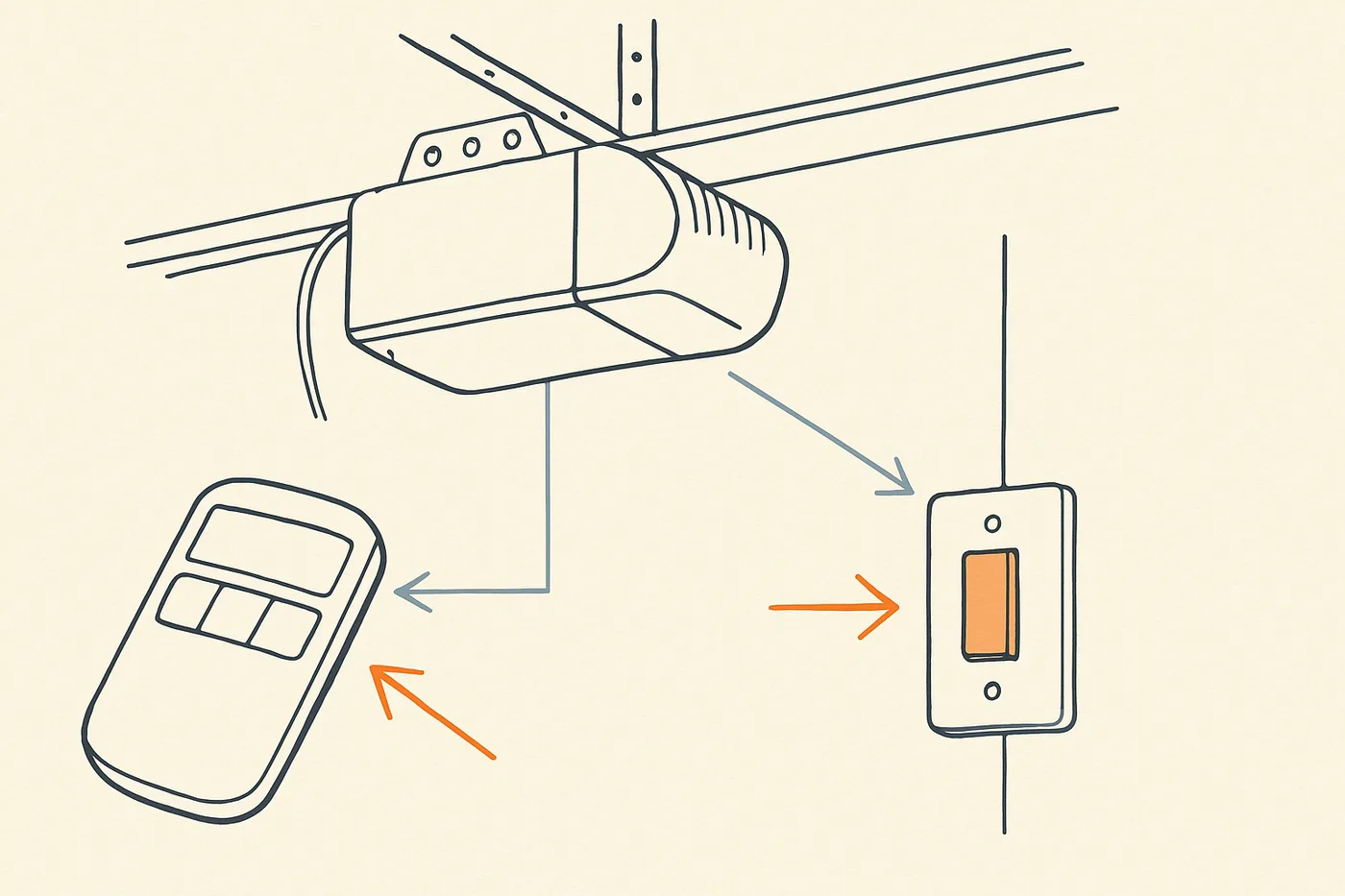
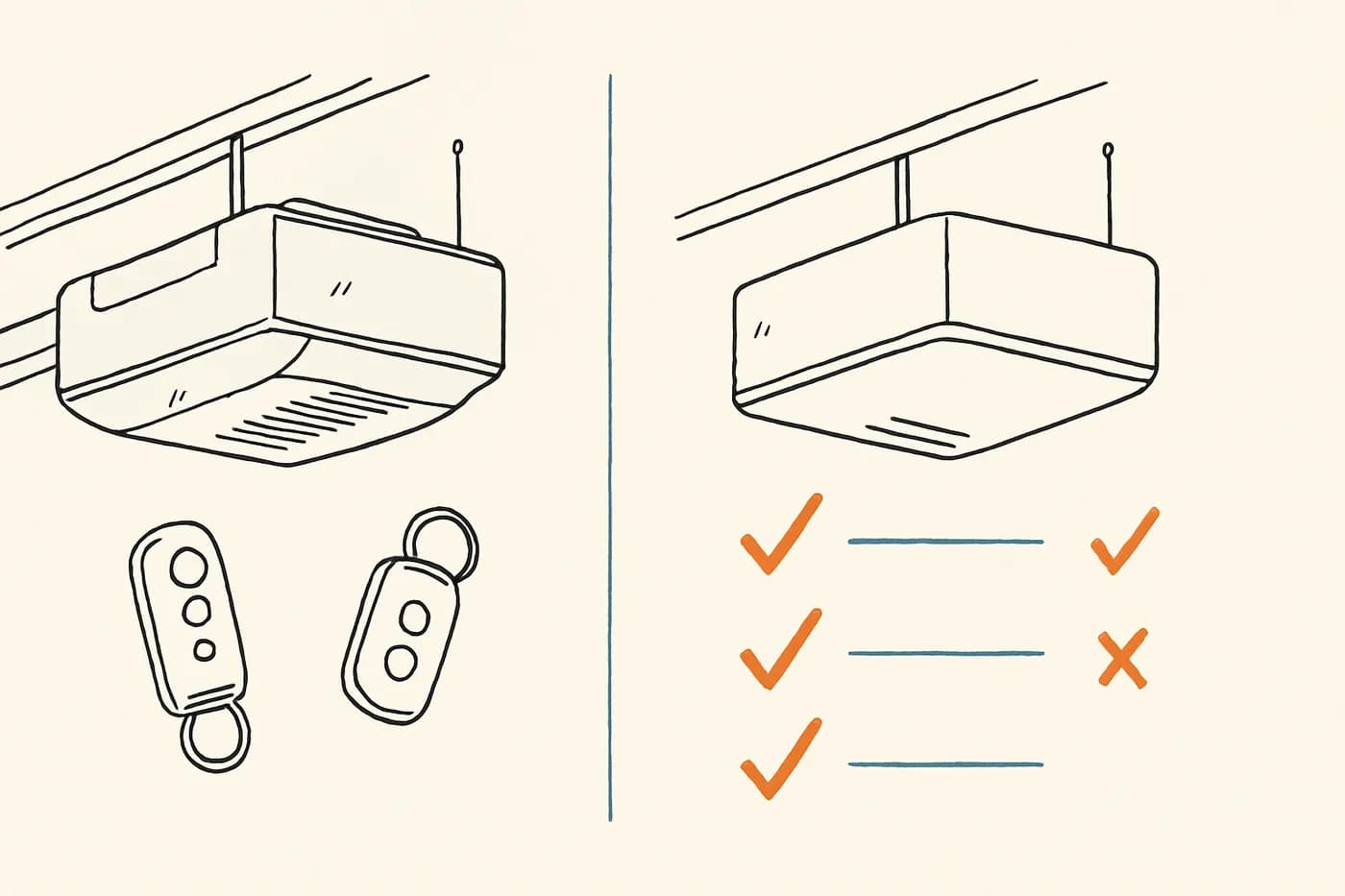
Every time you press a remote, it sends a code to the opener. Older openers used a fixed code, the same one every time. Genie, an opener maker, says on its Intellicode page that with a fixed code, the "code that opens the door today will be the same code that opens it tomorrow," which it calls "much more susceptible to hackers," and that "an intruder with an appropriate receiver could discover the code and use it to gain access sometime later."
A rolling-code opener changes the code each time. Genie says its Intellicode system works by "generating a new encrypted security code transmission every time the remote control is used," "selecting a new code from billions of possible combinations," and that "the same code will never be used more than once." Genie dates the shift from fixed to rolling code to the "mid-1990s" on that same page.
Chamberlain, another opener maker, says on its B2202 opener page that "Security+ 2.0 technology provides unmatched encryption (100 billion codes)." Chamberlain's support article on opener frequencies says it introduced Security+ 2.0 in 2010.
If you do not know which kind you have, your opener's manual is the place to check.
Your remotes are keys
Genie says on its garage safety blog (Nov 10, 2021): "Treat your garage door opener like a house key." The same post says, "If your remote does get stolen, clear the codes on your garage door opener immediately."
Howard County (MD) Police say on their property protection page (published 06/21/2021): "Even if your garage door is closed, a garage door opener in an unlocked car is like a key to your home!" Genie says that if you cannot take your garage remote with you, hide it in your car so it is not visible. Since Howard County calls an opener in an unlocked car a key, lock the car too.
Lock the door from the garage into the house
This is the door that matters most. Howard County (MD) Police say on their property protection page: "Always keep all doors, including your garage door and rear slider, closed and locked," and "Ensure that the door leading from your garage to the interior of your home also is locked." Genie says the same on its garage safety blog: "Lock your doors, even the door that connects your garage to your home."
A locked house door means an open garage is not an open house.
The red release cord
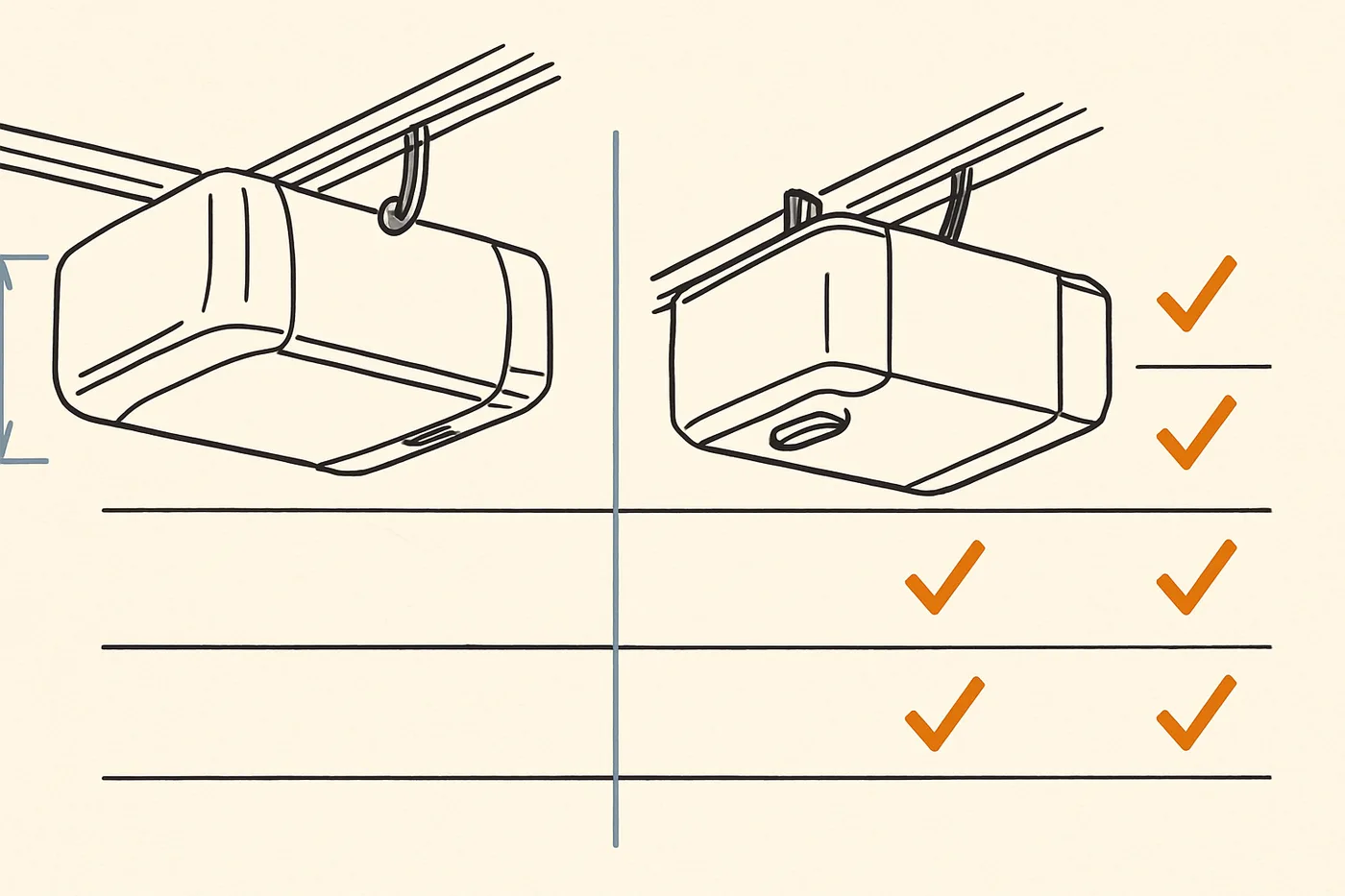
The red cord hanging from the opener rail lets you disconnect the door from the opener so it can move by hand. Chamberlain's support article on manual opening says to "ONLY use the emergency release when the garage door is fully CLOSED, if possible," and to "NEVER pull the emergency release handle to raise or lower the door." On a T-rail opener, Chamberlain says to pull the cord straight down, then back toward the opener.
From outside, Chamberlain's manual opening article describes an optional exterior release kit: a small round keyed lock on the outside of the door that only disconnects the opener and does not lift the door. Chamberlain's support article on releasing from outside says that without an outside release model (1702LM, 7702C or 7702CB), "there is unfortunately no way to activate the opener" from outside.
What to put on any quote or install
If you are replacing an opener or having one installed, ask these and get the answers in writing:
- Does this opener use the maker's rolling-code system, and which one?
- Can every remote and keypad be erased and re-paired by me, and does the manual show how?
- What does the warranty cover, and for how long?
What not to do
- Do not leave a remote clipped to the visor of an unlocked car.
- Do not leave the door from the garage into the house unlocked, even when the garage door is closed.
- Do not pull the red release cord with the door open. Chamberlain says to use it only with the door fully closed.
- Do not try to adjust, loosen or replace a spring or cable yourself. Springs and cables are a job for a trained technician.
What to do today
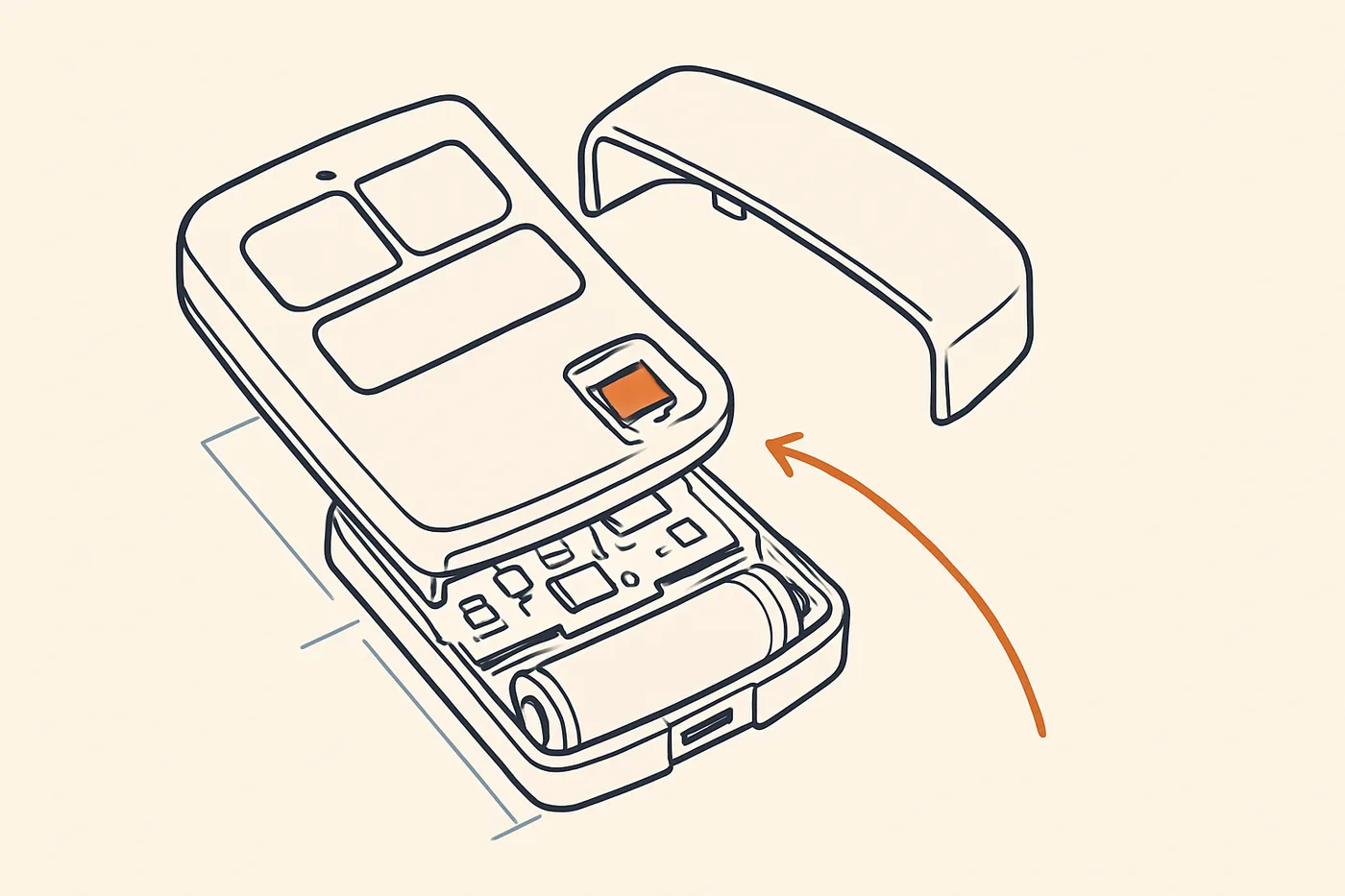
- Count your remotes and keypads. If one is missing, clear the codes on the opener and pair the ones you still have, using the steps in your opener's manual.
- Lock the door from the garage into the house, and make it part of your night routine.