Water dripping off your garage door in winter? What's happening and how to stop it
Beads of water or frost on a garage door in cold weather is usually condensation, not a defect. Here is what the door industry says causes it, how to tell it from a failed window seal, and the three changes that help.

You walk out on a cold morning and the door is wet. Beads of water on the panels, a drip line on the floor, maybe a film of frost on the little windows. It looks like something is leaking, and it is natural to wonder whether the door is failing.
Most of the time it is not. The industry body for garage door makers, the Door & Access Systems Manufacturers Association (DASMA), says so directly in its technical data sheet on the subject: condensation is not normally a product defect.
Why a door sweats
DASMA describes condensation as water that collects as droplets on a cold surface when humid air touches it. In a garage, that means two things have to be true at once: the air inside is warm and humid, and the door's surface is cooler because it is colder outside.
DASMA also notes that an insulated door may not perform at the same level as the surrounding walls, which is one reason a heated garage can still have a cooler door.
The humidity has to come from somewhere. The same sheet lists the usual sources:
- A wet or snow-covered car parked inside
- A humidifier
- Moisture from an adjacent laundry or washing area
If your door only sweats in winter, and only after the car has been in, that pattern points at the first one.
Windows get it worst
Condensation can show up on the panels, but DASMA says it is a bigger concern on the glazing, the windows in the door. Two details matter:
- It does not typically affect the durability or structural integrity of the door.
- Even double or triple pane windows can collect condensation in a humid garage.
So wet windows alone are not a reason to replace anything.
Condensation or a failed window seal?
There is one case where the problem is the door. DASMA separates condensation from fogging. Condensation is water on the surface. Fogging may indicate a failure of the glazing seal in a double pane system.
A simple check of our own, not from DASMA: wipe the glass. Moisture that comes off was on the surface. Haze that stays is somewhere you cannot reach, which fits the fogging description. Because garage door windows are built into the door, DASMA's advice is to have a trained door system technician evaluate it rather than trying to take the window apart yourself.
What helps
DASMA's tips for controlling condensation are short:
- Ventilate the garage. Proper ventilation is DASMA's first tip for controlling humidity.
- Turn the heat down in extreme cold. That is DASMA's wording for extreme cold-weather conditions.
- Keep the seals tight. DASMA lists tight seals around the glazing perimeter and between sections. Our guide to the three weather seals that matter covers which one fixes which gap.
Two more points from the same sheet. If you clean the windows, use the cleaning products your door manufacturer recommends so they do not degrade the glazing. And if ice builds up on the glass, DASMA cautions that care should be used if it is mechanically scraped off.
If you are weighing a better-insulated door, R-value explained shows what the numbers mean.
Water on the floor is not always condensation
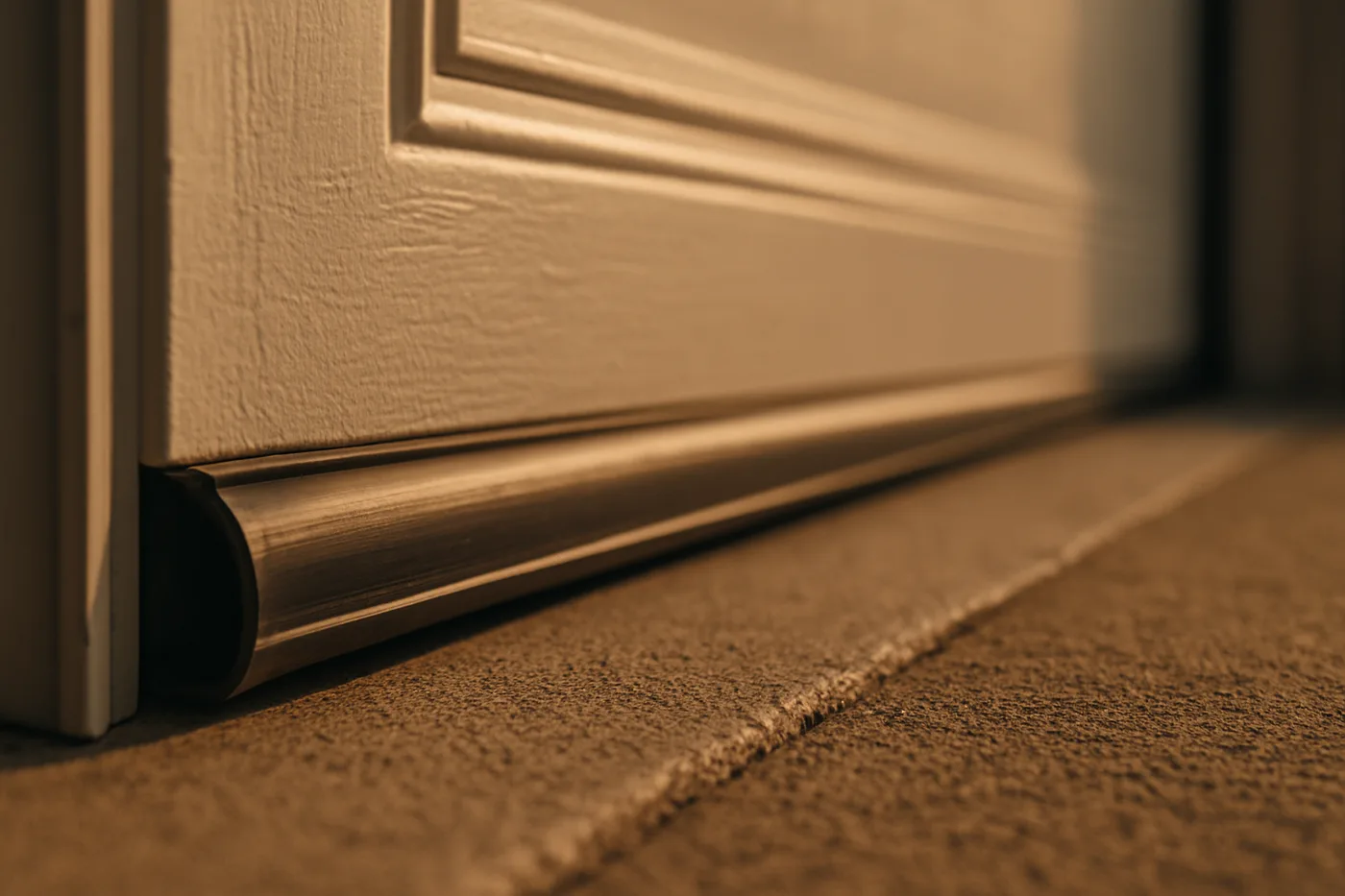
If the water is pooling at the bottom of the door and the weather outside is rain or melting snow, the source may be the opening, not the air. DASMA has a separate data sheet on water getting under the bottom of a sectional door. Its fix is in the concrete: a slightly inclined lip for the door to rest on, or a notch in the slab edge that the door sits into. A replacement seal alone will not change the slab.
What to do this week
- Check where the wetness is. Panels and windows point at condensation. A puddle at the bottom edge after rain or thaw points at water coming in.
- Wipe a wet window. If the haze stays, call a door technician about the glazing seal.
- Improve ventilation, watch where the moisture is coming from (a wet car, a humidifier, the laundry), and see whether the sweating eases.
None of this involves springs, cables or the opener. If the door itself is hard to move or sounds wrong, that is a different problem.