Your garage door is damaged or showing its age. Three options before you replace it.
A damaged or aging door can mean repairing the bad section, replacing it with a basic steel door, or replacing it with an insulated one. What each gets you, what to ask for in writing, and when the cheapest option is the right call.

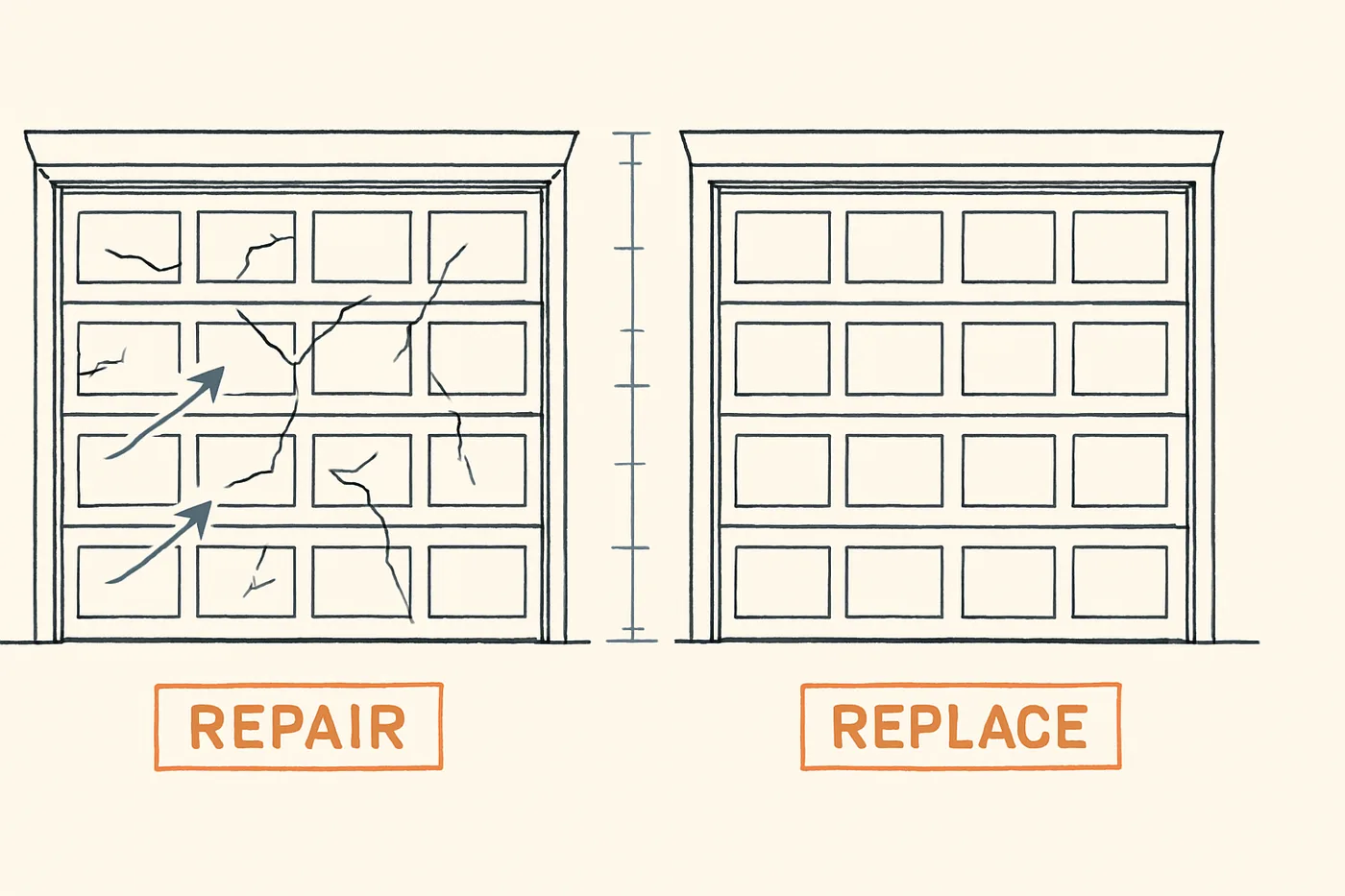
The door is dented, or a section is cracked, or it has simply had its years, and someone has said the word "replace." Before you accept that, there are three real options, and the right one depends on how much of the door is actually damaged.
This page does not tell you how to repair anything. It helps you read a quote, compare it with a second one and know what to ask. For the test of when a repair has stopped making sense, see our repair-or-replace guide, and for the material-by-material price table, our replacement guide. Neither is repeated here. If you are still deciding the basic question, start with our page on repairing or replacing a garage door.
Option 1, the good: repair or replace the damaged section
The technician fixes or swaps the damaged panel and leaves the rest of the door in place.
What it gets you: a working, sound door for the least money, with the rest of the door as old as it was.
What to know: HomeAdvisor's repair-cost page (updated June 2026) lists a single panel at $250 to $1,000. That is one aggregator's range, not a price for your door. We have no sourced answer on whether a replacement panel will match an older door, so ask.
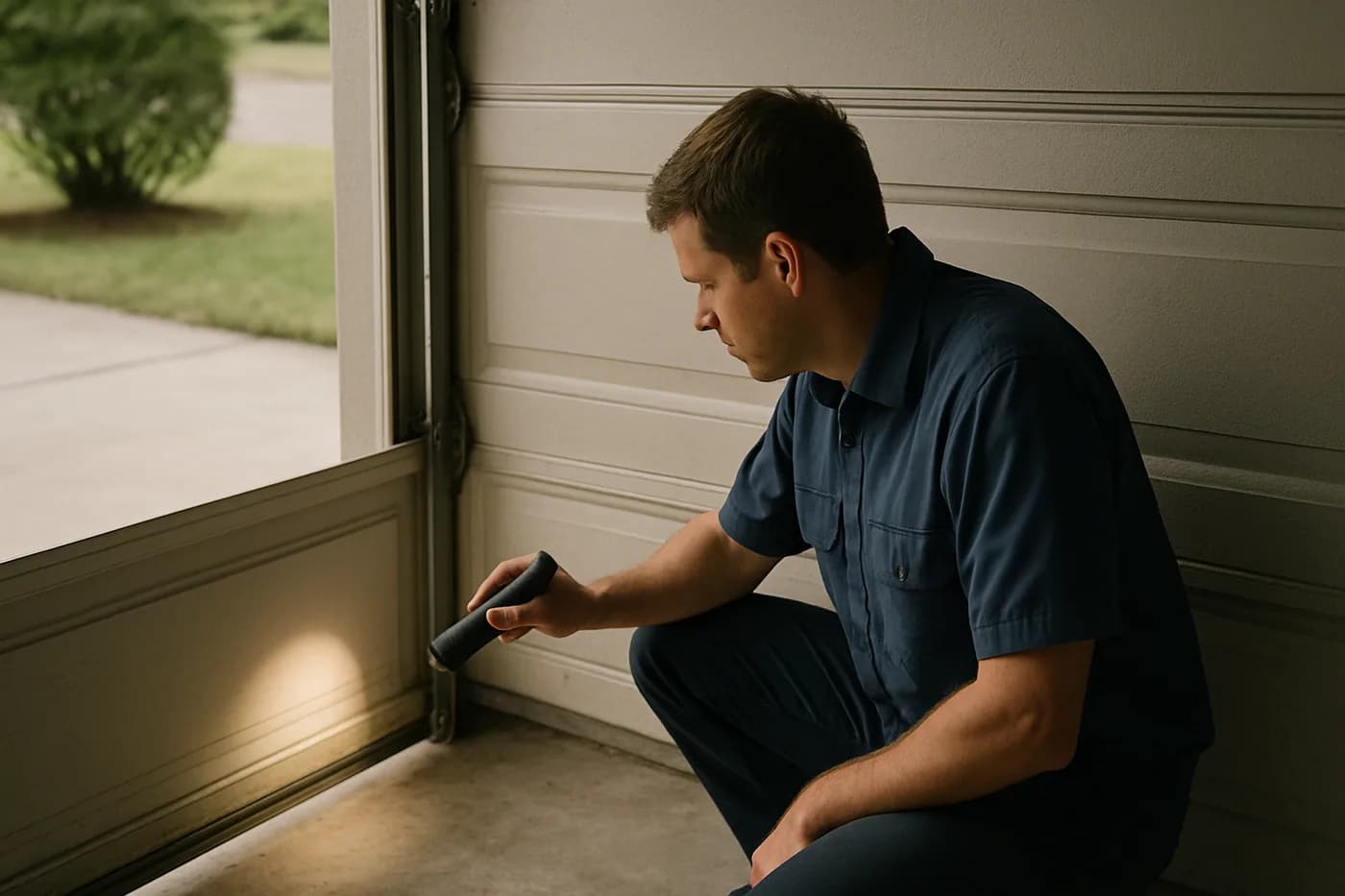
What to ask: whether the panel is available for your door, what the price is for the panel alone and installed, and what the technician sees on the other panels, the hinges and the tracks.
Option 2, the better: replace the door with a basic steel one
The old door comes out and a plain steel door goes in. No insulation upgrade, no windows.
What it gets you: a new door for the whole opening, with a new warranty. HomeAdvisor's installation page (updated June 2026) lists steel at $650 to $3,200 per door and describes it as budget-friendly and durable, and puts the normal range for replacement at $754 to $1,707 with an average of $1,231.
What to ask: whether removal and haul-away of the old door are in the quote, whether the springs and the opener are included, and what spring class is going in. Springs are installed by a technician, never by the homeowner. Put every one of those in writing.
Option 3, the best: replace the door with an insulated one
The new door has insulation built in, which matters most on an attached or heated garage, or one you use as a workspace.
What it gets you: HomeAdvisor lists the insulation upgrade at $600 to $3,000, depending on the insulation type and door size. Clopay says polystyrene is typically the more budget-friendly insulation and polyurethane usually adds more to the price. Clopay sells insulated doors, so read its list of benefits as the maker's case, not an independent test.
What neither source gives: a payback figure. Our insulated door guide goes through what the published numbers do and do not say.
What to ask: the R-value of the exact door, the type of insulation, and the same door with and without insulation as two lines, so the upgrade has its own price.
When the cheapest option is the right call
Option 1 can be the right call, and it is not a trick or a sign of a bad technician. This part is our judgment, not a manufacturer's or an industry standard. It fits when:
- One panel is damaged. A dent or a crack in a single section, not several.
- The rest of the door is sound. The other panels, the hinges and the tracks look good to the technician, and they say so in writing.
- The repair is a small share of a replacement quote. Put the two written prices side by side.
It does not fit when several panels are damaged, when the door is old and other parts are close to failing, or when the repair price is a large share of a replacement. In those cases Option 2 or 3 is the cheaper choice in the long run.
What to put on any door quote
- What is being repaired or replaced, and whether the price is the part, the labor or both.
- For a new door, the material, the insulation and the R-value.
- Whether removal and haul-away of the old door are included.
- The springs, the opener and the warranty, each on its own line.
Two written quotes with the same four lines are easy to compare. Two that leave them out are not.
What not to do
Do not try to wind, adjust, loosen or replace a spring or cable yourself, and do not touch the bottom bracket. Those parts are under tension and belong to a trained technician. If the door has come off its track, or feels very heavy, drops fast or will not stay up, do not use it or lift it, and call a professional. Our guide to what counts as a garage door emergency says what to leave alone.
What to do today
- Read your quote against the four lines above and circle what is missing.
- Ask for a repair price and a replacement price on the same visit.
- Choose the option that fits how much of the door is damaged and how long you will keep the house.
If you want to try your own numbers, the garage door ROI lab lets you run them.