Garage door heavy and hard to lift? Three fixes and when the cheapest is right
A heavy garage door or a straining opener can mean a balance correction, new springs, or springs with cables and rollers. What each fix covers, what to ask for in writing, and why a bigger opener is not one of them.

Your garage door has got heavy. Maybe you lifted it by hand and it fought you, or the opener groans and crawls on the way up. A technician has looked at it, and a quote is on the table. Our view: the number on it may cover one of three different jobs, and the cheapest one is sometimes the right one.
First, before any price: stop lifting it
A heavy door is a spring warning, not a strength test. Chamberlain's manual-release article says "If the door feels unusually heavy, will not stay open, or slams shut, STOP immediately and contact a garage door professional." It also says "A heavy door indicates a spring problem requiring professional service."
Our advice: do not lift the door by hand again, and do not pull the emergency release while the door is open. The same article says "If the springs are weak or broken, the door may fall rapidly and without warning." Keep people, pets and cars out from under it, and call a garage door technician.
No part of this page is a how-to. Our advice: springs and cables are a technician's work, never yours. Clopay's maintenance guide says "If your springs are broken or improperly tensioned, do not adjust or remove them yourself. Contact a qualified garage door repair professional."
Why a heavy door is a spring question
Our view: the springs carry the door's weight, which is why a heavy door points at them first. Clopay's spring guide says "The right balance means you can lift the door with minimal effort, and the opener motor doesn't have to strain." It also says "If your system feels unusually heavy, or if the opener is straining more than usual, the spring may have lost its tension."
Our view: that is why all three options below are about the springs and the parts they pull on. For how the springs carry the door, see our page on why a heavy door feels light.
Option 1, the good: a balance correction
Our view: in this option the technician checks the springs, finds them sound, and corrects the balance so the springs carry the door again. It is the smallest job on the table.
What to know: Clopay's maintenance guide says "Tension that is too low or too high makes your opener work harder, straining the system and leading to unnecessary wear and tear." Clopay's spring guide says that if a door lifted halfway falls or shoots up, "the springs may need adjustment."
What it costs: we found no sourced price for a balance correction on its own, so this page gives none.
Our advice, what to ask: what the technician saw on each spring, whether the door now stays put when lifted partway, and whether they lubricated the hinges and rollers. Clopay's lubrication guide says "If you notice your door becoming noisy or difficult to open, it may be time to reapply." Our advice: anything touching the torsion spring stays with the technician.
Option 2, the better: new springs, sized to your door
Our view: in this option the technician replaces the springs because they are worn, broken or the wrong size for the door. A spring that has lost its tension cannot be adjusted back to new.
What to know: Clopay's spring guide says "You'll need to know the door's weight, height, and track configuration to choose the correct spring size and type. Using the wrong spring can cause performance issues or even damage the door." Springs also wear out with use. A standard spring is rated for about 10,000 cycles, one cycle is one full open and close, and at four cycles a day that is about seven years (IDC Spring, a spring manufacturer).
What it costs, as one guide reads it: HomeAdvisor's repair-cost page (updated Jun 20, 2026) says "Expect to spend $180 to $350 to replace them, depending on the spring type." That is one aggregator's range, not a price for your door.
Our advice, what to ask: why the springs need replacing rather than a balance correction, whether the new springs are sized for your door's weight, and whether the price covers one spring or the pair. Our page on the three options a spring quote can contain walks through one spring, both, or a longer-life spring. If you added insulation or windows to the door since the springs went in, say so; see our page on what an insulation kit does to springs and openers.
Option 3, the best: springs, plus the cables and rollers they work with
Our view: a door that has been heavy for a while has been wearing on the parts around the springs too. In this option the technician replaces the springs and also checks the cables and rollers, and replaces the ones that are worn.
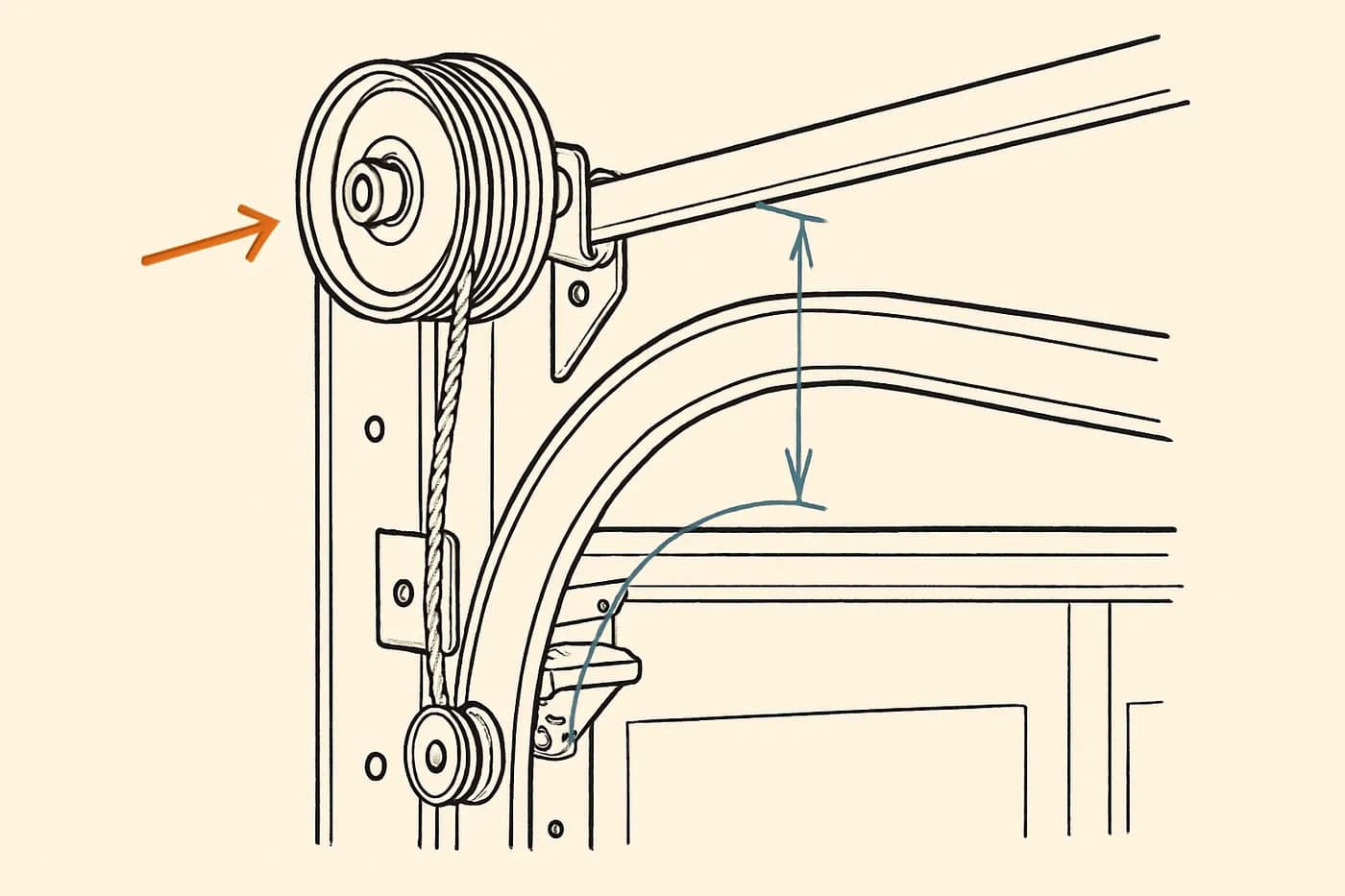
What to know: Clopay's spring guide says "Connected to the springs are steel cables that run along the sides of the door. As the door opens, the energy from the springs is transferred through these cables, which pull the door upward." Clopay's noisy-door guide says "When it comes to worn parts, rollers are usually the first to go." Amarr's owner's manual says to "Visually scan tracks, cables, springs, steel brackets, rollers, and hinges for fraying, rupture, and other signs of wear. A trained garage door technician must replace these items to ensure garage door safety." Those are two makers' pages, and both sell doors and parts.
What it costs, as one guide reads it: HomeAdvisor (updated Jun 20, 2026) says "Cable repairs run $100 to $400. Heavier or solid-wood doors need thicker, higher-grade cables, so plan for the upper end of the range if your door is on the bulky side." Add that to the spring range above. We found no sourced price for rollers alone, so this page gives none.
Our advice, what to ask: each part as its own line on the quote, with what the technician saw on it. For a cable quote on its own, see our page on the three options a cable quote can contain.
What is not on the list: a bigger opener
A heavy door can make a new, stronger opener sound like the fix. It is not. DASMA's opener safety tips say "If your door feels heavy or requires two hands to open it, the door is probably out of balance and needs adjustment." The same page says "The answer is not a more powerful garage door opener. Openers are designed to open doors that are properly balanced."
Our advice: if a quote offers a new opener for a heavy door, ask what the technician found on the springs first. For when a bigger motor does make sense, see our page on opener horsepower.
When the cheapest option is the right call
Our view: Option 1 can be the right call. It fits when the technician says in writing that the springs are not broken, are the right size for the door, and still have life in them, and the door stays put after the balance is corrected. That is our judgment from the sources above, not a door maker's rule.
Our view: it does not fit when a spring is broken or stretched, when the springs have years of daily use on them and were never replaced, or when the door was made heavier after the springs went in. In those cases Option 2 or Option 3 is the quote to compare.
What to put on any heavy-door quote
Our advice: ask for these four lines on every quote. Two written quotes with the same four lines are easy to compare; two that leave them out are not.
- What the technician found on each spring, in their words, and whether the springs are sized for your door.
- Whether the job is a balance correction, new springs, or springs with other parts, with each part as its own line.
- For new springs, whether the price is for one spring or the pair.
- Whether the door is safe to use until the work is done. Our advice: assume it is not, and ask.
What to do right now
Our advice:
- Stop lifting the door by hand, and leave it where it is if it will not stay up.
- Call a garage door technician and say the door has got heavy or the opener is straining.
- When the quote arrives, check it against the four lines above and ask for anything missing in writing.