Garage Door Insulation for Summer Cooling: What It Actually Saves
Discover how insulated garage doors reduce summer heat and cooling costs. Learn realistic energy savings, R-value ratings, and whether insulation pays off for your home.

Upgrading from an uninsulated garage door to a mid-grade insulated one saves roughly $313 per year in energy costs on a 16x7 attached garage in a hot-summer climate, at an installed premium of $800 to $1,200. That is a payback period of about 3.2 years, and under two years in the hottest markets. Here is what the insulation actually does in summer, what R-value is worth paying for, and when the math stops working.
What summer heat actually does to your garage
A garage door is a big flat panel sitting in direct afternoon sun. In July, the exterior skin of a west-facing steel door can hit 140°F while the garage interior is trying to stay somewhere in the 90s. That temperature gap drives heat straight through the door and into the space behind it.
At a 38-degree temperature differential, a 112-square-foot garage door at R-0 loses 4,256 BTU per hour, while the same door at R-18 loses only 237 BTU per hour — a 94% reduction in heat transfer. That is not a marketing figure. That is a straight conduction calculation, and you can model it against your own climate in the energy efficiency lab.
If the garage is detached and unconditioned, that heat gain does not cost you anything directly — you are not paying to cool the garage. But if the garage is attached, and especially if a bedroom or living room sits behind the shared wall, that heat crosses the wall on its own schedule and shows up on your utility bill.
The actual dollar savings
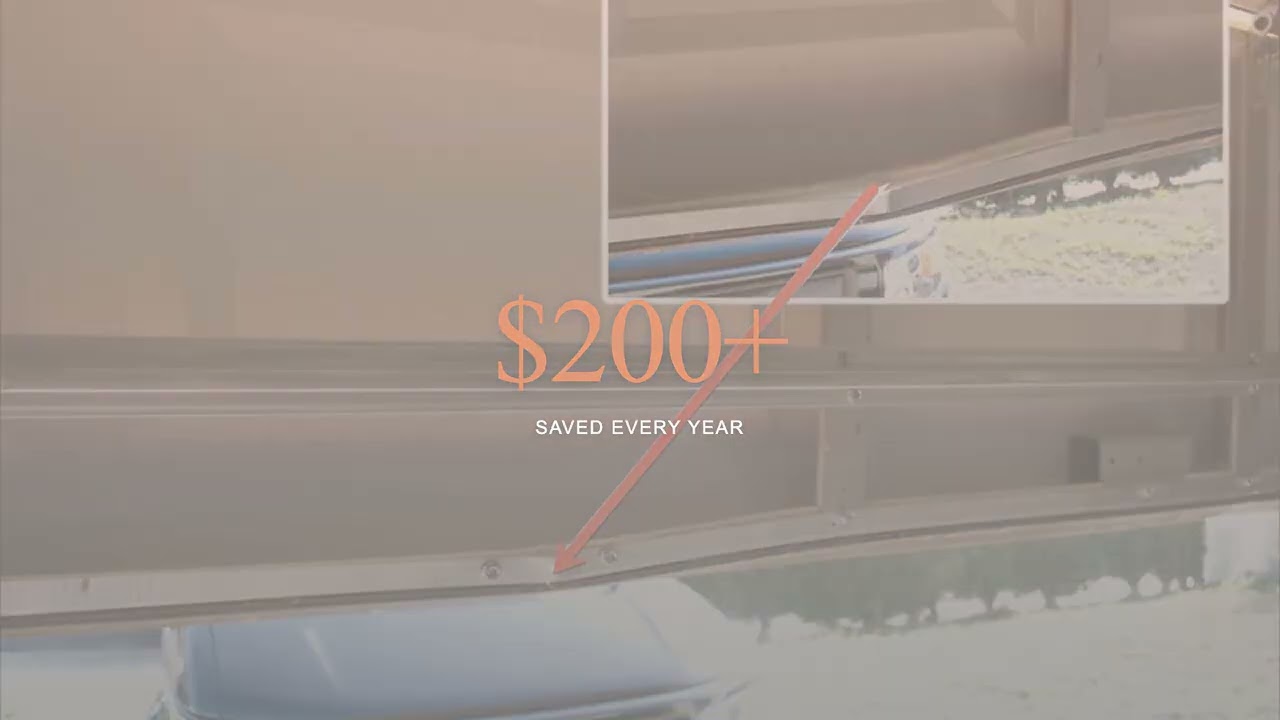
For a 16x7 attached garage in a hot-summer climate, upgrading from an uninsulated R-0 door to a polyurethane R-18 door drops annual energy costs from $385 to $72, a savings of $313 per year. That figure combines direct cooling load through the door with the secondary load through the shared wall of the attached garage.
Three things move that number for your house:
Climate. A homeowner in Phoenix runs cooling load for far more hours than a homeowner in Denver. In extreme climates such as Phoenix summers or Minneapolis winters, the payback period for upgrading from R-0 to R-18 can be under two years because the temperature differential the door must fight is larger for more hours of the year.
Garage configuration. A detached garage does not share a thermal boundary with your conditioned space, so the savings drop sharply. An attached garage with a bedroom above it — a "bonus room" configuration — sees the largest savings, because you are effectively paying to cool the garage ceiling.
Utility rate. The $313 assumes a moderate residential electricity rate. If you are paying $0.32/kWh in California or on a tiered summer plan, the savings scale up. If you are on $0.10/kWh in the Southeast, they scale down.
What R-value you actually need
R-value ratings on garage doors are not comparable to attic insulation ratings, and the higher numbers on the sticker are not always the ones doing the work. What matters is the insulation type, thickness, and whether the door has a thermal break.
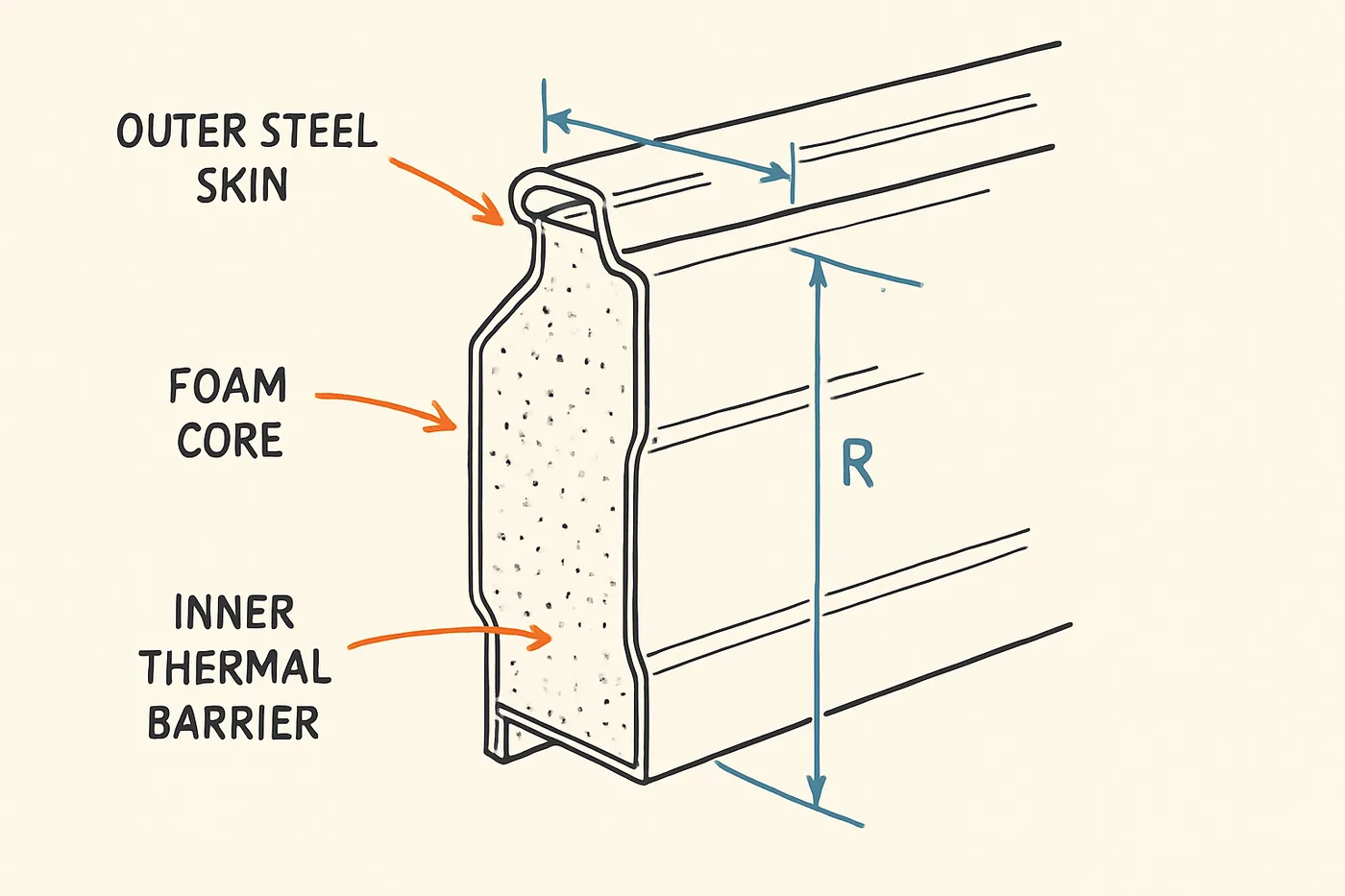
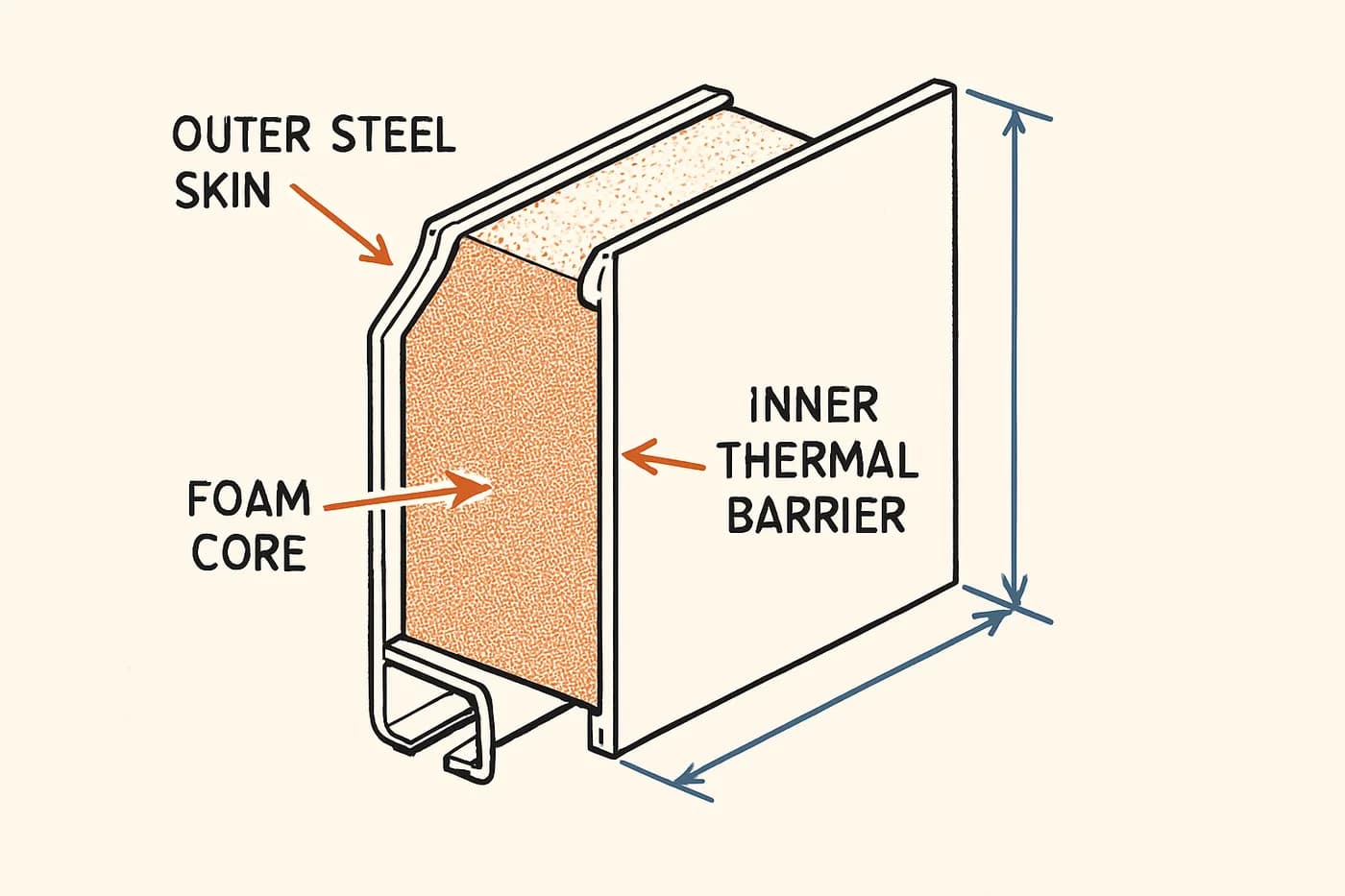
Polyurethane foam delivers approximately R-6.5 per inch of thickness compared to roughly R-4 per inch for polystyrene, so a 2-inch polyurethane door reaches R-13 while a 2-inch polystyrene door lands closer to R-8. That is why two doors advertised as "insulated" at the same thickness can perform differently. Polyurethane is injected and bonds to both steel skins, which also stiffens the panel — polystyrene is a foam board slid into a cavity.
More is not always better. For an attached garage that shares a wall with conditioned living space, the useful working R-value range for the garage door is R-12 to R-16, because the garage temperature sets the boundary condition for the shared wall. Above R-16, you are paying for numbers you cannot feel on your utility bill. Below R-12, you are leaving obvious money on the table.
What it costs to buy the upgrade
| Tier | R-value | Installed cost (2026) | Insulation type |
|---|---|---|---|
| Entry (non-insulated) | R-0 to R-6 | $800–$1,800 | None or thin polystyrene |
| Mid-grade | R-12 to R-18 | $1,500–$3,200 | Polyurethane, injected |
| Premium | R-18+ with thermal break | $2,800–$4,500 | Polyurethane with thermal break, upgraded seals |
The mid-grade tier is where the payback math works cleanly. The premium tier is where you are paying for edge cases — extreme climate zones, bonus rooms above the garage, or homes where the garage doubles as a workshop or gym.
The seals matter as much as the R-value
An insulated door with failed weather seals leaks summer air the same way an uninsulated one does. Seals are the part of the system that fails first and gets replaced last, and they undo the R-value math when they go.
The bottom U-shaped seal on a garage door typically lasts five to ten years before the rubber loses its compression memory and stops pressing flat against the floor, and jamb weatherstripping lasts ten to fifteen years on a door with moderate sun exposure before the vinyl stiffens and loses its sealing compression. Both are cheap fixes that most homeowners defer.
Wind makes leaking seals worse fast. A 20 mph wind creates approximately 1.6 psf of pressure on a 16x7 garage door — roughly 180 pounds pushing air through every gap — and can triple infiltration rates compared to calm conditions. If you live somewhere windy, the seal condition is doing more work than the R-value number.
Local pros will replace seals as a standalone service — Garage Door Pro services will swap a bottom seal and re-cut jamb weatherstripping in a single visit, and if you are in Nevada, A+ Garage Doors handles the same work as part of their standard maintenance call.
If you are not ready to replace the door
If a full replacement is not in the budget this summer, there is one low-cost intervention worth doing. Adding foam tape to the panel joints on an uninsulated door can reduce air infiltration by 15 to 20%, at a cost of under $30. That is not R-value work — you are not stopping conduction — but you are cutting infiltration, which in a windy climate is the bigger loss anyway.
Also worth doing: get a professional to look at the seals before you spend anything on insulation kits. A free garage door safety inspection will tell you whether your bottom seal and jamb weatherstripping still have compression left, and that answer determines whether foam tape is worth your afternoon.
The secondary benefit nobody quotes
There is one thing on the "value" side that installers almost never mention because it does not show up on a utility bill. An insulated door with intact weather seals reduces daily thermal cycling on the panels, which matters because panel warping from thermal expansion and contraction stresses hinges and track over time. An insulated door holds its geometry longer, which means fewer track adjustments, fewer roller replacements, and a slower drift toward the day the whole system needs work.
That is not a number you can put in a payback calculation without hand-waving, so I am not going to try. But it is a real effect, and if you are choosing between two doors at similar price points, it is one more reason to go with the insulated one.
What to decide this week
Run your own numbers before you commit. Pull last July's electric bill, note your utility rate, and use the ROI lab to model the payback at your actual climate and rate — the answer for Phoenix is not the answer for Portland, and the $313 average will land somewhere different for you. Then ask any installer quoting a new door three things: what R-value the door tests at, whether the insulation is polyurethane or polystyrene, and whether the quote includes new bottom seal and jamb weatherstripping. If they cannot answer the first two, you are not talking to the right installer.