Your garage door opener hums or runs, but the door won't move. What to check first
When the opener motor runs and the door stays put, the cause is often simpler than a failed opener. Here is what the manufacturer lists, the two checks that cost nothing, and where a worn drive gear fits in.

You press the button. You hear the opener hum, or the motor run. The door does not move.
It feels like the opener has died. Often it has not. Chamberlain's support page for exactly this problem, an opener that hums but the door does not move, lists several causes. Most are checks you can make without opening anything.
Check 1: is the door still attached to the opener?
For a hum of about 30 seconds, Chamberlain says the door may not be connected to the opener. On chain and belt models you may see only the trolley travel along the rail. The fix it gives is to use the emergency release handle to reattach the door.
Our own guide to what to do when the power is out also covers the release cord. Chamberlain has a separate guide on how to manually open or close a garage door. Its warning says to use the emergency release only when the door is fully closed, if possible, and never to pull the release handle to raise or lower the door. It adds that weak or broken springs can make a door drop fast with no warning.
Check 2: is something else holding it?
For a brief hum, Chamberlain lists three causes:
- The trolley is stuck against the stop bolt or stop tab. Chamberlain has its own article on freeing it.
- The door lock is engaged. Chamberlain's fix is to disable the lock.
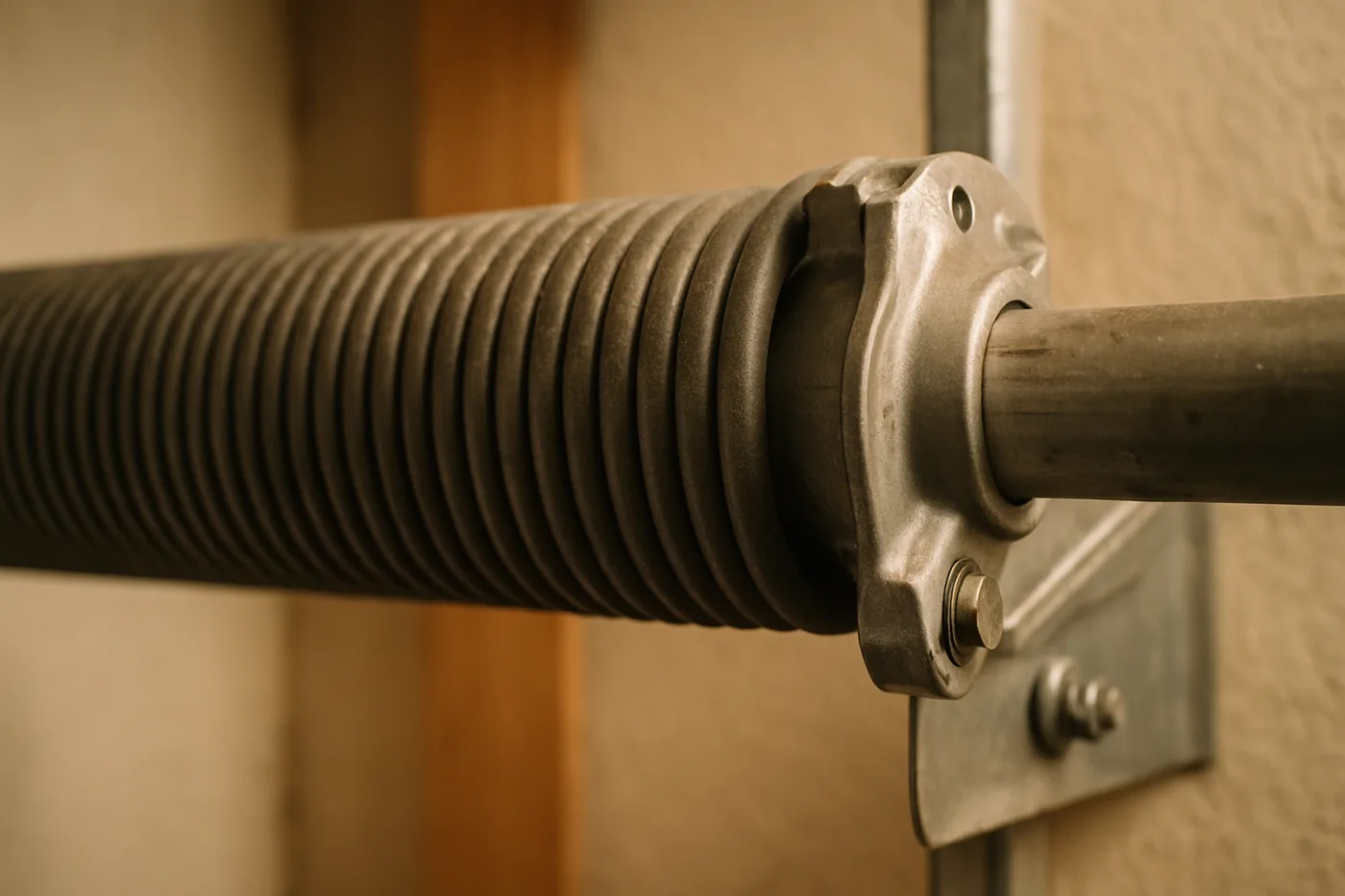
- The springs may be broken. Chamberlain's instruction is to contact a trained door technician.
Springs are always a professional job. If a spring is the cause, do not try to lift the door or wind or replace anything yourself.
Where a worn drive gear fits
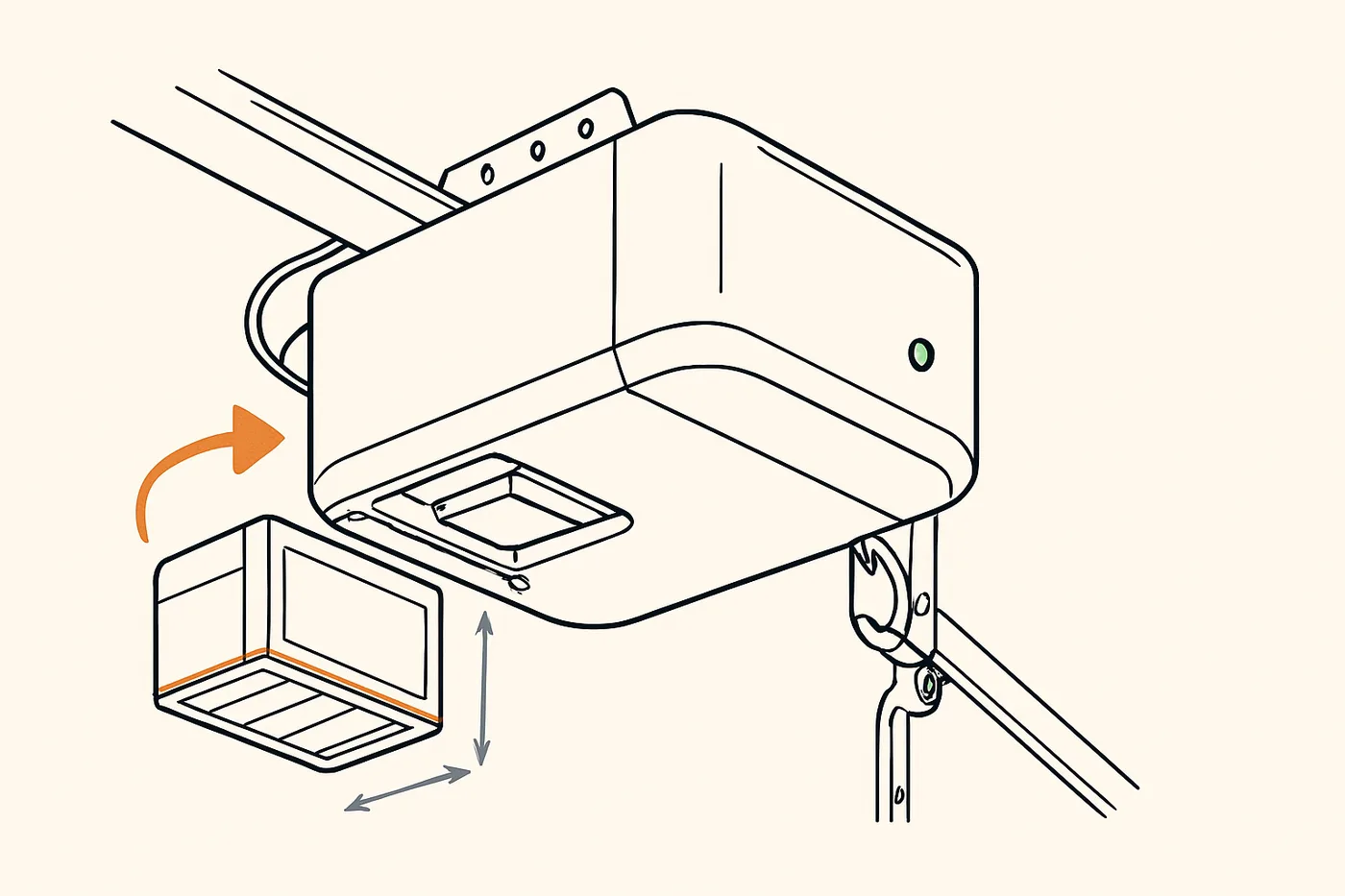
Inside the opener, gears sit between the motor and the part that pulls the door. Manufacturers sell replacement gear kits. Which drive type you have (chain, belt or screw) is covered in belt vs chain vs screw drive openers. LiftMaster's chain drive gear and sprocket kit includes a helical gear and top hat assembly, a worm gear, wear bushings and grease. Its drive gear and worm kit is similar. The pages say the kits fit listed models made after 1993 only, and tell you to check your owner's manual or parts diagram before ordering.
The manufacturer pages do not describe symptoms or give installation steps, so what follows is ours, not theirs. A worn gear is one cause a technician may check when the motor runs, the chain, belt or screw is not moving, and the door is correctly connected. We cannot tell you from a description that it is your cause.
For screw-drive openers, Chamberlain's page names a different part: a hum longer than 5 seconds can mean a stripped rack, the black piece along the inside of the rail, which it says to replace if worn.
What a part costs
One example: LiftMaster lists the chain drive gear and sprocket kit above at $50.99 and the drive gear and worm kit at $27.99. Those are parts only, for those models, as listed on the manufacturer's pages. The cost of having it installed is higher and varies, and we do not have a sourced figure for it.
Who should do the swap
This part is our advice. Replacing a gear means taking the opener apart, and Chamberlain's warning on the hum page is to "Disconnect ALL electric and battery power" before any service or maintenance. The door also has to be held safely while the opener is apart. Have a garage door technician confirm the cause and do the swap. If the opener is old enough that you are weighing repair against replacement, how long a garage door opener lasts and our repair guide help with that decision.
What to do today
- Unplug the opener, or pull its power, before you touch anything.
- Check that the door is closed and attached. Use the emergency release as Chamberlain describes.
- Check the door lock and the trolley position.
- If the door feels extremely heavy, falls quickly when released, or will not stay open, stop. The same Chamberlain manual-open page lists these as times not to operate the door manually, and says they point to a mechanical problem that needs a professional. It also lists springs, cables or rollers that look broken or damaged.
- If none of that explains it, call a technician and give them the opener model number from its label.