Your garage door won't open in a power outage. Here's what fixes it.
The power goes out and the garage won't open — during a wildfire evacuation, an ice storm, or a summer blackout. What a battery backup actually does, and the ten-minute check that keeps you from being locked out of your own house.

A few weeks ago the power went out here in St. George, at rush hour. I have battery backups on our openers, so we pulled into the garage and went inside without thinking about it.
Our neighbours were not having that evening.
The woman across the street could not get her garage open, and she did not carry a key to her own front door — the garage had been her way in for years. She ended up at her dad's house for the night. Another neighbour was standing in his driveway because his puppy was shut inside and he had no way to reach it. Every traffic light on the main road was dark, so the streets were jammed with people who were also just trying to get home.
Nobody in that story had a garage door problem. They had a power problem that turned into a garage door problem, and then into a getting-into-my-house problem.
This is a seasonal pattern, not bad luck
Most homeowners think of a power outage as a random event. It is closer to a schedule. Three seasons drive most residential outages, and each one is a different failure:
Wildfire season. Two things happen. Fires take out transmission infrastructure, and utilities increasingly cut power on purpose — Public Safety Power Shutoffs — when wind and dry fuel make lines a fire risk. The shutoff is the part that catches people, because it happens on a clear day and can last a day or more. It also overlaps exactly with evacuation orders, which is the worst possible time to discover your car is sealed in your garage. California wrote this into law for precisely that reason after the 2017 fires, which I get into below.
Winter storms. Ice and heavy wet snow bring down lines, and these outages last longest because crews are working in the conditions that caused them. Winter also stiffens the grease in your opener's rail and makes the springs a little less willing, so an already-marginal door is at its worst in the same week the power is least reliable.
Summer heat. Air conditioning load peaks, the grid strains, and you get rolling blackouts or heat-related equipment failures. These are usually short, but they cluster in the late afternoon — right when people are coming home.
Different causes, same outcome at your house: the opener has no energy source, and the door does not move.
What actually happens to the opener
A garage door opener is a motor, a logic board and a drive mechanism. Cut the power and it is inert. It will not respond to the remote, the wall button, or the app. There is no reserve in it.
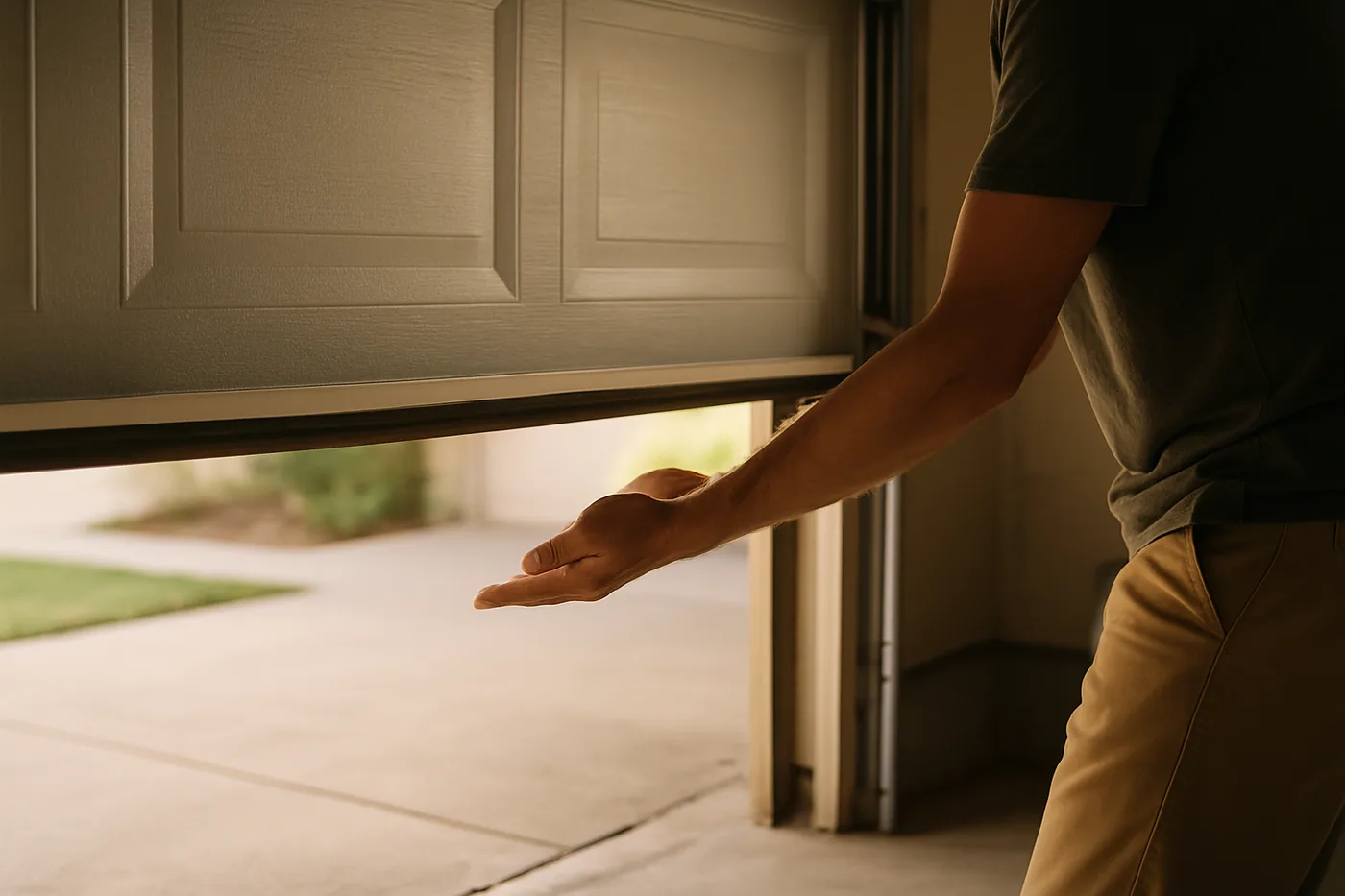
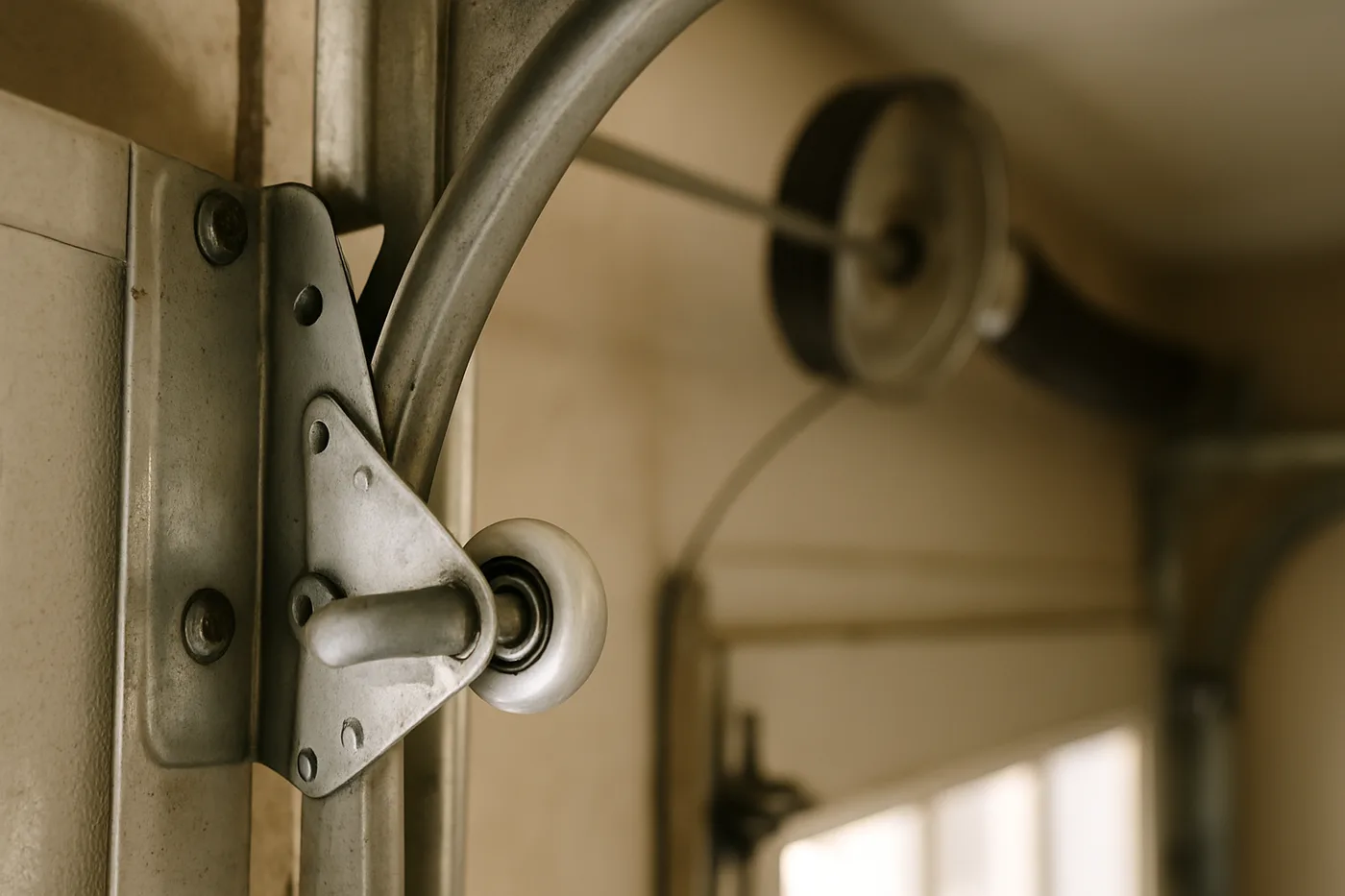
What you still have is the emergency release — the red cord hanging from the trolley. Pull it and the door disconnects from the opener so you can lift it by hand.
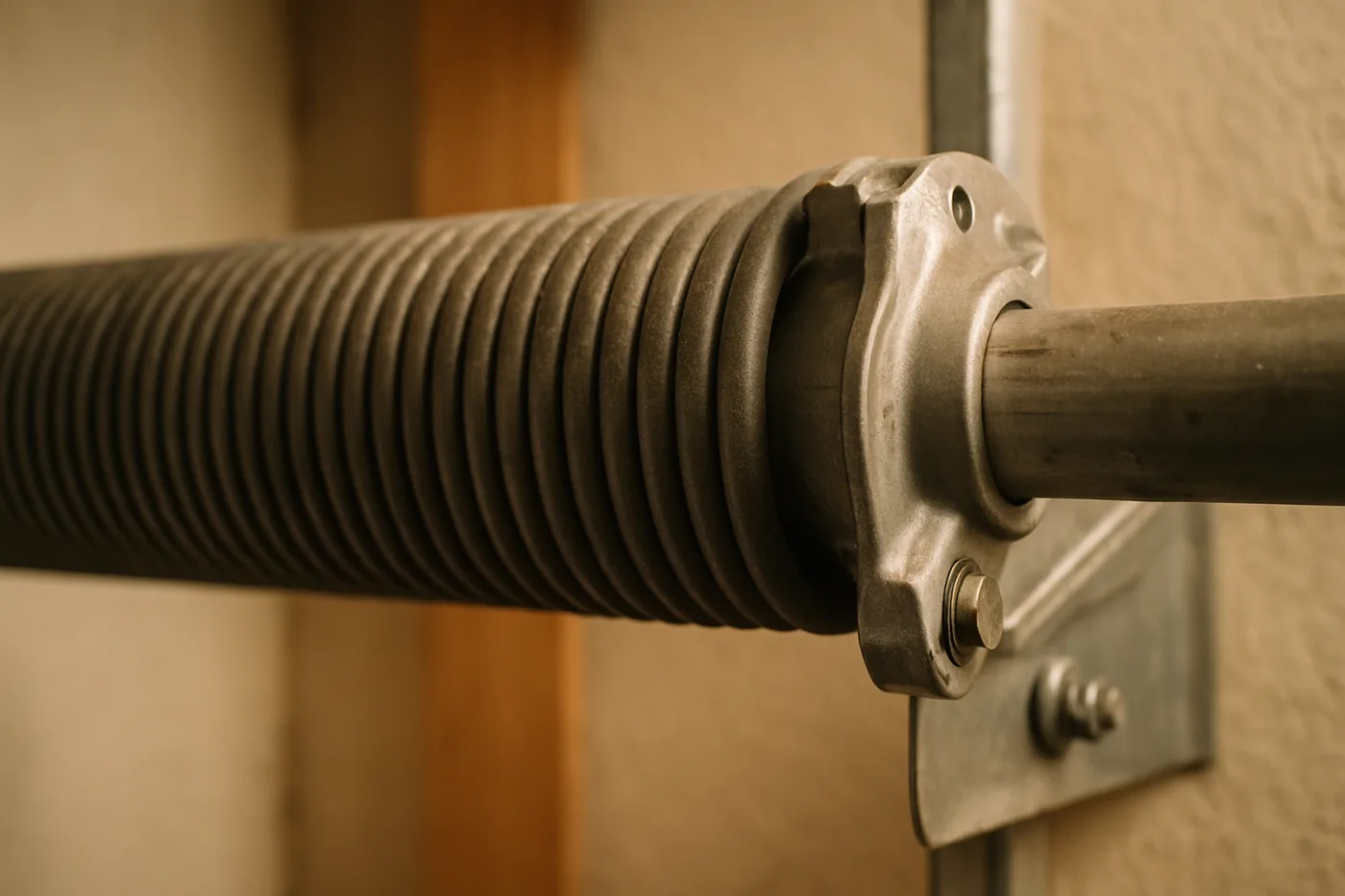
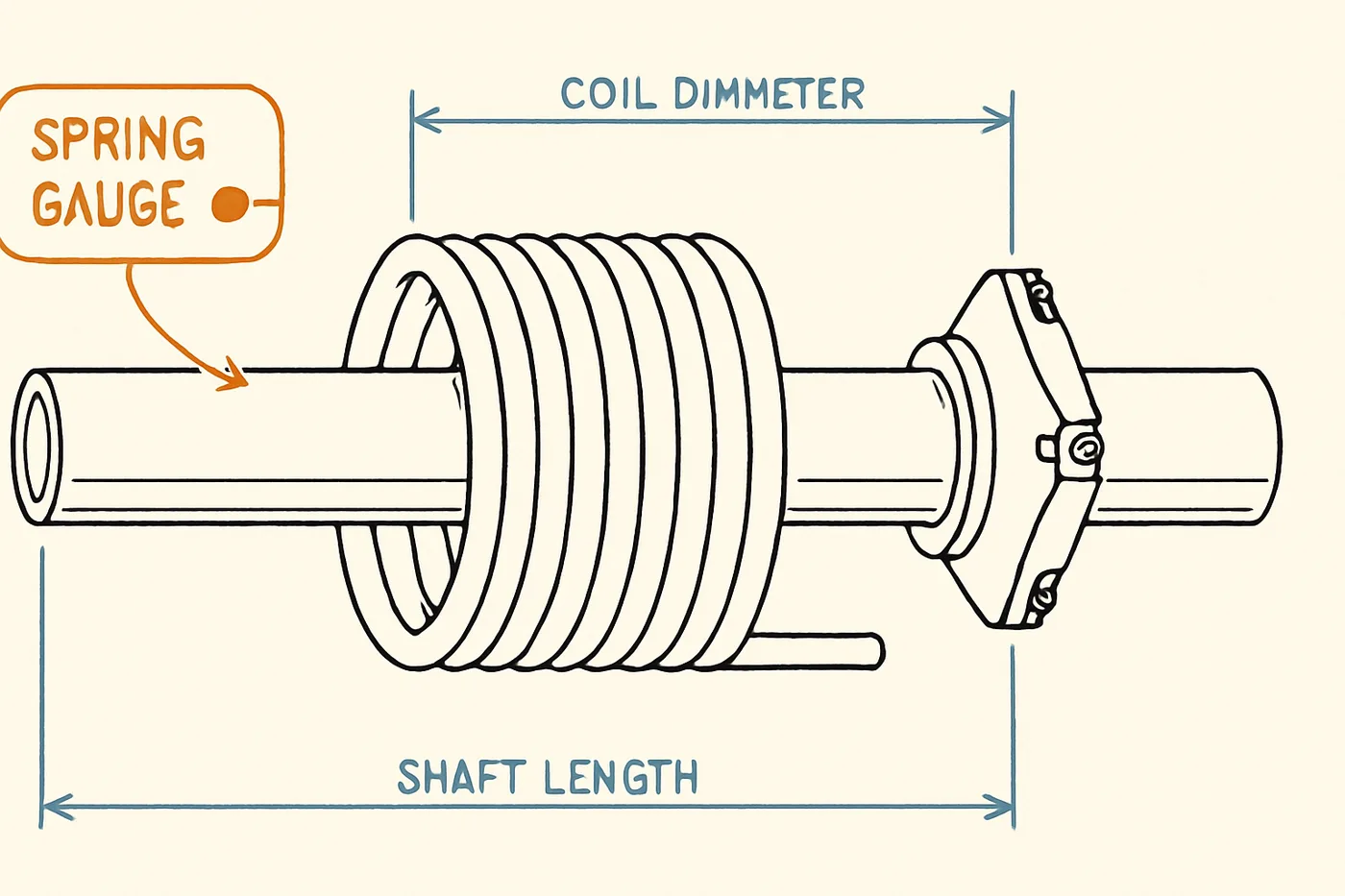
Two things people find out the hard way. First, that door is heavy. A double door runs 150 to 250 pounds, and the only reason a person can lift it at all is that the torsion springs are carrying nearly all of that weight. If a spring is broken, the door is dead weight and you should not pull on it. Second, the release is a one-way door in practice: it works from inside the garage, and once you have used it you cannot properly re-secure the door from the outside. Neither of my neighbours could reach their release cord, because both were standing outside a closed door.
What a battery backup changes
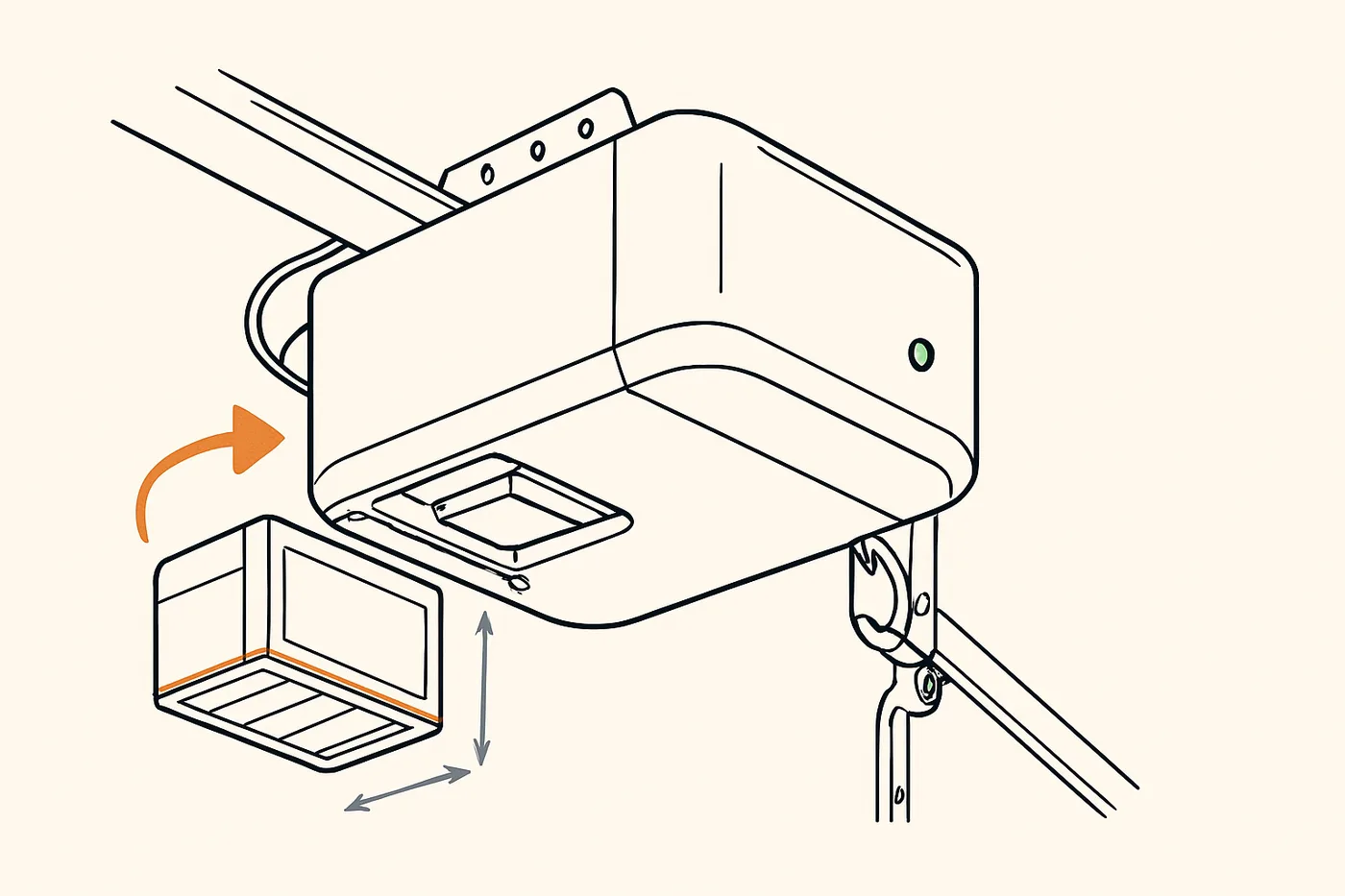
A battery backup is a sealed battery inside or attached to the opener head that takes over when line power drops. The door opens on the button, the same as always. That is the whole feature, and it is the right feature, because it fixes the actual problem: getting the car out and getting into the house.
Worth knowing before you buy:
- Capacity is sized for an emergency, not for normal life. Expect roughly 20 cycles or about 24 hours of standby. That is enough to leave and come back. It is not enough to ignore a multi-day outage.
- The battery ages whether you use it or not. One to three years is typical, and a dead backup battery is indistinguishable from no backup until the night you need it. Most openers signal this with a status LED or a beep. Learn what yours does.
- Retrofitting is limited. Some models take a manufacturer battery module; many do not. If yours does not, battery backup becomes a reason to replace the opener rather than an add-on.
California has required battery backup on every residential opener sold or installed in the state since July 1, 2019, under SB-969 — written after the 2017 wildfires, when people lost power and then lost the ability to get their cars out. If you want the full mechanical and legal detail, we have a dedicated piece on it: garage door opener battery backup: what it does and whether you need one.
If you live anywhere with a fire season, a real winter, or summer rolling blackouts, the statute is just California having already done the math.
Where app connectivity fits, and where it does not
Smart openers get bundled into this conversation, and they are genuinely useful — but be clear about what they do.
App connectivity tells you the state of the door and lets you operate it remotely. During an outage its value is knowing whether you left the door open before you evacuated, and being able to let someone in without driving over.
It does not substitute for a battery. A Wi-Fi opener with no battery backup is exactly as stuck as a twenty-year-old chain drive. And connectivity has its own dependency: your home internet almost certainly goes down with the power, because the modem and router are plugged into the same wall. If you want the app to work during an outage, the router needs a small UPS of its own — and that is a genuinely good pairing with an opener battery.
The honest ranking, if you are spending money in order: battery backup first, because it solves being locked out. Connectivity second, because it solves not knowing. Do not buy the second one believing you bought the first.
What to actually do
None of this needs a technician:
- Find your emergency release cord and pull it once, with the door closed, so you know how it feels and where it is. Re-engage it by pulling again or running the opener.
- Check whether you have a battery backup at all. Look for a status light on the opener head or a battery compartment. If you have one, note roughly how old it is.
- Put a house key somewhere you can reach without the garage. A lockbox, a neighbour, your car. This is the cheapest fix on the list and it is the one that actually stranded people on my street.
- If you are buying an opener this year, treat battery backup as a requirement rather than an upgrade, whatever your state requires.
The garage door is the largest moving object in most houses and, for a lot of families, the main way in. It is worth ten minutes to know how it behaves when the power is out — before an evacuation order, an ice storm, or a rolling blackout decides to teach you.
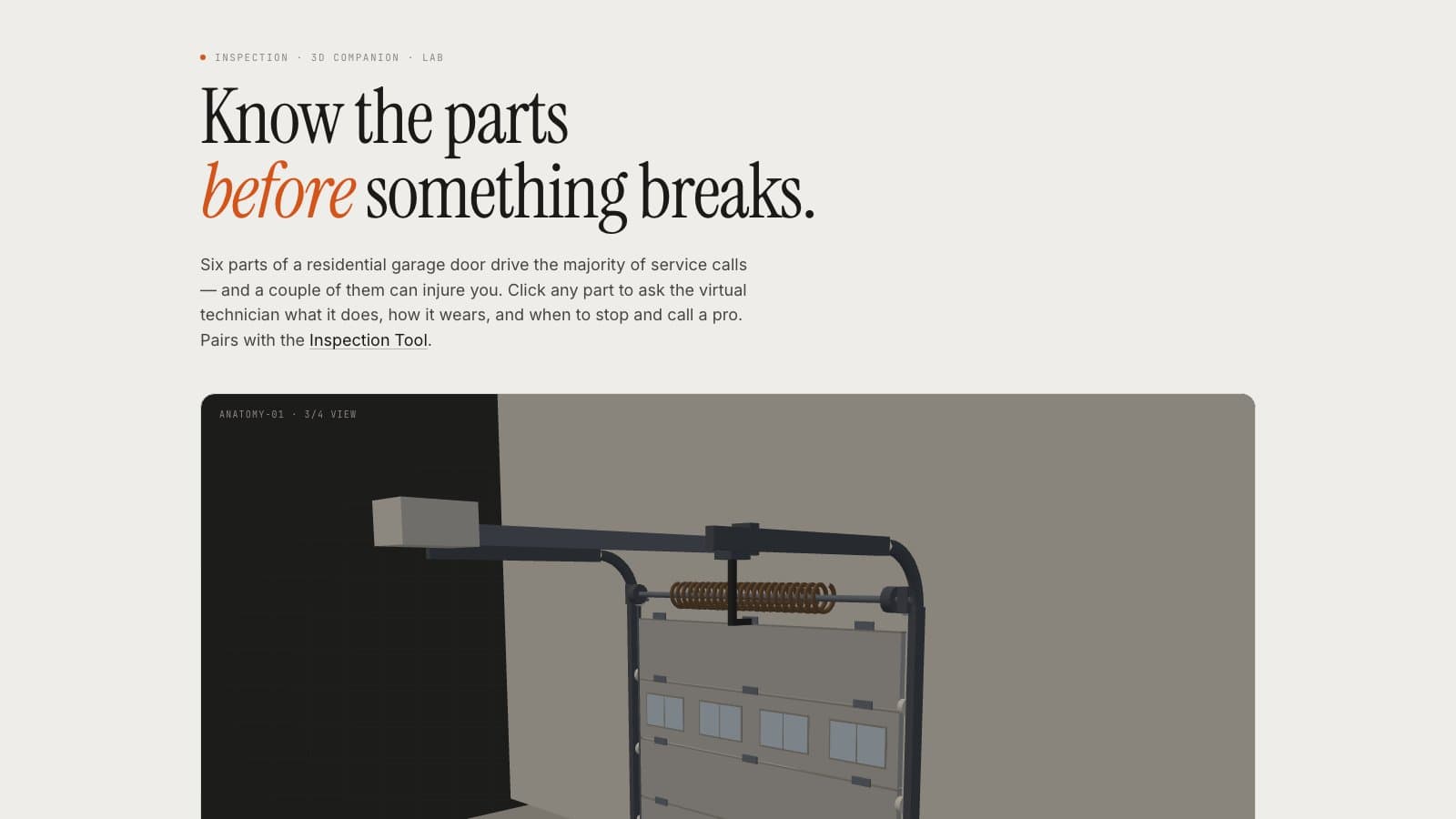
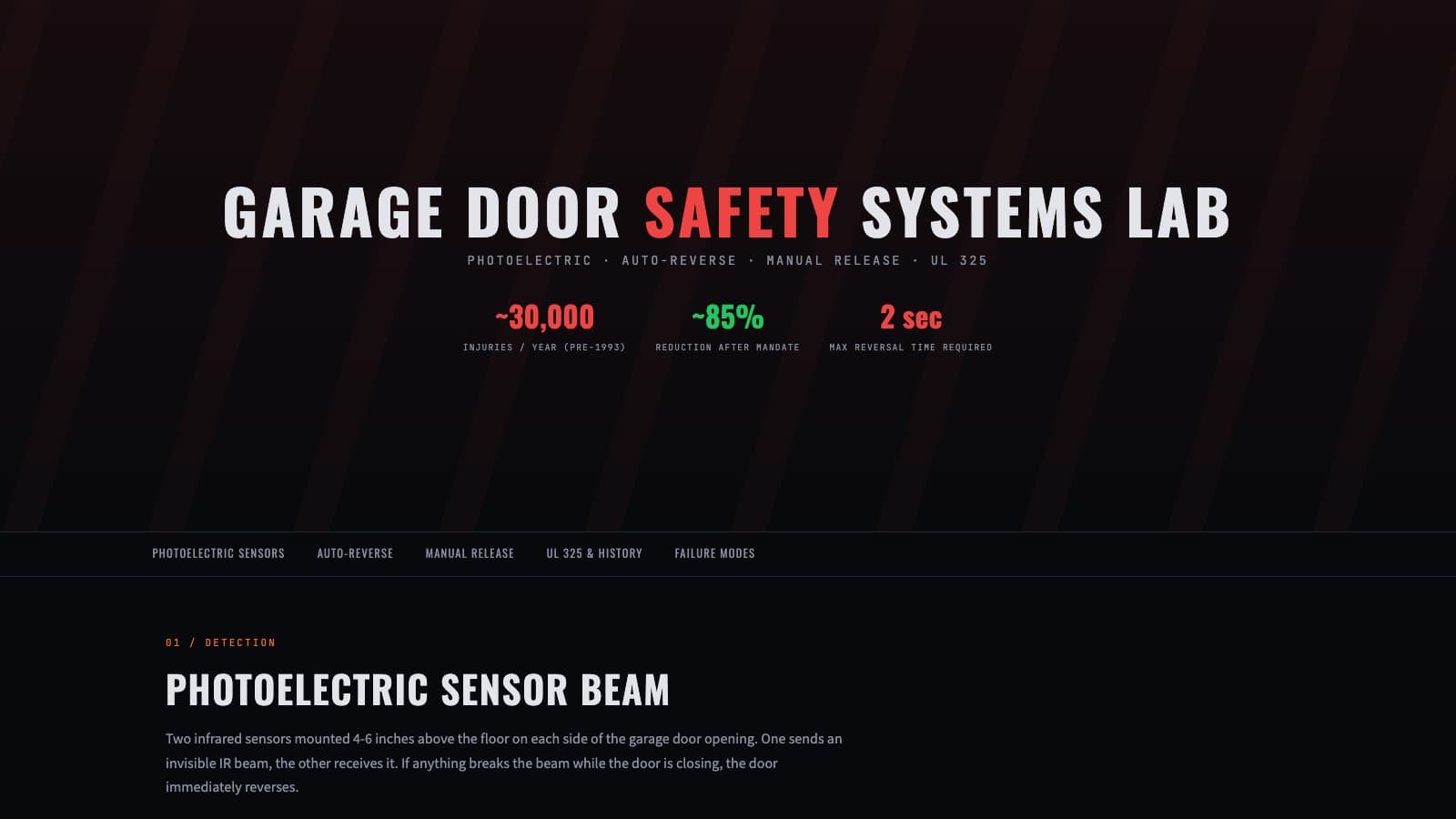
If you want to walk your own door and check the rest of it, our garage door anatomy lab shows what every part does, and the safety systems lab covers the release mechanism and the photo eyes.