Garage Door Repair Cost: What Common Fixes Actually Run in 2026
Explore realistic 2026 garage door repair costs for common issues. Get pricing breakdowns on springs, cables, openers, tracks & more to budget effectively.

Most garage door repairs in 2026 land between $150 and $600 all-in, with the service call itself running $75 to $150 on top of parts and labor. That covers the majority of what goes wrong on a residential door — broken springs, frayed cables, a dead opener, a bent panel, a track knocked out of alignment. This article walks through each of those repairs, tells you what they cost in 2026, and flags the two or three ways a routine repair turns into a $600 repair instead of a $200 one.
The service call is the floor
Before any part gets touched, most companies charge $75 to $150 to show up. That fee is usually rolled into the repair if you approve the work, but not always — ask. If a contractor tells you the service call is "free," that cost is somewhere else in the quote. It has not disappeared.
Region matters. Urban markets with dense competition price the service call at the lower end. Rural service areas and same-day emergency calls push it toward $150 or above. For Las Vegas homeowners, A+ Garage Doors runs same-day repair with the service fee credited against the work. That is the arrangement you want — a diagnostic fee that converts into labor, not a surcharge stacked on top of it.
Torsion springs: the most common repair on your door
A broken torsion spring on a standard residential door runs $150 to $350 depending on the spring and the region. It is the single most common garage door repair, and it is the one most homeowners encounter first — usually on a cold morning when the door refuses to lift.
The reason springs dominate the repair conversation is physics, not bad luck. A standard residential torsion spring is rated for roughly 10,000 cycles, which works out to about seven years at two cycles per day, or three and a half years at four cycles per day. Every close cycle puts around 800 foot-pounds of torsional stress into the spring's steel. It is a wear part. It will fail. The only question is when.
| Spring repair tier | 2026 installed cost | Rated life |
|---|---|---|
| Standard replacement (like-for-like) | $150 – $350 | ~10,000 cycles |
| High-cycle upgrade | $250 – $500 | 25,000 – 100,000 cycles |
The high-cycle spring upgrade adds $100 to $200 to the job. If you cycle the door more than four times a day — kids, home office, second driveway entry — that upgrade pays for itself the second time you would have otherwise replaced a standard spring. If you cycle it twice a day, the math is closer to a wash.
Do not attempt this repair yourself. A fully wound residential torsion spring stores around 236 foot-pounds of energy — enough to fracture a wrist. The spring science lab covers the mechanics, and Margaret's video on springs and physics shows what that stored energy does when it releases.
Cables: cheap on their own, expensive when ignored
Cable replacement runs $150 to $250 installed for a pair. Cables should always be replaced in pairs — if one has stretched or frayed, the other is not far behind, and mismatched cables will pull the door out of balance within weeks.
The reason cables matter for the budget conversation is not the cable itself. It is what a bad cable does to everything else. An out-of-balance door wears the spring, the opener's nylon gears, and the cables simultaneously, which is how a $200 spring job becomes a $600 repair. A door that operates two years out of balance can lose a decade of total service life across the entire assembly — motor, cables, rollers, hinges, and brackets.
If your quote includes cable replacement but not a balance check, ask for one. It is a two-minute test and it prevents the next repair.
Opener repairs vs. opener replacement
Openers are where the repair-versus-replace question gets sharp. A replacement circuit board runs $60 to $120 if you source it yourself, or $150 to $300 installed. A worn drive gear kit is $100 to $180 installed. A capacitor or logic board on an older unit can be similar.
A full new opener installed runs $350 to $900. Here is the rule: if a single repair quote exceeds 50 percent of the cost of replacing the unit, replace it. A $300 board repair on a 12-year-old chain drive that costs $450 to swap out is a bad deal — you are buying six months of runway on a unit that has other parts near end-of-life.
The exception is direct-drive units. A direct-drive opener can last 20 years or more because the design eliminates the chain and most of the moving parts that wear. If you have a direct-drive that needs a board, fix it. If you have a screw-drive, replace it — the grease stiffens in cold and gets loud in heat, and parts are harder to source, which is why most professionals stopped recommending them years ago.
For opener replacement, a chain-drive costs $350 to $500 installed and lasts 10 to 15 years, while a belt-drive opener costs $100 to $150 more and runs at about 50 dB versus a chain drive's 70-plus dB. If the garage is under a bedroom, that is the easiest $150 you will ever spend. If you are in California, add $75 to $150 for battery backup — it is required on all new installations under SB-969.
Panels, tracks, rollers, and seals
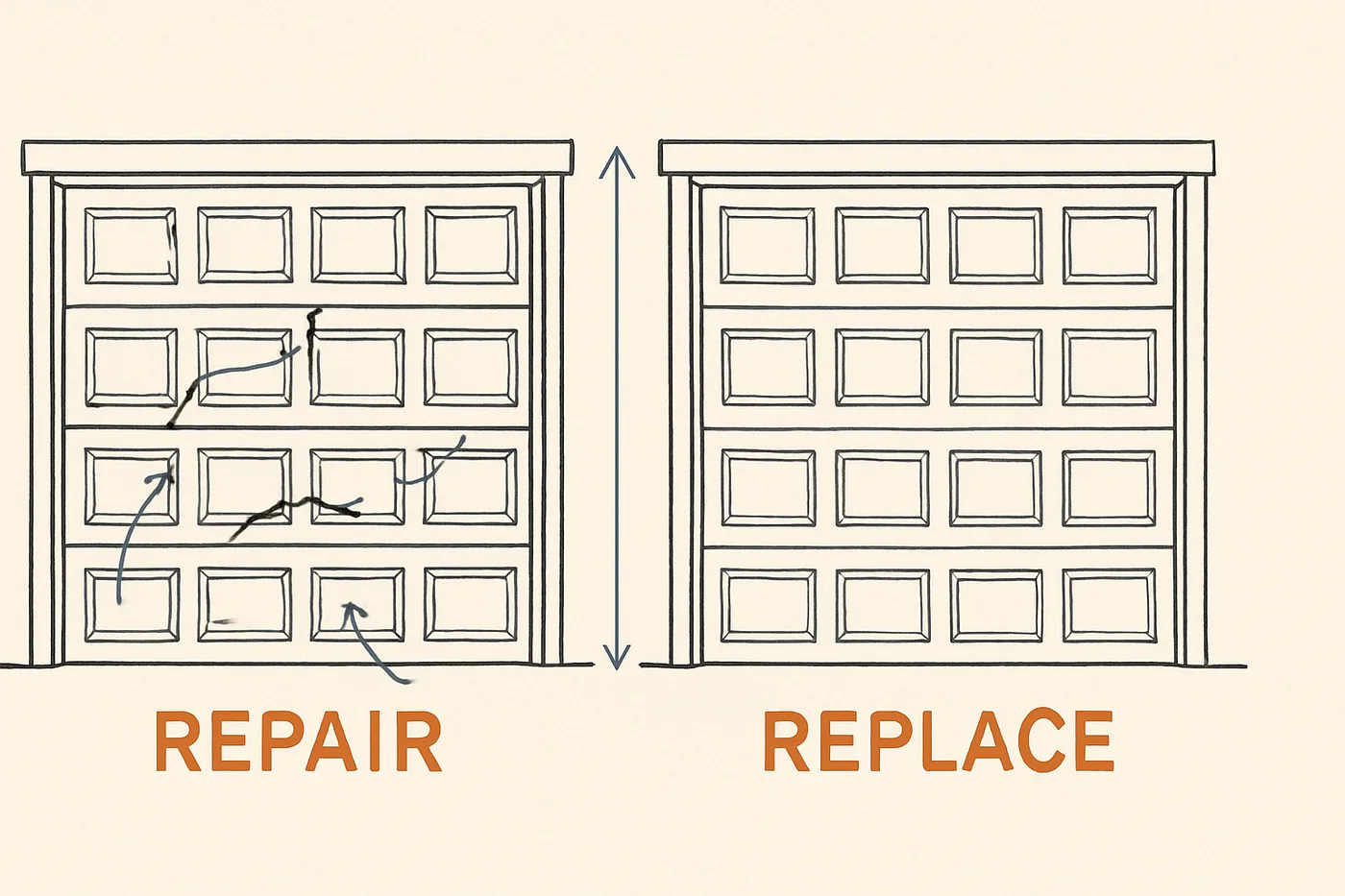
Single panel replacement runs $250 to $800, and the cost depends on whether the door model is still manufactured. If it is, you are at the low end. If it is not, the installer has to source a close match or fabricate one — and now you are staring at the top of the range or a full door replacement. For any door past 15 years old with a damaged panel, price a full replacement before you commit to the panel repair. A mid-grade insulated steel door installed runs $1,500 to $3,200, and if the panel repair is $700 on a door with three or four more years in it, the math tilts fast.
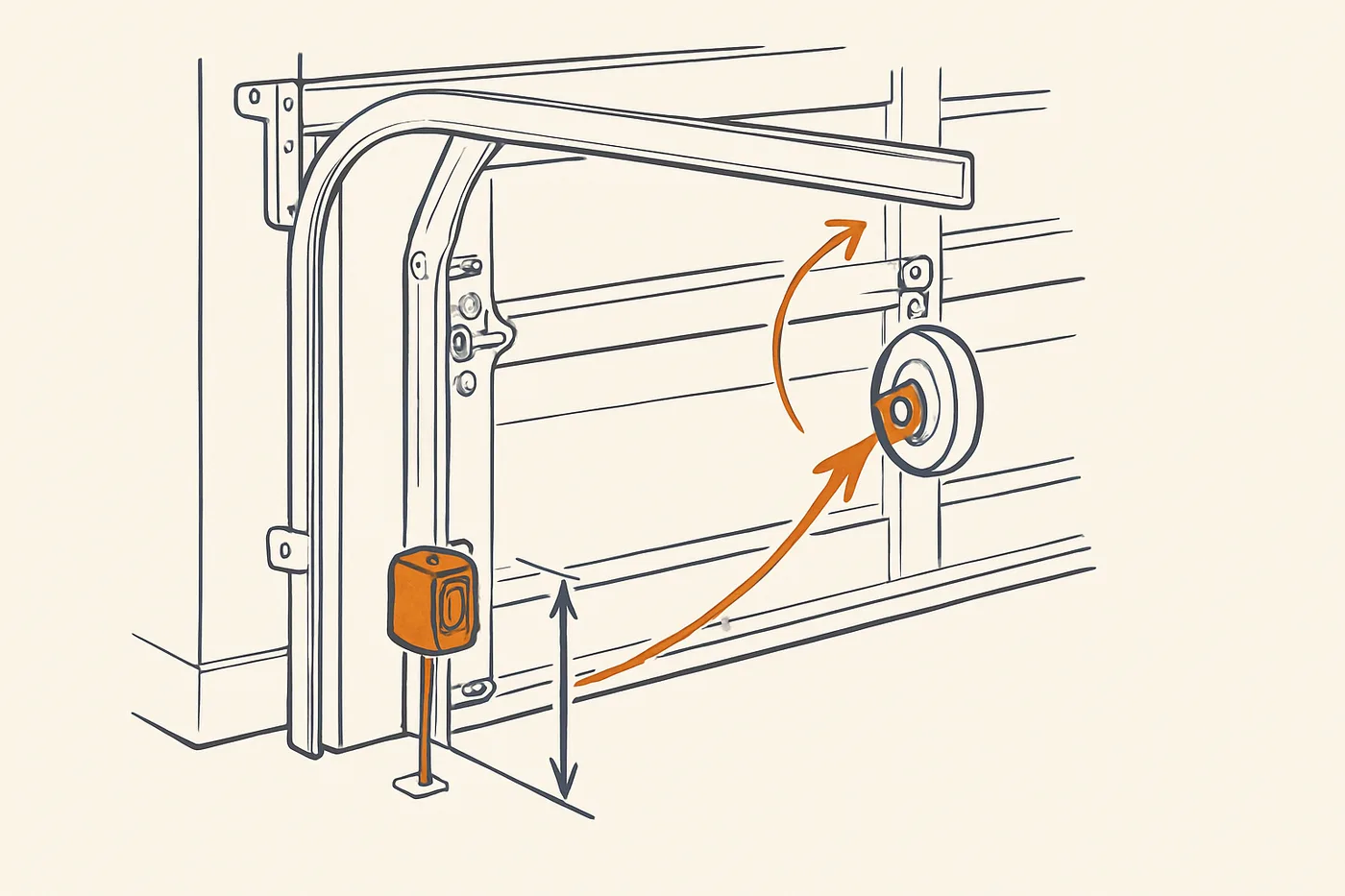
Track realignment or minor bending is $125 to $250. Full track replacement is $200 to $500 per side. Bent tracks almost always mean something bigger went wrong — a car bumped the door, a cable snapped and the door dropped, or the door has been operating out of balance long enough to work the track loose. Fix the track, but also find out what caused it.
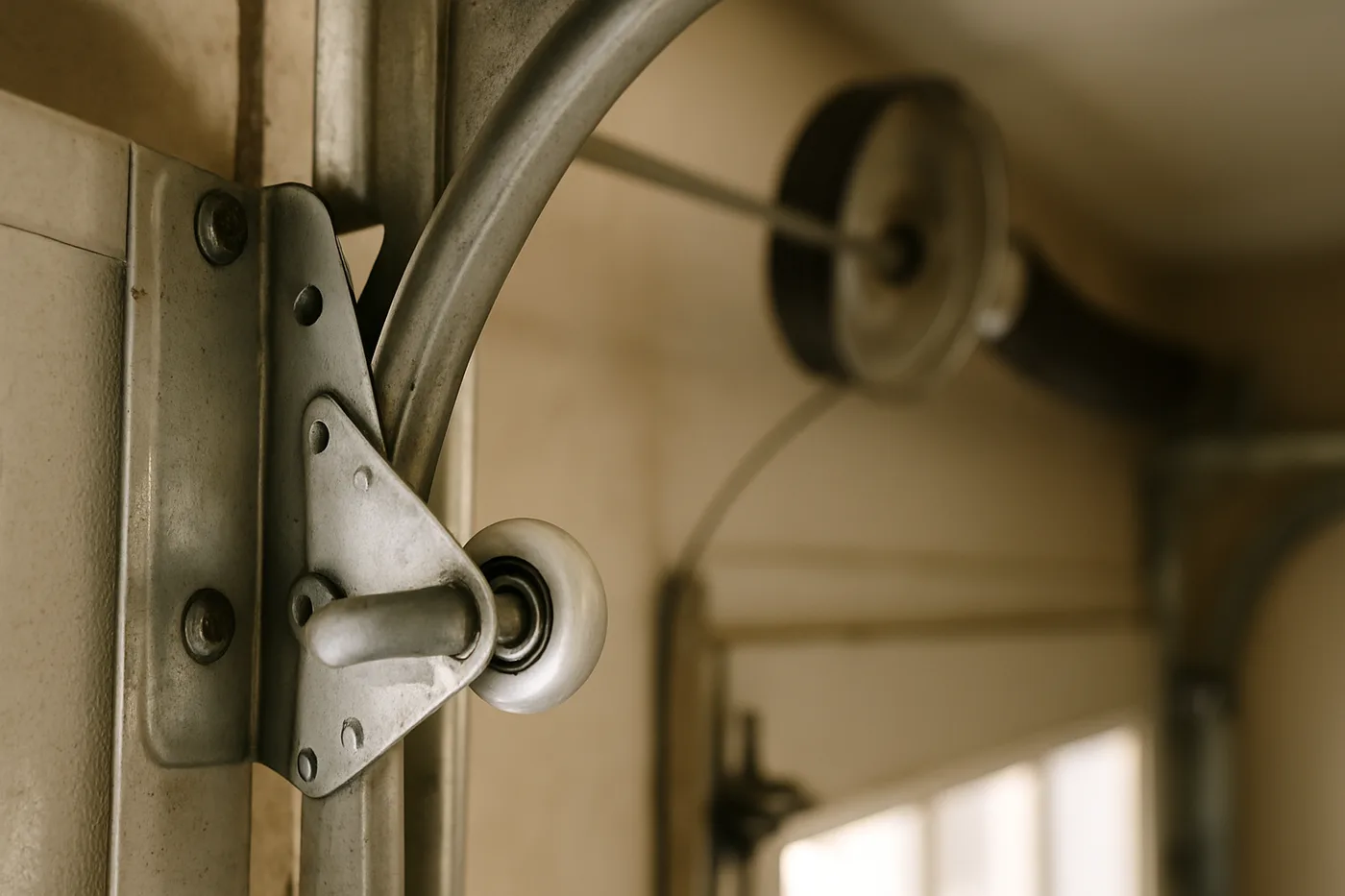
Roller replacement runs $100 to $200 for a full set of nylon rollers with sealed bearings. On a 15-year-old door with steel rollers, this is one of the highest-value upgrades you can make — quieter operation and less strain on every other component.
Bottom seals are $50 to $100 installed. A U-seal bottom seal lasts five to ten years before the rubber loses compression memory. If yours is cracked or you can see daylight, replace it.
What your quote probably doesn't include
Every repair quote should be read against this list. If it's not in the number, ask what it costs to add:
- A balance test after the repair (should be free with the service call)
- Lubrication of hinges, rollers, and spring coils
- Inspection of the opposite spring or cable — the twin of whatever just broke
- Haul-away of the failed part
- Warranty terms in writing, including labor coverage
Garage Door Pro Services offers a free garage door safety inspection that covers most of these checkpoints. If your regular installer does not do a walk-through inspection with the repair, book one from a company that will.
When repair stops being the right answer
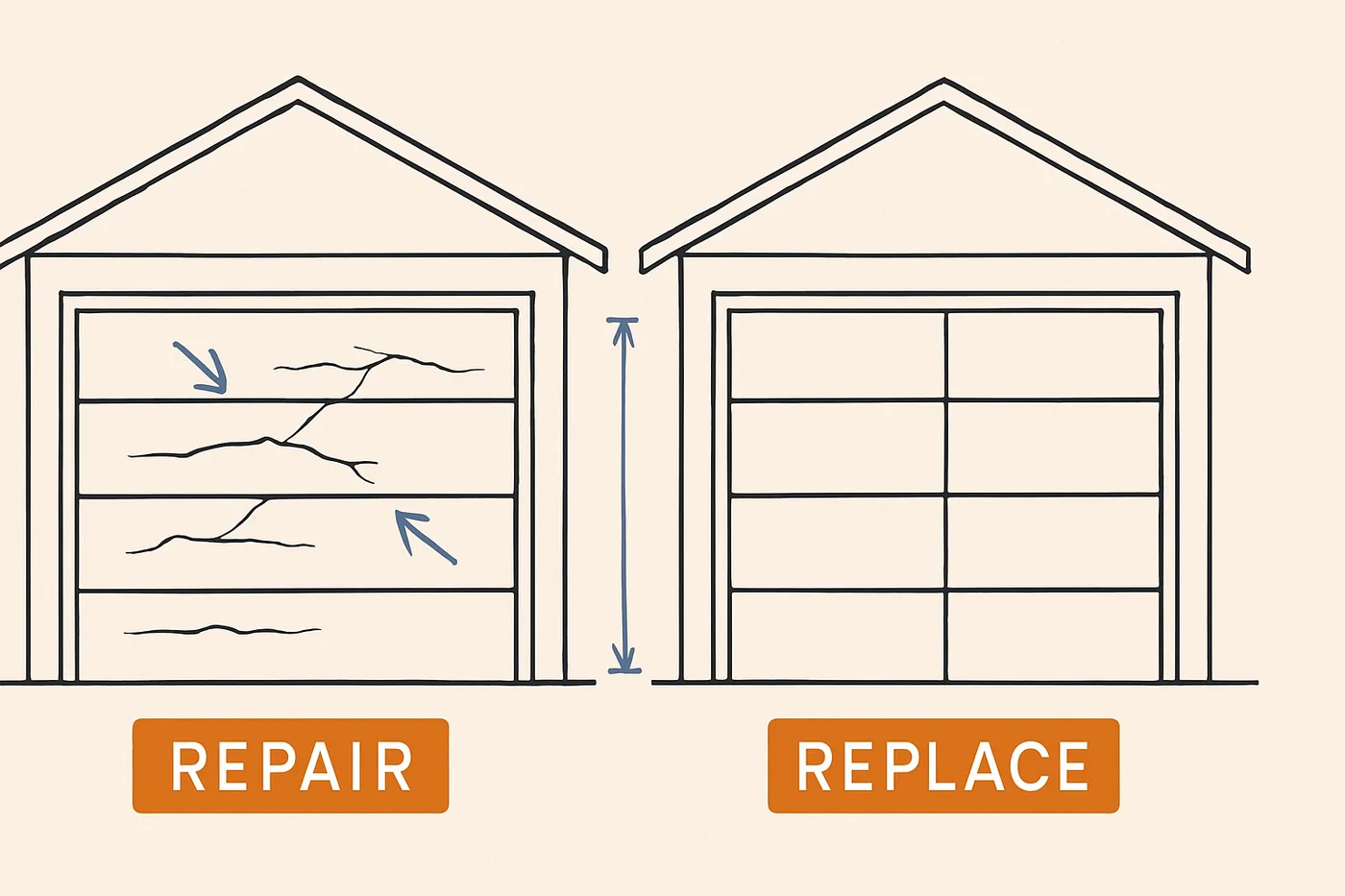
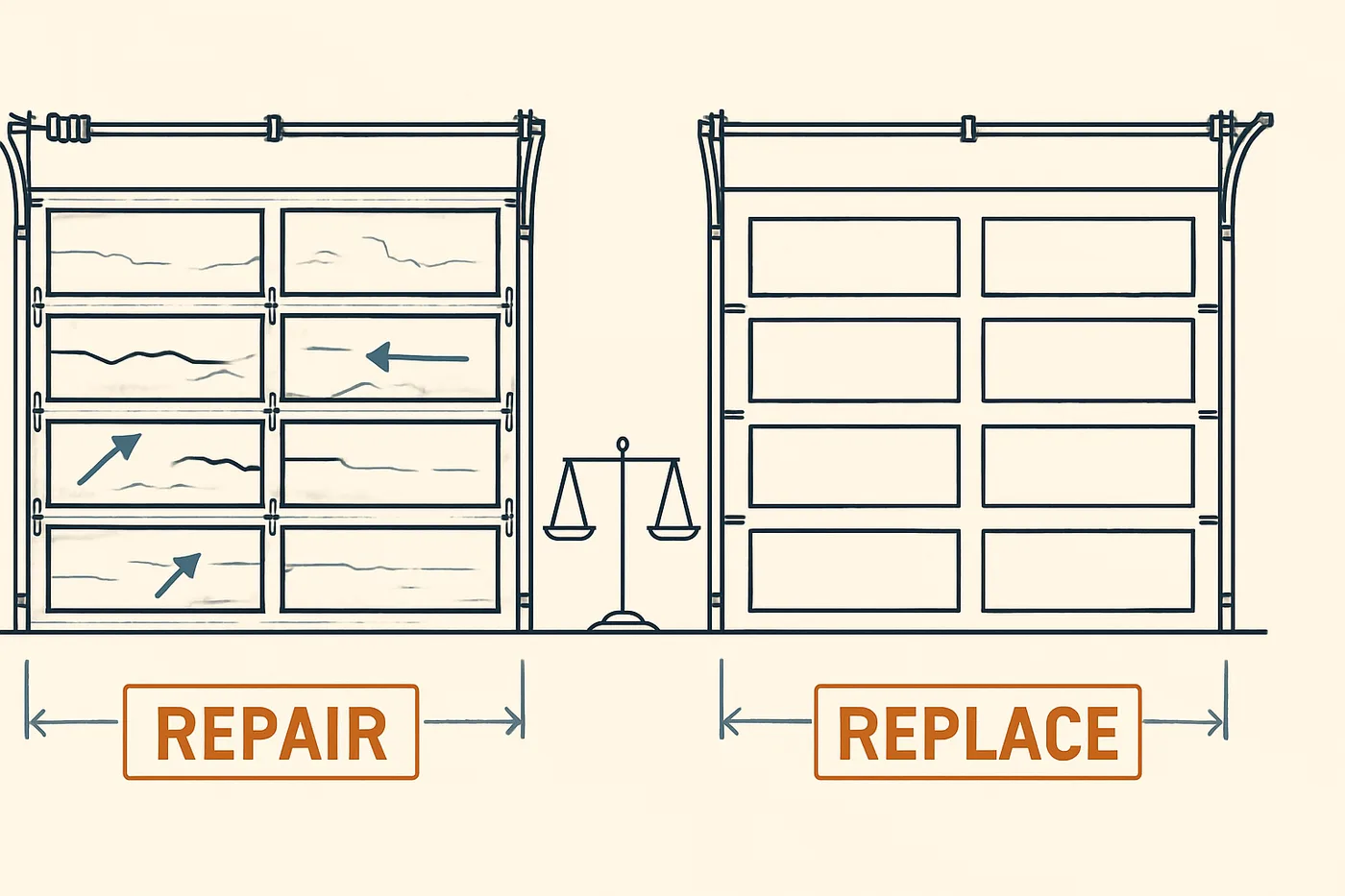
A well-built residential steel sectional lasts 15 to 30 years, but past the 20-year mark, the probability that the next component is also near end-of-life climbs each year. Two repair calls in eighteen months on a door older than 20 years is the market telling you something. Run the numbers before you approve the third repair — the ROI lab will show you where the crossover point sits based on your door's age and what you have already spent.
Three questions before you approve any repair quote: Is a balance test included? Is the twin component (opposite spring, second cable) being inspected? Is the total cost less than half of what replacing the failed system outright would run? If any answer is no, get a second quote before you sign.