Garage door winterizing checklist: what to do before the first freeze
A short checklist for getting your garage door ready for winter: seals, hinges and rollers, remote batteries, bulbs, sensors, and what to do if the door freezes shut. Springs and cables stay with a technician.

You want your garage door to work on the first cold morning, not stop working on it. Here is what to check this fall, in the order that makes sense when you walk around the door.
Not sure which problem this is? Start with our page on a garage door frozen shut.
1. Look at the seals
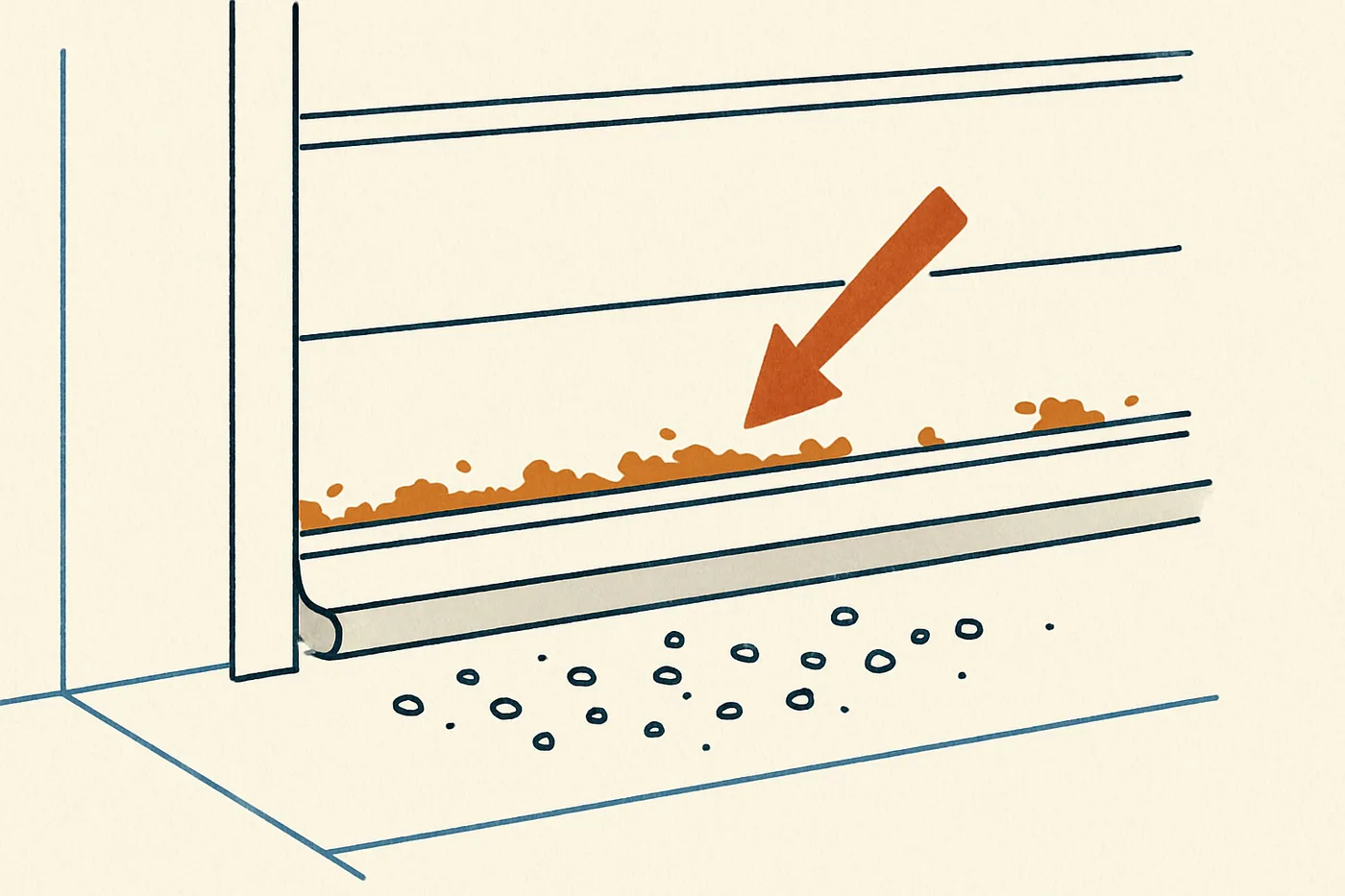
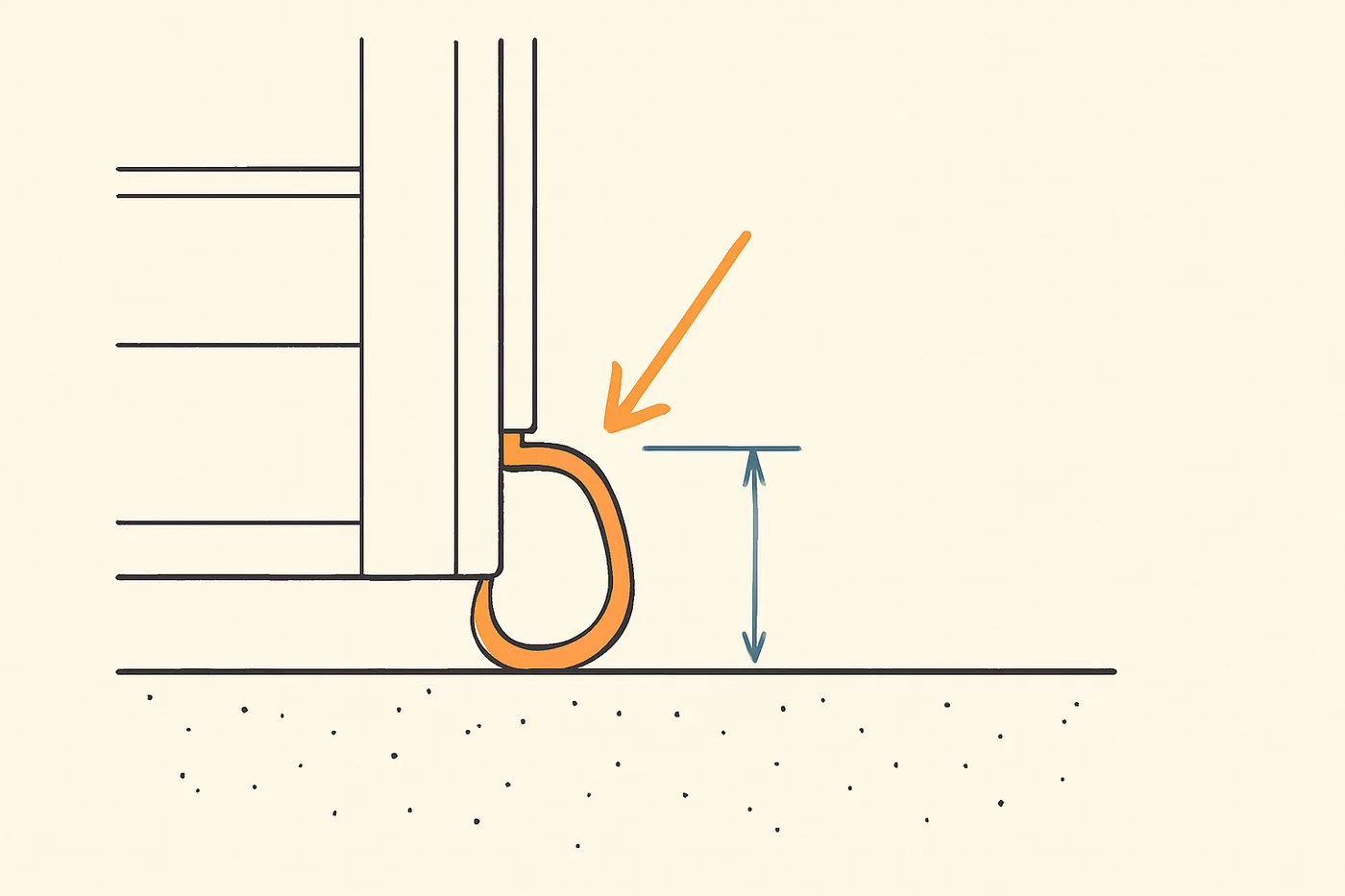
Start at the bottom of the door. Clopay's cold-climate guide says harsh winters can make weatherstripping crack or lose flexibility, that bottom seals face the brunt of snow and ice, and to inspect seals and weatherstripping every fall. If roads near you are salted, our road salt guide covers washing and rust.
Clopay's seal guide lists the signs of wear: cracks, tears or missing pieces, hardening or brittleness, gaps between the seal and the floor or frame, and water, pests or drafts getting inside. A seal that is cracked, crushed or no longer springs back into shape is due for replacement, the guide says. Our guide to choosing a garage door weather seal covers the types.
2. Hinges and rollers
Clopay's cold-weather post says that as the temperature drops, lubricant can harden and get gunky.
If you lubricate the door yourself, use the type your door maker's manual names (Wayne Dalton and Amarr say non-silicone). Wayne Dalton's manual names the parts: "hinges, steel rollers and bearings". Clopay's lubrication guide says not to lubricate nylon rollers or the tracks, and to avoid WD-40; our WD-40 page explains why. Do not lubricate the spring. That is our rule, and we leave anything touching the spring, the cables or the brackets at the bottom corners to a technician. Our lubrication page has the schedule.
3. Batteries in the remotes and the keypad
Raynor's winter checklist says to replace remote batteries you have not changed in the past year, and that the outside keypad typically needs more frequent attention because it is exposed to weather extremes. If it has been a while, Raynor says, replace the keypad battery and check that the last codes you set still work. If a remote seems weak after that, our guide to a remote that is not working goes through the rest.
4. Bulbs
Raynor's checklist says changing opener bulbs is most conveniently done before cold weather, and that some LED bulbs can cause radio signal interference. Chamberlain's bulb page says to avoid low-quality LED bulbs, which can interfere with the operation of remote controls.
5. The sensors
Raynor's checklist says to look at the sensors to be sure they are clean and pointing at each other, and that if they are aligned, their LED lights should be on, not blinking or dark. Our rule is stricter than Raynor's: if the lights are still not steady after you clear and clean them, call a technician, and do not switch the sensors off or look for a way to force the door shut.
Then do the reversal test. Chamberlain's version starts with the door fully open, puts a one-inch board, or a 2x4 laid flat, on the floor in the middle of the door's path and says the door must reverse when it hits the obstruction. Chamberlain says: "The safety reversal system MUST be tested every month. After ANY adjustments are made, the safety reversal system MUST be tested." If the door does not reverse, Chamberlain says to call a trained door systems technician. Until then, stop using the opener, and do not adjust the force to make it pass. That part is our rule.
6. If you have battery backup
Clopay's cold-climate guide says a battery backup is available with many modern openers and helps make sure your door works during an outage. Our guide to battery backup for garage door openers explains how it works and what to ask about.
If the power goes out in a storm
Our power outage guide covers what happens to the opener. Raynor's checklist says you and your family should know how to disconnect the door from the opener if the power goes out. Read that section of your opener's manual before you need it.
If the garage is the cold room
Insulation is a bigger decision than a fall checklist. If you are weighing it, our R-value guide explains what the rating means.
What to leave to a technician
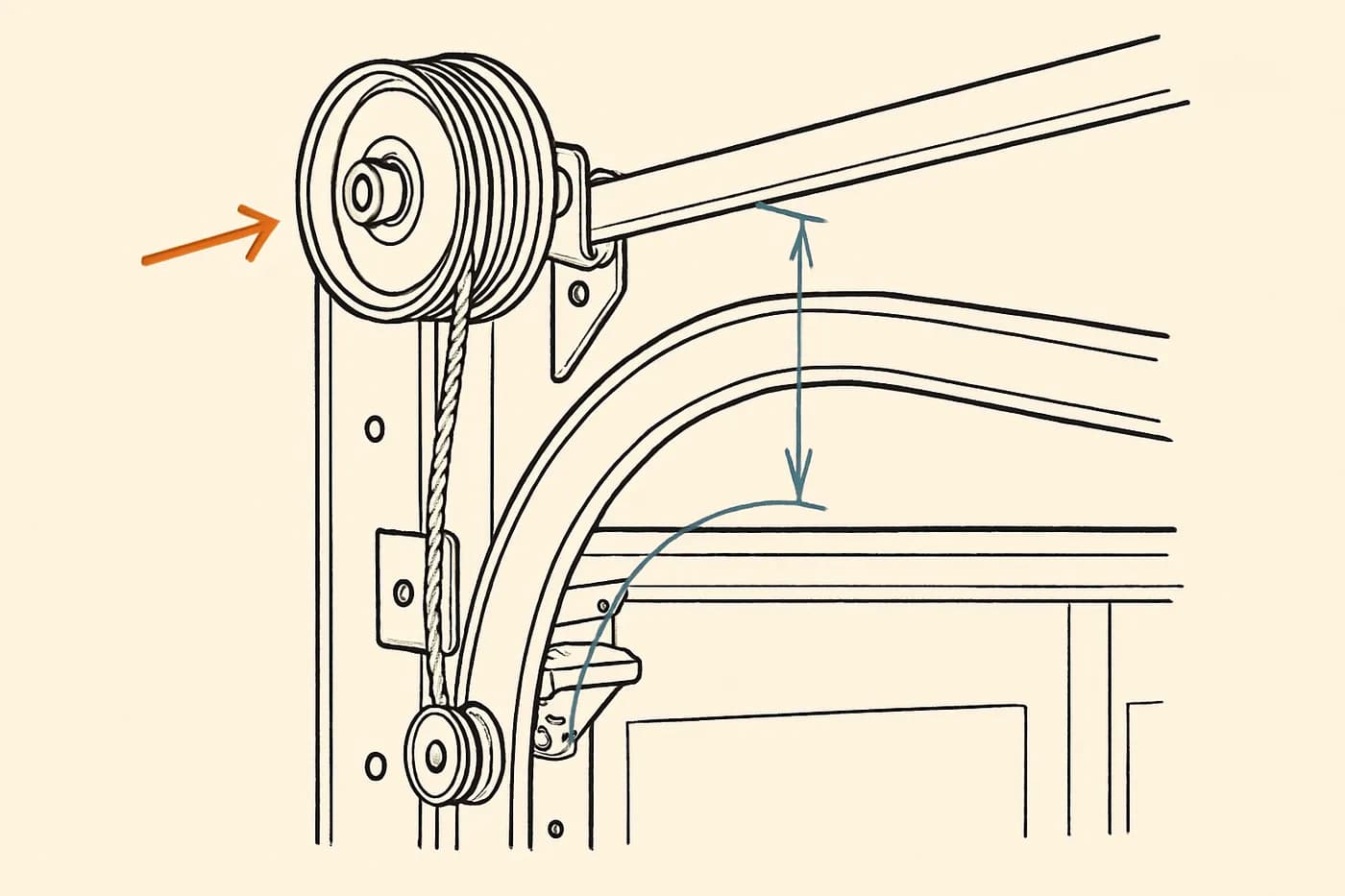
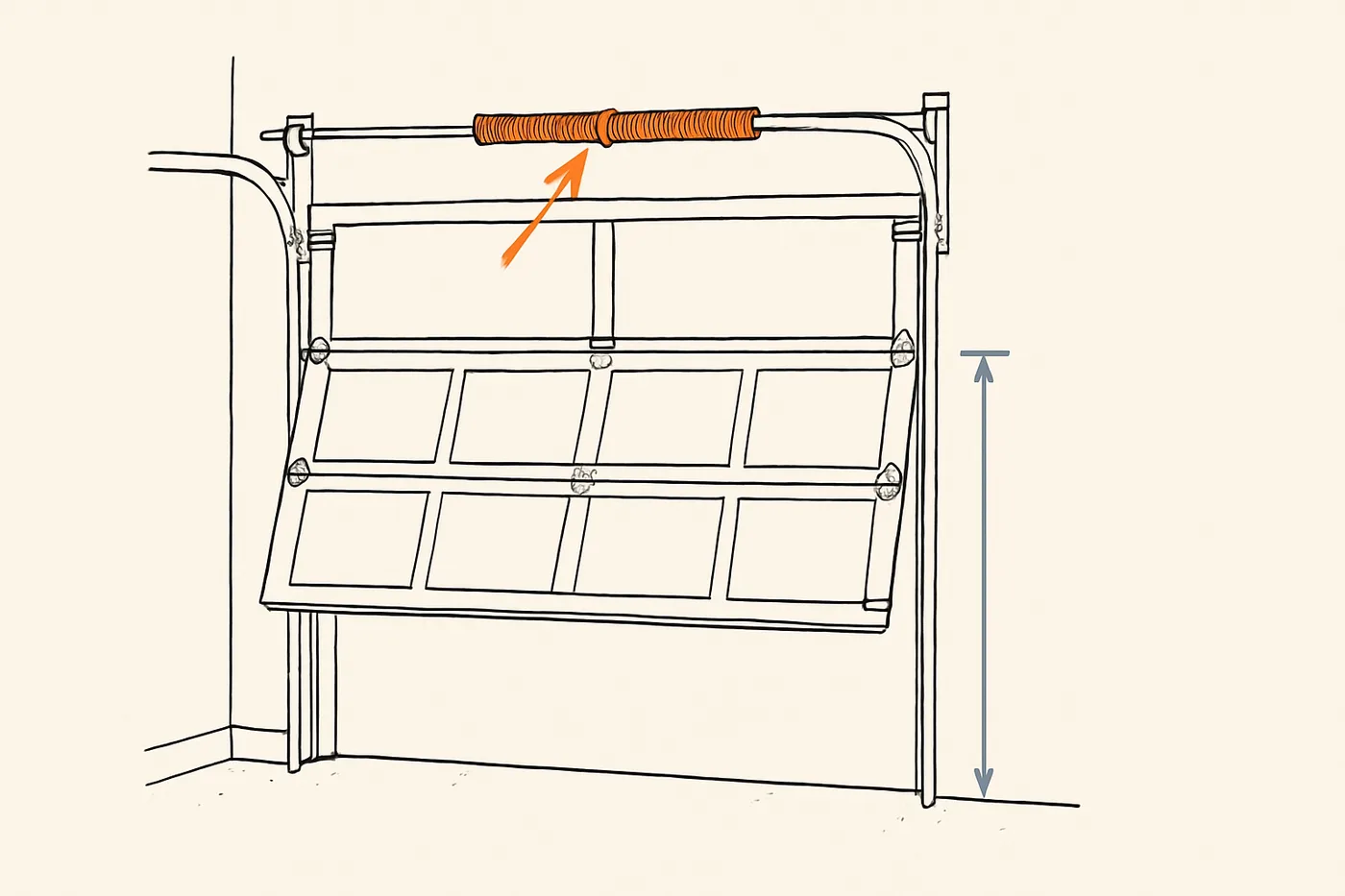
Springs, cables, brackets and the torsion shaft are a technician's job. We give no steps for any of them. Clopay's cold-weather post says spring wire becomes more brittle and weakens in colder temperatures, and that a broken spring may show as the long coil above the door split into two pieces. Our page on springs in cold weather has more.
Our rule: stop using the door and call a technician if you see a break or gap in a spring, hear loud banging or snapping, or the door looks crooked, gets stuck partway or feels unusually heavy. Do the same if you see a frayed or kinked cable. If the only sign is an opener that sounds like it is straining, book a technician. Our balance guide covers what a heavy or uneven door means.
If the door reverses partway down on cold mornings, do not turn the force up. That is our rule too. Book a technician to find the cause.
If the door freezes shut
Raynor's checklist starts by disconnecting the door from the opener's trolley, then says to scrape ice and snow away with a flat blade shovel or spade without hitting the door, and if the door is still stuck, to soften the ice with a hot air gun or hair dryer kept away from the door and weather strip. Raynor also says not to cycle your automatic opener to break the door loose, because the opener is designed for normal loads, not for lifting against a solid freeze. Our addition, not Raynor's: if you disconnect the door, do it with the door closed, as Raynor's balance check also does, and follow your opener's manual. Read that section of your opener's manual before you need it.
Clopay's cold-weather post says not to force the door open and break the ice, because that could rip the weatherseal, and not to use ice melt on the door. If the door still will not come free, call a technician. Our frozen-shut guide goes through it in more detail.
Wet door, no leak
If the door is dripping or frosted but nothing is broken, our condensation guide explains what causes it and what helps.
This weekend
- Walk the bottom seal and look for cracks, hardening and gaps.
- If you lubricate, use the type your door maker's manual names, on the parts it names. Never the nylon rollers, the tracks or the spring.
- Replace remote batteries you have not changed in the past year, and the keypad battery if it has been a while.
- Check both sensor lights, then do your opener maker's reversal test, for example Chamberlain's board test.
- Call a technician about anything that touches the spring, the cables, the brackets or the force settings.