Your garage door won't close in the afternoon sun. Here's why, and what to do
If the door opens fine but refuses to close when the sun hits the garage, the safety sensors may be reading sunlight as a blockage. Here is what the manufacturer says causes it and the fixes it lists.

Some days the door closes fine. Then, around the same time every afternoon, you press the button and the lights on the opener blink and the door stays open. Wait a few hours and it works again.
That pattern is worth noticing. It points to sunlight, not a broken opener.
What the manufacturer says is happening
Chamberlain's support article on sunlight interference with safety sensors describes the symptom: the opener behaves as though the sensors are blocked, the door opens but will not close, and the lights blink 10 times when it tries.
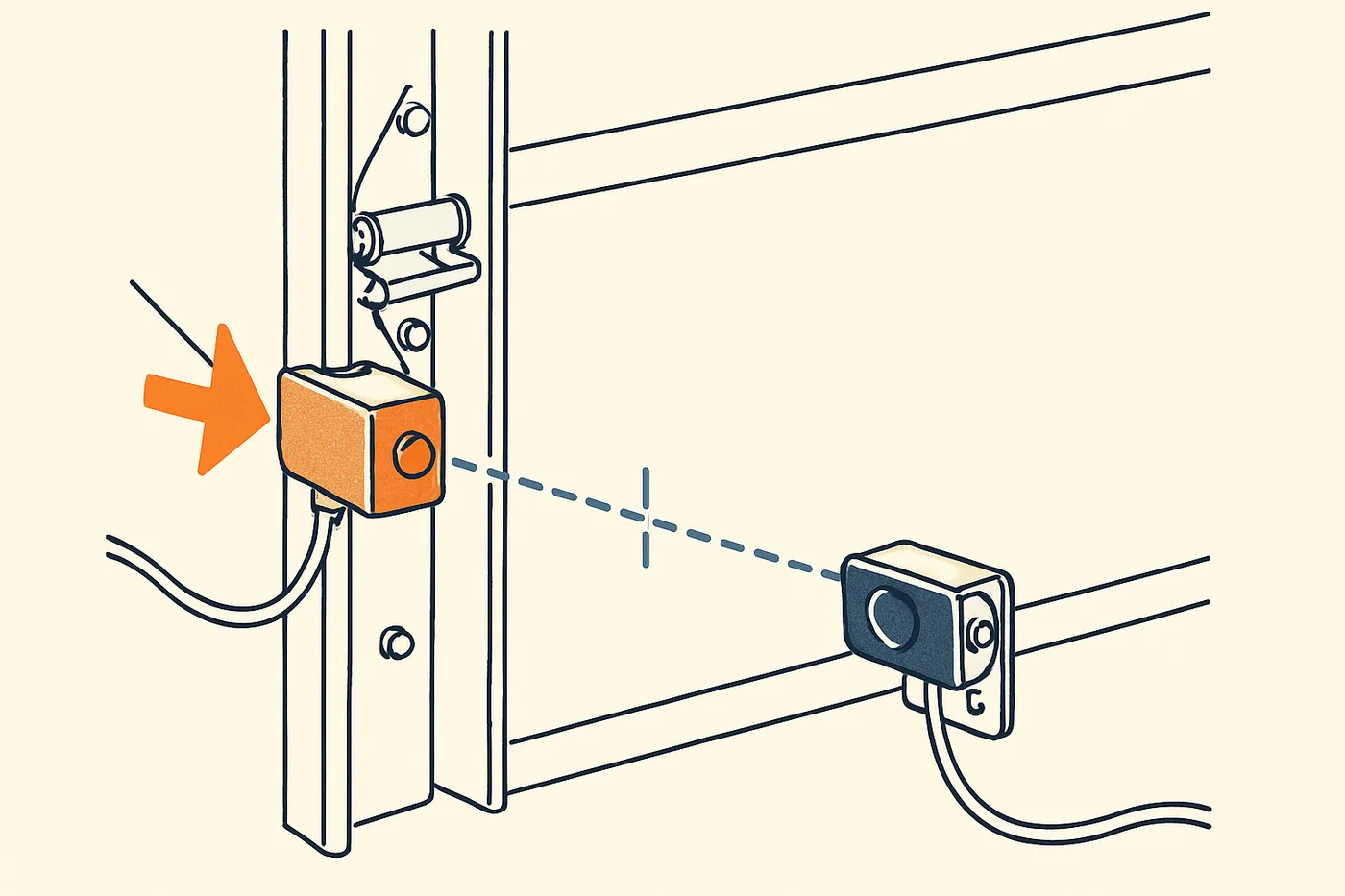
The cause it gives: sunlight hits the receiving sensor, the one with the green LED, and drowns out the infrared beam from the sending sensor, the one with the amber LED. How the two units work together is in how garage door safety sensors actually work.
The sun is lower in the sky in autumn and winter, which is our observation and not Chamberlain's. If your sensors never had trouble in summer, a new afternoon pattern is a reason to look.
Rule out the ordinary causes first
Sunlight is not the only reason a door will not close and the lights blink. Chamberlain's page on sensors with one LED off or flickering says that healthy sensors glow steady once any obstruction is cleared, and walks through the basics:
- Make sure nothing is blocking either sensor.
- If the receiving sensor is off or flickering, loosen its wing nut, move the sensor until its LED glows steady, and tighten the nut.
- Close the door with the remote. If it closes, test the safety reversal.
Our guide to why the door won't close and the opener light keeps blinking covers these checks in more detail. If the sensors work fine in the morning and fail only when the sun hits them, sunlight is the likelier cause. That is our reasoning, not a Chamberlain statement.
What Chamberlain suggests for sun
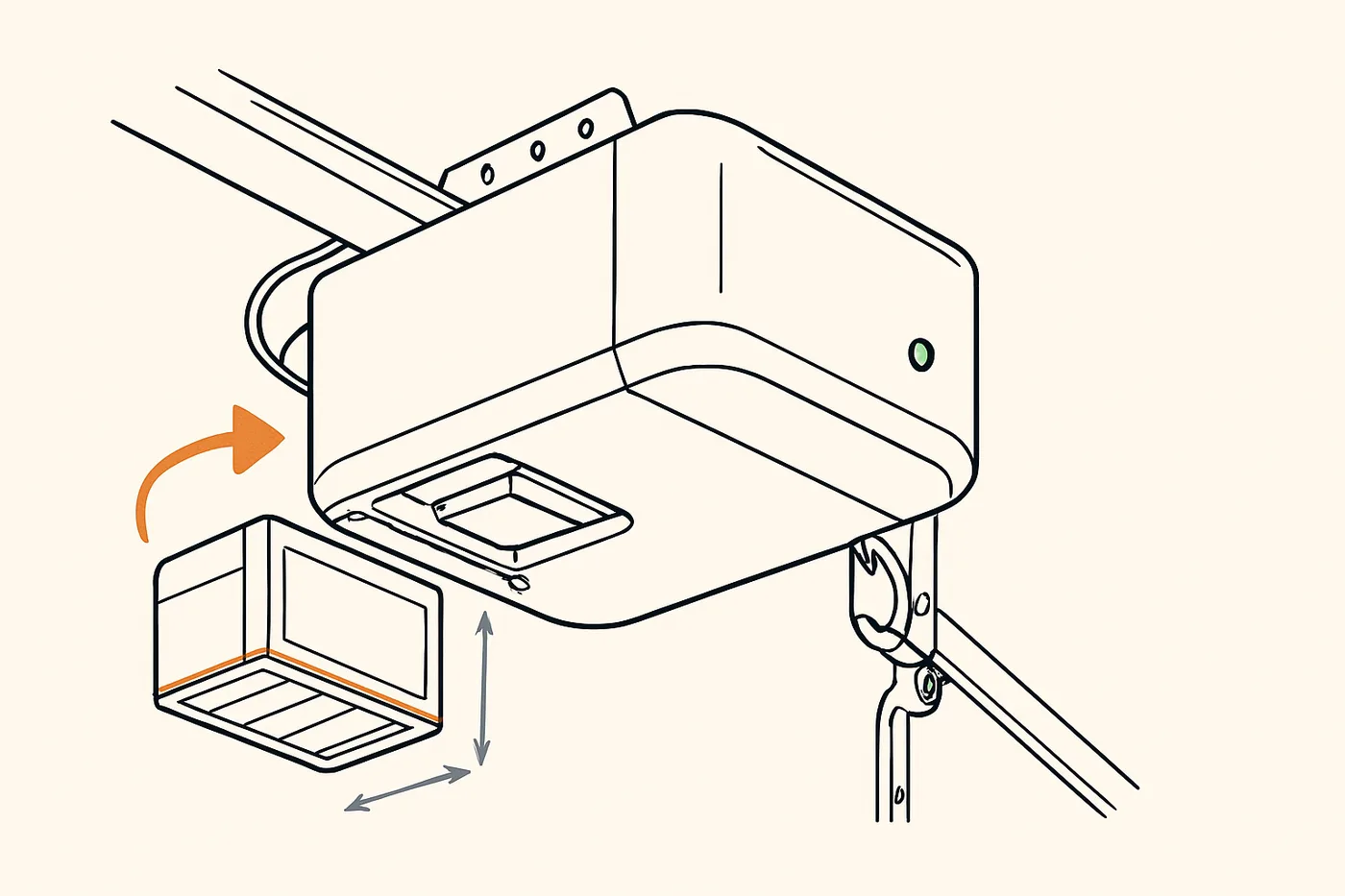
Chamberlain's article lists one fix first: swap the sensor sides, so the sun no longer hits the receiver at the bad time. Its procedure starts with cutting power to the opener and involves cutting the sensor wires six to twelve inches behind the sensors, or disconnecting them if they are spliced, remounting each sensor on the opposite side, rejoining white to white and black-and-white to black-and-white, then restoring power and checking that both sensors are lit.
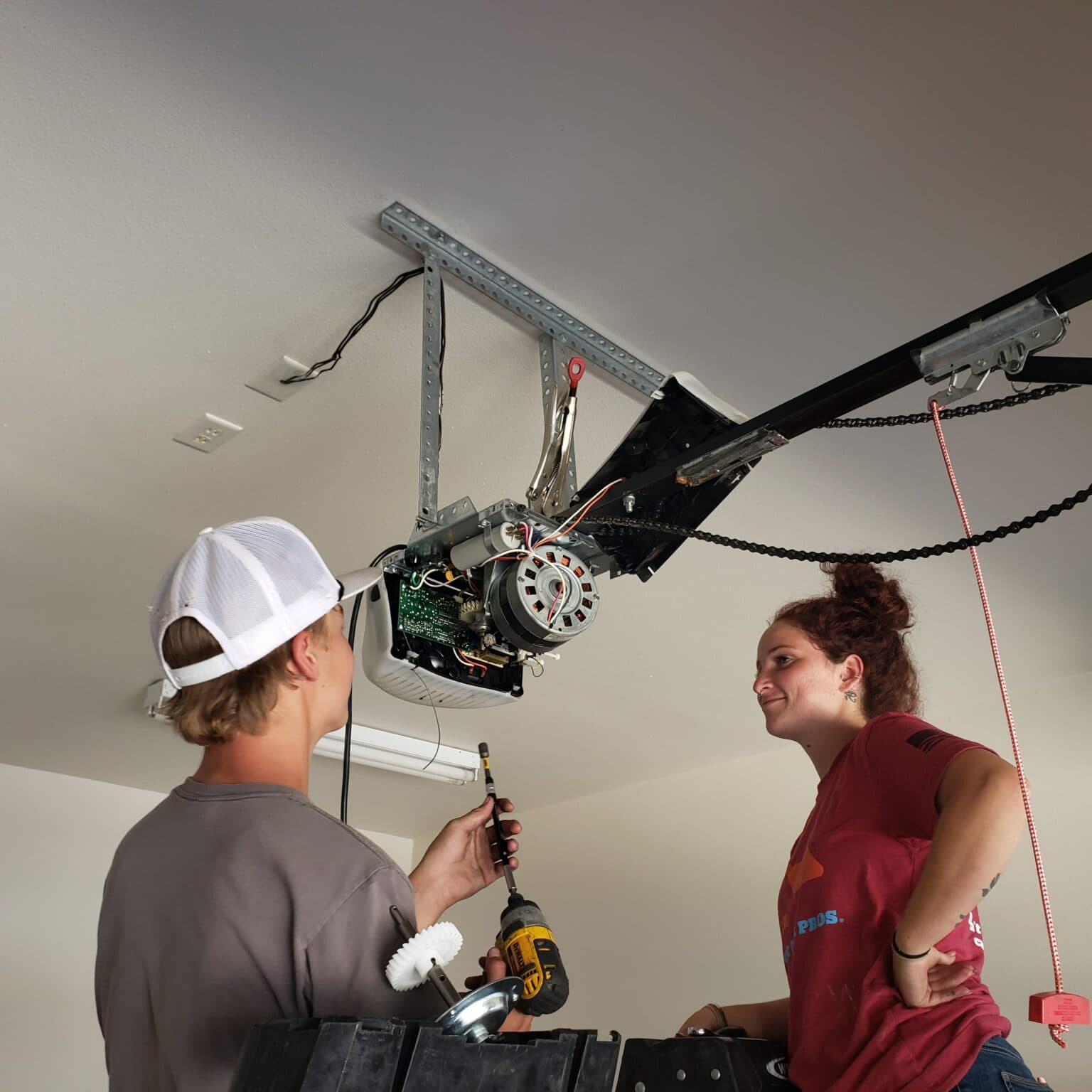
That is the manufacturer's procedure, and it is a wiring job. Our advice, not Chamberlain's: a garage door technician can do it, and it is the sensible choice if you are not comfortable working with the opener's wiring.
If swapping does not solve it, the article notes that the sun will then reach the receiver in the evening instead of the morning. In that case, sun shields can be ordered, part number 41B873. Chamberlain sells it as the Safety Sensor Sunblocker Kit, listed at $24.99 on its page. The page gives no model list, so check your opener's manual for compatibility before ordering.
Two things not to do
- Do not disable or bypass the sensors. They are the opener's safety reversal.
- Test the reversal after any change. Chamberlain's sensor page says to test the safety reversal after a successful fix, and refers you to your opener's manual for how.
A different problem
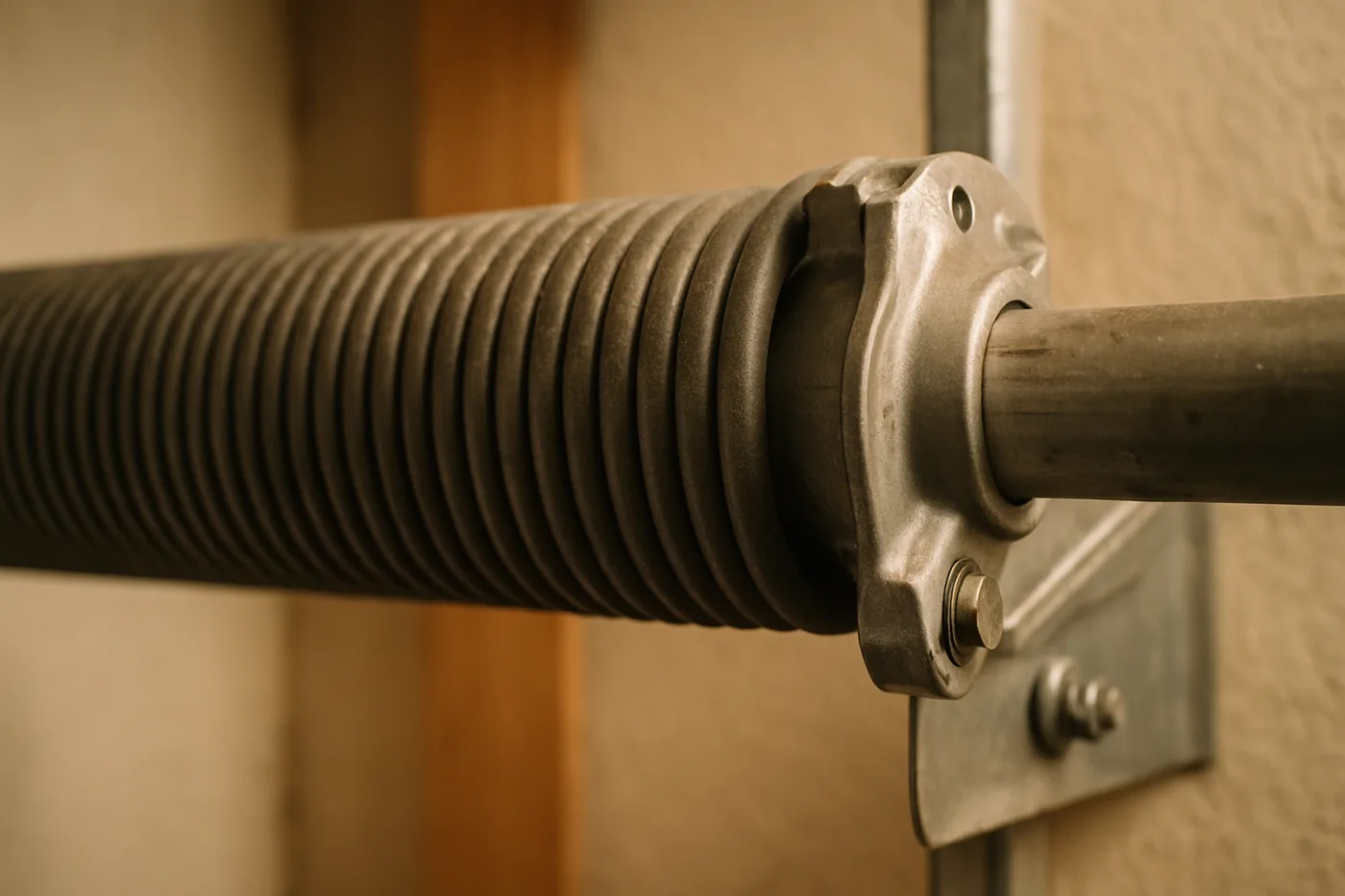
Our advice: if the door slams down, will not stay open, or feels very heavy when you move it by hand, that is not a sensor problem. It points to the springs or cables. Springs and cables are always a job for a trained technician. Do not try to adjust them yourself.
What to do this week
- Note what time of day the door refuses to close.
- Check that nothing is blocking either sensor, and look at both LEDs.
- If it only fails when the sun hits the receiver, call a technician about moving the sensors or fitting a sun shield, or check your manual for the sunblocker kit.
- Test the safety reversal after anyone touches the sensors.