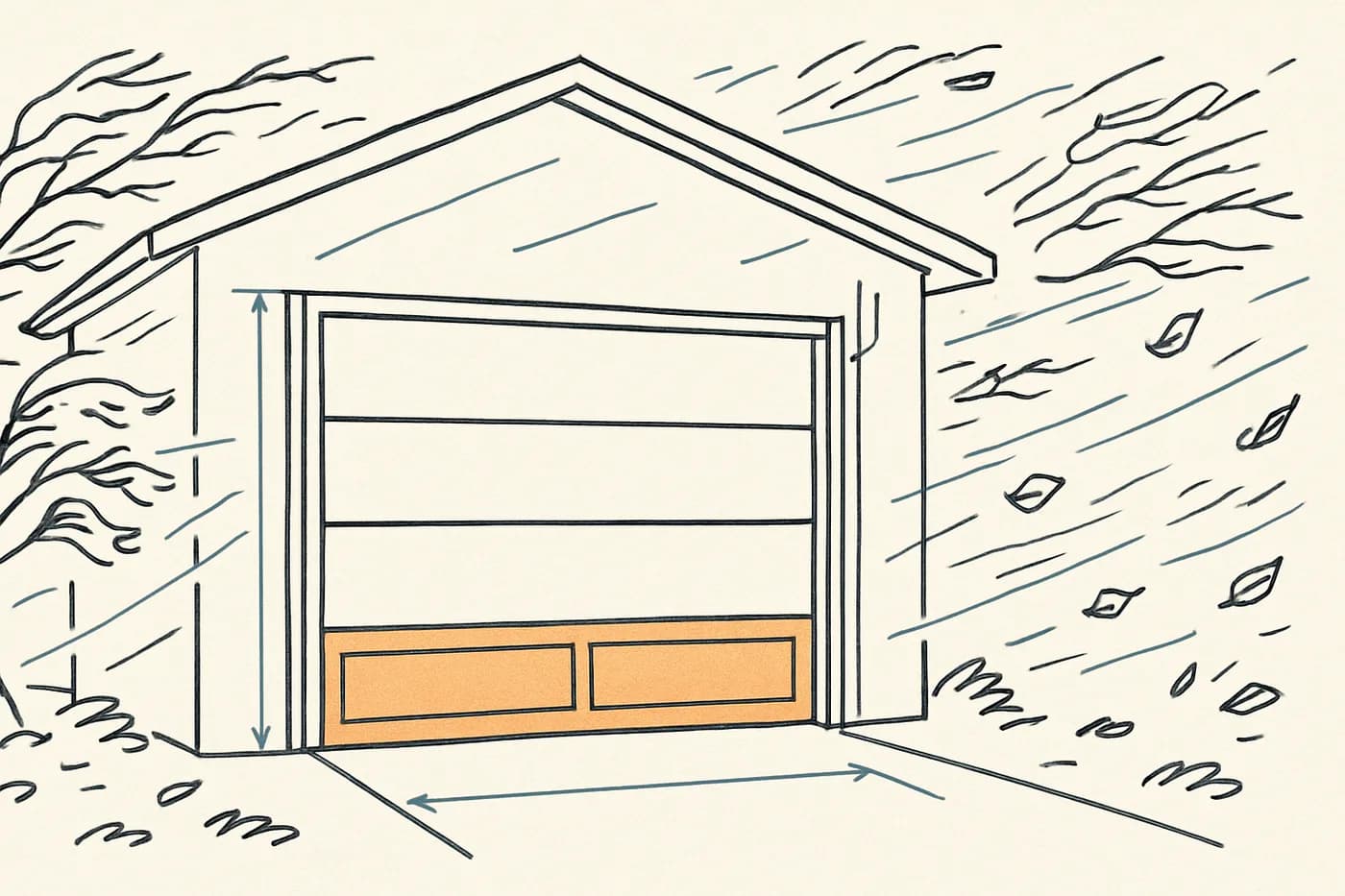
A storm with high winds is coming. What to do with your garage door
What to do with your garage door before, during and after a high wind storm, following DASMA's technical data sheet on garage doors and high wind events.

A storm with high winds is on the way and you are wondering what to do about the garage door. Here is our short answer. Close the door before the wind arrives, and leave it closed. Do not run it while the wind is up. Do not brace it or add weight to it yourself. For anything about your door's wind rating or reinforcing it, call a professional.
The wind-rating and bracing guidance below follows DASMA's data sheet #152, Garage Doors and High Wind Events. DASMA is the Door & Access Systems Manufacturers Association. Where a line is our own advice, it says so.
Find the situation below that matches your garage.
The wind is hours away
Close the door now. DASMA's data sheet #152 says a garage door should be closed before a high wind event. An open door leaves the interior walls, ceilings and roof structure "vulnerable to structural damage and possible collapse of the structure." The building owner is responsible for making sure each door is properly closed ahead of the event.
DASMA does not recommend parking a car against the door to hold it. A vehicle does not reinforce the door and may damage both the car and the door.
DASMA does not recommend operating garage doors during high wind events, because the extra force needed to open or close a door by hand may injure people or damage the door. Our advice: once the door is closed, leave it that way until the wind has passed.
When to call a pro (our advice): if the door closes normally, you do not need one for this. If it will not close, or it stops partway, call a trained technician. Our emergency guide covers which problems need a technician right away.
You are tempted to brace the door yourself
It is a natural thought: add a board, a bar, something heavy. Do not. The DASMA sheet says adding weight, particularly reinforcement the door maker did not specify, can create a dangerous situation, and that owners should avoid adding reinforcement themselves. The added weight may cause the supporting tracks or other parts to fail or collapse.
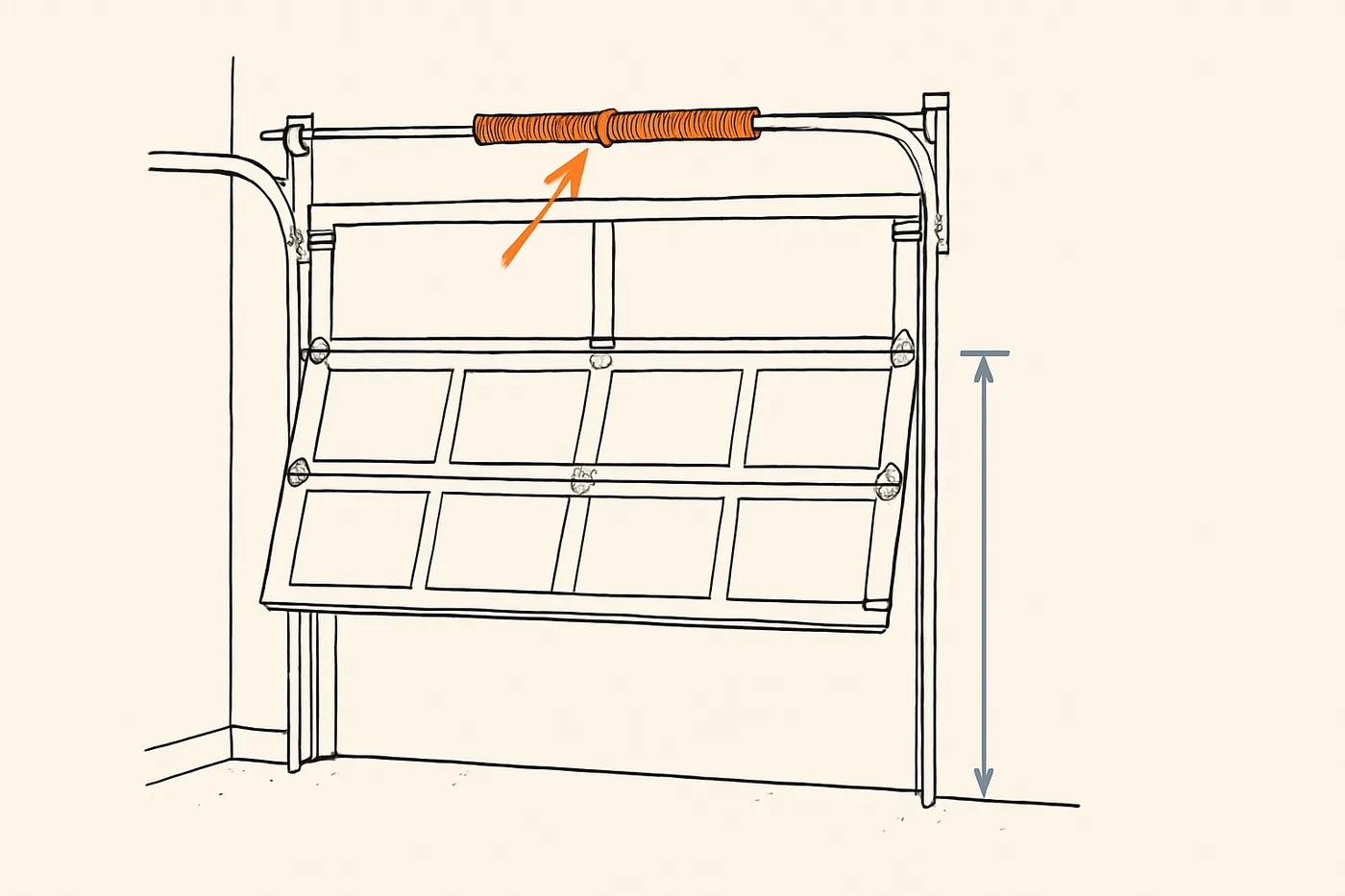
If you want a stronger door, it is not one part. Upgrading can take a package with the right springs, hardware and supporting track, and DASMA says to contact a trained door systems technician. Our rule, not DASMA's: springs, lift cables and bottom brackets are always a job for a technician. Never adjust, remove or replace them yourself.
When to call a pro (DASMA's advice): any time you want to reinforce or upgrade the door.
You are not sure the door can take it
Wind pushes a garage door both ways. According to DASMA's sheet #152, a door can be blown into the garage or pulled out of the opening, so ratings for pressure in both directions matter. The right protection is a door rated to the design pressure required.
Our advice: ask the door maker or a design professional what rating applies to your door.
The door is only part of it. How the door track and the door jamb attach to the structure is just as critical as the strength of the door itself.
If you live on the coast, there may be more to it. In some coastal areas subject to storm surges, other requirements may apply that override wind load resistance.
When to call a pro (DASMA's advice): you have doubts about the door, the frame or the rating. DASMA says to contact a design professional to evaluate both the door and the surrounding frame of the opening.
The storm has passed and the door looks off
This section is our advice, not DASMA's. Look at the door before you touch the opener. If a panel is bent, the door has come off its track, or the cables or springs look loose, broken or out of place, do not run the door. Leave it where it is and call a trained technician.
Our off-track guide covers doors that have come off their tracks. Our emergency guide covers which problems need a technician right away.
When to call a pro: any visible damage to the door, the tracks, the cables or the springs.
The power is out
This section is our advice, not DASMA's. If the storm takes your power out, an opener without battery backup will not run the door. Our battery backup guide explains what a backup does in an outage. If the door is open or stuck when the power fails, do not try to lift or force it by hand. Call a trained technician.
What to do before the next storm
This list is our summary of the sections above.
- Ask the door maker, or a design professional, what wind rating applies to your door.
- If you have doubts about the door or the frame around it, have a design professional look at both before storm season.
- If you want the door upgraded, call a trained door systems technician. Do not add bracing or weight yourself.
- When a storm is forecast, close the door before the wind arrives, keep the car off it, and leave the door closed until the wind has passed.