Insulating a Garage Door for Summer Cooling: Cost vs. Savings in 2026
Learn how much it costs to insulate your garage door for summer cooling and what energy savings you can expect. Complete cost-benefit breakdown.

Upgrading from an uninsulated garage door to a mid-grade insulated one runs an $800 to $1,200 premium in 2026, and in a hot-summer climate it saves roughly $313 a year on cooling — a payback of about 3.2 years. In extreme climates like Phoenix or Minneapolis, that payback drops under two years. This article shows you the full installed cost by tier, the math behind the savings, and the two cheap fixes that get you most of the way there for under $150 if a new door isn't in the budget.
What an insulated door actually costs installed
For a standard 16x7 opening in 2026, a non-insulated or lightly insulated steel sectional door runs $800 to $1,800 installed, and a mid-grade polyurethane-insulated steel door with an R-value of 12 to 18 runs $1,500 to $3,200 installed. The insulation premium — the delta between comparable doors at the same trim level — is where the ROI conversation lives, and that number lands in the $800 to $1,200 range for most homeowners.
Here is how the tiers break down for a standard 16x7 door, installed:
| Tier | R-value | Installed cost (2026) | Construction |
|---|---|---|---|
| Uninsulated / lightly insulated steel | R-0 to R-6 | $800 – $1,800 | Single-layer steel or thin polystyrene backer |
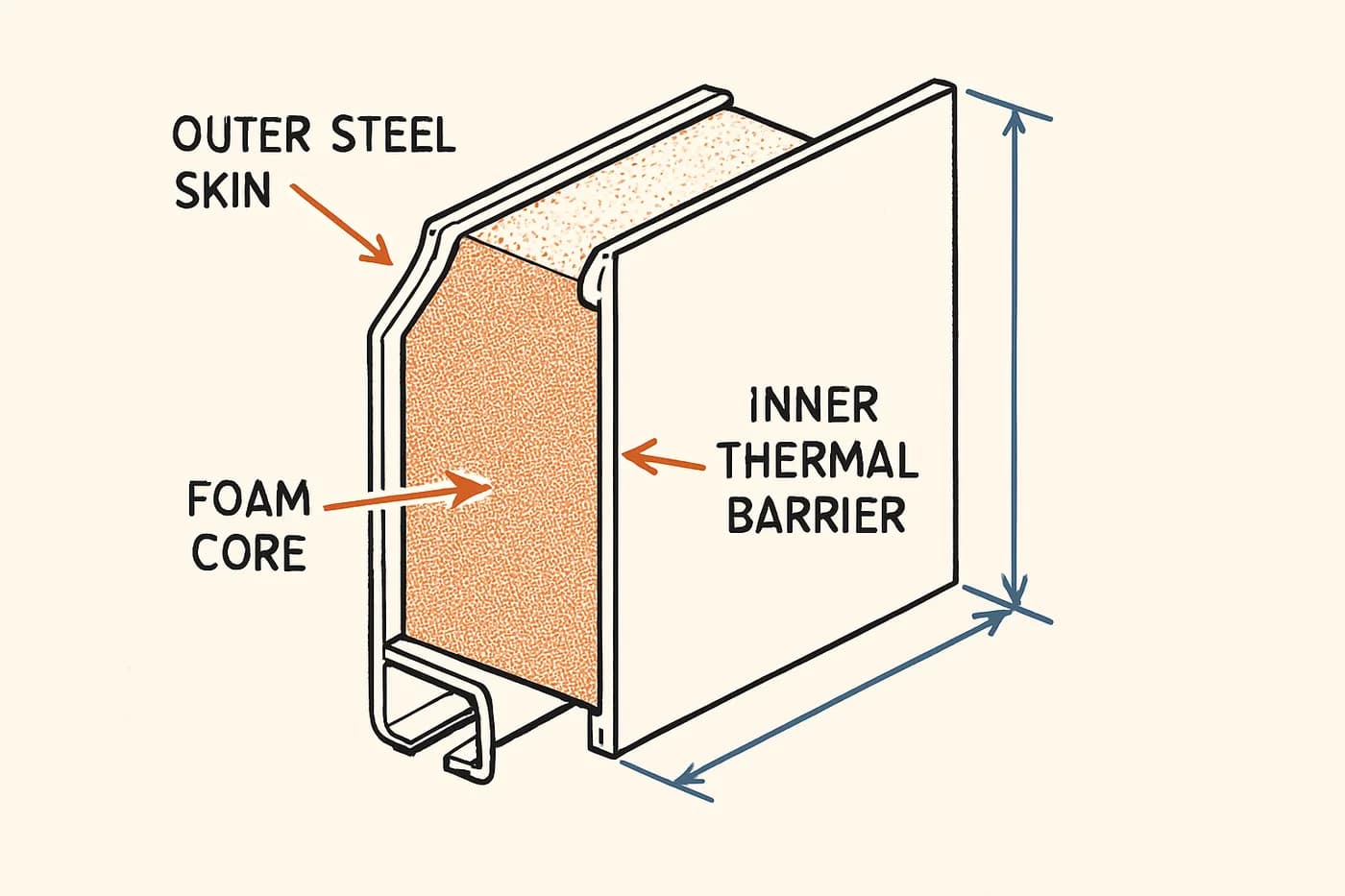
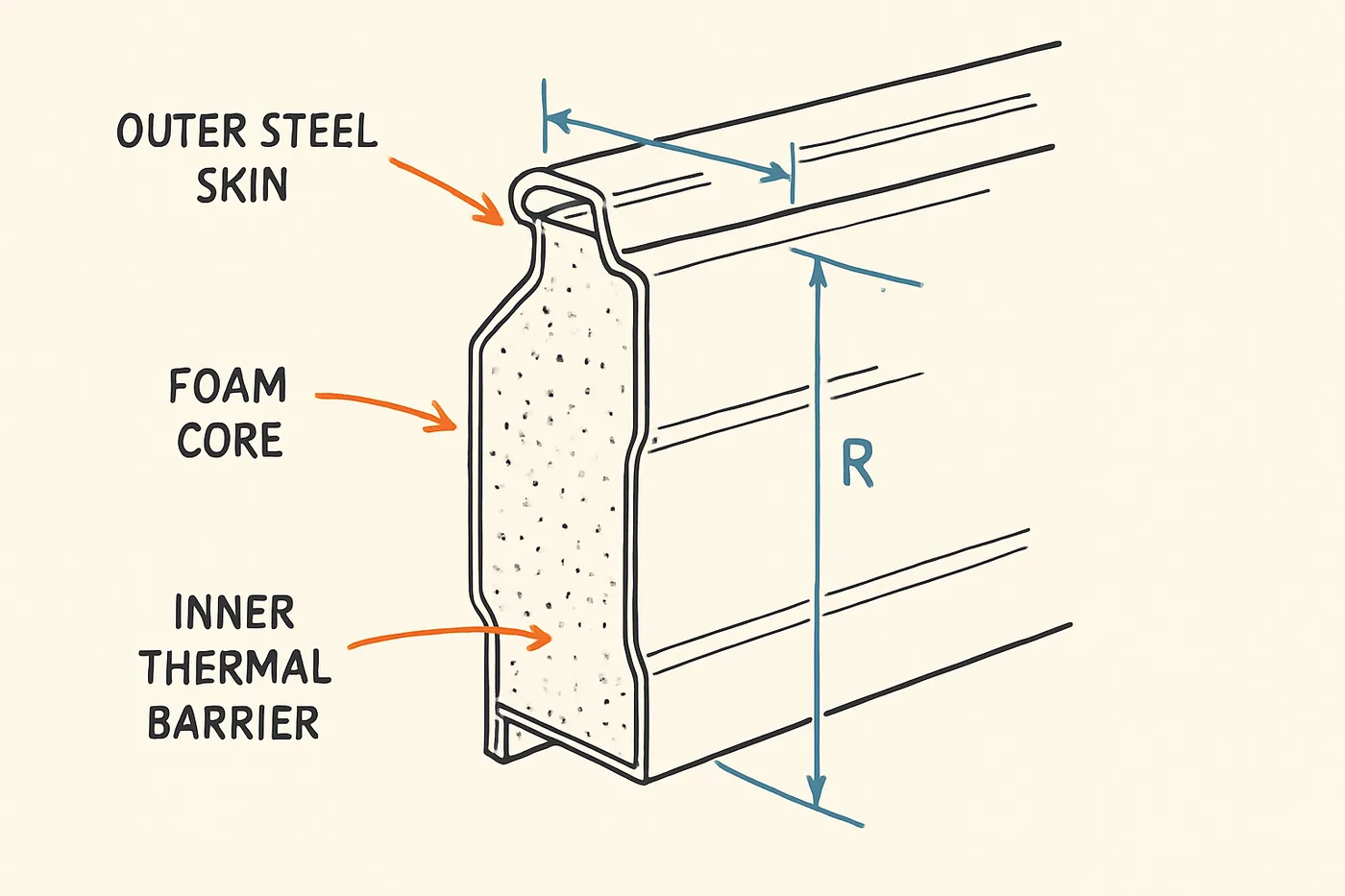
| Mid-grade insulated steel | R-12 to R-18 | $1,500 – $3,200 | Two-layer steel with polyurethane foam core |
| Premium insulated steel | R-18+ | $2,800 – $4,500 | Three-layer sandwich construction, thermal breaks |
The premium tier gets expensive fast, and the savings curve flattens hard once you cross R-16 on an attached garage. More on that below.
The savings math, with real numbers
Insulation math is BTU per hour times hours times cost per BTU. On the energy lab's benchmark case — a 112-square-foot garage door with a 38-degree temperature differential — an R-0 door loses 4,256 BTU per hour, while the same door at R-18 loses only 237 BTU per hour, a 94% reduction in heat transfer.
Translated to a utility bill on a 16x7 attached garage in a hot-summer climate, that means annual energy costs drop from $385 for the R-0 door to $72 for the R-18 door — a savings of $313 per year. At an $800 to $1,200 insulation premium, that's a payback of roughly 3.2 years, and the door lasts 20-plus.
If you want to run your own numbers — your climate zone, your electricity rate, your garage geometry — the ROI lab and the energy efficiency lab will give you a specific answer instead of my averaged one. I'd run them both before signing anything above $3,000.
Why R-18 is usually overkill on an attached garage
There is a ceiling on how much R-value your garage door can meaningfully return to you, and most homeowners hit it around R-16. For an attached garage that shares a wall with conditioned living space, the useful working range is R-12 to R-16, because the garage temperature sets the boundary condition for the shared wall, and above R-16 the returns diminish on the utility bill.
The garage door is one surface. The garage also has walls, a ceiling, and a slab, all of which are leaking or gaining heat. Once the door is better insulated than the rest of the envelope, the door stops being the bottleneck. Buying R-24 for a garage whose ceiling is R-13 is like putting a triple-pane window next to a screen door.
For a detached garage you're actively conditioning — a workshop, a gym — the calculus changes and higher R-values can make sense. For an attached garage where you just want the mudroom wall to stop cooking in August, aim for R-12 to R-16 and stop paying for more.
Foam type matters more than thickness
Two doors marketed as "2-inch insulated" can have very different R-values depending on what's inside them. Polyurethane foam delivers approximately R-6.5 per inch of thickness compared to roughly R-4 per inch for polystyrene, so a 2-inch polyurethane door reaches R-13 while a 2-inch polystyrene door lands closer to R-8.
Polystyrene is the cheaper, snap-in panel foam you see in mid-priced doors. Polyurethane is injected as a liquid that expands and bonds to both steel skins, which also stiffens the door and cuts noise. When you're comparing quotes, ask which foam is in the door. If the salesperson says "insulated" and can't tell you polystyrene versus polyurethane, they don't know what they're selling you.
Air sealing is doing half the work
R-value only tells you how heat moves through the door. It says nothing about heat moving around it. A 20 mph wind creates approximately 1.6 psf of pressure on a 16x7 garage door — roughly 180 pounds pushing air through every gap — and can triple infiltration rates compared to calm conditions. An R-18 door with a shot bottom seal will underperform an R-12 door with fresh weatherstripping.
Two failure points to check before you spend anything on a new door:
The bottom seal. The U-shaped rubber gasket on the bottom of the door typically lasts five to ten years before it loses its compression memory and stops pressing flat against the floor. If yours is more than seven summers old, replace it. Parts run $25 to $50.
The jamb weatherstripping. The vinyl strips along the sides and top of the doorframe last ten to fifteen years on a door with moderate sun exposure before they stiffen and lose sealing compression. If they're brittle or you can see daylight, replace them. Under $60 for the perimeter.
The under-$150 fix if you're not ready to replace
If a new door isn't in the cards this year, you can capture a real share of the savings for the cost of dinner. Adding foam tape to the panel joints on an uninsulated door can reduce air infiltration by 15 to 20% at a cost of under $30. Pair that with a fresh bottom seal and a threshold kit — a threshold seal kit for a 16-foot garage door runs between $50 and $120, and combined with a fresh bottom U-seal, it restores the perimeter sealing that panel insulation depends on — and you've spent under $150 to cut infiltration meaningfully.
You will not turn an R-0 door into an R-18 door with a roll of foam tape. But you will get a measurable dent in the summer cooling bill while you save for the real replacement. If you'd rather have a pro handle the seals and check the door balance at the same time, Garage Door Pro Services rolls seal replacement and balance checks into a standard service call, and for Las Vegas homeowners looking at full replacement in a Phoenix-tier climate, A+ Garage Doors installs polyurethane insulated doors where the payback math is the most aggressive.
What the quote probably leaves out
When you get an installed price for a new insulated door, the headline number usually excludes a few line items that add up:
- Haul-away of the old door — often $75 to $150 if not included.
- New bottom seal and threshold — sometimes assumed with new install, sometimes not. Ask.
- Reinforcement strut for the top panel if you're keeping your existing opener on a heavier insulated door.
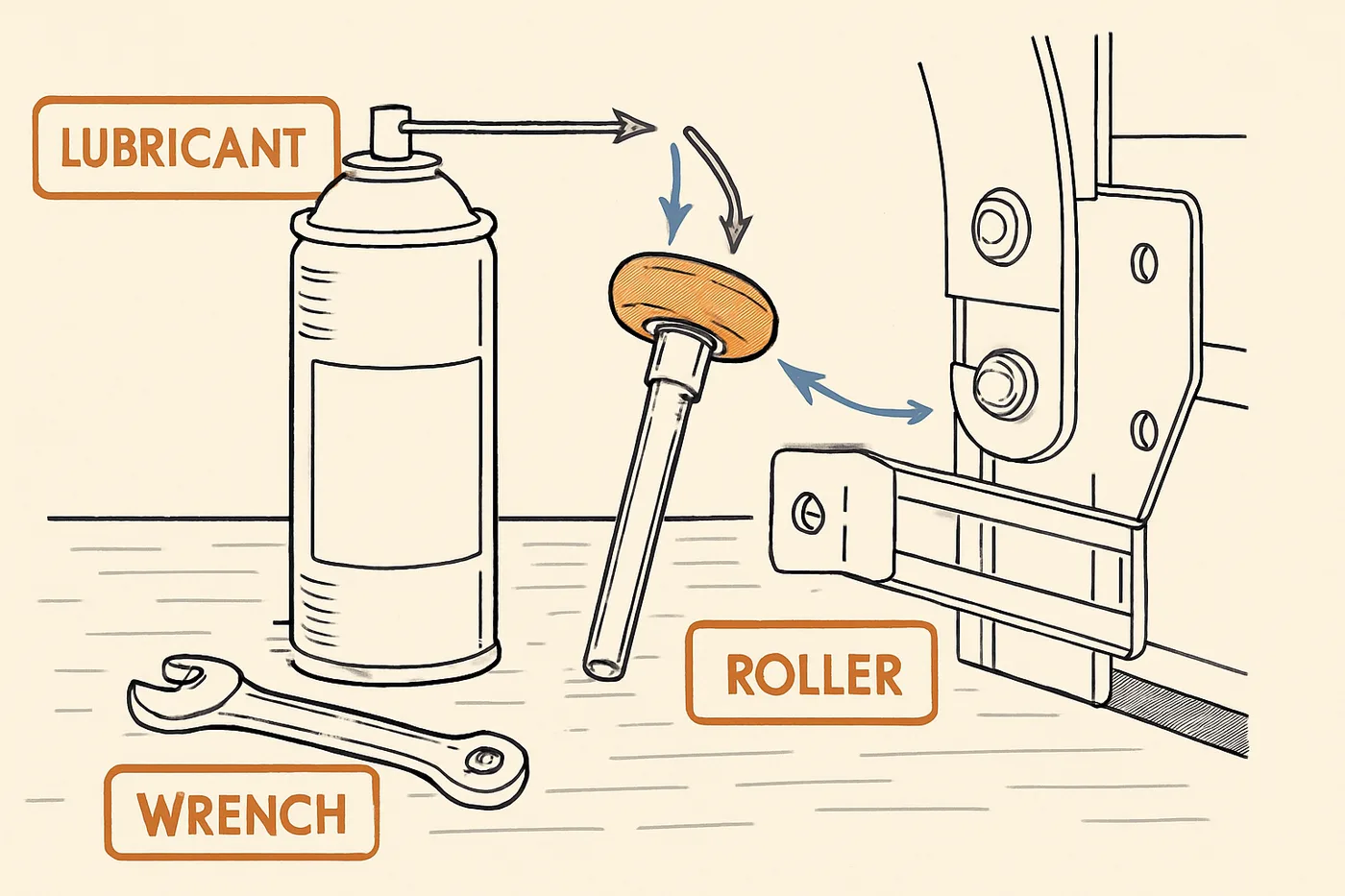
- Opener reprogramming or rebalancing — an insulated door weighs more, and the springs sized for the old door may not be right.
- New jamb weatherstripping — the wood jamb weatherstripping is a separate part from the door itself and often gets skipped in the quote.
None of these are huge on their own. Together they can add $200 to $400 to a quote that looked like $2,400.
Your next move
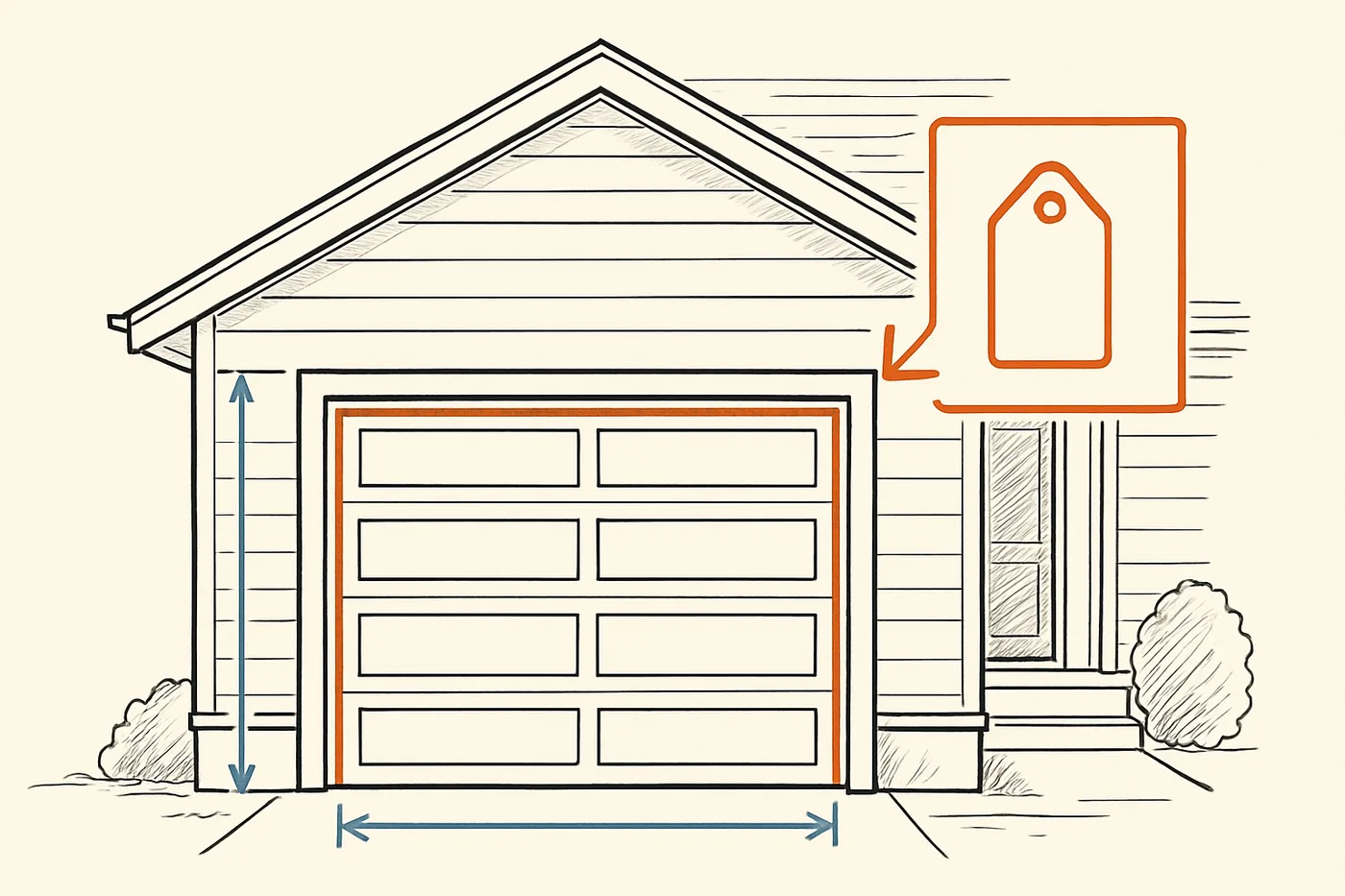
Run three numbers before you decide: your current door's R-value (0 if it's single-layer steel), your local summer electricity rate, and the number of cooling months where you live. Plug them into the ROI lab. If the payback comes in under four years, replace the door with a polyurethane R-12 to R-16. If the payback is longer than six years, spend $150 on seals and foam tape this weekend and revisit the replacement when the door reaches end of life.
Do not buy R-18-plus for an attached garage unless you're actively conditioning the space. The math stops working before you get there.