LiftMaster or Genie? How to choose when both quotes look the same
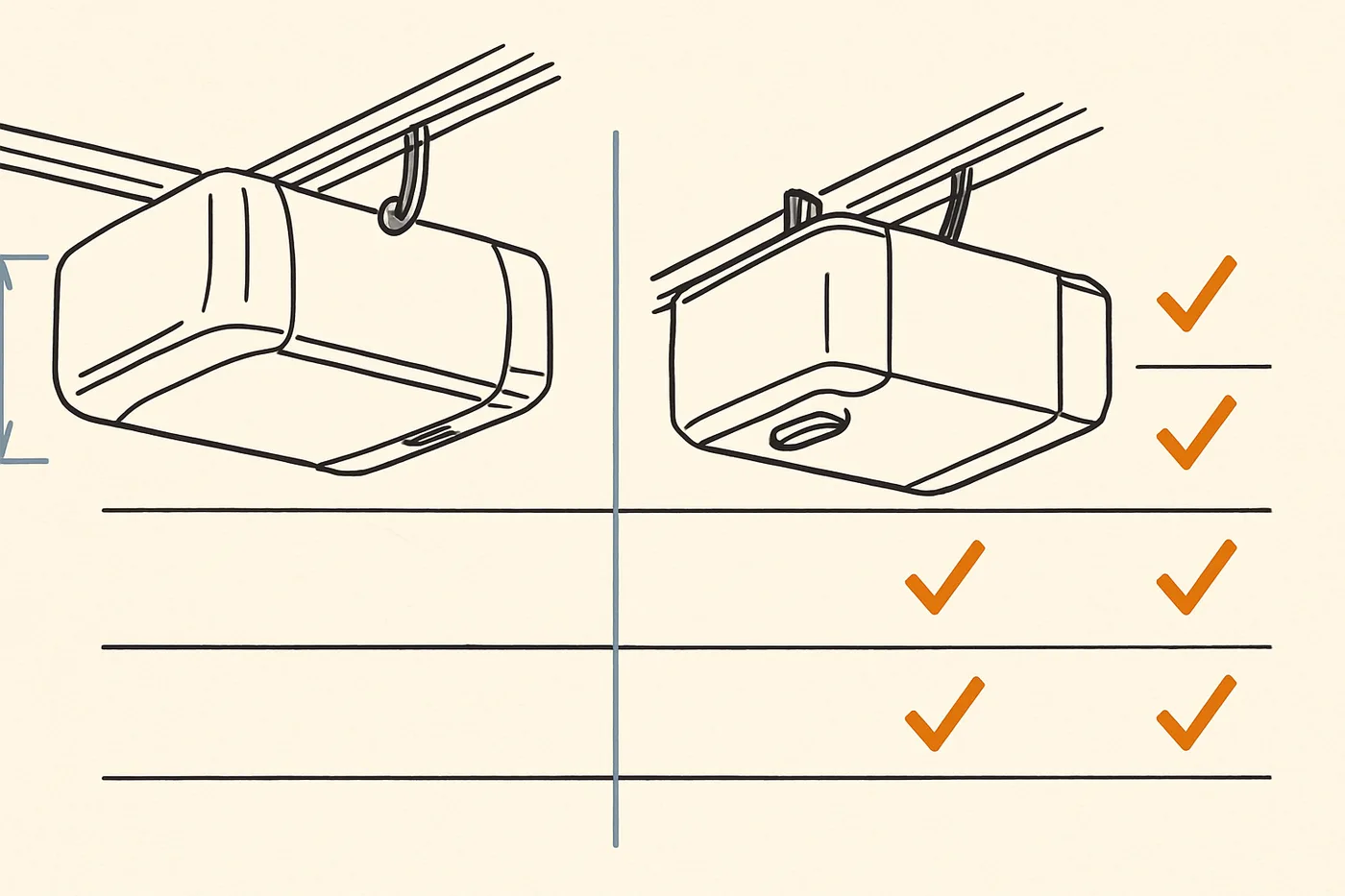
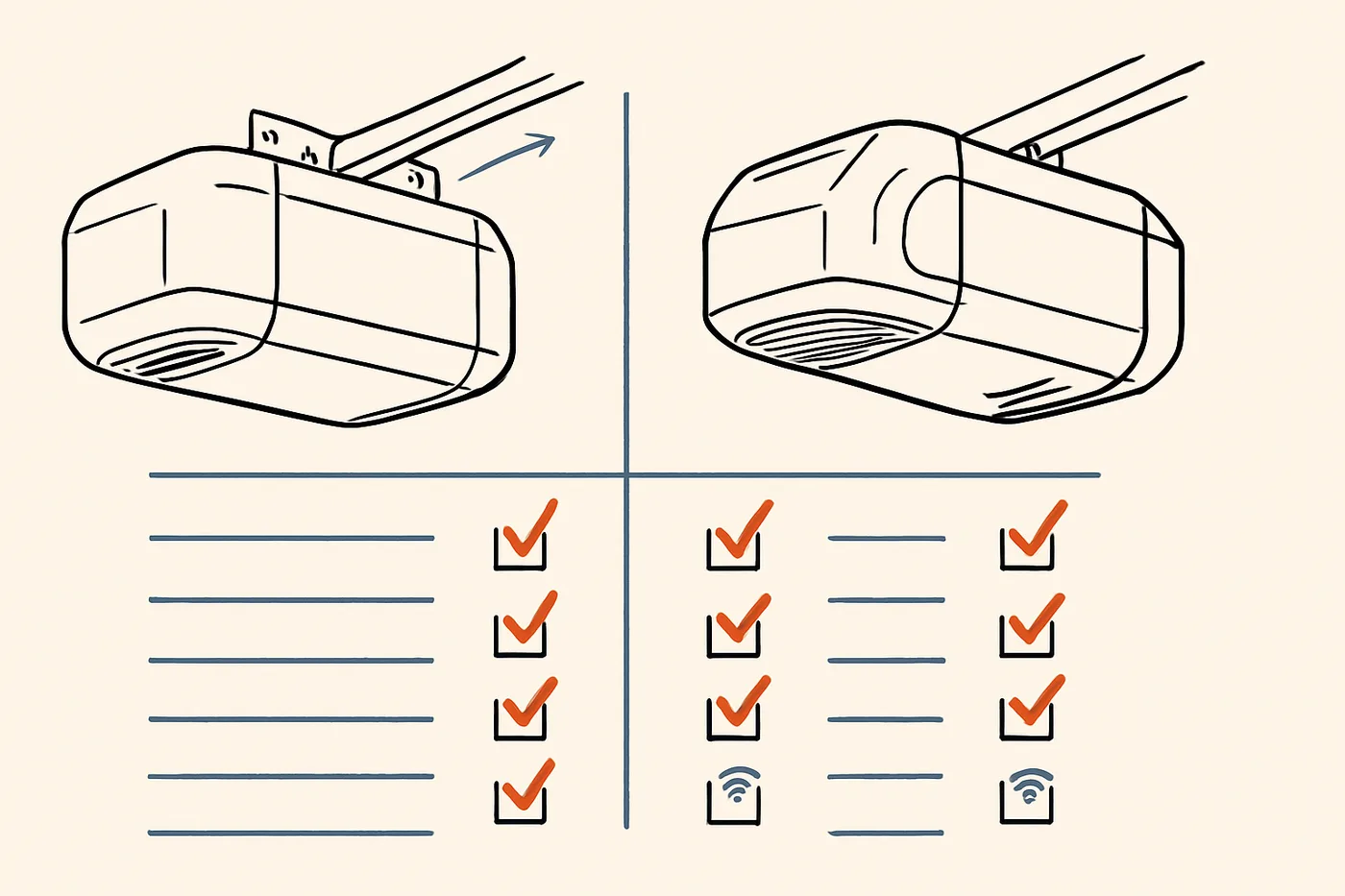
Two opener quotes, one LiftMaster and one Genie? Compare six things on each: how it is sold, warranty, drive, battery backup, Wi-Fi and price.

You have two opener quotes in front of you, one for a LiftMaster and one for a Genie, and the prices are close enough that you cannot tell which to pick. Compare six things on each quote: how the opener is sold and installed, the warranty terms, the drive, battery backup, Wi-Fi and the security system, and the price, with the horsepower wording read carefully.
We do not pick a winner here. Neither maker's page gives a reliability or noise ranking, so we do not give one either. What we can do is show you what each maker puts in writing, so you can hold your two quotes up against it.
How each one is sold
LiftMaster is a brand of the Chamberlain Group. Chamberlain's FAQ says LiftMaster openers are designed for professional installation, and that its Chamberlain-branded openers are sold through retail partners for do-it-yourself buyers.
Genie's About Us page lists two ways to buy, through local retailers and through local pro dealers, and says Overhead Door Corporation purchased the company in 1994. So a Genie may reach you from a store shelf or from an installer.
That matters for your quote. An opener bought off a shelf and an opener installed by a technician are two different purchases, even when the box is the same. Make sure both quotes say whether installation is included.
What the warranties say
These are the terms each maker publishes for specific models. Your quote may be for a different model, so ask for its terms in writing.
- LiftMaster 87504-267. LiftMaster's product page for the 87504-267 lists the motor at Lifetime, the belt at Lifetime, parts at 5 years and accessories at 1 year. The page does not list a separate term for the battery.
- Genie 3035 series. Genie's 3035 owner's manual, dated 09/2017, lists the motor at Limited Lifetime, core parts at five years, accessories at one year, a belt at fifteen years and a chain at five years, and says the warranty does not cover batteries. That manual is from 2017 and may not be current.
- What Genie means by Limited Lifetime. The same Genie 3035 manual says Limited Lifetime lasts as long as the original purchaser owns the home.
- Genie 7155. Genie's 7155 page lists a Limited Lifetime motor and belt warranty. It gives no parts, accessories or battery terms, so ask for those.
The pattern to notice: "Lifetime" appears on both, but the parts and accessories terms are much shorter, and neither page we read gives a battery term. That is where two quotes can differ without either one saying so. If you want more on the Genie model, our Genie 7155 guide covers it.
Drive, battery backup and Wi-Fi
Here is what each maker lists for the models we could check.
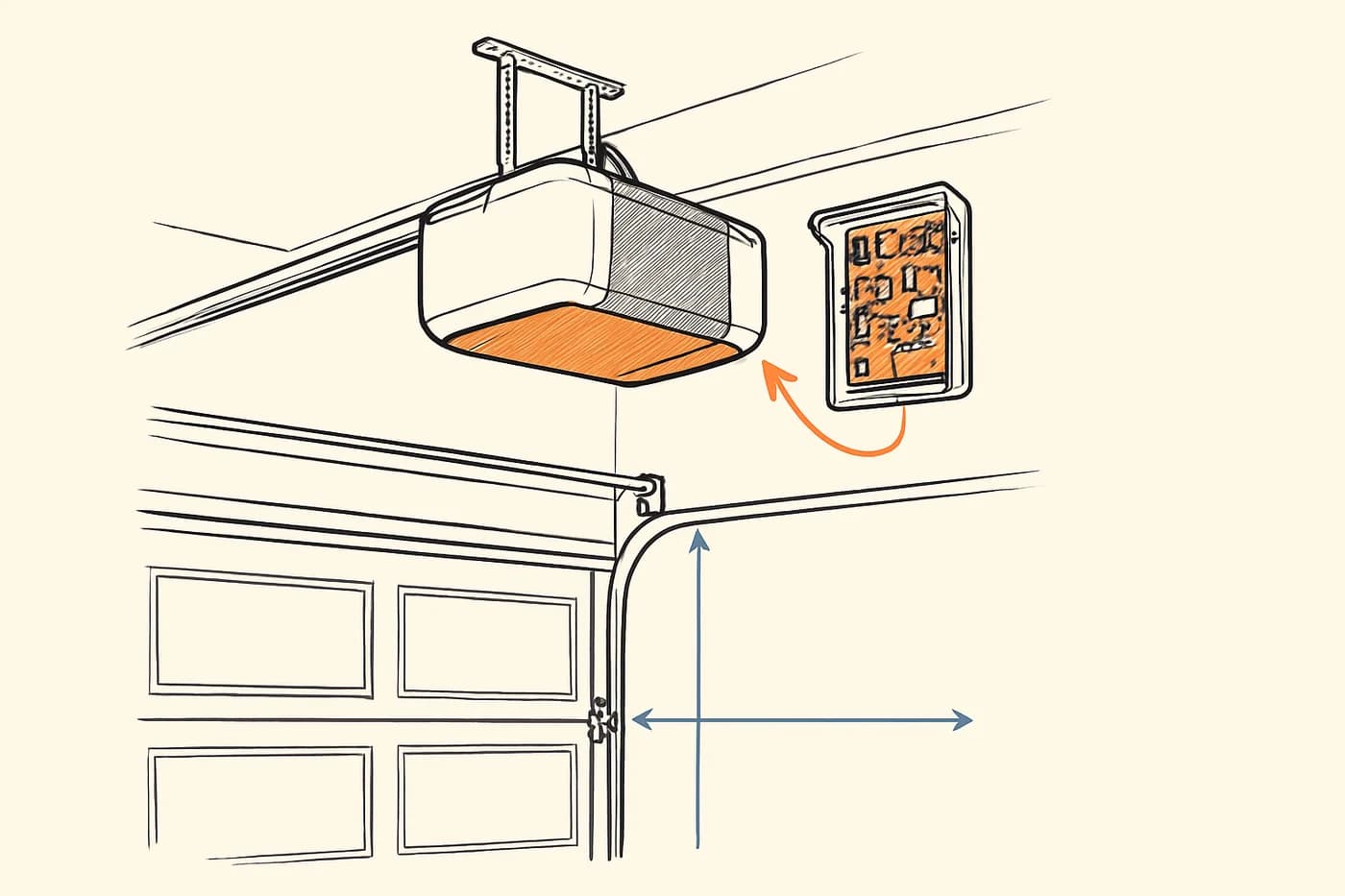
- LiftMaster 87504-267. LiftMaster's 87504-267 page lists a belt drive, battery backup that meets California SB-969, built-in Wi-Fi, myQ compatibility and Security + 2.0 as its security system.
- LiftMaster 8365W-267. LiftMaster's 8365W-267 page lists a chain drive, no battery backup, and Wi-Fi with smartphone control. This model is discontinued, so you may only see it on an older quote.
- Genie 7155. Genie's 7155 page lists a steel reinforced belt drive, a battery backup good for up to 50 cycles from the initial power failure, integrated Aladdin Connect and Intellicode Security Technology.
Security + 2.0 is LiftMaster's name and Intellicode Security Technology is Genie's name for the security system each page lists, so ask each installer what the model on your quote uses. Our Aladdin Connect and myQ comparison goes further, and our chain, belt and screw drive comparison explains the drives.
Horsepower: read the wording
Horsepower is the number most likely to make two quotes look different when they are not.
LiftMaster's 8365W-267 page lists it at 1/2 HP, while LiftMaster's 87504-267 page states no horsepower at all. Genie's 7155 page states no horsepower either, and its footnote says Horsepower Comparable, written HPc, is a rating of lifting force, not the size of the motor. The Genie 3035 manual gives none.
So a horsepower figure on one quote and an HPc figure on the other are not the same kind of number. Do not choose on that line alone. Our under-$500 opener guide shows what the money buys, and our brand comparison table lines the models up side by side.
What to put on any quote
Whichever brand you lean toward, ask for these lines on both quotes:
- The exact model number. Not "LiftMaster belt drive" or "Genie smart opener." The number lets you look up the maker's page yourself.
- The warranty terms in writing. Motor, belt, parts, accessories and battery, each as its own line.
- Whether installation is included. And whether removal of the old opener is part of it.
- What is excluded. Ask directly about the battery, the safety sensors and any smart module.
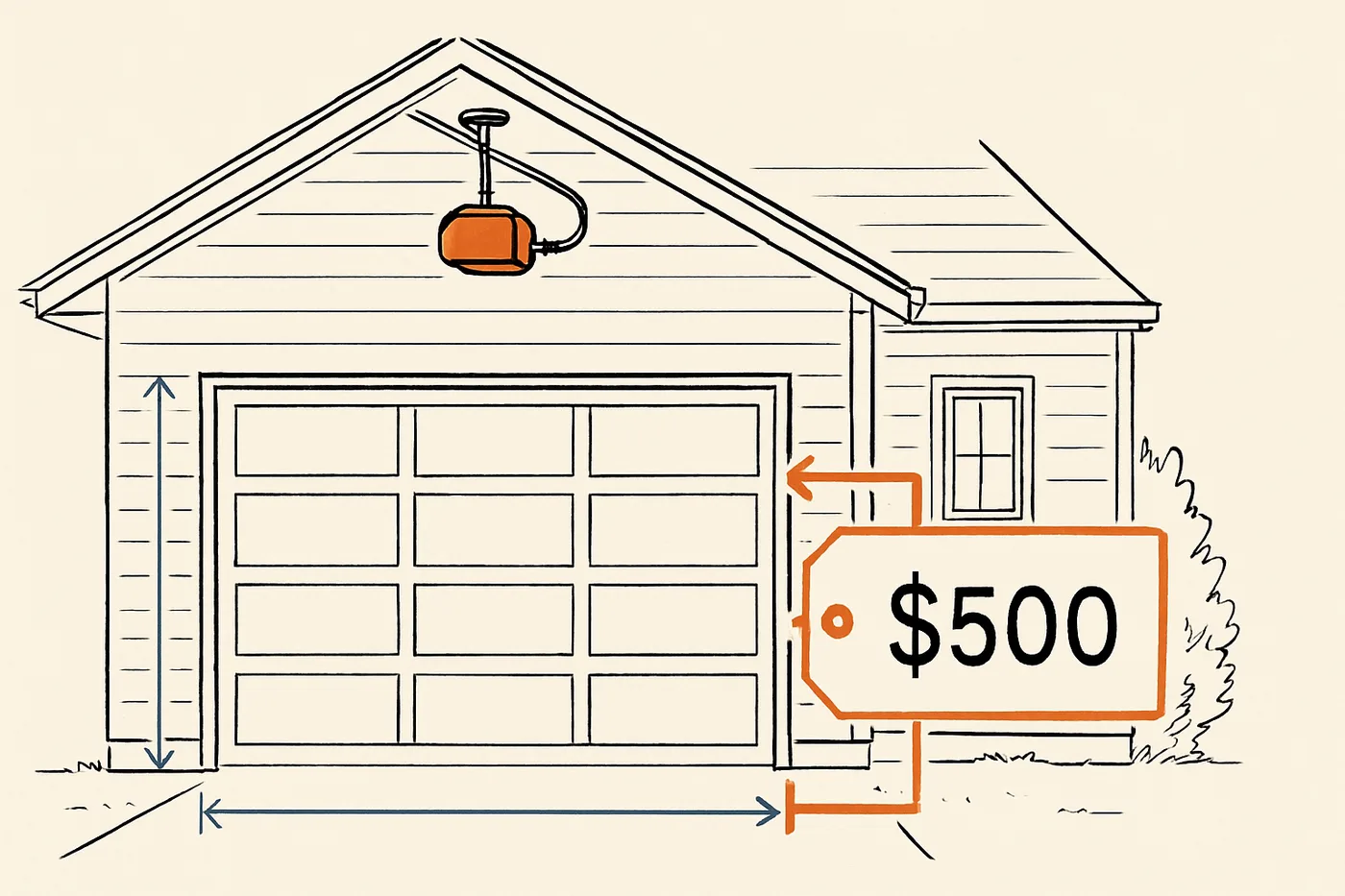
On price, HomeAdvisor puts the normal range for installing an opener at $218 to $540, with an average of $379, adds $50 to $150 for battery backup and lists safety sensors at $50 to $100 (updated June 20, 2026). That is one cost guide, not a price list, so your written quotes come first.
What not to do
Do not pick on brand name or on the horsepower line alone. Do not assume "Lifetime" covers everything; read the parts, accessories and battery lines.
And do not take down the old opener or touch the door's springs, cables or bottom brackets yourself. Those parts are under tension and belong to a trained technician. If the door feels very heavy, drops fast or will not stay up, stop and call a professional.
What to do today
- Write the model number from each quote next to the six things above.
- Look up each model on the maker's own page and compare the warranty lines.
- Ask each installer for anything missing in writing, then choose the quote that answers all six.