Road salt is eating the bottom of your garage door. What to do before winter
Amarr says rock salt and ice melt are harsh on steel garage doors. Here is what the door makers say to do about rust on the bottom panel, the seal, the tracks and the springs.

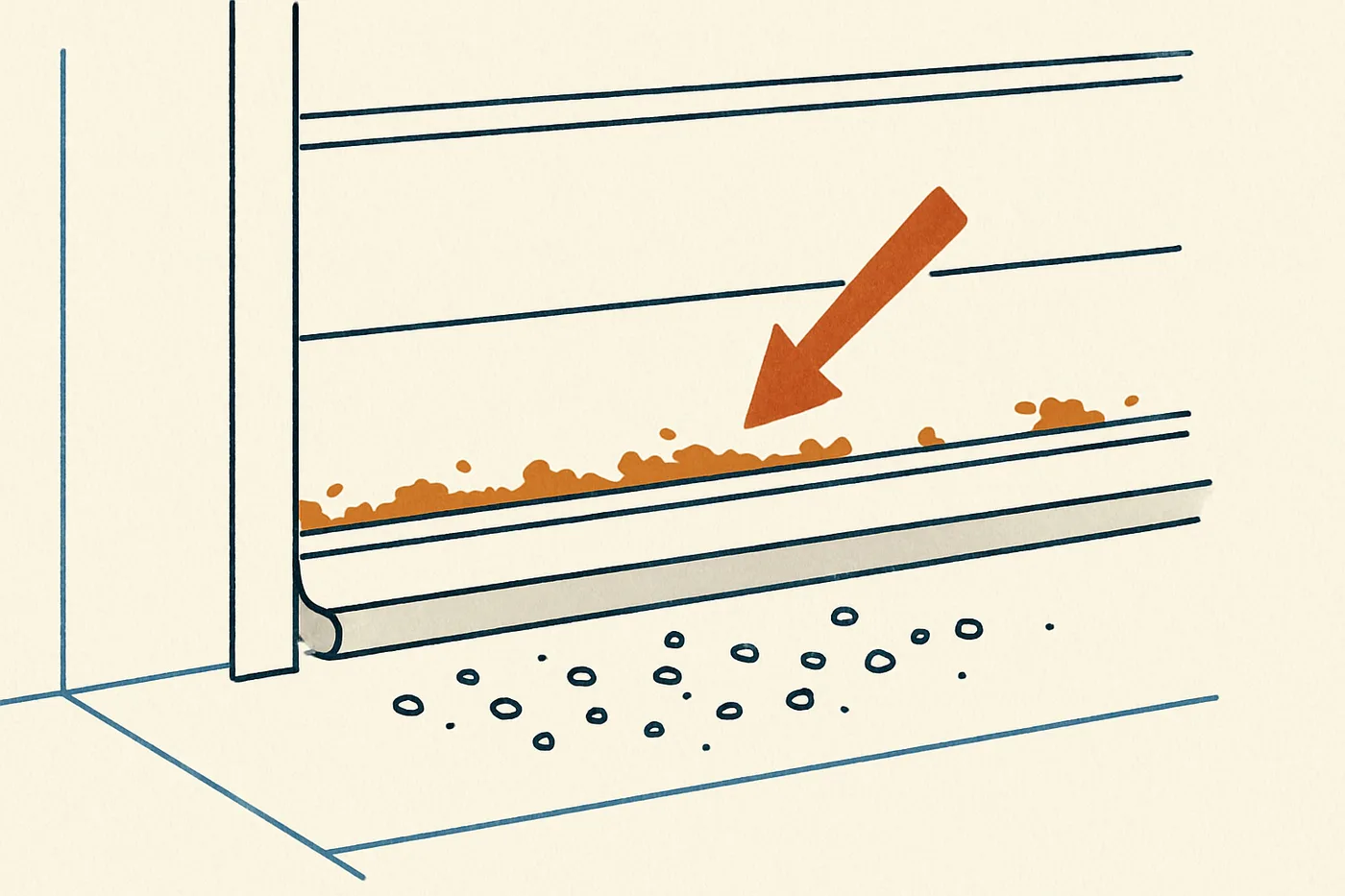
You found rust bubbling along the bottom panel, and maybe on the tracks too. The first question is whether it is on the door's surface or on the parts that carry its weight. If it is a light film on the steel skin, the door makers' care pages point you to washing, rinsing and waxing. If it is heavy, or it is on the tracks, springs or cables, it is a job for a professional.
Salt is hard on steel. Amarr's care page says rock salt, ice melt and salt spray are harsh on steel garage doors, and that a steel door can deteriorate if it is not washed properly.
Find the situation below that matches your garage.
You live where roads are salted every winter
The fix here is washing on a schedule, and the door makers do not agree on one schedule. Here is what each one says.
- Amarr's care page gives washing the outside once a year as a baseline, and more often if de-icing salt is used near you.
- Clopay's cleaning guide says twice a year is standard, and that a door in a region with high road salt should be cleaned every quarter.
- Raynor's winter salt article suggests washing every couple of weeks with warm water.
That is a wide spread. Follow your own door maker's care page first.
For the wash itself, Amarr's care page suggests a cup of household detergent in five gallons of warm water. Amarr's same page says to rinse thoroughly, until the soap and dirt are gone, and not to pressure wash. Clopay's cleaning guide says to rinse with clean water and let the door dry.
You have light surface rust now
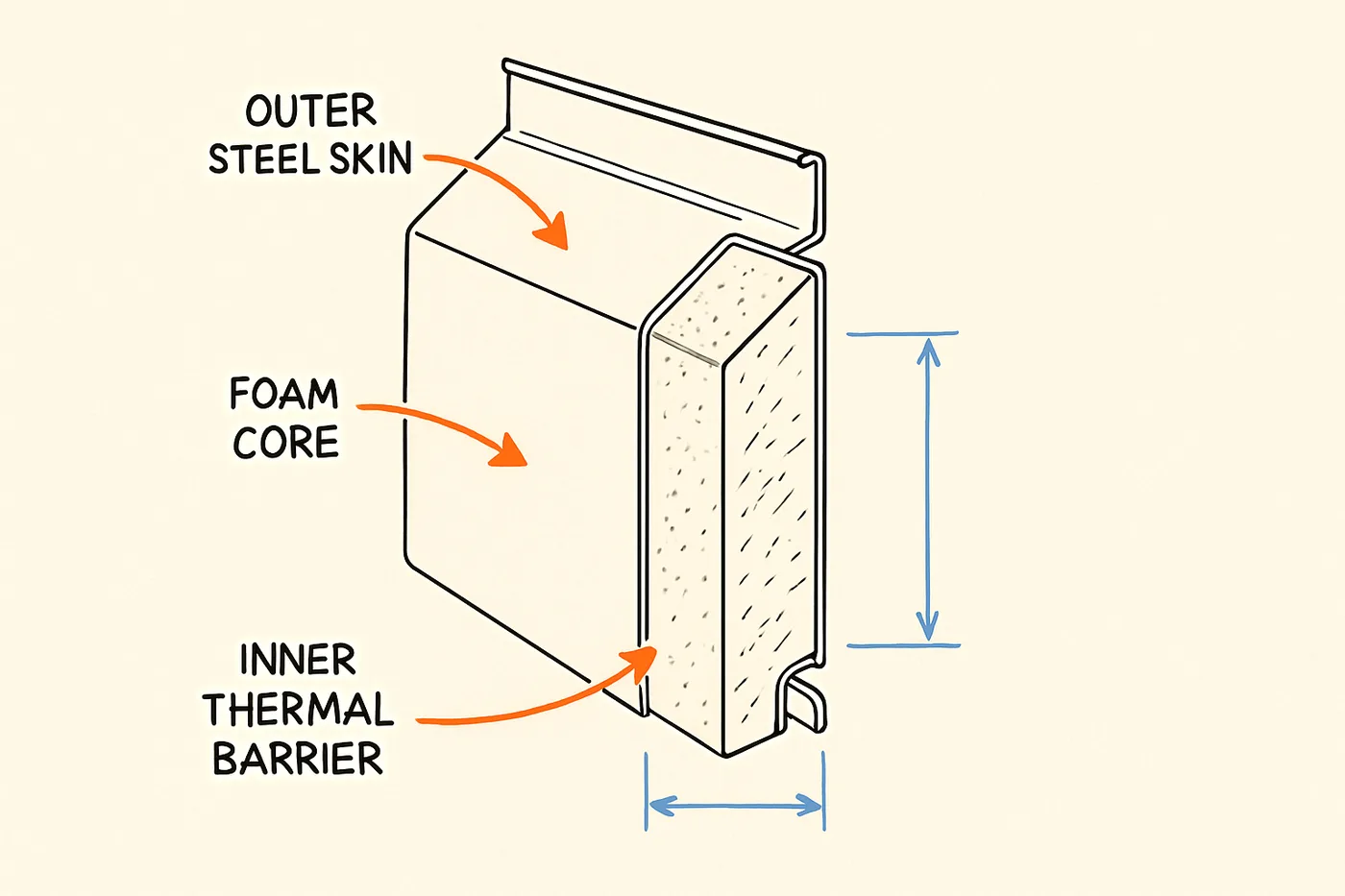
Start with the same wash, then protect the finish. Clopay's cleaning guide says to wax the door with a liquid wax, not a paste, and to include the inside of the bottom section. Clopay's same guide says to keep wax off decorative hardware.
Do not scrub the rust off with anything harsh. Clopay's cleaning guide says not to use scouring powders or solvents on the door.
Read your warranty before you decide what to do next. Amarr's care page says its warranty excludes surface rust damage caused by salt spray, salt or ice melt. Clopay's cleaning guide says cleaning is essential for meeting its warranty requirements. So the wash schedule matters for your coverage, not only for looks.
If your door's bottom edge keeps rusting, ask about a cap for it. Raynor's winter salt article says an aluminum bottom cap shields the steel edges from salt and moisture.
When to call a pro: the rust is more than a light film, or it keeps coming back after you wash and wax. Ask a technician whether the panel is worth saving. If it comes to a quote, our guide to repair or replace helps you weigh it.
The bottom seal looks cracked or stiff
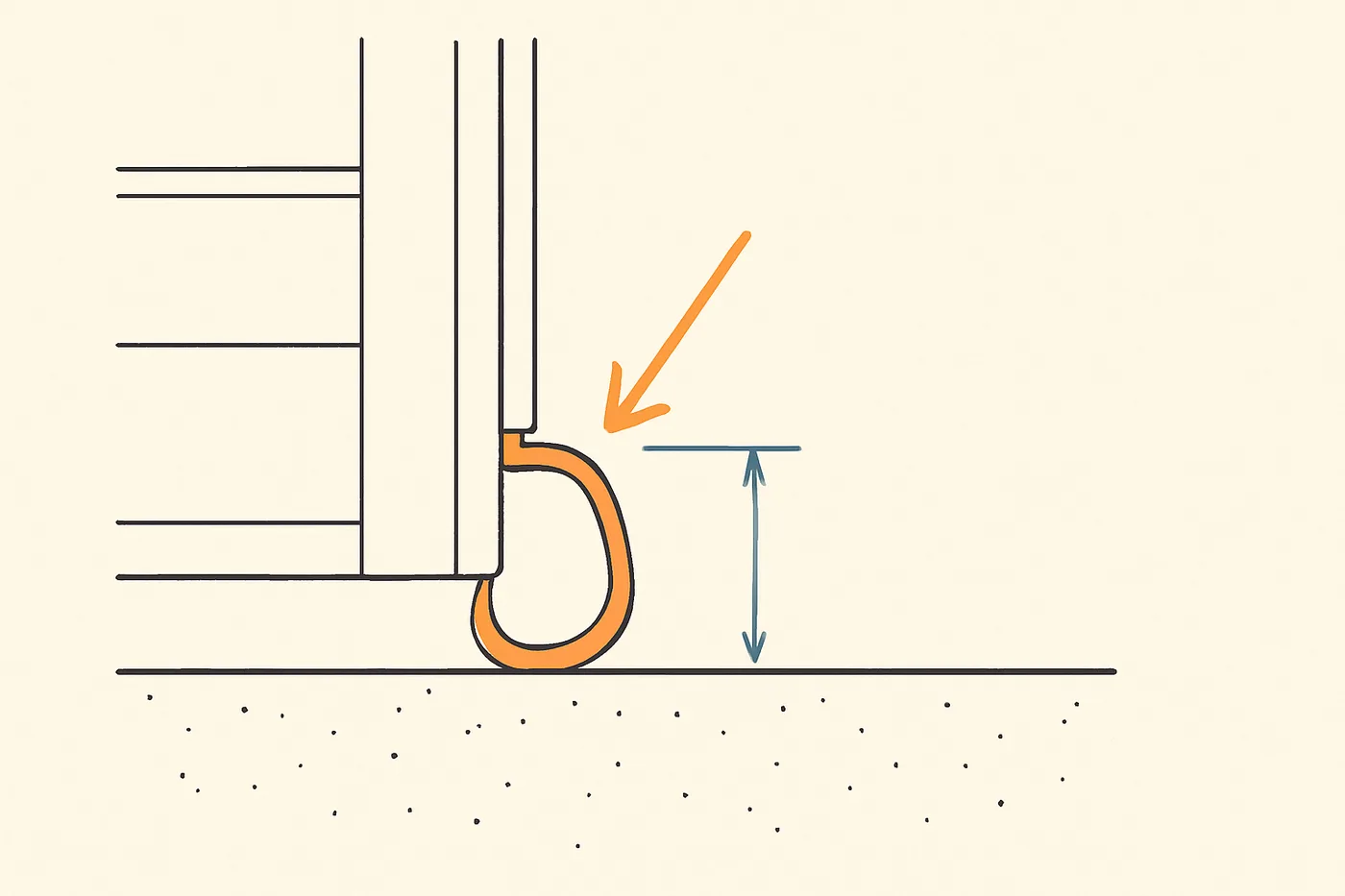
The rubber strip along the bottom of your door has a hard winter. Clopay's article on doors for cold climates says bottom seals face the brunt of snow and ice. Raynor's winter salt article says salt can break down rubber seals.
Clopay's same cold-climate article says to check the seals each fall, and to replace weatherstripping every few years, or sooner if it turns stiff or brittle after a cold snap. If yours already feels stiff or brittle, it is due.
Which seal to buy depends on your door. Our weather seal guide covers the types.
When to call a pro: if changing the seal on your door means working at the bottom brackets, stop there. Leave the brackets, and anything attached to them, to a technician.
Salt grit is on the tracks and rollers
Salt does not stay on the panels. Raynor's winter salt article says salt residue clings to the metal tracks, rollers, springs and hinges. Raynor's same article says the buildup in the tracks is gritty and creates friction.
If you are wondering about oil, we keep that question in its own place. Our lubrication schedule covers which parts get it and how often, and our WD-40 page covers what to use.
When to call a pro: the tracks show rust spots or heavy wear. Raynor's article says tracks like that should be cleaned and aligned by professionals.
Rust is on the springs, cables or hardware
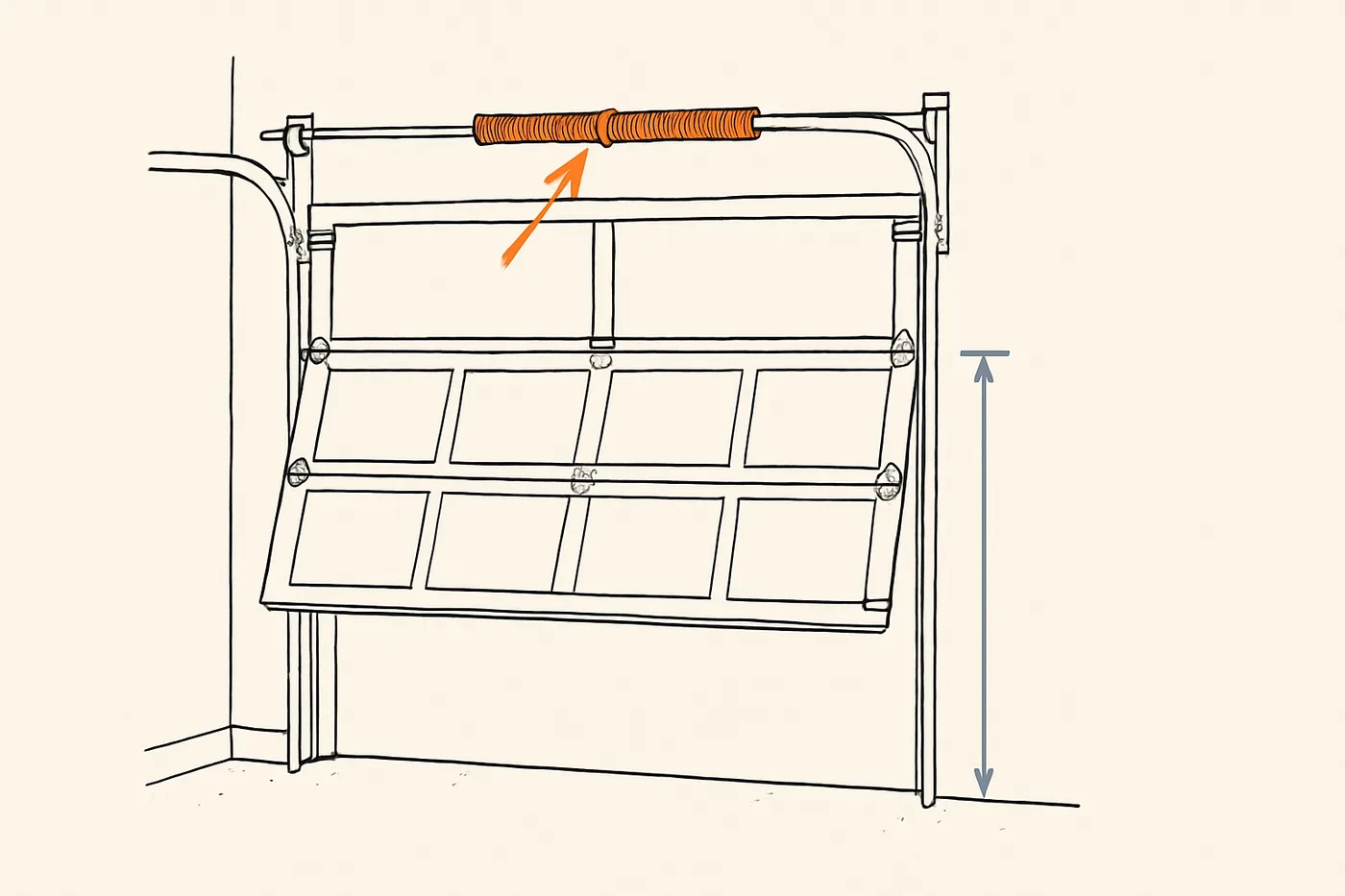
This one is short. A DASMA technical data sheet on garage door springs says springs should be kept dry to prevent surface rust, and that rust reduces the effective area of the spring wire.
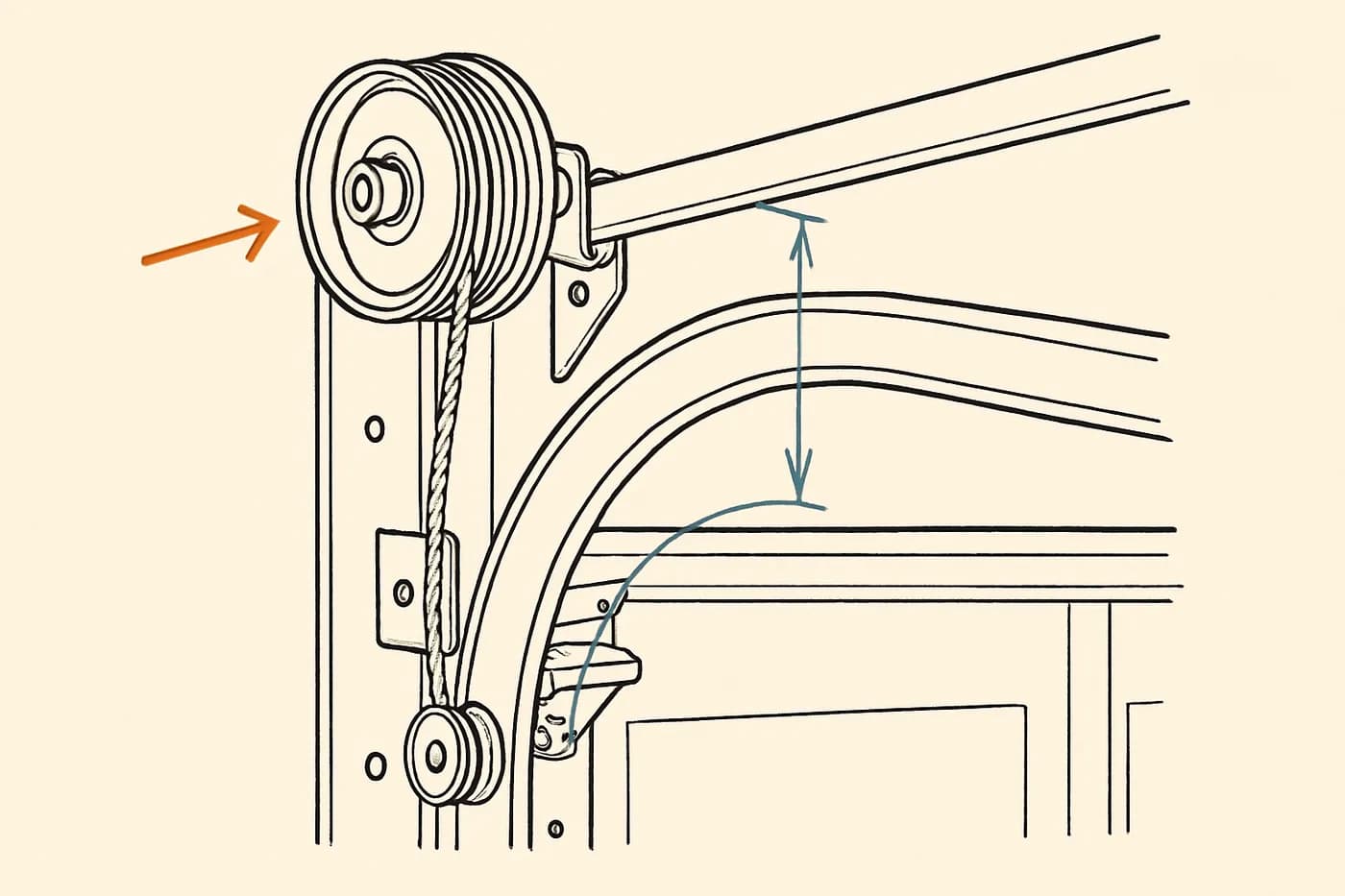
That is not a reason to clean or touch the springs yourself. If you see rust on the springs, the lift cables or the bottom brackets, call a trained technician and let them look. Do not try to fix or adjust any of it. Our page on springs in cold weather explains more about what winter does to them.
What to do before winter
- Find your door maker's care page and put its wash schedule on your calendar. If your maker gives a separate schedule for salted regions, use that one, not the standard one.
- Wash the door with mild detergent and warm water, no pressure washer, then rinse until the soap is gone and let it dry. If your maker calls for it, wax with a liquid wax, including the inside of the bottom section.
- Check the bottom seal. If it is cracked, stiff or brittle, plan to replace it, using our weather seal guide to pick the type.
- Look at the tracks, rollers, springs and cables from a step back. If you see heavy rust on the tracks or any rust on the springs, cables or bottom brackets, call a technician.
The rest of the fall list, from the opener to the seal, is in our winterizing checklist.