What is a sectional garage door? What your quote means and how it works
A sectional garage door is panels hinged together that ride on tracks. Here is what each part does, how the door differs from a roll-up, and what to ask about before you buy, from DASMA and Clopay.

The quote says "sectional," or you searched for it and found a wall of parts lists. Here is the plain version: what a sectional door is, what each part does, and what to ask before you buy. We use DASMA, the door makers' trade association, and Clopay's own parts guide, so the names match what an installer will say.
The short answer
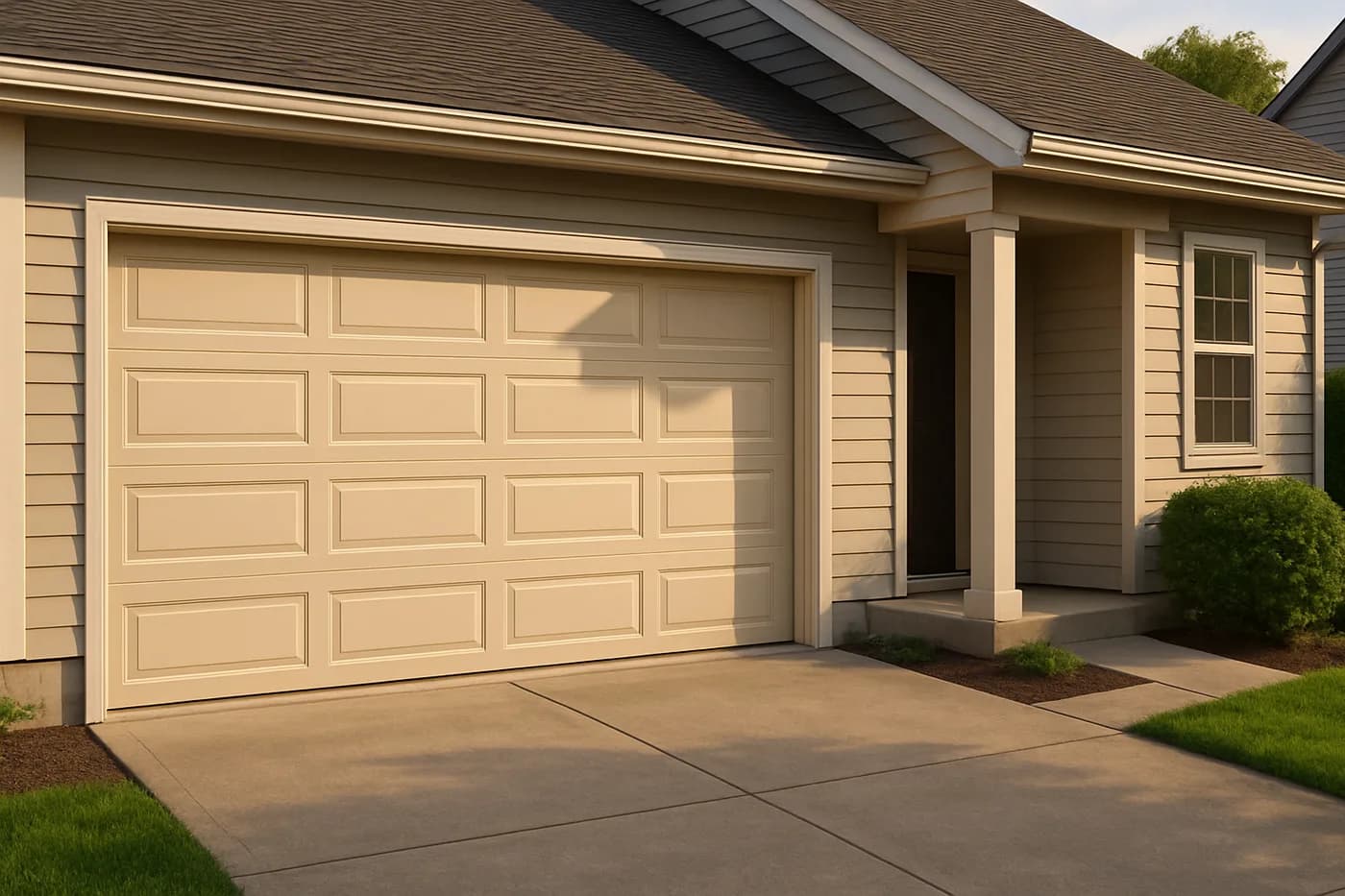
DASMA's terminology sheet defines a sectional door as a door made of two or more horizontal sections hinged together so that it can close the entire opening, guided by tracks and track rollers (DASMA TDS 160). If your garage door looks like a stack of rectangles that bends as it rises and ends up flat overhead, it is sectional.
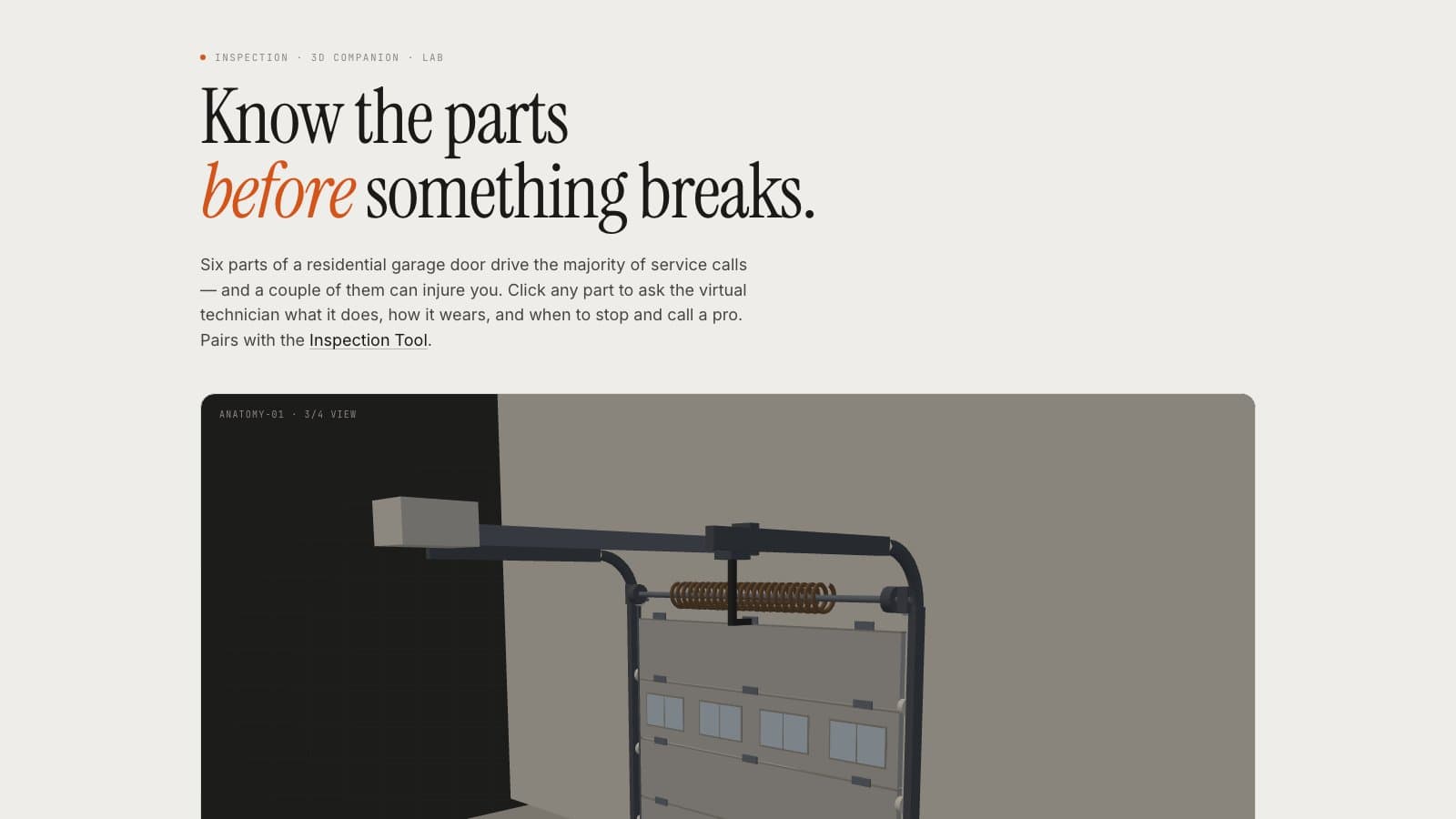
The parts, in plain words
From Clopay's garage door components guide, and DASMA's definitions:
- Panels (sections). The visible face of the door. Clopay lists steel, wood, aluminum and glass. Steel is strong and low-maintenance, wood needs more upkeep, and aluminum is lightweight and rust resistant. Some panels have no insulation; others use polystyrene or polyurethane.
- Hinges. DASMA calls the hinge the hardware that joins sections together and lets them pivot independently. Clopay adds that heavier or larger doors need sturdier hinges.
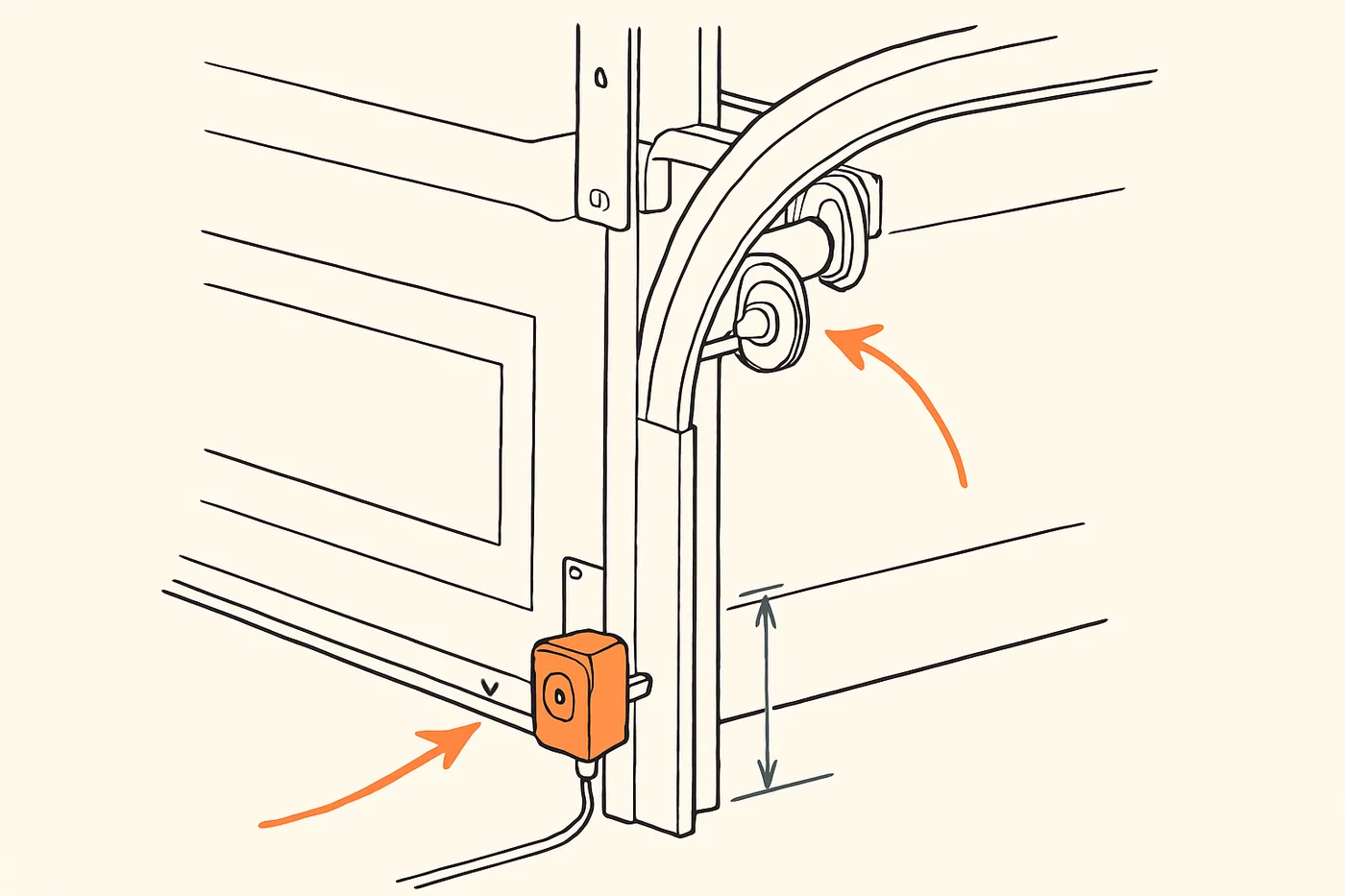
- Tracks and rollers. The track is the path on both sides of the opening, and the rollers are the small wheels that ride in it. Clopay says steel rollers are more durable but noisier, and nylon is quieter. Standard tracks are most common; low-headroom tracks exist for garages without much room overhead.
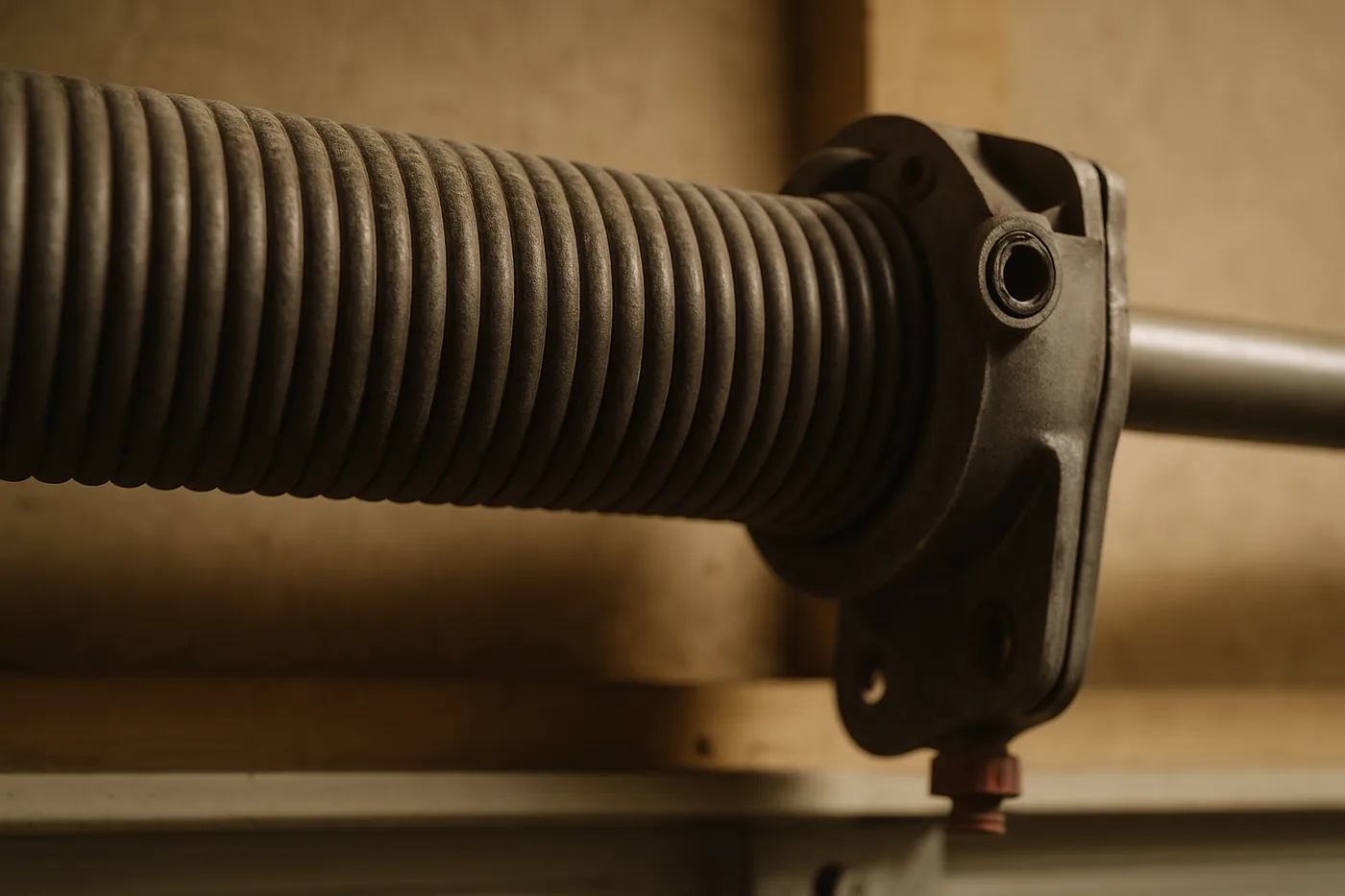
- Springs. Clopay calls springs the muscle of the door: they offset its weight so it opens and closes easily. Torsion springs sit above the door and twist; extension springs run along the sides and stretch.
- Cables. They work with the springs to lift the door, run from the bottom corners up to drums near the top, and are under heavy tension.
- Bottom fixtures. Clopay says they anchor the panels at the bottom and secure the lifting cables. DASMA's term for the same part is the bottom bracket, which holds the track rollers and can also hold the cable.
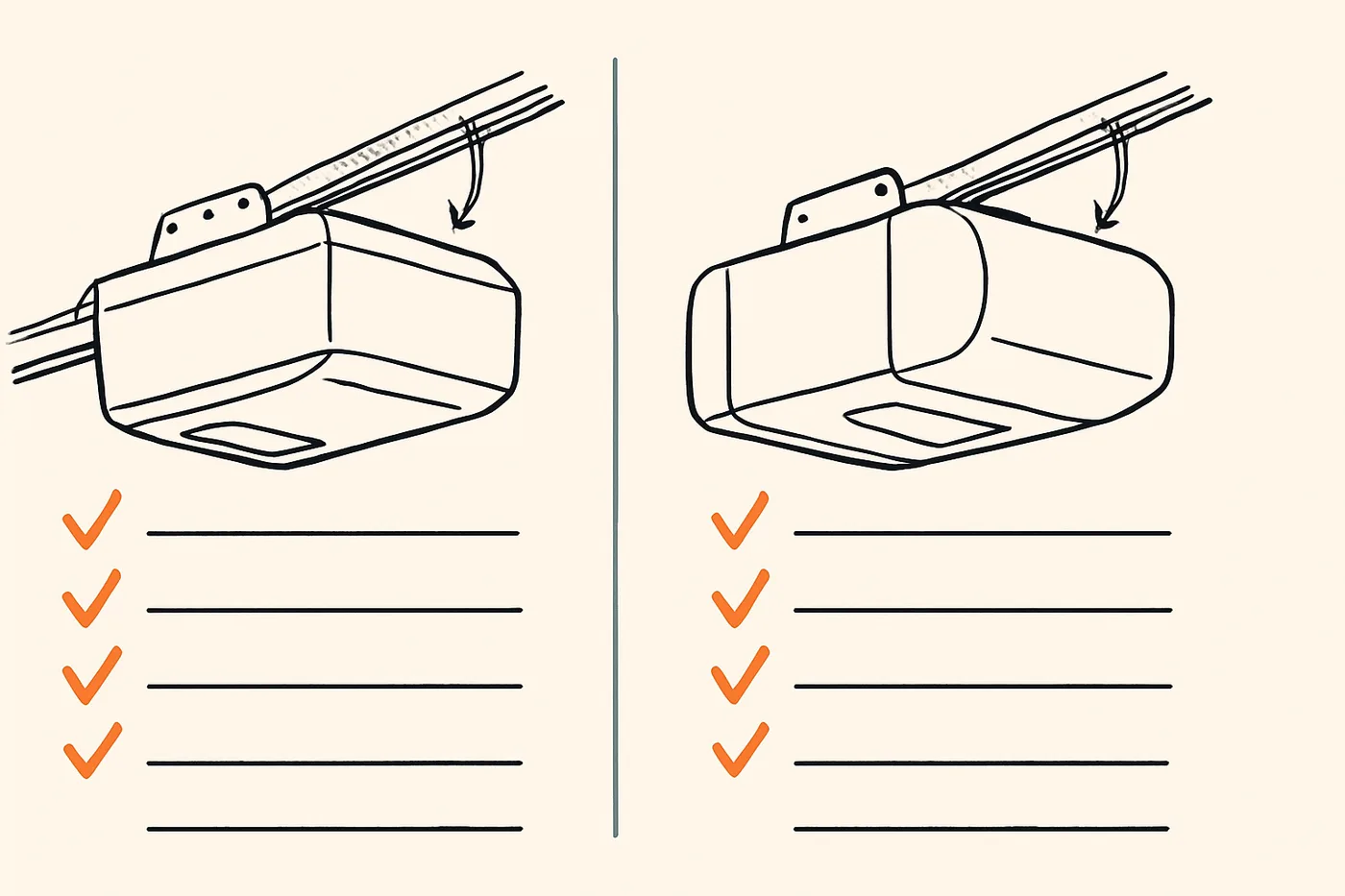
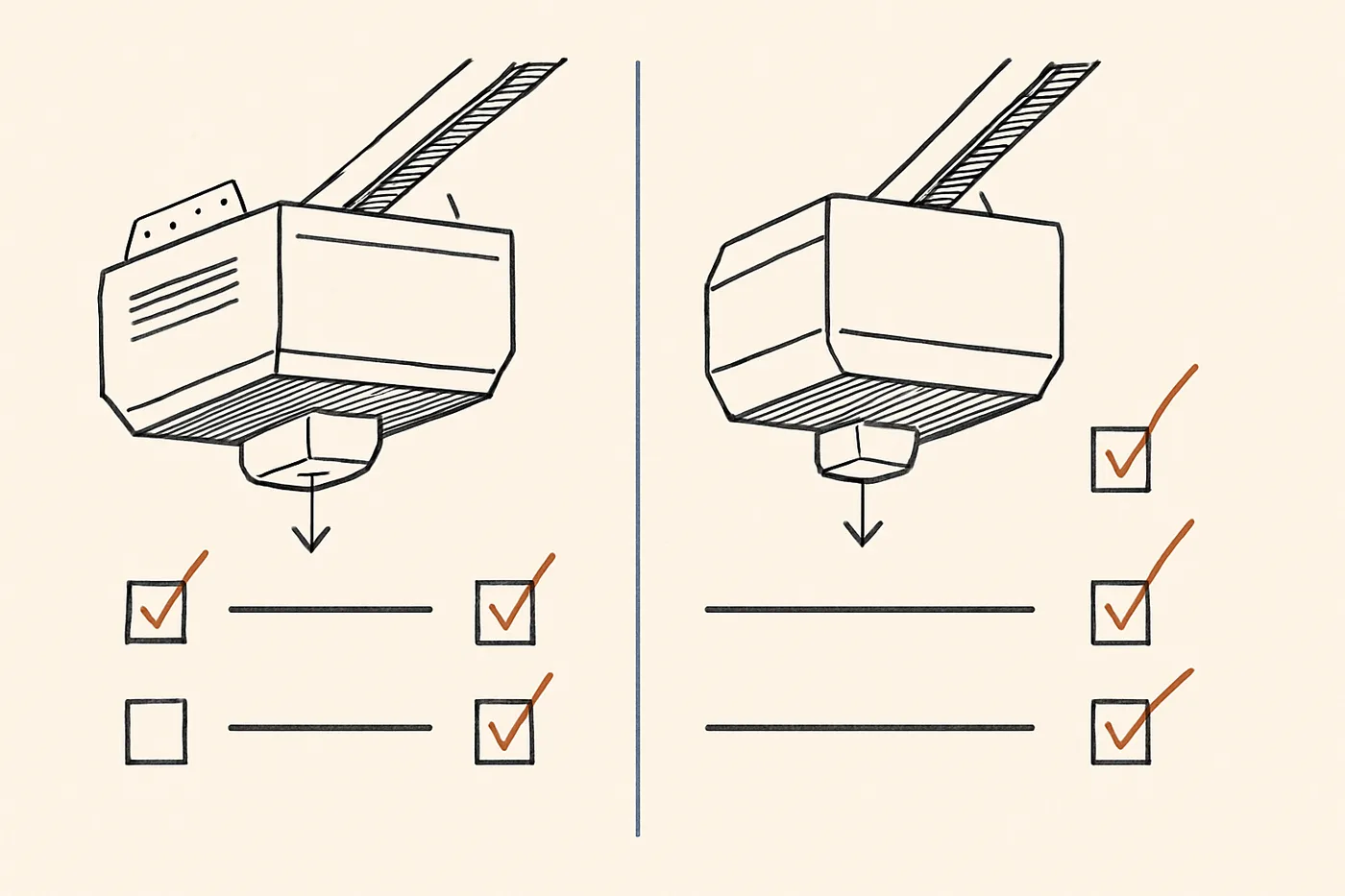
- Opener. Chain, belt, screw or direct drive. It moves the door; the springs carry its weight.
- Weather seals. At the bottom, sides and top.
How it opens
The door rides up the vertical track, passes through the curved section DASMA calls the horizontal radius, where the track turns from vertical to horizontal, and ends up overhead. The hinges are what let the panels bend through that curve. The springs carry the weight, so the opener does not have to.
Sectional versus roll-up
A roll-up door is a different animal. HomeAdvisor describes roll-up doors as made of narrow slats that roll up and coil onto a bar above the opening. Our posts on roll-up versus sectional doors and on insulated roll-up doors for a home cover what that means for a building and for insulation.
What you can look at, and what is a pro's job
Clopay says owners can do visual checks every few months, lubricate with a silicone-based product, clean the sensors and replace remote batteries. Our lubrication guide covers where lubricant goes and where it never goes.
Clopay says springs, cables, and broken or heavily worn parts go to a professional, and that a frayed cable or broken spring is a call to a technician, not a repair to try. The bottom brackets are anchored to cables under tension, so they are not a homeowner's job either. If the opener hums but the door will not move, or the door moves unevenly, stop and call a pro.
What to ask when the quote says sectional
- What are the panels made of, and are they insulated? With what, and what is the R-value? (Our R-value guide explains the number.)
- Which style: raised panel, flush panel or carriage house?
- Standard track or low-headroom track, and does my garage need low-headroom?
- Torsion or extension springs, and who services them?
- Which opener does it assume, and is it included in the price?
For the full list of door types and what they cost, start with our buyer's guide.