What a garage door actually is: types, parts, and the physics that moves them
Learn what a garage door is, explore common types like sectional and roll-up, understand key parts, and discover how they work together safely.

A residential garage door is a 130 to 350 pound slab of insulated steel that a torsion spring lifts against gravity roughly 1,500 times a year. The opener does not do the lifting. The spring does. The opener only nudges a counterbalanced load across the threshold between rest and motion. Once you understand that one fact, every other part of the system — the drums, the cables, the sensors, the tracks — starts to make sense as pieces of a single counterbalance machine.
This article walks through what a garage door is, the common types you will encounter, the parts that make each type work, and the physics that ties them together. It is written for the reader who wants to understand the mechanism, not to open it up.
What a garage door is, mechanically
A garage door is a large panel — or a curtain of horizontal slats — that seals an opening in a wall and moves out of the way on demand. The engineering problem it solves is not "how do we cover a hole." It is "how do we cover a hole with something so heavy that a person cannot lift it, and then make that thing feel light."
The answer, on almost every residential door built in the last fifty years, is a torsion spring mounted on a shaft above the opening. A standard residential steel door weighs between 130 and 350 pounds, with insulated double-wide doors sitting at the upper end of that range. A properly wound spring stores roughly 236 ft-lb of energy when the door is closed and releases that energy as the door rises. When the door falls, the spring absorbs approximately 800 ft-lb of torsional stress per cycle. That is what "counterbalance" means in practice: the spring, not you, does the work.
If you want to see the counterbalance argument from the ground up, the science of garage doors lab walks through the moment-arm math step by step.
The two dominant residential types
Most residential garages use one of two door types. The distinction is not cosmetic. It is structural.
Sectional doors are the panels most Americans picture: four or five horizontal sections, hinged together, that ride up and back along a pair of curved tracks into a horizontal run under the garage ceiling. The panels sit flush against the opening when closed and lie flat overhead when open. A sectional door with polyurethane injection can reach up to R-18 because the panel is continuous and the perimeter seals are unbroken.
Rolling steel doors — sometimes called roll-up doors — do not have panels or ceiling tracks. The curtain is made of interlocking horizontal slats, typically 2 to 3 inches tall in 18 to 26 gauge galvanized steel, stainless, or aluminum, coiled around a steel barrel mounted above the opening. They dominate commercial applications and appear on residential garages where headroom is tight or fire rating matters. A rolling steel door with foam-filled slats tops out at about R-10 because the interlock joints between slats leak air in ways a continuous panel does not. Rolling steel doors are also available with fire ratings up to 4 hours, using fusible links that melt at approximately 165°F and allow the door to drop closed by gravity — a capability sectional doors do not typically offer.
The tradeoff is straightforward. Sectional doors insulate better and seal better. Rolling steel doors take less overhead space and can be fire-rated.
The parts, and what each one does
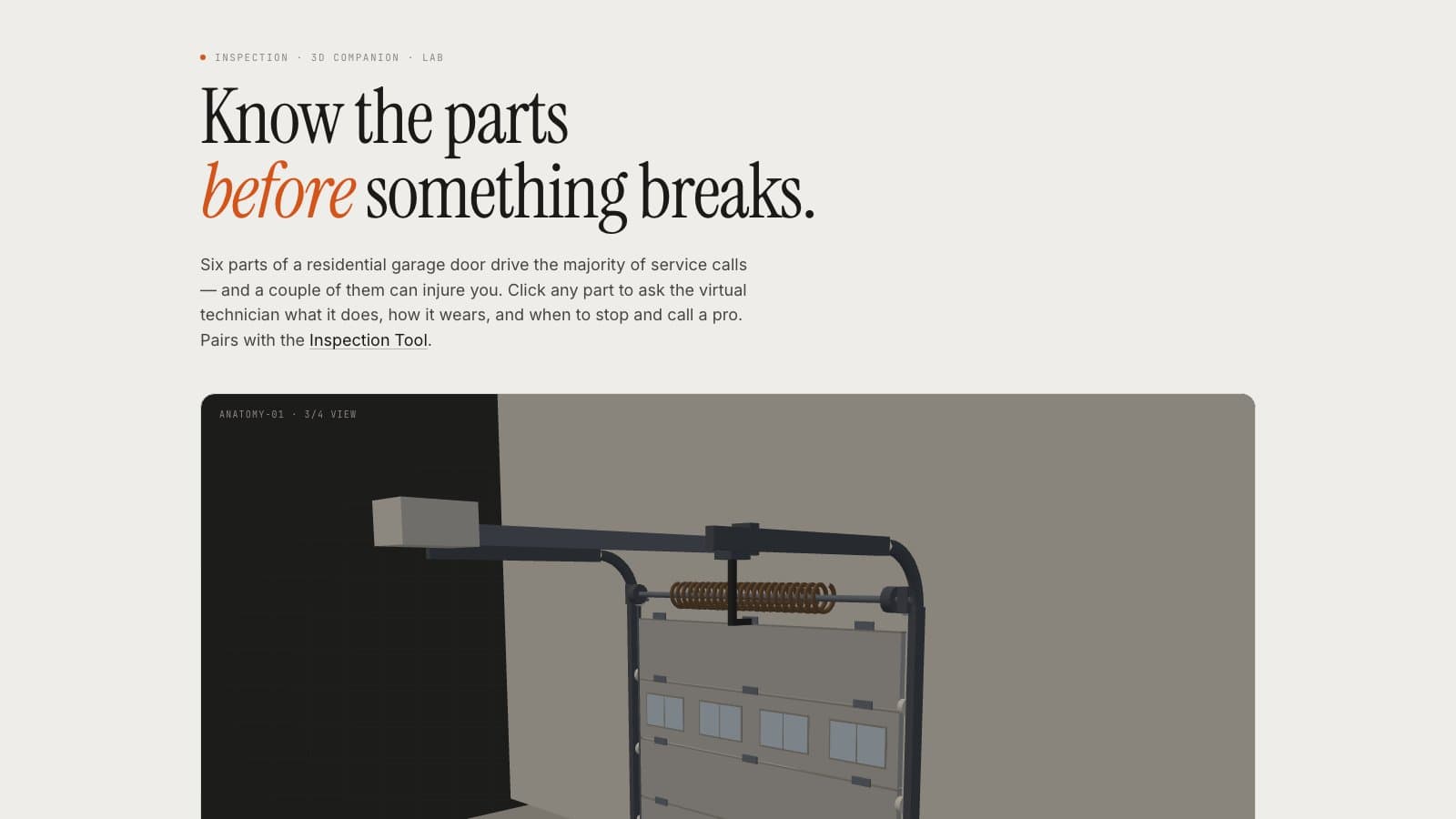
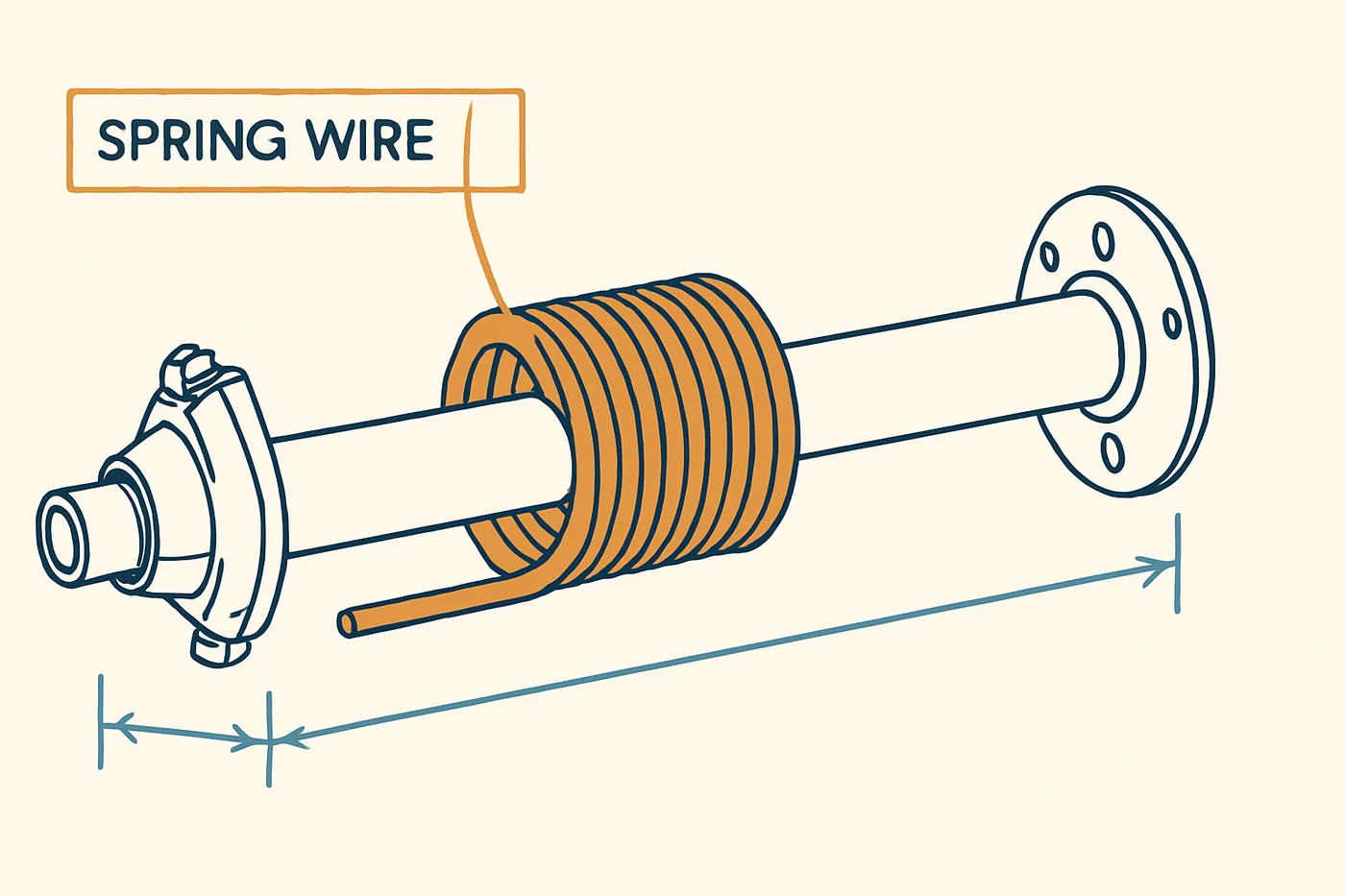
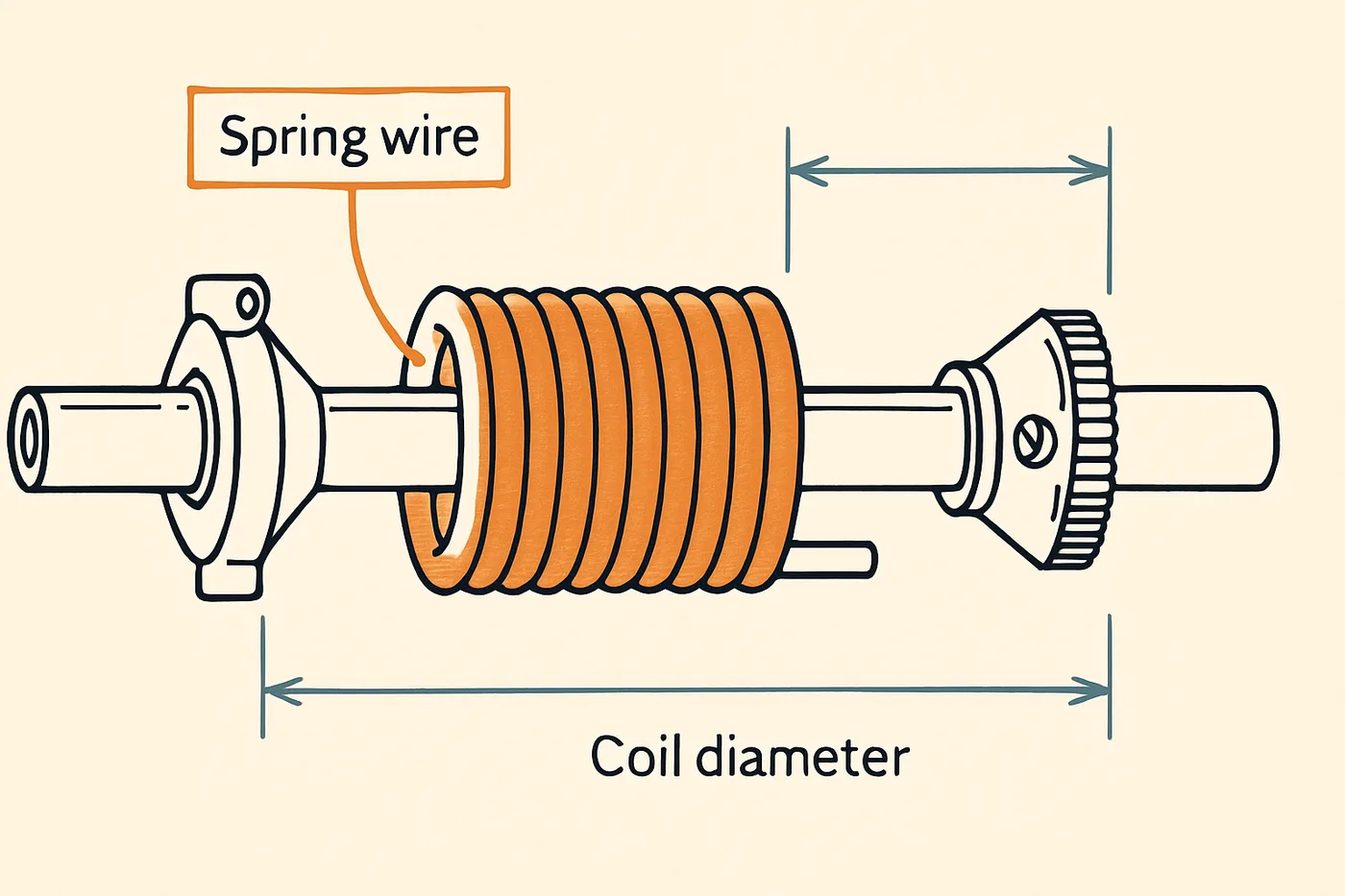
On a sectional door, the torsion shaft assembly runs horizontally above the opening and consists of a steel shaft typically one inch in diameter, one or two torsion springs anchored by stationary and winding cones, two cable drums grooved to receive lift cables, and two lift cables running from bottom brackets on the door up to the drums. Every one of those parts is doing something specific.
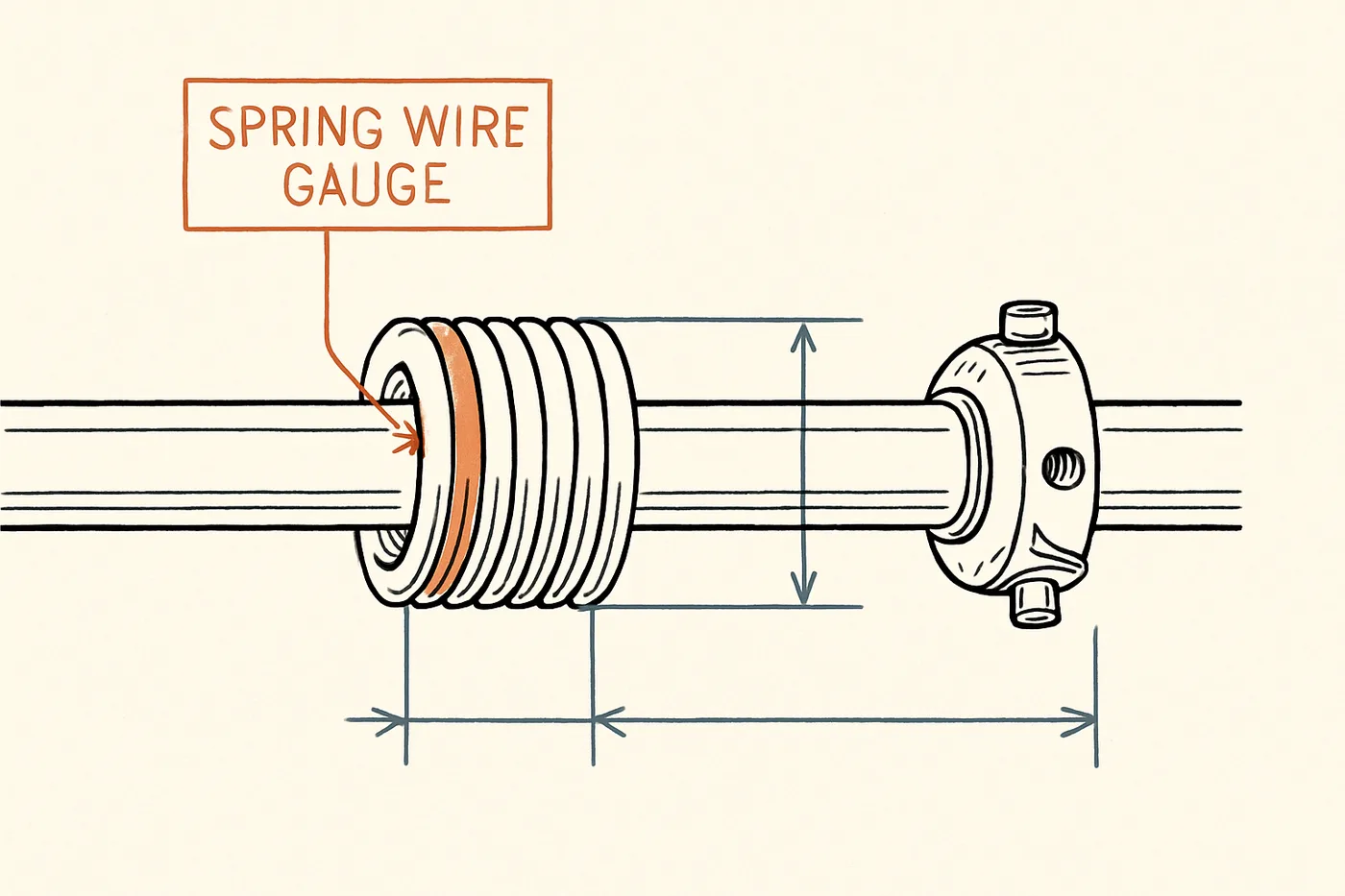
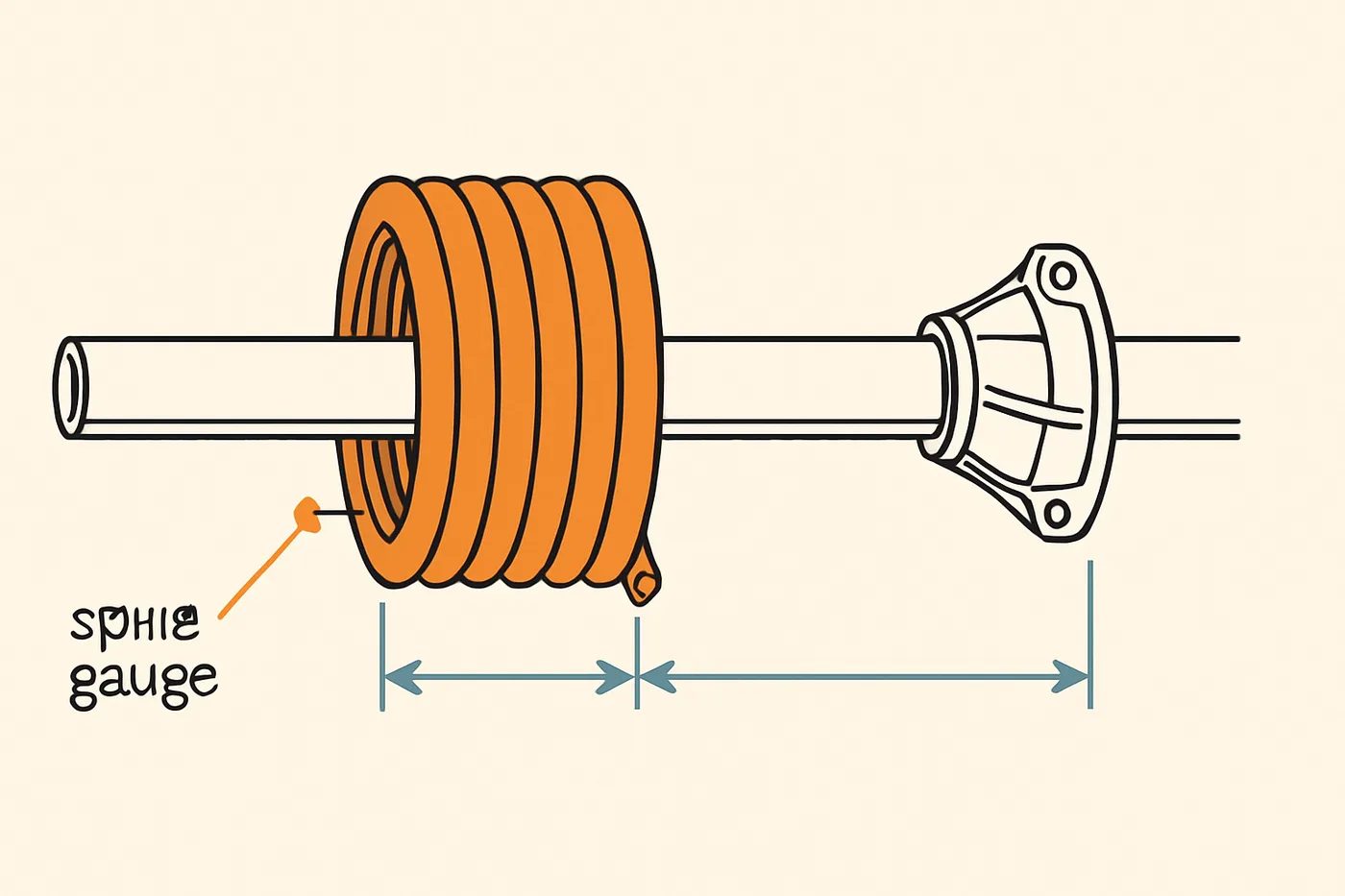
The springs store energy. A spring built from 0.250-inch wire produces on the order of fifty percent more torque per turn than the same geometry built from 0.225-inch wire, which is why springs are not interchangeable by appearance. Wire diameter, inside diameter, and length together determine the torque curve the spring produces across its wound range. A spring that looks right can be catastrophically wrong.
The cable drums translate that torque into linear lift. A drum is a grooved aluminum or steel cylinder that converts the torque of a wound spring into the vertical motion of the door slab. What is not obvious from looking at one is that the spiral diameter changes along the drum's length, giving variable mechanical advantage that matches the door's changing weight distribution: a smaller moment arm where the load is heaviest, larger where the load is lightest. The drum is doing calculus while the door goes up.
The cables carry the load from the drum down to the bottom brackets on the door itself. They are under tension whenever the door is not fully open with the spring unwound. That tension does not go away when the door is closed. It goes up.
The tracks and rollers constrain the door's path. They are not load-bearing in the vertical sense — the cables and springs are. They keep the panels in plane while the door translates from vertical to horizontal.
The opener is the last piece, and it is smaller than most homeowners think. On a counterbalanced door, the opener only has to overcome friction and any imbalance in the spring. A chain drive opener runs at 70-plus decibels — loud enough to hear clearly two rooms away — while a belt drive operates at roughly 50 dB, which matters in any garage with living space above. On price and lifespan: a chain drive costs $350 to $500 installed and lasts 10 to 15 years, a belt drive costs $450 to $650 installed and lasts 12 to 15 years, and a direct drive runs $650 to $900 or more and lasts 20 years or more, with most units carrying a lifetime warranty on the motor.
The safety layer
None of this works safely without the entrapment-prevention system, and that system is not optional. The photo-eye sensors mounted near the floor emit a 940 nm infrared beam modulated at about 38 kHz so the receiver can distinguish it from sunlight and ambient infrared, and they trigger a reversal within 150 to 250 milliseconds when the signal drops. UL 325 requires sensors mounted no higher than 6 inches above the floor and requires the auto-reverse to fire within 2 seconds when the door encounters more than 15 pounds of resistance. If your photo eyes are misaligned or bypassed, the door is out of compliance and the entrapment protection is not doing its job. The safety systems lab demonstrates what the sensors are doing and how a misalignment defeats them.
How the parts move together
Press the wall button. The opener releases the door's holding force. The wound spring begins to unwind, transferring stored torque through the one-inch shaft to the cable drums. The drums rotate, winding cable around their grooves and pulling the bottom brackets upward. The door lifts. The rollers guide the panels around the curve of the track until the door is horizontal overhead. The opener has done almost none of the lifting work. The spring did it.
When the door comes back down, the process reverses. Gravity does the work. The spring absorbs the returned torque and re-winds. Every closing cycle deposits approximately 800 ft-lb of stress back into the spring steel — and steel has a finite fatigue life. A standard residential torsion spring is rated for approximately 10,000 cycles, which works out to about seven years of twice-daily use, while high-cycle oil-tempered springs are available rated for 25,000 to 100,000 cycles.
Cold weather compresses that lifespan. Steel contracts at roughly 6.5 millionths of an inch per inch of length per degree Fahrenheit, and that contraction concentrates stress in already-fatigued coils — which is why springs most often fail on the first cold morning of winter. The spring fatigue in cold weather lab shows how the failure clusters against the temperature record.
What you can check, and what you cannot
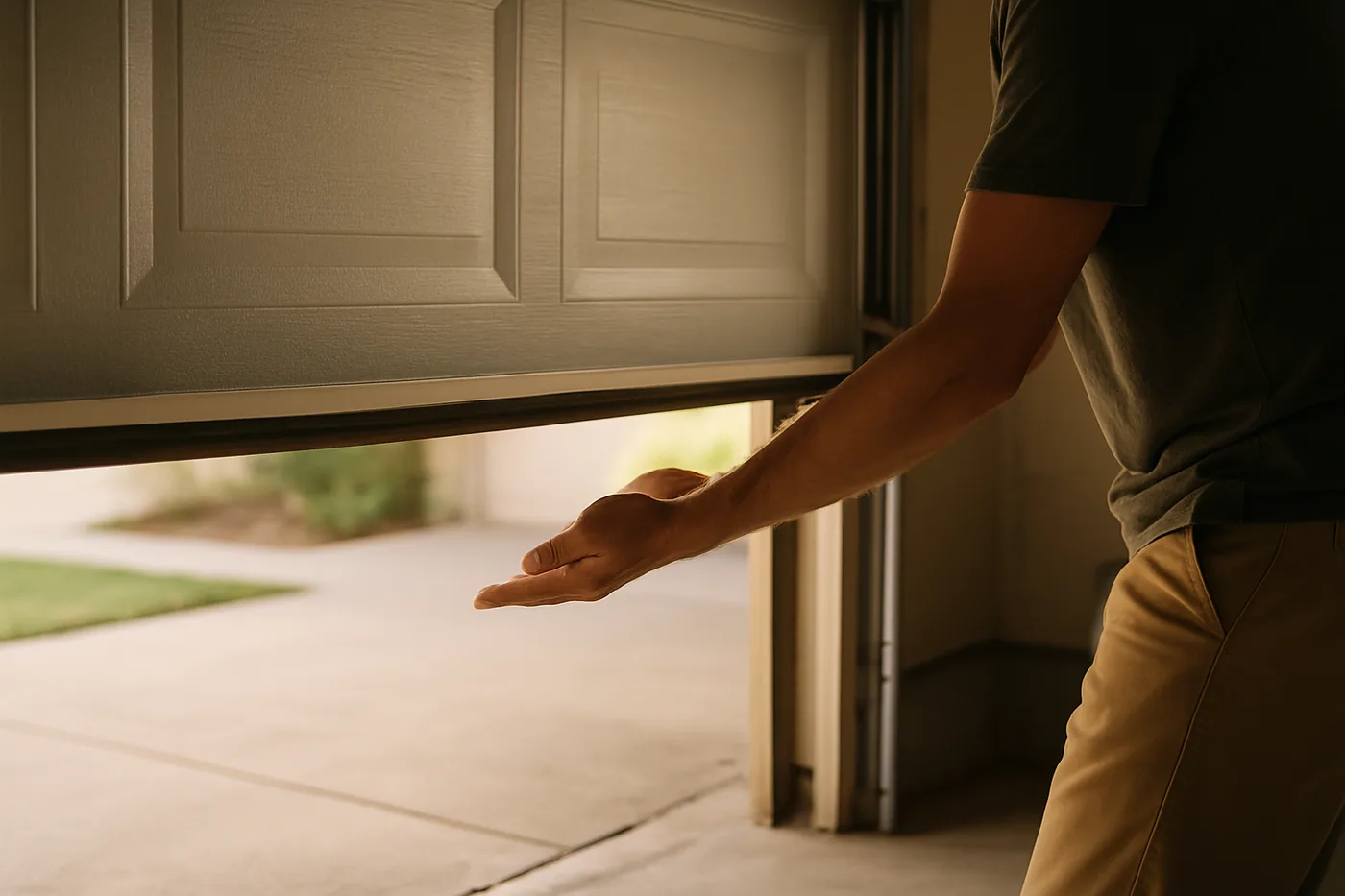
You can look at your door. You can watch it operate. You can wave a broom handle through the photo-eye beam and confirm that a moving door reverses within about two seconds. You can inspect the spring coils visually for gaps, rust, or a bright fracture line. You can walk the tracks and note any deflection or loose brackets. The garage door anatomy lab covers what a homeowner-level visual inspection includes, and Maya's parts walkthrough names each component on camera.
You cannot safely adjust the spring. You cannot safely detension the cables. You cannot safely replace a bottom bracket while the door is closed and the cables are loaded. A slipped winding bar under 236 ft-lb of stored energy can crack a skull. A snapped cable under load can lacerate an arm. These are documented consequences, not hypothetical ones. Any inspection or adjustment involving the torsion shaft, the cables, the drums, or the bottom brackets is technician work — the kind of work covered by A+ Garage Doors nationally, by garage door repair in Las Vegas specifically, or by Garage Door Pro services in their coverage area, which includes a free garage door safety inspection on the standard service call. If you want the safety walkthrough on video before you decide what to hand off, Margaret's safety guide covers it, and the noise diagnostic video covers what audible changes signal that a hand-off is overdue.
The visual inspection is yours. The tension work is not. The line between those two columns is not about your confidence level. It is about the fact that the spring stores 236 ft-lb of energy whether you respect it or not. Call a licensed technician for any work on the counterbalance system.