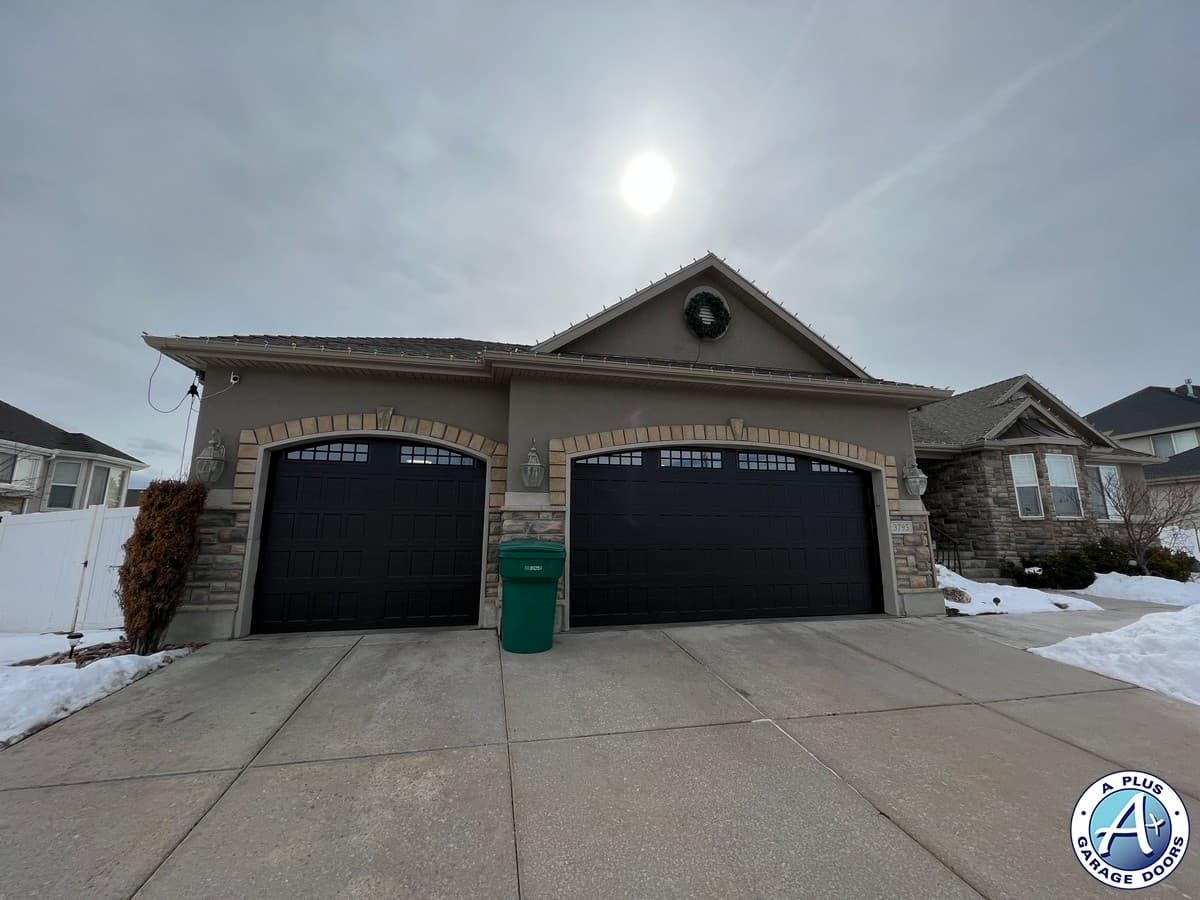
How Much Does a New Garage Door Cost in 2026?
A new garage door costs $754 to $1,707 per HomeAdvisor, with most homeowners paying about $1,231. What drives the price, cost by material and door type, what labor and extras add, and how to compare quotes.

A new garage door costs between $754 and $1,707, with most homeowners spending around $1,231, according to HomeAdvisor's installation-cost page (updated Jun 17, 2026). What moves your price is the size of the opening and the material you pick, with opener installation, insulation upgrades and structural repairs on top. HomeAdvisor is one aggregator, not a price list, so treat every figure here as a place to start and get quotes in writing.
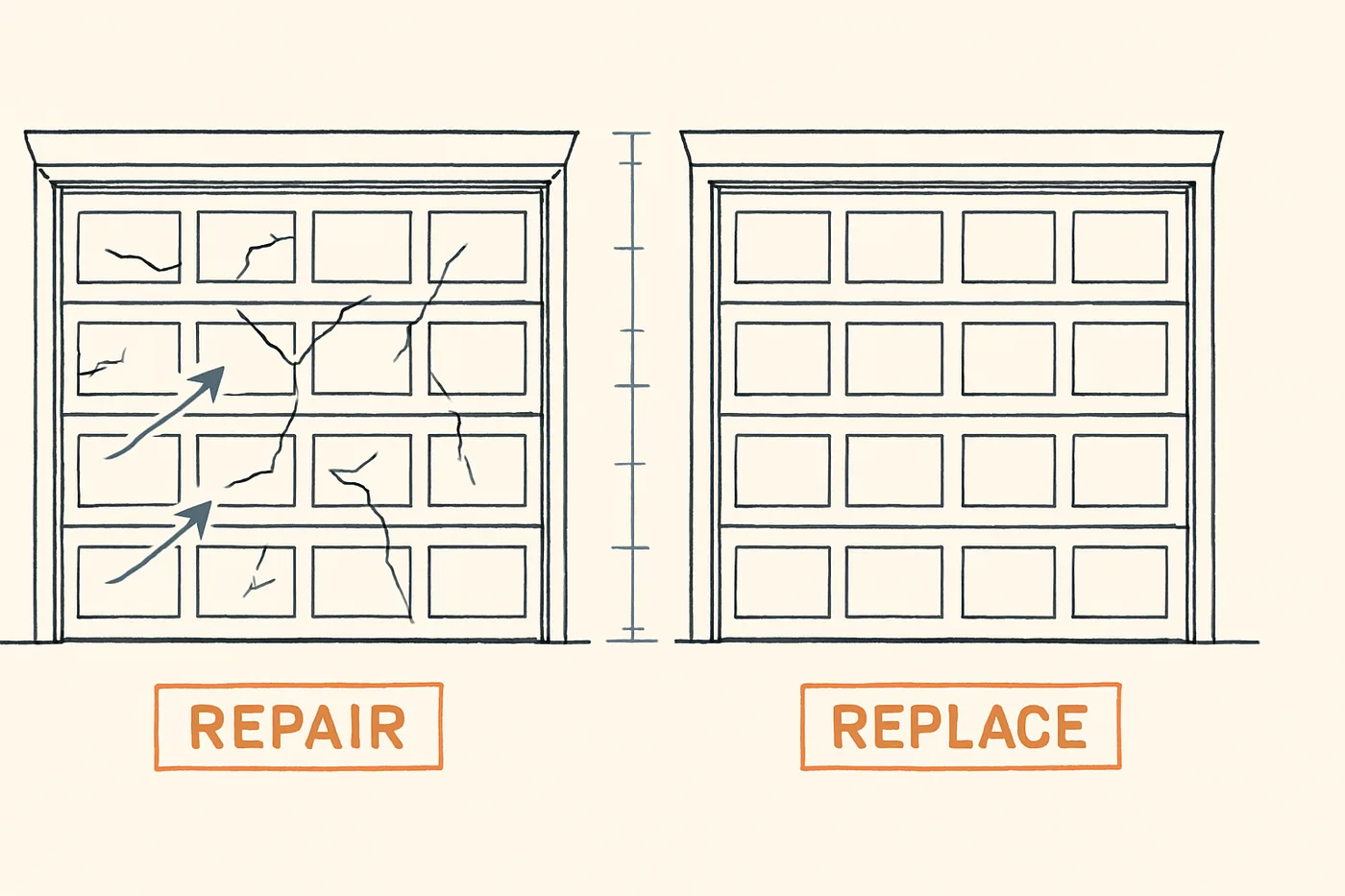
Not sure whether to repair or replace? Start with our page on deciding whether to repair or replace a garage door.
What you pay for besides the door
Labor. HomeAdvisor says most installers include a labor fee in the estimate, ranging from $200 to $500 with an average of $350, usually a flat fee for the job. If removing the old door is not included, it puts the extra at $50 to $200 for labor and disposal. Ask whether removal and haul-away are in the quote.
Size. Two-car doors are twice as wide as one-car doors and cost more, according to the same page.
A new door is also the moment to have a technician look at the springs, cables and balance on the system it hangs from. Those are a professional's job, not a homeowner's.
Price by door material
HomeAdvisor's per-door ranges by material:
| Material | Cost range per door |
|---|---|
| Aluminum | $600 to $2,900 |
| Steel | $650 to $3,200 |
| Wood | $900 to $4,500 |
| Composite | $650 to $4,800 |
| Fiberglass | $800 to $2,700 |
| Vinyl | $800 to $2,500 |
The page's own text gives steel as $600 to $3,300, which differs slightly from its table; the table figures are used here. It describes steel as budget-friendly and durable, and says wood typically sits at the high end of the cost range and can need more upkeep to prevent warping or deterioration.
Price by door type
| Door type | Average cost |
|---|---|
| Tilt-up | $400 to $1,600 |
| Sectional | $500 to $1,800 |
| Carriage house | $1,200 to $8,000 |
| Roll-up | $600 to $3,000 |
| Glass roll-up | $1,000 to $7,000 |
Most homes have the sectional type: hinged panels that slide up and over on a track to the garage ceiling. If a sectional door is what your quote describes, what a sectional garage door is explains the parts. For roll-up and rolling steel doors, see the rolling steel vs sectional guide.
Insulation and customization
HomeAdvisor puts an insulation upgrade at $600 to $3,000 depending on the insulation type and door size, and says insulated doors are rated in R-values from 0 to 20. Whether it pays for itself depends on your climate and how you use the garage; our insulated door guide covers what the upgrade runs and when it makes sense. The energy efficiency lab shows how heat moves through a door.
For custom work, HomeAdvisor says partial customization adds $800 to $2,500 and a completely custom door can exceed $10,000.
Springs and hardware
Springs are rated by cycle life. A standard spring is rated for about 10,000 cycles, one cycle is one full open and close, and at four cycles a day that is about seven years (IDC Spring, a spring manufacturer). Higher-cycle springs cost more up front: IDC Spring, a spring manufacturer, says certain wire types can offer 25,000 cycles or even 50,000. Ask your installer which spring class is included in the quote, and for the rating and price in writing. Springs are installed and adjusted by a technician, never by the homeowner.
Opener
Some quotes include a new opener and many do not. HomeAdvisor's opener page (updated Jun 20, 2026) lists belt-drive units at $160 to $350 and battery backup at $50 to $150, before installation. The belt vs screw drive guide compares the drive types.
Comparing quotes
Ask each installer to put the same things in writing: door material and model, insulation, spring class and rating, whether the opener is included, labor, and removal and haul-away. A quote that leaves any of those out is not comparable to one that includes them.
The garage door ROI lab lets you try your own numbers before you sign. And if you want a professional look at your existing door before you decide whether to replace it, the 24-point inspection tool walks through what a technician checks.
When you are ready for a quote, Garage Door Pros (our affiliated installer) covers residential installation in Southern Utah, and A+ Garage Doors (our affiliated installer) serves the Las Vegas valley.