Why Garage Door Springs Break in Cold Weather
The metallurgy and cycle-fatigue science behind why torsion springs fail on cold mornings, and how to spot wear before winter turns a tired spring into a broken one.

If your garage door spring broke on a cold morning, or you are worried it will this winter, this page covers why worn springs and cold weather go together and what you can check without touching the spring.
Not sure which problem this is? Start with our page on a broken garage door spring.
How the spring works, and what cold does to it
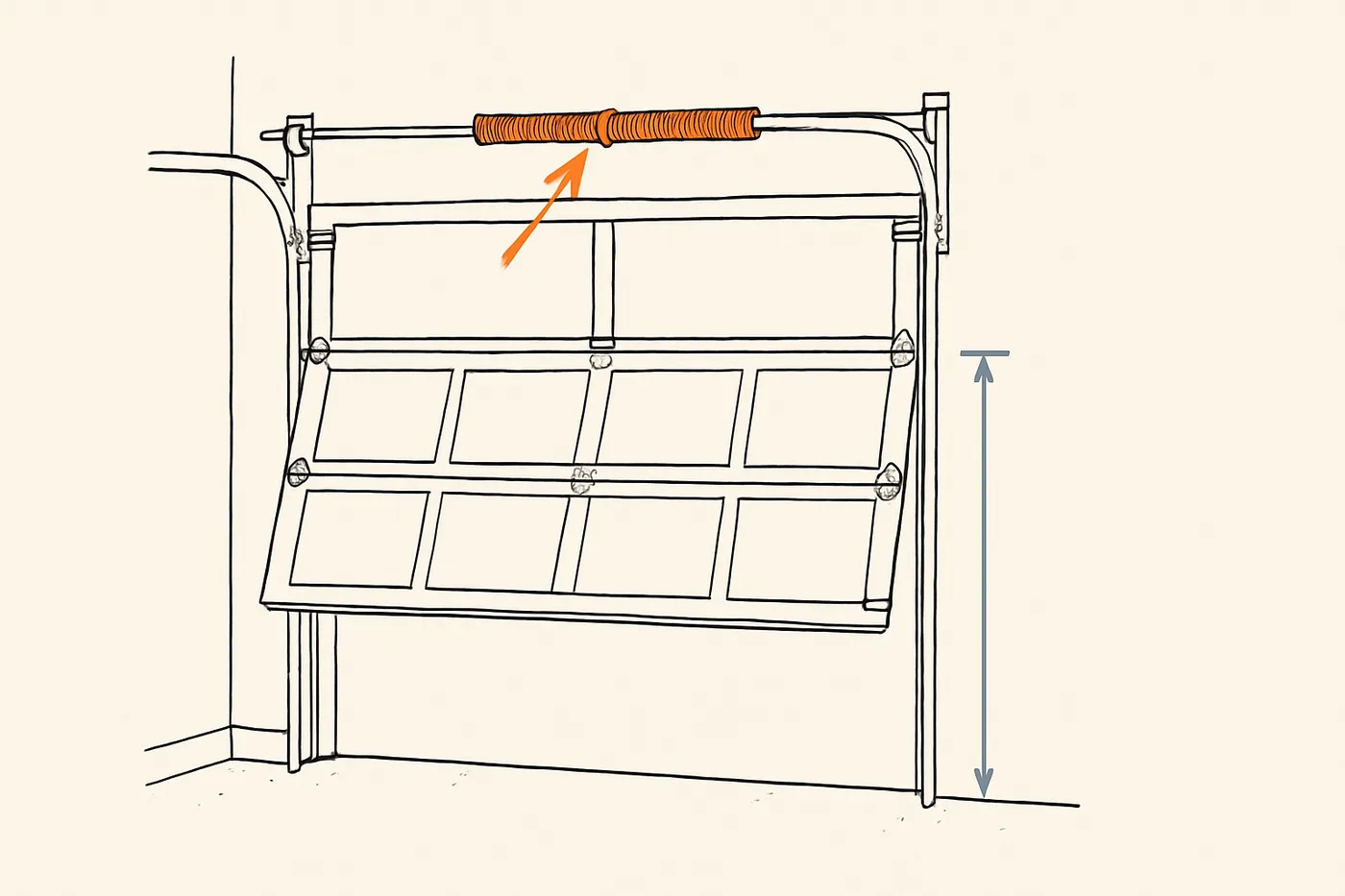
Clopay's spring guide says a torsion spring is mounted horizontally above the door on a metal shaft. When the door is closed, Clopay says, the spring is wound up, storing energy through torque, and as you open the door it unwinds, releasing that energy to lift the door's weight.
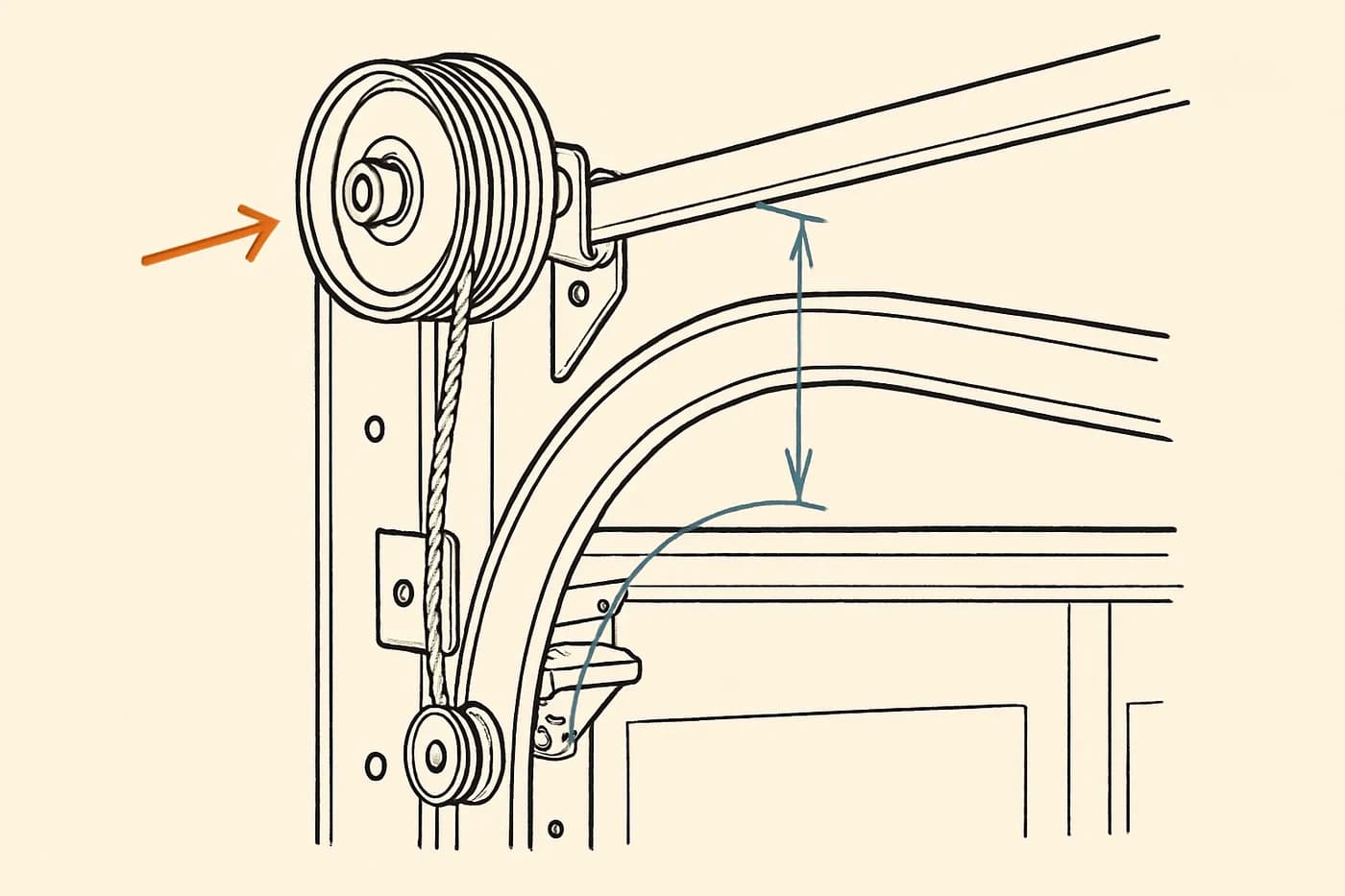
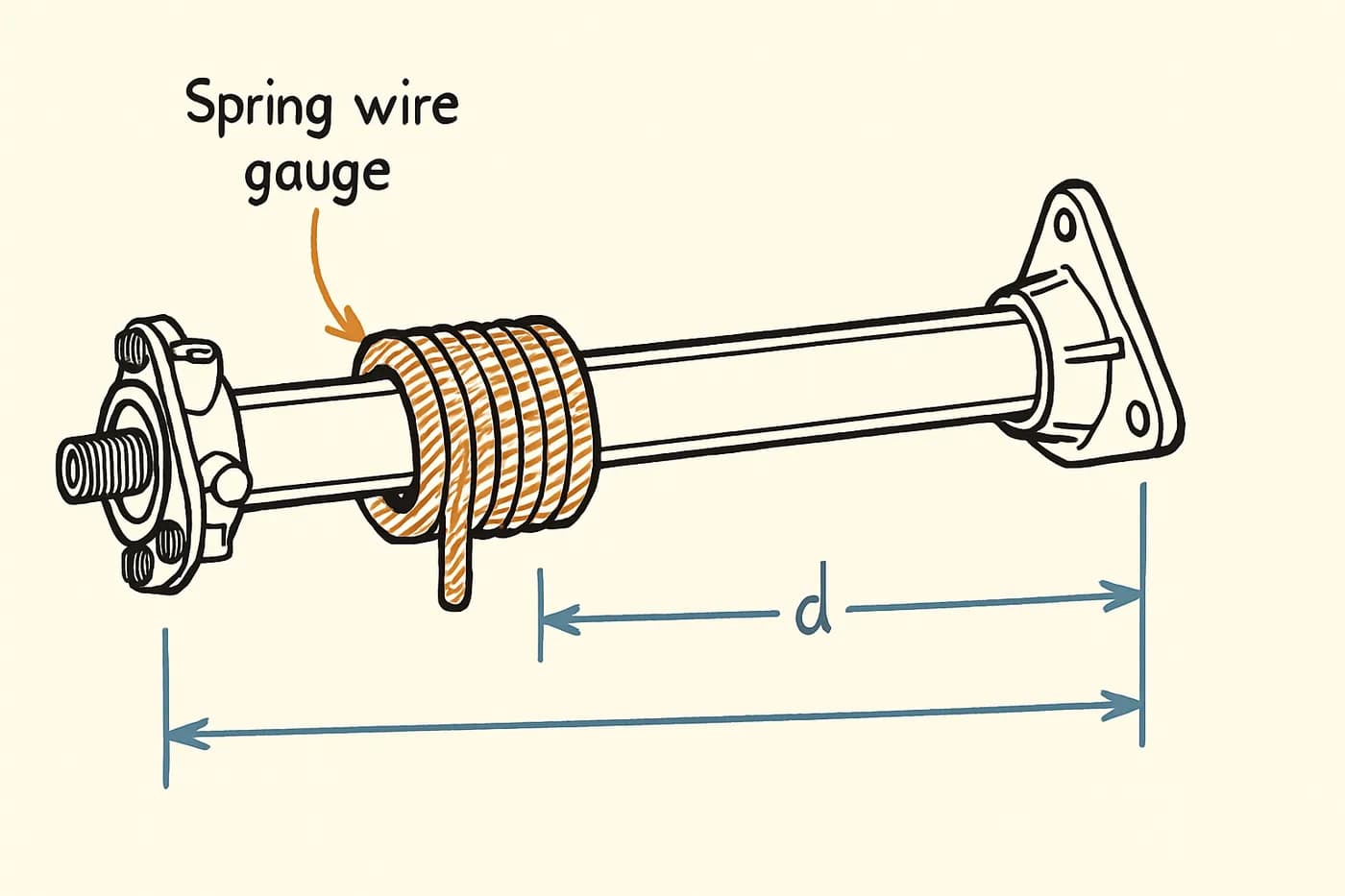
The science of garage door springs lab shows the parts that work together: the spring, the shaft, the cable drums, the mounting brackets and the lift cables.
Here is where the cold comes in: cold makes the spring steel less forgiving. Clopay says winter breakage is more common because spring wire becomes more brittle and weaker in colder temperatures.
What fatigue means, and why it matters in the cold
Each time the door opens, that energy releases. This cycle repeats every single time the door moves.
A standard spring is rated for about 10,000 cycles, one cycle is one full open and close, and at four cycles a day that is about seven years (IDC Spring, a spring manufacturer). The metal wears with every cycle, and a spring near the end of that rating has the least margin left.
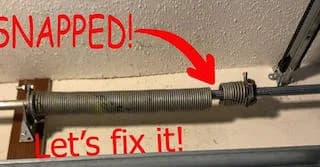
Here is how that can play out, as an example: a spring near the end of its rating makes it through the warmer months, then, with the wire more brittle in the cold, it can give out on the first cold morning. Clopay's cold weather post says that if you heard a popping noise when you opened or closed the door, that may have been your spring breaking, and that you may be able to see the long coil above the door split into two pieces. If that happens, stop using the door and call a technician.
The spring fatigue and cold weather lab sketches the idea: a crack starts in a wire, grows as the cycle count climbs and breaks the wire, and a cold weather curve sits lower than the mild weather one. The lab marks these as sketches, not measured data.
What you can actually check yourself
There is meaningful inspection work you can do before winter arrives, and it doesn't involve touching the spring.
Watch for the signs of a weak spring. Clopay's spring guide lists these signs. You can notice them in normal use, without touching a spring:
- The opener is straining more than usual. Clopay says the spring may have lost its tension.
- The door feels unusually heavy. Clopay says the same.
- The door looks crooked as it moves or gets stuck partway. Clopay says one of the springs could be weaker or broken.
- You hear loud banging or snapping noises while it runs. Clopay calls that "a strong indicator a spring has let go."
- You see a break or gap in the spring above the door. Clopay says "The most obvious sign is a visible break or gap in the spring itself."
Stop using the door and call a technician if you see a break or gap in a spring, hear loud banging or snapping, or the door looks crooked, gets stuck partway or feels unusually heavy. Do the same if you see a frayed or kinked cable; that one is our rule, not on Clopay's list. If the only sign is an opener that sounds like it is straining, book a technician. The balance test is done with the door closed and the opener disconnected, and our balance test page has the steps and when to stop.
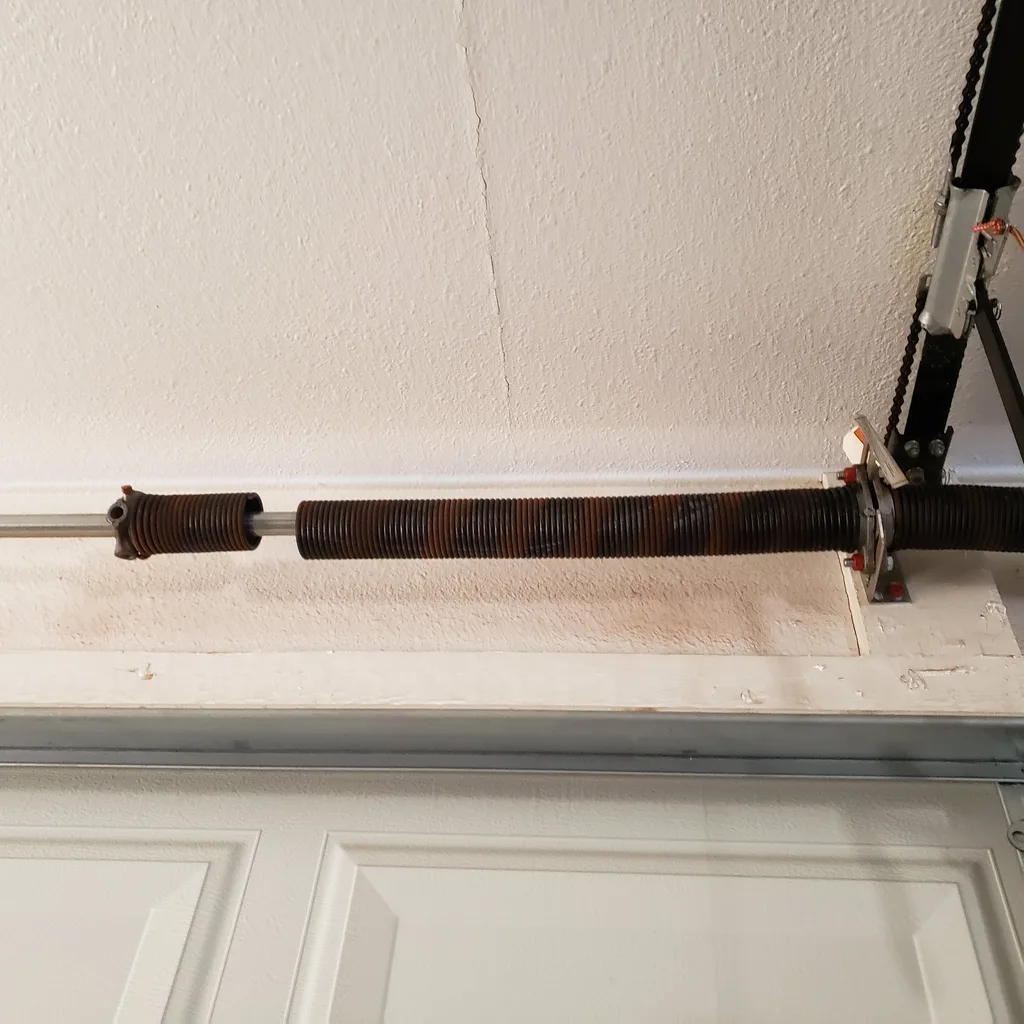
Look at the spring without touching it. With the door closed, look at the torsion spring above the door. You're not looking for anything subtle. Clopay says a broken torsion spring splits into two separate pieces, so look for a distinct gap in the coil. If you see a gap, stop using the door and call a technician. Look for rust too: Raynor says rust weakens the metal and accelerates fatigue, and that orange or flaky coils mean the spring is deteriorating. If you see rust, book a technician to look at the spring.
Listen for a change. Clopay's guide to noisy garage doors says to "listen and watch your door through a full cycle, noting any new sounds or hesitations." If you notice one, book a technician, unless it matches one of the spring signs above.
Check the age. If you know when the door was installed, compare it with the IDC Spring rating above. If your spring is near or past that rating, book a technician to inspect it and discuss whether a high-cycle upgrade makes sense, even if nothing looks wrong.
Do not attempt spring replacement or adjustment yourself
This needs to be said without softening it. Clopay's spring guide says working with a garage door spring system is not your typical DIY project: torsion and extension springs are under extreme tension, and even a small mistake can cause serious injury or property damage. Clopay also says the winding cones and mounting brackets are best adjusted by professionals.
Do not wind, unwind, replace or adjust a torsion spring yourself. Call a technician. The anatomy lab shows how the system fits together so you understand what a tech is doing, but understanding the system and doing the work yourself are different things.
Before winter gets here
Run through the 24-point inspection in the fall, while the weather is still forgiving. It includes a visual check of the springs. The balance check is on our balance test page. A problem found in the fall beats finding it in a cold garage in January, late for work, staring at a door that won't move. For the rest of your fall list, see our winterizing checklist.
A spring replacement before failure is a scheduled visit. A spring replacement after failure, on a frozen Tuesday morning, is an emergency. The difference is whether you chose the timing. If you'd rather have a professional handle the spring (or a full safety check before winter), Garage Door Pros (our affiliated installer) offers free safety inspections to customers in St. George and the surrounding area, and its page lists a spring tension check and a balance test among what is included. For same-day repair, A+ Garage Doors (our affiliated installer) services the Las Vegas area, and its repair page says "We carry common springs, cables, rollers, and opener parts on every truck."