Garage door opener battery backup: what it does and whether you need one
A guide to garage door opener battery backup: what it does, what California law requires, whether you can add it aftermarket, and whether it's worth the cost.

When the power fails, a garage door opener stops being a door opener. It is an electric motor with no electricity. The remote does nothing, the wall button does nothing, and the car inside the garage stays inside the garage until somebody pulls the emergency release and lifts a 150-to-250-pound door by hand, which only works from inside, and only if the springs are intact.
For most households that is an inconvenience. During an evacuation, it is the difference between leaving and not leaving.
A battery backup removes that failure entirely, and it is one of the few garage door upgrades whose value is easy to state precisely. What follows is what it does mechanically, what it does not do, how long it lasts, and how to decide whether the risk where you live justifies the cost.
Not sure which problem this is? Start with our page on a garage door that won't open in a power outage.
Where the outages actually come from
The case for a backup depends almost entirely on how often the power goes out where you are, and outage risk is regional rather than random.
Dry western regions with a fire season. Two separate mechanisms. Fire damages transmission infrastructure, and, increasingly, utilities cut power deliberately during high-wind, low-humidity conditions to keep lines from starting one. Those planned shutoffs, generally called Public Safety Power Shutoffs, are the ones that catch people: they happen on clear days, can last more than 24 hours, and overlap precisely with the conditions that produce evacuation orders.
Hot-dry desert. Air-conditioning load peaks with the temperature, and sustained heat above about 110°F stresses both the grid and the opener itself. Outages here tend to be short and to cluster in late afternoon, when people are arriving home. Heat is also hard on the opener's own electronics and on a backup battery's service life (see below).
Freeze-thaw and ice-storm regions. The longest outages, because ice brings down lines and crews must work in the conditions that caused the damage. Cold compounds the problem at the door: stiffened lubricant and a contracted weather seal mean the opener is already working harder in the same week the power is least reliable.
Humid coastal and storm-exposed areas. Wind events and saturated ground bring down trees and lines; the outage is usually shorter than an ice storm but arrives with less warning.
A household in a region with a real fire season or genuine ice storms should weigh a backup very differently from one that loses power twice a year for twenty minutes.
What a battery backup is, mechanically
A garage door opener is an electric motor with a logic board, a trolley, and a drive mechanism: belt, chain, or screw. When utility power fails, the motor has no energy source. The door does not open under motor power. It does not open under remote command. The opener is inert.
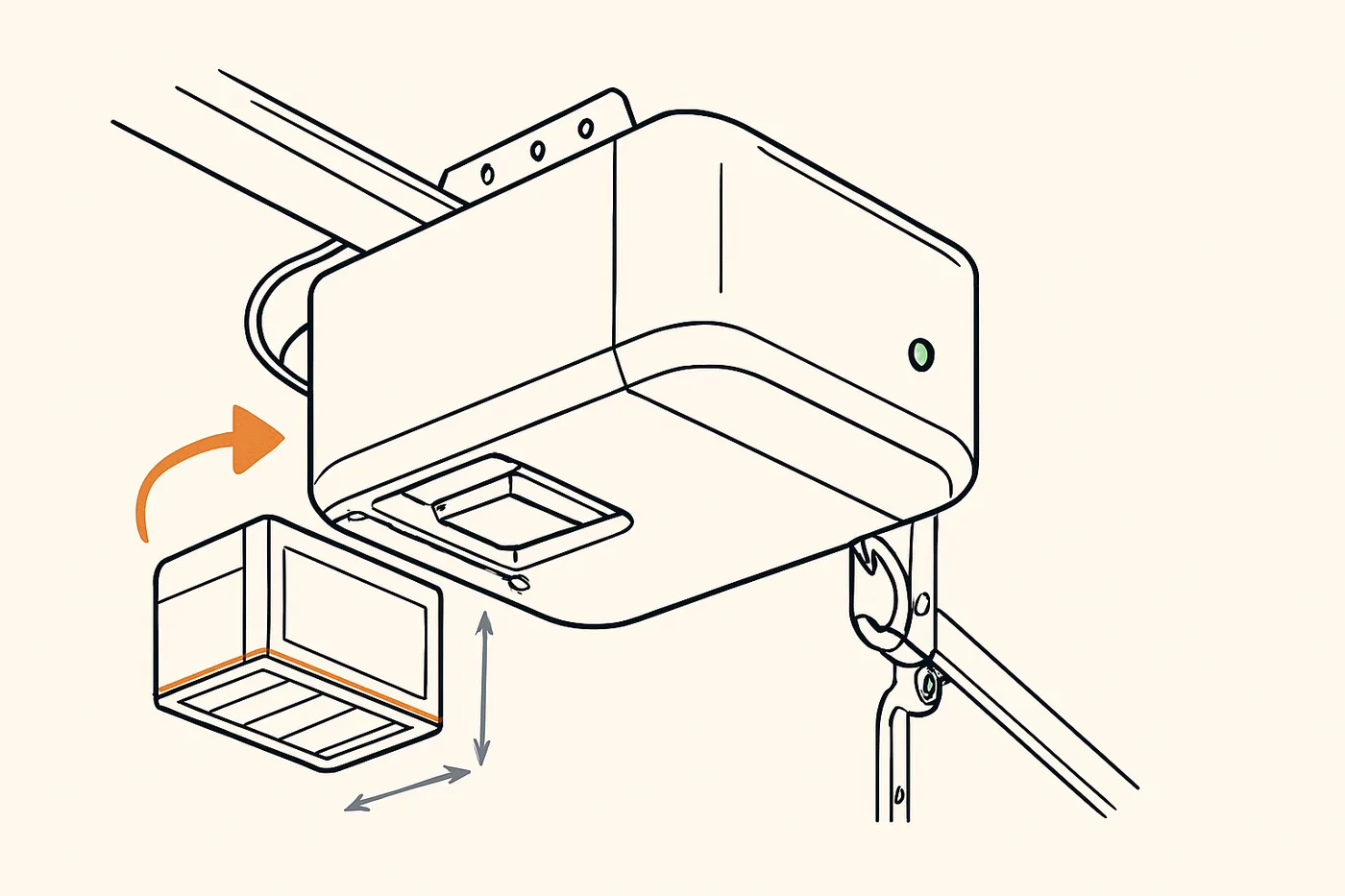
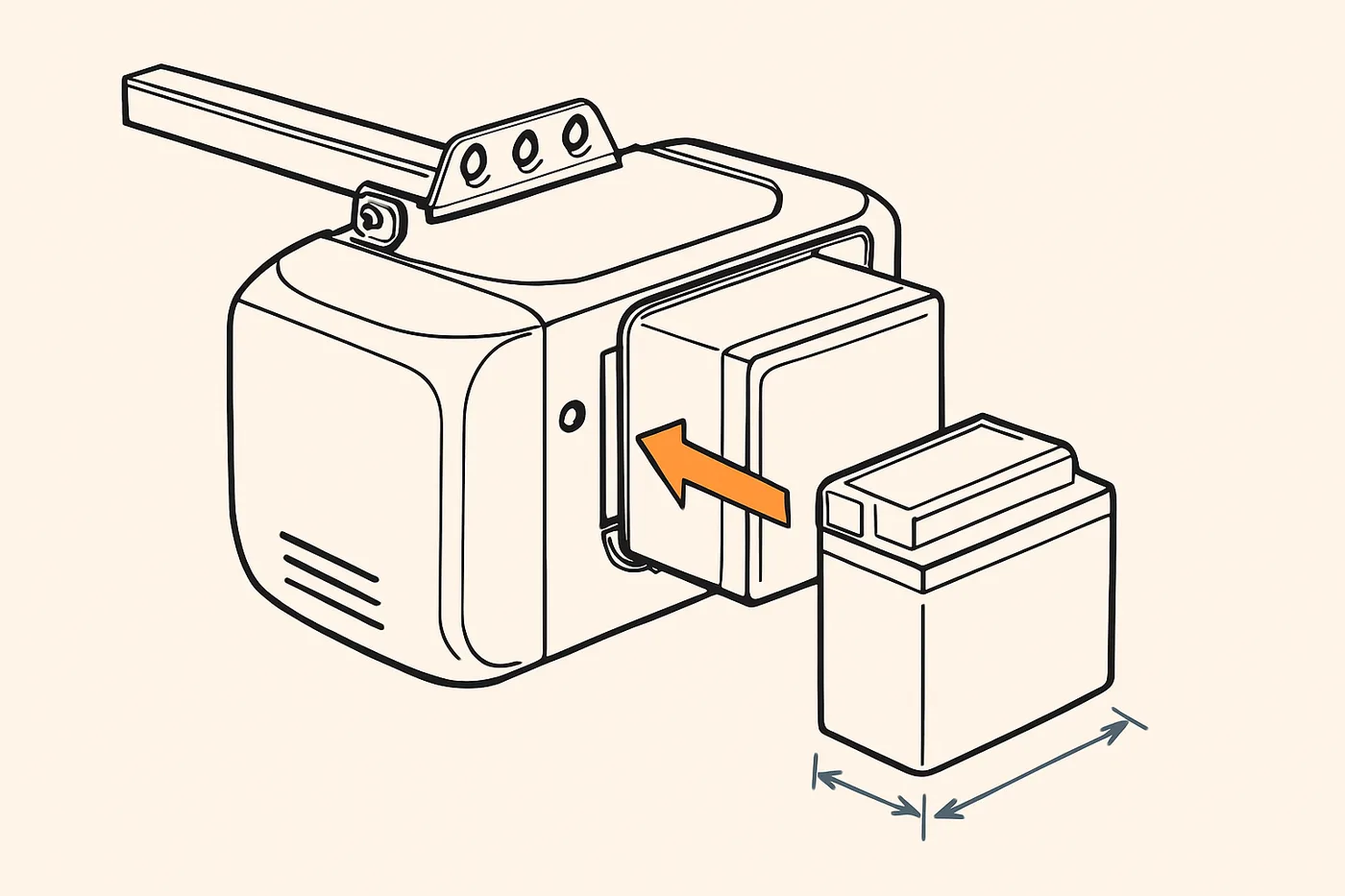
A battery backup is a sealed lead-acid or lithium battery pack that sits inside or alongside the motor housing. It is wired into the opener's power system through a dedicated port. When the opener detects loss of line voltage, it switches to the battery automatically. The motor continues to operate. The logic board continues to respond to remotes and wall buttons. The safety sensors continue to function. From the homeowner's perspective, the door works the same way it did ten seconds earlier.
That is the entire mechanism. It is a transfer switch and a battery. The complexity is in the charge controller and the monitoring circuit, not in the concept.
What it does not do
A battery backup does not power your opener through an extended outage. Most manufacturers rate their standard backup units for one to two full open-and-close cycles on a charged battery. That is the design target. Two cycles. Not twenty. Not a weekend of normal use while the grid is down.
The arithmetic is straightforward. A residential opener draws several hundred watts during the few seconds of active lift. A small sealed battery holds enough energy for a handful of those lift events and the standby current between them. If you cycle the door once to get a vehicle out and once to close behind you, you have used the backup as designed. If you open and close the door four or five times to carry supplies in and out during an outage, you will exhaust it.
The backup exists to get you and your vehicles out of the garage in an emergency. It is not a substitute for line power.
What California requires
California has put battery backup in a statute. SB 969 adds Health and Safety Code section 19892, according to a California door dealer's page that quotes the bill text. The section requires residential garage door openers to have a battery backup function designed to operate when activated because of an electrical outage, and to keep the opener operational without interruption during the outage.
On or after July 1, 2019, the bill bars manufacturing for sale, selling or offering for sale, and installing in California a residential opener that lacks the backup. It also covers openers "manufactured and sold for use in any residence," including commercial-purpose openers used in homes.
One point matters most to a homeowner, and it is about door replacements. On or after July 1, 2019, a replacement residential garage door may not be connected to an existing opener that lacks the backup, "regardless of the date of manufacture" of that opener. In practice, replacing the door can mean replacing the opener too (our reading of that subdivision). The dealer's page does not say whether the law requires you to add a backup to an opener you already own, so ask the installer.
The dealer's page also quotes Section 1 of the bill, which amends Section 19891: a civil penalty of "one thousand dollars ($1,000) per opener installed, manufactured, sold, or offered for sale" that does not comply.
A backup battery is useful for the reason it always was. The emergency-release cord disengages the trolley so the door can be lifted by hand, but a torsion-sprung door is heavy, and during an outage you may not want to lift it. The battery removes that problem for the first cycle or two (our reasoning, not the statute's).
Adding it aftermarket
If your opener did not ship with battery backup, you can often add one. Genie and LiftMaster both sell aftermarket plug-in battery packs that attach to compatible motor units through a dedicated port. LiftMaster offers a similar accessory for many of its post-2012 models. The installation is low-voltage, tool-light, and does not involve any part of the door mechanism itself: no springs, no cables, no track. You are plugging a battery into a port on a motor housing.
Compatibility is the variable. Not every opener has the port. Older chain-drive units from the 1990s and early 2000s generally do not. The controller has to be designed to detect line loss and switch sources, and the physical enclosure has to have room for the pack. Check the model number against the manufacturer's compatibility list before you buy a battery. If your model is not listed, the answer is a new opener, not a workaround.
For an overview of where the opener sits in the full system, the garage door anatomy lab walks through the mechanical layout.
Battery life and replacement
A sealed lead-acid backup battery lasts one to three years in service. The range is climate-driven. A battery sitting in a conditioned interior garage in a mild coastal climate will reach the top of that range. A battery sitting in an uninsulated attached garage in Phoenix, where summer attic-adjacent temperatures regularly exceed 120°F, will fail toward the bottom of it. Cold climates degrade sealed batteries more slowly than heat does, but deep winter lows in a detached unheated garage still shorten service life relative to a controlled environment.
The opener will tell you when the battery is failing. Most units have a status LED that changes color or blinks a fault code when the backup fails its periodic self-test. Ignoring that indicator means discovering during your next outage that the backup is not actually backing anything up.
Replacement batteries are a standard part. The opener manufacturer sells them. Third-party equivalents are widely available. The swap is a plug-out, plug-in operation on a de-energized unit.
Cost
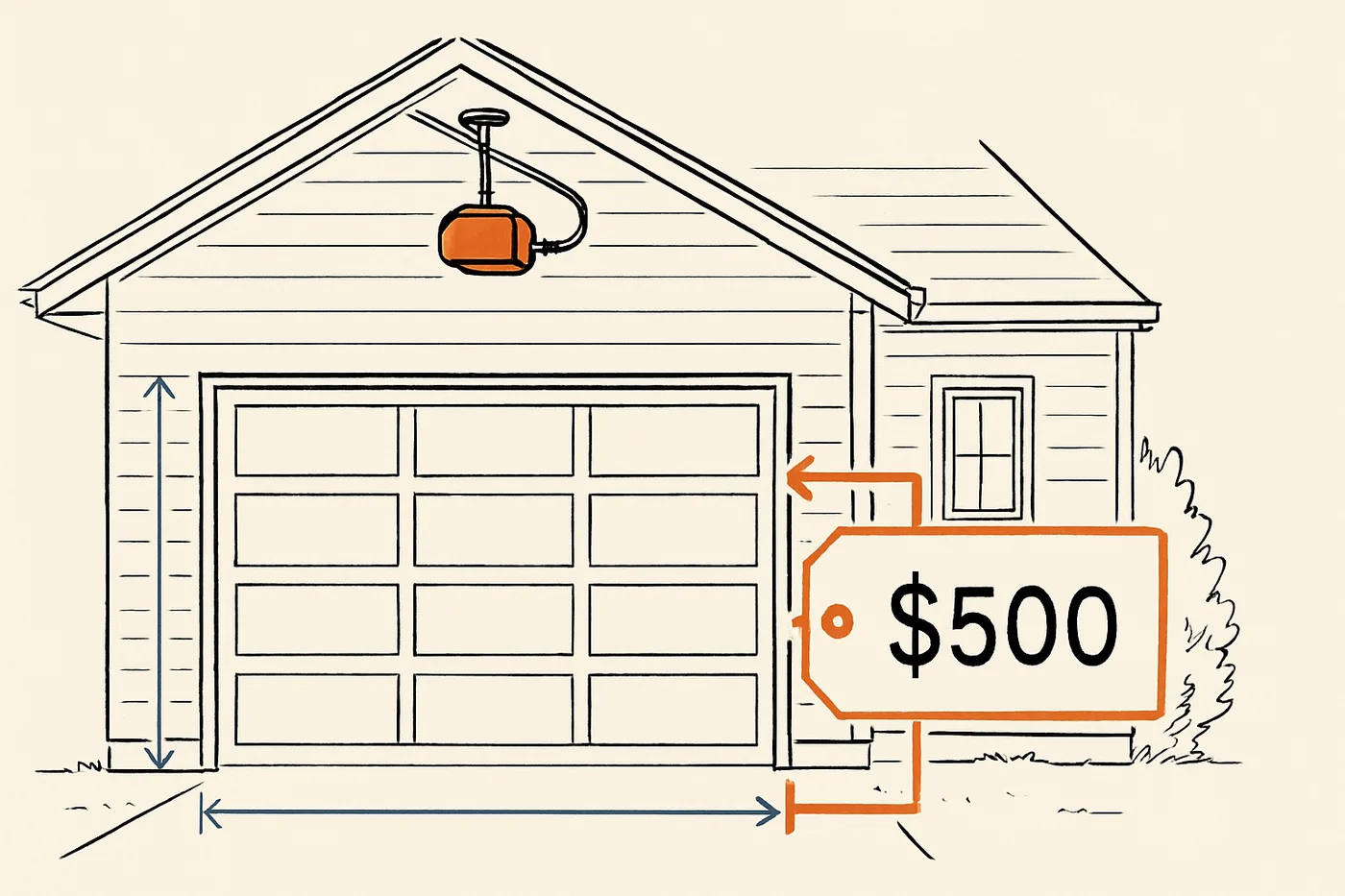
On a new installation, battery backup is an added cost on top of the opener and labor, and whether it is included depends on the model. Ask for it as a separate line on the quote.
On an aftermarket add, the battery pack alone runs in the same range. Installation, if you are comfortable with a plug-in accessory on an unpowered motor housing, is a task you can do yourself.
Whether you need one
You need one if California law applies to your installation. That is not a judgment call.
Outside California, the calculus is about your outage exposure and your evacuation risk. If you live in a wildfire-prone region, a hurricane-evacuation corridor, or anywhere the grid fails for more than a few hours several times a year, the backup is worth the money. If your garage contains the only exit path for a vehicle you might need to move in an emergency, the backup is worth the money. If you have a second egress, a manual-release cord you have actually practiced with, and a grid that rarely fails, a backup is convenience rather than safety.
Convenience is a legitimate reason to buy one. Just name it as what it is.
What you can verify and what you cannot
What you can verify yourself: whether your opener has battery backup installed, whether the status LED reports a healthy battery, whether your model appears on the manufacturer's aftermarket compatibility list, and whether the emergency-release cord on your opener disengages cleanly when the door is in the closed position with the spring balanced. Pull the cord. The trolley should release. That is a valid homeowner check.
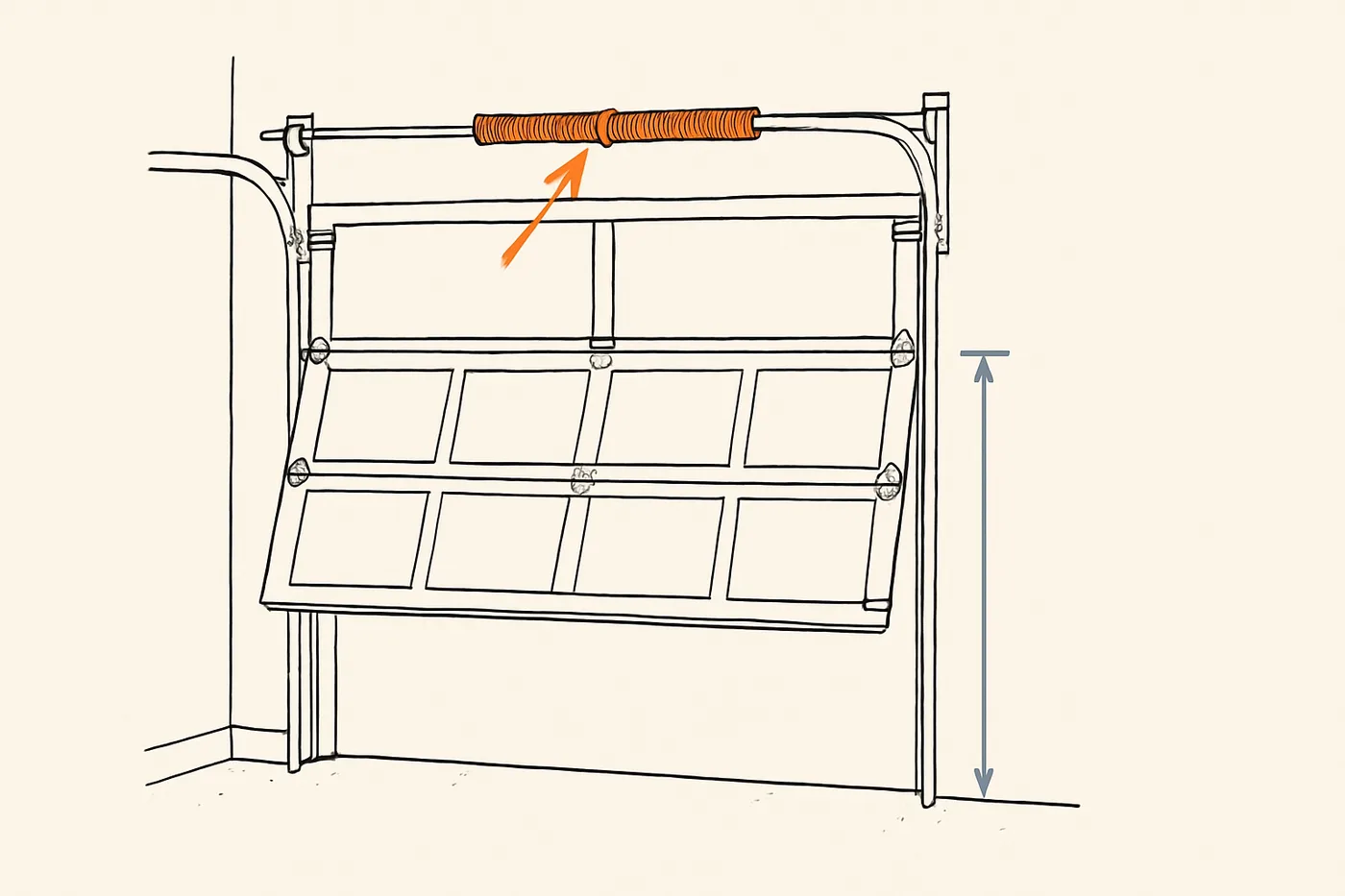
What you cannot do safely: operate the emergency release on a door that is stuck in the open position. A door held up only by the trolley, with a broken or weakened spring below it, will fall when the trolley releases. The fall can crush a hand, a foot, or a vehicle. If the door is stuck open, leave it open and call a licensed technician. A+ Garage Doors (our affiliated installer) offers same-day emergency service in the Las Vegas valley, and Garage Door Pro Services (our affiliated installer) covers the same across Southern Utah.