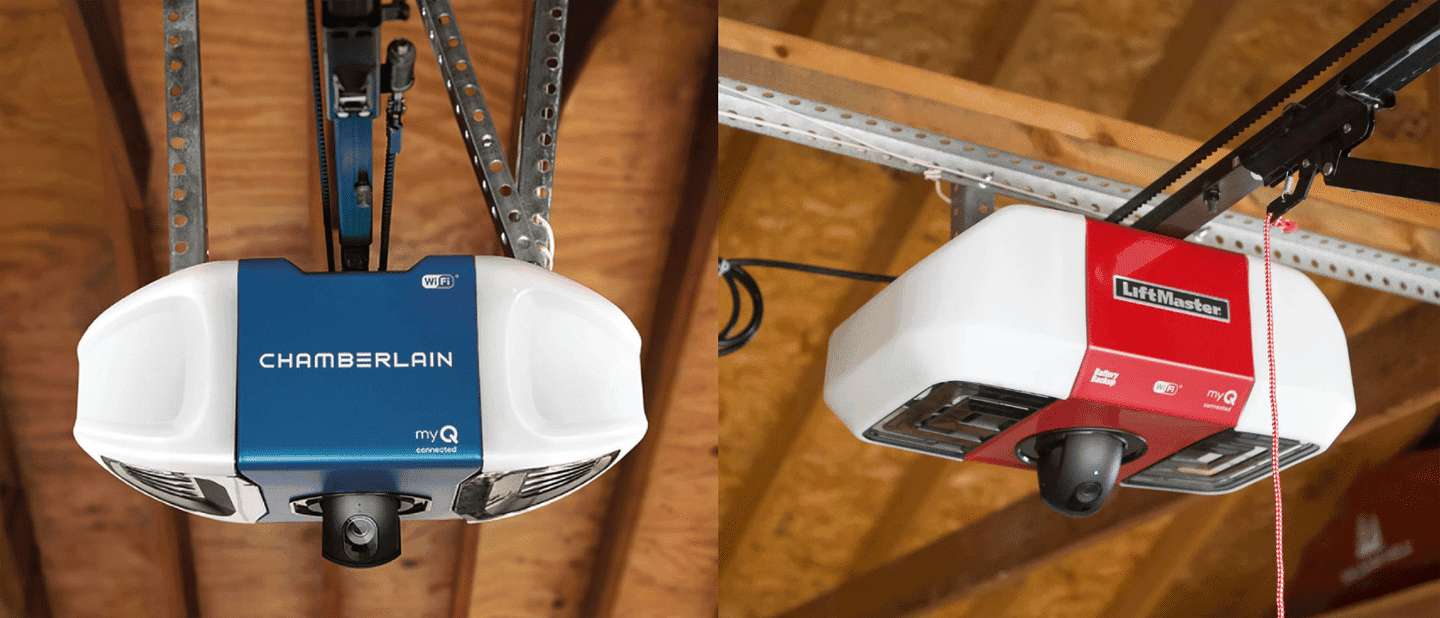
Chamberlain vs LiftMaster: does Chamberlain own LiftMaster?
Who makes LiftMaster? The Chamberlain Group, which owns both Chamberlain and LiftMaster. What differs is where you buy them and who installs them. Here is what that means for your garage.

Who makes LiftMaster? The Chamberlain Group, the same company behind Chamberlain, so yes, it owns both. Its own Chamberlain site calls it "the parent company to LiftMaster, myQ, and Chamberlain", so LiftMaster and Chamberlain are the same company's two opener brands, not competitors.
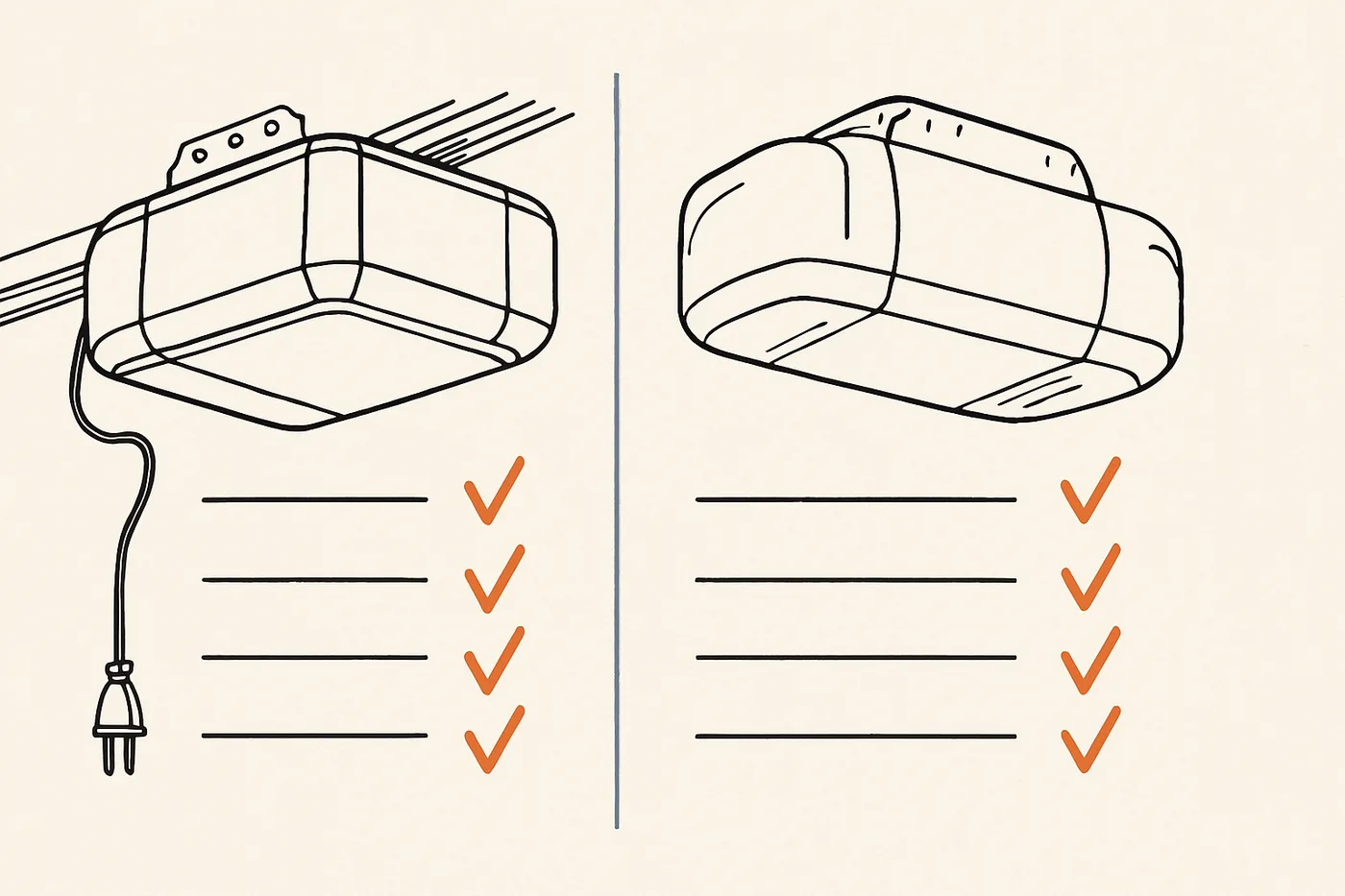
The difference is how they are sold. Chamberlain's support page says Chamberlain openers are sold through retail partners such as Home Depot and Lowes for the do-it-yourself customer, and that LiftMaster openers are sold through authorized dealers and made for professional installation.
The brand architecture
In the United States you will meet two of its brands: LiftMaster and Chamberlain. Which one you meet depends mostly on where you are buying and who is installing.
LiftMaster is the dealer-sold, professionally installed brand. Chamberlain's support page says LiftMaster openers are sold through authorized dealers and made for professional installation, and that some professional models have features the retail models do not.
Chamberlain is the retail brand. The same page says Chamberlain openers are sold through retail partners such as Home Depot and Lowes, for the do-it-yourself customer who wants easy installation. Whether you want to install an opener yourself is a separate question; if the door's springs or cables are involved, that part is a technician's job either way.
The warranty difference, stated plainly
This is where the channel difference matters most.
Warranty terms differ by brand, by model and by how the opener was bought. Check the model's own page for the terms that apply to yours, and ask the seller or installer who handles a claim.
If something fails after the first few years, the difference you will notice is who you call. With a dealer-installed opener that is usually the installer who put it in. With a retail opener you deal with the retailer or the maker directly.
The price difference, and what you're paying for
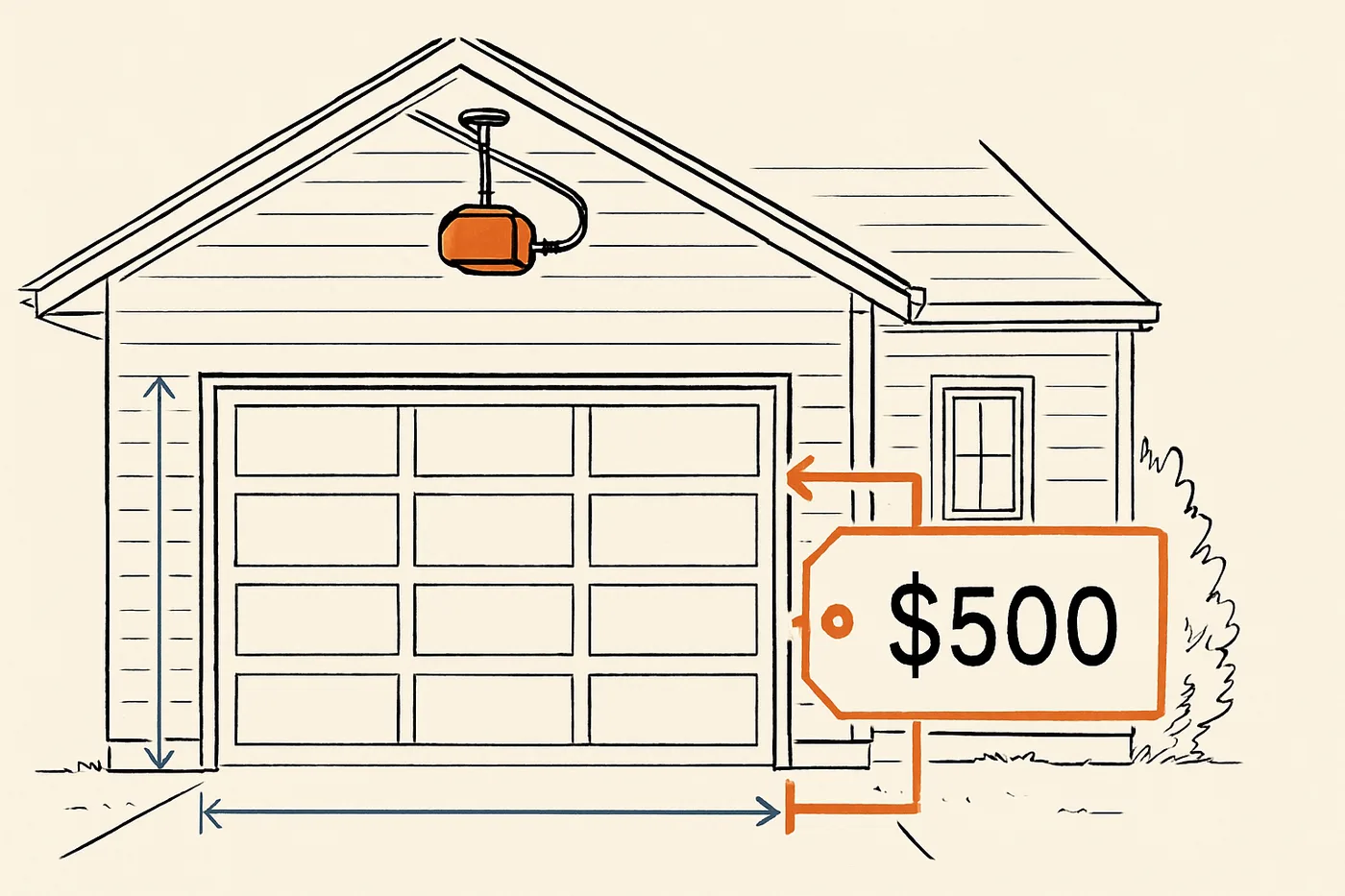
Price depends on the model, the drive type and who installs it, so get quotes for the specific model. A retail opener costs less up front, and you or someone you hire does the installing. A dealer-installed opener costs more because the installer's work and responsibility for the job are part of the price.
An installer who is accountable for the job will also check the door itself and run the reversal test from the manual before signing off. If you install a retail opener yourself, a technician should check the springs and cables first, because that part is not a homeowner job.
The honest buyer's guide
Buy Chamberlain at retail if: you are comfortable with the opener's own setup steps, a technician has already checked the door's springs and cables, you know how to run the reversal test from the manual, and you are willing to pay for a service call if something goes wrong. For a homeowner replacing an opener on a door a technician has checked, the retail route saves real money.
Buy LiftMaster through a pro if: you are replacing the opener as part of a larger service call, you want the professional installation to catch anything the door inspection might surface, or you simply don't want to spend a Saturday reading a manual and calling tech support. The professional channel is more expensive because it includes more, and for most homeowners that's the right trade.
If you're on the fence: ask the installer for the model number of what they're putting in and look it up. Ask what the model offers that the retail one you found does not.
Six models, as their manuals describe them
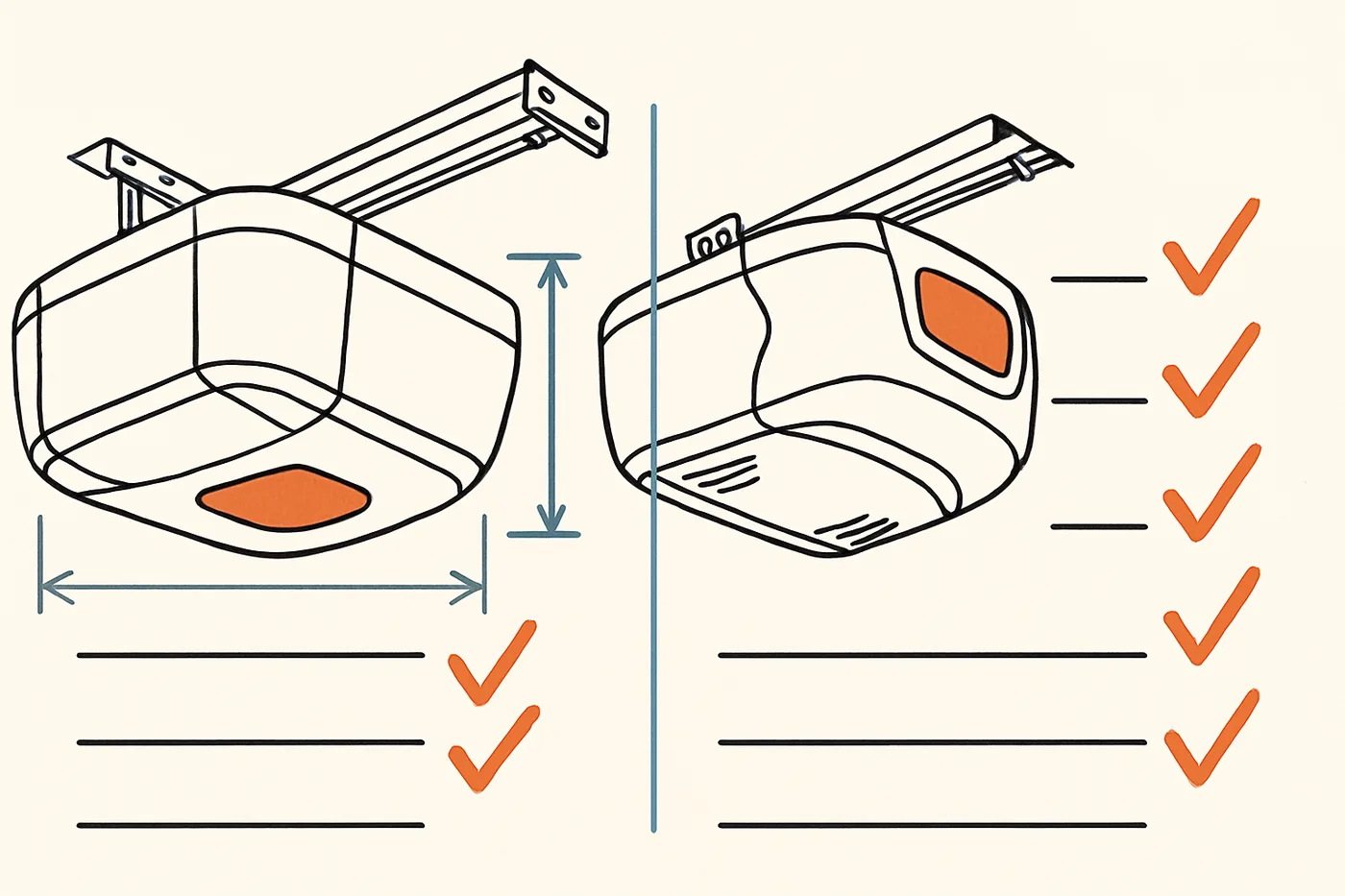
Brand tells you who sells an opener and who installs it. The model tells you what it does. These are the six models we have manual-sourced specs for, and each line says only what that opener's own manual or product page states. Side by side, with filters, they are on our brand comparison page.
- LiftMaster 8360W (manual): chain drive, built-in Wi-Fi and a DC battery backup. LiftMaster's product page lists it as discontinued.
- LiftMaster 8365W-267 (manual): chain drive, Wi-Fi smartphone control, no battery backup, 1/2 HP per LiftMaster's product page. Also listed as discontinued.
- LiftMaster 8500W (manual): wall mount, built-in Wi-Fi and a 12V battery backup. The manual says it is for installation only by trained garage door technicians, and only for sectional doors with torsion assemblies.
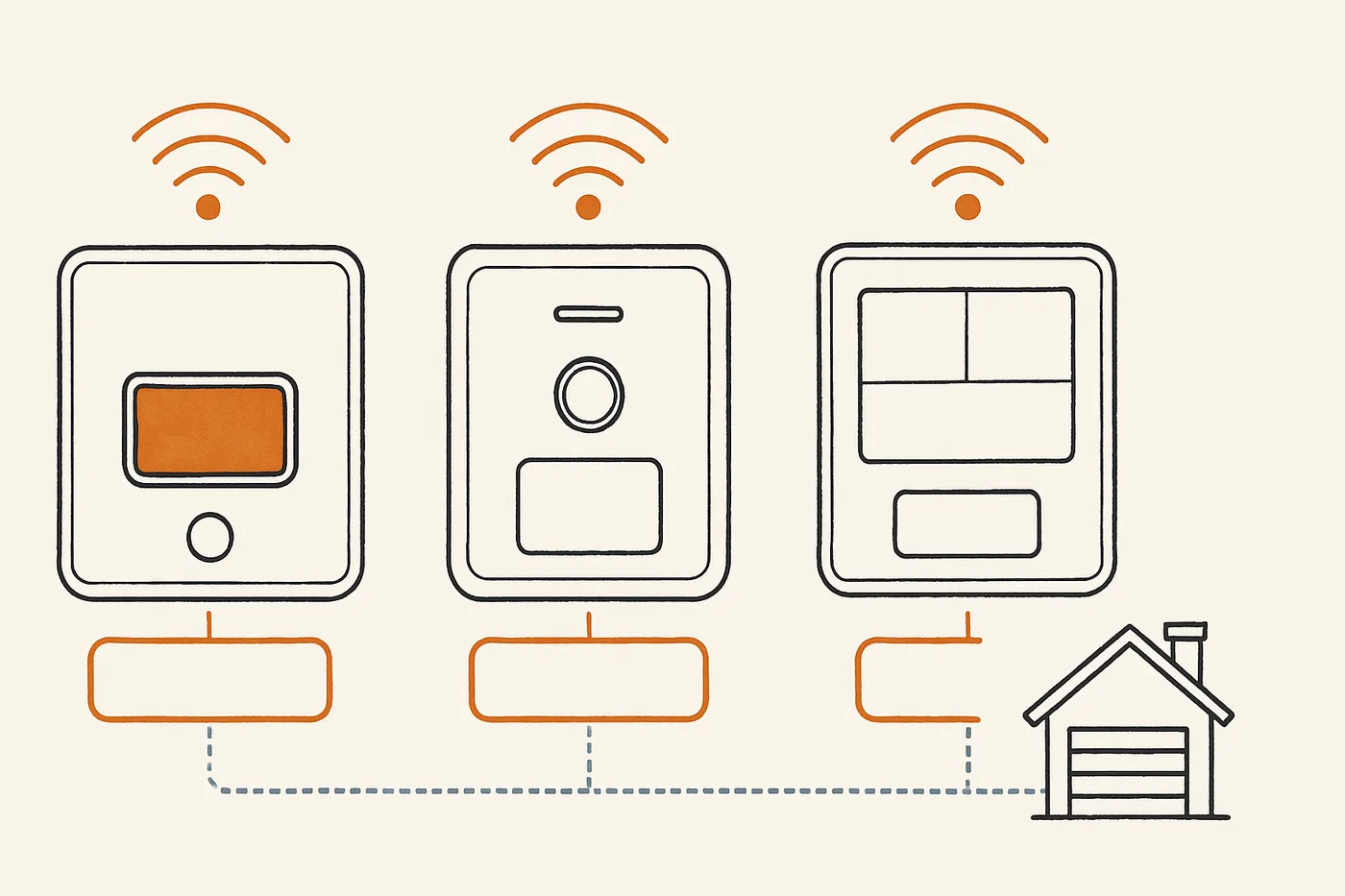
- Chamberlain B980 (manual): belt drive, myQ Wi-Fi control and battery backup, with two 3-button remotes and a wireless keypad.
- Chamberlain B6753T (manual): belt drive with integrated LED lighting, Wi-Fi/myQ control, a camera and a battery backup.
- Chamberlain B4643T (same manual): belt drive with integrated LED lighting, myQ app control over Wi-Fi and a camera. That manual lists battery backup for other models in the family, not this one.
Which one do I buy
Start with what you need, then look for the model that has it.
- You want a battery backup. Per the specs above, the 8360W, 8500W, B980 and B6753T have one. The 8365W-267 and the B4643T do not.
- You want a camera. Only the B6753T and B4643T are listed with one.
- You want chain or belt. The 8360W and 8365W-267 are chain drive. The B980, B6753T and B4643T are belt drive. The chain, belt and screw drive comparison covers what that choice means.
- You want a wall mount opener. The 8500W is the wall mount model in this list, and its manual limits it to sectional doors with torsion assemblies and installation by a trained technician.
- You are shopping used or old stock. Two of the six, the 8360W and 8365W-267, are listed as discontinued on LiftMaster's product pages.
Before you buy any of them, read the manual for the exact model number on the box, and have a technician check the door's springs and cables first. Those are not a homeowner job, and a new opener does not fix a tired door.
What to read next
Once you know the brand, the other question is what kind of opener you actually need. The chain vs belt vs screw drive article works through the mechanism types: noise, lifespan, and when each one is the right call. That decision comes before brand, not after.
If you're getting a new opener installed, it's also the right time to have the door itself assessed. The 24-point inspection tool walks through what a technician checks before a new opener goes on: spring condition, cable wear, balance, hardware. A new opener on a door that's mechanically tired is a problem you will likely meet again.
If you'd rather have a pro handle the opener swap and make sure the door is ready for it, A+ Garage Doors (our affiliated installer) installs openers in Las Vegas and checks the door as part of the visit.
Comparison image at the top of this article courtesy of Garage Transformed.