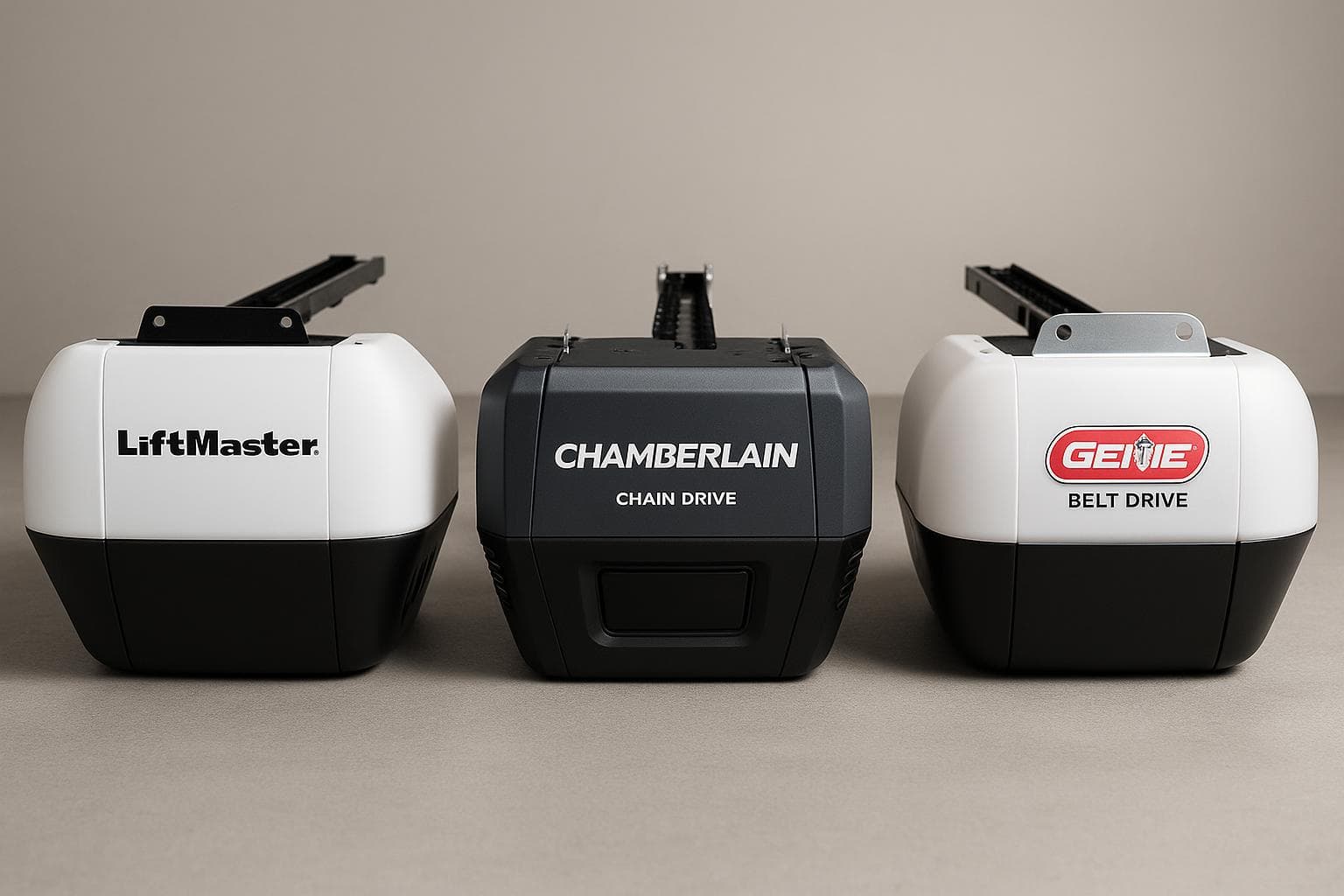
Screw Drive vs Belt Drive Garage Door Opener: Which One Should You Buy?
Belt or screw? What HomeAdvisor and Chamberlain say about the noise and price of each drive type, where chain and direct drive fit, and three questions to pick the right one.

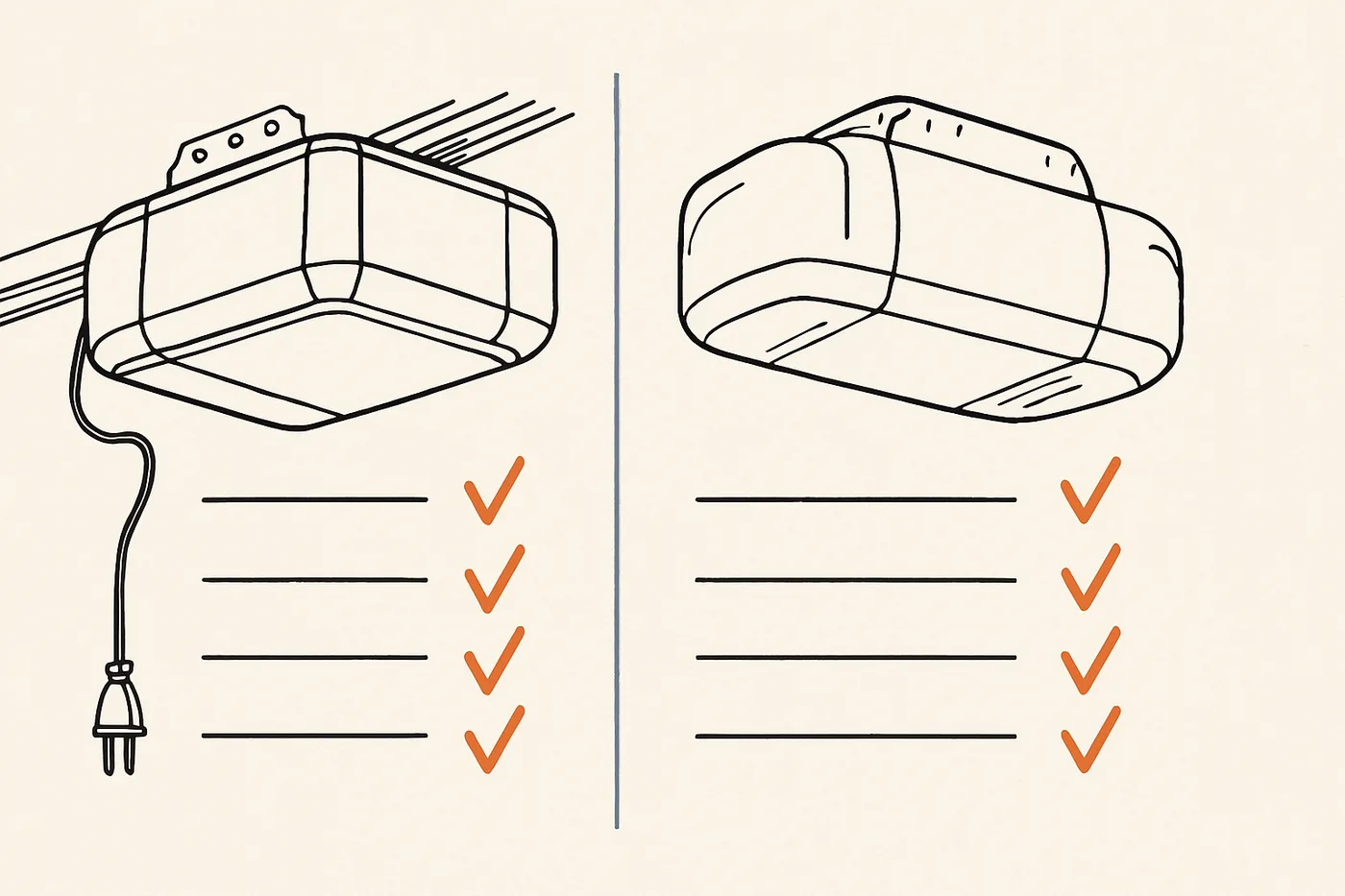
Screw drive vs belt drive, in short: HomeAdvisor's opener cost page says belt drive openers are "significantly quieter than chain drive systems" and that a screw drive is also "significantly quieter than a chain." It also cautions that screw drive openers "don’t do well with fluctuations in temperature and aren’t ideal for heavier garage doors," and that these issues, along with belt drives, "have led many manufacturers to stop making screw drive openers." In our view, if the garage is attached and noise matters, start with a belt drive, and keep an existing screw drive only if neither of those cautions applies to your garage.
Chamberlain's buyer's guide calls chain drive "Budget-friendly." In our view that makes it the natural fit for a detached garage or a tight budget. The rest of this page covers all three, plus direct drive, and ends with three questions that pick yours.
The question is usually: which opener will be quiet, last a long time, and not cost more than I need to spend? That's a reasonable question. The answer depends on three things about your house that you already know.
Before the framework, though, you need to understand what you're choosing between. There are three mainstream drive types (chain, belt, and screw) and a fourth that's worth knowing about even if you don't end up buying it. They feel different to live with, and they are priced differently.
Screw drive vs belt drive: what the manufacturers say
This section reports only what two maker pages say: Chamberlain's buyer's guide, which covers belt and chain, and Genie's page for its StealthDrive Connect 7155, a belt drive model.
- Belt drive (Chamberlain): its guide says belt drive "Uses a steel-reinforced rubber belt," with "Ultra-quiet, smooth operation" that is "Ideal for garages next to bedrooms."
- Belt drive (one Genie model): Genie says the 7155's steel reinforced belt drive, paired with its DC motor, "offers minimal noise, making operation quiet and smooth and ideal for garages close to living spaces." That is about that model, not every Genie opener.
- Chain drive (Chamberlain): its guide says chain drive "Uses a heavy-duty, bicycle-like chain," with "Durable, dependable operation," and calls it "Budget-friendly."
- Screw drive: neither page covers it, so nothing about screw drive is attributed to a maker here. What HomeAdvisor says about it is in the table below and in the screw drive section.
If the garage is attached and noise matters, belt is the drive both makers call quiet. If you are weighing two drives on a specific door, get a written quote for each and read the manual for the models quoted.
Garage door openers: belt vs chain vs screw drive compared
Every noise note and price in this table comes from HomeAdvisor's opener cost page, updated Jun 20, 2026: the noise column is from its section on each drive type, and the unit price column is its average cost range for each opener type. The maintenance and best-for columns are our view.
| Drive type | Noise (HomeAdvisor) | Unit price (HomeAdvisor, updated Jun 20, 2026) | Maintenance | Best for (our view) |
|---|---|---|---|---|
| Chain | Much louder than other models | $150 to $250 | Check the manual | Detached garages, tight budgets |
| Belt | Significantly quieter than chain | $160 to $350 | Check the manual | Attached garages, bedrooms nearby |
| Screw | Significantly quieter than a chain | $150 to $300 | Check the manual | Replacing an existing screw drive (lighter door, steady temperatures) |
| Direct drive | Very little noise | $280 to $500 | Check the manual | Long-term homeowners, new builds |
The same HomeAdvisor page, updated Jun 20, 2026, lists "a total labor cost of $130 to $510" for an average installation of two to six hours, so get a written quote for the installed price. For the signs it is time to replace rather than repair, see the garage door opener lifespan guide. If you have a budget ceiling, see our picks in the best garage door openers under $500 roundup.
Chain drive: the workhorse
A chain drive opener works exactly like a bicycle chain. A metal chain connects the trolley that pulls the door to the drive sprocket on the motor unit. When you press the button, the motor turns the sprocket, the chain moves, the trolley moves, the door moves.
HomeAdvisor calls chain drives "the most basic in design" and says they are "the least expensive." Before you buy a specific model, ask the installer which parts they stock for it.
The trade-off is noise. Chamberlain's guide calls its chain drive durable, dependable and budget-friendly, and keeps "Ultra-quiet" and "Ideal for garages next to bedrooms" for its belt drive. If your garage is detached, that difference matters little. If there is a bedroom above or beside the garage, it matters more.
Lifespan and maintenance depend on the model; read the manufacturer's warranty terms for the one you pick.
Best for: detached garages, workshops, anything where noise is irrelevant. For anyone on a strict budget who is not living above or beside the garage.
Belt drive: the quiet premium
Replace the metal chain with a rubber belt, and you have a belt drive. The operating principle is identical (belt moves trolley moves door) and Chamberlain's guide describes the steel-reinforced rubber belt as giving ultra-quiet, smooth operation.
HomeAdvisor's belt range in the table above runs higher than its chain range. Compare the specific models rather than the drive-type averages.
Check the manufacturer's manual for maintenance and warranty terms on the model you pick.
Best for: attached garages where bedrooms or living spaces are nearby. Anyone who has woken up a baby or a spouse with the old chain drive and would like to stop doing that.
Screw drive: fewer moving parts
A screw drive opener uses a metal rod running the length of the rail, which turns like a screw to move the trolley. Turn the rod, the trolley moves.
HomeAdvisor says a screw drive works with "a metal rod that rotates like a screw" and that the systems have "very few moving parts, resulting in lower maintenance costs." It also cautions that screw drive openers "don’t do well with fluctuations in temperature and aren’t ideal for heavier garage doors." Before you buy one, ask the installer what the warranty covers, and check the maker's manual for maintenance guidance on the model you pick.
Best for: a garage that already has a screw drive, a mild climate in the garage and a lighter door, given HomeAdvisor's caution above. If either of those does not fit your garage, get a belt-drive quote too. If you are starting fresh, get a belt-drive quote for the same door and compare the prices and the warranties.
Direct drive: the high-end play
A direct drive opener has no belt, chain, or screw. The motor unit itself travels along the stationary rail as it opens and closes the door. The motor is the trolley.
HomeAdvisor says that means fewer moving parts and less maintenance, and that direct drive operators "make very little noise." It lists direct-drive units at the top of the drive-type range.
Warranty terms vary by model, so read the manufacturer's page for the one you pick.
Best for: homeowners who plan to stay in the house a long time, who want fewer moving parts, and who have the budget to buy it right once. If you're doing a full garage renovation or building new, it is worth a quote.
The four ways to move a heavy steel sectional door in the science of garage doors lab maps these mechanisms mechanically, if you want to understand what you're buying from the physics up.
Three questions that pick your opener
Answer these in order and you have your answer.
One: is the garage attached or detached? If detached (the garage is a separate structure and no one sleeps near it) a chain drive is fine. Save the money. If attached and there's living space adjacent or above, start with belt drive as your baseline. HomeAdvisor says chain drives are "much louder than other models," and belt drives "significantly quieter" than chain.
Two: how long do you plan to stay in the house? A short stay: chain or entry-level belt drive, spend what you need to, don't over-invest. A long stay: in our view belt drive is a sound default, and it is worth pricing direct drive and comparing the warranties.
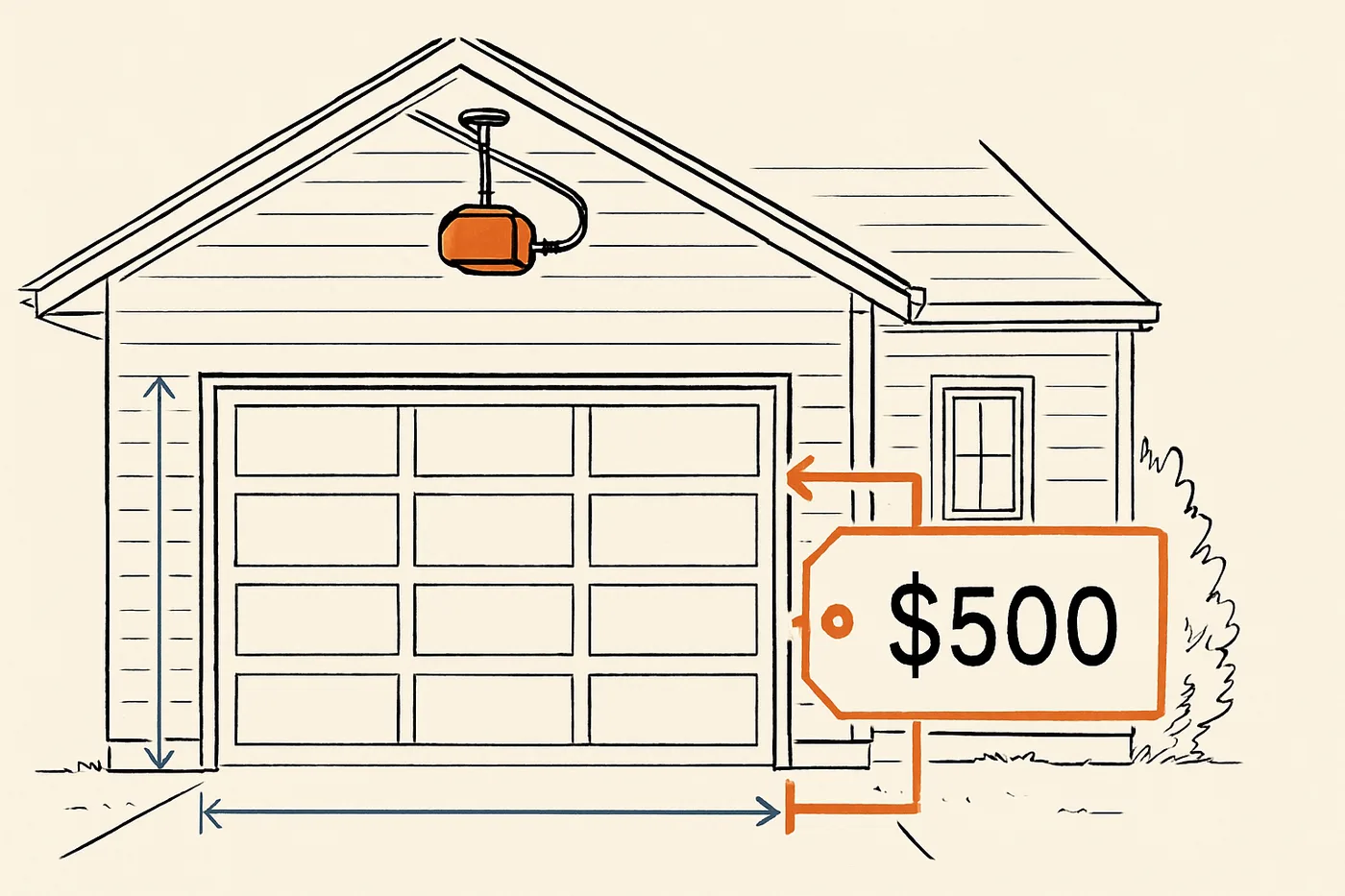
Three: what's your budget? In our view a belt drive is a sound default for an attached garage if you plan to stay a while; HomeAdvisor's range for each drive is in the table above. Get a written quote for the installed price. If you need to keep the total down, the best garage door openers under $500 guide narrows the choices.
Details that matter more than drive type
Once you've picked the mechanism, don't skip these.
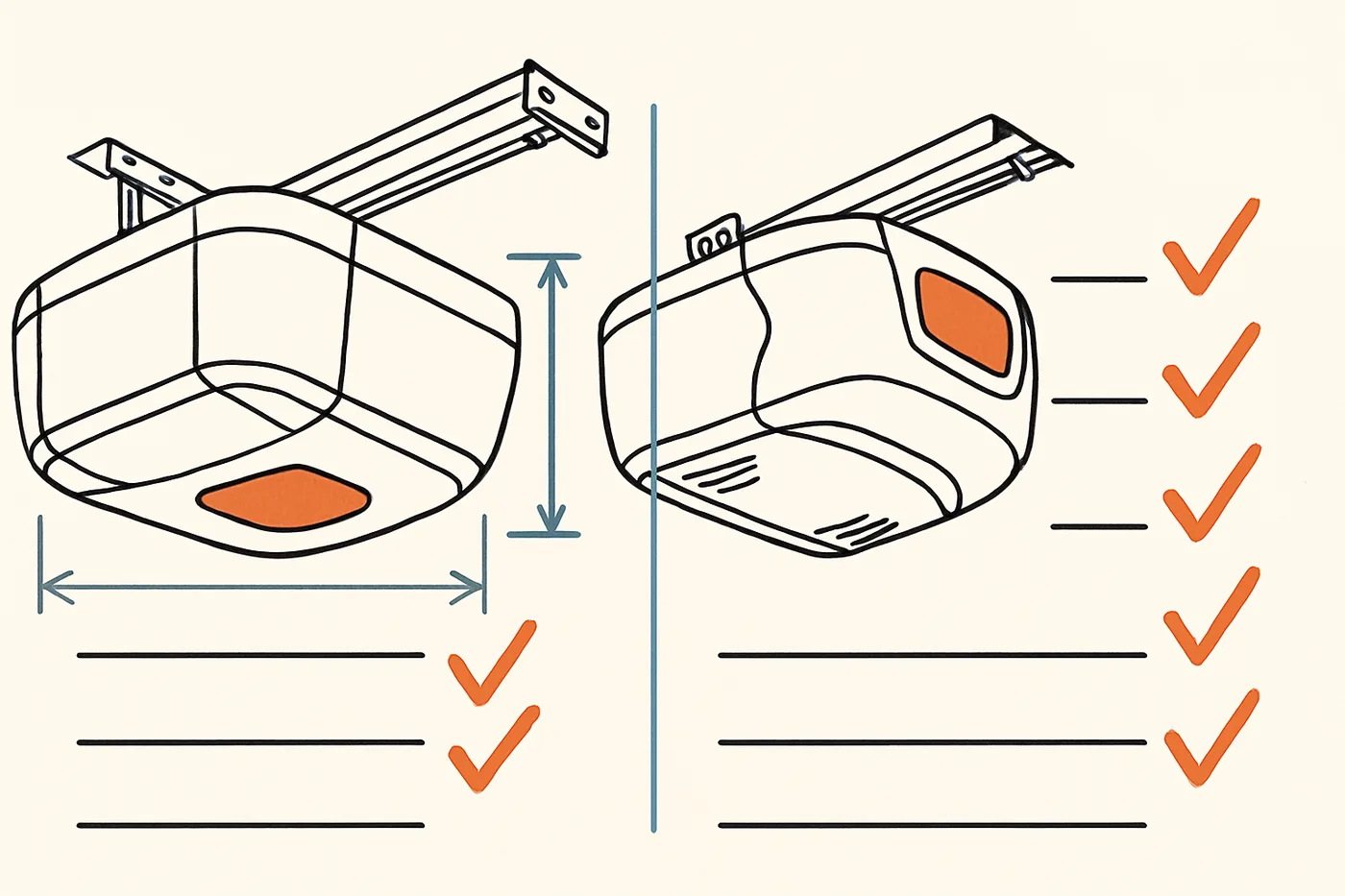
Horsepower. Check the horsepower the manufacturer specifies for your door's size and weight; the model's manual or product page lists it. Chamberlain's buyer's guide says higher lifting power "means the motor doesn’t have to work as hard and will typically last longer." A heavy door, such as a wood door or a taller one, is where that matters most.
Battery backup. Chamberlain's buyer's guide says: "If your area experiences severe weather, look for garage door openers with battery backup." HomeAdvisor's opener page, updated Jun 20, 2026, says "Battery backups are available as an aftermarket accessory for $50 to $150."
In California, SB 969 says that on or after July 1, 2019, no one may make for sale, sell, offer for sale or install in the state a residential automatic garage door opener without a battery backup function, and that the function must keep the opener "operational without interruption during an electrical outage." A California door dealer's page quotes the same bill text. If the garage is your main way in and out, ask for battery backup in the quote.
Smart-home integration. App and voice-assistant support varies by model, so check the specific model's page before you count on it. If you're thinking about which brand to buy, that question has its own answer in the LiftMaster vs Chamberlain article.
Opener lifespan. How long you can expect each drive type to last before it needs replacing is its own topic. The garage door opener lifespan guide covers the signs it's time to replace rather than repair.
What to do next
If you're replacing an opener that has finally given out, this is also the natural time to have a professional inspect the door itself (springs, cables, balance). An opener installed on a door that's in poor mechanical shape is like new brakes on a car with worn suspension. The 24-point inspection tool walks through what a technician checks. Run it before the install appointment, and you'll know whether there's anything to address while the tech is already there. If your current opener has already failed and you need it looked at quickly, A+ Garage Doors (our affiliated installer) says it provides same-day residential garage door repair across Las Vegas, Henderson, North Las Vegas, Summerlin, Paradise, Spring Valley and Enterprise. In St. George, Utah, Garage Door Pros (our affiliated installer) says "We install, repair, & maintain all major brands of doors & openers."
The investment frame for the opener decision (not just upfront cost but lifespan, maintenance cost, and noise) is something the garage door ROI lab can model with your own numbers if you want to see it on paper before you sign a quote.