Yearly Garage Door Maintenance: What to Do Yourself and What to Leave Alone
Like a car, a garage door needs an annual check to stay safe and avoid expensive breakdowns. Here's the complete homeowner guide: what you can do, what a pro should handle, and when to call before something fails.

You take your car in for an oil change. You rotate the tires. You get the brakes looked at before a road trip. You do not wait until the engine seizes to decide that maintenance was worth the money.
Your garage door works the same way, and almost nobody treats it that way.
A garage door is a large mechanical system under constant load. Springs under tension. Cables bearing weight. Rollers riding tracks. You can check a lot of it from the floor once a year, and the rest belongs to a technician.
The annual check is a short walk around the door. Some of it you do yourself. Some of it belongs to a pro. Here is how to tell the difference.
What you can safely do yourself: the "oil change" equivalents
These tasks require no special tools, no tension adjustment, and no knowledge that isn't in this article. Do the checks once a year. Late summer or early fall is a sensible time, so problems turn up before you need the door on a cold morning. Lubrication and the auto-reverse test are the exceptions: they run on shorter schedules, below.
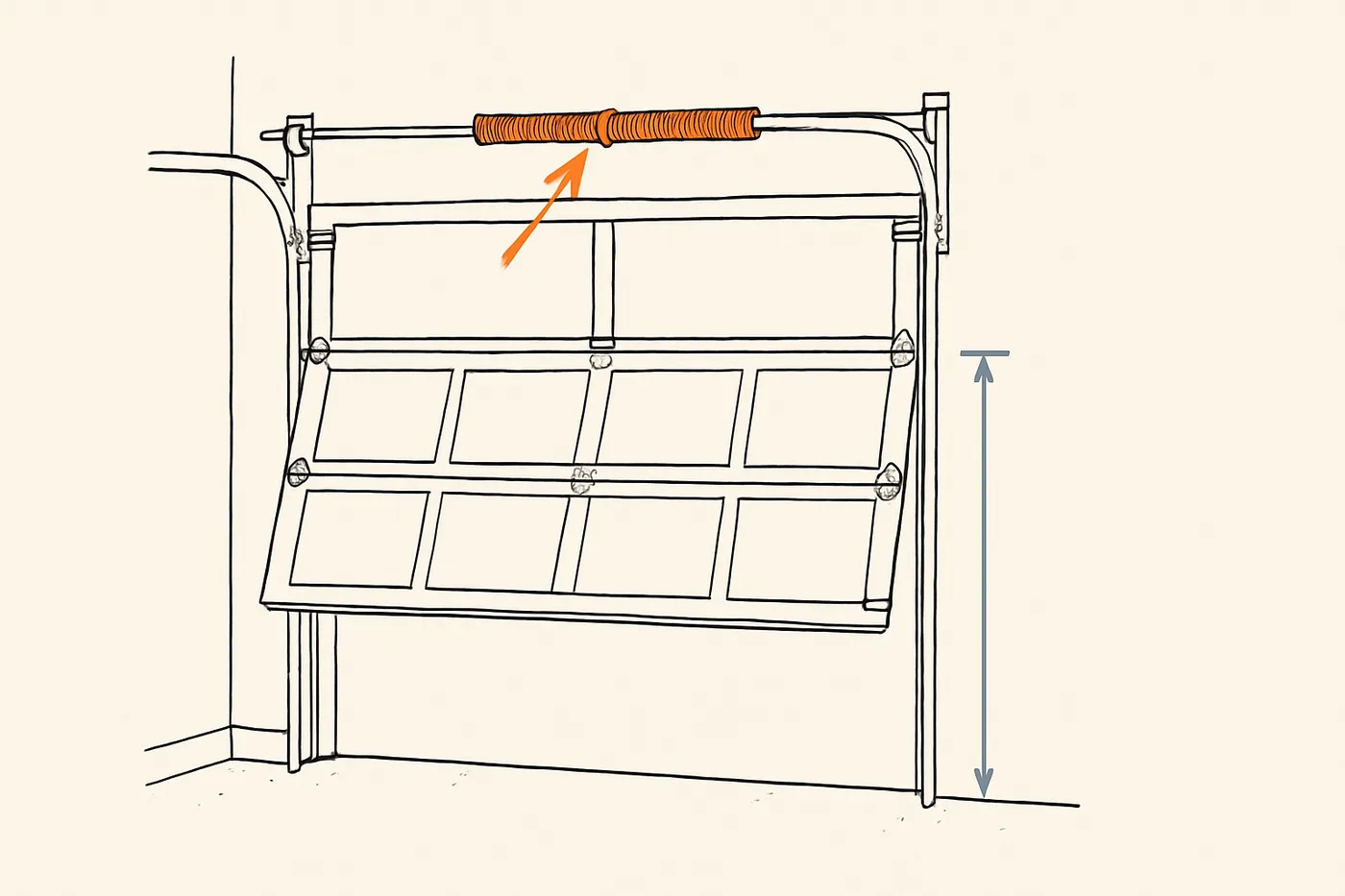
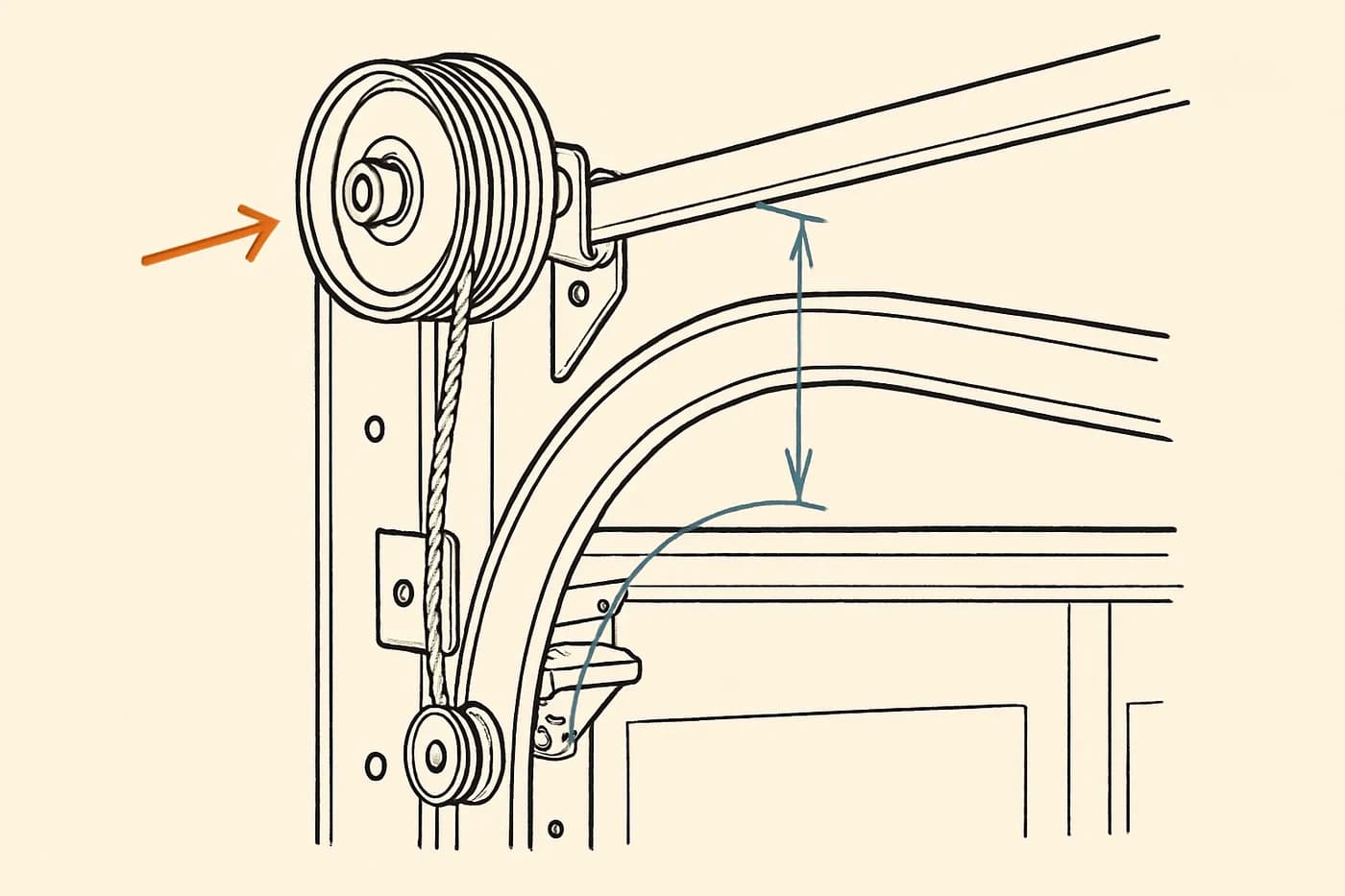
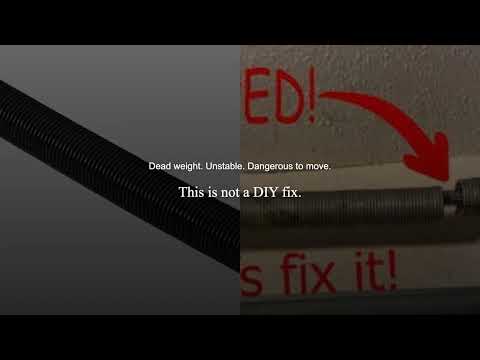
Visual inspection of springs and cables. Stand back and look at the torsion spring above the door, the large coiled spring mounted horizontally along the header beam. You're not looking for anything subtle. You're looking for a visible gap in the coil (a spring that has already broken, per Clopay) or rust along the wire; Raynor says orange or flaky coils mean a spring is deteriorating. Then look at the cables, the steel wires that run from the bottom bracket at each lower corner of the door up to the drums above. Fraying, kinking, or uneven tension between the two sides are all warning signs. If you see any of them, do not operate the door. Call a pro.
The 3D anatomy lab names every part you're looking at if any of this feels unfamiliar. Spend five minutes there before you do the inspection.
Lubricate the hinge pins and steel roller bearings, every 3 to 6 months. That is Clopay's interval, or as needed for how much you use the door and your climate. Use the type your door maker's manual names on those parts, sparingly, because Clopay says excess lubricant attracts dirt. Clopay's own pick is a silicone-based lubricant or white lithium grease. Clopay says not to lubricate nylon rollers, and to wipe off the excess so nothing drips. Clopay also lists the springs and bearing plates; we leave those to a technician.
Do not use WD-40. Clopay says WD-40 and oil-based lubricants should be avoided because they draw dirt and dust, which causes premature wear.
Look over the hardware. Look at the track brackets on the wall, the hinges between the panels and the opener's mounting hardware for anything loose, missing, bent or cracked. Look, don't tighten: brackets and hinges hold a door under load, so a loose or damaged one goes on the list for the technician.
Do not touch the lag bolts on the bottom bracket, the metal fitting at the lower corner of the door where the cable attaches. That bracket is under significant cable tension even with the door closed. Leave it alone.
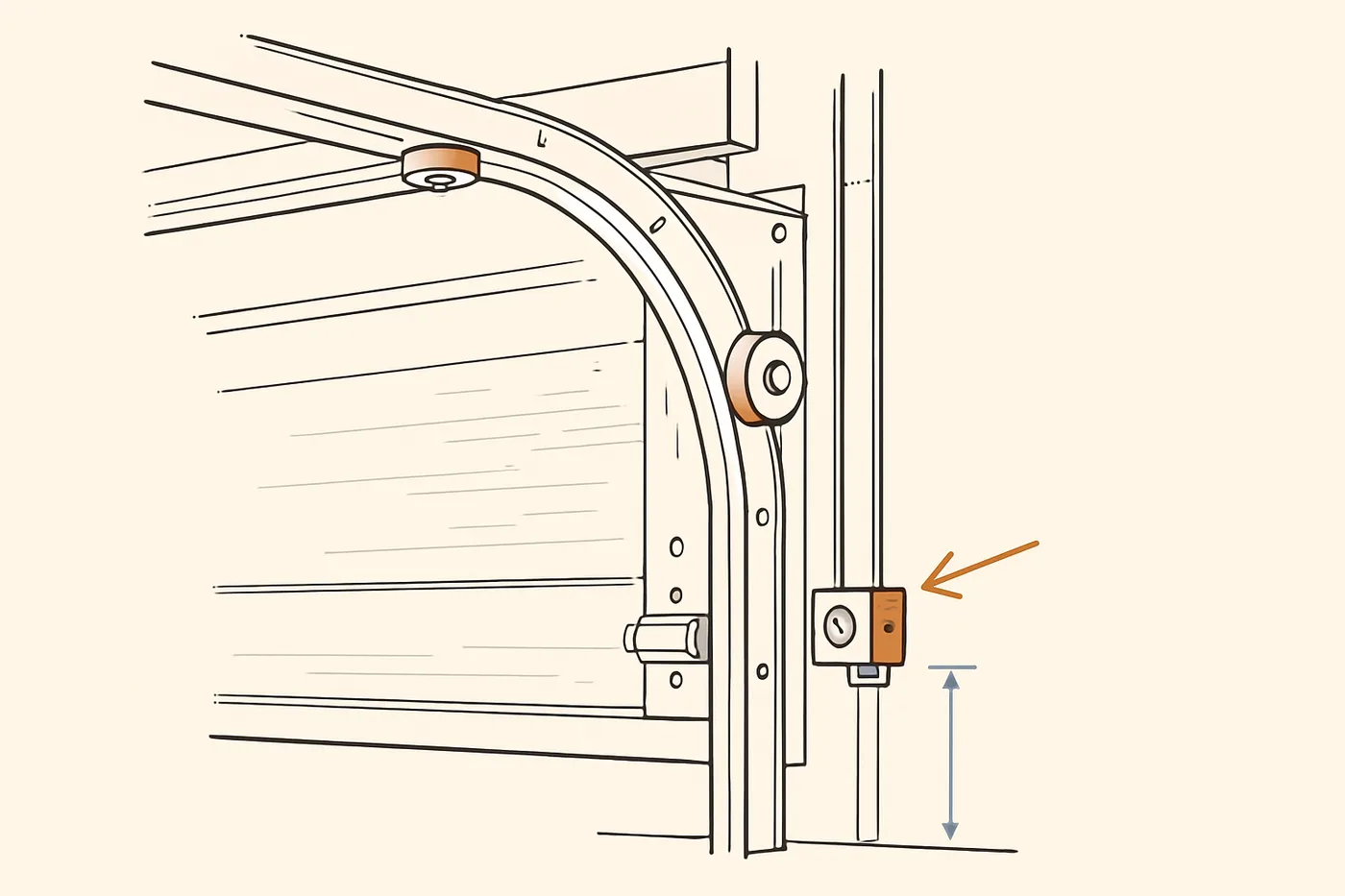
Clean the photo-eye sensors. Your opener's photo-eye sensors sit near the floor on either side of the door opening, pointed at each other across the path of the door. Check the opener's manual for how to clean the lenses, and look up what it says about the sensors' indicator lights if one is off or blinking. The safety systems lab shows how the sensors work.
Clear the tracks. Run a rag along the inside of both vertical tracks. You're removing dirt, hardened grease, and any debris that has worked its way into the path. Do not apply lubricant to the tracks. Clopay says not to lubricate the tracks: wipe them with a damp cloth, because lubricant there makes the rollers work harder and strains the opener.
Test the auto-reverse. Your opener's manual describes the reversal test. Chamberlain's version puts a one-inch board, or a 2x4 laid flat, on the floor in the middle of the door's path and says the door must reverse when it hits the obstruction. Set the board in the center of the opening and close the door with the wall button or remote. Chamberlain says to test the safety reversal system every month and after any adjustments are made, so do not save this test for the yearly check. If the door does not reverse, stop using the opener and call a technician. Never adjust the force to make it pass. This is a safety system the federal rule requires: 16 CFR part 1211 says a closing door must start to reverse within 2 seconds of hitting an obstruction.
What to leave for a pro: the "alignment and brake inspection" equivalents
A good mechanic doesn't expect you to adjust your own valve timing. The same logic applies here. These tasks involve either stored energy that can hurt you or precision calibration that is easy to get wrong.
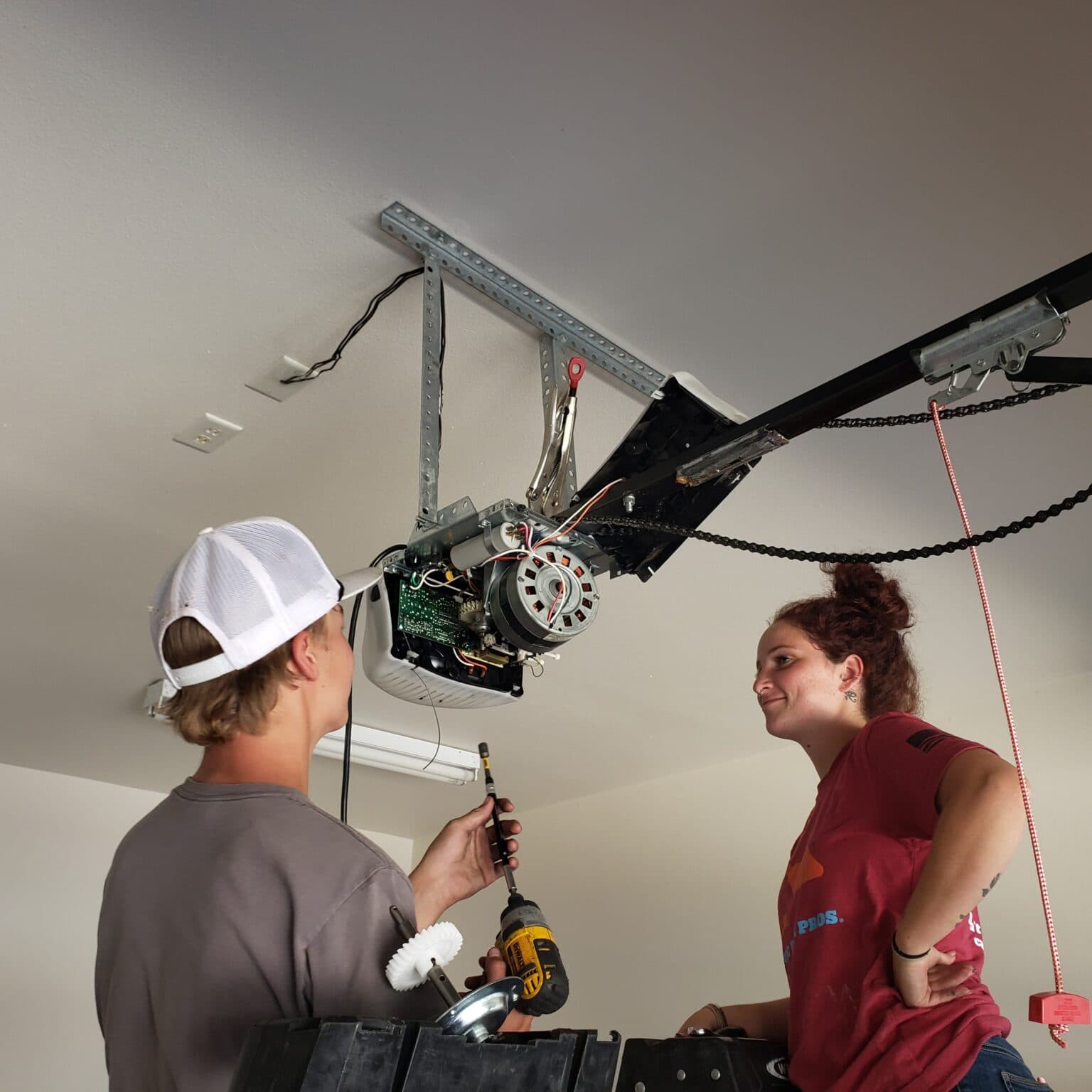
Spring tension adjustment. Never adjust a spring yourself, even if you have watched every tutorial online. Call a pro. The science of garage door springs lab shows how the spring works. The spring safety video shows what a technician checks before touching one.
Cable replacement. If you saw fraying or kinking during your visual inspection, do not attempt to rewind or replace the cable yourself. Cables, like springs, are a technician's job.
Full balance test and opener force calibration. A technician does the balance test and sets the opener afterward. Our balance test page explains the test and when to stop and call a pro.
Drum inspection. The drums the cables wind around sit on the torsion shaft above the door. A technician checks them; you do not.
The cost of skipping it
A standard spring is rated for about 10,000 cycles, one cycle is one full open and close, and at four cycles a day that is about seven years (IDC Spring, a spring manufacturer). A door that has had no check in that time has no one watching a spring that is nearing the end of its rating, and a spring does not always give a warning before it breaks.
A broken spring can leave the door stuck shut. HomeAdvisor's repair-cost page (updated Jun 20, 2026) lists springs at $180 to $350 and cables at $100 to $400, before any other part that needs work. What a yearly check costs depends on who does it and where you live, so ask for a written quote.
That is the case for the annual check: a technician who looks at the spring, cables and drums once a year can flag wear before the door sticks, on a day you chose.
The right time to do it
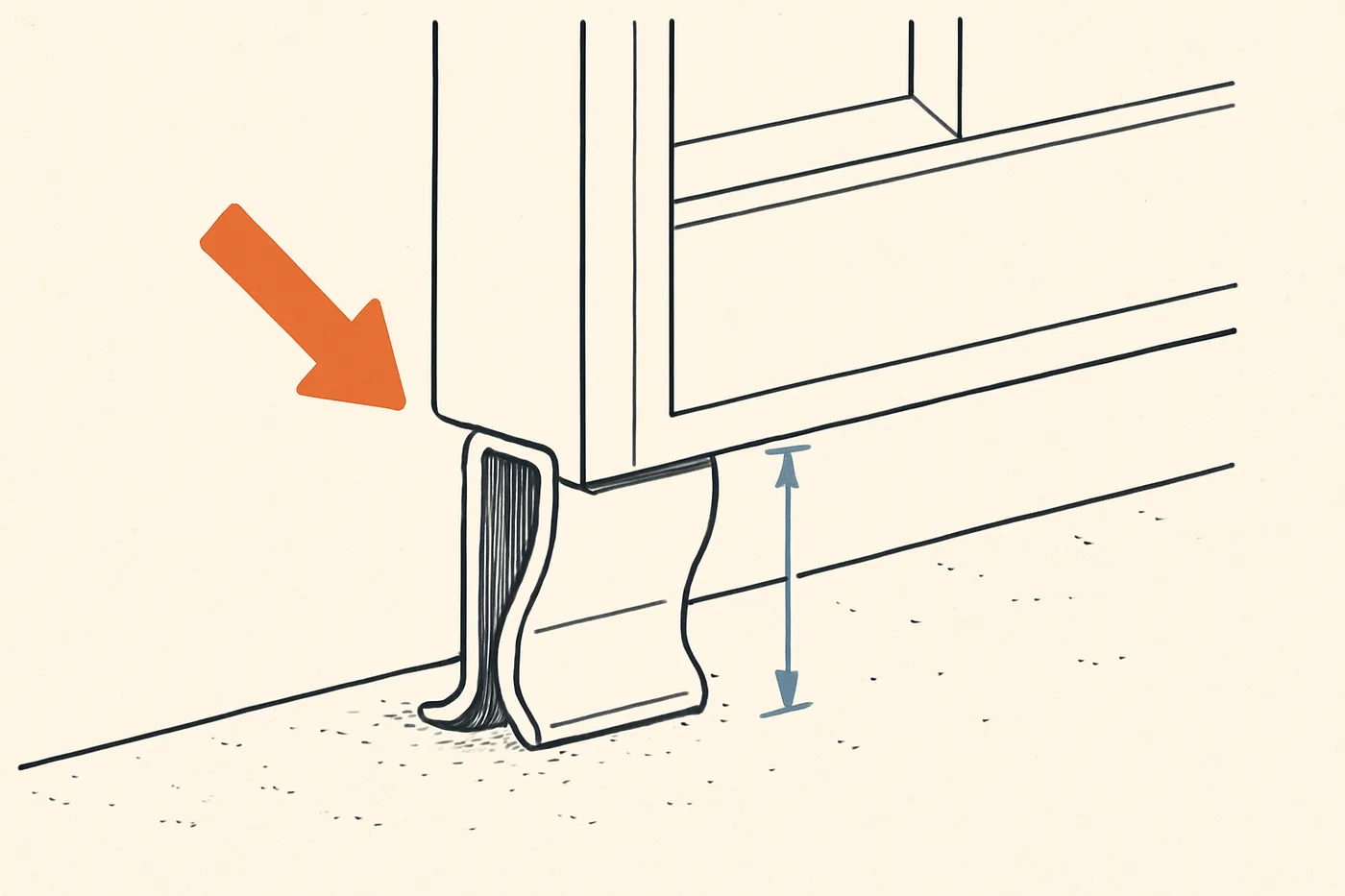
Late summer or early fall is a sensible window, and it is our suggestion rather than a manufacturer's rule: you want the check done before the busy season for repairs, and before you need the garage door to work on a cold morning. Clopay's winter guide makes a similar point for seals: it says to inspect seals and weatherstripping every fall, and to replace them sooner than planned if they turn stiff or brittle after a cold snap.
There is also a practical argument for doing your own checks first, before the pro visit. Run through the homeowner list above: lubrication, photo-eye cleaning, the auto-reverse test. If something flags, such as a squeak the lube didn't quiet, that becomes the agenda for the pro visit. The tech isn't coming out for a generic once-over; they're coming with a specific punch list. More efficient for both parties.
The spring safety video shows what a spring failure looks like and why a technician, not you, deals with it.
When to call a pro without waiting for the annual check
Clopay's guide to noisy garage doors says to mark your calendar for quarterly inspections, and to "listen and watch your door through a full cycle, noting any new sounds or hesitations." If you notice one, book a technician, unless it matches one of the spring signs below.
The same Clopay guide lists "grinding noises that won't quit" as a reason to call in the pros. Book a technician for that too.
Clopay's spring guide lists these signs. You can notice them in normal use, without touching a spring:
- The opener is straining more than usual, or the door seems unusually heavy when it runs. Clopay says the spring may have lost its tension.
- The door looks crooked as it moves or gets stuck partway. Clopay says one of the springs could be weaker or broken.
- You hear loud banging or snapping noises while it runs. Clopay calls that "a strong indicator a spring has let go."
- You see a break or gap in the spring above the door. Clopay says "the most obvious sign is a visible break or gap in the spring itself."
Stop using the door and call a technician if you see a break or gap in a spring, hear loud banging or snapping, see a frayed or kinked cable, or the door looks crooked, gets stuck partway or feels unusually heavy (the power outage guide covers when the release is the right move). If the only sign is an opener that sounds like it is straining, book a technician.
If the opener's LED is blinking in a pattern you don't recognize, count the blinks and look up the error code in the manual. Check the manual for what the blink count means, and call a pro if it points to anything beyond a setting.
The annual rhythm
The 24-point inspection tool is the structured version of this checklist. It walks you through exactly what a technician checks on a professional visit: spring visual, cable condition, balance test, hardware integrity, photo-eye function, auto-reverse test. Run it yourself first. Then, if anything flags, you know exactly what to tell the tech when you call. If you want to see what the tool walks through before you run it, here's a quick introduction.
Your car gets a reminder sticker on the windshield. Your garage door doesn't. Set a calendar reminder for September, and a monthly one for the auto-reverse test. It does not take long. And the calls nobody wants to make in January are the ones where the answer starts with "well, when did you last have it serviced?" Garage Door Pros (our affiliated installer) offers a free safety inspection; their page says what it covers. If your DIY checks turn up something that needs a professional, A+ Garage Doors (our affiliated installer) repairs garage doors in Las Vegas.