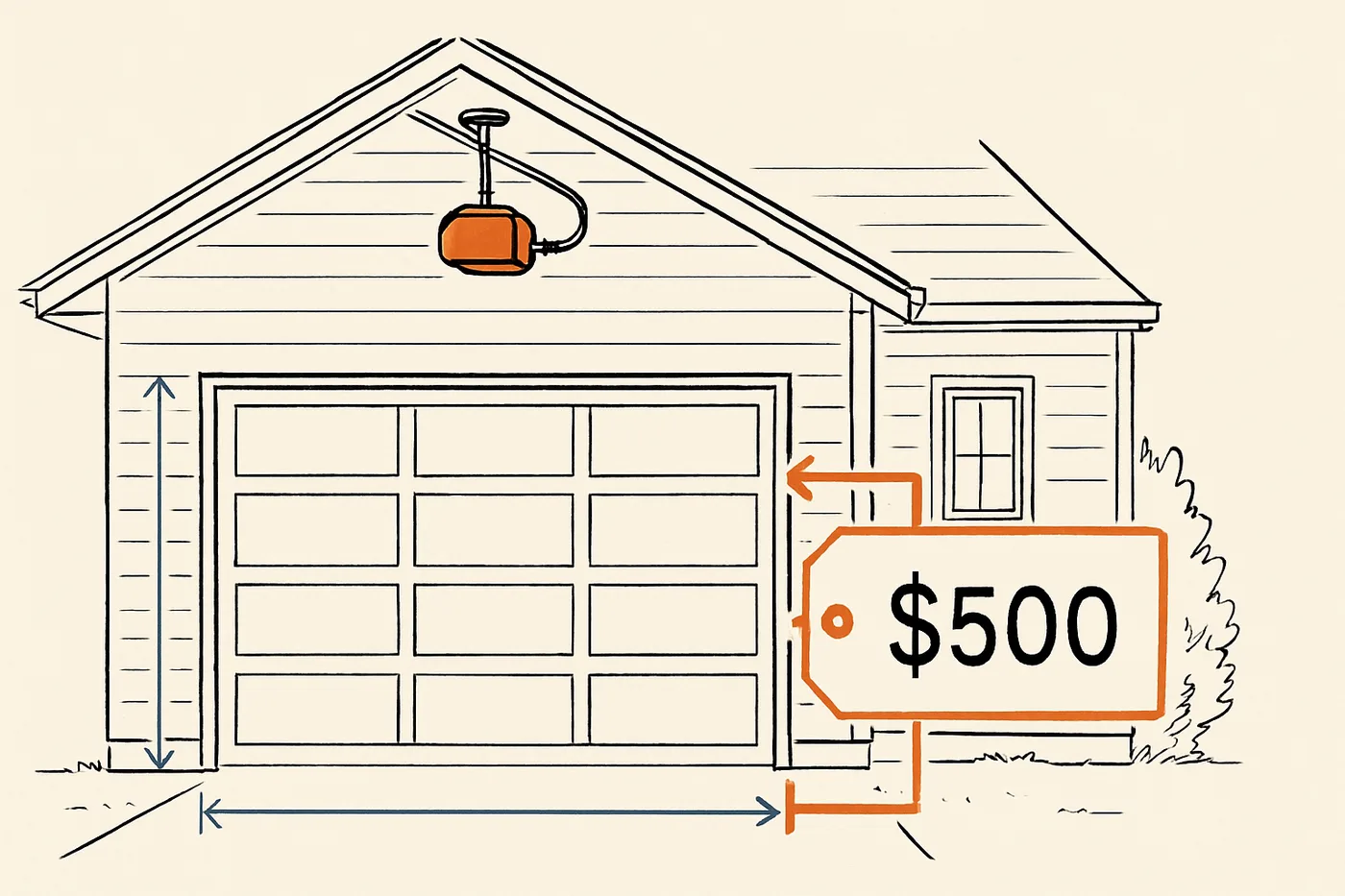
Garage Door Opener Price Comparison: What $500 Buys in 2026
Chain, belt, screw and direct drive opener prices side by side per HomeAdvisor (June 2026), what installation adds, and what a quote under $500 can leave out.

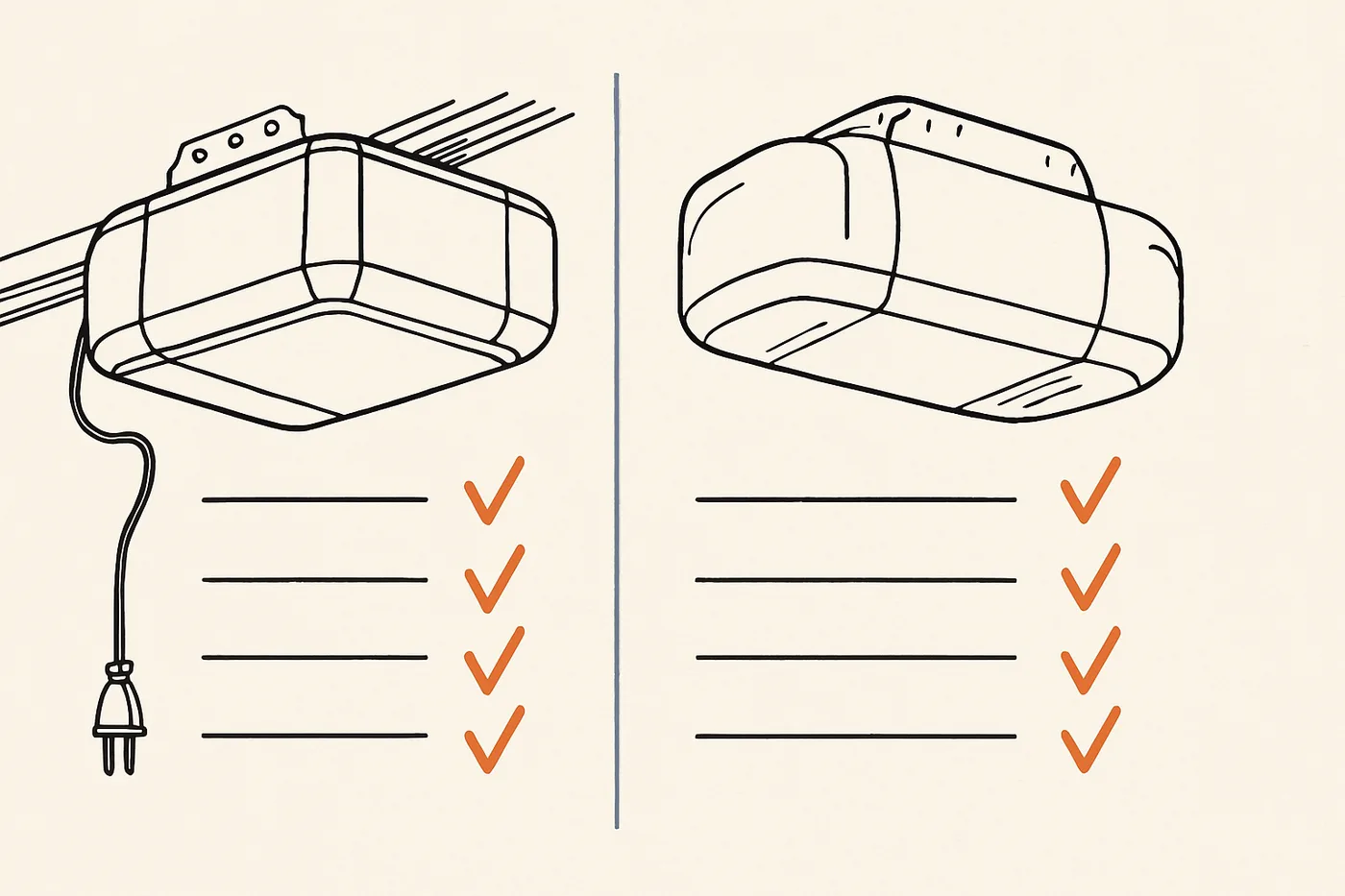
A garage door opener that fits a $500 budget in 2026 is usually an entry-level belt or chain drive from a major maker. Models worth pricing: the Chamberlain B4603T (belt drive), the Genie SilentMax 750 (belt drive) and a Chamberlain 1/2 HP chain drive for a budget build. HomeAdvisor, a home-services cost guide, puts the normal range for opener installation at $218 to $540 with an average of $379 (updated June 2026). Prices vary by door and installer, so get a written quote.
Opener price comparison by drive type
The unit alone, before installation, per HomeAdvisor (updated June 2026):
| Drive type | Unit price | What it means |
|---|---|---|
| Chain | $150 to $250 | The lowest price |
| Belt | $160 to $350 | Overlaps chain at the low end |
| Screw | $150 to $300 | Same low end as chain |
| Direct (the motor travels the rail, no belt, chain or screw) | $280 to $500 | The highest price of the four |
Installation is extra: HomeAdvisor lists labor at $60 to $80 an hour for a job of about two to six hours. That is why a unit near the low end can still land past $500 installed. For what each drive type is like to live with, see our chain, belt and screw comparison.
Quick comparison: top picks to price for $500
| Model | Drive | Installed price | Best for |
|---|---|---|---|
| Chamberlain B4603T | Belt | Get a written quote | Most attached garages, quiet operation |
| Genie SilentMax 750 | Belt | Get a written quote | Budget belt, light to medium doors |
| Chamberlain 1/2 HP chain | Chain | Get a written quote | Detached or budget builds |
| Genie 3/4 HPc | Belt | Get a written quote | Heavy or insulated double doors |
| LiftMaster 8365W | Chain | Get a written quote | Reliability-first, attached garage |
I have not listed an installed price for each model, because the manufacturers' pages and the cost guides do not give one. Ask the installer for the price of the specific model, installed.
What $500 actually buys in 2026
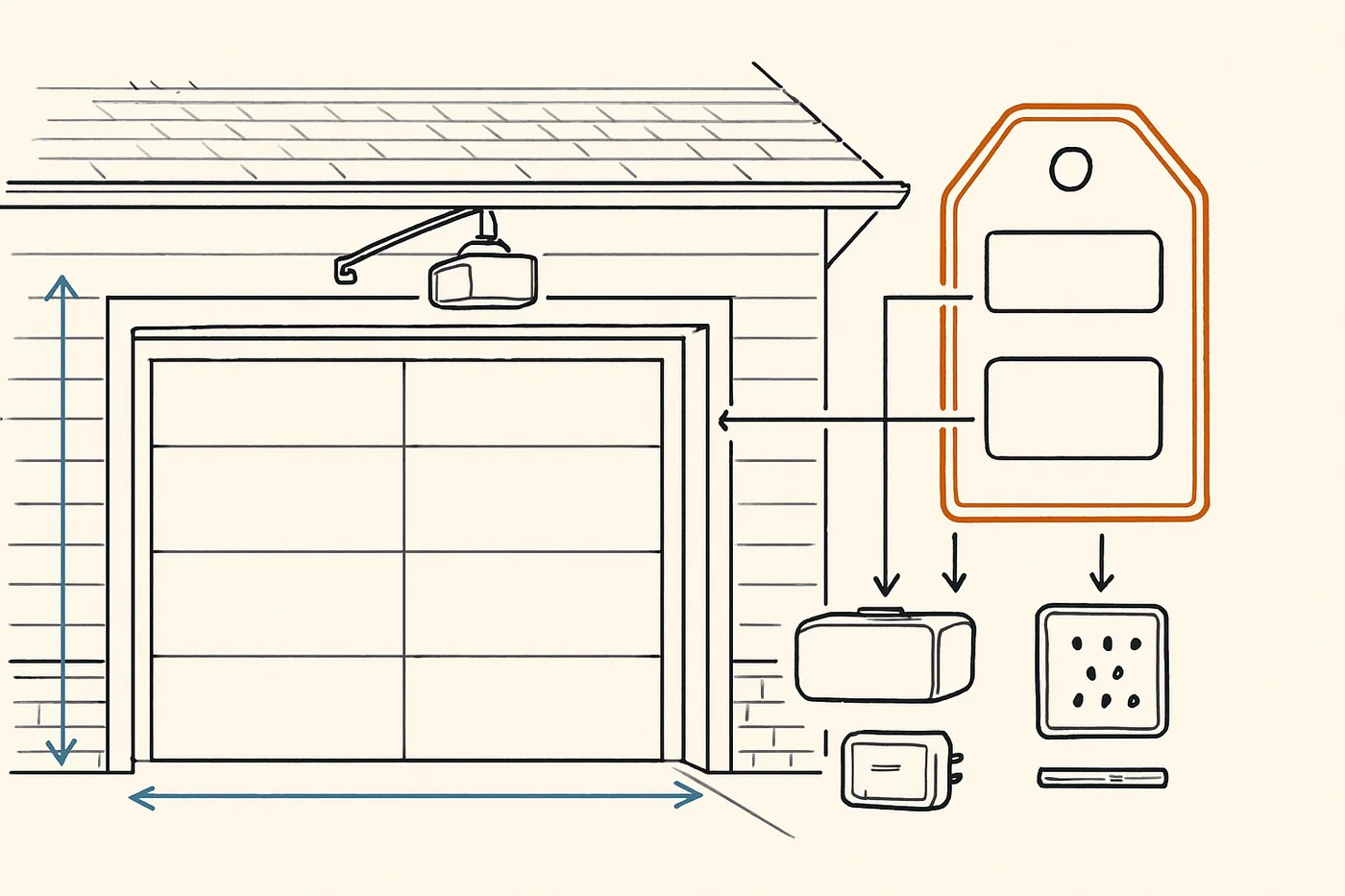
Here is what HomeAdvisor says the pieces typically cost (updated June 2026, one cost guide, so treat it as a typical range and get a written quote).
| Component | Typical cost, per HomeAdvisor |
|---|---|
| Chain-drive unit | $150 to $250 |
| Belt-drive unit | $160 to $350 |
| Smart connectivity (if not standard) | Varies by model |
| Battery backup (if not standard) | $50 to $150 |
| Professional installation | Labor $60 to $80 an hour, about 2 to 6 hours |
| Haul-away of old opener | Ask the installer |
Prices vary by door and installer, and installation can include extras such as wiring, so the unit price plus labor is a starting point, not a quote. Read the horsepower section before you buy. An undersized opener is not something you want to discover after you have bolted it to the ceiling. See our full garage door opener cost breakdown for a line-by-line cost breakdown.
Pick by situation, not by brand
Brand rankings on opener listicles are mostly noise. What matters is matching the drive type and horsepower to your door. Here are the three situations that cover most homeowners under $500.
Best for a detached garage or budget build: chain drive
If your garage is detached, or if it is attached but sits under a garage, a hallway, or a room nobody sleeps in, a chain drive is the right answer. It is the budget option, and the noise is real: a chain drive is the loudest of the three. But if nobody is trying to sleep above it, you may be paying extra for quiet you do not need. Our guide to belt, chain and screw drives goes through the trade-offs.
Check the model's own page for its motor rating and the doors it is listed for, and ask the installer whether it suits your door.
Best for an attached garage with a bedroom above: belt drive
The rubber belt is quieter than chain and built for attached garages where the noise matters. If someone sleeps near the garage, the quiet is worth asking about. At a $500 budget you will be looking at an entry-level belt drive from a major manufacturer. Higher-priced models add smart features and different motors, which matter only if you need them.
Best for a double-car, wood, or wide insulated door: check the motor rating
Motor rating matters once the door gets heavy. For a double-car, solid wood or wide insulated door, check the model's own page for the doors it is listed for, and ask the installer to confirm it suits yours in writing. If the door is heavy and you want quiet, a higher-rated belt drive may not fit a $500 budget, so ask for the installed price of the specific model.
Smart features and battery backup: what is worth the money
Smart connectivity (WiFi, app control, voice assistant integration) costs more on some models and comes standard on others. Check the model's page for what it includes.
Battery backup is a different conversation. California's SB 969 requires it on residential openers made, sold or installed in the state on or after July 1, 2019. Elsewhere it is an option, and HomeAdvisor lists $50 to $150 if you buy it separately. If you live in an area with regular power outages, or you have only one car and it lives in the garage, this is the feature worth protecting in your budget. It is also the feature most likely to be quietly omitted from a low-ball installer quote.
What your installer quote probably does not include
Every opener quote under $500 needs to be checked against this list before you sign it:
- Haul-away of the old opener. Ask whether it is included.
- New remotes beyond the one or two that ship in the box. Ask what each extra costs.
- A new wall-mounted control panel if yours is old or hardwired to a different brand.
- New safety sensors. The ones in the box are usually fine, but if the installer is reusing your old sensors to save time, ask why.
- Replacement of the trolley rail if you are switching drive types (chain to belt requires a belt-compatible rail).
- Reinforcement bracket for the top panel of the door. Required by many manufacturers and often not itemized.
Any of these additions can push a quote past your budget. This is how "under $500" quotes end up over $500 on the invoice. See our full cost breakdown before you sign anything.
What to skip even if it fits the budget
Read the warranty page for the specific model, and skip any quote that does not state the motor rating in writing. "Heavy-duty" is not a specification.
Before you say yes to the quote
Confirm three things in writing: the drive type, the horsepower, and whether battery backup and haul-away are included. If you are matching the opener to a heavier door, verify the motor rating against the door with the installer. The garage door anatomy lab shows how door construction drives the weight number your opener has to move. Get the installed price, not the unit price, and get it as one figure with everything listed underneath it. If the installer will not write it that way, you already have your answer about which installer to call next. If you would rather have a professional handle the install (or if your existing opener has already failed and you need same-day service), A+ Garage Doors (our affiliated installer) offers repair and installation in Las Vegas, and Garage Door Pro Services (our affiliated installer) covers installation and repair across their service areas.