How long does a garage door opener last?
About 10 to 15 years, says a home builders' study, and Genie gives the same range. No maker or study we found splits opener life by drive type.

About 10 to 15 years
A garage door opener lasts about 10 to 15 years. The NAHB and Bank of America study of home component life (2007) lists garage door openers at 10 to 15 years and names Wayne-Dalton as its source. Genie's page on replacing an opener, published June 22, 2022, says most openers last an average of 10 to 15 years.
Chamberlain and LiftMaster publish no life figure that we could find. The study came from a telephone survey of manufacturers, trade associations and researchers in the summer of 2006, so it is close to twenty years old. Treat 10 to 15 years as a typical range, not a promise about your opener.
Not sure which problem this is? Start with our page on a garage door opener or remote that is not working.
Does the drive type change it?
No maker or study we found gives a separate life for belt, chain, screw or direct drive openers, so this page gives none. The study's range and Genie's range both cover openers in general.
If you are choosing between drive types, our belt vs chain vs screw drive comparison covers cost, noise and upkeep side by side.
A warranty is terms, not a life expectancy
A warranty says what the maker will cover and for how long. It does not say how long the opener will run, and the terms change from model to model.
- LiftMaster's page for the 87504-267 lists the motor and belt at Lifetime, parts at 5 years and accessories at 1 year.
- Genie's 3035 owner's manual, dated 2017, lists the motor at Limited Lifetime, core parts at 5 years, a belt at 15 years and a chain at 5 years. It defines Limited Lifetime as for as long as the original purchaser owns the home.
Check the warranty for your own model before you count on any of it.
What "lifespan" means here
A range like 10 to 15 years is an expectation, not a guarantee. The study's authors say the life of a home component is greatly affected by the quality of maintenance, and they name weather and climate conditions and the intensity of use as well. Two identical openers can finish their lives years apart.
An opener in a house with two drivers, teenagers and daily deliveries runs far more often than one in a house where the car leaves once a day. That is the intensity of use the study means.
The door and springs matter too
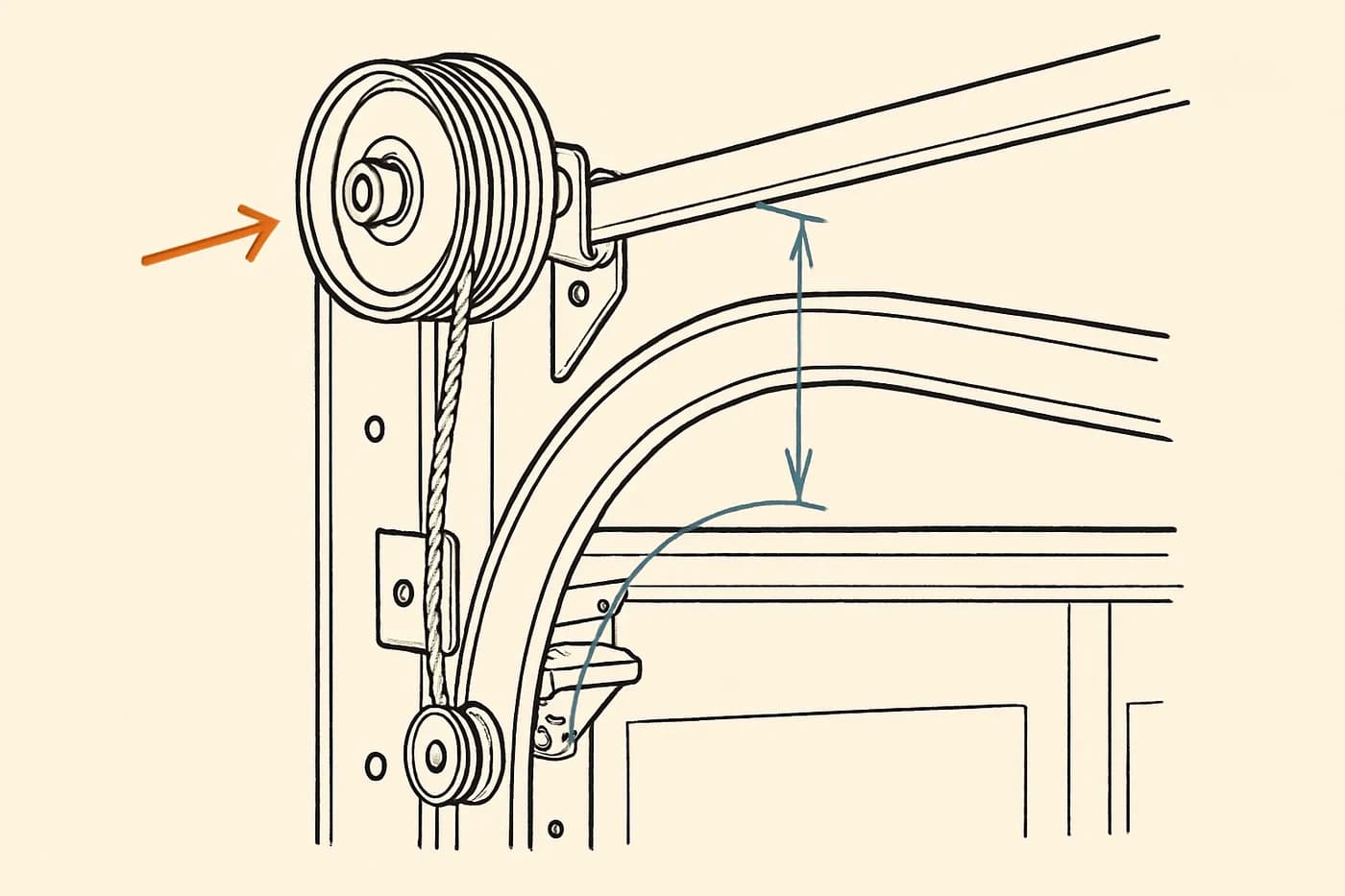
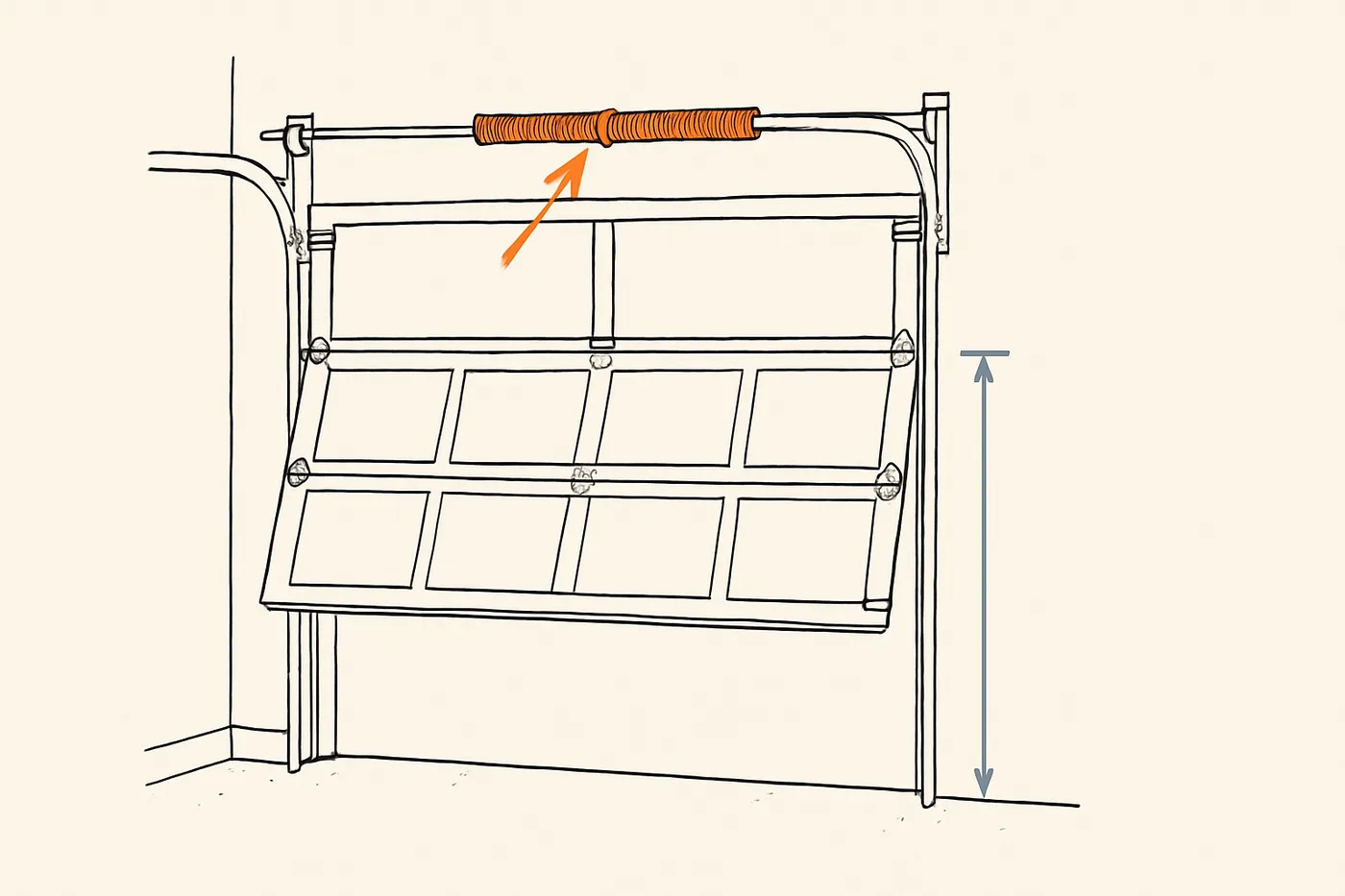
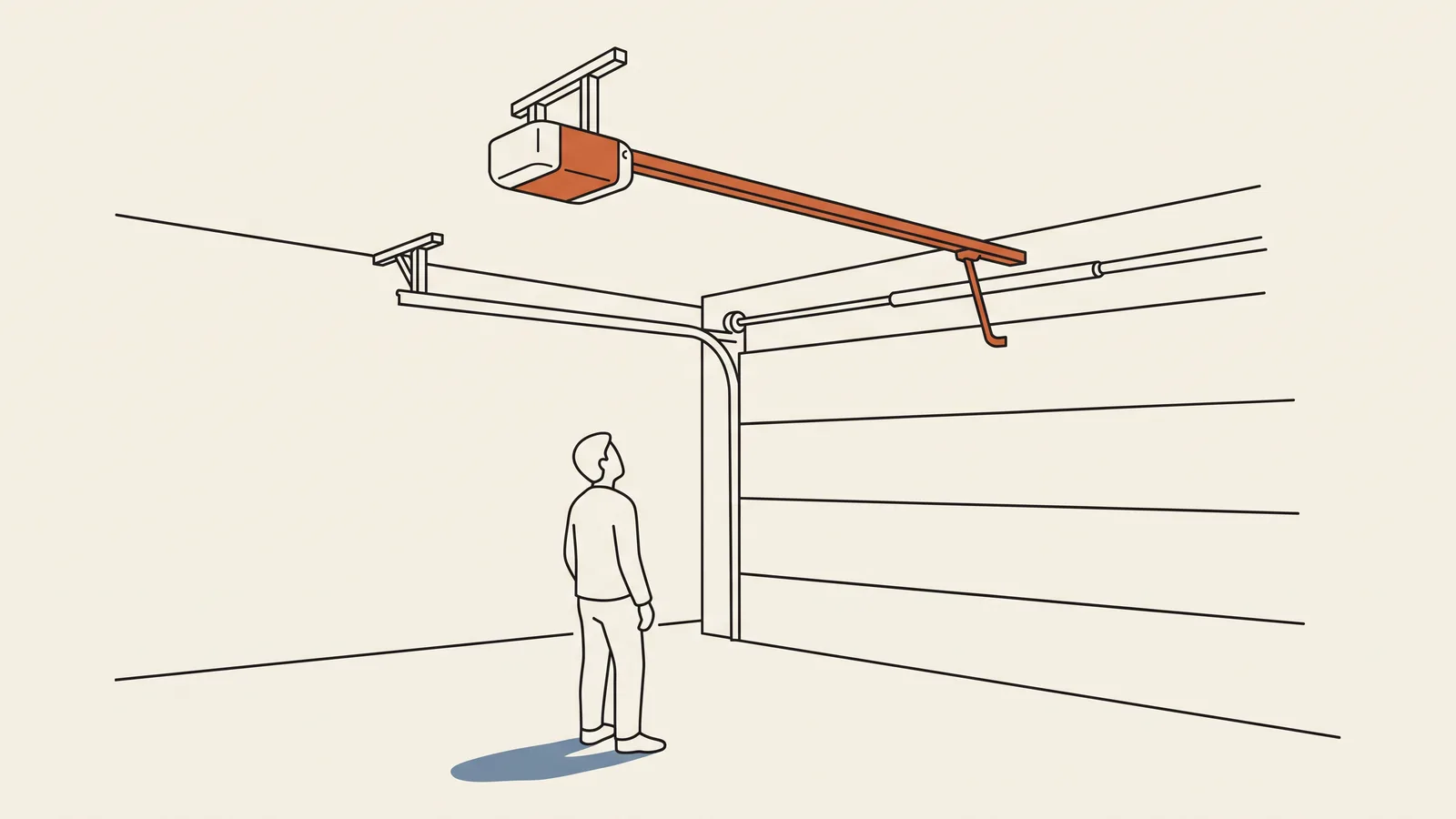
The opener does not work alone. It moves a door that hangs on springs, cables and brackets. Genie's page says that if you have old torsion springs or other parts wearing out, your opener may not work as well as before.
A standard spring is rated for about 10,000 cycles, one cycle is one full open and close, and at four cycles a day that is about seven years (IDC Spring, a spring manufacturer).
Chamberlain's maintenance page says to call a local garage door professional if the door sticks, binds, runs unevenly or looks out of balance, and to "Never loosen, move, or adjust garage door springs, cables, pulleys, brackets." Springs, cables, brackets and rollers are a job for a trained technician. You can try our balance test page to see whether the door needs that call, and the garage door anatomy lab shows how the parts share the load.
Signs it needs service or replacing
Genie lists these signs that an opener may need repair or replacing:
- It moves slowly. Genie says that could be from old age, or from old springs and worn parts.
- It makes loud noises. Genie names a "screeching or scraping noise" as a sign.
- The motor struggles. With age, Genie says, the motor "will have more and more difficulty pulling open your garage door."
- It works only some of the time. Genie says that is usually a wiring problem.
- It opens or closes on its own. Genie says the cause is often a short in the circuit board.
- The door reverses. Genie says that points to the safety sensors or the opener itself. Keep the sensor lenses clean and the path between them clear.
None of these is a certainty. Each one is worth a call to a technician before it turns into a door that will not open on a busy morning.
Test the reversal once a month
Chamberlain's maintenance page lists two checks with its monthly look at the door:
- The reversal test. Open the door all the way. Lay a 1½ inch high object, such as a 2x4 laid flat, on the floor in the middle of the door's path. Close the door with the opener. The door should touch the board and reverse. If it does not, Chamberlain says "The opener may require adjustment or service," so call a local garage door professional.
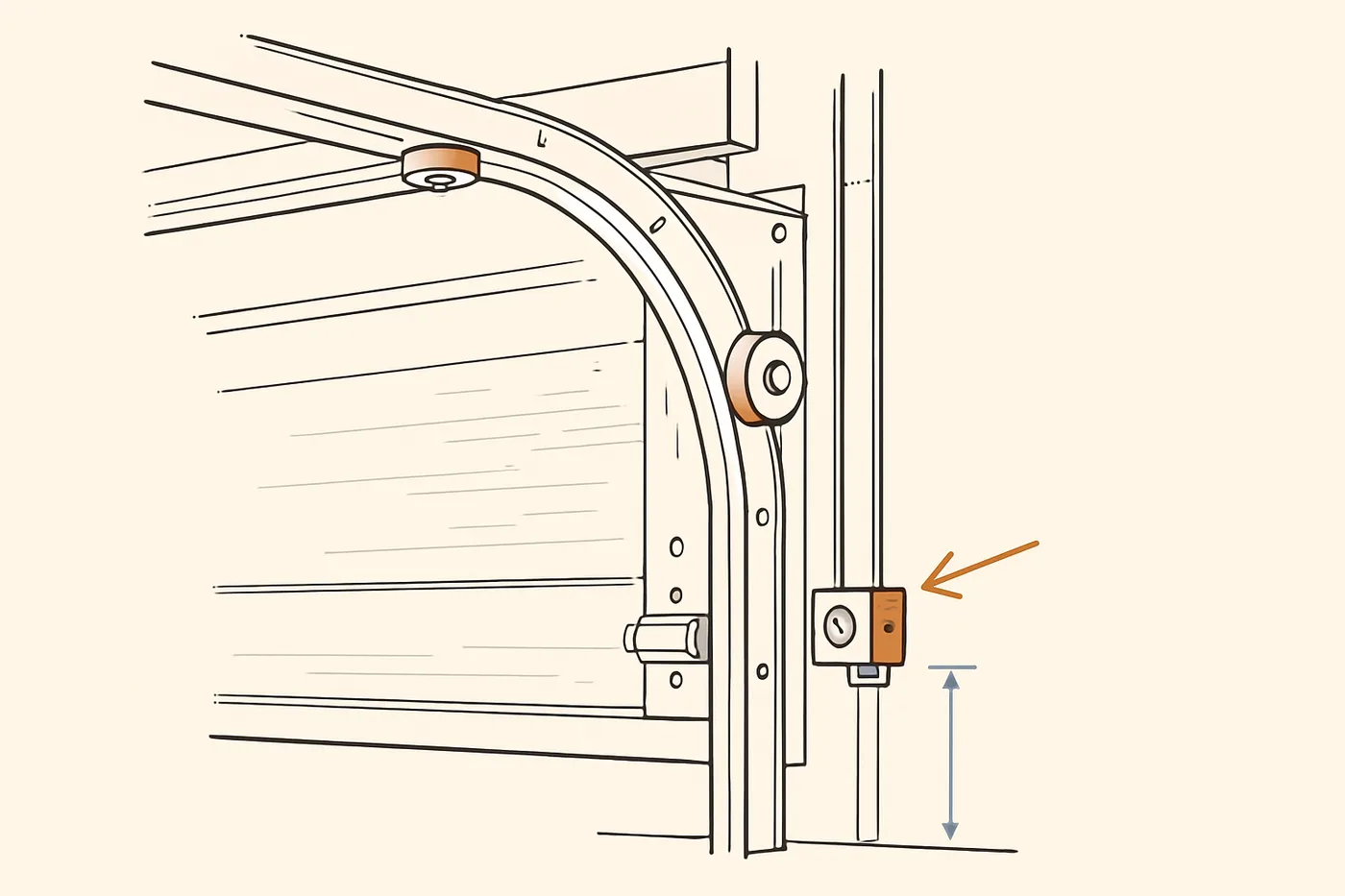
- The sensor test. While the door closes, pass a small object through the sensor beam near either sensor, keeping yourself and the object out of the door's path. The door should stop and reverse. If it does not, Chamberlain says to stop using the opener and contact a local garage door professional.
Never switch the sensors off or work around them to get a door to close.
Chamberlain also says lubricating the door's moving parts "helps reduce noise and wear." Our lubrication guide gives the schedule and the parts: the hinge pins and steel roller bearings, never the tracks, and nothing touching the torsion spring, which we leave to a technician. A maintenance check is also when a technician looks at the springs and cables, which are not a homeowner's job.
Openers made before 1993
The federal opener safety rule, 16 CFR 1211.1, "applies to all residential garage door operators manufactured on or after January 1, 1993."
Chamberlain and LiftMaster's support page says openers made before 1993 should be "replaced, as opposed to being repaired." It says most of them have no infrared sensors, and that the makers stopped supporting their repair in 2008. Genie's page on openers made before 1993 also says to replace them, not repair them, and Genie stopped supporting their repair on July 1, 2013. If your opener predates 1993, plan to replace it.
The backup battery has its own clock
If your opener has a battery backup, the battery wears out long before the opener does. Chamberlain's battery backup page says that with normal usage a battery lasts approximately 1 to 2 years. When it needs replacing, the opener beeps and the battery status light turns red.
Repair or replace?
This part is our advice, not a maker's rule. If your opener is inside the 10 to 15 year range and a single part has failed, a repair may make sense. If it is past that range, shows several of the signs above, or was made before 1993, replacing it is usually the better call. Our guide on when to replace vs repair your garage door walks through how to weigh the cost of a repair against what a new opener or door would run you.
Whatever you decide, have the springs, cables and balance checked at the same visit. An opener is only as good as the door it moves.
If your opener is nearing the end of its life and you'd rather have a professional assess the full system (springs, balance, and all), A+ Garage Doors (our affiliated installer) handles opener replacement and spring repair in the Las Vegas area, and Garage Door Pros (our affiliated installer) serves homeowners across their broader service territory.