Best Garage Door Weather Seal: The Three That Actually Matter
Three seals do all the work on a garage door: bottom U-seal, threshold seal, and jamb weatherstripping. Here's which one to buy for which problem, how each one fails, the combination that actually closes the gaps in a real garage, and which material holds up in a cold winter.

If you're here, you've already noticed the problem. Light under the door at night. A dusting of leaves inside the garage after a windy week. The heater running longer than it should. You've looked at the seals on your door and realized some of them are not doing their job.
Not sure what is letting in drafts or water? Start with our page on a garage door that lets in drafts or water.
Here's what most buying guides get wrong: there isn't one garage door weather seal. There are four distinct gaps on a closed door: bottom to floor, floor to door, sides and top to jamb, and between the panels themselves. Each one takes a different product. Three of those four cover the problems almost every homeowner actually has. The fourth, panel-to-panel, is handled by the door's own hinge design and isn't something you buy.
So you're choosing among three seals. The question isn't which one is best. It's which one is failing, and whether you need one of them or all three.
Bottom U-seal: the one everyone replaces first
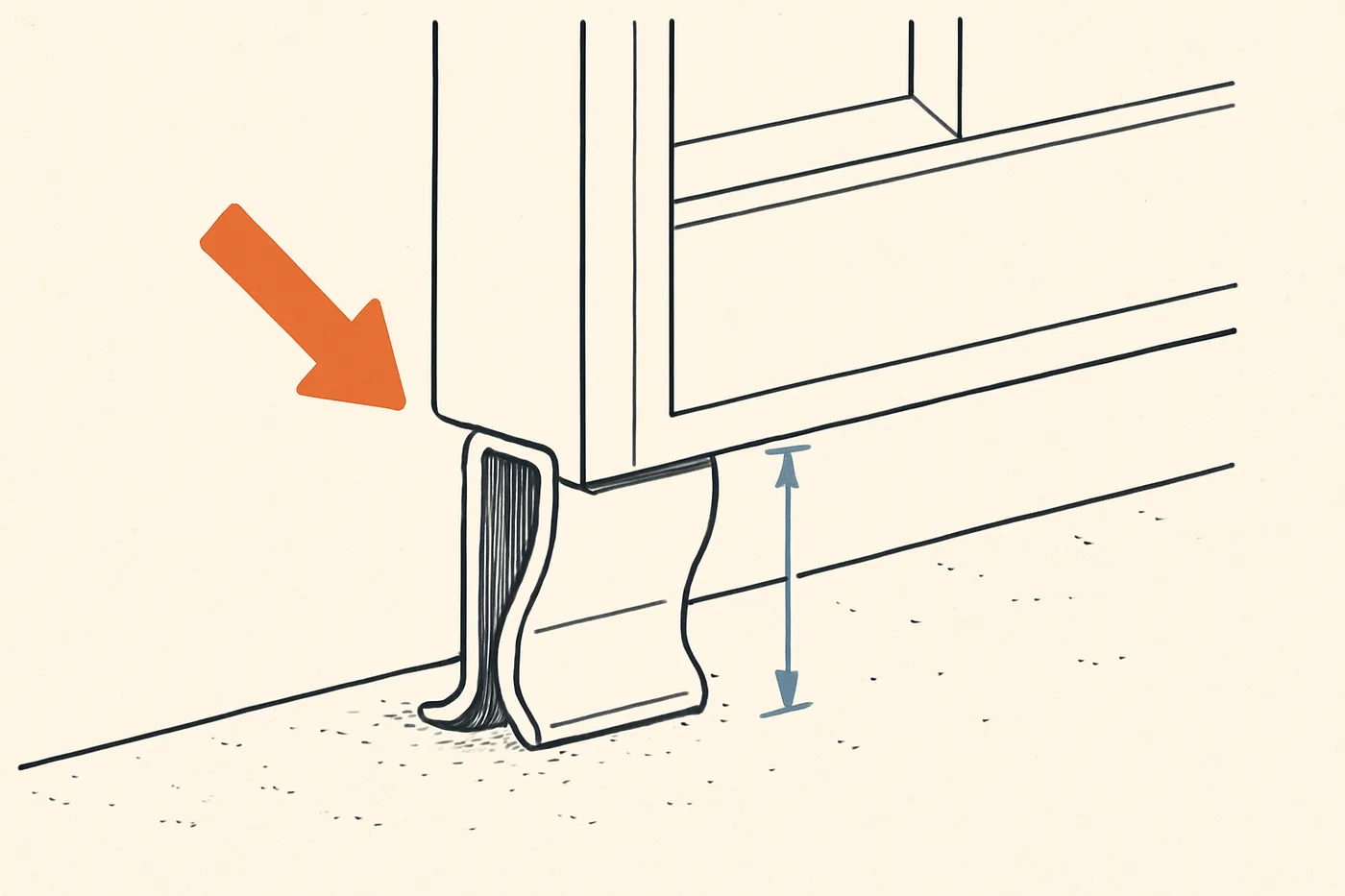
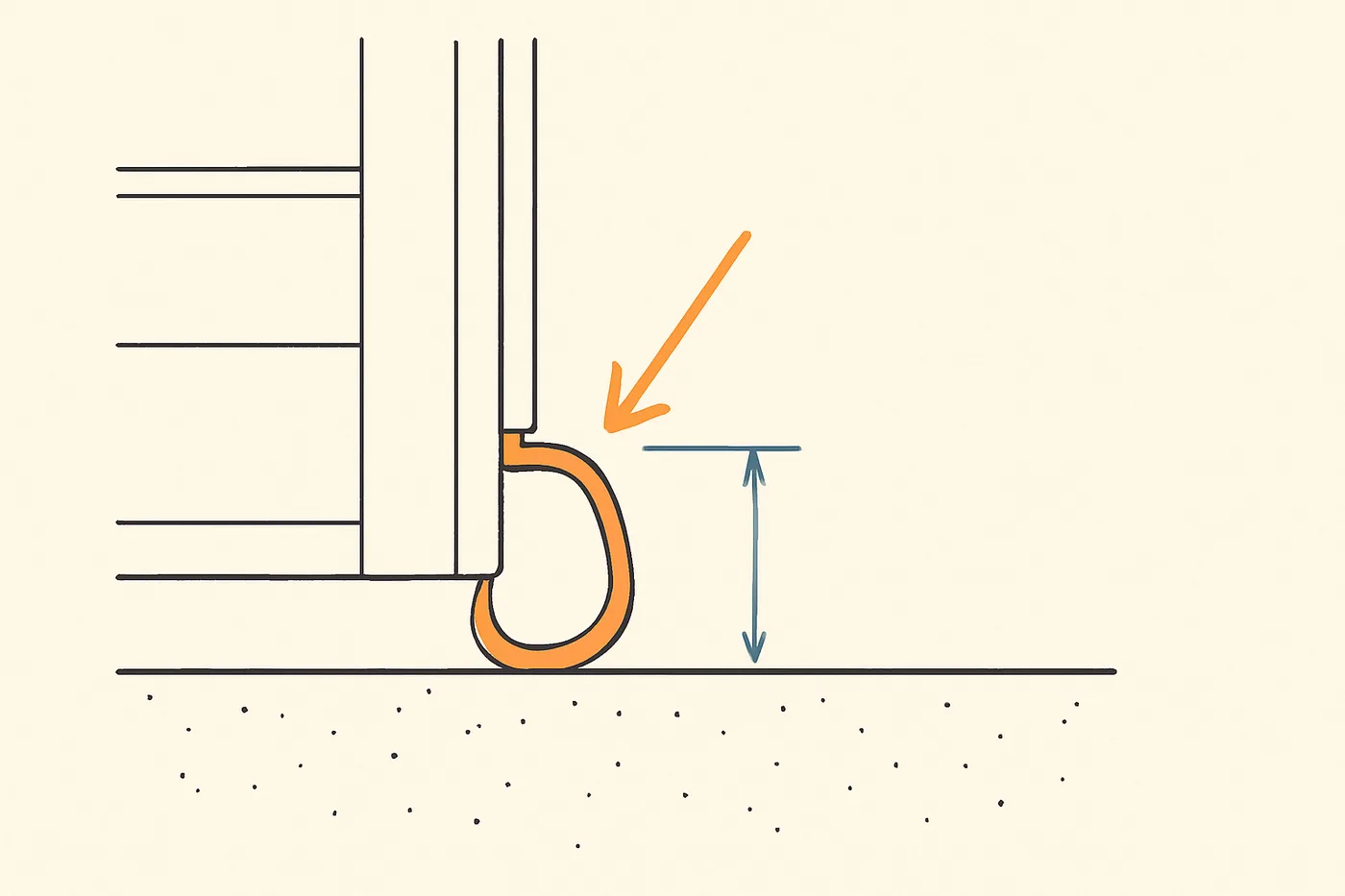
The bottom U-seal, sometimes called the bottom astragal, is the flexible rubber or vinyl profile that slides into a retainer channel along the bottom of the door and compresses against the floor when the door closes. It's the single most-replaced seal on a residential door, and if you're seeing daylight under your closed door, this is almost certainly the one that's gone.
Prices vary by profile and length, so check the product page. The catch is matching the retainer: T-style, bead-style, and P-bulb are common profiles, and the replacement has to match the one already on your door. If your door has no retainer channel at all (older wood doors sometimes don't), you will need to add an aluminum channel as well.
Failure mode: UV, ozone, and temperature cycling break down rubber and vinyl. Clopay's seal guide says most seals need replacing every two to three years, depending on climate and use, and rubber seals can stiffen and crack over time, especially in very cold climates. When it fails, it doesn't tear. It goes chalky, cracks, or stays permanently flattened and stops springing back. If you press the seal with your thumb and it doesn't rebound, it's done, regardless of how it looks when the door is down.
Who buys it: anyone whose door has been in service five or more years, or anyone seeing daylight, water, or leaves under the closed door. This is the cheapest, highest-leverage seal on the door.
Threshold seal: the fix for a slab that isn't flat
A threshold seal is an adhesive-backed rubber strip you bond to the garage floor itself, creating a continuous ridge the U-seal presses down against. It's not a replacement for the U-seal. It's a partner for it, and it solves a specific problem: a concrete slab that isn't flat.
Almost no slab is flat. Garage floors slope toward the door for drainage, and the slab often settles unevenly over the decades. The U-seal can only stretch so far to close those gaps. When you see daylight under the door in one spot but not another (middle sealed, corners not), the slab is the problem, not the seal.
Check the product page for the price of a kit. Adhesive needs a clean, dry surface and mild temperatures to cure, so read the maker's instructions and don't install this in a cold garage in January.
Failure mode: the adhesive. If the slab wasn't cleaned properly, or if it was installed during cold weather, the strip lifts at the edges within the first year and water gets under it. Once water's under it, it's coming up. There's also a nuisance factor: the threshold becomes a small ridge you drive over, which some people hate and most don't notice after a week.
Who buys it: anyone with a visible slope, settlement, or sweep pattern in their slab that a new U-seal alone won't close. Also anyone in a region with wind-driven rain or heavy pest pressure, where the belt-and-suspenders approach is worth the extra step.
Jamb weatherstripping: the seal most people forget
Jamb weatherstripping, also called side-and-top stop molding, is the flexible vinyl or rubber flap nailed to the exterior face of the door jamb. It's the seal on the sides and top of the opening, the one that closes the gap between the outer edge of the door and the wood frame.
Most homeowners have never thought about this seal because it usually outlasts the U-seal, and because its failure is less dramatic. It doesn't let light through. It stops sealing against wind and slowly stiffens until there's a quarter-inch gap you never notice.
Check the product page for the price of the molding. Installation needs a miter saw and galvanized finish nails. The cuts at the header joint have to meet cleanly or the top corners leak. That miter is the whole job.
The install geometry matters too: the flap has to press lightly against the door face when the door is closed, enough to seal but not enough to bind when the door opens. Too loose, no seal. Too tight, the flap wears out in two years and the door scrapes paint off every cycle.
Failure mode: the vinyl stiffens from UV exposure and loses compression. Unlike the U-seal, you usually can't see this failure. The flap still looks fine. Clopay's check is to close the door and look for light or drafts along the jamb. If you find either, the seal is no longer doing its job.
Who buys it: anyone in a heating or cooling climate with an attached garage whose jamb seal is old, stiff or gapped, or anyone whose door was installed without proper jamb molding in the first place (more common than you'd think on older wood frames).
Best garage door seal for cold weather
If your winters are hard, the material matters as much as the type. Clopay's garage door seals buyer's guide compares three:
- Rubber handles temperature changes well and seals on uneven floors, but it can stiffen and crack over time, especially in very cold climates.
- Vinyl stands up to moisture and sun, but it is less flexible in cold temperatures, so it may not press tightly against rough concrete.
- Silicone is highly flexible and resists cracking and fading in both heat and cold. It tends to cost more and can be harder to find at hardware stores.
For a cold climate, that points to silicone, or to rubber that you check regularly. Vinyl is the weakest of the three in the cold. We do not have a manufacturer's low-temperature rating to quote for any specific seal, so check the product's own data sheet or ask the door maker.
A few cold-weather habits, from Clopay:
- Check your seals every fall and after a cold snap. Clopay's winter guide says harsh winters can leave weatherstripping cracked or stiff, and that bottom seals often need more attention because they take the worst of the snow and ice. Replace a seal that is cracked, crushed, or no longer springing back into shape.
- Use silicone lubricant on the seal, not petroleum products. The seals guide says a thin coat of silicone-based lubricant on rubber or vinyl seals can keep them pliable and stop sticking, especially in very cold weather, and that petroleum-based products can degrade the seal material.
- Install in early fall. Clopay says milder temperatures help weatherstripping adhere properly and that extreme cold makes materials more brittle. For new insulated doors in cold climates, Clopay's winter guide also recommends professional installation, because small gaps let in more cold air than you would expect. For replacing a seal on an existing door, its seal guide says most projects are DIY-friendly.
If you are fighting condensation or water at the bottom of the door rather than drafts, see why a garage door sweats in winter.
Does any of this actually save energy?
Yes, and the Department of Energy is explicit about why. Air sealing of the building envelope is one of the highest-return efficiency investments a homeowner can make, and ENERGY STAR recommends it as a foundational step before upgrading heating and cooling equipment because leakage undermines equipment gains. For an attached garage specifically, you can model how much of your loss is perimeter leakage versus panel R-value in the Energy Efficiency Lab. Clopay says most seals need replacing every two to three years, depending on climate and use, so on an older door check the seals first.
Which one to buy
Three questions, in order.
One: is there daylight under your closed door? If yes, start with a new bottom U-seal. Match the retainer and do it this weekend. Clopay's seal guide says most seal replacements are DIY-friendly, and that a pro can help if the door is especially heavy, has custom hardware or shows major alignment issues, and you can ask a dealer about installation.
Two: after the U-seal is new, is there still daylight at the corners or an uneven gap? If yes, the slab isn't flat. Add a threshold seal. Clean the floor, follow the adhesive maker's directions for temperature and cure time, and keep the door closed and off the threshold for at least 24 hours, as Clopay's seal guide says. Price both seals from the product pages before you buy.
Three: is the garage attached, and is the jamb molding old, stiff or gapped? If yes, replace it. It's the seal you never think about until you realize your heater has been fighting a quarter-inch gap along three sides of the opening for a decade. Price the molding from the product page, and plan on a Saturday with a miter saw.
For the homeowner with a standard attached garage and a door that's been in service for years: all three. It's inexpensive maintenance compared with replacing the door. If you'd rather have a technician check whether your seals are doing their job, Garage Door Pro Services (our affiliated installer) offers a free safety inspection that covers seal condition alongside the rest of the door. And if a seal has failed and you need it replaced quickly, A+ Garage Doors (our affiliated installer) provides same-day repair service in Las Vegas.