How Much Does a Garage Door Opener Really Cost? (2026 Installed Price Breakdown)
A breakdown of garage door opener costs: unit price by drive type, installation labor, extras like battery backup, and what a quote should list before you sign.

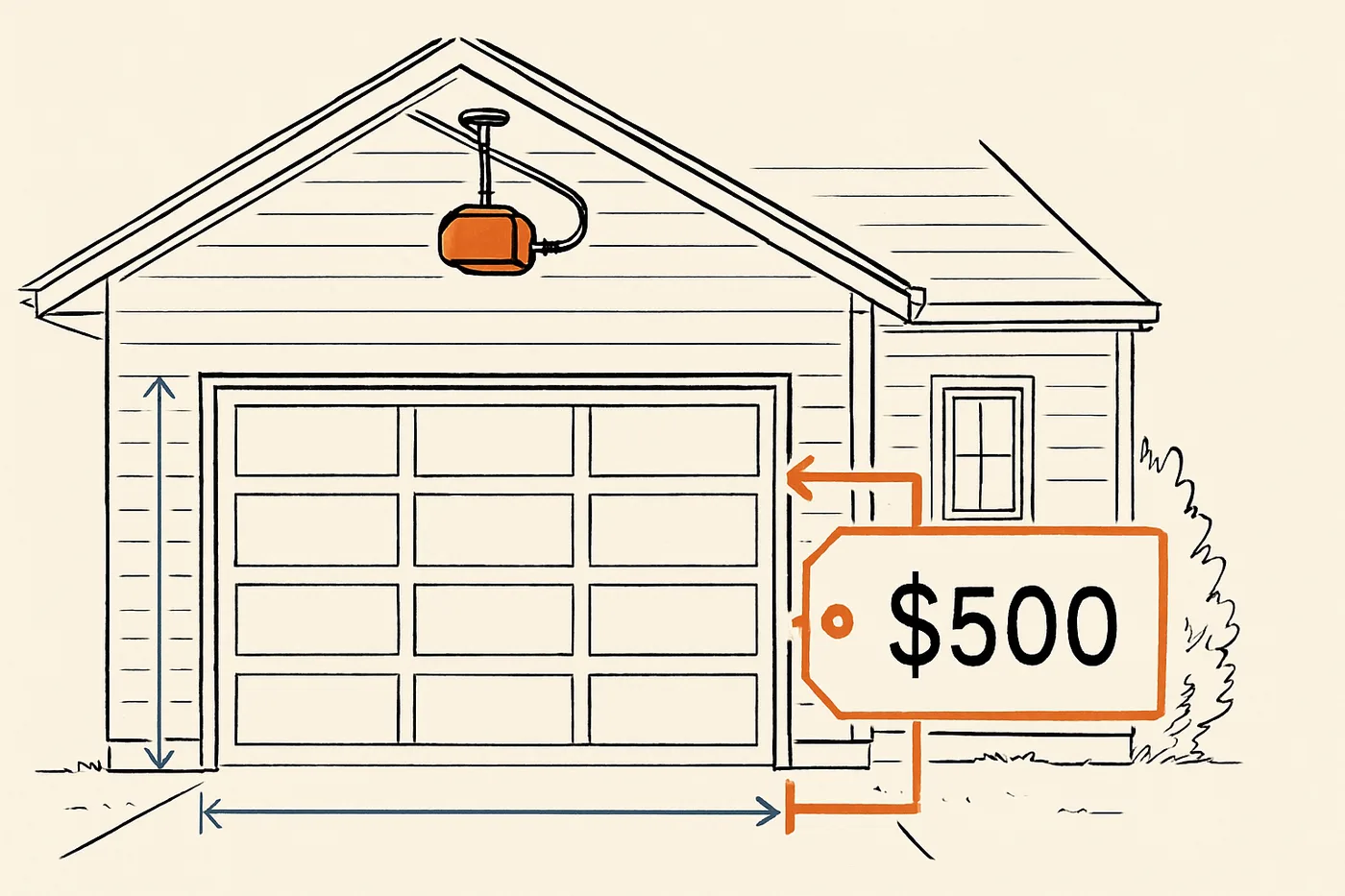
HomeAdvisor, a home-services cost guide, puts the normal range for installing an opener at $218 to $540, with an average of $379 (updated June 2026). Your quote depends on the drive type, the door, your region and what the quote actually includes. Here is where the money goes, line by line, and where the quote you are holding is probably leaving something out.
Not sure which problem this is? Start with our page on a garage door opener or remote that is not working.
The unit itself: $150 to $500
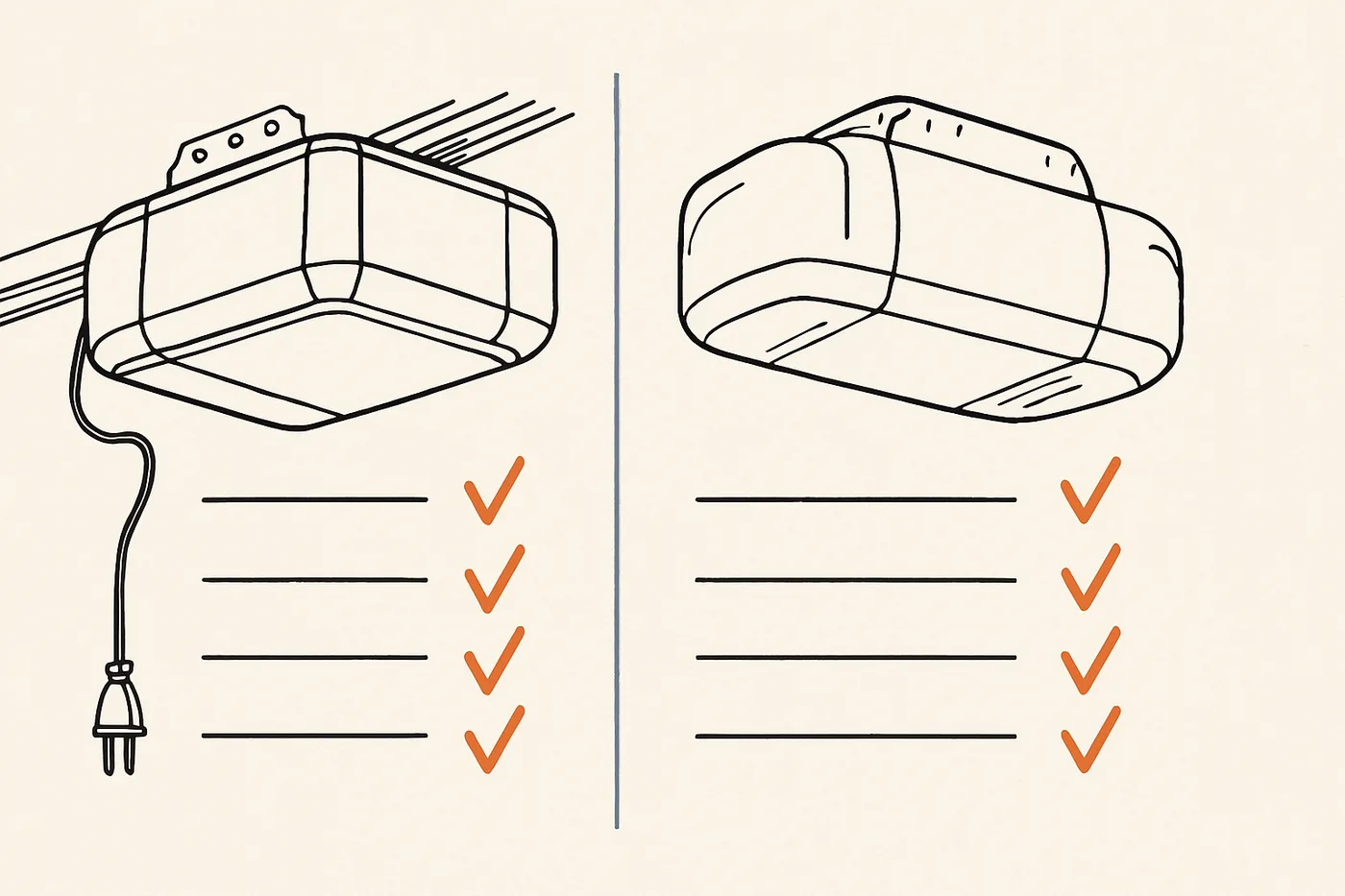
The opener unit is the biggest variable in the total, and it splits cleanly into three tiers based on drive type.
| Drive type | Unit price (HomeAdvisor, June 2026) | What you're buying |
|---|---|---|
| Chain drive | $150 to $250 | Loudest, cheapest, mechanically simplest |
| Belt drive | $160 to $350 | Quieter and smoother than chain |
| Direct drive | $280 to $500 | Fewer moving parts, highest-end of the three |
| Wall-mount (jackshaft) | Get a written quote | Mounts beside the door, frees ceiling space |
Those ranges come from HomeAdvisor's opener cost page, one aggregator rather than a price list, and they are for the unit only: no installation, no accessories, no battery.
The decision between chain and belt is about noise and how close the garage is to a bedroom. If there is living space above or beside the garage, the step up to a belt drive is the easiest money in this category to justify. If the garage is detached or you sleep on the opposite side of the house, a chain drive will do the same mechanical job for less.
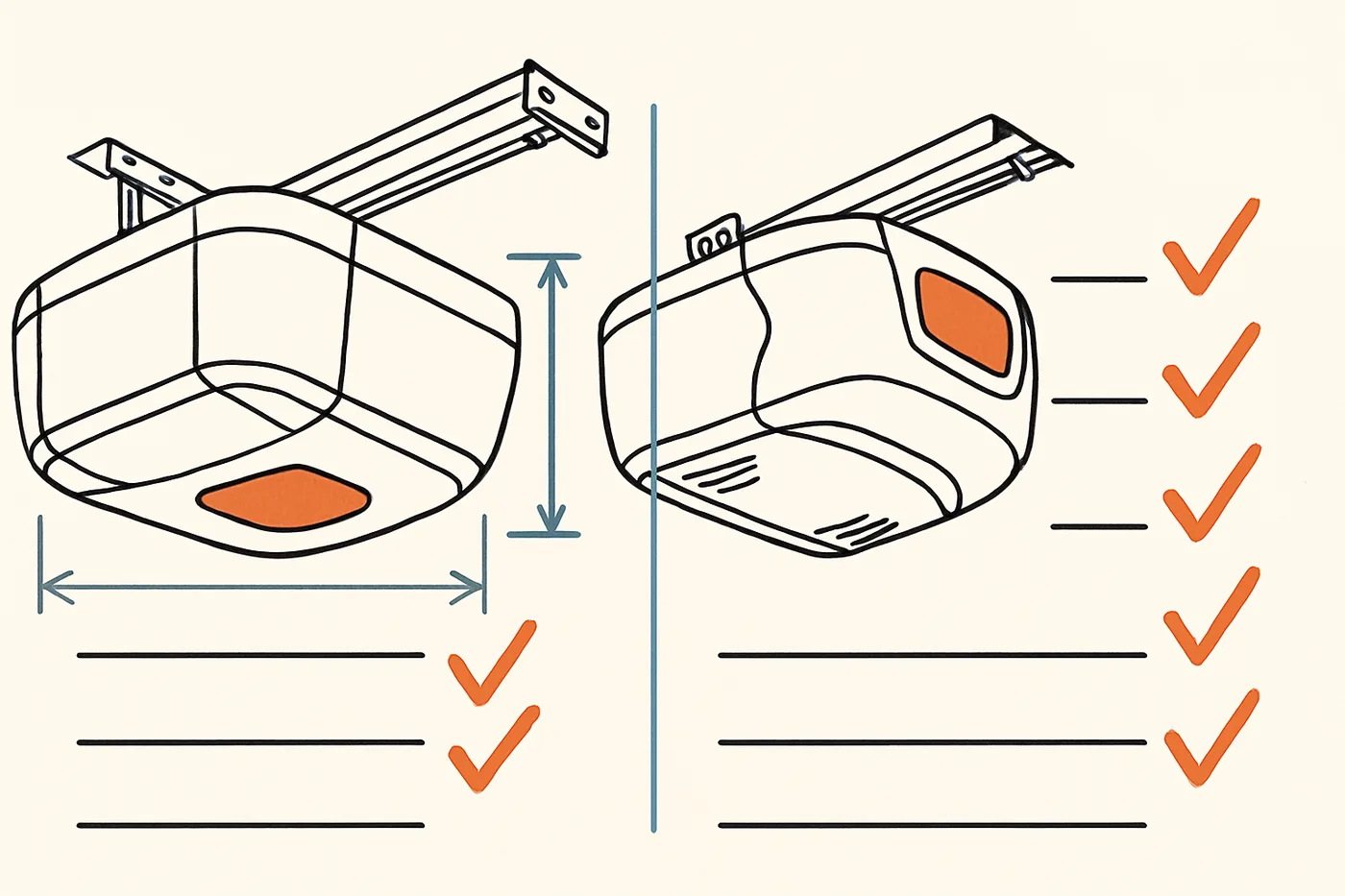
Wall-mount (jackshaft) openers are a different animal. They mount beside the door instead of on the ceiling, which matters if you have a high ceiling, a car lift, or a storage platform overhead. HomeAdvisor's drive-type table does not list them, so get a written quote for the specific model and ask what installation adds. Pick one because you need the ceiling space, not because it looks cleaner in the showroom.
Installation labor: $60 to $80 an hour
HomeAdvisor's opener-installation page lists installer labor at $60 to $80 an hour for a job of about two to six hours. Its all-in figure for installing an opener is $218 to $540, with an average of $379. Where you land depends on your region and whether the installer is swapping a unit out or doing a fresh install on a door that has never had an opener.
A straight replacement, with the old unit coming down, the new one going up on the same rail geometry and the existing outlet reused, is at the short end of that range. A fresh install where the installer has to run power, mount the header bracket, drill for safety sensors, and route wiring end-to-end is at the long end.
This is the line item homeowners most often try to negotiate, and it is the wrong one to push on. Labor is where you pay for the installer to torque the header bracket correctly, set the force and travel limits, and verify the safety reversal. Save the negotiation for the accessories.
Battery backup: $50 to $150
HomeAdvisor lists battery backup at $50 to $150. If you live in California, this is not optional: California's SB 969 requires residential openers made, sold or installed in the state on or after July 1, 2019 to have a battery backup. If you live anywhere else, it is a judgment call, and the judgment comes down to one question: how often does your power go out, and do you have another way out of the garage when it does?
If the garage is your primary entry and exit, battery backup is worth the money. If you have an interior door to the house and a side door to the yard, you can skip it and pull the manual release the two times a decade it matters.
Smart module (WiFi)
WiFi connectivity is built into some openers and sold as an add-on module for others, and HomeAdvisor's page gives no price for it, so get the number in writing. Ask whether the quote's unit has it built in or whether it is a separate line.
If your existing opener works fine, you may be able to add a smart module to it instead of replacing it. Ask the opener's maker whether a module works with your model. If you are replacing the unit anyway, built-in is simpler than a bolt-on. If you are not, do not let "smart features" be the reason you replace a working opener.
The accessories that are not in your quote
This is the paragraph that saves you money. Extra remotes, keypads, and additional safety sensors may not be included in the base installation quote. HomeAdvisor lists a pair of safety sensors at $50 to $100; for remotes and keypads, ask the price.
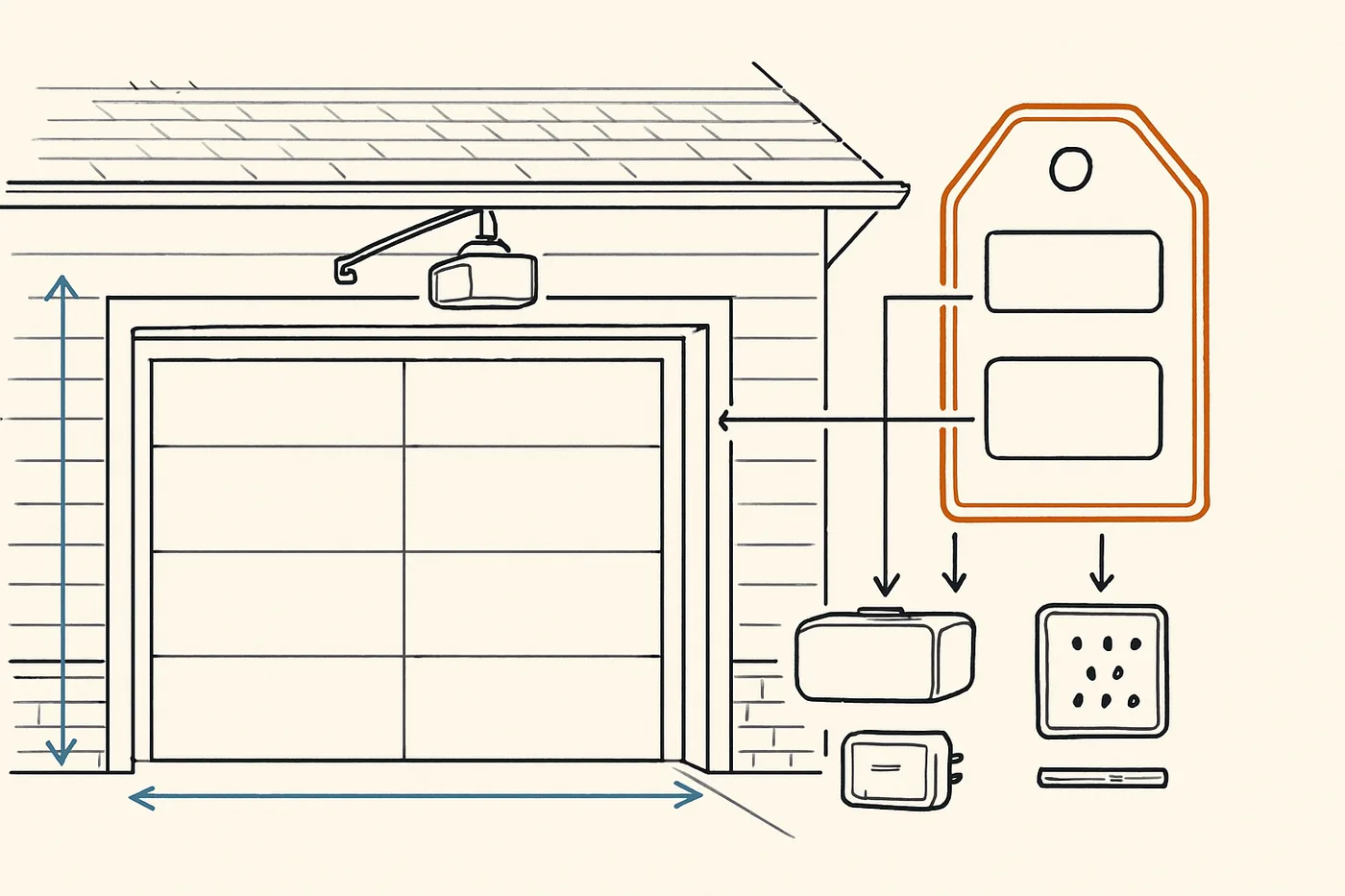
What a quote usually lists:
- The opener unit
- One rail and motor assembly
- One set of safety sensors (the photo eyes at the bottom of the track)
- One remote
- One wall-mounted control button
- Labor to install the above
What a quote may not include:
- A second or third remote
- An exterior keypad
- Haul-away of the old opener
- A new header bracket if yours is rusted or undersized
- An upgraded reinforcement bracket if your top door panel needs one
- An electrical outlet if there isn't one near the ceiling
Ask about each of these before you sign. Adding a keypad to the original quote is cheaper than calling the installer back next month to install one.
What you actually pay: four ways a quote adds up
A total is the unit plus labor plus whatever extras the quote lists, so ask for each line in writing and add them yourself. Four common combinations:
Budget replacement, chain drive, no extras: unit plus labor, nothing else. You are replacing a dead opener on a detached garage and you do not care about noise.
Typical replacement, belt drive, battery backup, one extra remote: unit, labor, a battery backup line and a remote line. A common setup for an attached two-car garage.
Premium replacement, wall-mount with built-in WiFi and battery backup, keypad, extra remote: the longest quote of the four, with a line for each extra. You have a high ceiling or want the quietest option.
California new install, belt drive with required battery backup, smart-enabled: unit, labor, battery backup and smart module. Battery backup is not a line item you can cut here; it's the law.
For a benchmark, HomeAdvisor's normal range for installing an opener is $218 to $540, with an average of $379. If your quote is far outside it, ask the installer what is in it.
Where to push and where to let it go
Ask about: accessories (remotes, keypads), haul-away, and whether the quote includes a new bottom seal or reinforcement bracket if those are needed. These are worth asking about before you sign.
Don't cut: the safety sensor setup, and the battery backup in jurisdictions where it's required. The sensors are safety equipment, and the installer's labor is what you are buying a professional for.
If you want to see how the opener fits into the rest of the door system before deciding which drive type makes sense for your setup, the garage door anatomy lab shows where the motor, rail, and header bracket sit in relation to the springs and tracks.
Three questions before you sign the quote: Does the unit price include installation, or are they listed separately? Are battery backup, a second remote, and a keypad included, or add-ons? Is haul-away of the old opener in the total? If any answer is "add-on," get the number in writing now, not after the truck is in your driveway. Want a second quote to compare? A+ Garage Doors (our affiliated installer) and Garage Door Pro Services (our affiliated installer) can give you one.