Rolling Steel vs Sectional Garage Doors: Which One Belongs on Your House
Compare rolling steel and sectional garage doors: costs, space requirements, insulation, durability, and which is best for your home.

If you're comparing rolling steel to a sectional door, one of two things is going on. Either you're building or renovating a shop, workshop, or detached garage and you saw a rolling steel door somewhere and wondered if it belongs on your property. Or you have an unusually wide opening — over 20 feet — and a sectional door is starting to look marginal.
For most attached residential garages, the answer is decided before you finish reading this sentence: sectional. But "most" is not "all," and the cases where rolling steel is the right call are worth understanding before you spend the money on the default.
Here's how the two doors differ.
How each door works
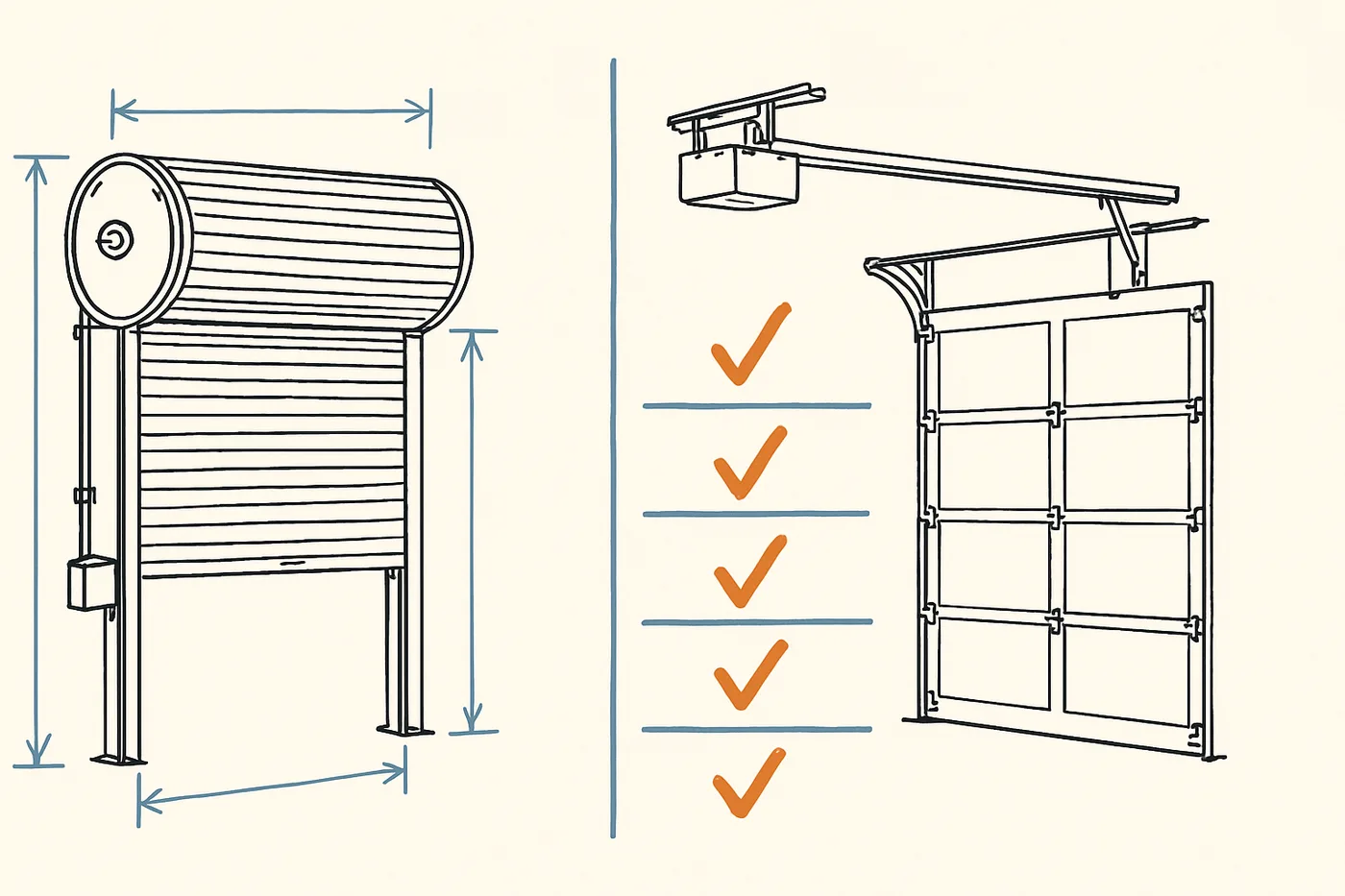
A sectional door is what you picture when you picture a garage door. Four or five horizontal panels hinged together, rolling up along a curved track that carries the door from vertical (closed) to horizontal (open, tucked against the ceiling). Torsion spring above the opening, cables on each side, nylon rollers in the tracks. Quiet, familiar, and the standard on virtually every attached residential garage built in the last fifty years. If you want a full teardown of how it's put together, the garage door anatomy lab walks through every part.
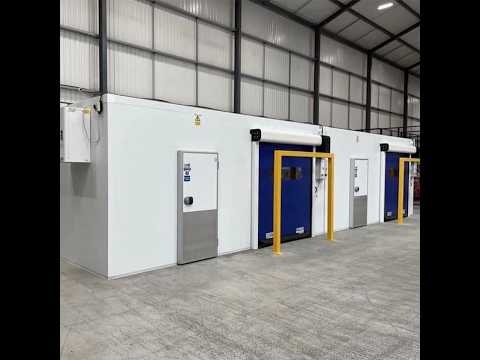
A rolling steel door is a different mechanism. Instead of hinged panels, it's a curtain of interlocking horizontal slats — in galvanized steel, stainless, or aluminum. When the door opens, the slats coil around a steel barrel mounted above the opening. The counterbalance torsion spring lives inside the barrel. There are no tracks along the ceiling. The whole door lives in a coil directly above the header. The rolling steel lab has the full mechanical breakdown.
That mechanical difference — panels rolling back into the ceiling versus slats coiling up over the opening — drives almost every other trade-off between the two.
Ceiling space and how much room the door needs
A sectional door needs the full backroom depth along your ceiling. If the door is 7 feet tall, you need roughly 7 feet of clear ceiling behind the opening for the door to sit when it's open. If you have low ceilings, exposed trusses, storage lofts, mechanical equipment, or a shallow garage, that's a real constraint.
A rolling steel door needs almost none of that. The curtain coils above the opening in a compact barrel, leaving the ceiling clear. You need headroom above the door for the barrel itself, but nothing behind it.
If you're building a shop with a lift, a mezzanine, or overhead storage that needs to run right up to the door, this alone can decide the question.
Size limits
Sectional doors come in the sizes residential and most light commercial openings need; ask the maker for its limits.
Rolling steel suits very wide openings. If you're building a hangar, an industrial bay, or an oversized shop door for equipment, ask the maker which door type comes in your size.
For a standard 16x7 double-car residential opening, this doesn't matter. For a 20-foot RV bay, it starts to.
Durability and cycle life
This is where rolling steel earns its price tag.
Cycle ratings differ by door and by maker, and they cover springs, cables and hardware. Ask for the door's cycle rating in writing, and for what it covers. One cycle is one open and one close.
For a house, the question is whether the rating matches how often you open the door. A commercial bay that opens its door many times a day needs a higher rating than a home does.
There's also a repair difference worth knowing. On a rolling steel door, if a slat gets damaged, that individual slat can be replaced without touching the rest of the curtain. On a sectional door, a dented panel is a whole-panel replacement. For shops where forklifts and equipment brush against the door, this matters. For a car in a residential garage, it usually doesn't.
Insulation
Sectional wins this one, and not by a small margin.
Both door types come with foam insulation, so ask the maker for the rated R-value of the exact model you are quoted. The interlock joints between rolling steel slats can leak air in ways a continuous sectional panel with weather seals does not.
If your garage is heated, cooled, or shares a wall with a bedroom, sectional is the better thermal envelope by a wide margin.
Noise
Sectional wins here too. Rolling steel doors are usually louder because the slats are metal-on-metal as they coil and uncoil, while sectional doors run on nylon rollers that damp the noise. If you're wondering how loud is too loud, the why is my garage door so noisy video covers what's normal and what isn't for a residential sectional.
For an attached garage with living space nearby, this alone is disqualifying for rolling steel. For a detached shop, it's a non-issue.
Fire rating
If you're building a garage that shares a wall with living space, and local code requires a fire-rated separation, rolling steel has an option sectional doesn't: fire-rated models with fusible links that let the door drop closed by gravity. Sectional doors are not typically fire-rated.
This almost never comes up in residential. When it does, rolling steel is the only answer.
Cost
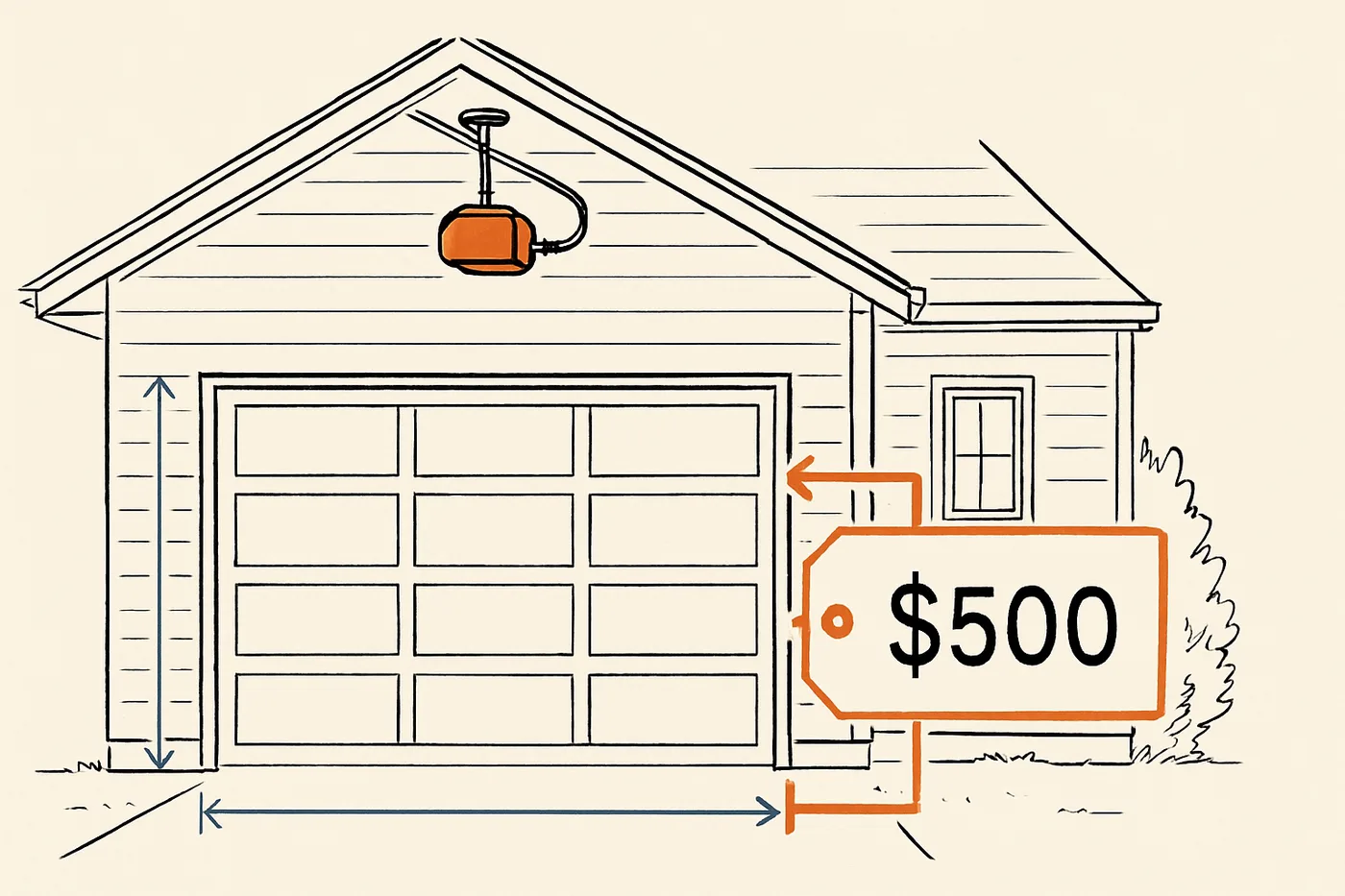
For a standard 16x7 double-car residential opening, a mid-grade insulated steel sectional runs $1,500 to $3,200 installed.
A commercial rolling steel door starts around $3,500 installed for a standard manual-operation model, and climbs quickly with width, height, insulation, motorization, and wind-load rating. Residential-scale rolling steel doors exist, but they occupy the same price band or higher.
Rolling steel starts where sectional ends.
Weight and safety
Both doors are heavy, but rolling steel is in a different class. A wide rolling steel curtain is heavy, with a counterbalance torsion spring in the barrel. This is not a door you service yourself. Sectional door springs are also lethal when they fail, but the systems are more approachable for a qualified technician working alone.
For either door, a professional inspection every year or two is money well spent — Garage Door Pro Services (our affiliated installer) offers a free garage door safety inspection that covers spring tension, cable wear, and hardware, and Las Vegas homeowners can get same-day service from A+ Garage Doors (our affiliated installer) for repairs that come out of one. For a primer on what a technician actually looks at during a service call, Maya's tech-decoded video is worth ten minutes.
Speed
One more spec worth knowing if you're buying commercial-adjacent: high-performance rolling steel doors are built for speed and heavy cycling, which matters in warehouses where forklift traffic is the bottleneck. Irrelevant for a house. Ask the maker for the opening speed and cycle rating.
The decision
Buy a sectional door if: the garage is attached to your house, or the garage shares a wall with any living space. You want it quiet. You want it insulated. You want the standard residential opening — 16x7, 9x7, 18x8 — at a price that reflects the residential market. This is 95% of homeowners. If you're in that group, stop reading and go pick a color. The rolling steel doors video is worth watching only so you understand what you're not buying, and why.
Buy a rolling steel door if: the garage is detached and you don't care about noise, or you need to keep the ceiling clear for a lift, mezzanine, or overhead equipment, or the opening is wider than 20 feet, or code requires a fire-rated door. In any of those cases, sectional isn't just wrong — it's not on the table.
For the middle-of-the-road homeowner with an attached two-car garage: insulated sectional in the $1,800 to $2,800 installed range. That's the answer.