Roll-Up (Coiling) Doors vs Sectional Doors: What Each Is and Which Fits Your Shop
What a roll-up (coiling) door is, what insulated roll-up doors can and can't do, and how they compare with sectional doors for a small shop.

If you run a small commercial shop — an auto bay, a contractor yard, a self-storage row, a small warehouse — and you're replacing the door at the front of the building, you've probably noticed the two options don't feel like they're in the same category. One looks like a bigger version of the door on your house. The other coils up into a metal drum above the opening and looks like it belongs on a loading dock. The price gap between them is wide. The right answer depends on what you're actually doing with the building.
Here's the short version: a sectional door is cheaper, quieter, and insulates better. A rolling steel door lasts longer, takes less ceiling space, and is the only one of the two that can be fire-rated. Most small shops would be fine with either. The question is which set of trade-offs fits your operation.
What is a coiling door, and how is it different from a sectional?
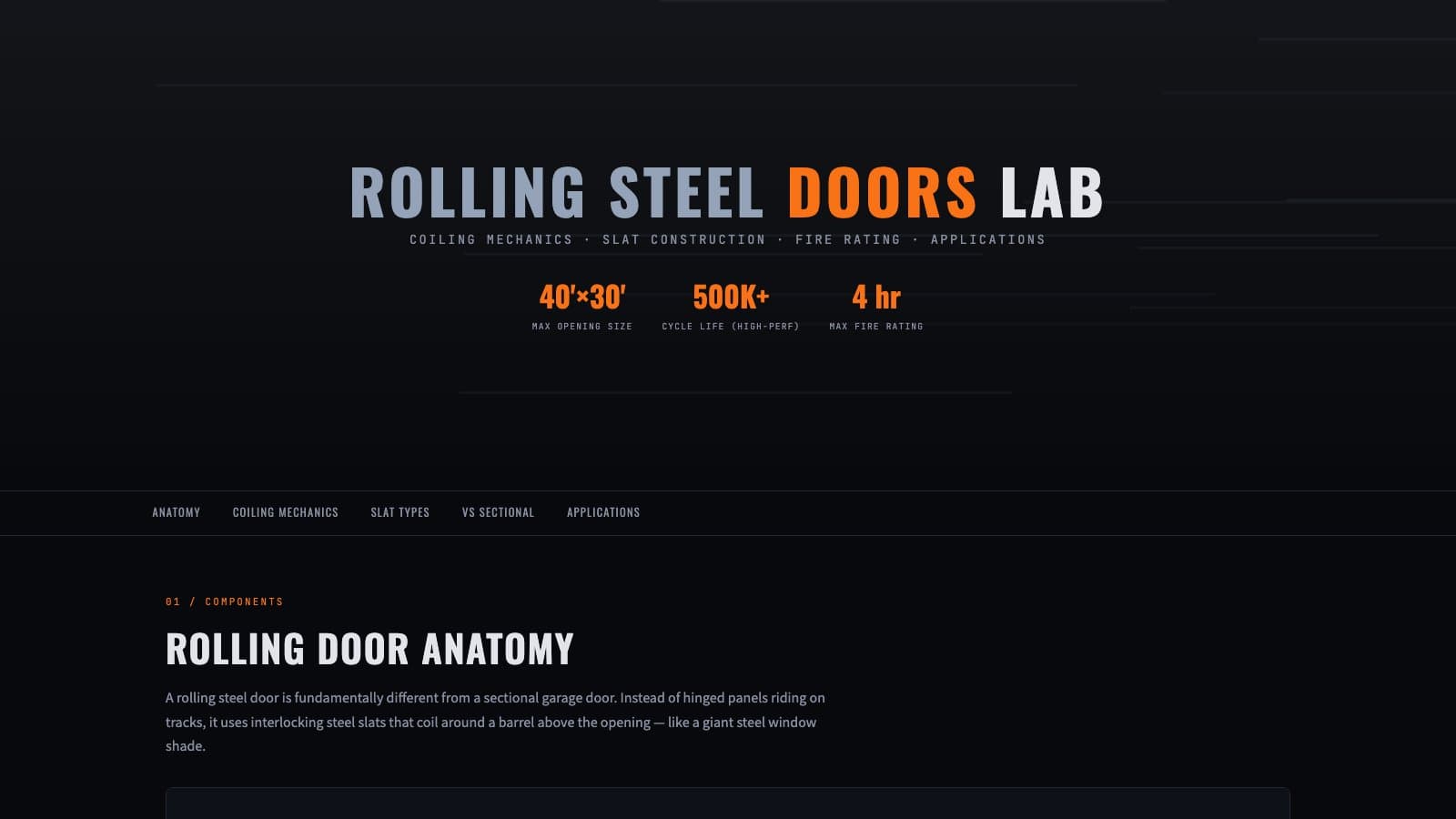
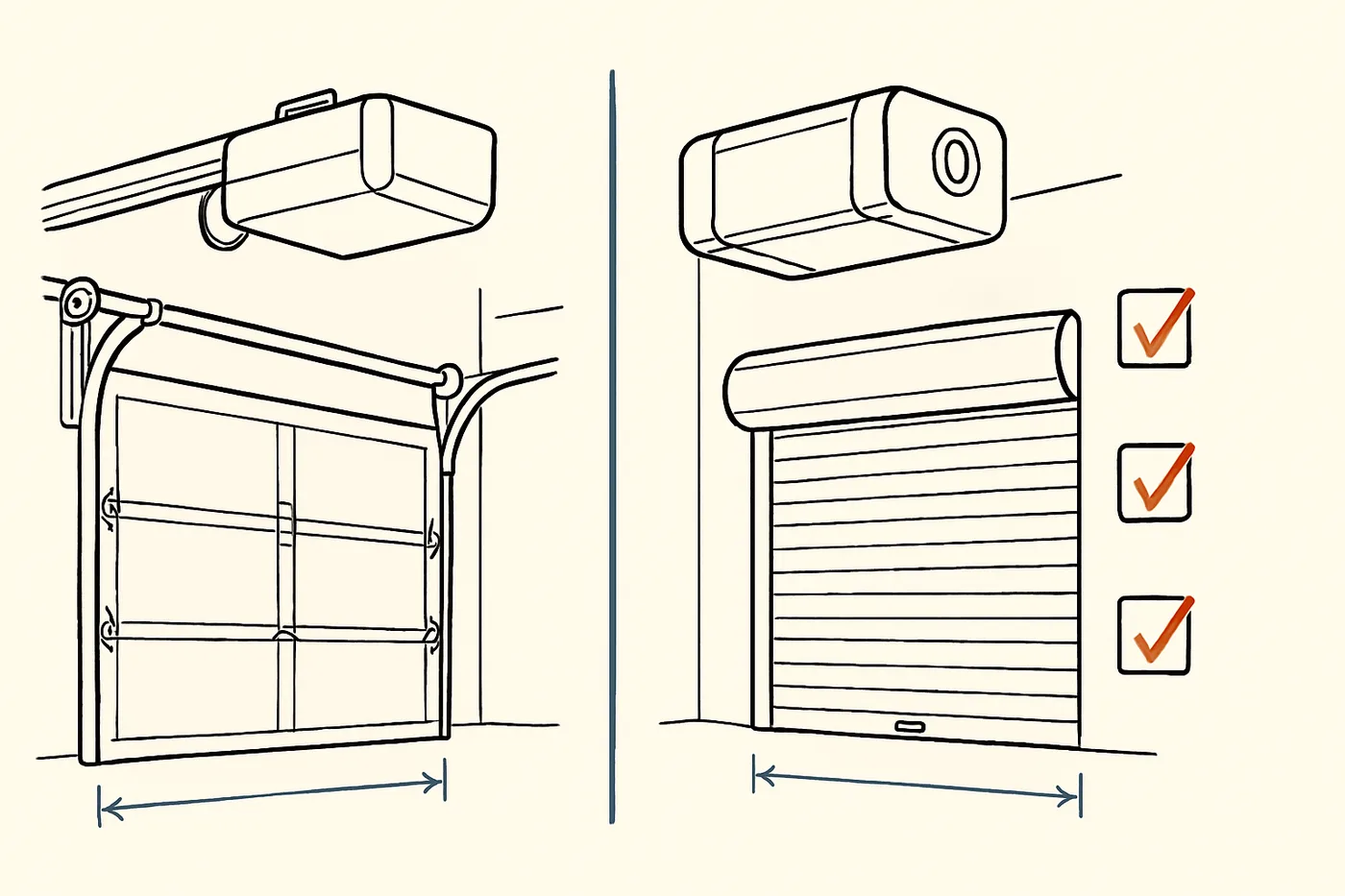
A coiling door, also called a roll-up or rolling steel door, is made of interlocking steel slats that coil around a barrel above the opening when the door goes up. A sectional door is made of hinged panels that ride tracks and park along the ceiling. Raynor, a door maker, describes roll-up doors as interlocking horizontal sheets of steel that coil up on themselves and lists shops, warehouses, storage facilities, restaurants and fire departments as typical places for them.
What each door actually is
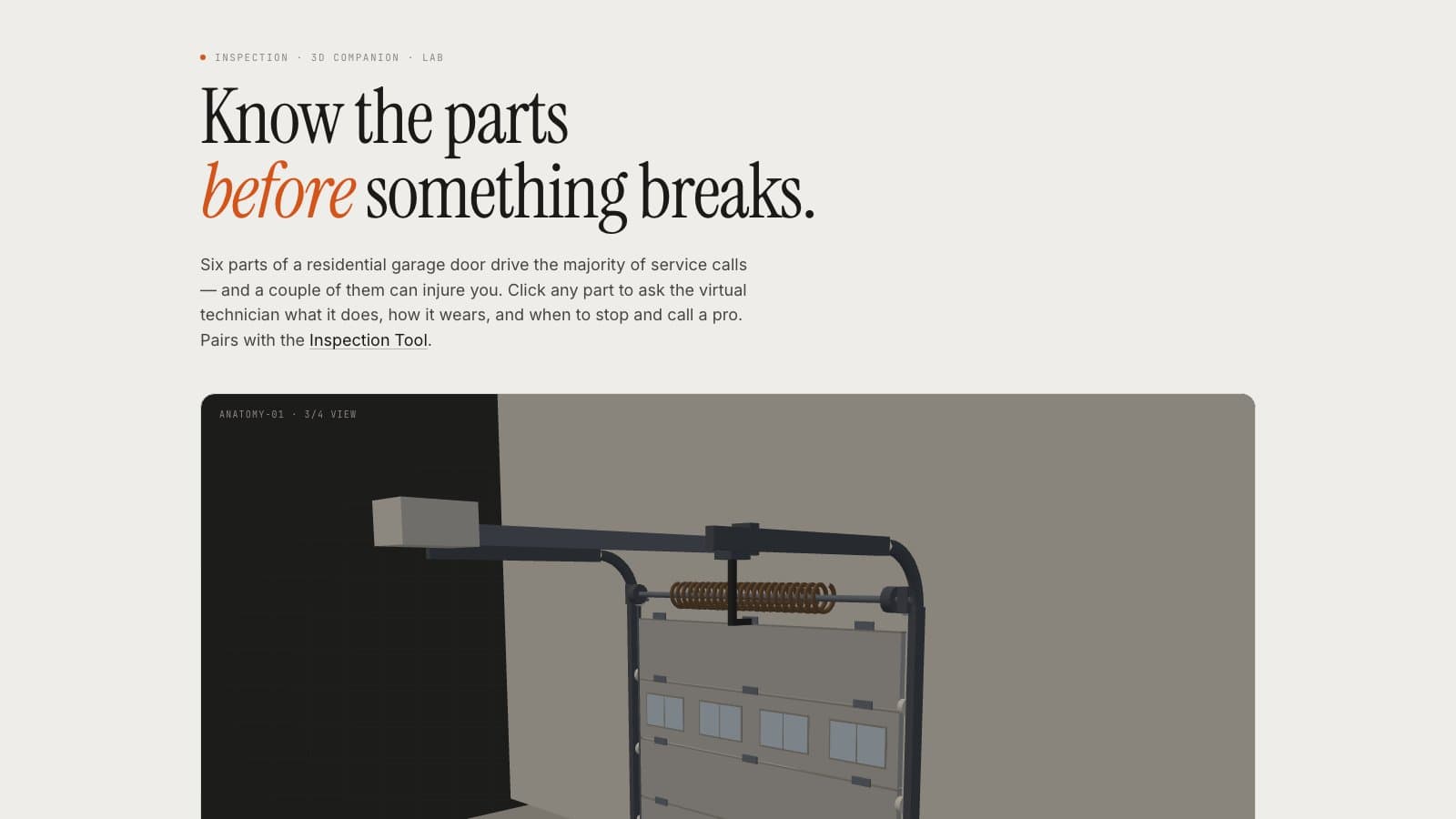
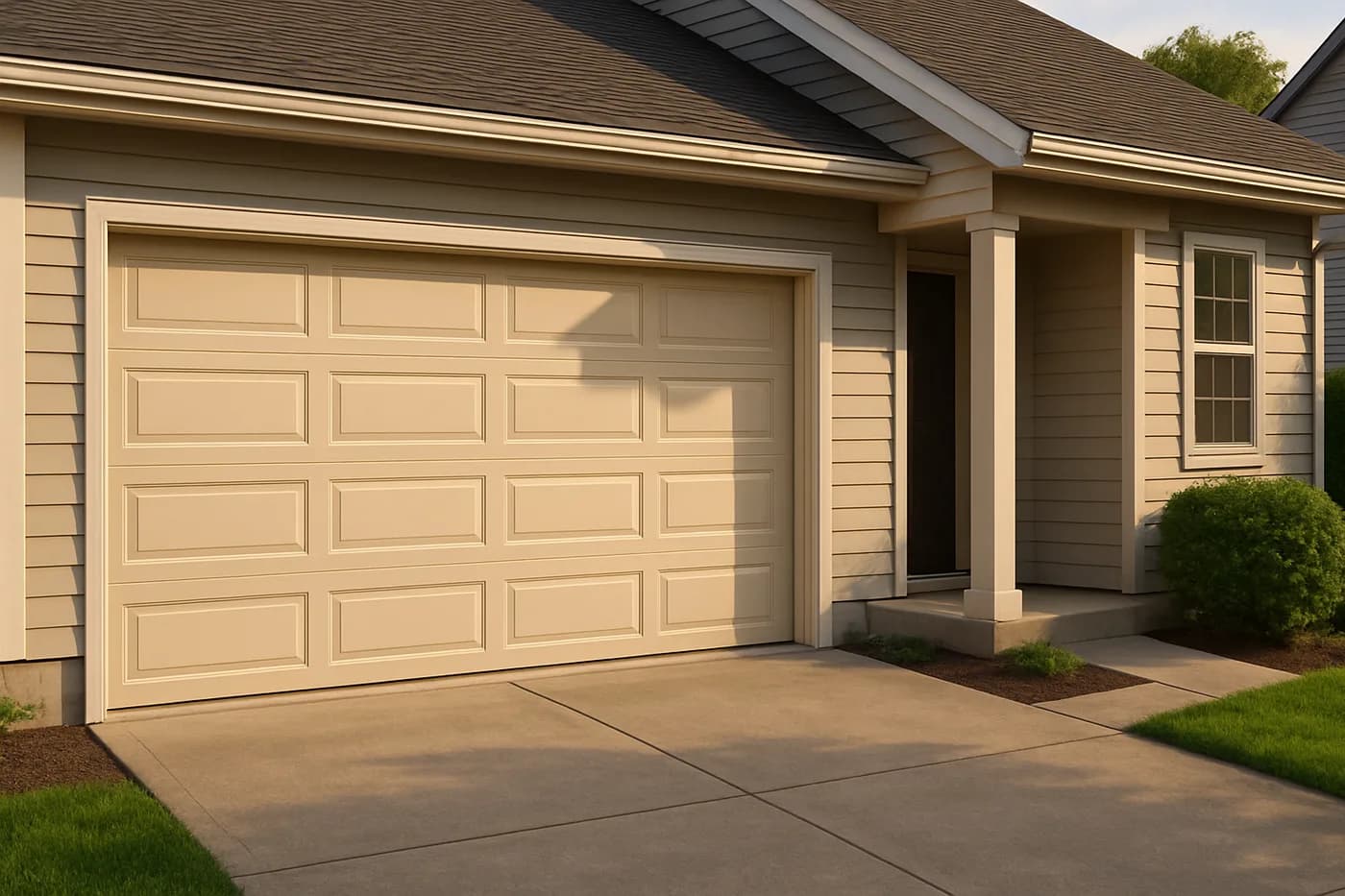
A sectional door is the same architecture as a residential garage door, scaled up. Hinged panels ride curved tracks from vertical along the opening to horizontal along the ceiling. The panels roll on nylon rollers and are counterbalanced by a torsion spring above the header. When you open it, the door folds up and parks parallel to the ceiling along the back of the room.
A rolling steel door — sometimes called a roll-up or a service door — is built from interlocking steel slats typically 2 to 3 inches tall, available in 18 to 26 gauge galvanized steel, stainless steel, or aluminum. When you open it, the slats coil around a barrel mounted above the opening. There are no horizontal tracks. The door stores itself in a tight cylinder a foot or two deep, right above the header. For a deeper look at how the barrel and counterbalance work, the rolling steel lab walks through the mechanics.
That difference in geometry — fold flat across the ceiling versus coil at the header — drives almost every other trade-off in this comparison.
Cost
Sectional wins on price, and it's not close at the entry level. A mid-grade insulated steel sectional door runs $1,500 to $3,200 installed for a standard 16-by-7 double-car opening. That same article puts a commercial rolling steel door at approximately $3,500 installed for a standard manual-operation model, rising steeply with width, height, insulation, motorization, and wind-load rating.
You're looking at roughly double the starting price for rolling steel on a small opening, and the gap widens as the door gets bigger or more spec'd out. If you're buying purely on upfront cost and your opening is residential-sized, sectional is the obvious answer.
The story changes if you factor in lifespan.
Durability and cycle life
This is where rolling steel may earn the price difference, if it does: ask the maker for each door's cycle rating in writing. One cycle is one open and one close.
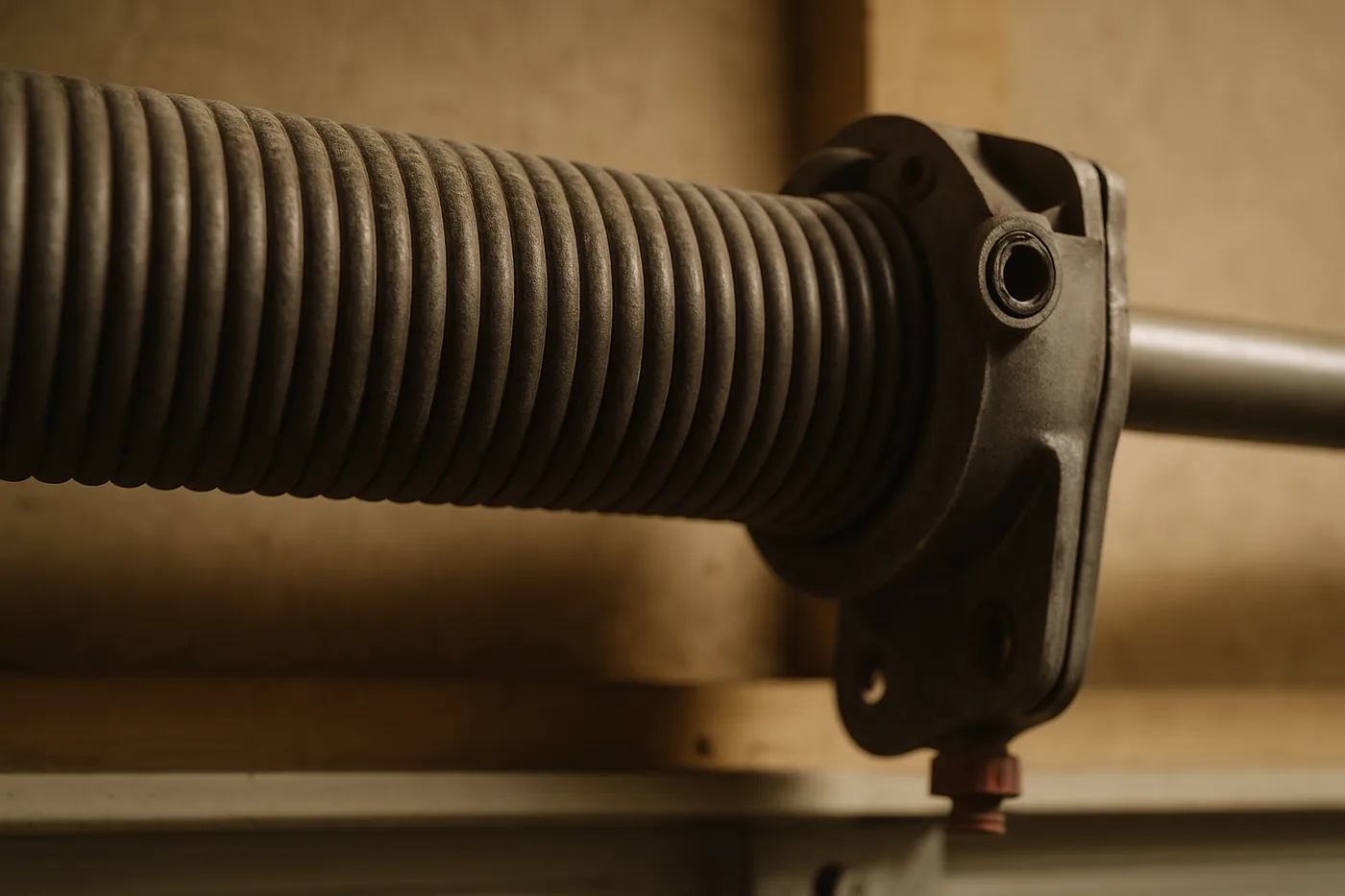
For context: A standard spring is rated for about 10,000 cycles, one cycle is one full open and close, and at four cycles a day that is about seven years (IDC Spring, a spring manufacturer). A commercial shop opens its door many more times a day than a home does, so ask for the rating before you buy.
There's a related repair point. On a rolling steel door, individual slats can be replaced independently when damaged. On a sectional door, if a forklift tags one panel, the whole panel comes off. Replacement panels are not always available years later in the original color and gauge, which is how sectional doors end up with one mismatched panel in the middle.
If your shop has heavy cycle use or any meaningful risk of vehicle contact, the math swings toward rolling steel even though the upfront number is higher.
Insulation, noise, and the working environment
Sectional wins on both.
Clopay lists R-values from 6.3 up to 20.4 across the doors on its insulation page, the top figure being polyurethane, while the roll-up makers we found list R-6.24 for Raynor's insulated slats and R-8 for Cornell's foam-filled door. Each maker measures its own door, so these are published figures, not a head-to-head test. Our guide to insulated roll-up doors has the detail. If you're heating or cooling the shop — an auto repair bay in a cold climate, a conditioned warehouse, anywhere a person is working inside for eight hours a day — that gap matters on the utility bill and on whether the space is comfortable in February.
Noise is the other one. Rolling steel doors are louder than sectional doors because of metal-on-metal contact between the slats; sectional doors run more quietly on nylon rollers. If you've ever stood under a rolling steel door while it cycles, you know the sound. It's not subtle. The video on rolling steel doors gives you a sense of how that compares to sectional operation, and this one on why garage doors get noisy explains what's happening at the slat or roller. For a shop next to an office, a residential neighborhood, or a customer waiting area, that noise is a real consideration.
Insulated roll-up doors: what the manufacturer says
Roll-up doors come in insulated versions. Raynor says its insulated roll-up doors have a thin polyethylene layer, described as bubble insulation with foil backing that coils with the door and adds no bulk to the roll. On its DuraCoil product page, Raynor lists insulated flat slats at an R-value of 6.24, with a U-factor of 0.90. Treat that as one maker's published figure, not a standard: Raynor's own spec sheets list different numbers for different slat builds, so check the current figure with the maker before you rely on it.
Two other things from that page worth knowing. These doors are sold for commercial and industrial applications, and the page says nothing about home use, so we make no claim about whether one suits a house. And they are not spring-free: the DuraCoil page describes a torsion-spring counterbalance in the barrel. Springs under tension are a job for a trained technician, so if a roll-up door becomes hard to lift or drops, stop and call a pro.
Space, fire rating, and the things you can't do with sectional
Rolling steel doors coil above the opening and require minimal ceiling space, whereas sectional doors require the full backroom depth along the ceiling for the horizontal tracks. If your shop has a low ceiling, exposed structural beams, mezzanine storage, overhead piping, or an HVAC system parked above the door opening, a sectional door may not physically fit. Rolling steel takes a foot or two at the header and leaves the rest of the ceiling free.
Size is the other ceiling. A rolling steel door can span openings up to 40 feet wide by 30 feet tall, while a sectional door is limited to approximately 24 feet wide by 18 feet tall. For a small shop this rarely matters, but if you're putting a door on a fire truck bay or a tall equipment opening, sectional isn't an option.
Fire rating is where rolling steel stands alone. Rolling steel doors can be rated for up to 4 hours of fire resistance and specified with fusible links that melt at approximately 165°F to allow gravity-closure, while sectional doors are not typically fire-rated. If your building code requires a fire-rated opening between two occupancies — a common requirement for shops sharing a wall with retail, office, or residential space — sectional is off the table.
One more thing: a 20-foot-wide rolling steel service door curtain can weigh over 800 pounds, with a counterbalance torsion spring inside the barrel that's at maximum tension when the door is fully closed. That spring is not a DIY service item. Whoever installs the door should be the same outfit that maintains it. A periodic professional inspection — Garage Door Pro Services (our affiliated installer) offers a free garage door safety inspection that covers commercial doors as well as residential — is the right level of attention for a commercial door at any size. For shops in southern Nevada, A+ Garage Doors (our affiliated installer) handles both sectional and rolling steel commercial installs.
Speed
Standard rolling steel doors open at 6 to 8 inches per second. High-performance rolling steel doors designed for heavy commercial use can hit opening speeds up to 24 inches per second. Sectional doors live in the same 6-to-8-inch range as standard rolling steel and don't have a high-speed equivalent at the small-commercial price point. If your operation depends on fast cycle times — a busy delivery bay, a car wash — that's a rolling steel feature without a sectional answer.
How to decide
Three questions, in order.
One: does the building code require a fire-rated door at this opening? If yes, you're buying rolling steel. There's no version of this where a sectional satisfies a fire-rated assembly requirement. If no, keep going.
Two: will the door cycle more than 20 times a day, or is there meaningful risk of vehicle impact? If yes, rolling steel pays for itself in lifespan and slat-level repairability even at double the upfront cost. If no, keep going.
Three: is the space heated, cooled, or noise-sensitive? If yes — a conditioned shop, a bay adjacent to an office or customer area, anywhere a person works all day inside — sectional is the right answer. The R-value gap and the noise gap both run in sectional's favor and matter every day the door is closed.
For the middle-of-the-road case — a small commercial shop with moderate cycle use, no fire code requirement, an opening under 16 feet wide, and a working environment that benefits from insulation and quieter operation — buy the sectional. Spend the savings on a mid-grade polyurethane-insulated panel and a commercial-rated opener.
For the harder-use case — high cycle counts, tight ceiling, fire-rated assembly, or any opening over 20 feet wide — buy rolling steel and don't look back at the price tag.