How long should a garage door last
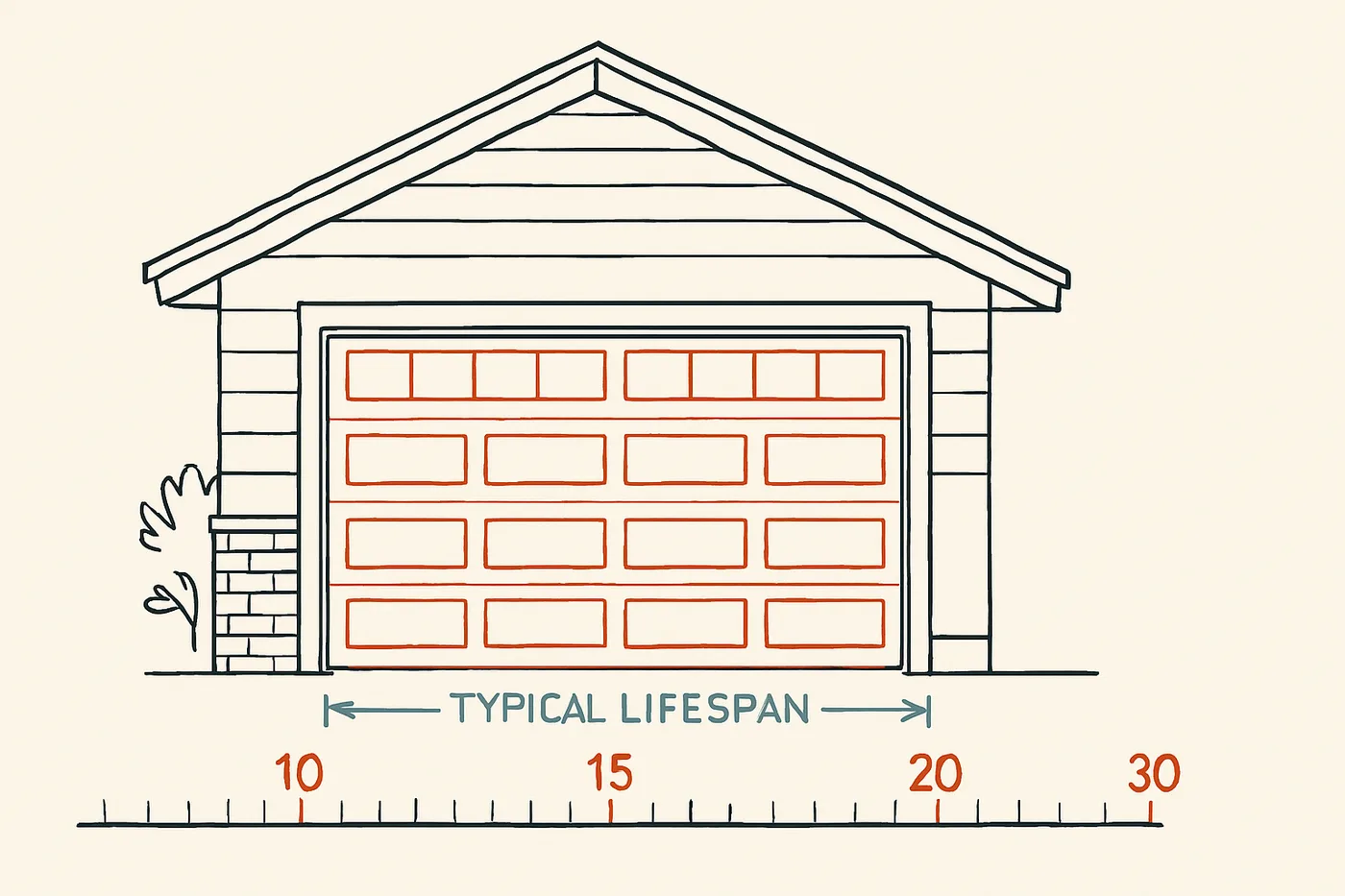
HomeAdvisor says most garage doors last 15 to 30 years, and steel 15 to 20. Here's what that range depends on, what shortens a door's life, and the yearly check that catches wear early.

You bought the house eleven years ago. The door was already on it then, and the inspector wrote something vague about "serviceable condition." It still works. It's louder than it used to be. You're wondering whether you're about to spend money, and if so, how much time you have to plan for it.
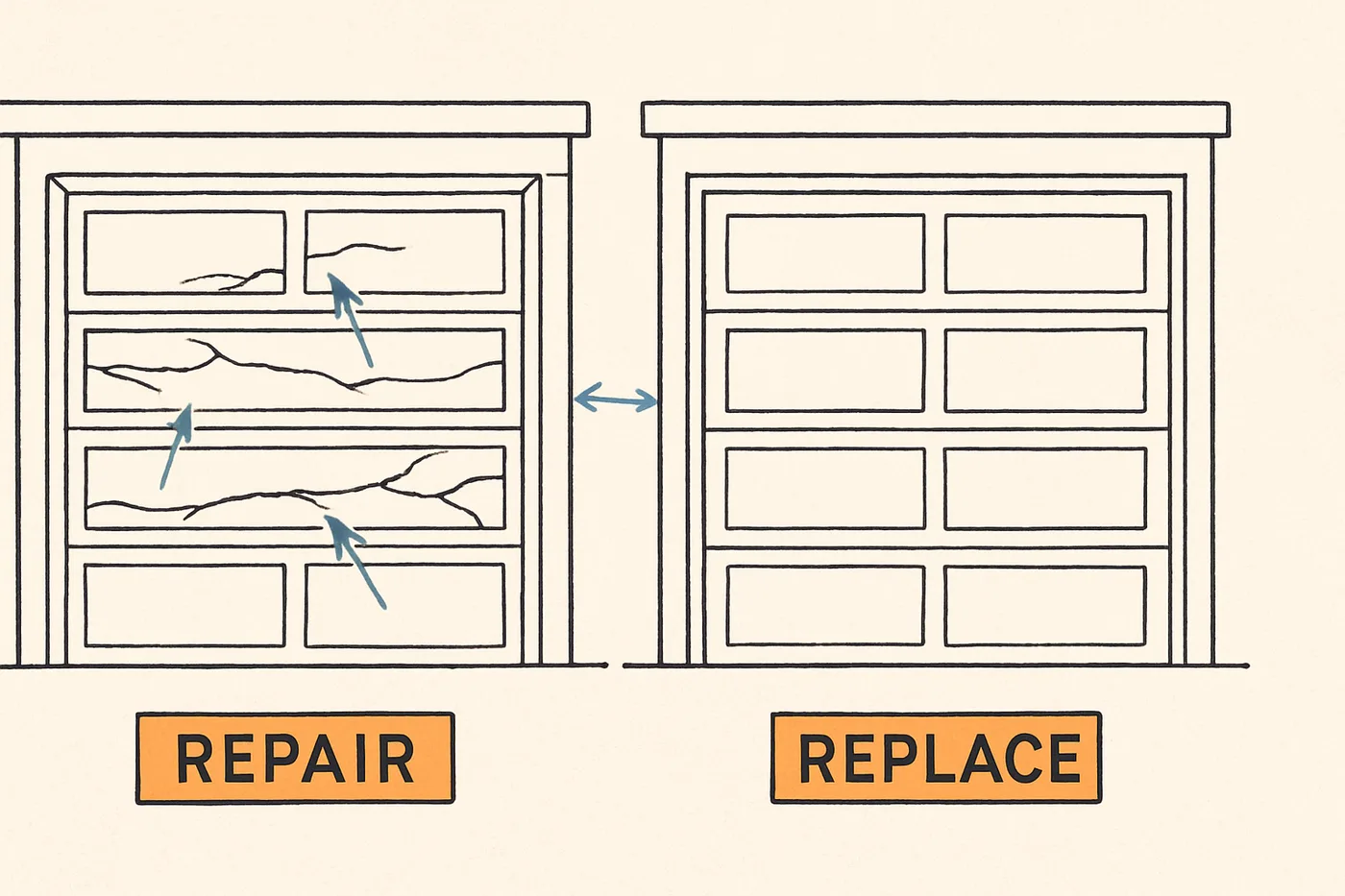
Not sure whether to repair or replace? Start with our page on deciding whether to repair or replace a garage door.
The short answer, from HomeAdvisor's installation page (updated Jun 17, 2026), is that most garage doors last 15 to 30 years, and that a steel door can give 15 to 20 years of reliable service with regular lubrication and rust control. It says material, climate and upkeep make the difference, and that harsh weather, heavy daily use and skipped maintenance can shorten a door's life considerably. Nobody can tell you where your door sits in that range without looking at how it has been used and cared for.
What "lasts" actually means
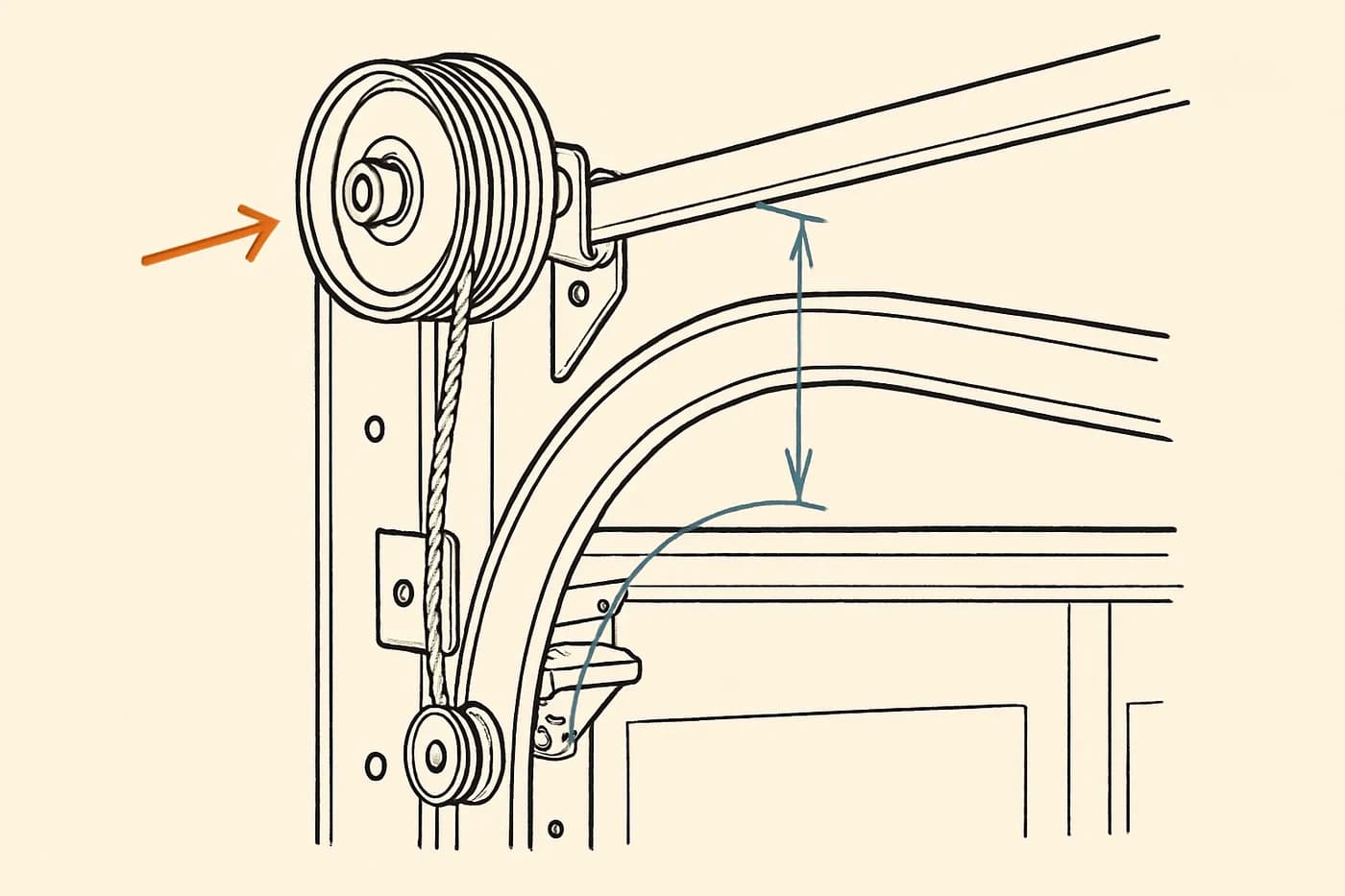
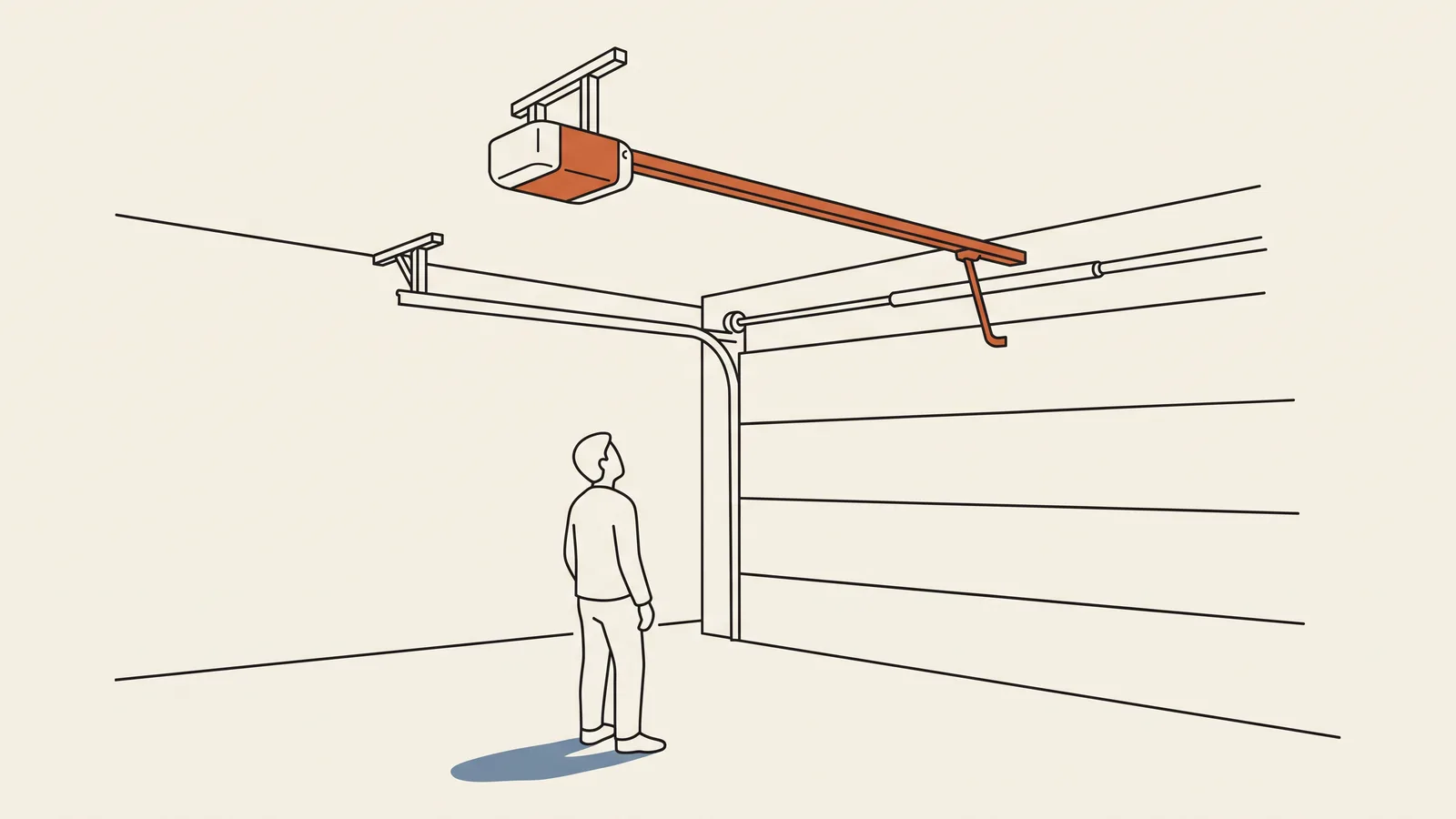
A garage door is not one thing. It's a panel assembly, a set of springs, a pair of cables, rollers, hinges, tracks, a bottom seal, and an opener that pulls it all up and down. These components do not age at the same rate, and when people say "my door lasted twenty years," they almost always mean the panels lasted twenty years while the springs got replaced twice and the opener got replaced once.
So when you're asking how long a door should last, you're really asking about three overlapping timelines. The panels and the frame: the structural door itself. The springs and cables: the tension system that does the lifting. The opener: the motor and logic that tells the system what to do.
HomeAdvisor says well-maintained wood doors often pass 20 years and can reach 30, but that they demand more sanding, sealing and repainting. The springs are on a different clock entirely.
The spring clock
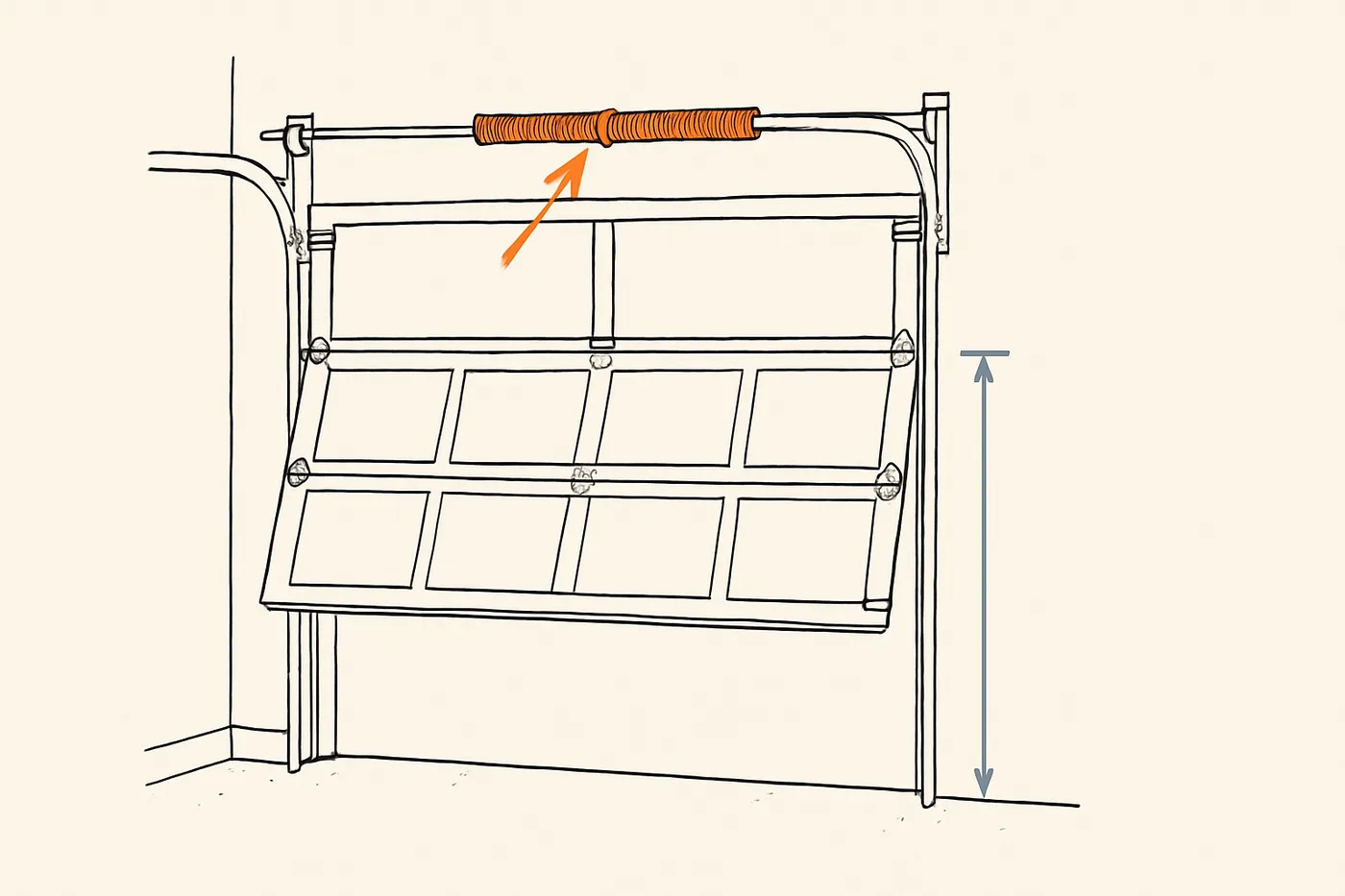
A standard spring is rated for about 10,000 cycles, one cycle is one full open and close, and at four cycles a day that is about seven years (IDC Spring, a spring manufacturer). Four cycles a day is going out and coming back twice. If there are teenagers in the house and the door goes up and down eight times a day, divide accordingly. You're looking at about three and a half years.
You can buy springs with a higher cycle rating: IDC Spring, a spring manufacturer, says certain wire types can offer 25,000 cycles or even 50,000. They cost more up front, so ask for the rating and the price in writing.
Here's the part worth sitting with. Clopay's spring guide says springs are designed to last a certain number of cycles, and once they wear out, they simply can't support the door's weight. Clopay also says a broken or worn-out spring can suddenly give way, causing the door to slam shut or even fall. Clopay says spring wire becomes more brittle and weaker in colder temperatures, so an old spring is more likely to break on a cold morning; our cold-weather guide has the details.
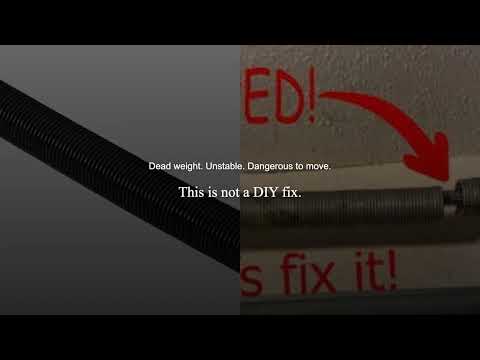
A broken spring is not a repair you do yourself. Torsion springs are under extreme tension, and Clopay calls spring replacement "not your typical DIY project". We have a short primer on why that tension doesn't release the way people assume it does, and it's worth the four minutes if you've never seen a spring come apart.
What actually shortens a door's life
HomeAdvisor names harsh weather, heavy daily use and skipped maintenance. Here is what those mean in practice.
An out-of-balance door. Clopay says spring tension that is too low or too high makes the opener work harder, straining the system and leading to unnecessary wear and tear (see the signs you can see and what the technician does). Clopay's spring guide lists the signs. If the door feels unusually heavy or the opener is straining more than usual, Clopay says the spring may have lost its tension. If the door looks crooked as it moves or gets stuck partway, Clopay says one of the springs could be weaker or broken. Clopay calls loud banging or snapping "a strong indicator a spring has let go," and says "the most obvious sign is a visible break or gap in the spring itself."
Stop using the door and call a technician if you see a break or gap in a spring, hear loud banging or snapping, see a frayed or kinked cable, or the door looks crooked, gets stuck partway or feels unusually heavy. If the only sign is an opener that sounds like it is straining, book a technician. If you see none of those signs and want to know whether the door holds, Clopay's test is to close it, pull the opener's release handle and lift it halfway: balanced doors stay open halfway, and unbalanced doors close or open themselves. If it drops fast, won't stay up, is very heavy, or a spring or cable looks broken, stop and call a pro. Clopay says not to fix the balance yourself; springs and cables are a technician's job.
Dry, gummy, or wrong-lubricant bearings. The hinges and steel rollers need lubricant to turn instead of grind. Clopay says to lubricate them every 3 to 6 months, or as needed with silicone-based lubricant or white lithium grease used sparingly, and to avoid WD-40.
Weather and heavy use. HomeAdvisor says harsh weather and heavy daily use can shorten a door's life considerably, and that wood needs more upkeep than other materials to prevent warping or deterioration. A door that cycles many times a day also uses up its spring's cycle rating sooner.
A yearly check
Once a year, pick a Saturday.
From the floor, without touching, look at the springs above the door for a break or a gap in the coils. Look at the cables running down the sides of the door, again without touching them, for frayed strands or kinks. Wipe the photo-eye sensors at the bottom of the tracks. Test the auto-reverse the way Chamberlain's support article describes: with the door open, put a one-inch board, or a 2x4 laid flat, on the floor in the middle of the door's path and close the door. Chamberlain says the door must reverse when it hits the obstruction, and says to test the safety reversal system every month and after any adjustments are made, so do not save this test for the yearly check. If the door does not reverse, stop using the opener and call a technician.
If you see any of the signs listed under an out-of-balance door above, stop using the door and call a technician; if the only sign is a straining opener, book one for the balance check.
Lubrication is the exception: Clopay says every 3 to 6 months, so if the hinge pins and steel roller bearings are due, give them a little lubricant now. Clopay says to keep it off the tracks and not to lubricate nylon rollers, and we leave the spring to a technician.
That is the yearly check, and it can catch wear while it is still a maintenance item rather than an emergency; the auto-reverse test runs every month and the lubrication every 3 to 6 months. Our yearly maintenance checklist walks through it.
Where your door probably sits
If your eleven-year-old steel door has had a spring replacement, gets lubricated now and then, and still moves much as it did when you moved in, it is inside HomeAdvisor's 15 to 20 years for steel with time left, and the springs are the part to plan for. A standard spring rated for about 10,000 cycles may need replacing again, so ask a technician to look at the whole system on the next visit. Opener life depends on the opener; see how long garage door openers last.
If it has never been lubricated, never had its balance checked, and sounds strained, the sensible move is to have a technician look at it before something fails.
A door doesn't fail on a schedule. How long it lasts depends on its material, how often it is used, the weather and how well it is kept up, and upkeep is the part you control. If your door is past the twenty-year mark or showing the warning signs described here, A+ Garage Doors (our affiliated installer) can assess the situation and provide same-day repair in Las Vegas. For homeowners elsewhere, Garage Door Pro Services (our affiliated installer) offers professional inspections and repair across their service areas.