What counts as a garage door emergency, and what doesn't
A homeowner's guide to garage door emergencies: which problems need a 24-hour technician, which can wait until morning, and how to keep your door closed in the meantime.

It's 10:47 PM. Something in the garage made a sound you've never heard before, and now the door won't move, or it moved and stopped somewhere it shouldn't have, and you're standing there trying to decide whether the number on the "24-hour emergency service" ad is a number you call tonight or a number you call in the morning.
Not sure which problem this is? Start with our page on a broken garage door spring.
The honest answer is that it depends on what failed. A few specific things are genuine emergencies, the kind where you should stop touching the door and pick up the phone. Most things aren't. The trick is knowing which is which before the after-hours rate starts adding up.
What "emergency" actually means here
An emergency, in garage door terms, isn't about how annoyed you are. It's about whether the door is currently dangerous, whether it's about to become dangerous, or whether your home is physically open to the outside until it's fixed.
Inconvenience is not an emergency. A door stuck open on a warm June night, with the opener working but the photo-eyes misaligned, is frustrating. It is not a 10 PM service call. A door hanging at a forty-five-degree angle because something structural let go is not going to get safer between now and sunrise.
When you're trying to decide, ask two questions. Is anything under tension about to move on its own? Is the house closed up? If the answer to the first is yes, or the answer to the second is no in a way you can't fix in ten minutes, you're in emergency territory.
The three failures that are real emergencies
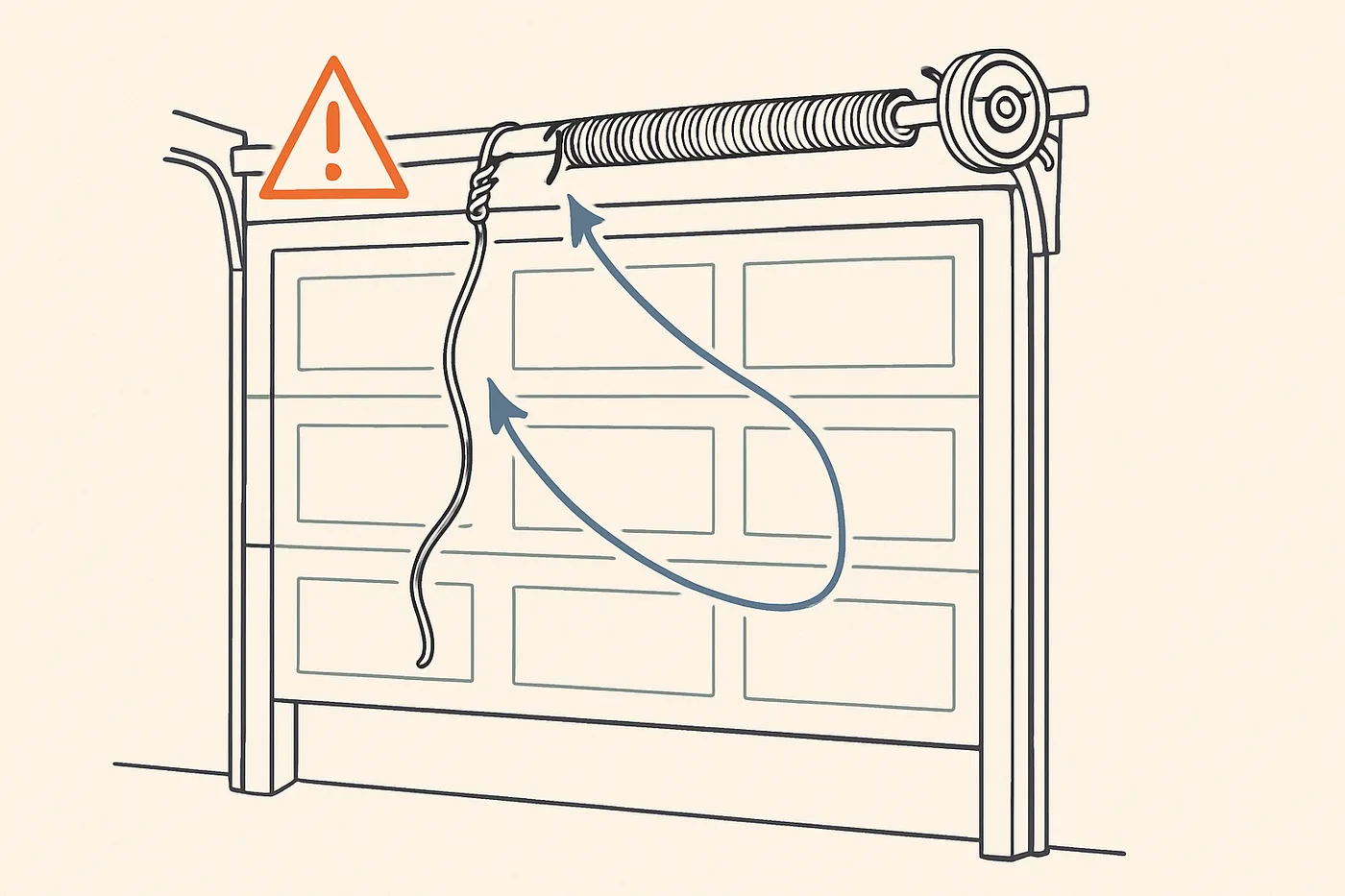
A broken torsion spring
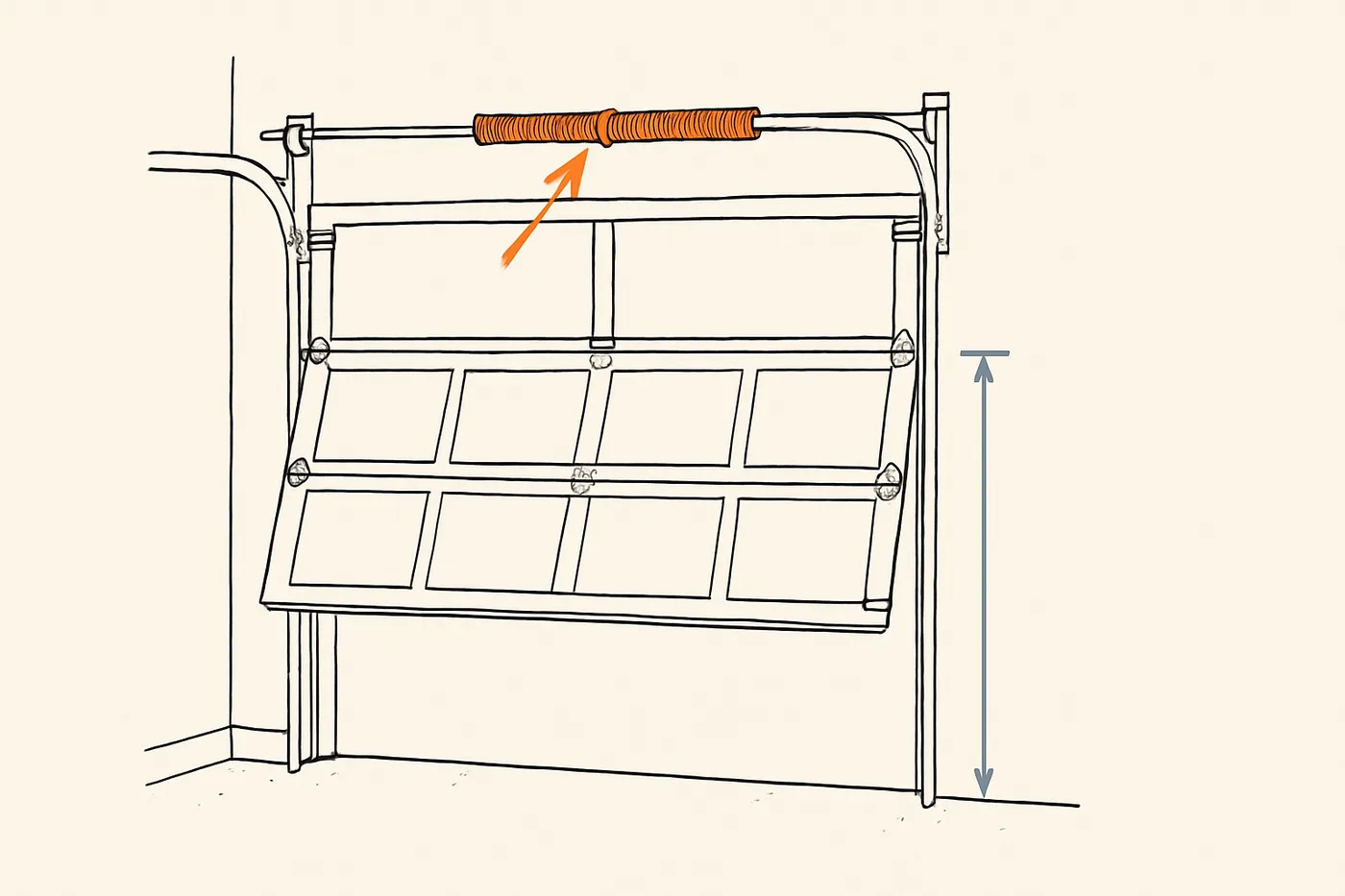
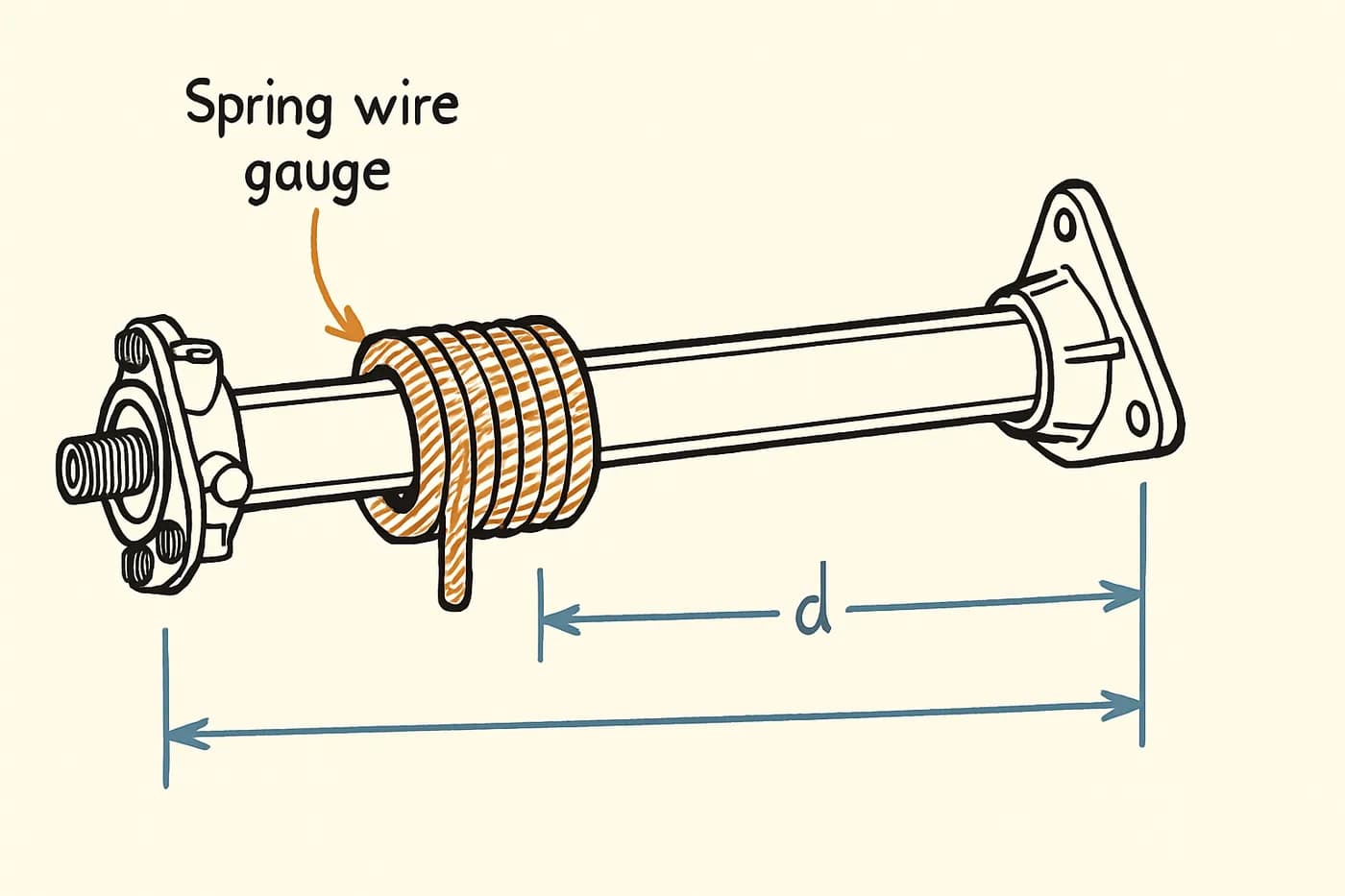
The spring above your door does the lifting work so the opener does not have to. When it breaks, Raynor says the door is dead weight, that the opener motor is not designed to lift the full door weight without spring assistance, and that running the opener with a broken spring can burn out the motor, strip the gears, or cause the door to fall.
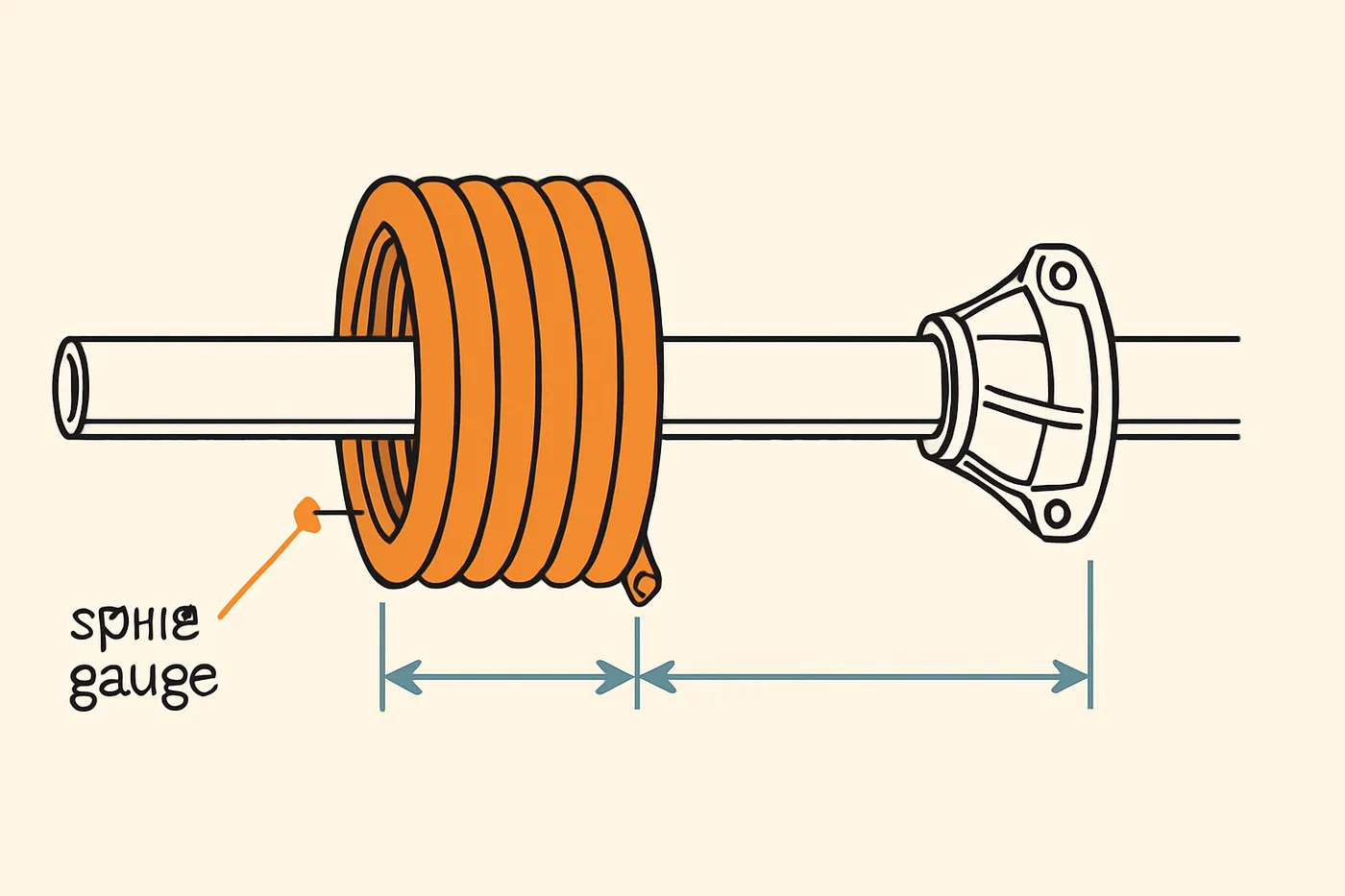
You will usually know. A broken torsion spring makes a sound like a gunshot inside the garage. Sometimes the spring is visibly separated into two pieces on the shaft above the door. Sometimes the door is halfway up and won't go either direction.
Do not try to lift it manually. Do not keep pressing the opener button to see if it'll go this time. Do not pull the emergency release on a door that is partway open, because the door can drop. Call someone. HomeAdvisor puts spring replacement at $180 to $350 (updated Jun 20, 2026), and it is not a job for a homeowner. The components are under enormous tension even when they look still.
Short version. The door is now a weight. The thing that was holding it is gone. Leave it alone.
A door off its track
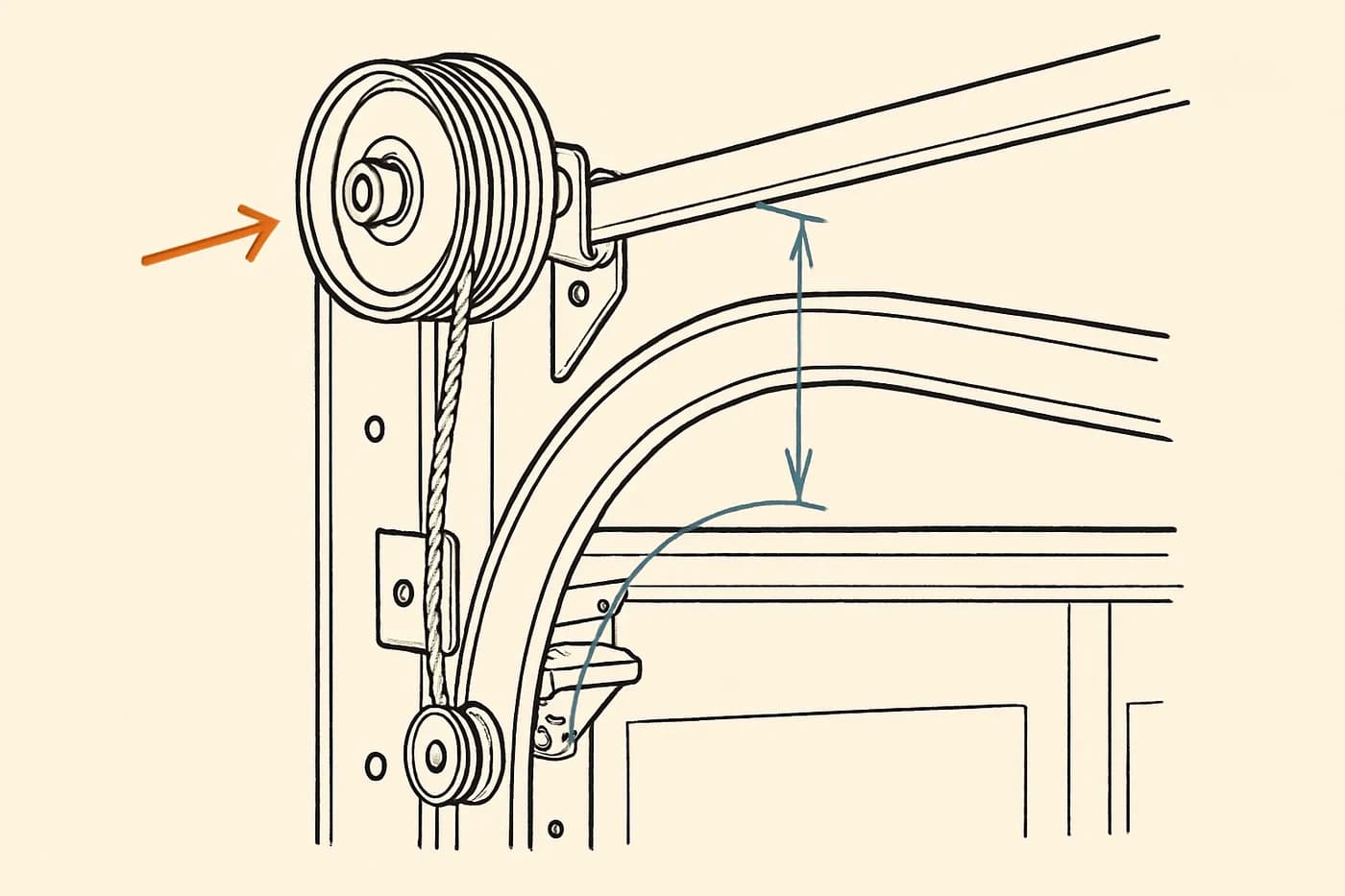
If a door has jumped its track (usually because a roller failed, a bracket pulled loose, or the door hit something on the way down), it's being held in place by a combination of luck and whatever's still attached. Do not try to operate it. Call a trained technician. If the door is partially open, the situation is worse, not better.
Do not run the opener to "try to get it back on." You will make it worse, and you may make it fall.
If the door is stuck open and your house is exposed, that's a second emergency stacked on top of the first: the house is open to the street. A technician on an after-hours call can stabilize the door in the closed position for the night even if the full repair waits for daylight and parts.
A snapped lift cable
The lift cables run down each side of the door. If one has snapped or come off its drum, do not try to move the door and do not run the opener. Call a trained technician.
Do not try to level the door by hand. Do not reach between the panels to see what happened. Do not cycle the opener.
The pattern here is the same as the spring and the off-track door. Something structural failed. The system is no longer balanced. Anything you do to the door now is a gamble against tension you can't see.
The things that feel like emergencies but aren't
A door that won't close because of the photo-eyes
The two small sensors near the floor on either side of the door (the photo-eyes) have to see each other for the door to close under power. A spider web, a leaf, a bumped bracket, or a bit of grime on a lens will make the door refuse to close and reverse itself partway down.
This is annoying at 11 PM. It is not an emergency. Do not look for a way around the safety sensors. Make sure nothing is blocking them and that their lights glow steady, and if the door still won't close, a technician fixes the sensors.
Once the door is down and the house is closed up, the actual fix (cleaning the lenses, realigning the brackets until the indicator lights are steady) can wait for morning light and a clear head.
A noisy but functional door
Grinding. Squeaking. A rattle that's louder this week than last week. A thunk at the top of travel that sounds mechanical.
None of this is an emergency by itself. Noise is information about wear (rollers, hinges, bearings, a chain that wants tension), and the information is worth acting on during business hours at standard rates, not at 1 AM at emergency rates. Write down what the sound is and when it happens. Book the appointment in the morning.
The exception: a new, sudden, loud noise followed by the door behaving differently. That's not "noise." That's something that just broke, and you should work down the emergency list above.
How to keep the door closed until morning
If you've decided the problem can wait but your door is stuck open, you have an open door to deal with tonight even if the mechanical problem isn't urgent.
If the door won't close, do not work around the safety sensors; a technician fixes the sensors. Once the door is closed the normal way, you can unplug the opener so no one with a remote (including a neighbor on the same frequency years ago) can open it overnight. If the door is closed but the opener will not hold it shut, a sliding bolt on the track (the manual kind most doors have and most people never use) keeps the door from being lifted from outside.
If the door is stuck partially open because of a failure you've decided is not urgent, reconsider. A door that won't close all the way is almost always either a quick fix (photo-eyes, travel limit) or one of the emergencies above. There isn't much in the middle.
If you're dealing with a genuine emergency (a broken spring, a door off its track, a snapped cable), A+ Garage Doors (our affiliated installer) offers same-day repair in Las Vegas. For non-emergency concerns, Garage Door Pros (our affiliated installer) provides free safety inspections that catch tension and alignment issues before they become 10 PM phone calls.
A better mental model than "should I call now" is this. Tension failures don't wait. Sensor and noise problems do. If you're not sure which category you're in, the anatomy of how a door actually holds itself up is worth ten minutes of your time before you press the button one more time to see what happens.