Garage Door Science
Editorial photo: extreme close-up of a coiled torsion spring mounted on a garage door shaft, fine dust visible on the coils.
Photo: Garage Door Science

Garage door insulation R-value, explained from first principles

Learn what R-value means for garage door insulation and how it affects energy efficiency. Understand ratings and choose the right insulation for your home.

Margaret Stone portraitBy Margaret Stone · Safety & Systems Editor·6 min read
insulationenergytechnical
Watch: Understanding Garage Door Insulation: What R-Value Really Means

R-value is a measure of thermal resistance. It is expressed in units of ft²·°F·hr/BTU, and it describes how strongly a material resists the passage of heat across its thickness. A higher number means heat moves through the assembly more slowly. That is the entire physical meaning of the rating, and most of the confusion around garage door insulation comes from people treating R-value as if it measured something else — comfort, quietness, or quality — rather than the single thermodynamic quantity it actually measures.

A garage door is the largest moving thermal boundary in a typical house. It is a panel of material, several feet tall and wide, that separates conditioned or semi-conditioned space from the outdoors. Whatever its R-value is, that number is doing work every hour the temperature differential exists.

What R-value actually measures

The definition is arithmetic. If a wall assembly has an R-value of 10, then for every 1 ft² of surface area and every 1 °F difference between inside and outside, heat flows through at a rate of 1/10 BTU per hour. Double the R-value and you halve the heat flow at the same temperature differential. Double the temperature differential and you double the heat flow at the same R-value. The relationship is linear in both directions.

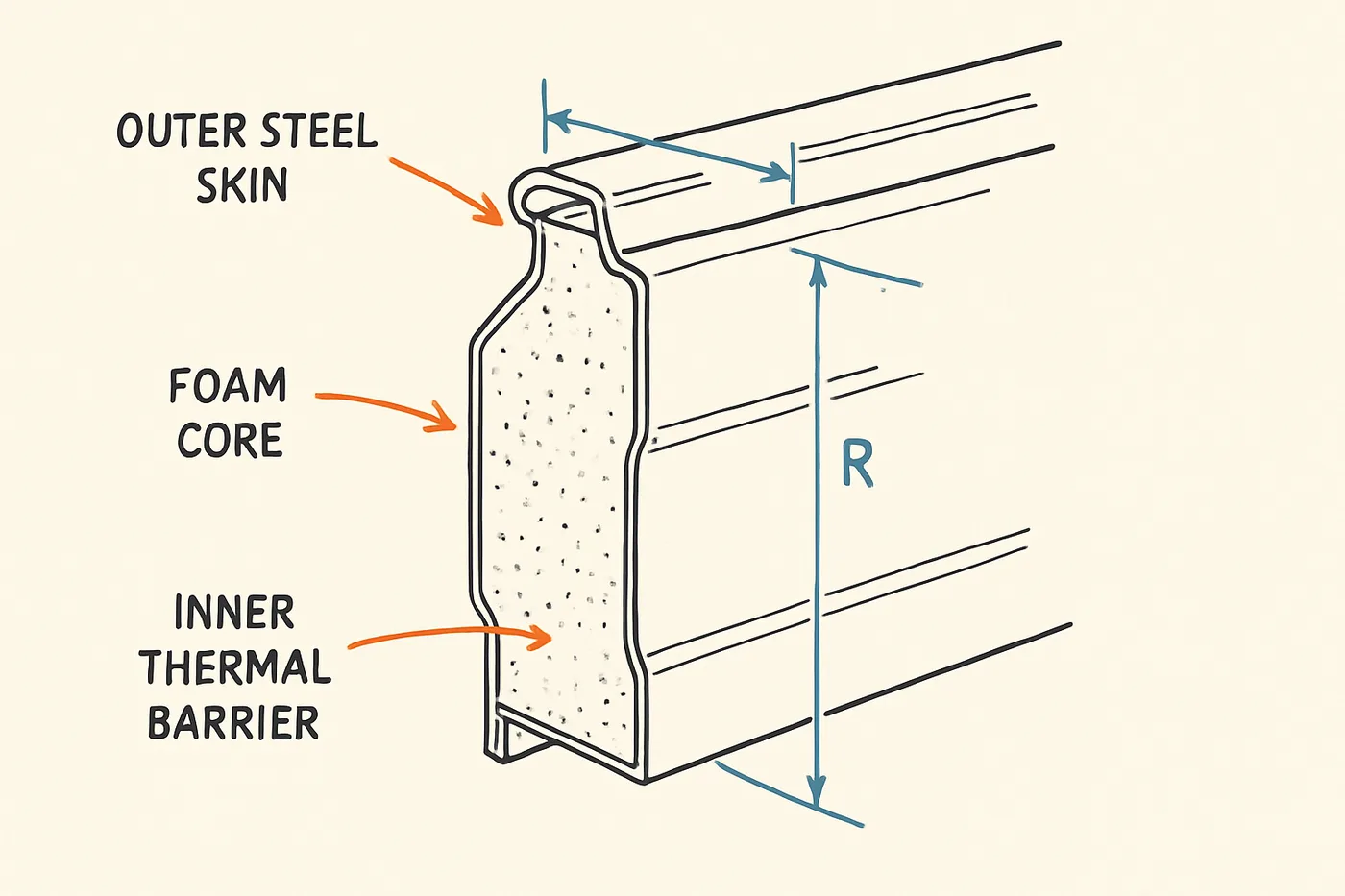
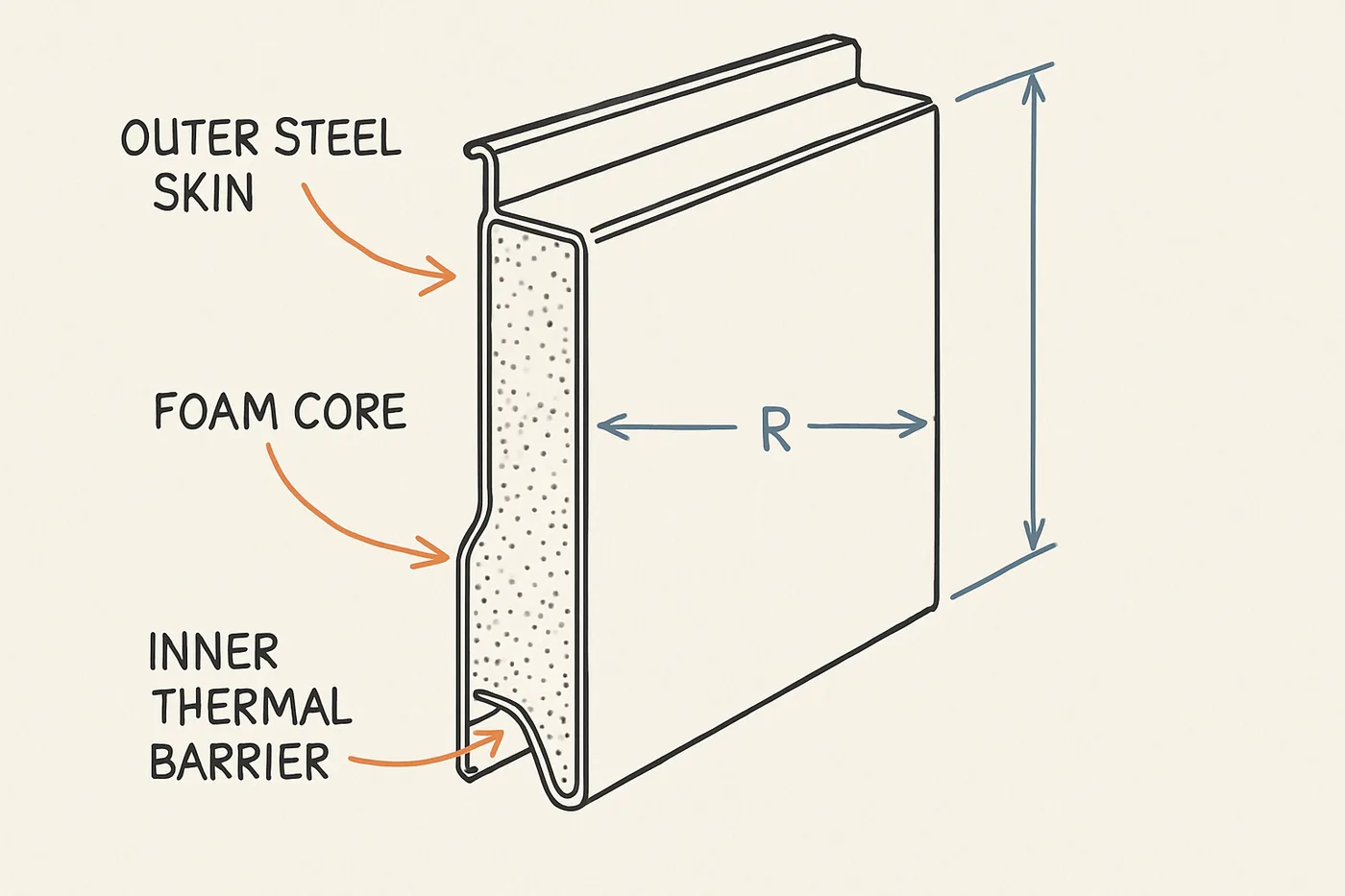
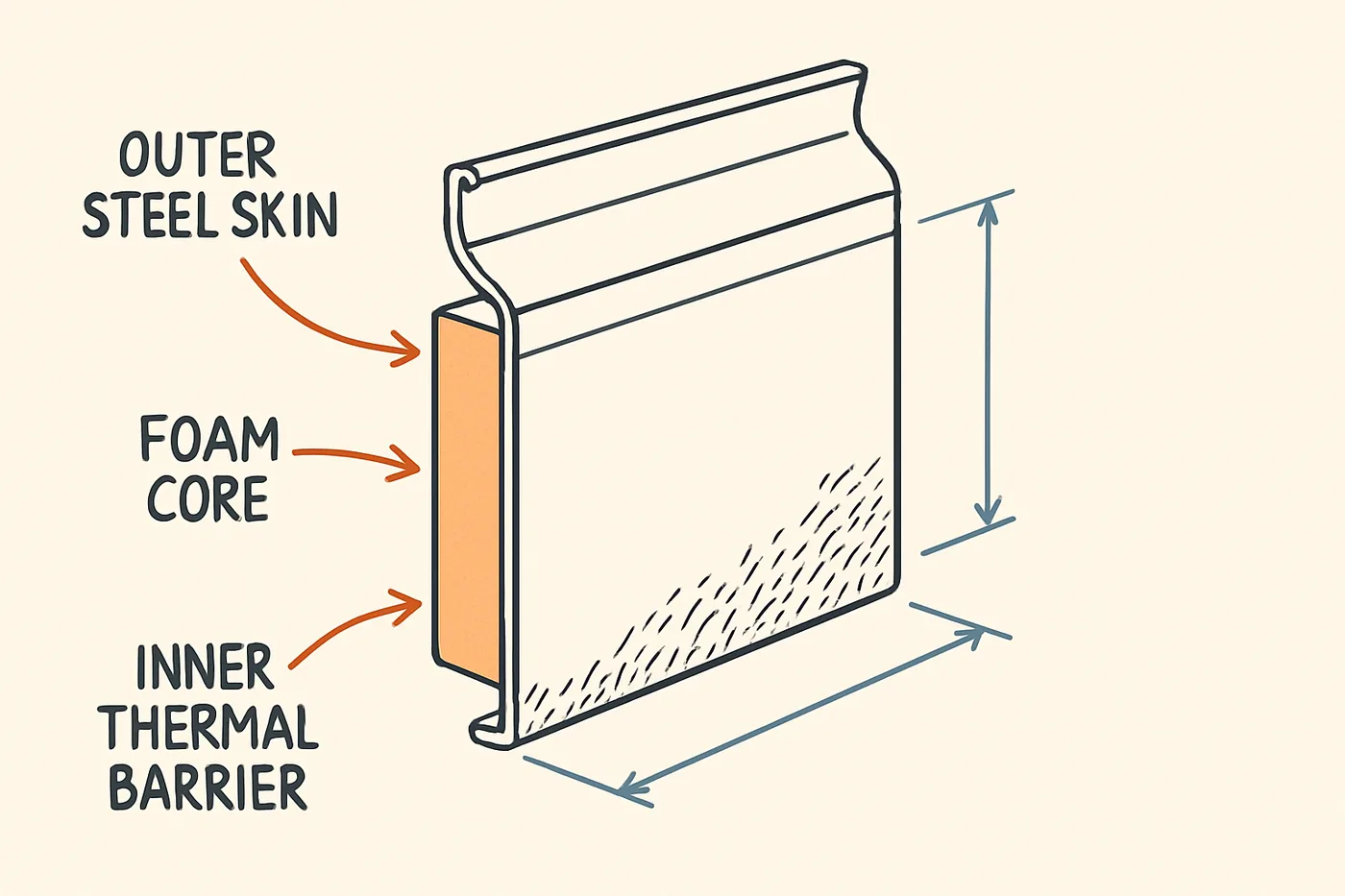
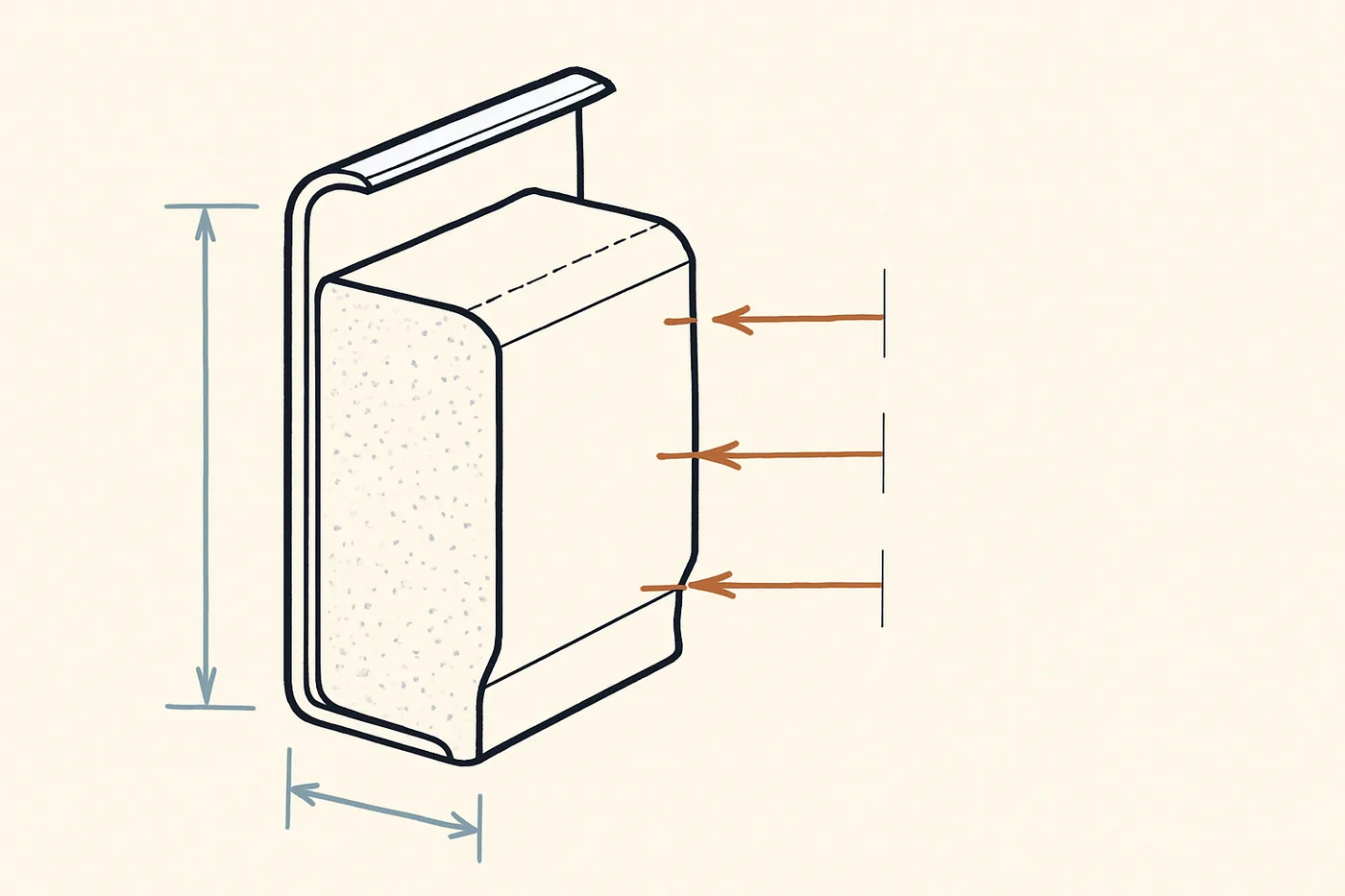
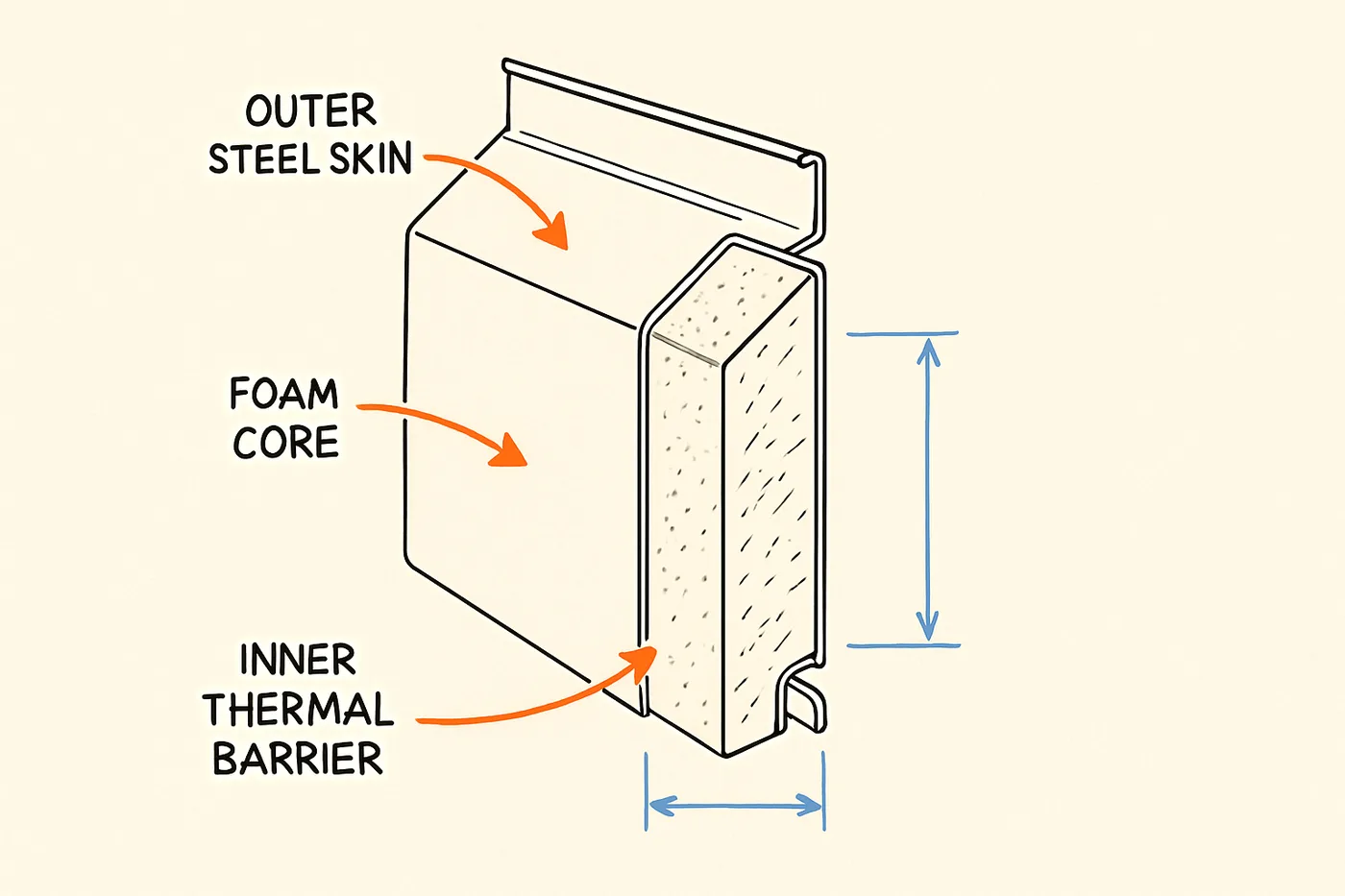
R-value is additive through layers in series. A steel skin, a foam core, and an interior steel skin each contribute their own resistance, and the door's rated R-value is the sum of those resistances plus any air films on either face. This is why a sandwich-construction door with foam bonded between two steel sheets rates higher than a single-skin steel door with the same foam loosely backed against it — the bonded assembly behaves as a continuous thermal path, while the loose assembly has gaps and convection loops that short-circuit the foam.

One caveat: R-value as published by a manufacturer is calculated at the thickest cross-section of the panel, not averaged across the whole door. The value at the stiles, hinges, and panel joints is lower. How much lower depends on construction, and it is the single largest source of disagreement between rated R-value and delivered thermal performance.

R-0 to R-18: what the range actually covers

Watch: Garage Door Insulation R-Value Explained

The spread in residential garage door insulation is wide. A single-skin steel garage door with no insulation has an effective R-value of essentially zero, while a polyurethane-injected door can reach R-12 to R-18. That is the working range for almost every residential product on the market.

The difference is not incremental. An R-0 door transfers heat at roughly the rate of the steel skin alone, which — because steel is an excellent thermal conductor — is limited primarily by the still-air film on either side of the panel. An R-16 door transfers heat at about one-sixteenth that rate. For a 16 ft by 7 ft door (112 ft²) on a 40 °F winter day with a 70 °F interior, the uninsulated door is losing heat at a rate on the order of hundreds of BTU per hour higher than the insulated door. Over a heating season, that difference accumulates into real fuel cost.

Two insulation chemistries dominate. Polystyrene is a rigid foam board, cut to fit inside the panel cavity. Polyurethane is a liquid chemistry injected into the sealed panel where it expands and bonds to both skins. Polyurethane produces higher R-values per inch of thickness and, because it bonds the skins together, also stiffens the panel mechanically. Polystyrene is less expensive and easier to retrofit into an existing door.

Why door geometry matters to thermal performance

A standard residential door is constructed from four to five horizontal panels connected by hinges. Each hinge line is a seam. Each seam is a place where the insulated cross-section is interrupted by hardware, by an air gap, or by a thinner rail of material that the panel geometry requires for the door to articulate around the curved track.

The consequence is that the rated R-value of the panel is not the effective R-value of the installed door. The panel centers may be R-16. The hinge joints are substantially lower. The perimeter, where the door meets the jamb and header, is a separate thermal path governed by weatherseal compression rather than by foam thickness.

This is why two doors with the same advertised R-value can deliver different real-world performance. The panel rating is one number. The assembly performance depends on how the hinges, stiles, and seals are designed and — more importantly — how they age.

Seals are part of the thermal envelope

Insulation inside the panel is only useful if the perimeter of the door seals against the opening. Air leakage at the bottom, sides, and top of the door bypasses the foam entirely. You can install an R-18 door and lose most of its benefit to a failed bottom seal.

The bottom U-shaped seal on a garage door typically lasts five to ten years before the rubber loses its compression memory and stops pressing flat against the floor. When that happens, the seal is still visually present but no longer sealing. Cold air enters at the floor, rises along the interior of the door, and convects into the garage. Thermal imaging of a door with a failed U-seal shows a blue band across the entire bottom edge regardless of the panel's R-rating.

The fix at the floor is a threshold seal bonded to the concrete. A threshold kit for a 16-foot door runs between $50 and $120. Combined with a fresh bottom U-seal, it restores the perimeter contribution that the panel insulation depends on.

How to choose an R-value for your situation

The right R-value depends on three variables: whether the garage is attached to conditioned living space, whether the garage itself is heated or cooled, and the climate zone you live in.

If the garage is detached and unconditioned, the R-value of the door affects only how much the garage tracks outdoor temperature. Any number from R-6 upward will noticeably reduce temperature swings inside the garage. Going beyond R-12 produces diminishing returns because the walls, ceiling, and slab — not the door — become the dominant heat-loss paths.

If the garage is attached and shares a wall with conditioned space, the door's R-value affects the load on your heating and cooling system indirectly. The wall between the garage and the house is itself insulated, but the garage temperature sets the boundary condition for that wall. A colder garage means a larger temperature differential across the shared wall and higher heat loss from the house. R-12 to R-16 is the useful working range here.

If the garage is heated or cooled directly, the door is the weakest thermal element in the envelope and deserves the highest R-value the budget supports. R-16 to R-18 polyurethane construction is standard for this case.

What you can verify, and what you cannot

The inspection work is yours. Walk the door on a cold morning. Feel the panel center, then the hinge lines, then the perimeter. Large temperature differences between those regions tell you whether the panel, the hinges, or the seals are your weak point. Look at the bottom U-seal with the door closed: it should be compressed flat against the floor with no daylight visible. Check the side seals for the same compression.

What the rating number means is now in your hands. What the rating number does not tell you — how the specific door you are considering performs at its hinges and seals after five years of cycles — is a question for a technician who has serviced that product line. Ask them. The physics sets the ceiling on performance. Installation and maintenance determine how close to that ceiling you actually operate.