How Often Should You Lubricate Your Garage Door?
Clopay says every 3 to 6 months. Wayne Dalton's manual names the parts: hinges, steel rollers and bearings. Clopay says not the tracks, nylon rollers or WD-40. Never the spring: that is our rule, and spring work is a pro's job.

Lubricate a garage door every 3 to 6 months, or as needed for how much you use it and your climate (Clopay). Use the type your door maker's manual names (Wayne Dalton and Amarr say non-silicone) on the parts Wayne Dalton's manual names, "hinges, steel rollers and bearings", sparingly, because Clopay says excess lubricant attracts dirt. Clopay says to skip the tracks and nylon rollers and to avoid WD-40. Never lubricate or touch the spring. That is our rule, because spring work is a pro's job.
Not sure which problem this is? Start with our page on a noisy garage door.
Lubrication schedule at a glance
| Part | How often | What to use |
|---|---|---|
| Steel rollers and bearings | Every 3 to 6 months | Type per your door maker's manual, sparingly |
| Nylon rollers | Don't lubricate | Nothing |
| Hinges | Every 3 to 6 months | Type per your door maker's manual, sparingly |
| Torsion spring and its hardware | Technician only | Not a homeowner job |
| Tracks | Never | Wipe with a damp cloth |
Where the interval comes from: door manufacturers. Raynor says to apply a light silicone-based oil every six months (its list includes springs; our rule is different). Clopay says to re-lubricate every 3 to 6 months or as needed based on usage and climate, closer to 3 for heavy use and about 6 for average use, and says dusty or humid climates and older parts may need it more often. So: every three to six months, closer to three for heavy use and about six for a typical household.
What happens if you don't lubricate it
Clopay says friction builds up between the moving parts of the door over time, and that you will notice the door getting noisier when it opens and closes. It says lubrication minimizes wear and tear and helps prevent premature breakdowns that lead to costly repairs. It says well-lubricated rollers minimize friction and make the door easier to open and close, and lubricated hinge pins rotate freely and quietly.
Clopay also treats the symptoms as the cue: a noisier door, or one that is harder to open, is the sign to reapply. Clopay gives no repair costs or lifespan figures for skipping it, so we don't either.
What to use, and what happens when you use the wrong thing
Check your door maker's manual first, because the makers disagree on the type. Wayne Dalton (page 1) and Amarr (owner's manual, PDF page 5) say to use a non-silicone lubricant. Clopay and Raynor name silicone. Clopay's view is silicone-based lubricant, which it says lasts and won't attract dirt or dust, or white lithium grease, which it says can attract dirt, so use it sparingly. When they differ, follow the manual for your door.
Clopay also says that WD-40 and oil-based lubricants should be avoided because they draw dirt and dust and cause premature wear. For why we keep coming back to this, see the WD-40 and garage door lubrication guide.
Can you use too much lubricant?
Yes. Clopay's page says don't over-lubricate: excess lubricant attracts dirt, so wipe away any extra, and lubricant shouldn't be dripping from any component. A light application on the hinges, steel rollers and bearings is the goal, not a soaking.
Should you lubricate garage door springs?
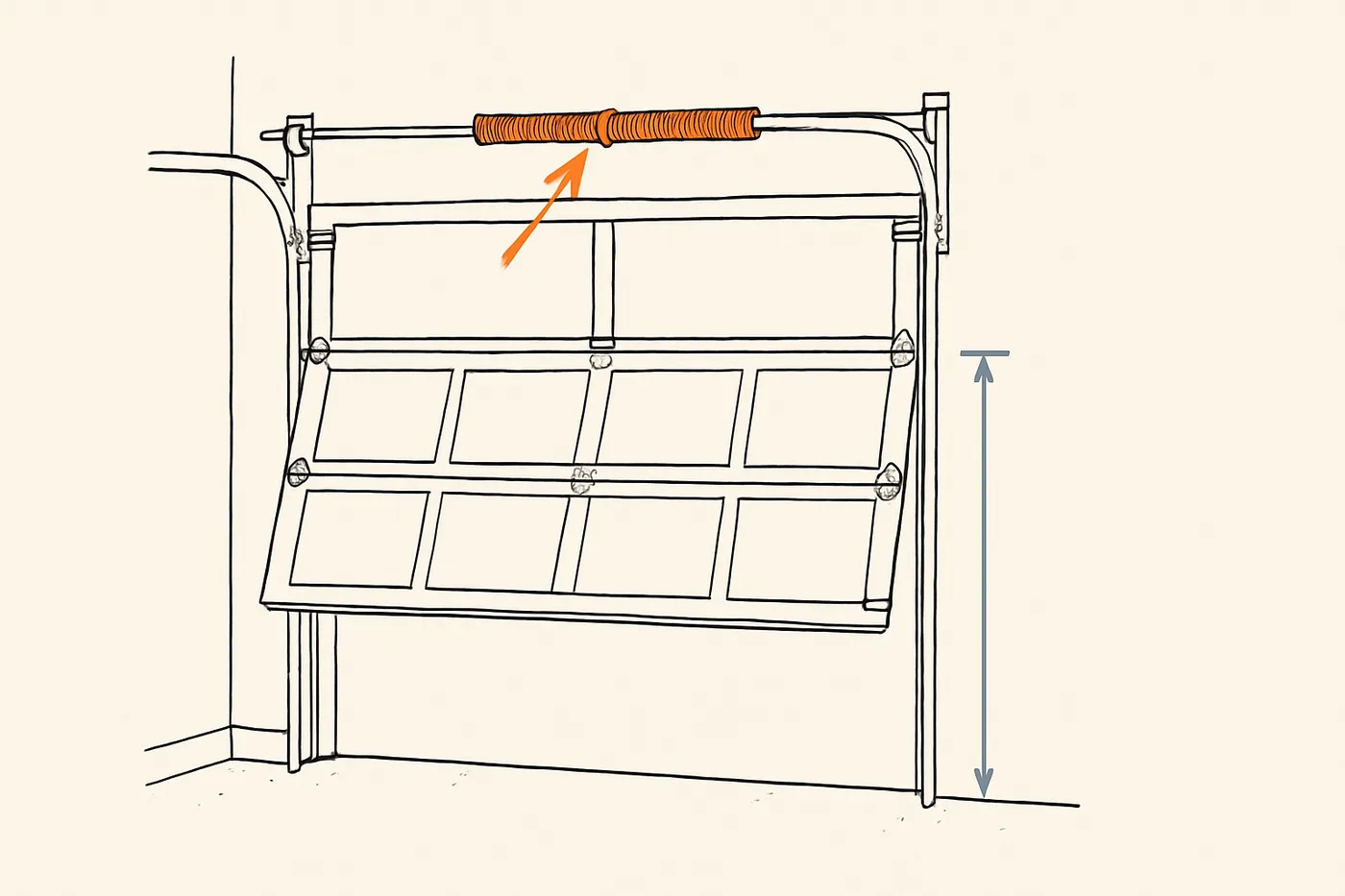
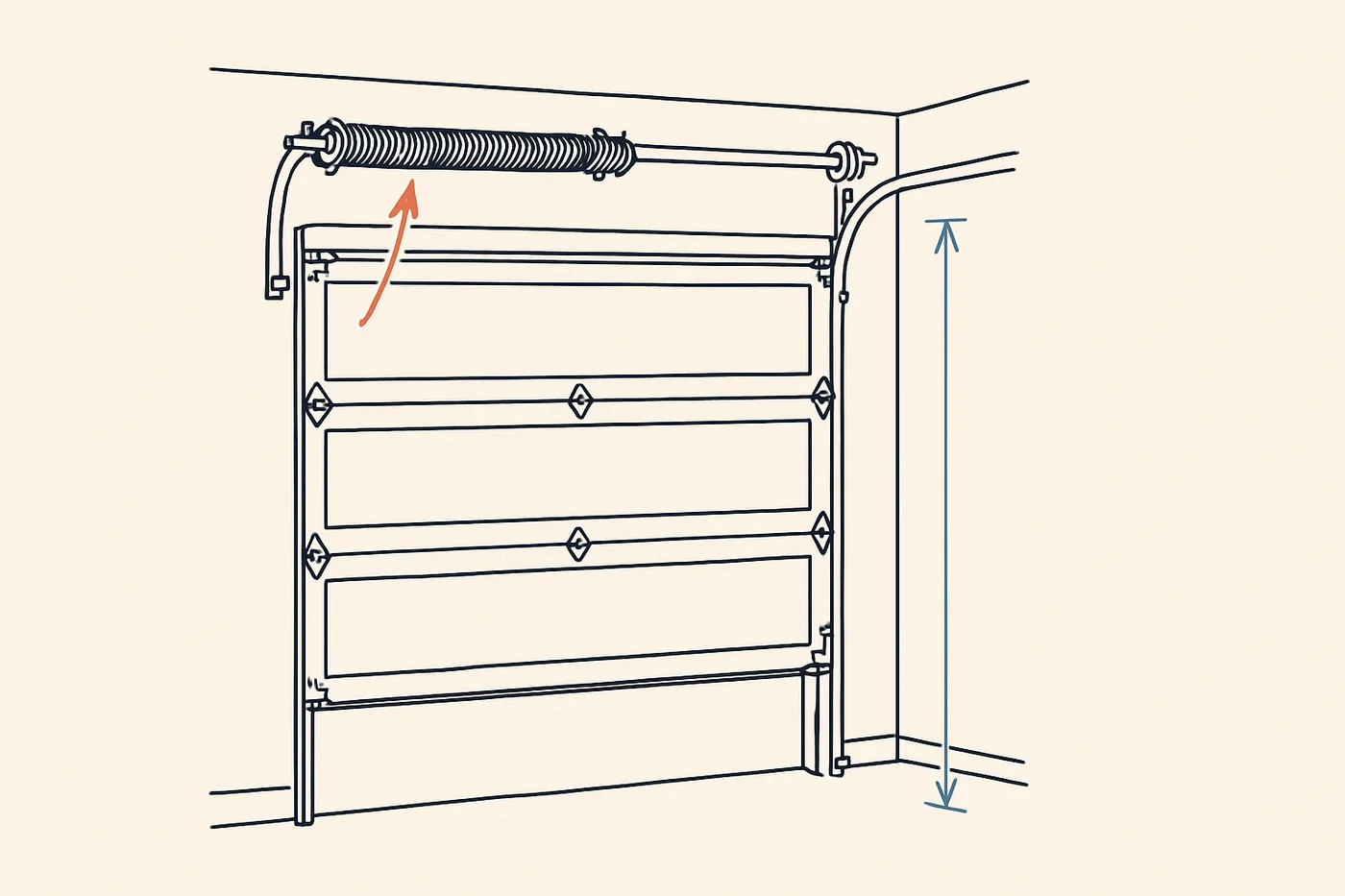
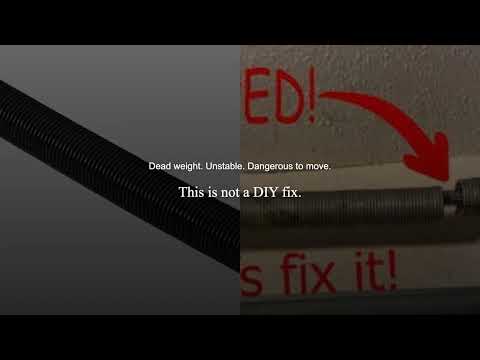
We leave anything touching the torsion spring to a technician. Clopay says torsion springs are under extreme tension, and even a small mistake can cause serious injury. That is our rule for this site, so lubricate the hinges, steel rollers and bearings and book a service visit for the spring. Our spring maintenance page covers what a technician checks on the springs and what you can look at yourself.
If the spring is squeaking, that is worth mentioning when you book a service visit. It is not something to fix with a can of spray.
The torsion spring lab explains what is happening inside the coil under load, and the spring safety intro video is worth your time before you go anywhere near it.
The short version
Every 3 to 6 months, or as needed (Clopay), on the hinges, steel rollers and bearings (Wayne Dalton's list), with the type your door maker's manual names, sparingly. The torsion spring is a technician's job.
The cold-weather spring fatigue lab covers how cold affects springs, if you want to see why a technician looks at them before winter.
Where the lubricant goes
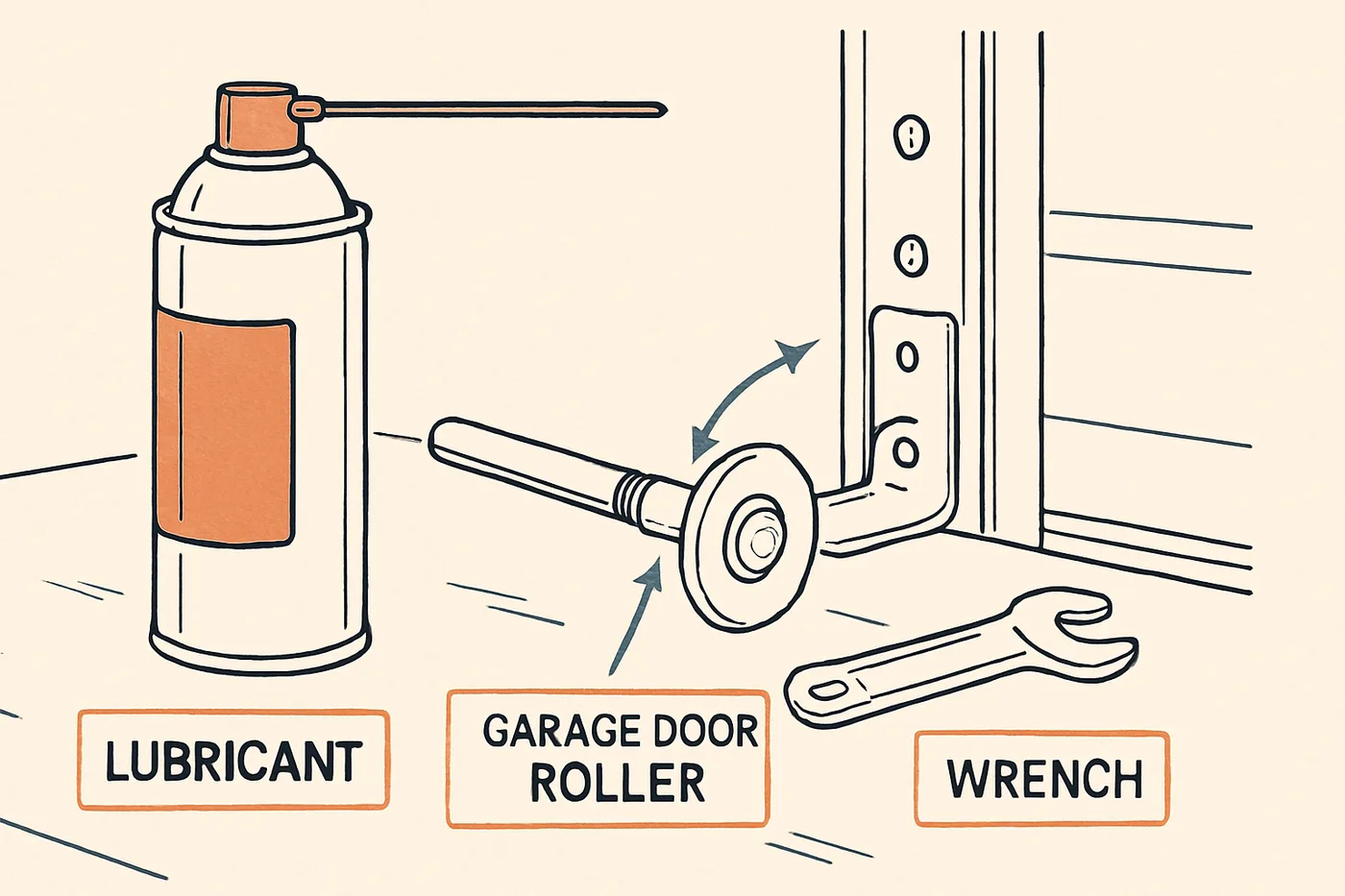
Wayne Dalton's manual names what you're treating: "hinges, steel rollers and bearings".
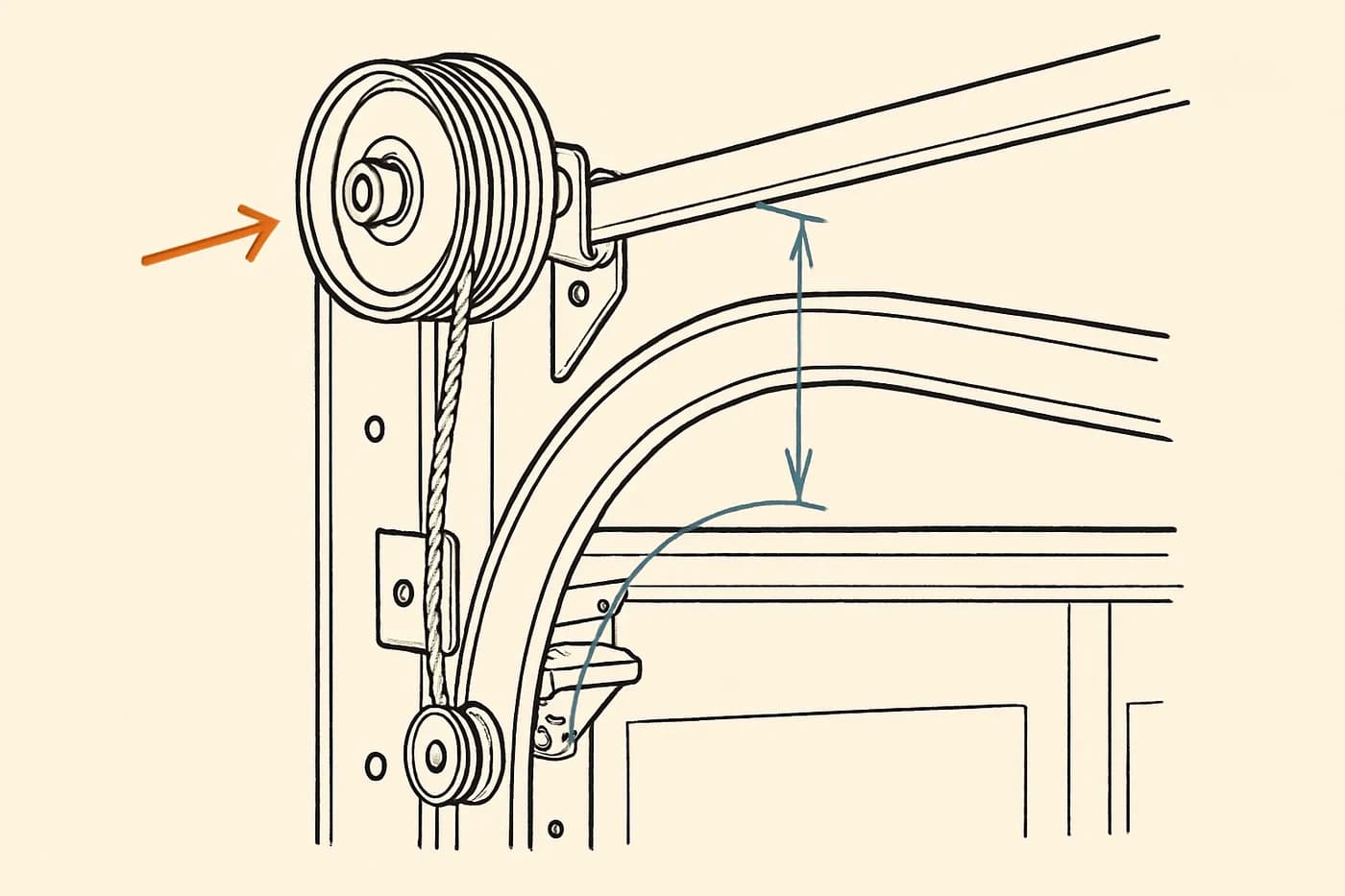
The rollers are the wheels that run in the vertical track on each side of the door. If yours are steel, they and their bearings are on Wayne Dalton's list. Clopay says that if your rollers are nylon, don't apply lubricant to them.
The hinges are the flat metal plates that connect one horizontal section of the door to the next. Each one pivots on a pin, and that pin is what you treat. Clopay's page says to apply lubricant directly to the hinge pins.
Skip the torsion spring. Leave it, and anything attached to it, to a technician.
If you want a visual map of the parts before you go hunting for them, the garage door anatomy lab lays out every component and what it does.
Where the lubricant does not go
Not on the tracks. Clopay says don't add lubrication to the actual tracks; wipe them with a damp cloth instead, because lubricant there makes the rollers work harder and strains the opener.
If your tracks are dirty, wipe them out. That's the maintenance they need.
The spring is different, and here's why
The torsion spring is not sitting still. Even when the door is closed, it is under extreme tension the whole time. That is exactly why we leave it to a technician.
A spring under tension is not a homeowner-serviceable component. If it looks damaged, sounds wrong, or has a visible gap in the coil, stop and call a technician.
The schedule, once you've set it up
Put it on your calendar so it happens at a regular interval. Some people tie it to the time change in the fall, the same way they change smoke alarm batteries.
A door that squeaks is telling you something, and a light application of the right lubricant on the hinges, steel rollers and bearings is where to start. Clopay says to avoid WD-40. If the squeak doesn't go away after lubricating, or you'd rather have someone else do it, Garage Door Pro Services (our affiliated installer) offers a free safety inspection. For doors that need more than lube, A+ Garage Doors (our affiliated installer) offers residential repair.