Quoted an Amarr Garage Door? How the Models Differ and How to Check the Price
Amarr does not publish prices. Here is what its Lincoln, Classica, Olympus, Carriage Court and Hillcrest pages say about construction and R-value, and the national ranges HomeAdvisor lists to check a quote against.

You're replacing a garage door, you've heard the name Amarr from an installer or a neighbor, and you want to know two things before the salesperson calls back: is it any good, and what should it cost. Those are the right questions. Amarr's own model pages give construction and R-values but no prices, so the construction facts below come from Amarr and the cost figures come from HomeAdvisor and from your own written quote.
Here's what actually matters when you're picking between Amarr's lines.
What Amarr actually is
Amarr's about page says the company was established in 1951 by Abe, Morris and Herb Brenner, that all its products are made in the USA, that more than 4,000 independent professional dealers in North America service and install its doors, and that the doors are also sold at retailers including Costco and Sam's Club. That means you can compare a dealer's quote with a retail one.
This guide covers five Amarr models: the Lincoln, Classica, Olympus, Carriage Court and Hillcrest. Their pages differ in construction and R-value, so read the page for the exact model you are quoted. The rest of each page covers designs, colors, windows and hardware.
If you want a refresher on what makes up a sectional door before you pick a model, the garage door anatomy lab walks through the sections, the springs, the tracks, and the hardware.
Lincoln and Classica
Amarr's Lincoln page describes steel doors at great value prices, with optional 1-3/8" or 2" polystyrene insulation and insulated-door R-values of 6.48 to 9.05.
Amarr's Classica page lists stamped steel carriage house designs with optional polystyrene or polyurethane insulation and R-values of 6.64 to 13.35.
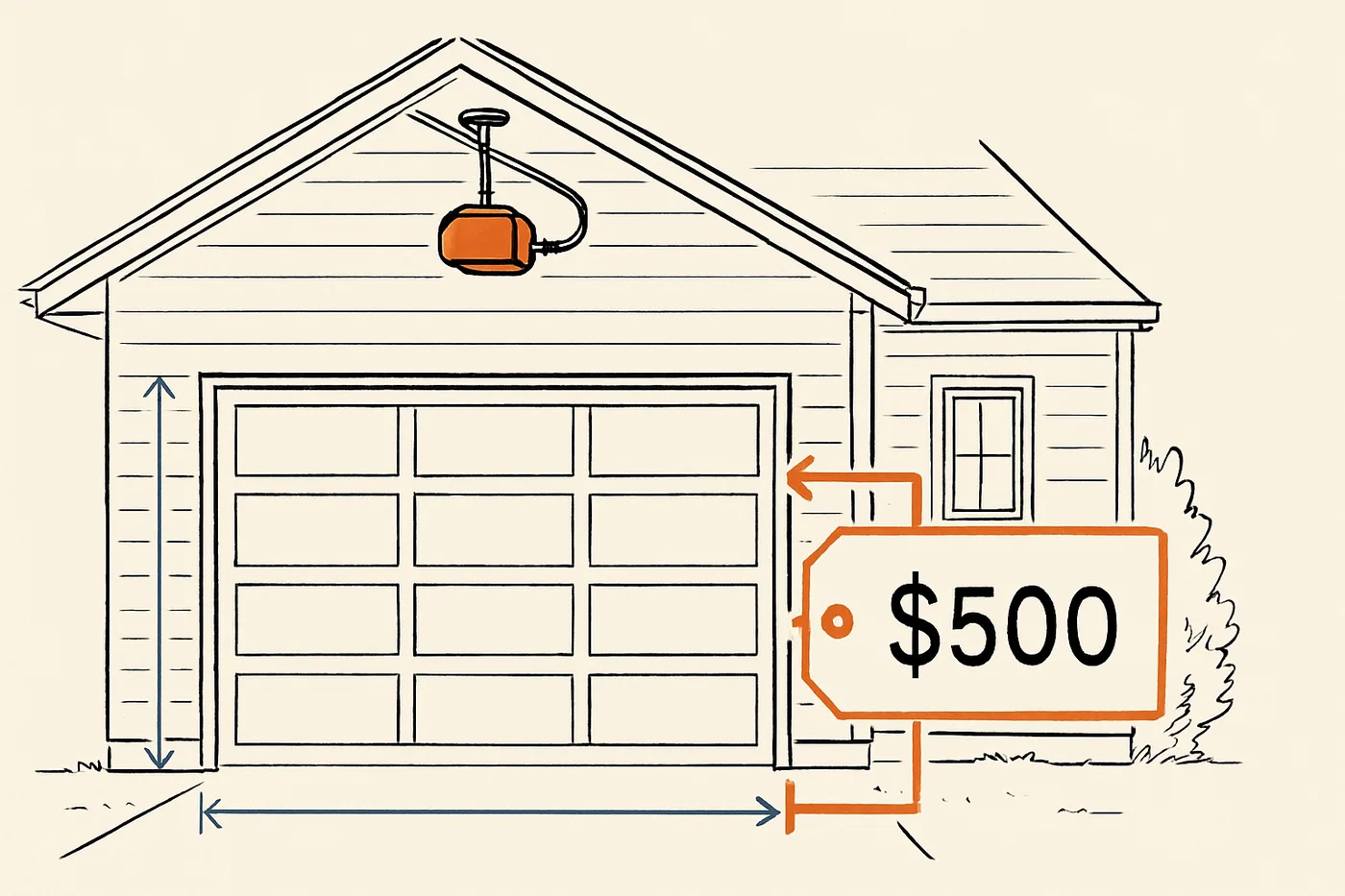
What it costs installed: ask your dealer for the installed price for your opening and the insulation option. To check it, HomeAdvisor's door-replacement page, updated June 17, 2026, puts garage door replacement at $754 to $1,707, with most homeowners spending around $1,231. That is a national figure for any brand, not an Amarr price.
Who it's for, in our view: a detached garage, or any garage where the door isn't separating living space from the weather. There, a lower-insulation option can be honest value. Compare the R-value for the exact option you are quoted.
Olympus: the most insulation of the five
Amarr's Olympus page lists triple-layer construction with 1-3/8" or 2" polyurethane insulation, for door R-values of 13.35 to 19.40, and says insulated doors lower your total home energy cost, especially if your garage is next to conditioned living areas.
Those are the highest R-values of the five models in this guide, which is why, in our view, this is the model to look at when the garage is attached.
What it costs installed: Amarr's page lists no price. Get a written quote for your opening and compare it against the HomeAdvisor range above.
Who it's for, in our view: attached garages with living space on the other side of the shared wall, or above, and anyone in a climate where the garage temperature affects the house temperature.
Carriage Court and Hillcrest: the carriage-house look
Amarr's Carriage Court page lists a 1-3/8" steel section with 5/8" composite overlay trim and 1-3/8" polystyrene insulation, for an R-value of 6.48, and says decorative hardware options are available.
Amarr's Hillcrest page describes value-priced carriage house designs in stamped steel, with double-strength, obscure, Frost, Dark Tint or insulated glass options, optional 1-3/8" or 2" polystyrene insulation, and R-values of 6.48 to 9.05.
Both pages show lower R-values than the Olympus, so if the garage is attached and insulation matters, compare the R-value in writing before you pay for the look.
What it costs installed: Amarr's pages list no price. Get a written quote that names the design, windows and hardware, so you can see what each choice adds.
Springs: Clopay's parts page says garage door springs counterbalance the weight of the door. Sizing and installing springs is a trained technician's job, so ask the installer how the springs were sized for your door, and ask for the spring's cycle rating in writing.
Who it's for, in our view: homeowners for whom the door is a design element visible from the street, and who are willing to pay for it.
What the total installed cost looks like
The door is only part of the number your installer quotes. HomeAdvisor's door-replacement page, updated June 17, 2026, lists installation labor at $200 to $500, with an average of $350, and an extra $50 to $200 for labor and disposal if the labor fee doesn't cover removing the old door.
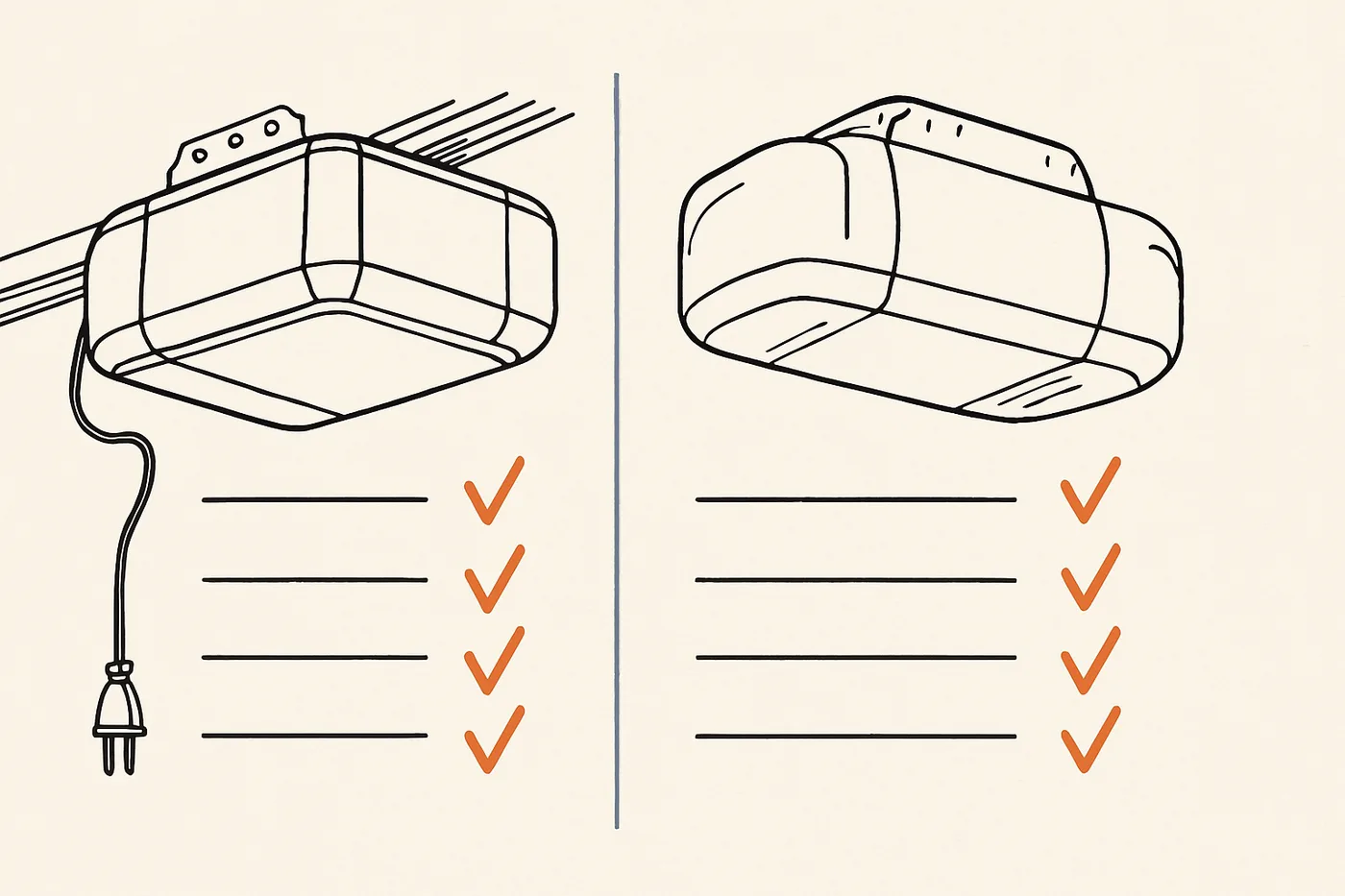
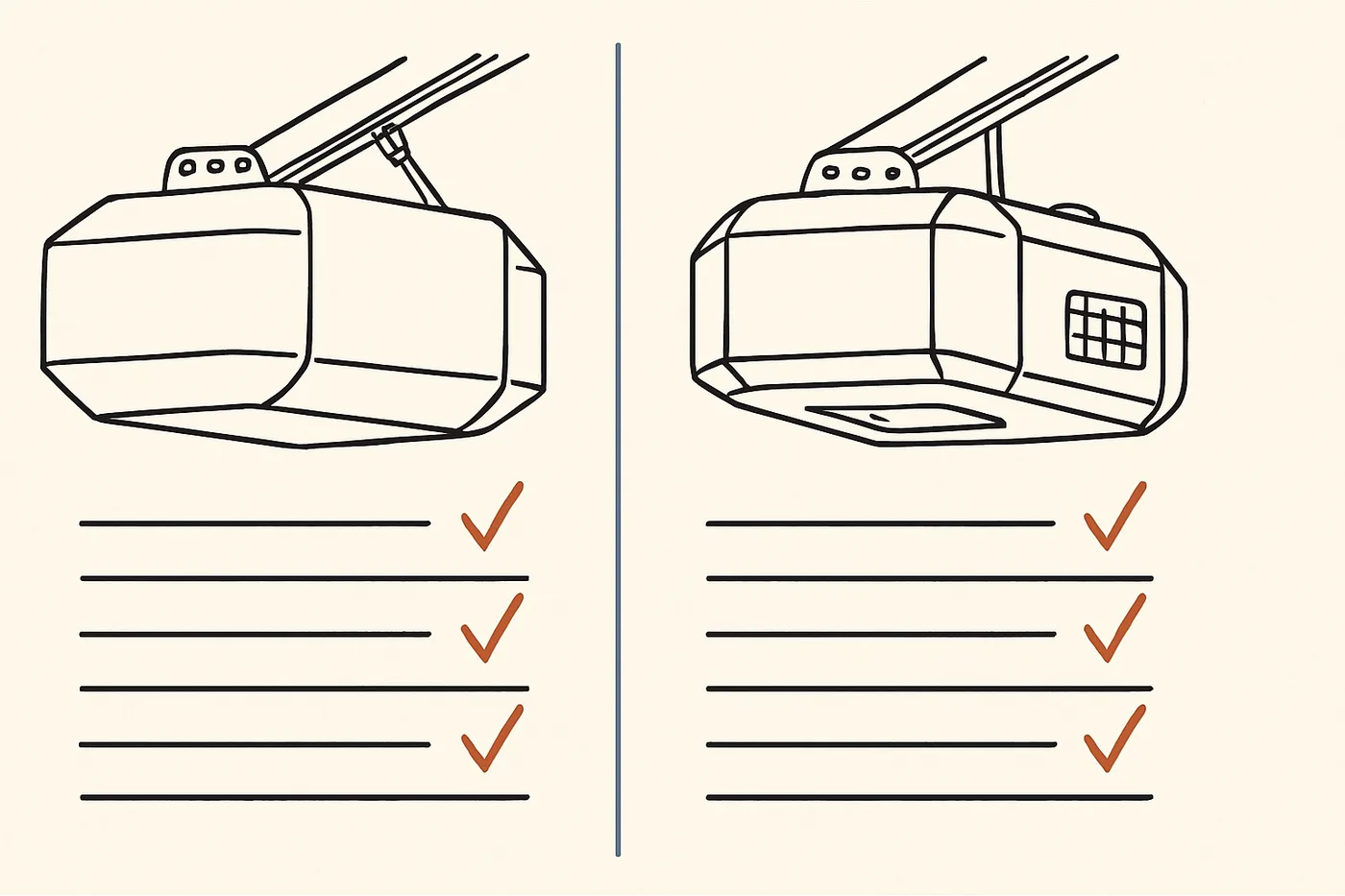
If a new opener is in the quote, HomeAdvisor's opener-installation page, updated June 20, 2026, lists belt-drive openers at $160 to $350, labor at $60 to $80 an hour for an average job of two to six hours, and battery backup as an aftermarket accessory at $50 to $150.
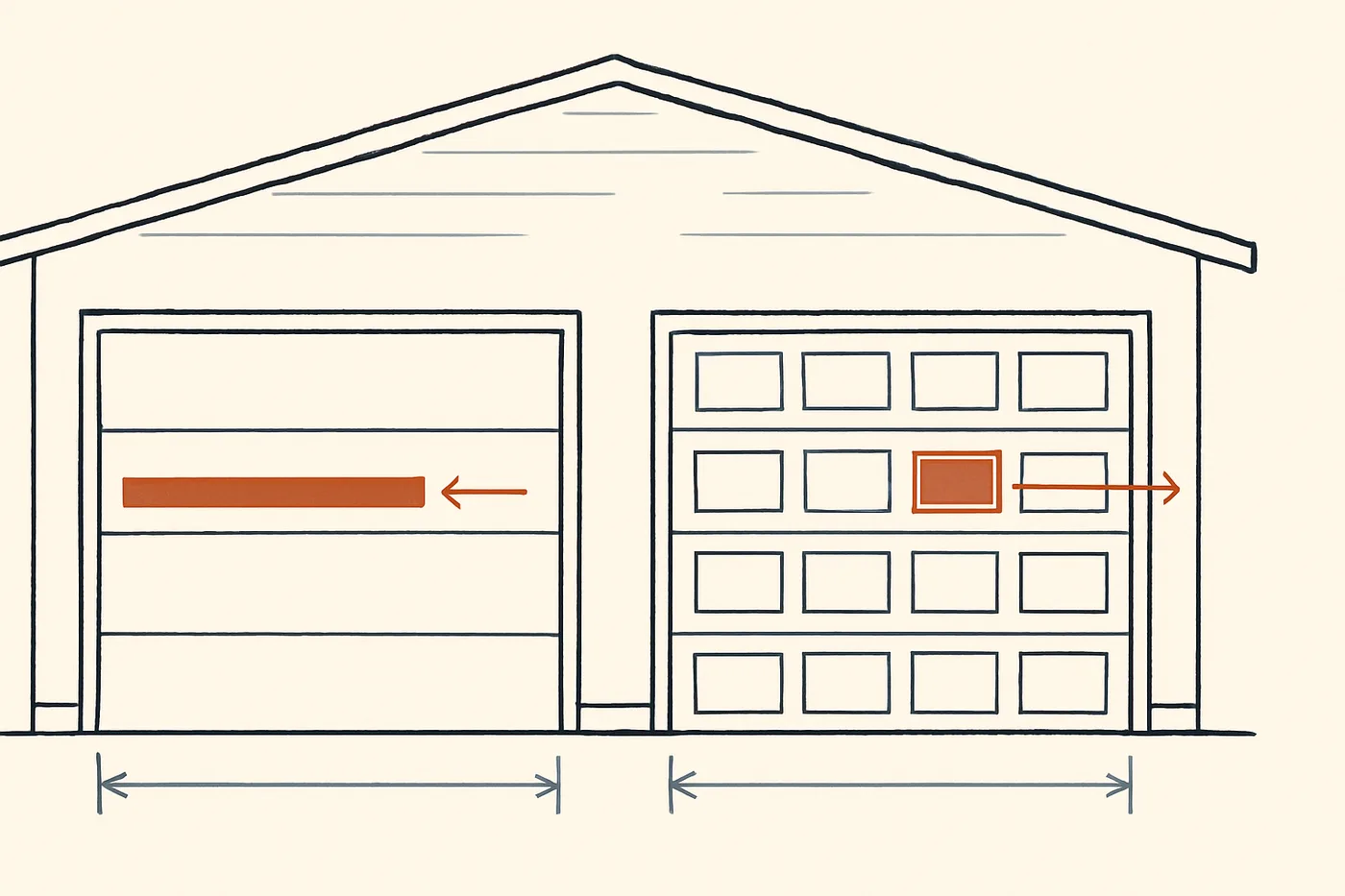
For a double-wide insulated door, ask the opener's maker which horsepower it specifies for your door's size and weight, and ask for it in the quote. If you're in California, battery backup is required on residential openers made, sold or installed there on or after July 1, 2019 under SB 969.
How Amarr compares to what else the dealer is offering
If a dealer quotes more than one brand, don't compare brand names. Ask each dealer for the construction, insulation type, R-value and warranty page for the specific model quoted, and compare those side by side. Amarr's model pages show a "Lifetime warranty" icon without terms, so ask for the warranty terms in writing.
Finding an installer is a local decision. In St. George, Utah, Garage Door Pro Services (our affiliated installer) offers free garage door safety inspections to customers in St. George and surrounding areas. In our view, that is a useful thing to have in hand before you commit to a full replacement.
In the Las Vegas valley, Reno and Mesquite, A+ Garage Doors (our affiliated installer) offers new garage door installation; ask which brands it quotes.
If you want to understand what's happening mechanically inside any of these doors before you sign the contract, the science of garage doors lab covers the counterbalance physics, and the Garage Door Tech Decoded video walks through the smart-opener side of the decision.
Which Amarr should you actually buy
Three questions, with our view on each.
One: is the garage attached or detached? If detached, a Lincoln with the insulation option you can afford is a reasonable start. Don't overspend on a door that's protecting a lawnmower. If attached, with living space on the other side of the wall or above the ceiling, start with the Olympus as your baseline and compare its R-value against anything else you're quoted.
Two: how much does the look matter? If curb appeal is the point, price out Carriage Court or Hillcrest, and compare the R-value in writing, because their pages list lower numbers than the Olympus.
Three: what does your installer's quote include? Make sure the quote lists the opener's specified horsepower, a spring sized for your door's weight, and battery backup if you're in California. If those aren't line items, get them added before you compare quotes.
Our view: for the middle case, an attached garage and no unusual design constraints, the Olympus with a belt-drive opener, installed by a local dealer from a written quote that lists every line, is the place to start.