Long Panel vs Short Panel Garage Doors: Which Looks Better, and What Sets the Price?
Compare long and short panel garage doors by appearance and durability, and see what actually moves the price on your quote, with insulation figures from the makers.

The question is usually: does the panel style matter, or is this just something the salesperson brings up to run up the ticket? It matters mostly for how the door looks on your house. What the makers do put numbers on is what sits behind the steel, and that is worth ten minutes of your time before you sign the quote.
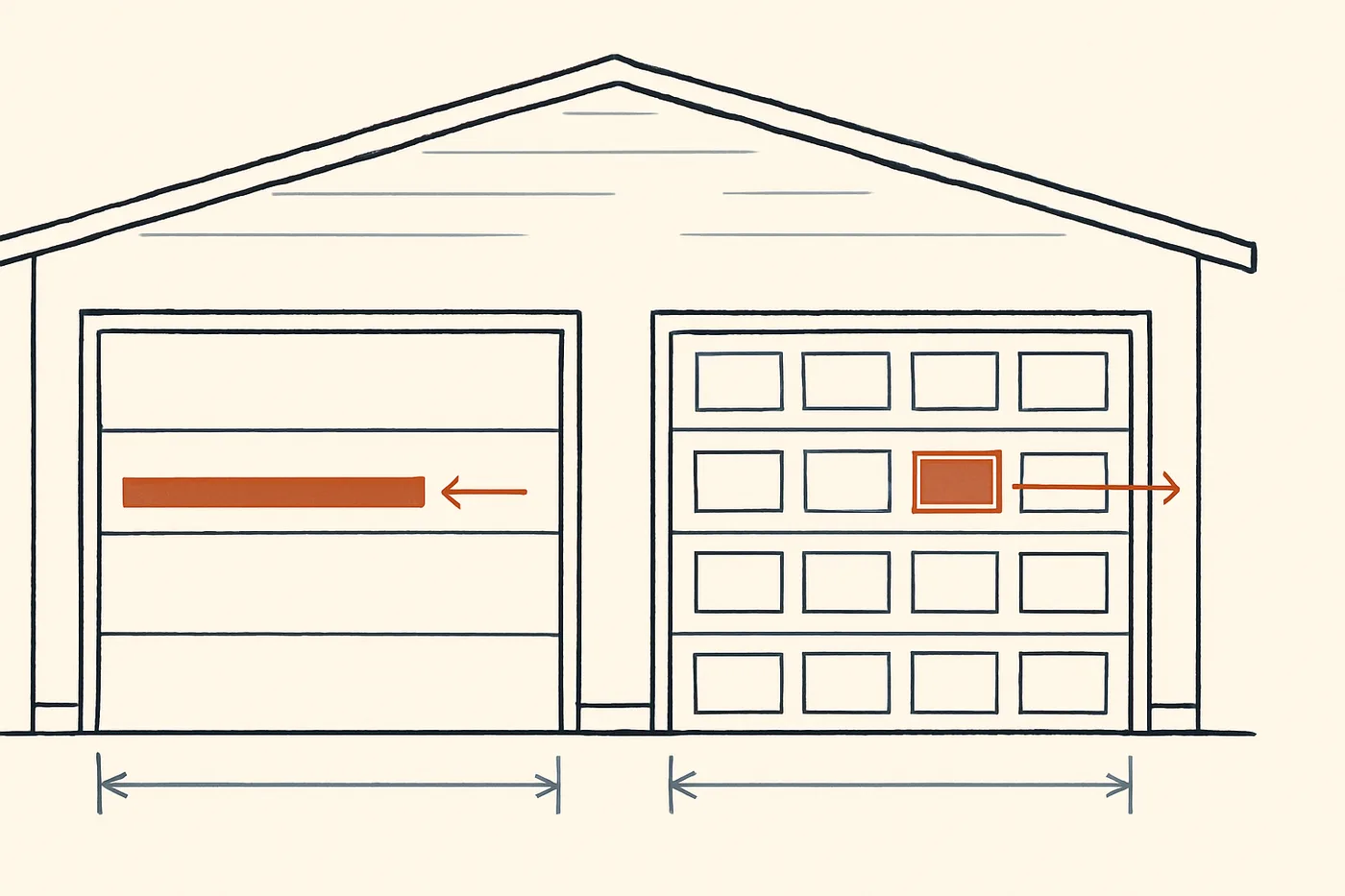
Long panel and short panel are two stampings of the same sectional door. On a long-panel door each horizontal section is pressed with a few long rectangles. On a short-panel door each section is pressed with more, shorter rectangles. Amarr's Lincoln page shows the same Lincoln door in a "Traditional Long Panel design" and a "Traditional Short Panel design", so the model, the mechanism and the opener can stay the same while the pattern changes.
Long panel: the clean modern look
A long-panel door reads as horizontal bands. From the street it looks flatter and more contemporary. In our view, if your house has a lot of straight lines, stucco, or dark trim, long panels are usually the better match.
Our view on dents: a dent from a basketball or a bike handlebar sits in the middle of a wide, flat rectangle on a long-panel door, where your eye goes straight to it. On a short-panel door the same dent lands inside a smaller rectangle and the pattern around it hides it a little. If your garage doubles as a driveway sports arena, factor that in.
Short panel: the traditional look
Short-panel doors read as a grid of smaller rectangles. In our view this is the traditional look, and it suits colonial, craftsman, and ranch houses.
The carriage-house look is a different build. Amarr's Carriage Court page describes its door as "Built with 1-3/8” steel section and 5/8” composite overlay trim", so ask the dealer to price that model if the carriage look is what you want.
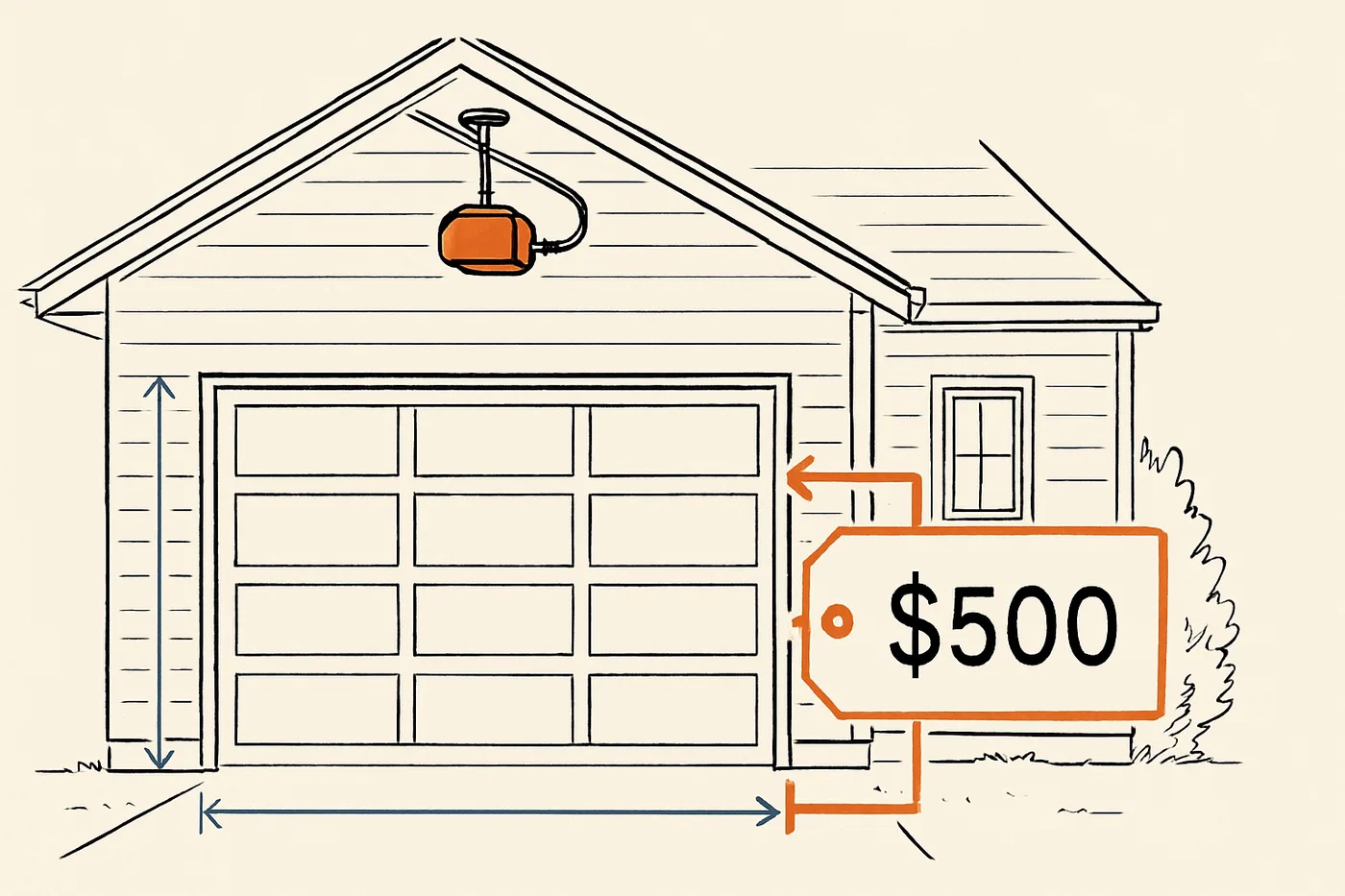
HomeAdvisor's replacement cost page, updated Jun 17, 2026, says "Sectional garage doors cost around $500 to $1,800." It does not price long and short panels separately, and we found no maker page that does, so ask the dealer to price both styles on your opening. Our cost guide covers the rest of the quote.
Our view on the downside: short panels can look out of place on a modern house. If your house has clean lines, black window frames and horizontal siding, a short-panel door is going to fight the front of the house, and no amount of paint fixes that.
If you add glass, ask the dealer for the price per section and the glass type before you decide.
What actually determines cost
In our view, what's behind the steel matters more to your quote than the stamping on the front.
Insulation changes the number that matters. Amarr's Lincoln page lists single-, double- and triple-layer construction with optional polystyrene and R-values of 6.48 to 9.05, while its Olympus page lists triple-layer construction with polyurethane for R-values of 13.35 to 19.40. Each maker measures its own door, so ask for the R-value in writing. Panel style comes after.
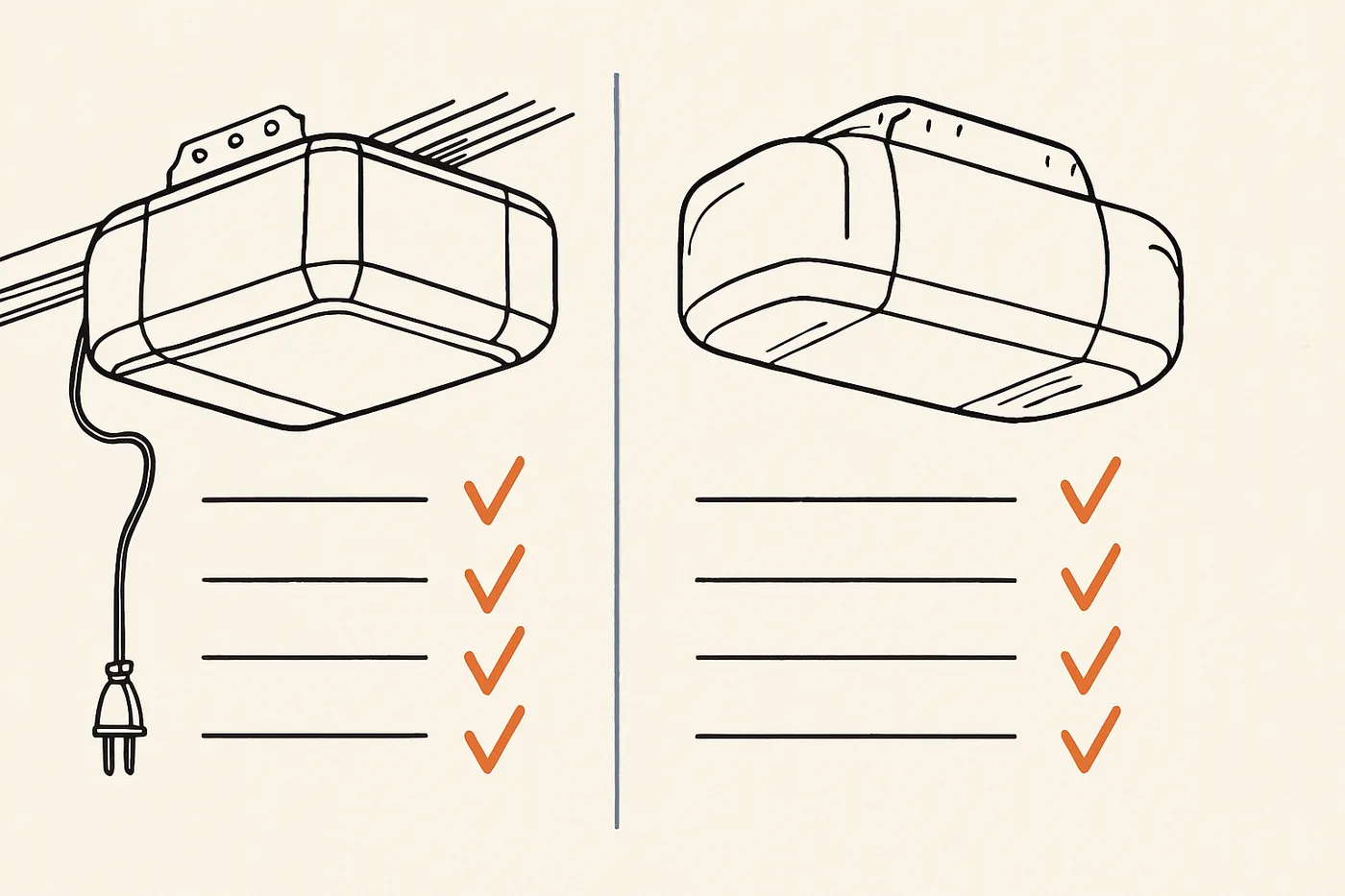
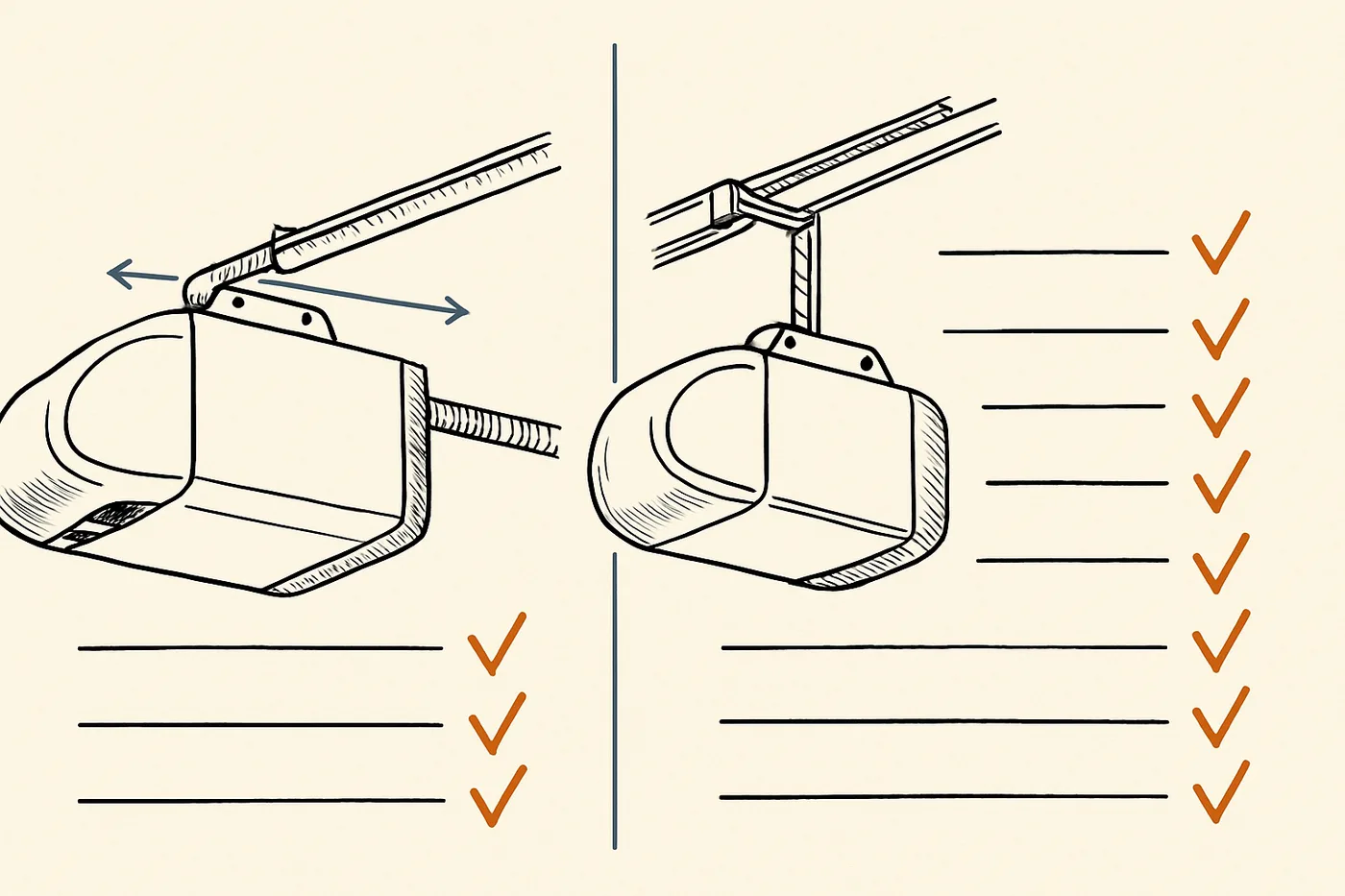
If you're replacing an opener at the same time, Genie's StealthDrive Connect 7155 page says its belt drive and DC motor offer "minimal noise, making operation quiet and smooth and ideal for garages close to living spaces," which matters if there's a bedroom over the garage.
HomeAdvisor's opener page, updated Jun 20, 2026, says belt drive openers "cost between $160 and $350, depending on the model" and chain drive openers run "from $150 to $250."
Durability over time
Ask the dealer whether both panel styles come in the same steel and finish on the model you are pricing. Amarr's Lincoln page says its "Heavy-gauge, nominal steel is coated in a 5-layer paint system for long-lasting durability," and it offers that door in both styles.
Our view: short panels hide small dings inside their pattern and long panels don't. If you're keeping the house long term and the garage sees real traffic, that's a fair argument for short panels.
If the door needs realignment or a spring service, that is a technician's job, not a weekend project. Garage Door Pros (our affiliated installer) in St. George, Utah says "We install, repair, & maintain all major brands of doors & openers." Garage Door Pros (our affiliated installer) also offers free safety inspections to its customers in St. George and surrounding areas.
For more on how panel construction interacts with insulation and structural rigidity, the garage door anatomy lab walks through the cross-section.
The decision framework
Three questions, in order.
One: what does the front of your house look like? In our view: clean modern lines, stucco, or horizontal siding suit long panels; colonial, craftsman, or ranch suit short panels. If you're unsure, walk to the end of your driveway, look at your house, and ask whether it is mostly horizontal bands or mostly a grid. Match the door to what's already there.
Two: how much does the garage get used as play space? Heavy use with kids, bikes, and sports equipment: in our view short panels hide dents better. Light use, one car in and out: either works.
Three: how long are you staying? If you are selling soon, pick whichever your installer has in stock. If you are staying long term, match the panel style to the house and compare the R-values the makers list, as above.
Our view: the panel style is a wardrobe choice. The insulation and the opener decide whether you're happy with the door years from now. Your next step is to ask the dealer to quote the same model in both panel styles, with the R-value of each in writing, and pick the one that matches your house.