Garage Door Buyer's Guide: What Actually Matters Before You Buy
Compare garage door types, costs, and the features that matter to make an informed buying decision. Learn what matters before purchasing a new door.

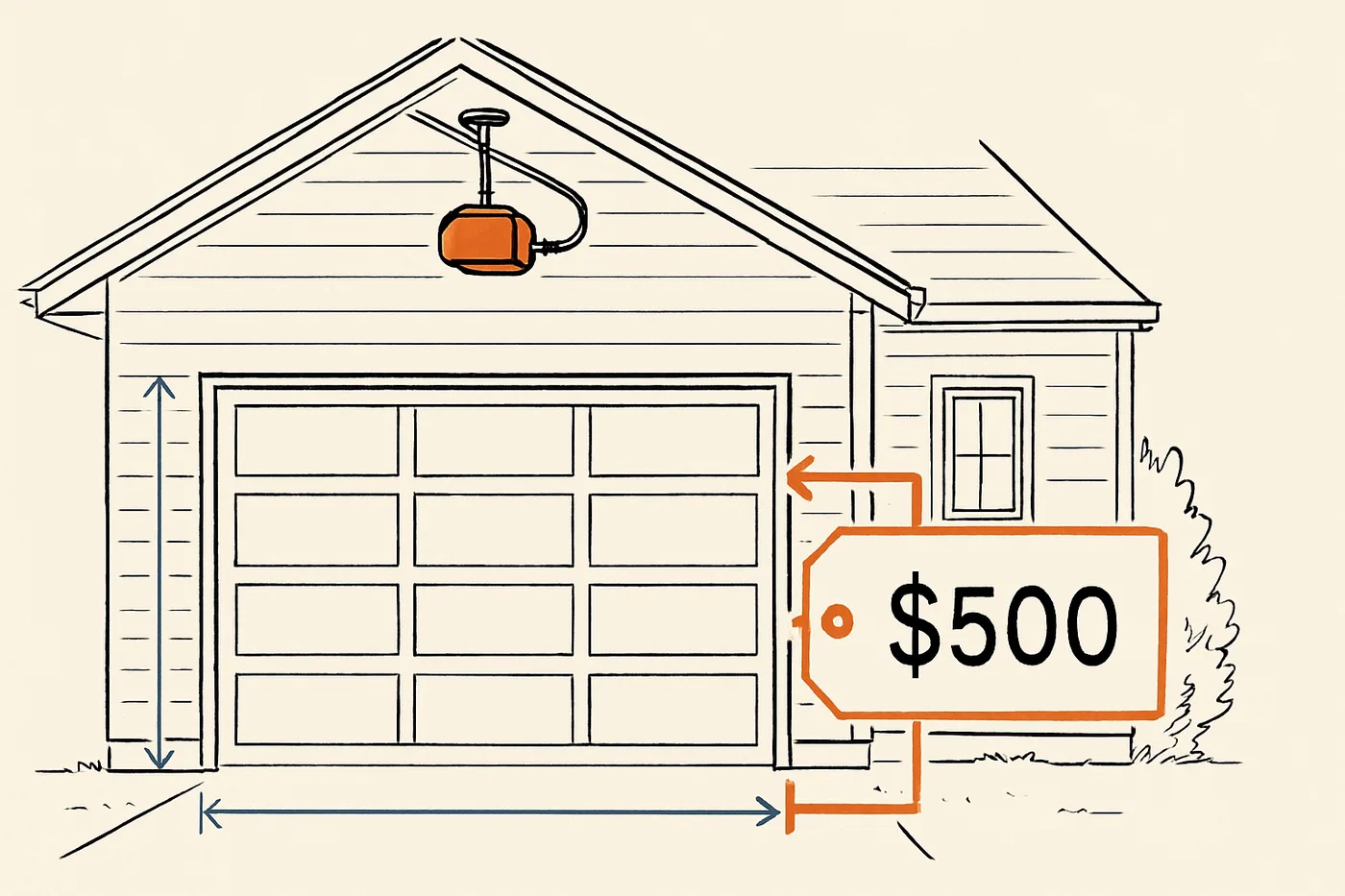
You're about to buy a garage door. You've looked at a few showroom photos, gotten one quote that seemed high, and now you're trying to figure out what's worth paying for and what's markup. That's the right question. HomeAdvisor's door-replacement page, a home-services cost guide updated Jun 17, 2026, says replacement costs between $754 and $1,707, with most homeowners spending around $1,231, and that completely custom doors can exceed $10,000. The answer comes down to four decisions (door material, insulation, opener drive, and add-ons), and in our view only two of them matter for most homeowners.
Door material: steel is the default for a reason
Steel is the default choice, and the other materials are compared against it. HomeAdvisor's door-replacement page, updated Jun 17, 2026, says steel doors range from $600 to $3,300 per door, are generally budget-friendly and offer high durability. That mix of price and durability is why we start every comparison with steel.
The alternatives are real, but in our view they're not for most buyers. The same page says wood doors typically reflect the high end of the cost range and may need more long-term maintenance than other materials to prevent warping or deterioration. Ask the maker for its care instructions before you buy wood. Aluminum-and-glass doors make sense on modern homes where the door is a design element, not a utility. For fiberglass, composite or aluminum, get a written price for the same size door and compare it with a steel quote.
Our advice: buy steel unless you have a specific architectural reason not to. The garage door anatomy lab walks through how the panels are constructed if you want to see what you're paying for.
Insulation: what R-value actually gets you
The number on the label is R-value, the door's insulation rating, and a higher number means more insulation. Ask for the door's R-value in writing, and read the manufacturer's spec sheet for how it is measured and what it covers.
Our honest view, which most guides won't tell you: if your garage is detached, R-value matters far less. Buy a door that meets your wind-load requirement and move on.
If your garage is attached, meaning it shares a wall with conditioned living space or has a bedroom above it, an insulated door is worth pricing. Clopay's insulated vs. non-insulated guide says insulation is especially valuable when the garage is attached to the house, since heat loss or gain through the garage can affect nearby living spaces and raise energy bills.
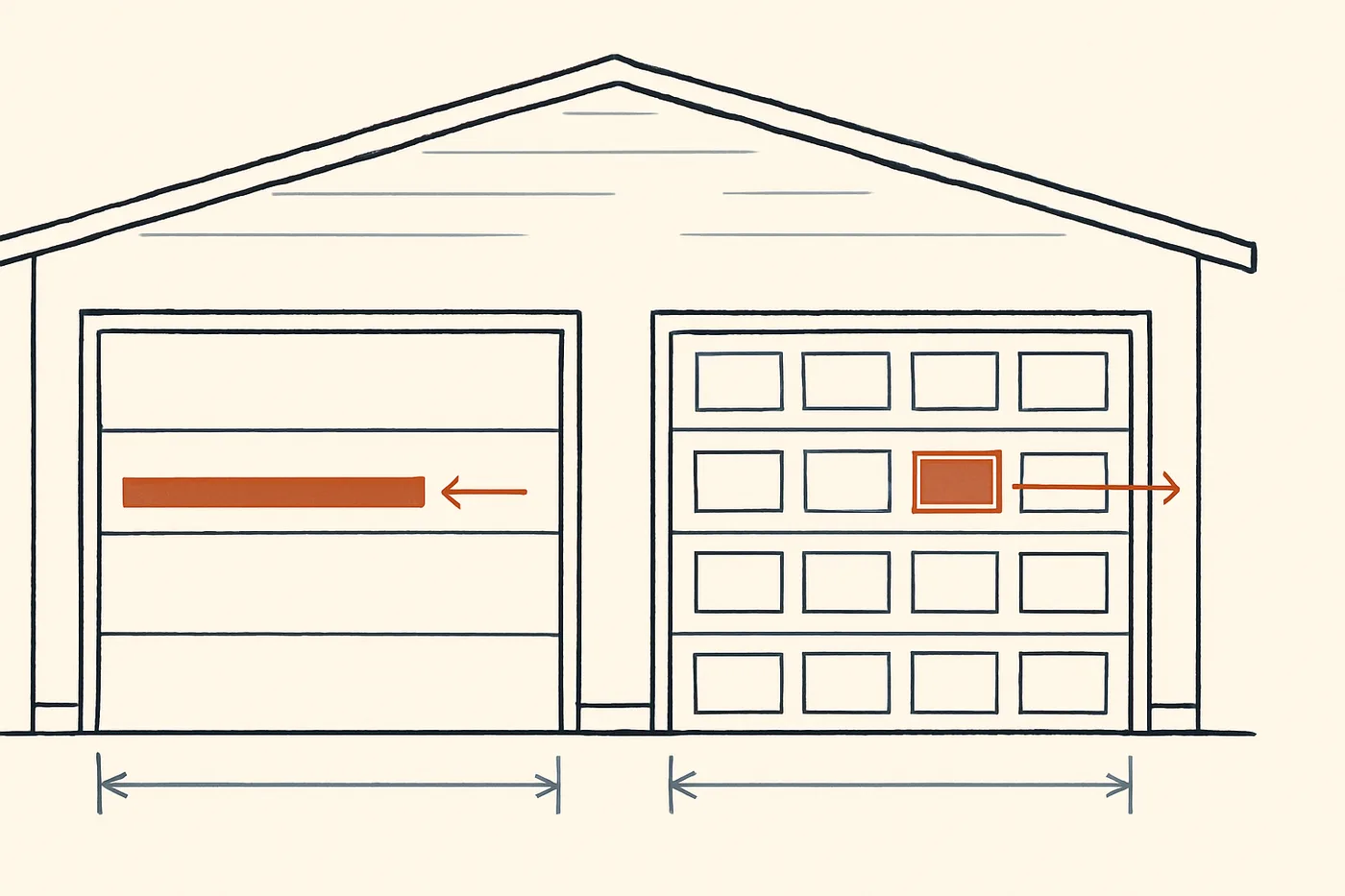
Our view: windows in the top section are a design choice, not a functional one. They add curb appeal and cleaning surface, so ask for the price per section and the glass type in writing and weigh them as a preference.
Opener drive: this is where the noise decision happens
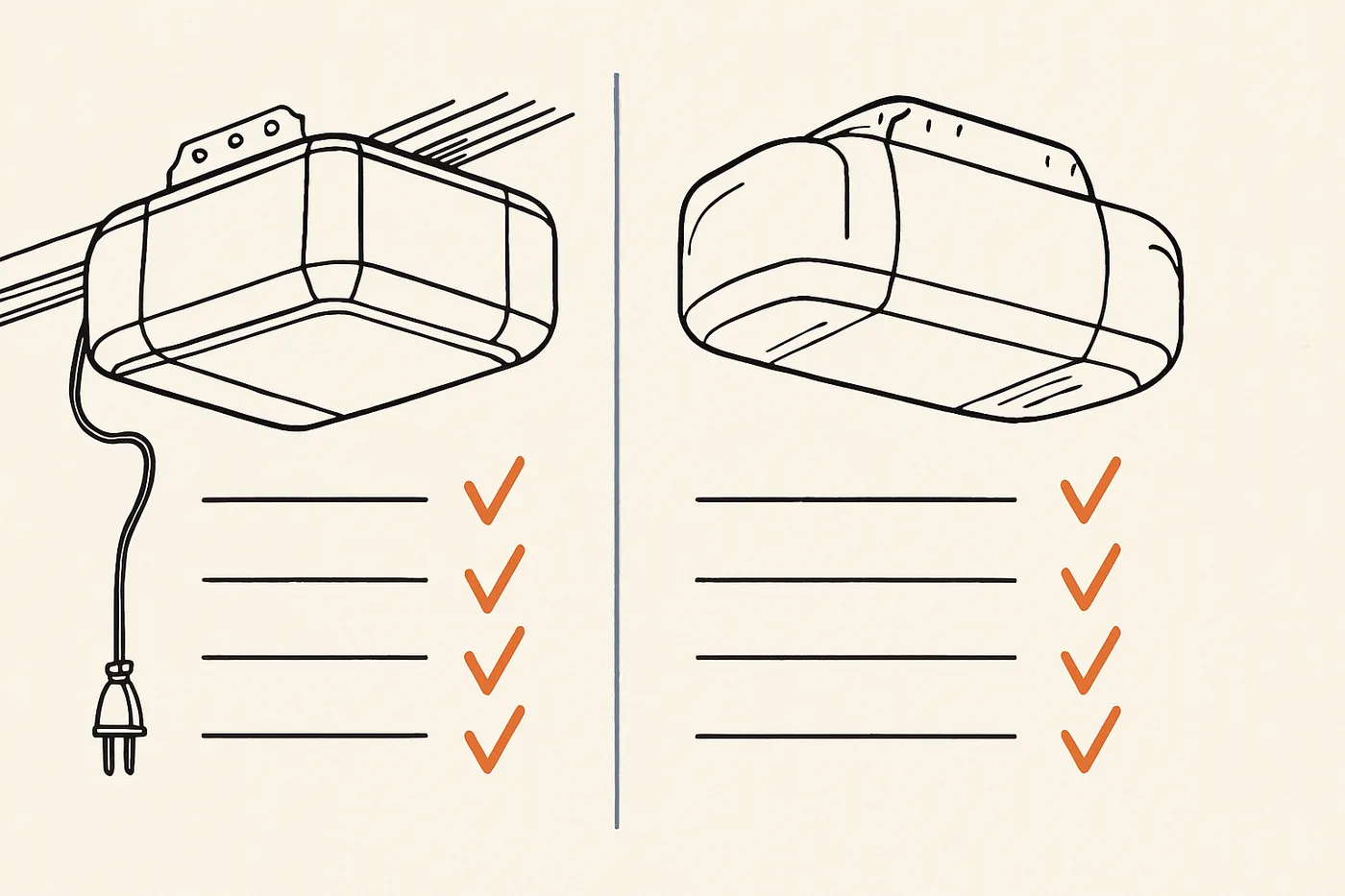
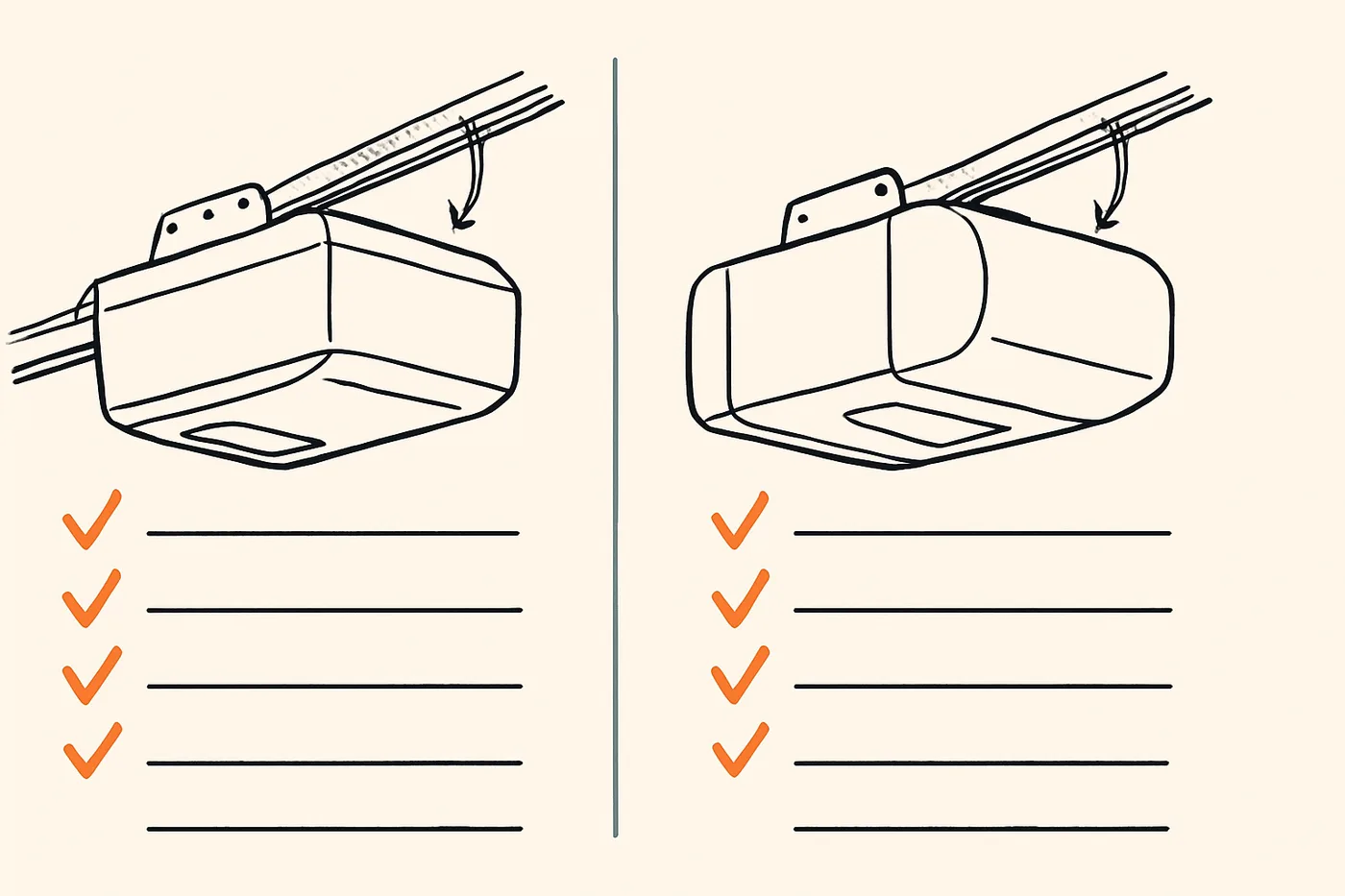
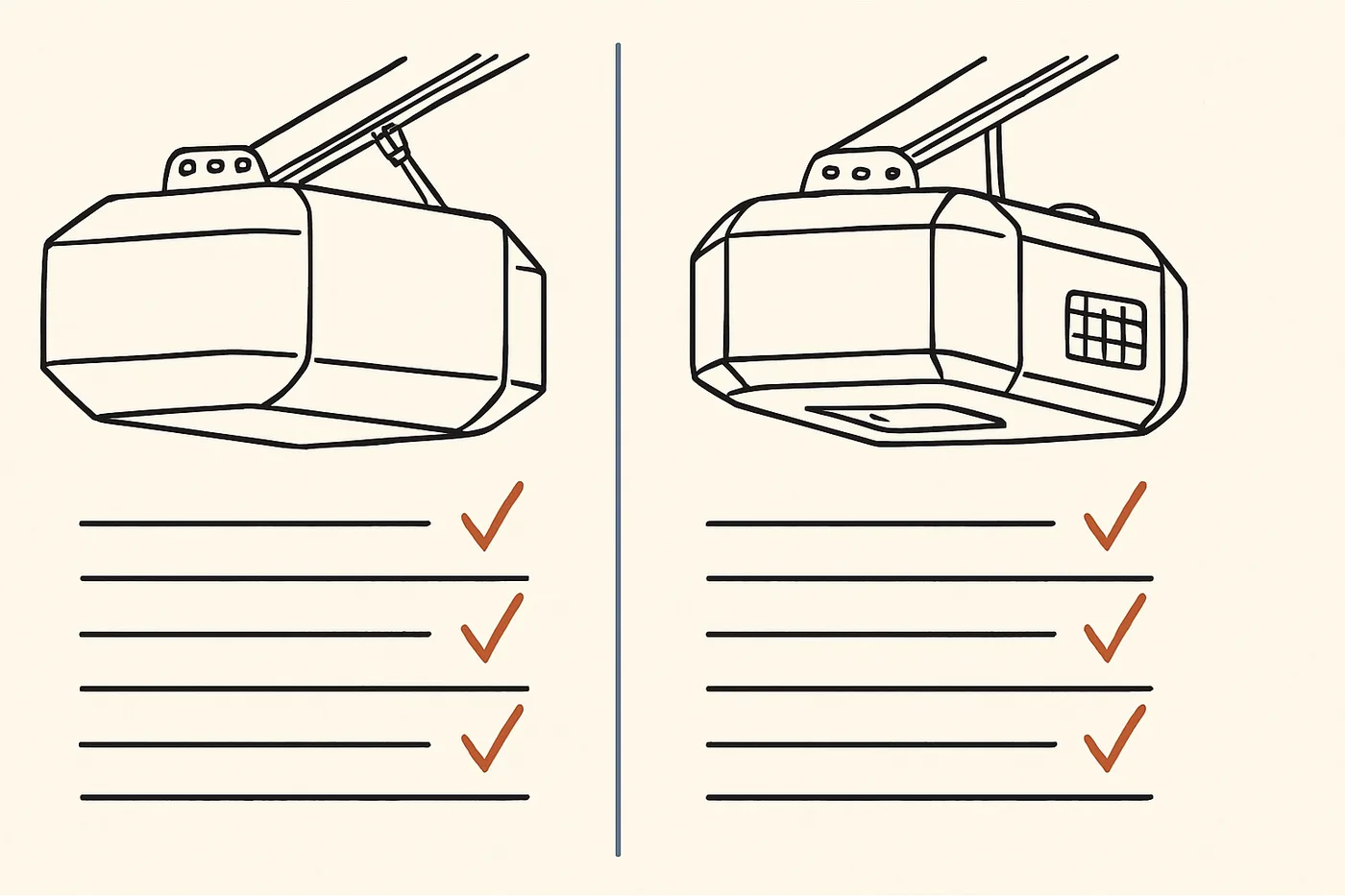
You have three real choices (chain, belt, direct), and the chain vs belt vs screw drive comparison goes deep on the mechanics. The unit prices below come from HomeAdvisor's opener-installation page, a cost guide updated Jun 20, 2026, and they are one aggregator's ranges rather than a price list. Ask every installer whether the quote includes installation.
Chain drive. HomeAdvisor's opener page, updated Jun 20, 2026, says chain-driven openers are the least expensive, at $150 to $250. Chamberlain's buyer's guide lists durable, dependable operation as the chain drive's advantage.
Belt drive. HomeAdvisor's opener page, updated Jun 20, 2026, puts belt-drive openers at $160 to $350, depending on the model. Chamberlain's buyer's guide calls the belt drive ultra-quiet and ideal for garages next to bedrooms.
Direct drive. HomeAdvisor's opener page, updated Jun 20, 2026, says direct-drive openers range from $280 to $500. Warranty terms vary by model, so read the manufacturer's page for the one you pick.
HomeAdvisor's opener page, updated Jun 20, 2026, lists screw-drive openers at $150 to $300. Get a belt-drive quote for the same door and compare the prices and the warranties.
One horsepower note: HomeAdvisor's opener page says openers rated at 1/3 hp can handle doors up to 150 pounds, while one- to two-hp motors can manage up to 400 pounds. The horsepower the manufacturer specifies for your door's size and weight is in the model's manual or on its product page.
The add-ons that matter and the ones that don't
Battery backup. HomeAdvisor's opener page, updated Jun 20, 2026, says battery backups are available as an aftermarket accessory for $50 to $150. California's SB 969 requires residential openers made, sold or installed in the state on or after July 1, 2019 to have a battery backup, so in California it's not optional. Elsewhere, ask for it if you're in a region with any meaningful power outages, because without it the door stops when the power does.
Smart connectivity. Some openers include Wi-Fi, and which app and assistants work with it varies by model. Check the specific model's page before you count on a platform. The brand question has its own answer in the LiftMaster vs Chamberlain article.
High-cycle springs. A standard spring is rated for about 10,000 cycles, one cycle is one full open and close, and at four cycles a day that is about seven years (IDC Spring, a spring manufacturer). If you cycle the door more than four times a day, ask about a spring with a higher cycle rating, and get the rating and the price in writing. Spring work is for a trained technician.
Rail type. If you're switching drive types, say chain to belt, ask whether the quote includes the rail that drive type needs. Ask what rail the opener comes with.
What it actually costs
Get two written quotes for your own door, with the door, the opener, the labor and the haul-away listed on separate lines. For a benchmark, HomeAdvisor's door-replacement page, updated Jun 17, 2026, says most installers charge a labor fee of $200 to $500, with an average of $350, and an extra $50 to $200 for labor and disposal if that fee doesn't cover removing the old door. If you already have a good door and only need a new opener, HomeAdvisor's opener-installation page, updated Jun 20, 2026, says local installers charge between $60 and $80 per hour.
In Las Vegas, A+ Garage Doors (our affiliated installer) repairs garage doors. In St. George, Utah, and surrounding areas, Garage Door Pro Services (our affiliated installer) offers a free safety inspection, and we'd get one before replacing anything you don't have to. If your existing door is structurally fine and only the opener is failing, ask whether you can skip the door replacement entirely.
The decision framework
This is our own framework: three questions, in order.
One: is the garage attached or detached? Detached: a basic door and a chain-drive opener are the logical starting point, so skip the rest of this article. Attached: an insulated door, with the R-value in writing, and a belt drive at minimum.
Two: how long are you staying? A short stay: a mid-grade insulated steel door, belt drive, no extras. A few years or more: the same door and drive, plus battery backup, and a higher cycle rating on the springs if you use the garage as your main entrance. If you plan to stay a very long time: price out direct drive, and compare the warranties.
Three: what's the opening size? Ask the opener's maker which horsepower it specifies for your door. A double-car, solid wood or oversized door is where it matters most.
For the middle-of-the-road case, an attached two-car garage and a standard opening, the answer is a mid-grade insulated steel door, a belt-drive opener with battery backup, and a written quote that lists every line. Everything above that is a preference, not a requirement. The science of garage doors lab covers why the mechanics work the way they do, and the Maya's tech decoded video is a fast walkthrough of the features worth paying for.