Cheap, mid-range, or premium garage door opener: which one is actually right for your garage?
Compare garage door opener price tiers to find the right fit. Learn what features justify higher costs and when budget models work best.

The question most homeowners are trying to answer is simpler than the showroom makes it look: do I need the cheap opener, the mid-range one or the premium one? The answer depends on a few things about your garage that you already know, and this article walks through them.
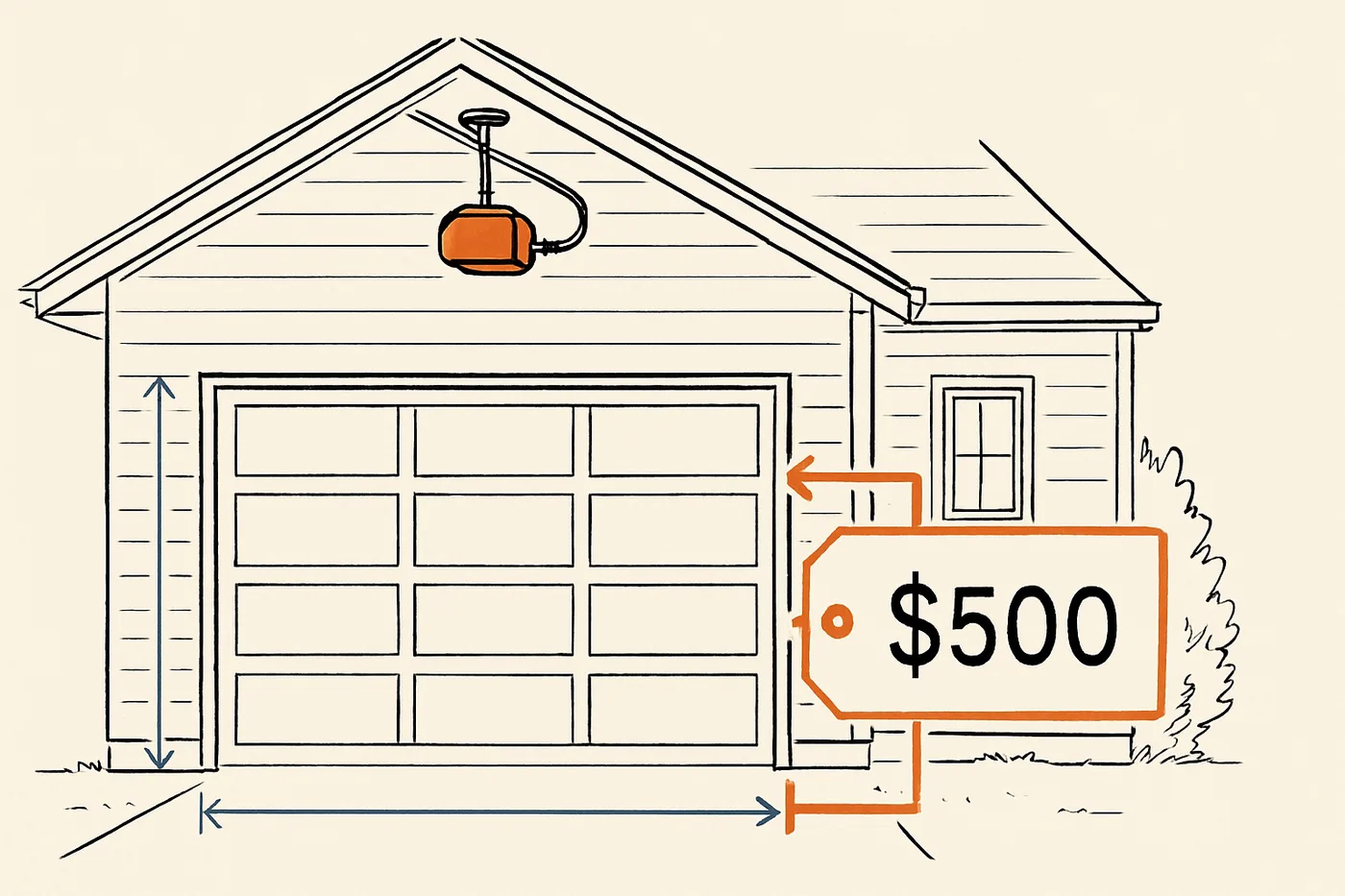
Price tier is not the same as unit price. By the time an opener is bolted to your ceiling, you have paid for the unit, the installation labor, and whatever accessories the installer added on top. HomeAdvisor, a home-services cost guide, puts the normal range for installing a garage door opener at $218 to $540, with an average of $379 (updated June 2026). The unit prices below come from the same page and leave out installation, which HomeAdvisor lists at $60 to $80 an hour for a job of two to six hours. Ask for the installed price in writing, because that is the number that lands on your credit card.
Good: chain drive
The entry-level tier is a chain-drive opener. HomeAdvisor lists chain-drive units at $150 to $250, before installation.
What it is: a motor that pulls a metal chain along a rail to raise and lower the door. HomeAdvisor says chain drives "are the most basic in design and have been around the longest." Chamberlain's buyer's guide calls its chain drive "durable, dependable" and "budget-friendly."
The drawback is noise. HomeAdvisor says chain drives are "much louder than other models." If a bedroom shares a wall or ceiling with the garage, that matters.
HomeAdvisor also says chain drives "do not come with a battery backup," so if you want one, it is a separate line on the quote.
Who it is for: a detached garage, or an attached garage where no one sleeps near it. If the garage is a separate structure, the quieter belt drive is money spent on a problem you do not have.
Skip the screw drive. HomeAdvisor cautions that screw-drive openers "don't do well with fluctuations in temperature and aren't ideal for heavier garage doors," and says those issues have "led many manufacturers to stop making screw drive openers."
Better: belt drive
The middle tier is a belt-drive opener. HomeAdvisor lists belt-drive units at $160 to $350, before installation.
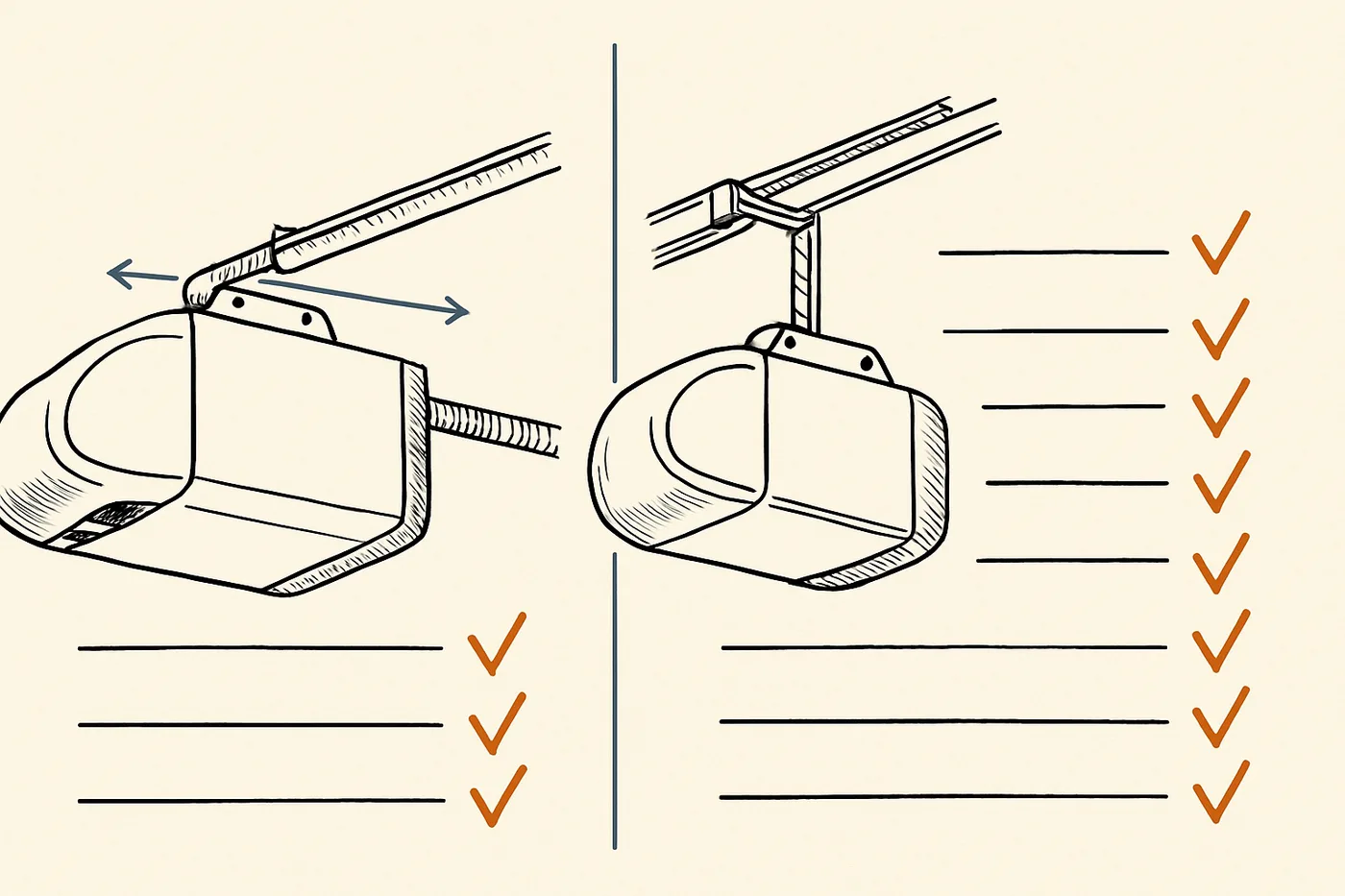
What it is: the same basic motor and rail as a chain drive, but a steel-reinforced rubber belt replaces the chain. That one change is what you are paying for. Chamberlain's buyer's guide says its belt drive gives "ultra-quiet, smooth operation" and is "ideal for garages next to bedrooms," and HomeAdvisor, a separate source, calls belt drives "significantly quieter than chain drive systems."
The trade-off: HomeAdvisor says belt drive openers "can wear out more quickly than chains, and the belts are sensitive to extreme temperatures and excessive humidity."
One thing to ask if you are switching from a chain to a belt: our under-$500 opener guide notes that a belt drive needs a belt-compatible rail, so ask whether the quote includes a new rail or only the motor head.
Who it is for: an attached garage with living space next to or above it.
Best: direct drive and the extras
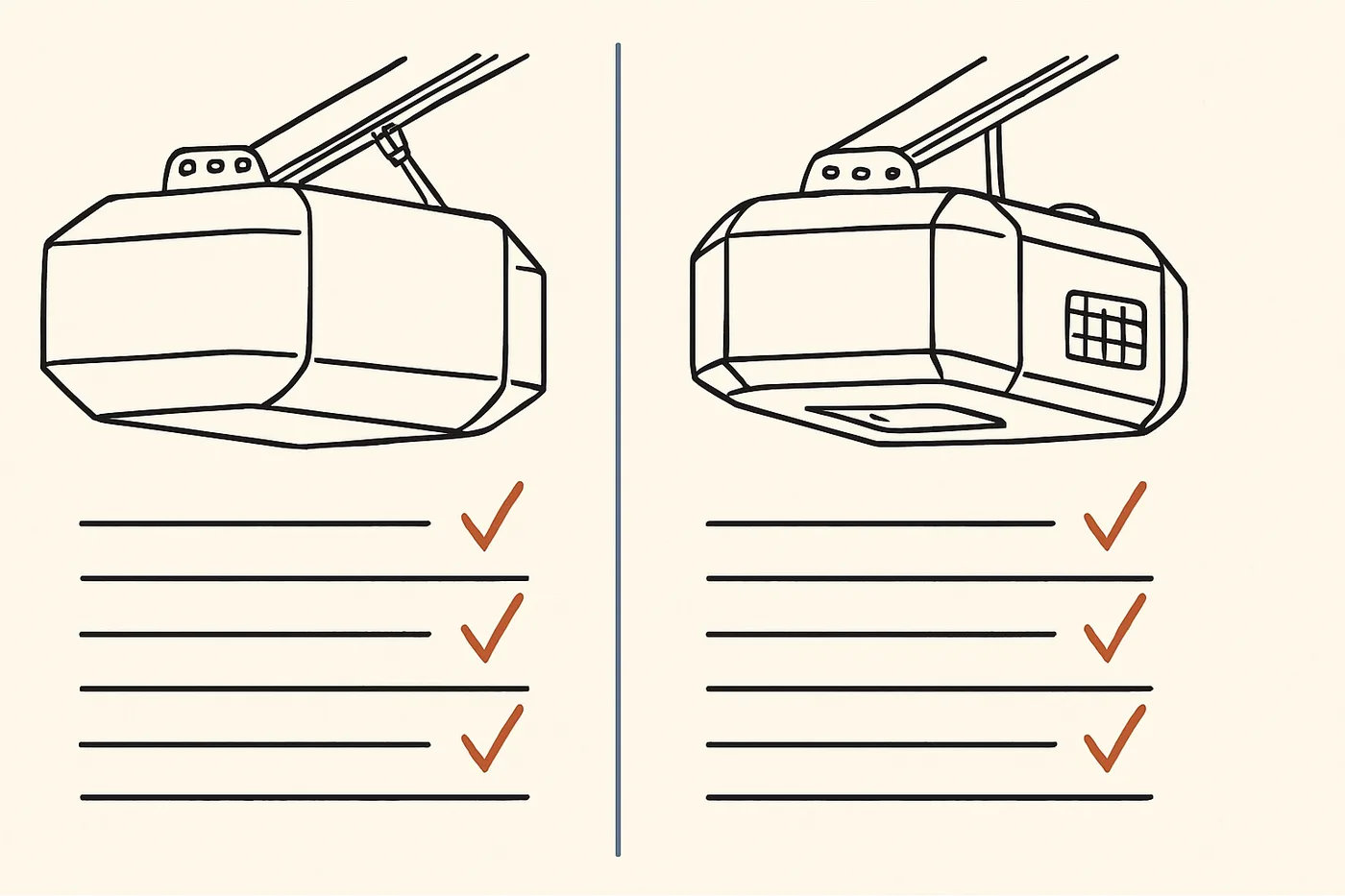
The premium tier is where things get specific. You are no longer only choosing a drive type. You are choosing features that solve a particular problem. HomeAdvisor lists direct-drive units at $280 to $500, before installation.
What you get at this tier splits into three things, and the question is whether any of them matter to you.
A drive with fewer moving parts. In a direct-drive opener the motor itself moves along the rail, with no chain, belt or screw. HomeAdvisor says that "means fewer moving parts and less maintenance," and that direct drive operators "make very little noise, can lift heavier garage doors, and withstand more extreme temperatures."
Battery backup. HomeAdvisor lists battery backup as an aftermarket accessory at $50 to $150 and says most opener types other than chain drive include one. It is worth asking about on any tier. In California, SB 969 requires an automatic garage door opener manufactured for sale, sold, offered for sale or installed in a residence beginning July 1, 2019 to have a battery backup function. Outside California, it is the feature that keeps your car from being stuck in the garage during a power outage.
Extras that look free in the quote but are not. Our cost breakdown notes that extra remotes, keypads and additional safety sensors may not be included in the base installation quote, so ask about each before you sign. HomeAdvisor lists a pair of safety sensors at $50 to $100 if yours need replacing.
Who it is for: a homeowner who plans to stay a long time, or a house where opener noise is a real problem. Adding a keypad to the original quote is cheaper than calling the installer back later, as our cost breakdown puts it.
When the cheap one is right, and when it is not
The cheap opener is right when your garage is detached, when nobody sleeps near it, or when you plan a short stay in the house and just want the car moving again.
The cheap opener is wrong when the opener is not the real problem. The NAHB and Bank of America Study of Life Expectancy of Home Components (2007) lists garage door openers at 10 to 15 years. It is a typical range from an old source, not a promise about your unit. The springs wear on their own schedule. A standard spring is rated for about 10,000 cycles, one cycle is one full open and close, and at four cycles a day that is about seven years (IDC Spring, a spring manufacturer). Spring work is for a trained technician, so ask for the springs and cables to be checked when the new opener goes in. In the Las Vegas valley, Reno and Mesquite, A+ Garage Doors (our affiliated installer) installs new doors and openers and does repairs and maintenance. In St. George and the surrounding area, Garage Door Pro Services (our affiliated installer) offers its customers a free safety inspection that includes a balance test and a spring tension check.
One more honest option: do not buy a new opener at all. HomeAdvisor lists opener repair at $100 to $500, and says the price "depends on whether the pro can adjust a gear or must swap out the entire motor." If you want to see what is going on in there before you decide, Maya's garage door tech walkthrough and the garage door anatomy lab will show you what each part does.
The three questions
One: is your garage attached, and does anyone sleep near it? If no, buy chain drive. If yes, start at belt drive.
Two: how long are you staying in the house? For a short stay, the cheapest option that fits question one is the right one. For a long stay, price belt drive and direct drive side by side, since belt is quieter than chain but HomeAdvisor says it can wear out sooner.
Three: do you need battery backup? In California, yes: it is the law. Outside California, yes if a power outage would leave your only car stuck in the garage. Ask for it on the original quote.
For most homeowners with an attached garage planning to stay a while, a belt-drive opener with battery backup is the place to start. Get the installed price in writing, line by line, and compare it with HomeAdvisor's normal range of $218 to $540.