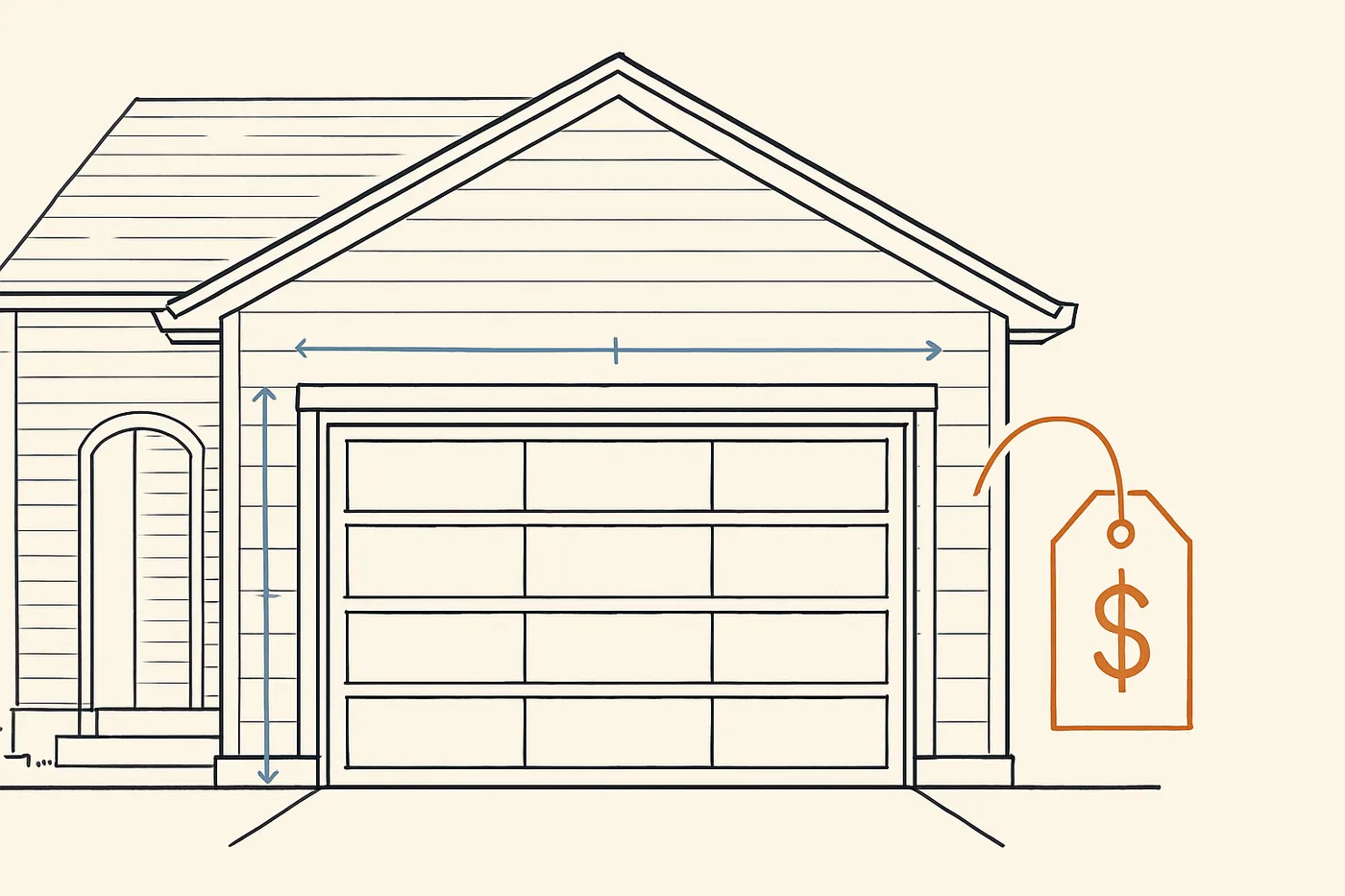
Garage door resale value: replace it before you sell?
You are thinking about replacing the garage door before you sell. Here is where to find your market's resale figure, what a replacement runs, and how to decide whether to repair or replace.

You are about to sell and the garage door looks tired. The question is whether a new one comes back to you in the sale price. No one number answers that for your house, so this page does not quote one. It shows you where to find the figure for your market, what a replacement costs according to HomeAdvisor, and how to decide between repairing and replacing.
Not sure whether to repair or replace? Start with our page on deciding whether to repair or replace a garage door.
Find your market's number, not a national one
Remodeling magazine publishes an annual Cost vs. Value report that estimates how much of a project's cost homeowners recoup at resale, by region. Look up garage door replacement for your region on Remodeling's Cost vs. Value page and read what the report says about its method. We have not re-read the current report in full, so we do not quote its percentages here. Treat any figure as an average across many homes: your own result depends on your market, your neighborhood and the condition of the rest of the house.
A local agent can tell you more than a report can. Ask how listings in your price range with a worn door sold against ones with a newer one.
What a replacement costs
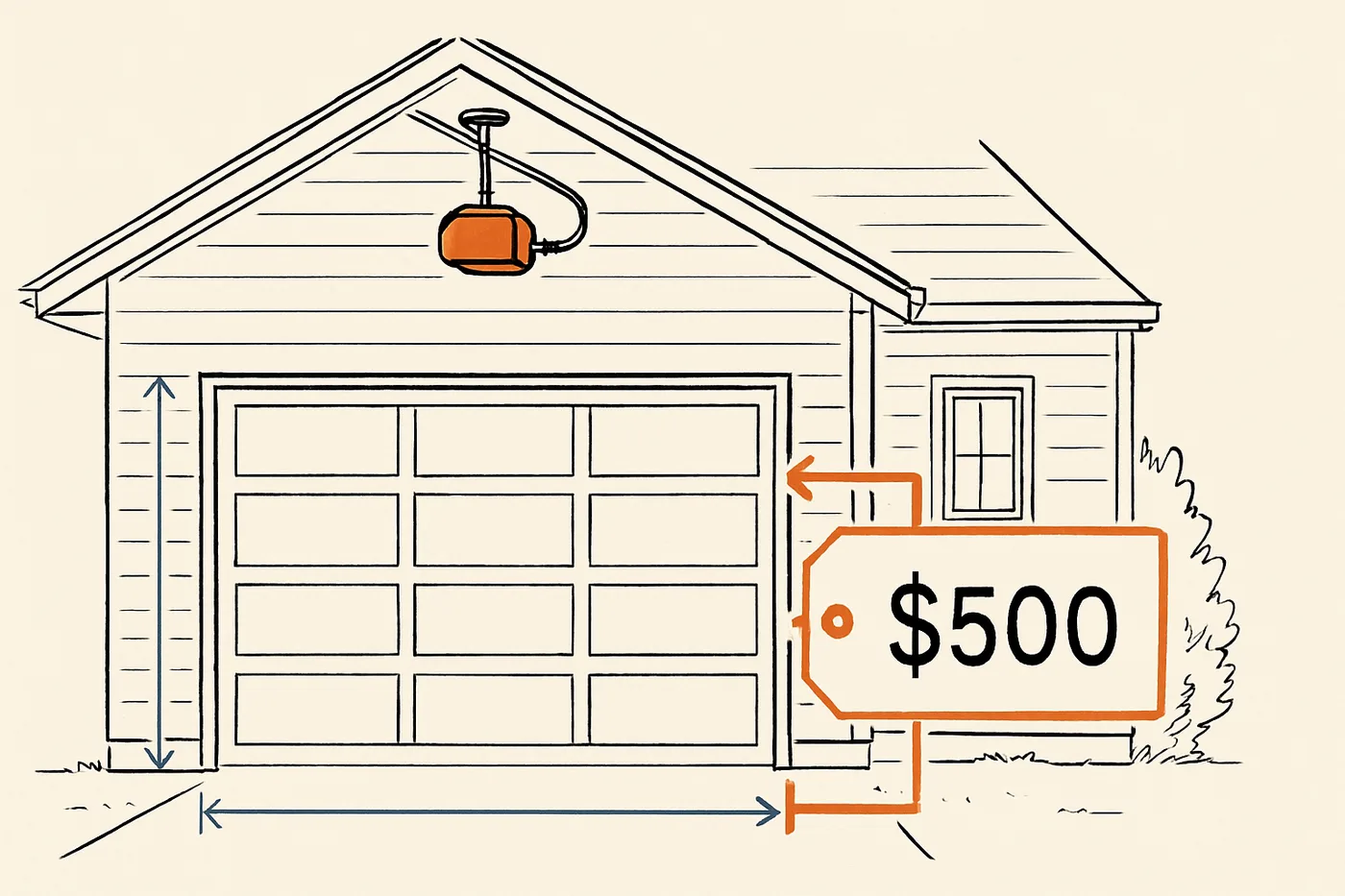
HomeAdvisor says garage door replacement costs between $754 and $1,707, with most homeowners spending around $1,231, and that opener installation, insulation upgrades and structural repairs come on top (page updated Jun 17, 2026). It puts an insulation upgrade at $600 to $3,000 depending on the insulation type and door size, and a completely custom door above $10,000. Those are one aggregator's ranges. Written quotes for your own door beat them.
For what moves the price, see how much a new garage door costs.
Match the door to the house
A door that suits the home's architecture will read better to a buyer than the most expensive one. A higher price is not a reason to expect a higher return: spend where it shows from the street, and do not spend on features a buyer will not see, such as a higher insulation rating, unless you want the energy benefit yourself. Our insulated door guide covers when the upgrade makes sense.
Repair or replace before you list
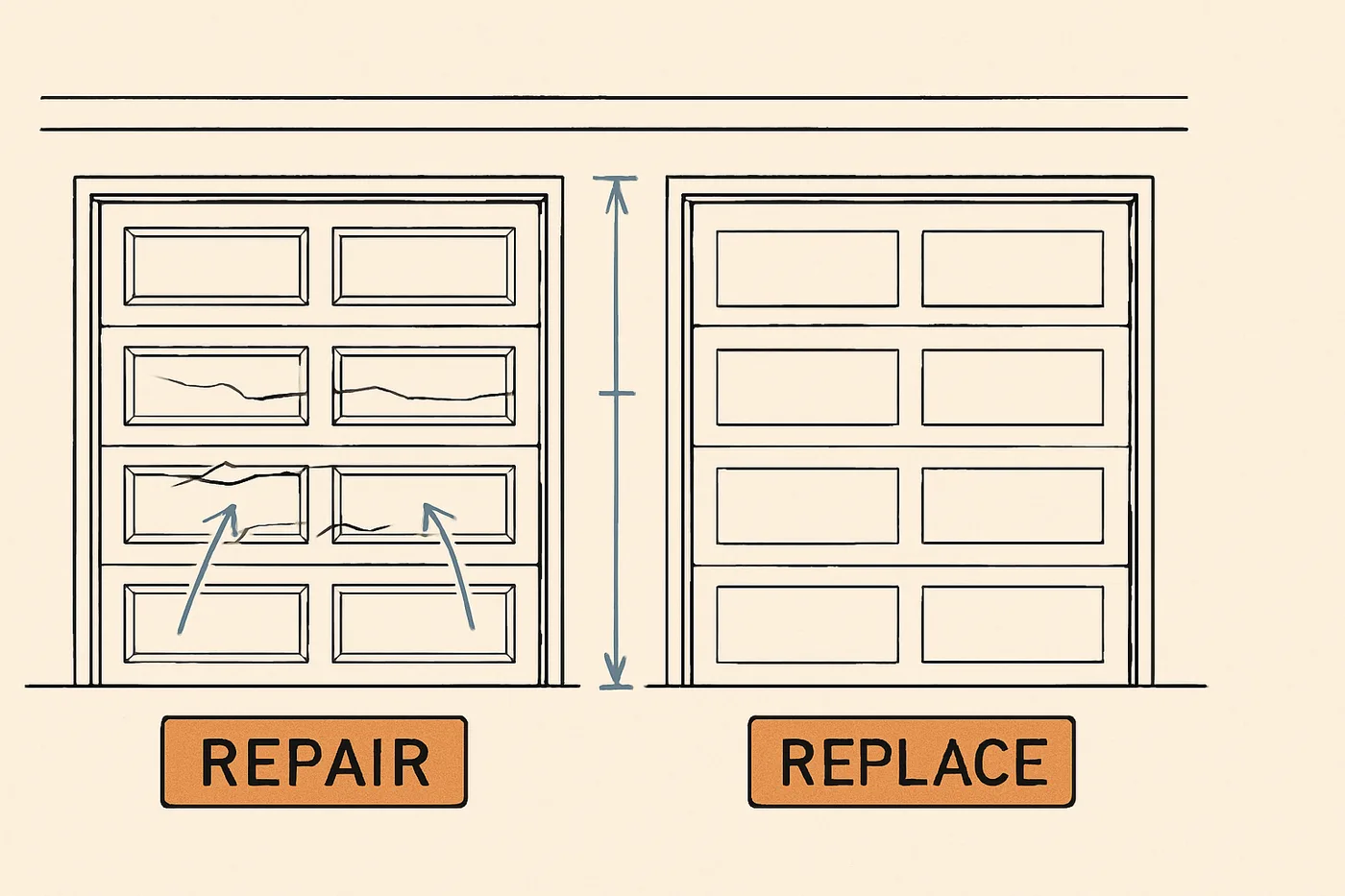
Our rule of thumb, not a manufacturer's or industry standard: if the repair quote is more than about half of a written quote to replace the same kind of door, get the replacement quote before you authorize the repair. A single failed part on a sound door is a repair. HomeAdvisor's repair page (updated Jun 20, 2026) puts a spring at $180 to $350 and an opener at $100 to $500. Our repair-or-replace guide walks through the decision.
If you do not know what shape the door is in, have it looked at honestly before you decide. Garage Door Pro Services (our affiliated installer) offers a free garage door safety inspection, and for Las Vegas homeowners, A+ Garage Doors (our affiliated installer) handles both repair and full replacement and can give you the comparison quote.
What the quote should include
When you get a replacement quote, ask that it list:
- Haul-away and disposal of the old door
- A new bottom seal and weatherstripping
- Tracks, if the old ones are not being reused
- The spring's cycle rating: a standard spring is rated for about 10,000 cycles, one cycle is one full open and close, and at four cycles a day that is about seven years (IDC Spring, a spring manufacturer)
- Programming of your existing remotes and keypads to the opener
If an item is missing, ask what it costs to add. A quote that leaves items out is not comparable to one that includes them.
Try your own numbers
The ROI lab adds the resale share you assume to the energy savings you enter. It uses only your numbers and is not a forecast. Run it with the figure you found for your region and a conservative guess, and see whether the replacement still makes sense.