Garage Door Replacement Cost in 2026: What It Runs, What's Included, and When to Pull the Trigger
Learn when to replace your garage door, replacement costs, installation process, and how to choose the right door for your home.

A full garage door replacement runs $1,500 to $3,200 installed in 2026 for the door most people actually buy — a mid-grade insulated steel sectional with an R-value of 12 to 18. Cheaper builds exist below that range and custom wood and full-view aluminum doors run well past it, but the mid-grade insulated steel band is where most replacement projects land. The rest of this guide tells you when replacement beats repair, what's in that quote, what's missing from it, and what you should be deciding before a contractor shows up in your driveway.
When replacement beats repair
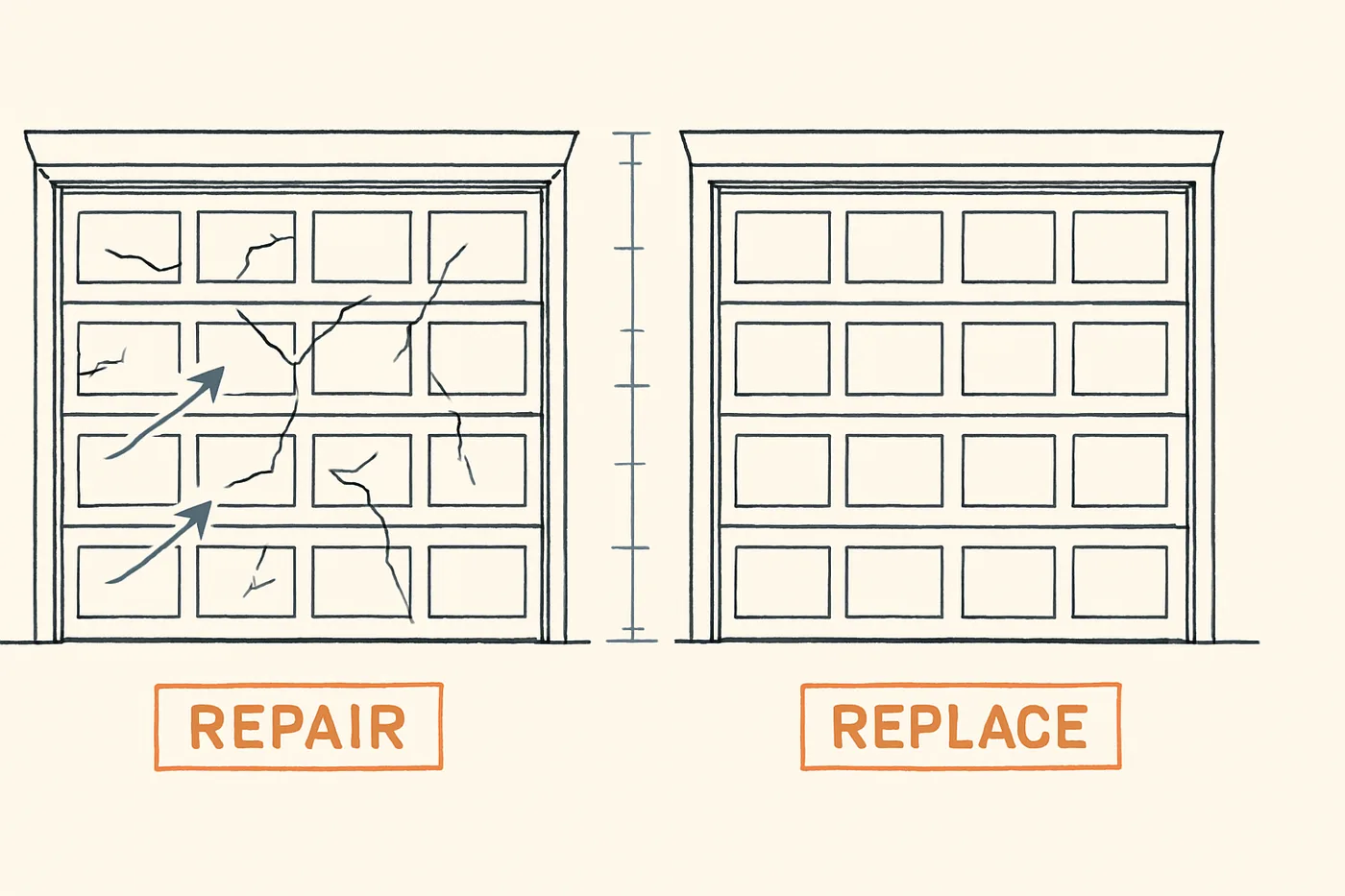
You replace a door for one of three reasons: it's structurally damaged beyond a sensible repair, it's old enough that the next thing is about to break too, or the math on a single repair has gotten absurd.
The math test is the cleanest. If a single repair quote exceeds 50 percent of the cost of replacing the door with the same tier, replacement wins. A $900 repair on a door that costs $1,800 to replace at the same quality level is almost never the right call — you're paying half the price of a new door to extend the life of an old one by an unknown number of years.
The age test is softer but real. A well-built residential steel sectional lasts 15 to 30 years, but past the 20-year mark, the probability that the next component is also near end-of-life climbs each year. If you're on year 22 and the springs just went, the cables, rollers, and bottom seal are not far behind. Replacing the door now buys you 20+ years of nothing breaking. Repairing it buys you an unknown number of months until the next call.
The damage test is obvious. Bent panels, rusted-through sections, a door hit by a car — replace.
What you're actually paying for: the tiers
Here's how the installed price moves with the door you pick. All figures are 2026 installed, standard 16x7 double-car opening, basic removal of the old door included:
| Tier | Installed Price | What You Get |
|---|---|---|
| Builder-grade | $800 – $1,500 | Single-layer non-insulated steel, light-gauge, basic hardware, standard-cycle springs |
| Mid-grade insulated | $1,500 – $3,200 | Two- or three-layer steel with polyurethane foam, R-12 to R-18, better hardware |
| Premium steel / carriage-house | $3,200 – $6,000 | Heavier gauge, decorative overlays, upgraded hardware, sometimes high-cycle springs |
| Wood, full-view aluminum, custom | $6,000 – $15,000+ | Species-dependent, custom builds, glass panels, designer hardware |
The mid-grade insulated tier is where most homeowners land, and it's where the value curve flattens. The jump from builder-grade to mid-grade buys you real insulation, real durability, and a much quieter door. The jump from mid-grade to premium mostly buys you aesthetics.
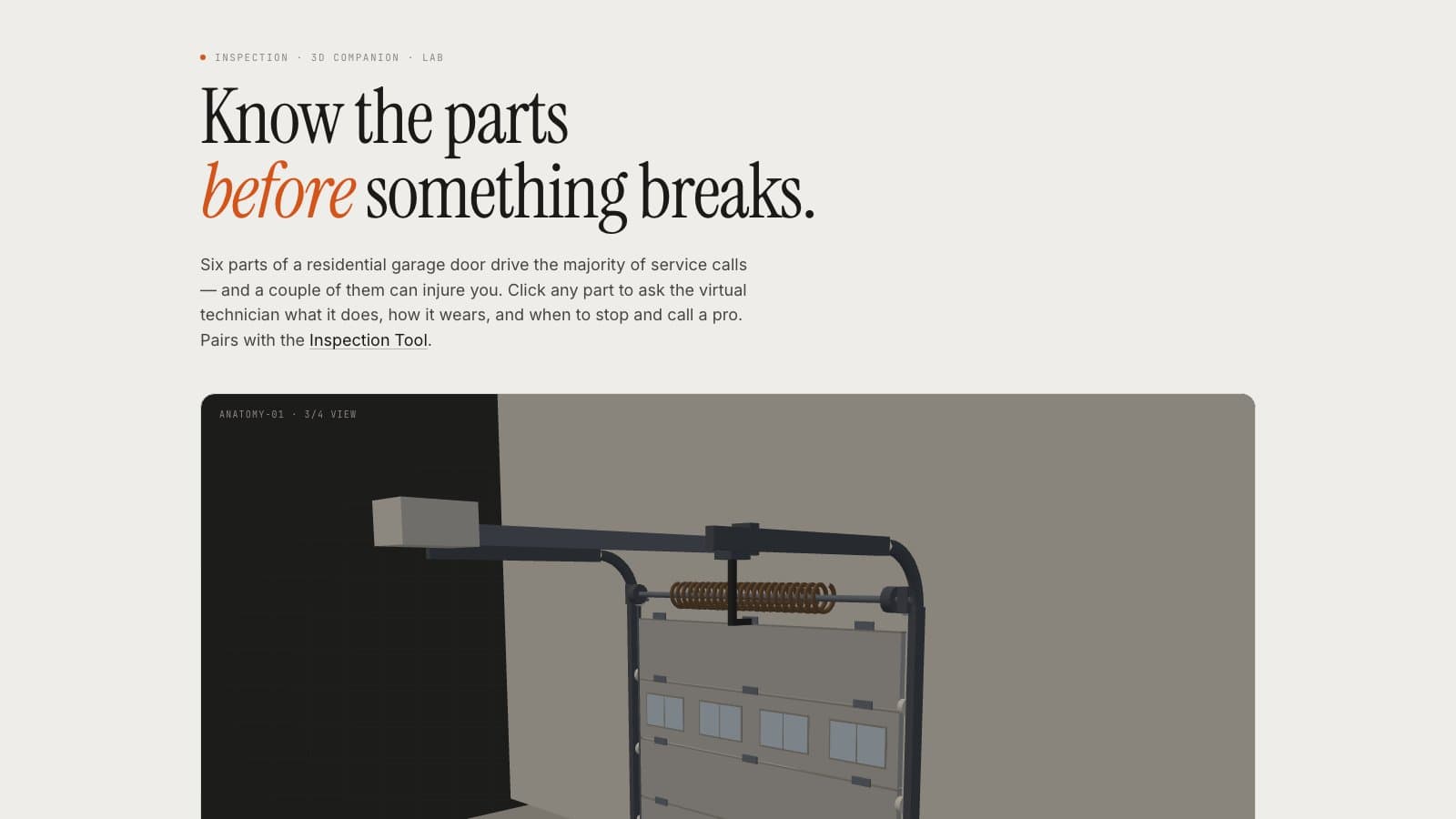
If you want to see the components that justify those price gaps — panel construction, spring class, hardware grade — the garage door anatomy lab walks the parts. For a friendly version of the same content, Maya's garage door tech decoded video covers it visually.
The opener decision sits next to the door decision
If your existing opener is more than 10 years old, replace it with the door. Don't bolt a new $3,000 door onto a tired chain drive that's about to fail.
A new opener runs $300 to $900 installed in 2026, and most homeowners replacing a standard opener on an attached two-car garage pay $450 to $700. Two pricing factors matter:
Drive type. A chain-drive opener costs $350 to $500 installed and lasts 10 to 15 years. A belt-drive runs $100 to $150 more installed. The reason to pay the gap is noise — a belt drive produces about 50 dB versus a chain drive's 70+ dB. If there's a bedroom above or next to the garage, get the belt. If the garage is detached, get the chain and keep the money. The garage door noise video breaks down where the sound comes from if you're trying to decide.
Horsepower. For a double-car door, a solid wood door, or an insulated steel door over 16 feet wide, three-quarter horsepower is the minimum to avoid premature motor burnout. Half-horse is fine for a single-car steel door and nothing else. Don't let an installer talk you into a half-horse on a heavy door because it was sitting on the truck.
Battery backup. Adds $75 to $150. Legally required on all new residential opener installs in California under SB-969; optional everywhere else but worth it if you lose power more than once a year.
Brand. A LiftMaster belt-drive installed by a pro runs $450 to $650 all-in, versus $250 to $350 for a retail Chamberlain you install yourself. The hardware is closely related, but LiftMaster carries a lifetime motor and logic board warranty when sold through pros; the retail Chamberlain carries 5 years on the motor. If you're already paying for installation, the LiftMaster warranty is the better deal. If you're handy and DIY-ing, the Chamberlain is the right call.
What your replacement quote probably leaves out
This is the part of the conversation contractors don't volunteer. Before you sign, confirm in writing whether the quote includes:
- Haul-away of the old door. Sometimes $50 to $150 added later.
- The opener. Most door quotes are door-only. Adding an opener to the same job is $300 to $900.
- High-cycle springs. Standard springs are rated to 10,000 cycles — about 7 to 10 years. High-cycle springs go 25,000 to 100,000 cycles at a higher upfront cost. Worth asking about if you use the garage as your main entry.
- New bottom seal and weatherstripping. A bottom U-seal for a 16-foot door is $15 to $40, threshold seal $50 to $120, jamb weatherstripping $40 to $80 in materials, plus labor if installed separately. Most door replacements should include a new bottom seal — confirm it.
- New tracks and rollers. Some installers reuse old tracks. On a 20-year-old install, that's a false economy.
- Permit fees. Varies by municipality, usually $50 to $200.
- Wiring or outlet work for a new opener install. Adds to the $150 to $300 base labor for opener installation if there's no outlet on the ceiling.
A quote that includes all of those line items, broken out, is a quote you can trust. A single-line quote that says "Garage Door Replacement — $2,400" is a quote you need to ask questions about.
The installation day itself
A straightforward replacement on an existing opening — old door out, new door in, same size, same opener — runs 4 to 6 hours for a two-person crew. They'll remove the old door and tracks, set the new vertical and horizontal tracks, hang the panels bottom-to-top, install springs and cables, balance the door, and reconnect the opener.
If the opener is being replaced too, add 1 to 2 hours. If the framing or header needs work, you're into a half-day or more of carpentry on top.
You should be home for the final balance test. A properly balanced door, disconnected from the opener, will hold its position at the halfway point. If it slams down or rockets up when the installer pulls the release, the springs are wrong and you need them corrected before the crew leaves.
Is the insulation upgrade worth it?
Depends on whether the garage is attached, conditioned, or used as a workspace. For a detached garage you only park in, R-6 builder-grade is fine. For an attached garage that shares a wall with living space, R-12 to R-18 is the sweet spot — meaningful temperature stability without paying for R-20+ premium foam that won't pay back.
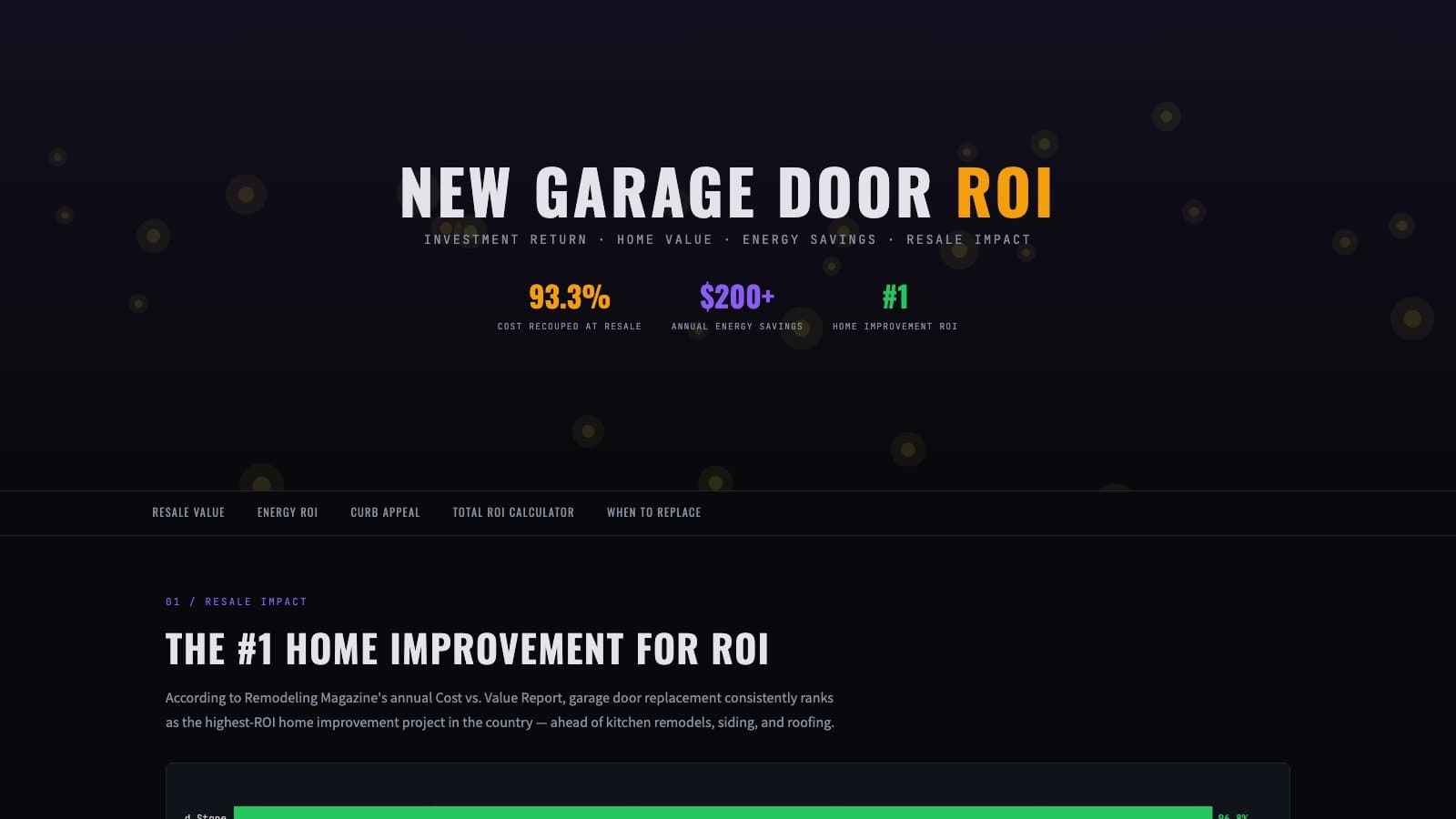
Don't take that as a blanket answer. Run your climate zone, utility rates, and how long you plan to stay in the house through the garage door ROI lab before you decide. The break-even on insulation upgrades varies wildly between a Phoenix garage and a Minneapolis one, and the lab does the arithmetic with your actual numbers.
Before you sign
Four questions, in this order:
- Is haul-away of the old door included, in writing?
- What cycle rating are the springs — 10,000, 25,000, or higher?
- Is a new bottom seal included, or is that a separate line item?
- If the opener is part of this quote, what horsepower and drive type, and is battery backup included?
If the contractor can't answer all four without checking with the office, you don't have a real quote yet. Get the answers, then decide.
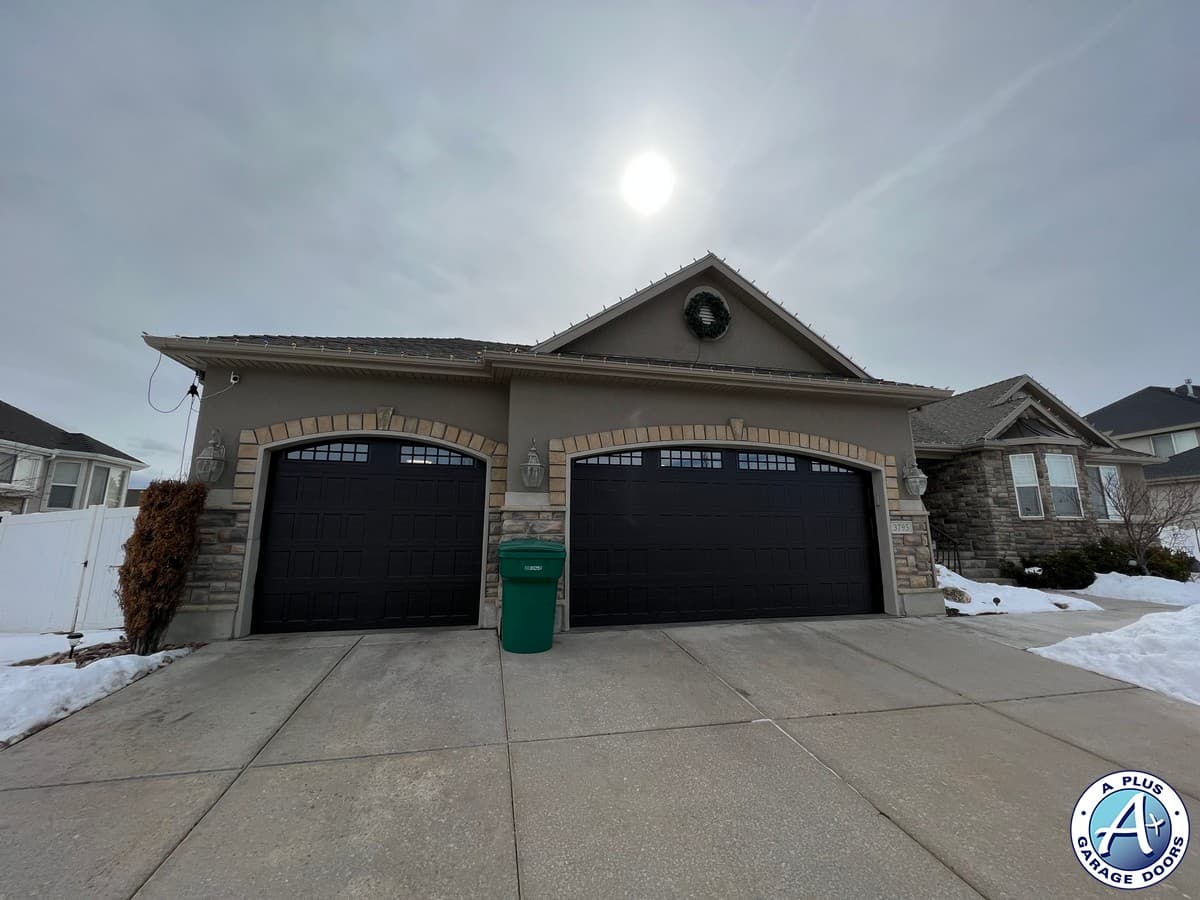
When you're ready to move forward, Garage Door Pros handles residential installation in Southern Utah with upfront pricing and spring-cycle options listed on the quote. If you're outside their area, A+ Garage Doors serves the Las Vegas valley and can quote both door and opener as a single job.