How garage door safety sensors actually work
Learn how garage door safety sensors work to protect your family. Understand infrared technology, alignment, and why regular testing keeps your door safe.

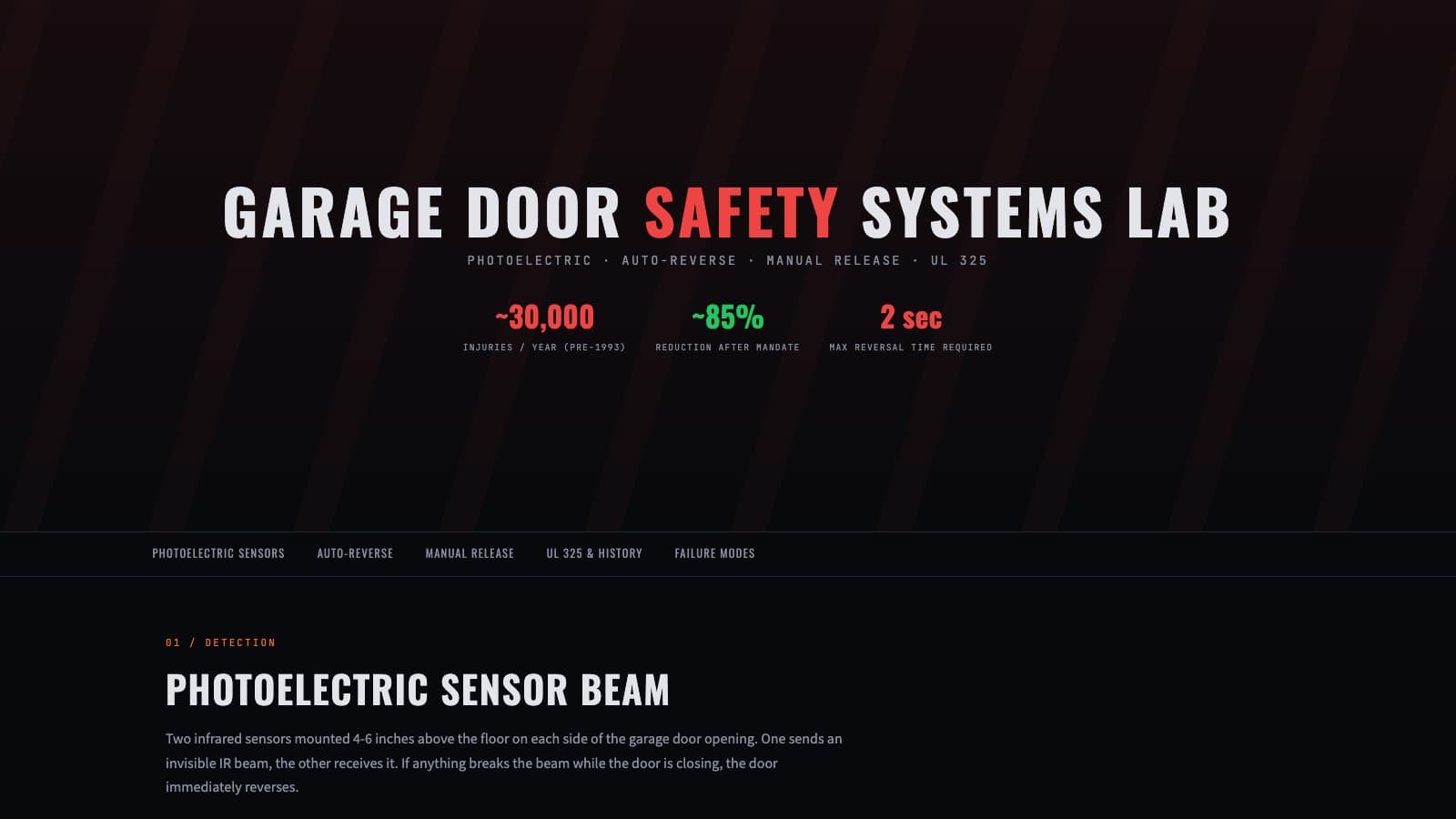
UL 325 has required two photo-eye sensors near the floor of every residential garage door opener sold in the United States since 1993. Before that rule existed, garage doors in this country were causing approximately 30,000 injuries per year. The mandate cut that number by roughly 85 percent. That is the policy record, and it is the reason the two small plastic boxes sitting four inches above your garage floor exist at all.
Most homeowners notice these sensors only when the door refuses to close and the opener light starts blinking. At that point the sensors have already done their job. Understanding what they are doing — and what they are not doing — is the difference between trusting the system and assuming it.
What the sensors actually measure
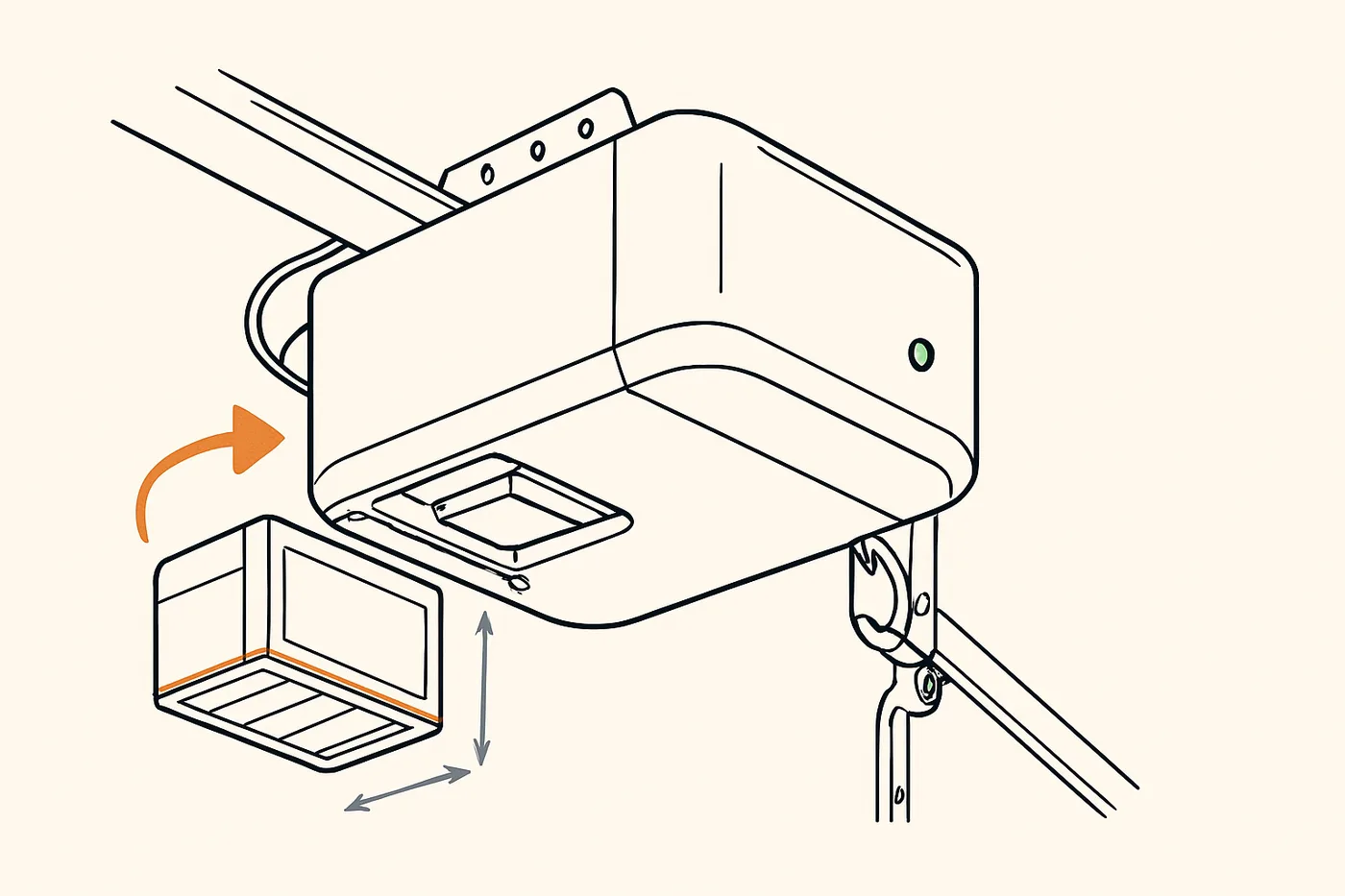
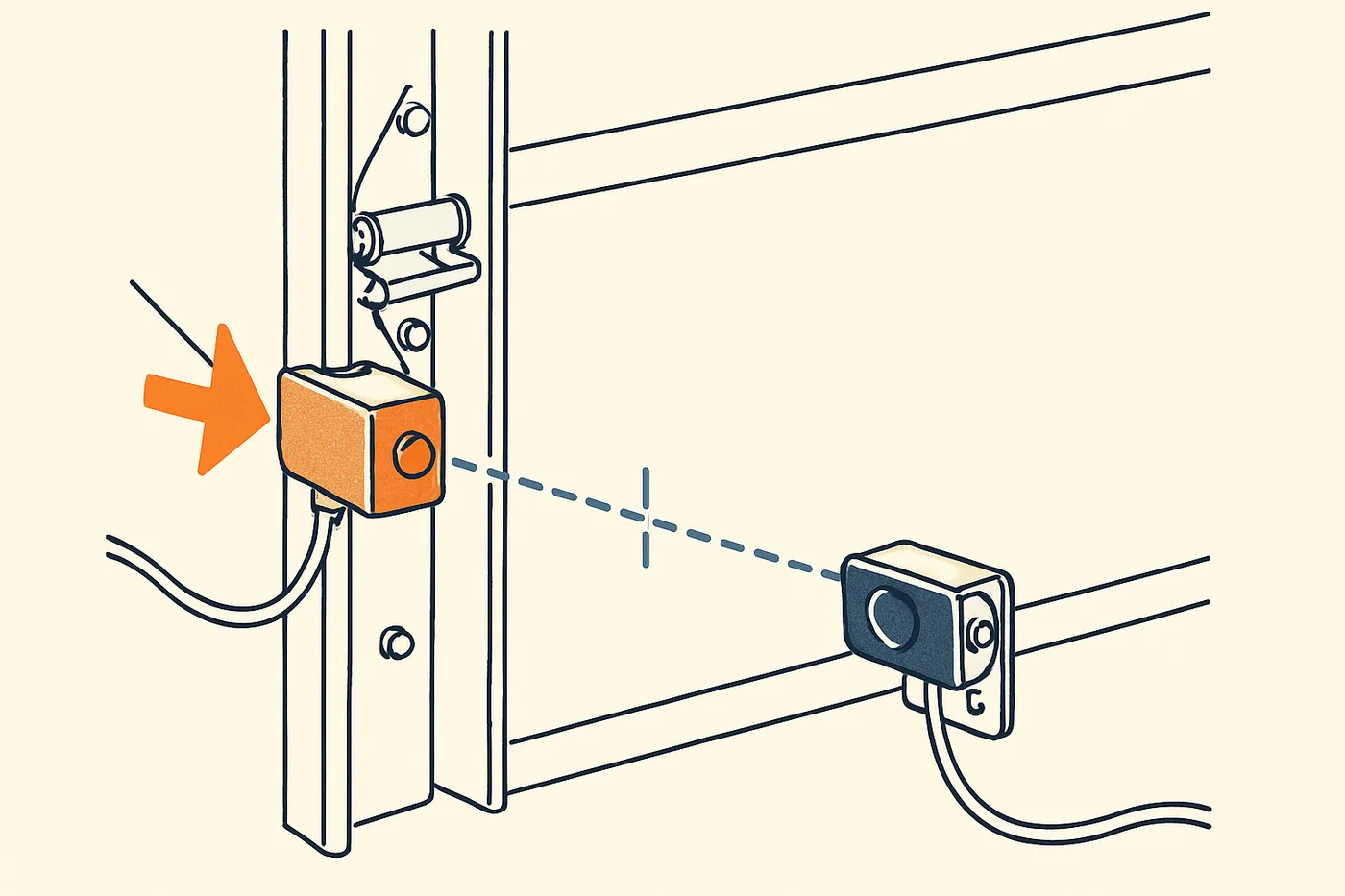
The two units mounted on either side of the door opening are a matched pair: one emitter, one receiver. The emitter projects a modulated infrared beam across the opening. The receiver looks for that specific beam. When the beam is interrupted, the controller in the opener head refuses to close the door, and if the door is already closing, it reverses.
The physics is more precise than "shine a light, look for the light." The emitter operates at a 940 nm wavelength and modulates the beam at approximately 38 kHz so the receiver can distinguish it from ambient light, sunlight, and other infrared sources. If the received signal drops below threshold, the controller triggers a reversal within 150 to 250 milliseconds. The modulation is the part that matters. A receiver looking only for "infrared light" would be triggered by sunlight, heat lamps, and the headlights of a car parked in the driveway. The 38 kHz modulation is a signature. The receiver is not asking "is there light?" — it is asking "is there my light?"
Why the sensors sit six inches off the floor
UL 325 specifies that the photo-eye pair must be mounted no higher than 6 inches above the garage floor. The height was chosen to detect a small child crawling under a descending door. Mount them higher and the beam clears the child. The standard is written for the worst case.
This is also why the sensors are not the only safety layer. The beam is a vertical plane; it can be defeated by an object that crosses after the beam check but before the door reaches the floor. So UL 325 requires a second, independent system: mechanical force reversal. The auto-reverse must reverse the door within 2 seconds when it encounters more than 15 pounds of resistance during closing. The 15-pound figure is not arbitrary. It was developed through biomechanical testing as the maximum force that can be applied to a child's chest or neck for 2 seconds without causing serious injury. Photo-eyes catch what is in the path before contact. Force reversal catches what the photo-eyes missed. Both are required because either, alone, can fail.
Why the sensors stop working
Misalignment is the number one cause of photo-eye sensor failure, and direct sunlight can overwhelm the IR receiver — most notably in west-facing garages at sunset, when the sun is low enough to fire straight down the beam axis. The 38 kHz modulation gives the receiver a fighting chance against ambient light, but a sunset aimed directly into the lens can saturate the photodiode and drown the signal.
Misalignment happens in ordinary ways. A bicycle handlebar bumps a bracket. A mop handle catches the cable on the back of the emitter. A bracket screw loosens over a season of vibration cycles. The beam is narrow. A deflection of a few degrees at the emitter translates to inches of miss at the receiver, and the system fails closed — the door will not close. That is the correct failure mode. A safety system that fails open is not a safety system.
The other common failure is contamination. Dust, cobweb, condensation, or a thin film of garage-floor grit on the lens reduces signal strength enough that the receiver registers an interruption. Cleaning the lenses with a soft dry cloth is part of routine maintenance. So is checking that the indicator LEDs on both units are steady, not blinking. A blinking LED on the receiver almost always means misalignment.
The override most homeowners do not know exists
There is a behavior in the opener firmware that homeowners should understand before they need it. If the photo-eye sensors are malfunctioning, the door can still be closed manually by holding down the wall-mounted button through the full travel — most openers interpret a held button as a command to override the safety reverse. This exists so a homeowner can close a door in a true emergency.
It is not a workaround for a broken sensor. Holding the button defeats the system that protects whatever is in the doorway. Use it once to close a door when you can see the opening is clear. Then get the sensors fixed. Garage Door Pro Services (our affiliated installer) offers a free garage door safety inspection that includes photo-eye alignment, force calibration, and a check of the auto-reverse threshold against the UL 325 specification.
What backup power changes, and what it does not
A power outage does not disable the safety sensors on a modern opener with battery backup — it powers them from the same battery that powers the motor. California SB-969 has required battery backup on every residential garage door opener sold or installed in the state since July 1, 2019, written in response to residents losing access to their garages during the 2017 wildfires. The battery is sized for emergency egress, not convenience. Expect one to two full open-and-close cycles on a charged backup battery, not extended operation. A sealed lead-acid backup battery lasts one to three years in service. Heat is the primary factor shortening lifespan — an uninsulated garage in a hot climate pushes the battery toward the lower end of that range. For homeowners in hot, dry markets, A+ Garage Doors (our affiliated installer) handles garage door repair in Las Vegas including battery replacement on schedule rather than on failure.
Testing the system you trust
There are two tests every homeowner should run monthly. Both take less than a minute. Neither requires tools.
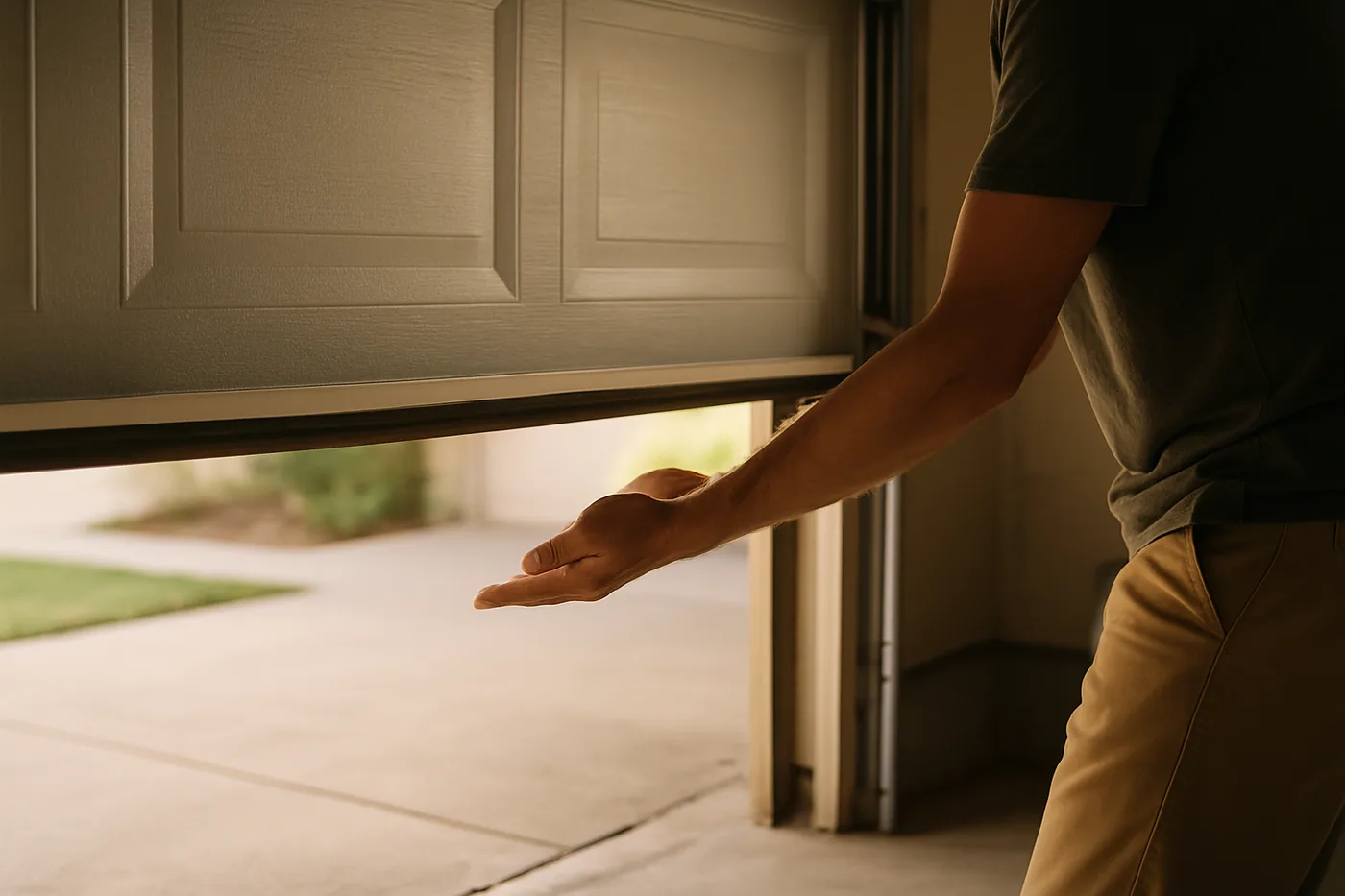
The first is the photo-eye test. With the door open, press the wall button to close. As the door descends, wave a long object — a broom handle works — through the beam path near the floor. The door should reverse to fully open within roughly half a second. If it does not, the sensors are misaligned, contaminated, or wired incorrectly.
The second is the force-reversal test. With the door open, lay a 2x4 flat on the floor in the center of the opening. Press the wall button to close. When the bottom of the door contacts the wood, it should reverse within 2 seconds. If it presses down on the wood, stalls, or continues to push, the force calibration on the opener is out of spec, and the door is currently capable of applying more than 15 lb of pressure to anything in its path.
Why none of this is the most dangerous part of your door
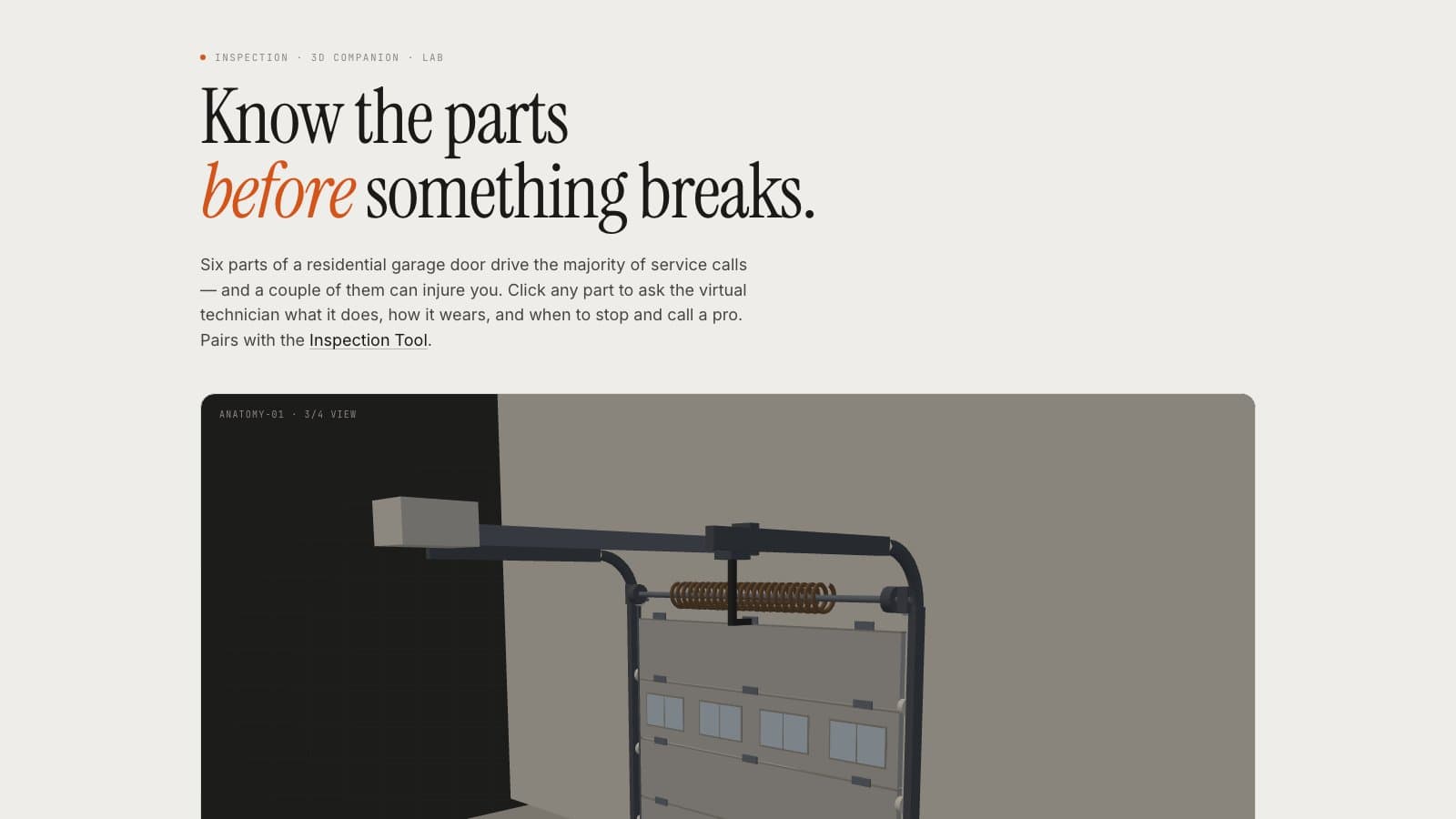
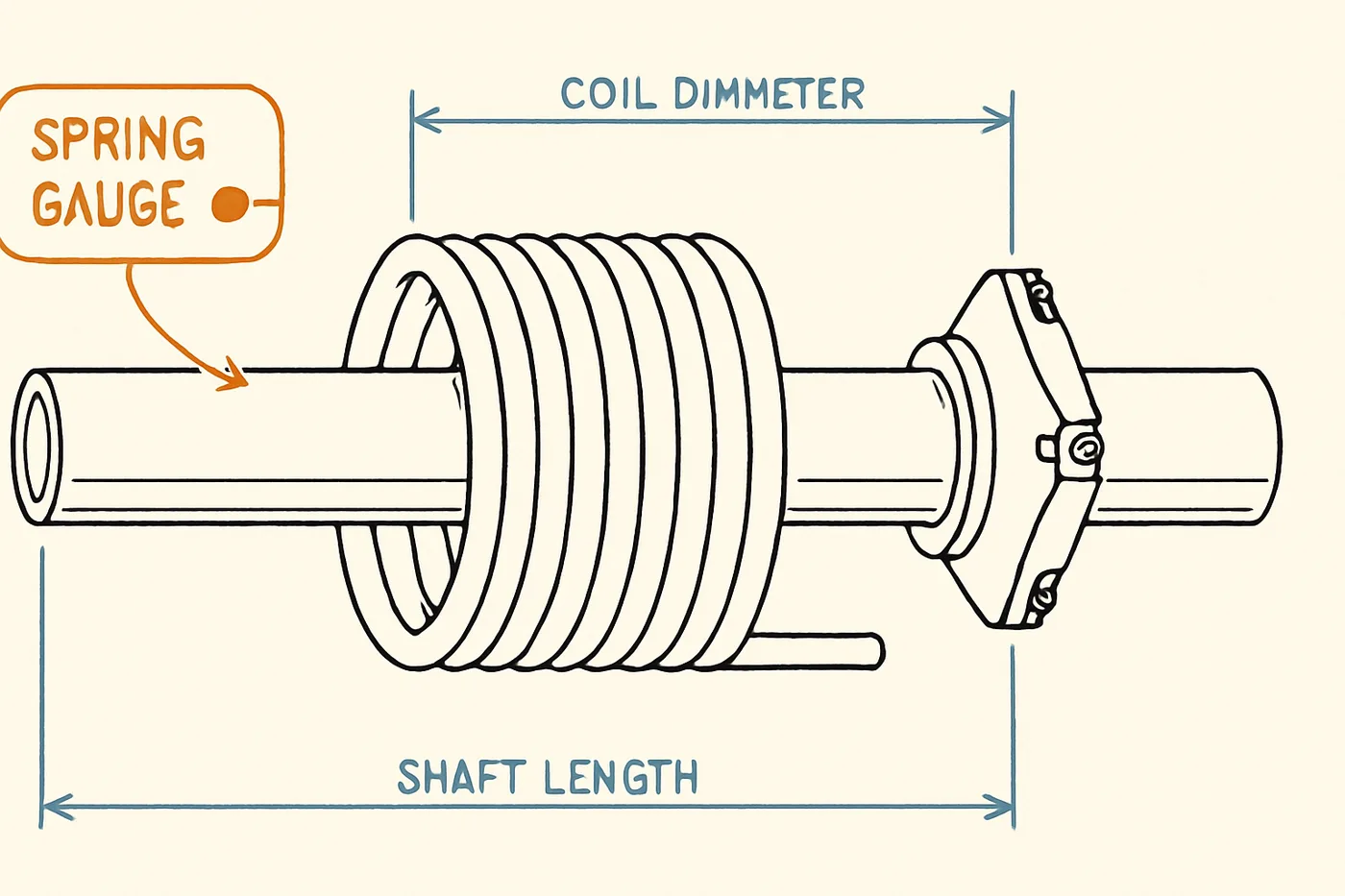
The sensors and the auto-reverse are the safety system you interact with. They are not the highest-energy components in the assembly. A torsion spring on a standard residential door stores approximately 236 foot-pounds of energy when fully wound — enough to fracture a wrist or drive a winding bar through drywall. Standard residential torsion springs are rated for 10,000 cycles, which works out to about seven years at four cycles a day. The risk on a spring at the end of its cycle life is not a sensor problem. It is a metallurgy problem.
The interaction matters. If the emergency release is pulled while the torsion spring is broken and the door is up, the full weight of the door — approximately 130 to 200 pounds — is released instantly with nothing to counterbalance it. The door comes down. Sensors do not catch that, because the door is no longer being driven by the opener.
This is the boundary readers need to hold. The sensors are inspectable, testable, and adjustable by a homeowner. The spring system that the sensors share a doorway with is not.
What you can verify yourself, and what you cannot
What you can verify yourself: that both sensor LEDs are steady and unobstructed, that the lenses are clean, that the brackets are tight, that the photo-eye reversal test passes, and that the force-reversal test on a 2x4 passes within 2 seconds. The safety systems lab walks through the geometry of the beam and the force threshold in more detail, and Margaret's safety guide video shows the monthly tests in real time.
What you cannot do safely: any adjustment to spring tension, any work on cables under drum load, any repair to a bottom bracket, or any recalibration of the opener force limits beyond what the manufacturer documents for end users. Force-limit settings affect whether the door can apply more than 15 lb of force during closing. A wrong adjustment defeats the auto-reverse system that UL 325 mandates. That work belongs to a licensed technician. The physics does not care about your confidence level.