Garage door repair: what you can fix, what to leave alone, and how to tell the difference
Learn how to identify garage door problems, when to DIY, and when to call a professional. A complete repair guide for homeowners.

You pressed the button and something was wrong. Maybe the door rose six inches and stopped. Maybe the opener strained and the door didn't move at all. Maybe there was a sound — a pop, a grinding, a thud — that you've never heard from this door in all the years you've owned the house.
Garage door repair starts with figuring out which problem you actually have. A door that won't close is not the same problem as a door that won't open, and a door that's gotten loud is not the same problem as a door that's gotten heavy. Before you call anyone or buy anything, read what the door is telling you.
Start with what changed
Notice what the door did differently, and when. A door that's been getting slower over months is telling you about wear. A door that worked yesterday and refuses today is telling you about a single failure — a broken spring, a dead remote battery, a tripped sensor, a snapped cable. Sudden problems and gradual problems point in different directions, and it's worth being honest with yourself about which one you have.
Then look at the door, with your eyes, before you touch anything. Is one of the springs above the door visibly broken — a clean gap in the coil where there used to be continuous metal? Is a cable hanging slack on one side? Is the door sitting crooked in the tracks? These are the failures you don't troubleshoot. You stop, and you call.
The things you can check yourself
Three failure points on a garage door can be safely diagnosed by a homeowner, and they're worth ruling out first.
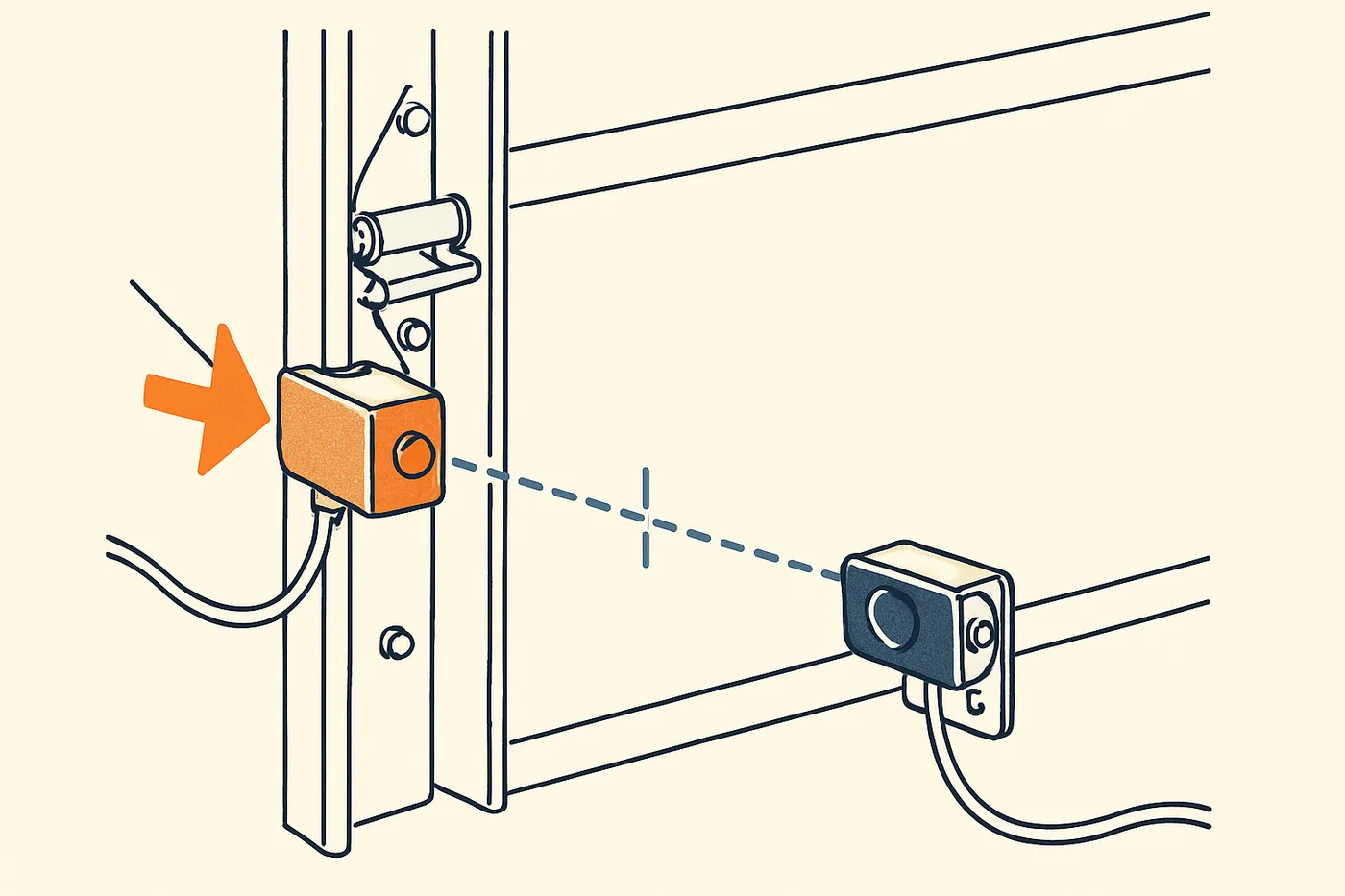
The photo-eye sensors. UL 325 has required two photo-eye sensors near the floor since 1993, and a misaligned or dirty sensor will refuse to let the door close. Walk to each sensor — one on each side of the door near the floor — and check whether the indicator lights are steady. Wipe the lenses. Make sure neither has been knocked sideways by a bike or a broom. The sensors must sit no higher than 6 inches from the garage floor, so don't try to "fix" the geometry by raising them.
The remote and the wall button. Replace the remote battery. Try the wall button. If the wall button works and the remote doesn't, you have a remote problem, not a door problem.
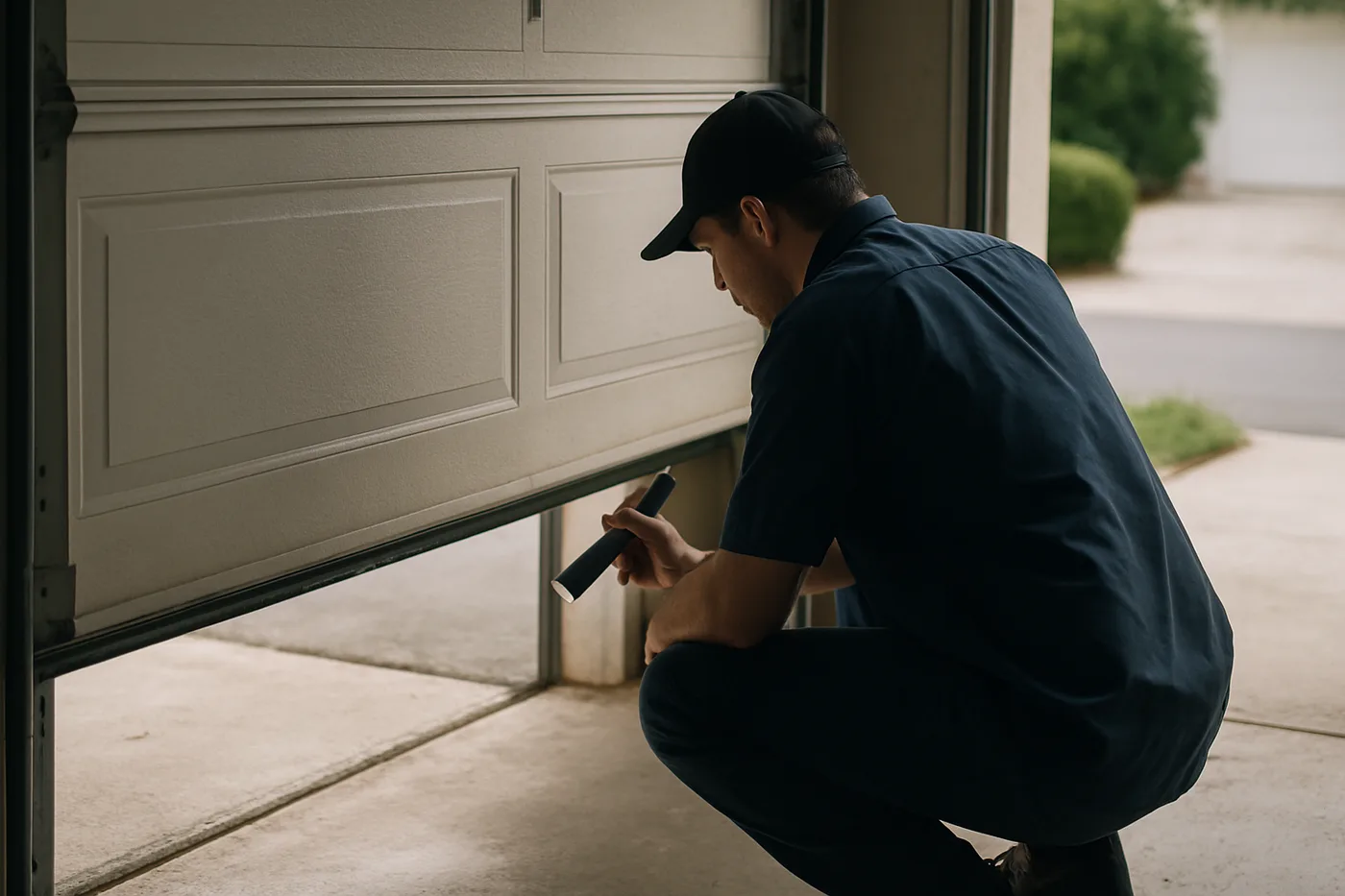
The tracks. With the door closed, look along the tracks for obvious obstructions, dents, or loose bolts. You're looking, not adjusting. A roller riding over a stray screw will jam the door and chew up the track if you keep cycling it.
If none of those is the issue, the problem has narrowed into the parts of the system you should not be working on yourself.
What WD-40 does to your door
One note about lubrication, because half the "my door got loud" calls trace back to it.
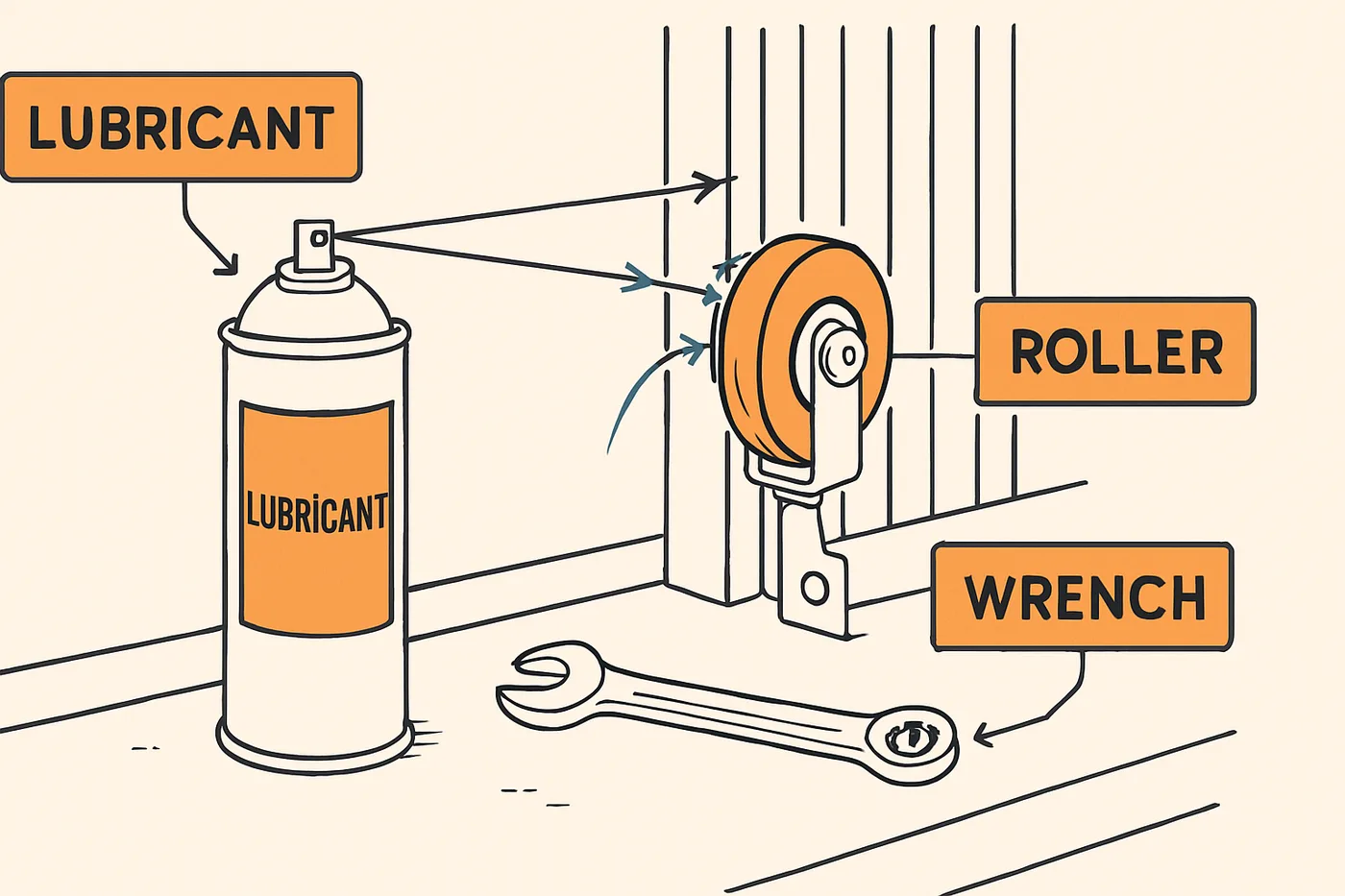
WD-40 is a solvent. It flushes out the existing lubricant and then evaporates. A door sprayed with WD-40 is measurably drier a month later than a door that was never touched at all. If your door is loud, what it wants is a proper garage door lubricant — lithium or silicone-based — applied to the hinges, rollers, and spring coils. The tracks stay dry. The video on what your door is telling you when it gets noisy covers what to listen for and what to spray where.
The balance test tells you most of what you need to know
The single most useful diagnostic a homeowner can run takes about ninety seconds.
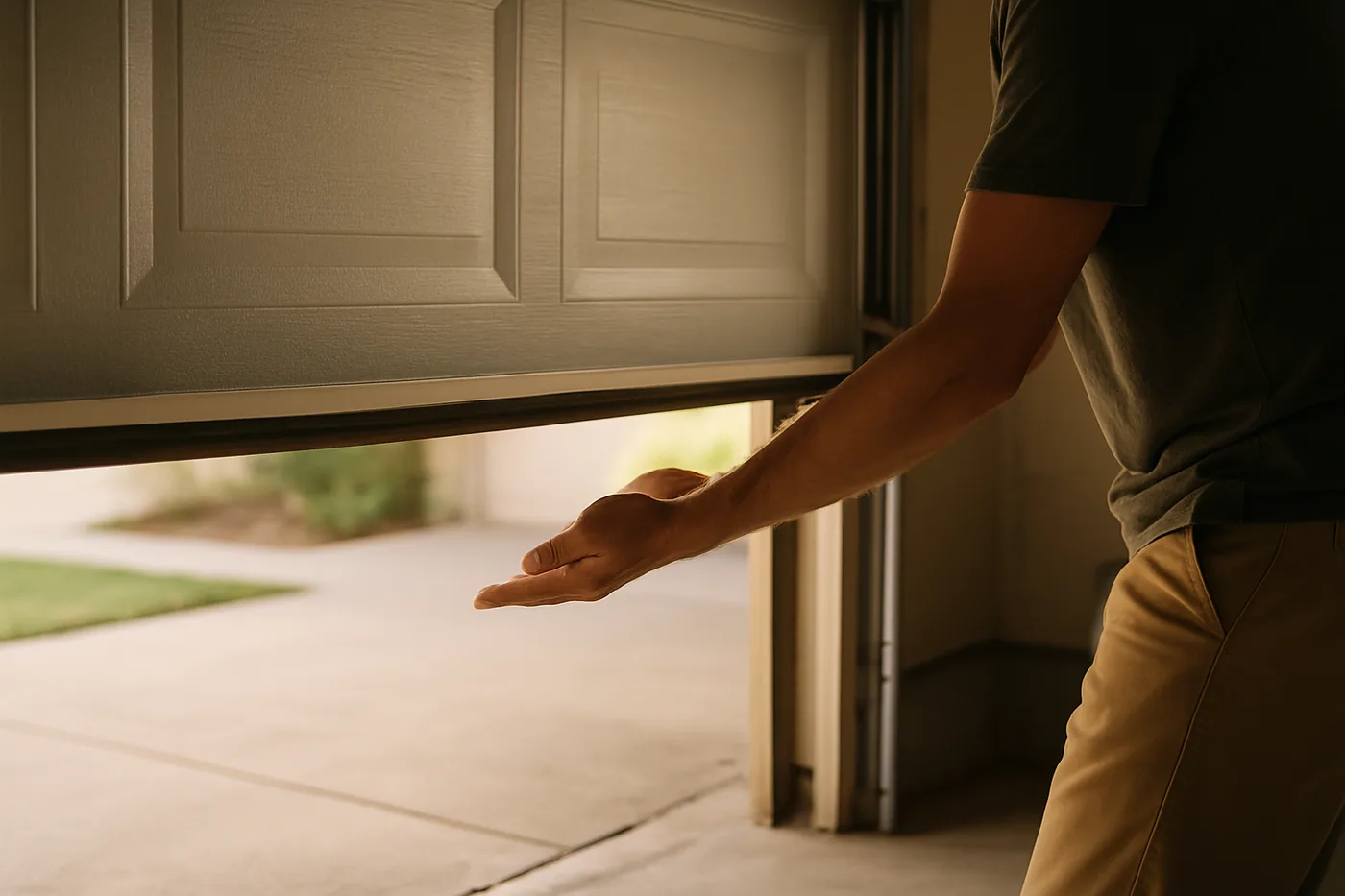
Pull the emergency release with the door fully closed — the red handle hanging from the trolley overhead. With the opener disconnected, lift the door by hand to about waist height and let go. A balanced door will hold position or drift slowly. An unbalanced door will slam down or rocket up.
A residential steel door weighs between 130 and 350 pounds, and an insulated double-wide lands in the 200 to 350 range. The springs are what make that weight feel like nothing. When the springs lose tension or the door gets heavier than the springs were sized for, the opener picks up the difference. That out-of-balance condition wears the spring, the opener's nylon gears, and the cables at the same time, which is how a $200 spring job becomes a $600 repair.
Run the balance test in spring and fall. If the door doesn't hold, you have your answer.
What's behind the line
This is the section where the sentences get short, because the components on the other side of this line have hurt people.
A standard residential torsion spring stores around 236 foot-pounds of energy when fully wound. That is enough to fracture a wrist. It is enough to drive a winding bar through drywall.
Each time the door closes, the spring absorbs about 800 foot-pounds of torsional stress. Cold concentrates that stress at the points where the metal is already fatigued. Springs are rated for 10,000 cycles, which works out to about seven years of twice-daily use. The cold-weather spring fatigue lab walks through why January is when those numbers come due.
You do not adjust torsion springs. You do not wind torsion springs. You do not loosen, tighten, or relocate the cables that run from the spring drums to the bottom brackets. A snapped spring on a partially raised door can drop the full weight of the door if the emergency release is pulled. The bottom brackets are under the same tension. None of this is a homeowner job. None of it. The walkthrough of garage door safety basics covers why this line is where it is.
A broken spring replacement runs $150 to $350 depending on the spring and the region. A service call for diagnosis is $75 to $150 on top of any repair. Those are real numbers, and they are far less than an emergency room visit.
When the opener is the problem
Openers fail differently than doors. The motor hums but nothing moves — usually a stripped nylon gear. The remotes stop syncing — usually the logic board. A replacement circuit board runs $60 to $120 if you source the part yourself, and on most modern openers, swapping it is within reach for a careful homeowner with the power disconnected.
The age of the opener matters here. A direct-drive opener can last 20 years or more because the design eliminates the traditional chain or belt and leaves far fewer wear points. A chain-drive opener at fifteen years that just lost its board may not be worth a $100 repair. The math depends on what's left.
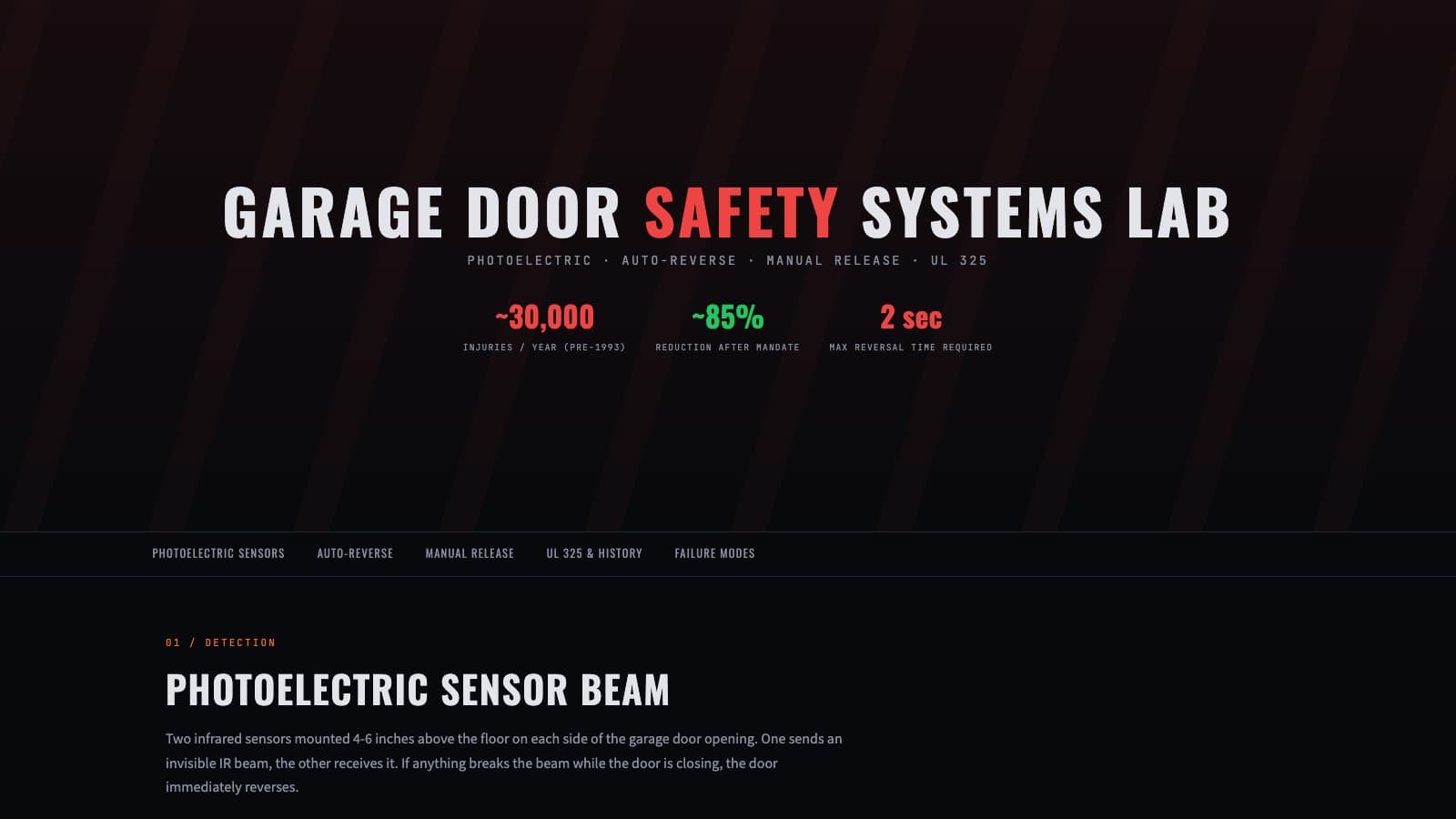
While we're on safety: every opener since 1993 carries an auto-reverse system that UL 325 requires to reverse the door within 2 seconds when it encounters more than 15 pounds of resistance during closing. That threshold came out of biomechanical testing on the maximum force a child's chest or neck can absorb for two seconds without serious injury. Before the 1993 mandate, garage doors caused about 30,000 injuries a year, and the rule cut that by roughly 85 percent. If your door doesn't reverse on a 2x4 laid flat across the threshold, that's not a quirk. That's a failed safety system, and it gets fixed before you cycle the door again. The safety systems lab walks through how to test it.
When the cost says replace, not repair
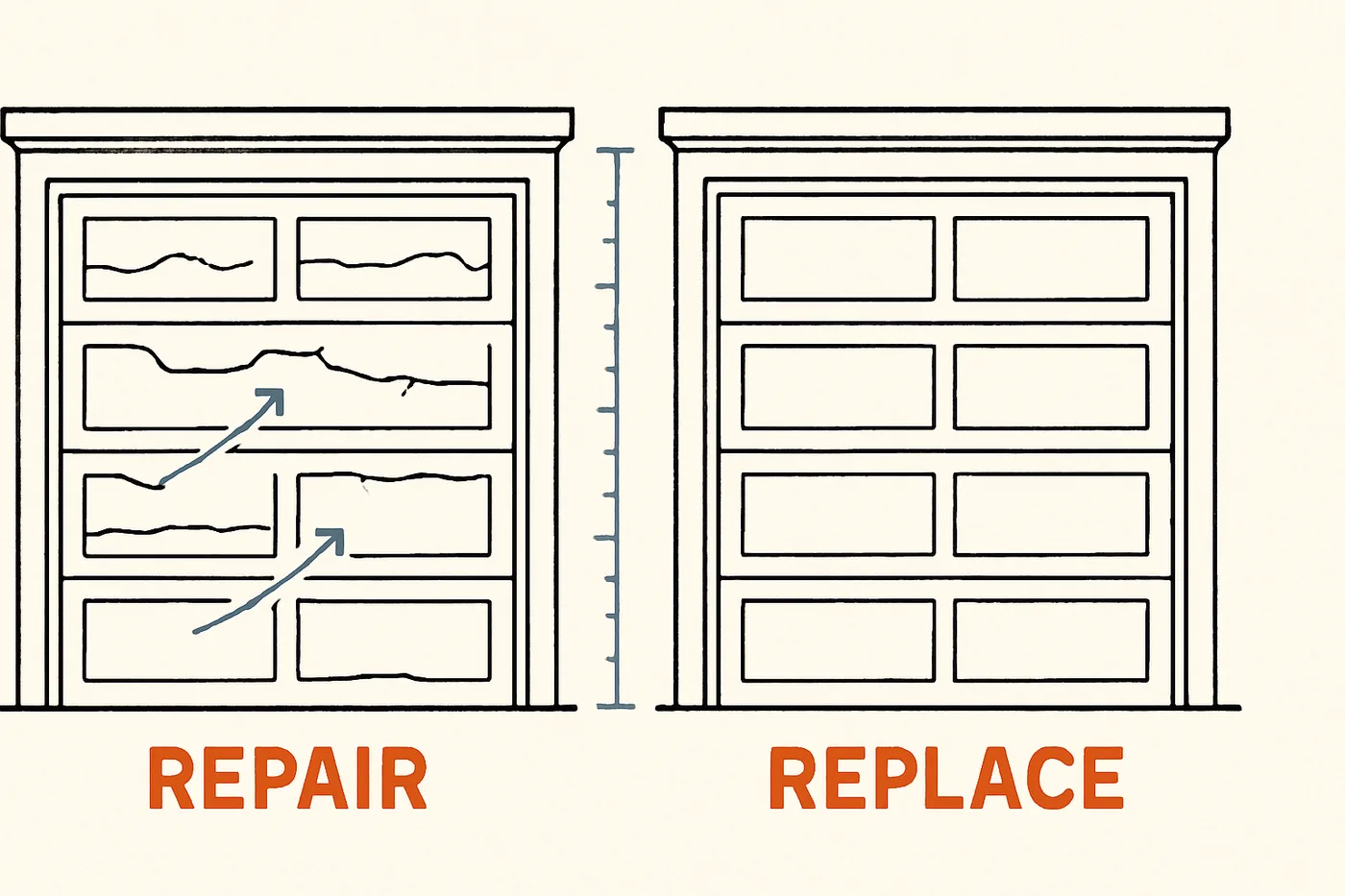
There's a financial line worth knowing in advance. If a single repair quote exceeds 50 percent of the cost of replacing the door at the same tier you currently own, replacement is the better decision. A new spring on a fifteen-year-old door is repair. A new spring plus two cables plus a bottom bracket plus a dented panel on a twenty-two-year-old door is a down payment on a door that's about to need more.
A well-built residential steel sectional door lasts 15 to 30 years. Past twenty, the probability that the next component is also near end-of-life climbs with every passing year. If a technician's quote feels like it's stacking, ask what else they expect to fail in the next two years. Most of them will tell you honestly.
Maintenance is repair you got ahead of
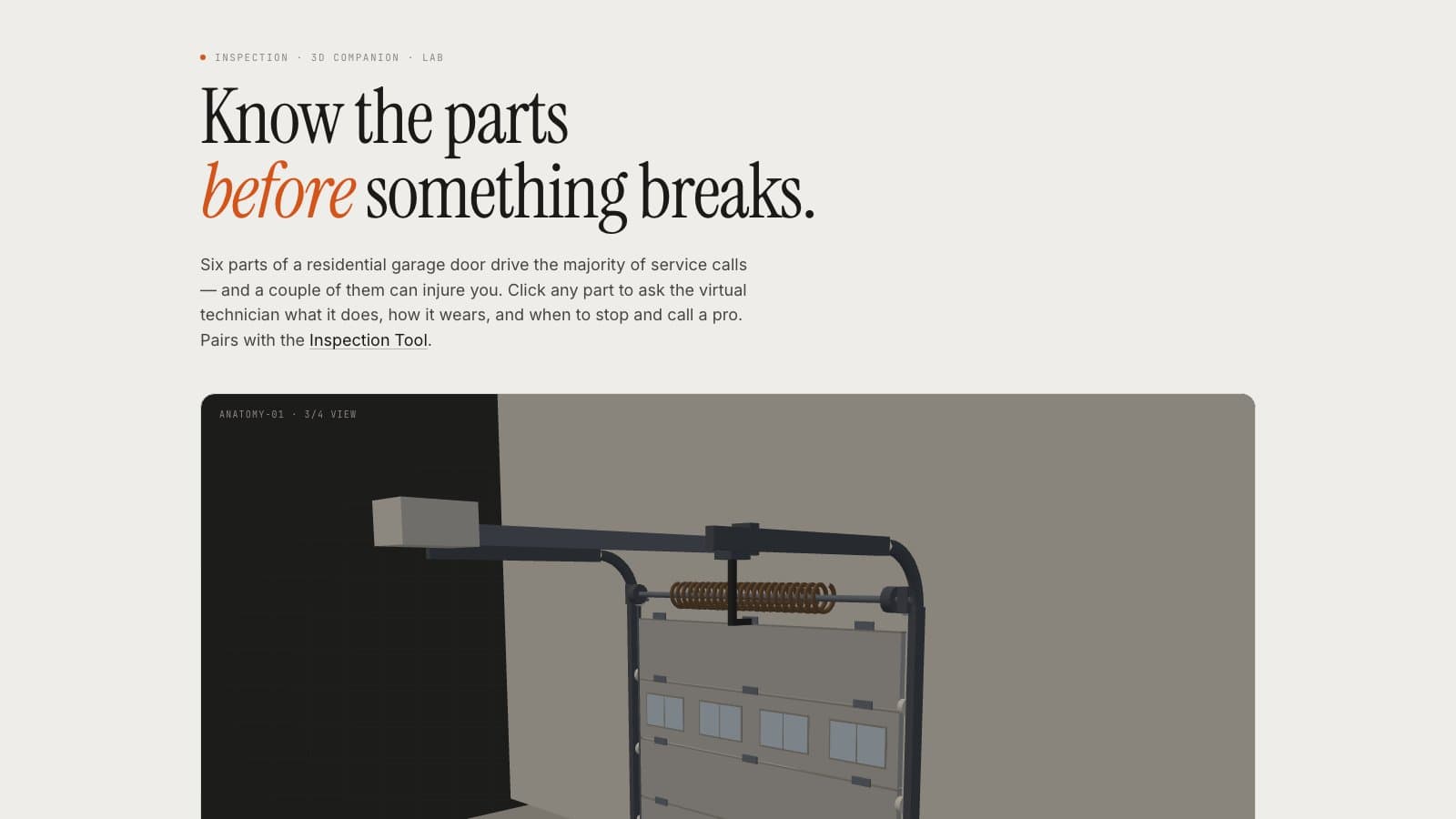
The doors that need the fewest emergency repairs are the ones that get a balance check twice a year, a proper lubrication twice a year, and a spring replacement scheduled at the seven-year mark instead of discovered at the seven-year mark. The anatomy of a garage door and the science of how the system carries its own weight explain what's actually moving inside the box, and the walkthrough of what techs are listening for covers the early signs that something is shifting.
If you'd rather have a professional handle the diagnosis and repair, A+ Garage Doors offers same-day residential repair, and Garage Door Pros covers installation and maintenance across their service areas.
Repair is two things. It's the work you do before the door breaks, and it's the work someone else does after. The first is cheaper, and it happens on your schedule. The second is more expensive, and it happens on the door's.