Your garage door won't open and the opener hums. Check the door's lock first
The door looks stuck and the opener runs or strains. Before you suspect the opener or a spring, look at the lock on the door. What the door and opener makers say, the one check, and when to stop and call a technician.

You pressed the button. The opener hummed or strained, the door barely moved or did not move at all, and now you are standing there wondering whether the opener has died or something worse has broken.
Before you suspect either, look at the lock on the door. It is the cheapest thing to rule out, and it costs nothing.
Why a lock stops the opener
Many garage doors have a lock on the inside: a slide bolt that rests in a slot in the vertical track, or an exterior keyed lock. Clopay describes the inside slide bolt as installed on the end stile of the second section, resting against the top of one of the rectangular slots in the vertical track. That slot is how the lock holds the door, and an opener cannot lift a door that is bolted to its own track.
Both makers we read treat a locked door as something an opener cannot work against:
- Clopay's door instructions say that if the door is going to have an automatic opener, the door must always be unlocked when the opener is being used, which avoids damage to the door. Its safety list for doors with openers also says to make sure the door remains unlocked.
- Chamberlain's page for an opener that hums but the door does not move lists the door lock being engaged as one of three causes, and says to disable the lock.
How to tell it is the lock
We cannot tell you from a description that it is your cause, but these fit:
- The opener runs or hums, and the door does not move, or moves only a little.
- The door is closed and nothing seems broken.
- When you walk up to it, a bolt is across or in the track on the inside of the door, or the lock handle is turned to locked.
If you do not see a lock, or the lock is already open, this is not your answer. Our guide to an opener that hums but the door won't move covers the other causes, and our remote guide covers a door that does nothing at all.
The one check
- Stop pressing the button. Pressing it against a locked door is the thing that can damage the door and strain the opener.
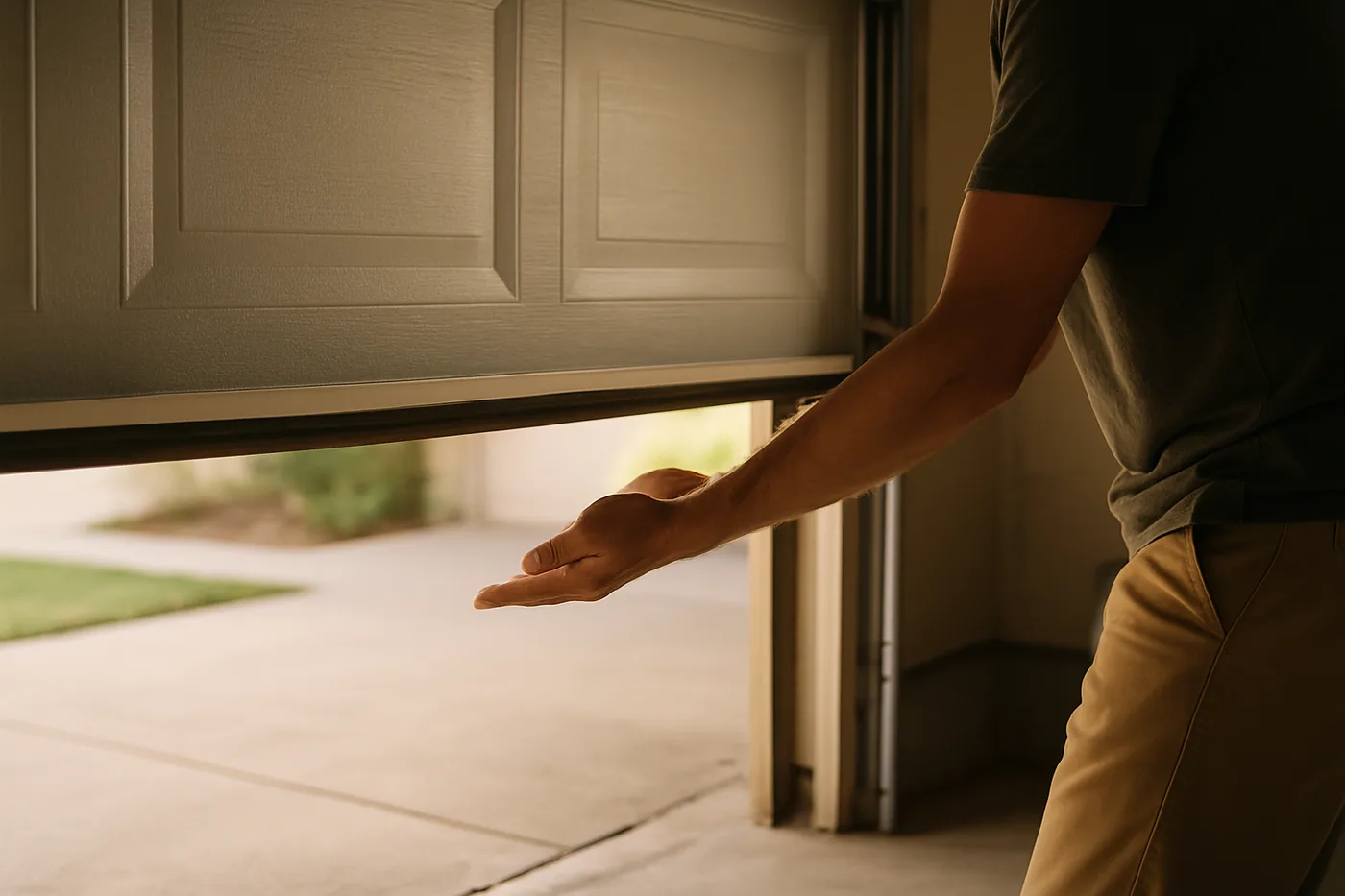
- Make sure the door is fully closed. Chamberlain says to use the manual release only when the door is fully closed, if possible, and never to use the release handle to raise or lower the door.
- Unlock it. Slide the bolt out of the track slot, or turn the lock to open. Chamberlain's instruction for a door with a manual lock is to disengage it first.
- Try the opener again. If the door now opens and closes normally, that was it.
Do this from inside the garage, with the doorway clear of people and anything else in the way.
What it is not
A lock is the easy answer. These are not:
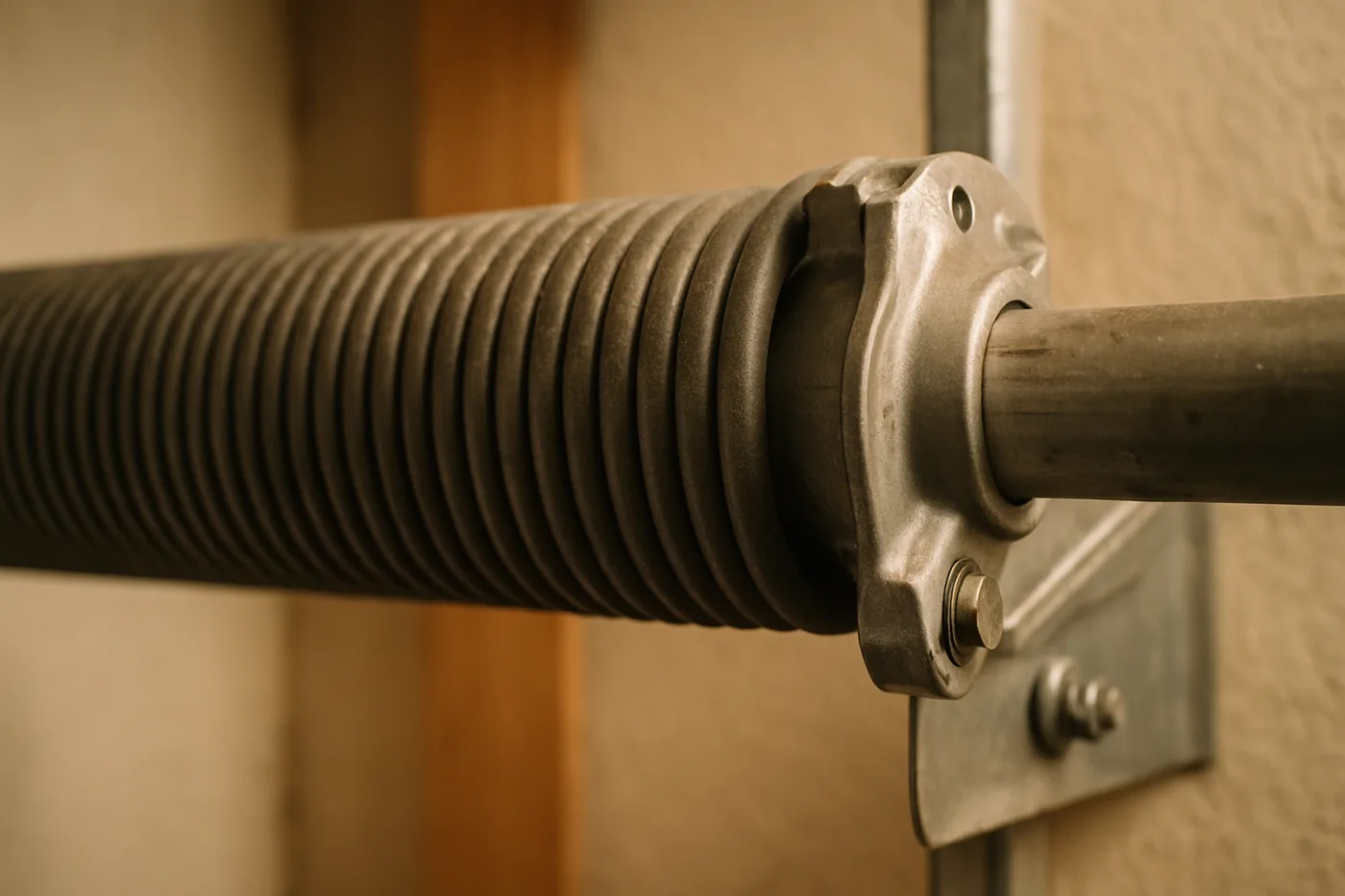
- A spring or cable problem. Chamberlain says the door may fall rapidly without warning if the springs are weak or broken. If the door feels very heavy, drops fast, or will not stay up once it is unlocked, stop. Chamberlain's page lists these as times not to operate the door manually, along with springs, cables or rollers that look broken or damaged. Do not lift it. Springs and cables are under tension and are a technician's job, not a homeowner repair.
- A door that is still stuck after you unlock it. If it still will not move, it may be frozen to the floor, which our guide to a garage door frozen shut covers, or something else is holding it.
- An emergency. If the door is open and will not close, or you suspect a broken spring, our guide to what counts as a garage door emergency says which problems cannot wait.
What to do today
- Look at the inside of the door for a bolt or a lock turned to locked, and unlock it with the door fully closed.
- Try the opener once. If it works, leave the lock open while the opener is in use.
- If the door is very heavy, drops fast, will not stay up, or a spring or cable looks wrong, stop and call a technician.
If you need one, A+ Garage Doors (our affiliated installer) repairs garage doors in Las Vegas, and Garage Door Pro Services (our affiliated installer) covers repair in their service areas.