Your garage door remote stopped working. Here's how to figure out why.
Troubleshoot a garage door remote that won't work. Learn common causes like dead batteries, misalignment, and interference—plus quick fixes you can try at home.

You're in the driveway. You press the remote. Nothing. You press it again, harder, like the button has feelings. Still nothing. The door sits there.
Before you do anything else, get out of the car and walk inside. Press the wall button. If the door moves, you've already solved half the puzzle: the door, the opener, the motor, the springs, the safety sensors — all of that is fine. The problem is in your hand, not on the ceiling. That single test saves you from chasing the wrong fix for the next hour.
Start with the battery, because it almost always is
Most garage door remotes run on a CR2032 or similar 3V lithium coin cell, and those last about two years. Two years sounds like a long time, but think about when you bought the remote, or when the previous owner did. If you can't remember, you're due.
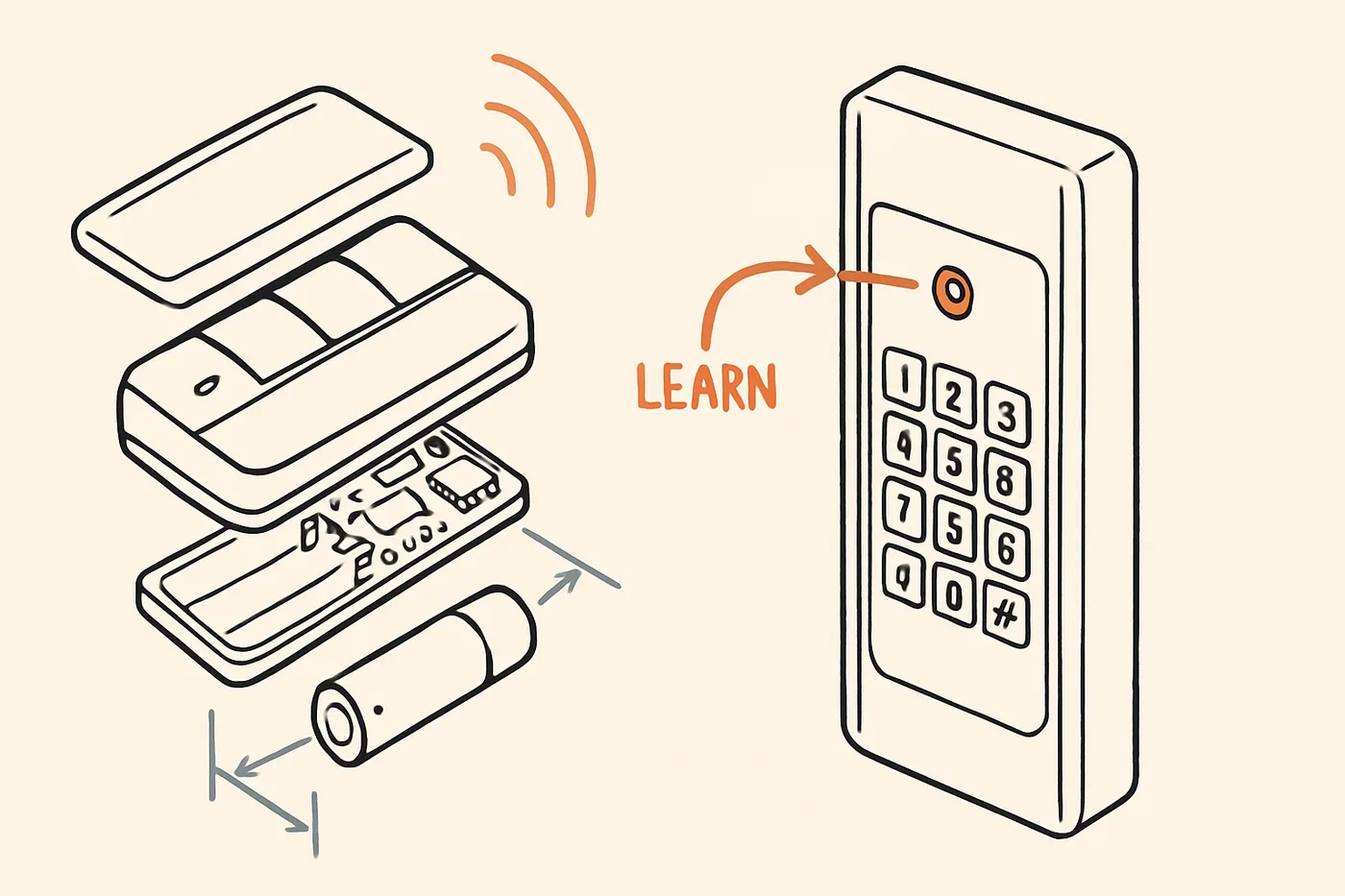
Pop the case open. There's usually a small slot for a coin or flathead screwdriver. Slide the old battery out, note the orientation (positive side usually faces up, but check before you pull it), and drop in a new one. Coin cells cost a couple of dollars at any hardware store or pharmacy. Get two while you're there. The keypad on the outside of the garage takes one too, and it dies on roughly the same schedule.
Here's the giveaway you may have missed for weeks. A dying battery shrinks the remote's effective range before it stops working entirely. If you've been creeping closer to the garage to get the door to respond — pulling into the driveway before pressing, instead of triggering it from the end of the street — that's the battery telling you it's tired. By the time the remote dies completely, it's been warning you for a while.
When a new battery doesn't fix it
You replaced the battery. The door still ignores you. Now the question is whether the remote has lost its pairing with the opener, or whether the remote itself is broken.
Reprogramming is the next step, and it's not a repair so much as a re-introduction. You're telling the opener: this remote is allowed to talk to you. The exact dance depends on your opener brand.
On a LiftMaster or Chamberlain, you press the Learn button on the motor unit, which opens a 30-second window during which you press the button on the remote to complete the pairing. Miss the window and the LED shuts off and nothing pairs. You start again. A common mistake is pressing the remote button too lightly or too briefly — give it a firm, full press.
On a Genie with Intellicode, the timing is similar but the remote button has to be pressed twice during programming. Press it once and nothing pairs. I mention this because it trips up people who assume the LiftMaster method applies universally.
If you have multiple remotes and you're not sure which is paired to what — or you bought the house and you're not sure who else has a working clicker from previous owners — you can wipe the slate. On LiftMaster and Chamberlain, hold the Learn button for about six seconds until the LED goes out, and every paired remote is unpaired at once. Then re-pair the ones you want. It's worth doing once when you move into a place.
What looks like a remote problem but isn't
Sometimes the remote works fine and the door still won't close from the remote. The motor hums, the door starts to move, then reverses. The opener light blinks. You blame the remote because that's what you were holding.
It's the photo-eyes.
The sensors on either side of the door, six inches off the ground, are talking to each other constantly. They fire a 940 nm infrared beam modulated at about 38 kHz so the receiver can pick the signal out of sunlight, headlights, and other ambient infrared. When that beam gets broken — by a leaf, a spider's web, a misaligned bracket, a kid's basketball — the controller triggers a reversal within 150 to 250 milliseconds. Faster than you can react.
A few specific things will look like a remote failure but aren't:
Direct sunlight can overwhelm the infrared receiver, particularly in west-facing garages at sunset when the sun is low enough to fire straight down the beam axis. The door refuses to close. You stand there pressing the remote, increasingly frustrated, while the sun is doing the work for you. Wait twenty minutes. Try again.
Damaged sensor wiring produces the same symptom as misalignment. The 2006 fifth edition of UL 325 required openers to monitor for cut or shorted sensor wires, so a chewed wire (mice, weed trimmer, a misplaced shovel) makes the opener blink its lights the same way a bumped sensor does.
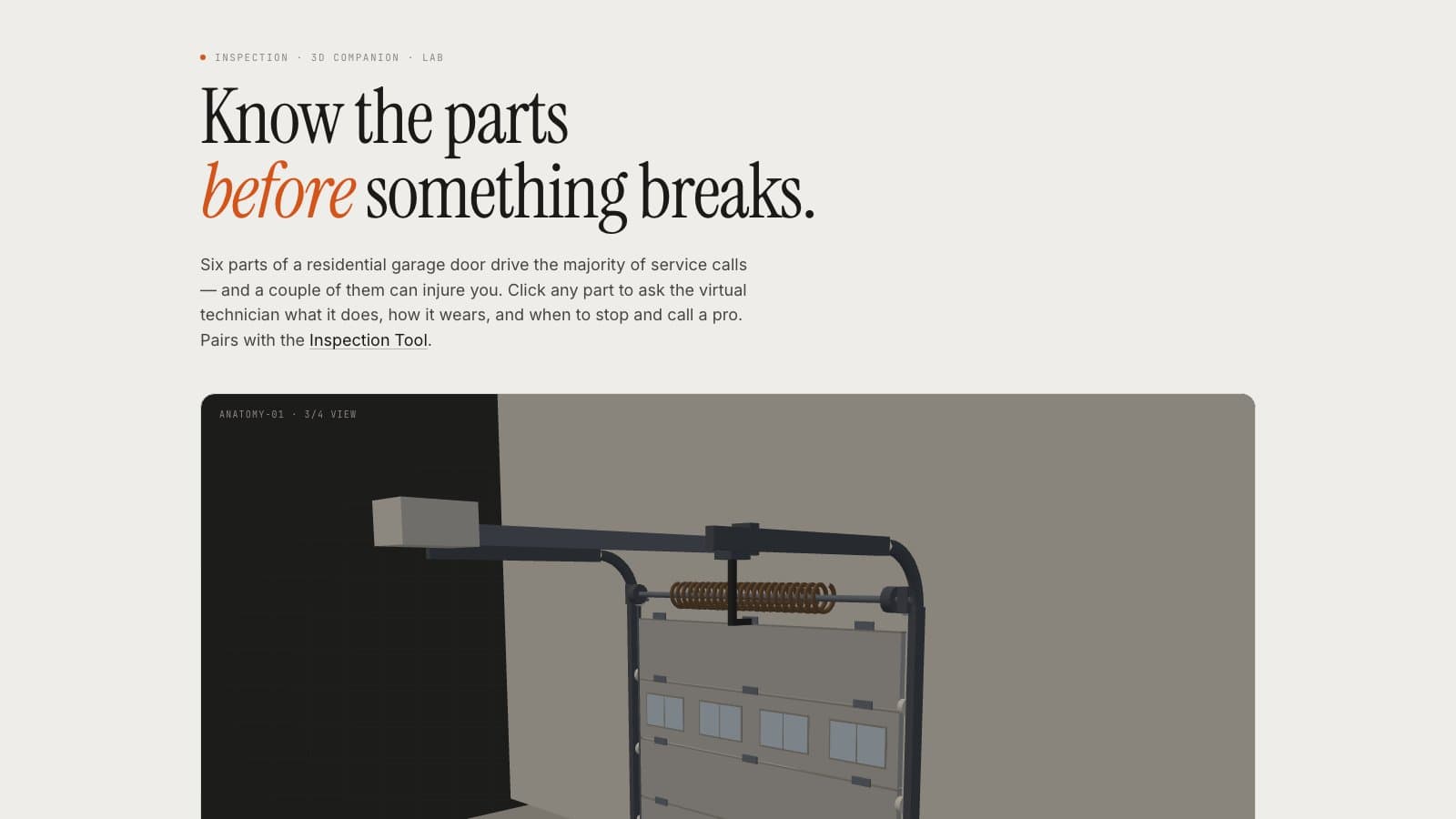
Here's a useful test. Most openers will close the door if you hold the wall-mounted button through the full travel, because a held button overrides the photo-eye reverse — but the remote and outdoor keypad cannot trigger that override. If the door closes when you hold the wall button but won't close from the remote, the remote isn't the problem. The sensors are. Walk down and look at them. The garage door anatomy lab shows where everything lives if you're not sure what you're looking at.
Interference, and when it's worth worrying about
WiFi-connected openers are common now — the connectivity adds $50 to $100 to the unit price when built in, and most mid-tier and all premium openers in 2026 ship with it. That helps you. You can check the door from your phone, get a notification when it opens, and pair remotes through an app. But a router pumping out a strong signal close to the opener's receiver can cause flaky behavior. If the remote works sometimes and not others, and you recently moved a router or added a mesh node near the garage, that's worth a look.
LED bulbs in the opener housing are another culprit. Cheap LEDs emit RF noise that can shorten remote range. If you swapped bulbs around the time the remote started acting up, swap them back as a test.
When it really is the opener
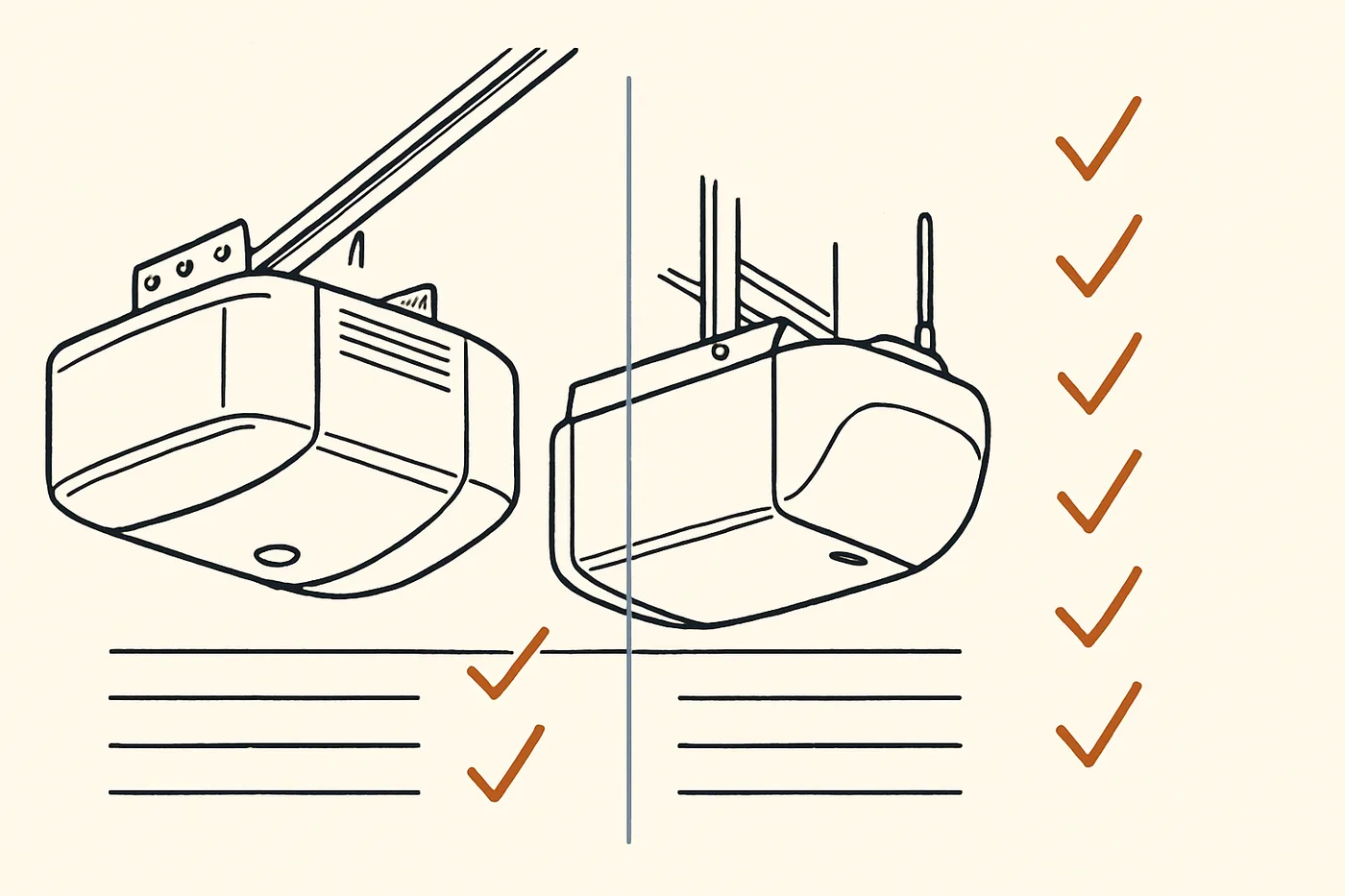
If you've replaced the battery, reprogrammed the remote, tested the wall button, ruled out the sensors, and tried a known-good remote from a neighbor with the same brand opener — and nothing works — the receiver in the opener itself may be failing. A replacement logic board runs $60 to $120 if you source the part yourself, and more with installation. At that point you're deciding whether to repair a unit that may be aging out anyway, or replace the whole opener.
For Las Vegas homeowners, A+ Garage Doors handles board swaps and full opener replacements without trying to upsell you on what you don't need. If you're somewhere else and you want a second set of eyes before spending money, Garage Door Pro Services offers a free safety inspection that will tell you whether the opener is the only thing on borrowed time. If you're in California, remember that SB-969 requires battery backup on new opener installations, so any replacement quote there will include it as a line item by law — that's not the installer padding the bill.
The remote is the smallest, cheapest part of the system, and ninety percent of the time the fix is a two-dollar battery and ten seconds of reprogramming. The other ten percent, the remote is telling you something larger is wearing out. Either way, the press of a button that does nothing is a piece of information. Read it before you replace the wrong part.