Garage door won't close and the opener light is blinking
What the Chamberlain B980 manual says about the two safety sensors near the floor when the door won't close and the lights flash, plus our advice.

You pressed the button. The door started down, stopped, and went back up. Now the opener light is blinking at you, and you needed to leave ten minutes ago.
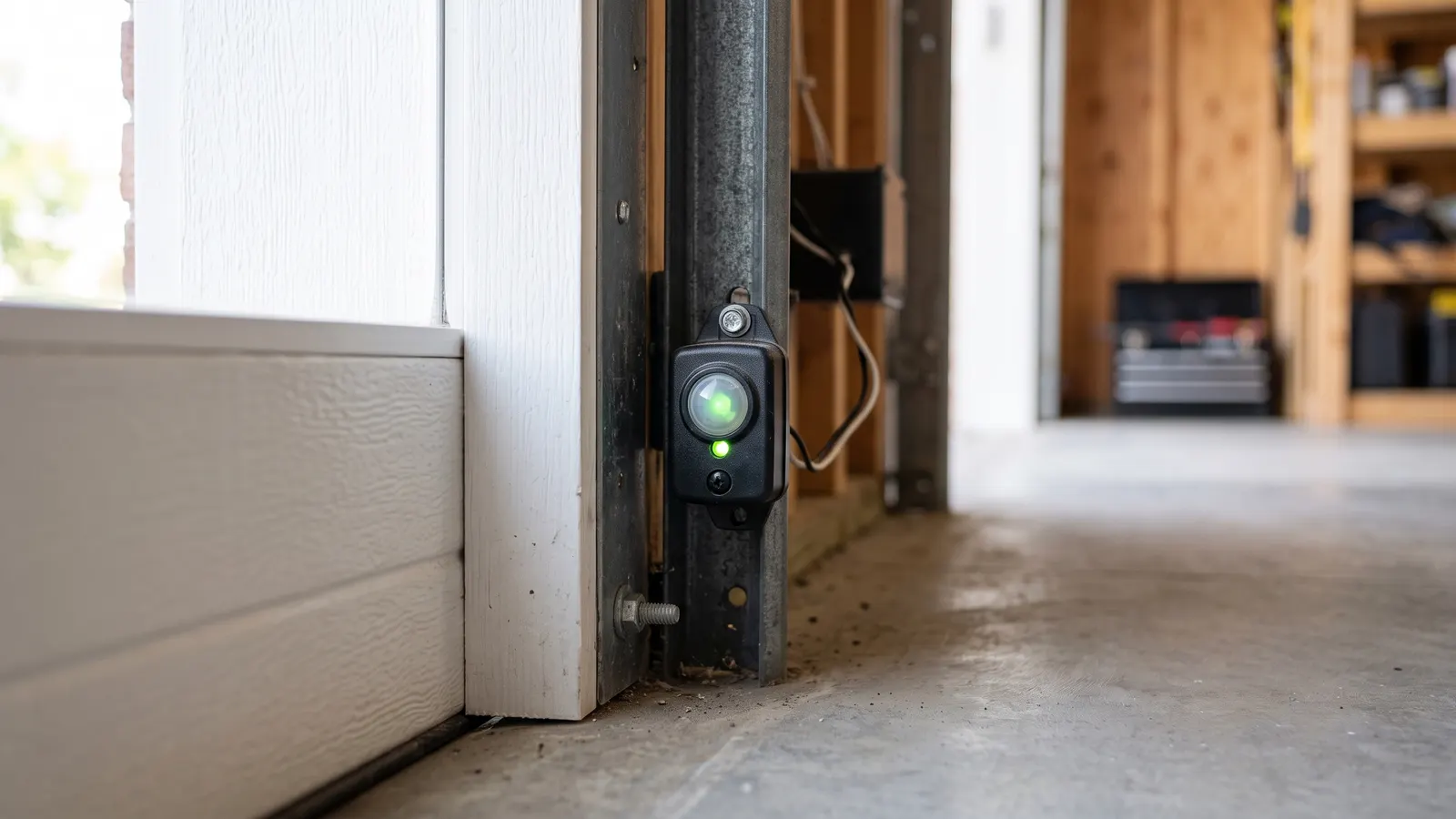
The Chamberlain B980 manual says on page 28: "When the light beam is obstructed or misaligned while the door is closing, the door will reverse and the garage door opener lights will flash ten times." On page 22 it says "The sending sensor (with an amber LED) transmits an invisible light beam to the receiving sensor (with a green LED)." And back on page 28: "The LEDs in both sensors will glow steadily if they are aligned and wired correctly."
Other models differ, so check your own manual.
Our advice: look at the little light on each sensor before you touch anything.
Not sure which problem this is? Start with our page on a garage door that reverses or won't close.
When the opener won't close the door
The B980 manual, page 35, says that if the door is fully open and the sensors "are not installed, or are misaligned, the door will not close from a remote control". The same page says "you can close the door by holding the button on the door control ... until the door is fully closed."
Our advice: holding the button doesn't fix anything. The sensors are still telling you something is wrong, so fix them, and don't rely on it.
On a Genie opener, Genie says: "A red, flashing Safe-T-Beam LED indicator means a malfunction has occurred."
Where the sensors sit
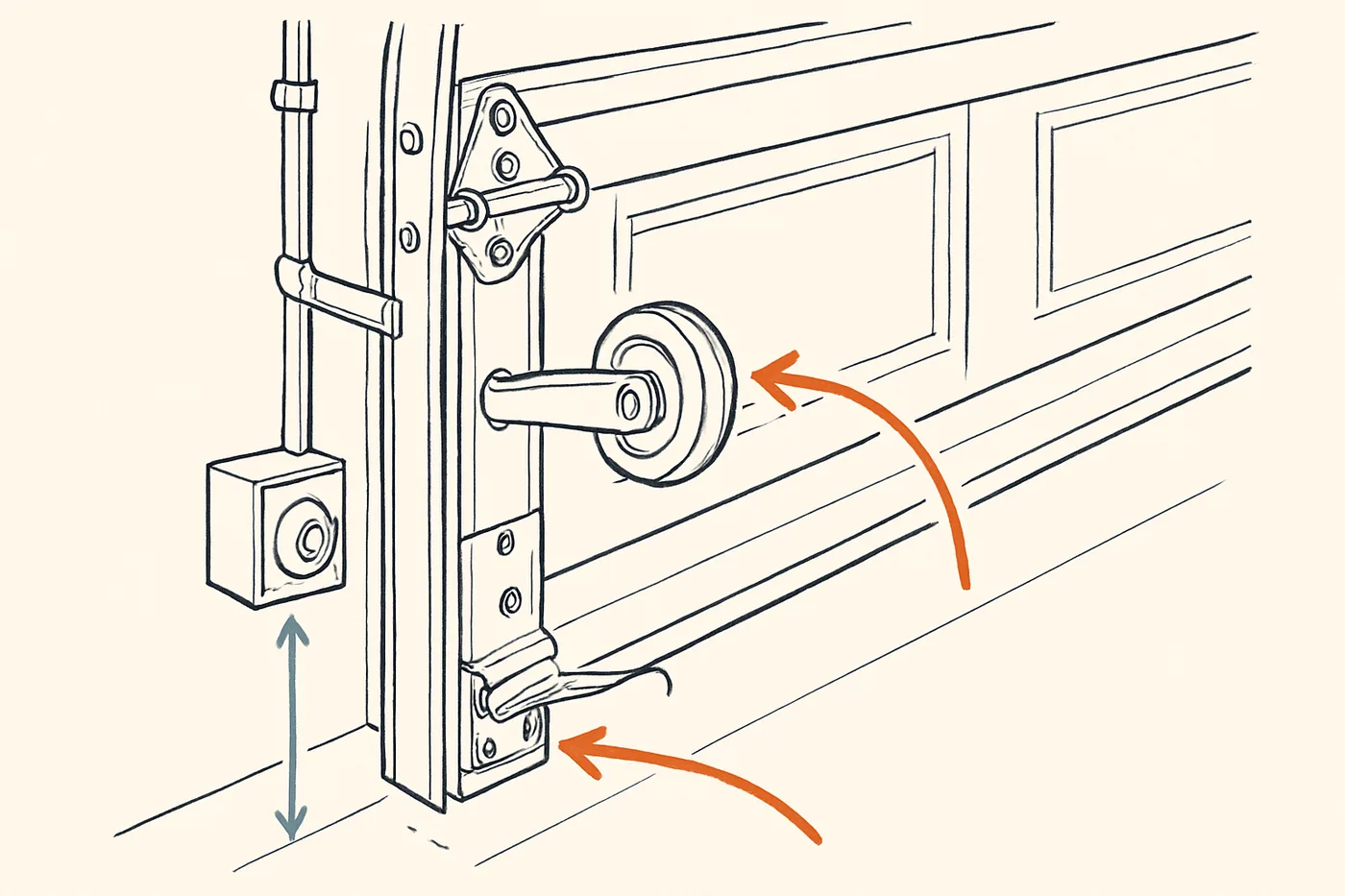
The B980 manual, page 22, says to install the sensor so the beam is "NO HIGHER than" 6 inches (15 cm) above the garage floor.
Genie says: "The beam lenses must be located at least 5 inches, but not more than 6 inches, from the floor."
How the whole safety system fits together is in our safety systems lab and in how garage door safety sensors actually work.
Clear the path, then line them up
Genie says: "First, be sure that the lenses are clean, and check for any possible obstructions or loose wires."
Our advice: a bike handlebar, a ball resting against the bracket or a cobweb over the lens all count. Clear it, then try the remote again.
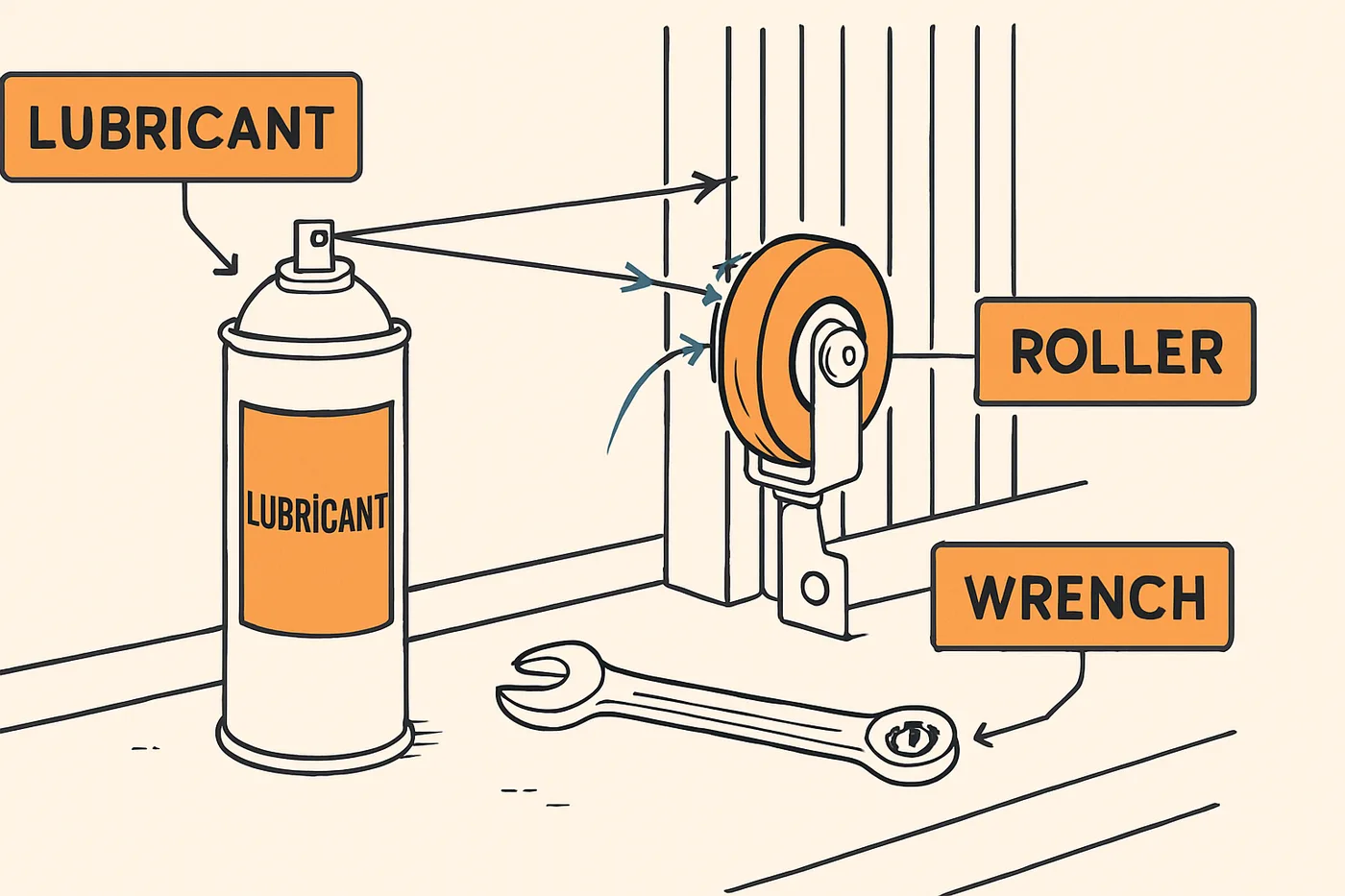
If the green light still isn't steady, line the sensors up. The B980 manual says "The sensors can be aligned by loosening the wing nuts, aligning the sensors, and tightening the wing nuts" (page 28) and "The lenses on both sensors should point toward each other" (page 22):
- Loosen the wing nut on the sensor.
- Turn the sensor so the lenses point toward each other.
- Tighten the wing nut.
Our advice: check the lights again, and do the same on the other sensor if they still aren't both glowing steady. Then close the door with the remote. If it closes, test the safety reversal before you use the door again.
Test the safety reversal
The B980 manual, page 34, says: "Safety reversal system MUST be tested every month." and "After ANY adjustments are made, the safety reversal system MUST be tested." For the test, it says:
Garage door MUST reverse on contact with 1-1/2" (3.8 cm) high object (or a 2x4 laid flat) on the floor.
Our advice: count moving or realigning the sensors as an adjustment. If your opener isn't a B980, use the test in your own manual.
If it fails at the same time each day
The B980 manual, page 28, says: "If the receiving sensor is in direct sunlight, switch it with sending sensor so it is on the opposite side of the door."
Our advice: if the door fails at the same time each day and works the rest of the time, suspect the sun. Have a garage door technician move the sensors, then test the safety reversal as described above.
Chamberlain also sells a Safety Sensor Sunblocker Kit, which its page says "is used to shield sunlight," listed at $24.99 when we checked on October 15, 2026. Its page says to "Check the manual for your specific model number before ordering to ensure compatibility."
When it's the wiring
If nothing is blocking the sensors and the green light still isn't glowing, the B980 manual, page 28, says: "Make sure the sensor wire is not shorted/broken."
Our advice: look along the wire for anything pinched or pulled loose without taking it apart. A cut or damaged wire is a job for a technician.
If you'd like a technician to look, Garage Door Pro Services (our affiliated installer) offers free garage door safety inspections to its loyal customers in St. George and surrounding areas, and the list of what's included has a sensor test.
If you're in the Las Vegas area, A+ Garage Doors (our affiliated installer) offers same-day repair in Las Vegas, and its page names an opener that stopped responding among the jobs it fixes.
Never switch the sensors off
The B980 manual, page 22, says it in capitals: "This required safety device MUST NOT be disabled."
Genie says: "The opener will not work if Safe-T-Beam® is tampered with, removed, unwired or otherwise modified."
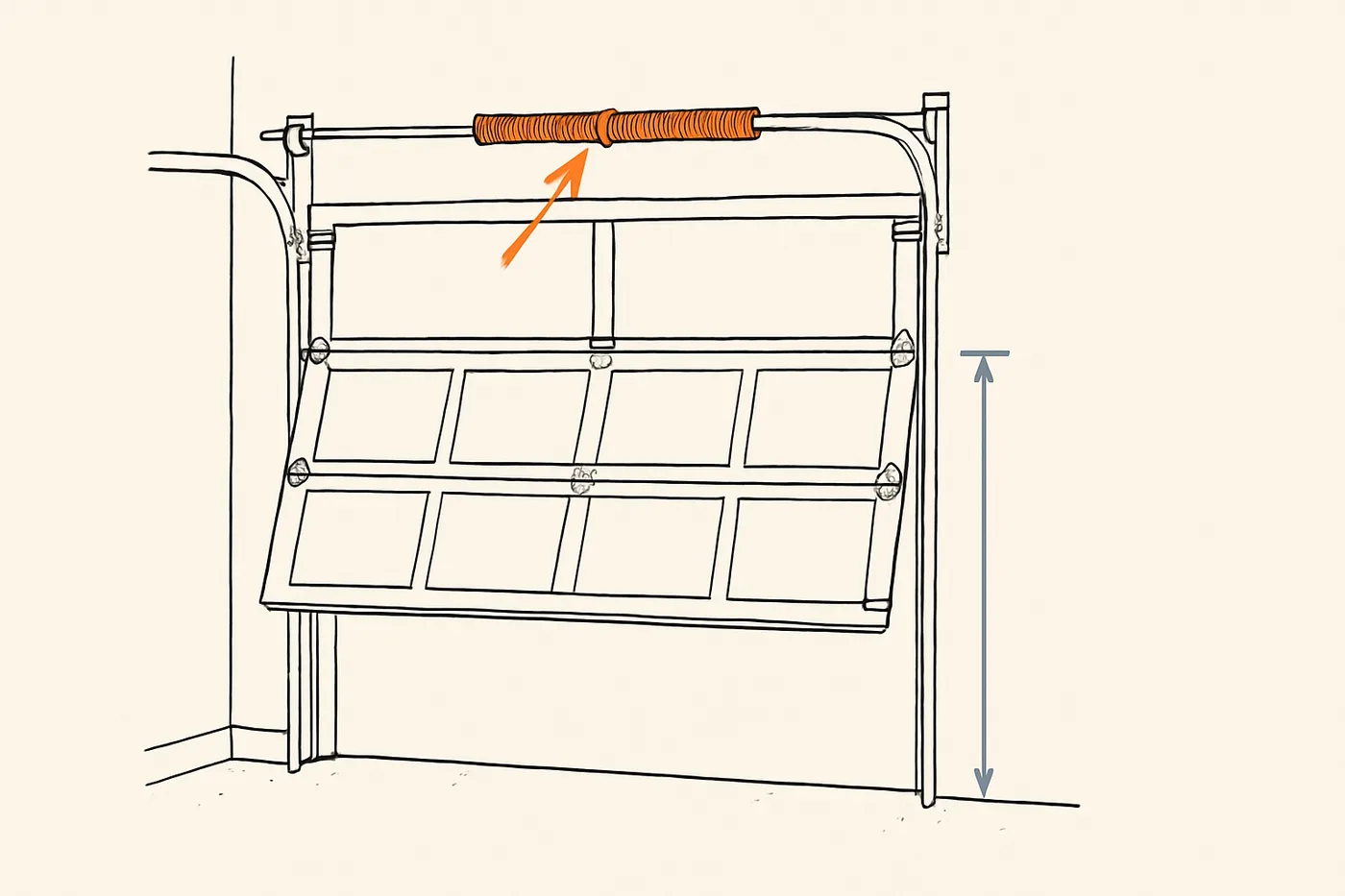
Springs and cables are a different job. The B980 manual, page 34, says: "ALL repairs to cables, spring assemblies and other hardware, ALL of which are under EXTREME tension, MUST be made by a trained door systems technician."
Our advice: holding the door control to force the door shut is not a fix, and neither is covering the sensors or taking them down. If the door feels very heavy, drops fast or won't stay up, or you can't get the steady lights back, leave the door where it is and call a technician.