Your garage door, part by part — and which parts actually break
Learn the key garage door components with diagrams and discover which parts fail most often. Expert guide to common breakdowns and maintenance.

You're standing in the garage looking up. Something is making a sound it didn't used to make, or something stopped moving the way it used to move, and you're trying to figure out which part of this assembly is giving out. There are more pieces up there than you remembered. The spring, the cables, the rollers, the brackets, the opener — all connected, all under load, and you're not sure where to start looking.
Start with the names. Most garage door problems get easier to think about once you can point at the part that's failing and call it by what it is.
The five systems that make up a door
A residential garage door isn't really one machine. It's five overlapping systems that all have to behave at once.
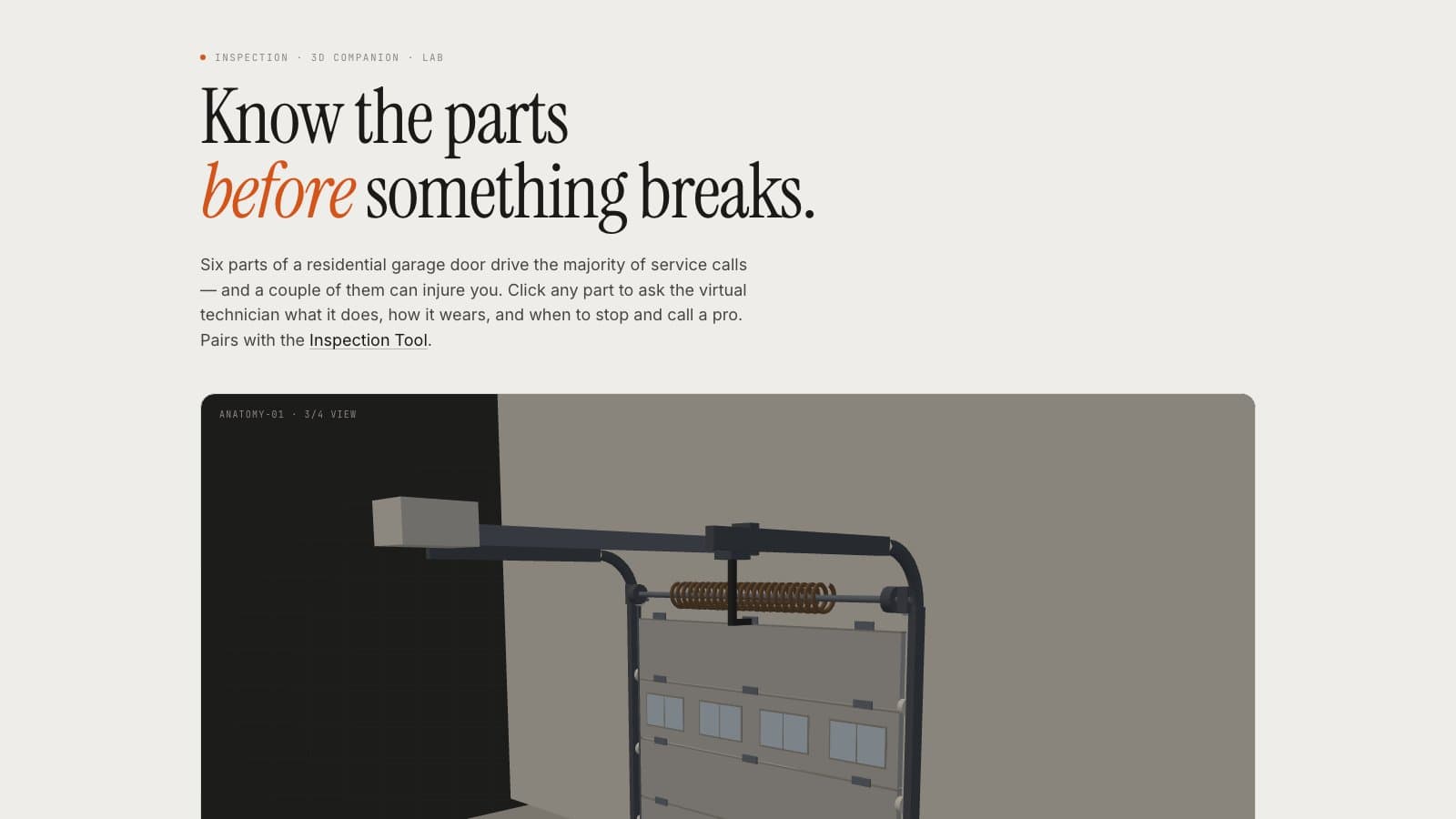
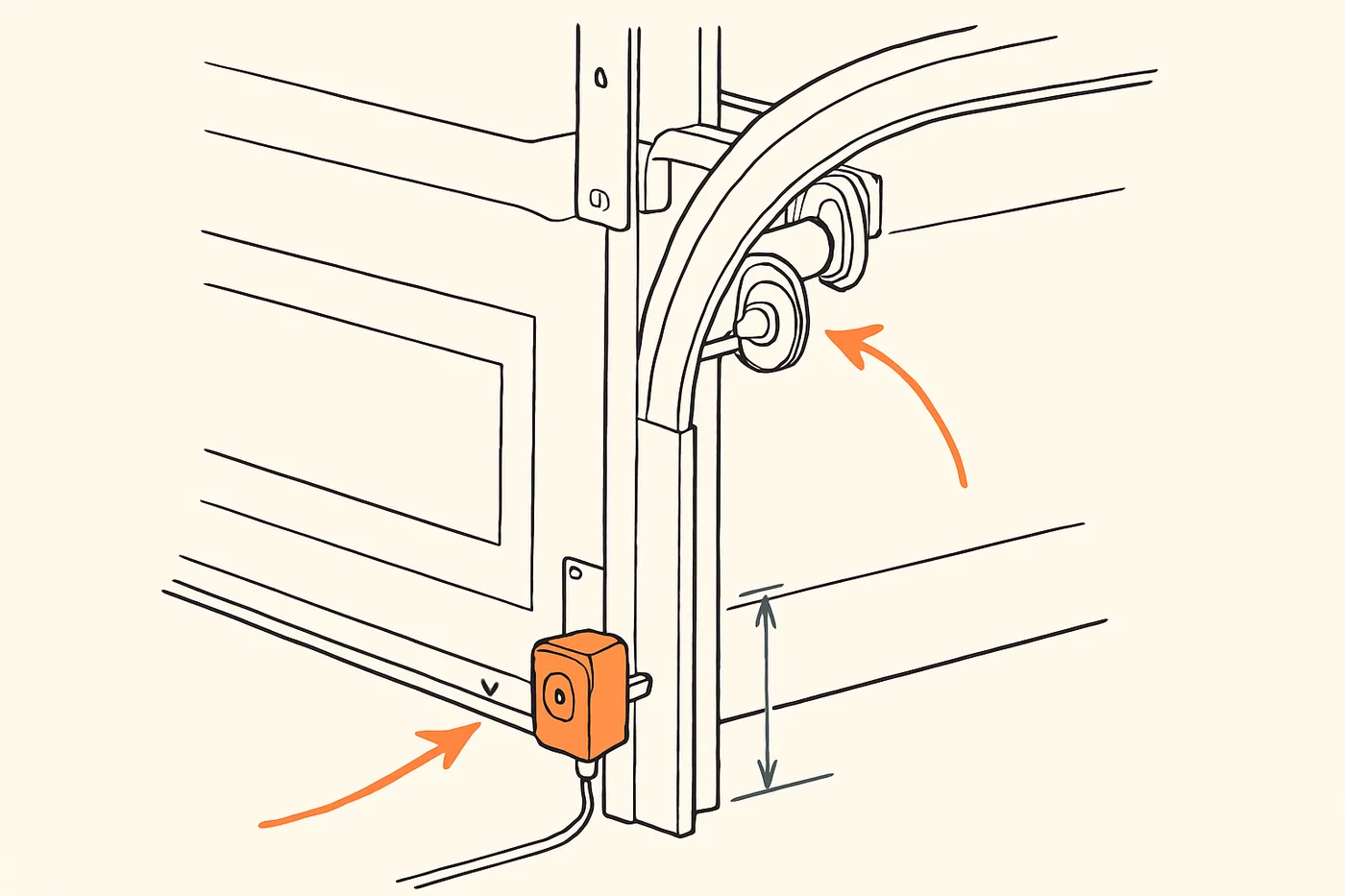
The counterbalance system is the springs and the cables and the drums. This is what makes a heavy door feel light when you lift it. The torsion spring sits on a shaft above the door, wound tight, storing energy. Cables run from the bottom corners of the door up to drums at the ends of that shaft. When the door closes, the spring winds tighter and stores energy. When the door opens, the spring unwinds and gives that energy back. The anatomy lab walks through this visually if you want to see the geometry.
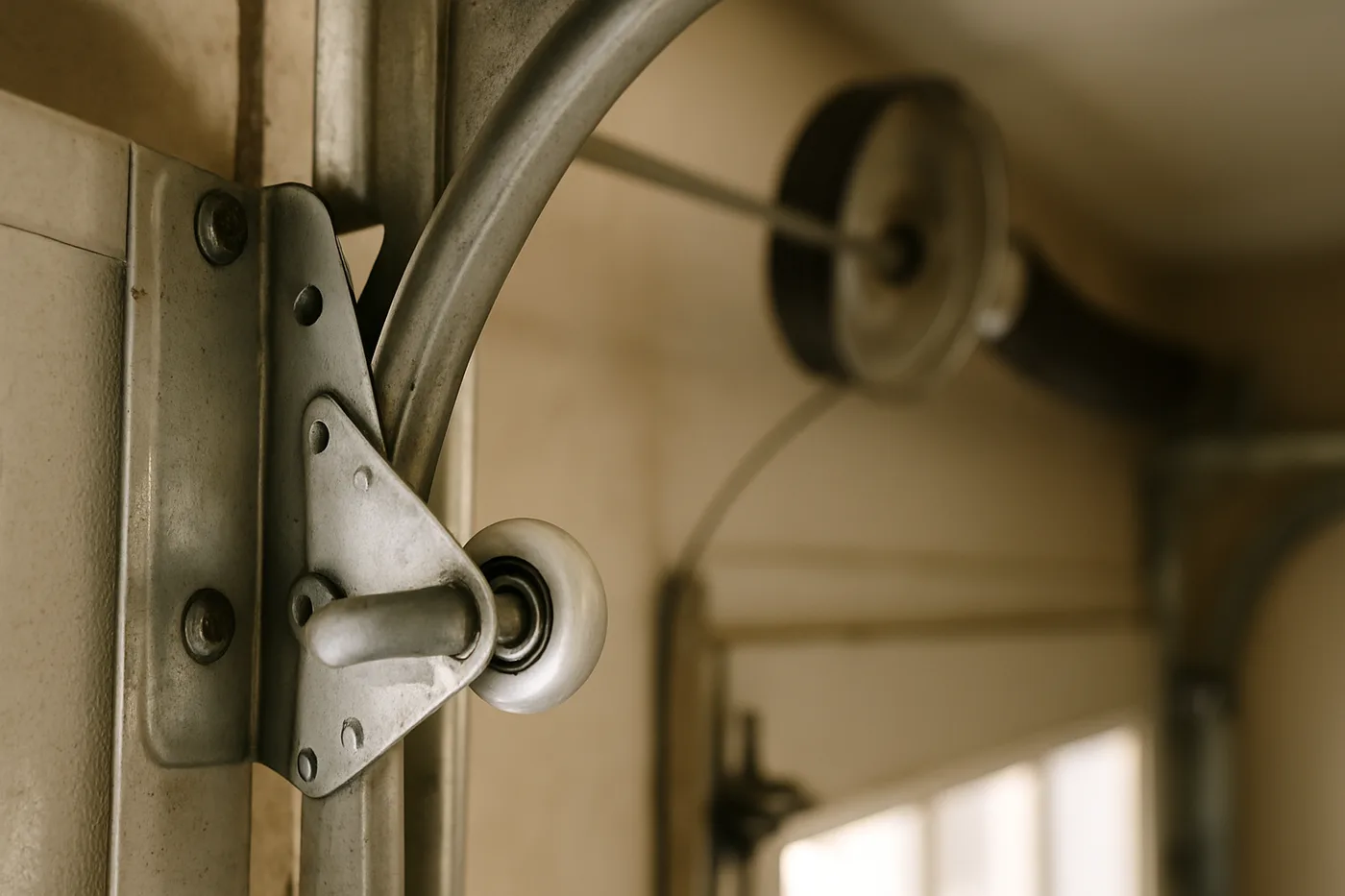
The track system is the vertical tracks on either side of the opening, the horizontal tracks that run back along the ceiling, and the curved sections that connect them. The rollers ride inside these tracks. The tracks bolt to the wall through brackets that take a surprising amount of side load every time the door changes direction.
The panel system is the door itself — the sections, the hinges between them, the strut bracing across the top, and the bottom seal. The hinges flex through tens of thousands of cycles. The bottom seal is the cheapest part on the door and the one homeowners notice fail first.
The drive system is the opener — the motor unit, the rail or shaft, the trolley, and the arm that pushes the door. It does not lift the door. The springs lift the door. The opener just nudges a balanced door up and pulls it back down.
The safety system is the photo-eye sensors near the floor and the auto-reverse logic built into the opener. It's the only part of the door whose entire job is to fail safely.
Where doors actually break
If you ranked failures by how often a technician sees them on a service call, the order is roughly: springs, rollers, cables, opener components, hinges and brackets, seals, photo eyes. That order is not coincidence. It tracks how much stress each part absorbs per cycle.
Springs break the most because they work the hardest. A standard residential torsion spring is rated for roughly 10,000 cycles, which is about seven years at four cycles a day.
This is the part of the article where the sentences get short. Do not adjust torsion springs. Do not loosen the set screws on the spring cones. Do not wind or unwind a spring with the wrong bars. The energy stored in there is not theoretical. It is in the metal right now, waiting.
If you want a longer spring life, you can ask for a higher cycle rating: IDC Spring, a spring manufacturer, says certain wire types can offer 25,000 cycles or even 50,000. They cost more up front, so ask for the rating and the price in writing, especially if you cycle the door more than four times a day.
Rollers fail next, usually quietly. Cheap steel rollers with unsealed bearings start to wobble after a few years. The wobble shows up as the door shimmying side to side in the tracks, or as a grinding sound on travel. You can hear what worn rollers do in why is my garage door so noisy. Replacing rollers is one of the few parts jobs a homeowner can do on the end rollers, though the top and bottom roller positions involve cables and brackets under load and are not DIY territory.
Cables fail when something else fails first. A cable that frays in isolation is rare. A cable that frays because a spring broke and shock-loaded the system is common. Same for cables that come off the drum because the door went out of balance and one side dropped faster than the other. If you see a frayed cable, look upward. The spring is part of the conversation.
Opener components fail in patterns that depend on drive type. Chain-drive openers produce around 70 dB of operating noise compared to about 45 dB for direct-drive, and they also have more parts that wear — the chain stretches, the sprocket teeth round off, the trolley nylon degrades. Belt-drive units fail in different ways. The gear inside the motor head is plastic on most consumer units and it strips before anything else does, usually because the door went out of balance and the motor was lifting weight it wasn't designed to lift.
Hinges and brackets fail late, but they fail badly. The bottom corner brackets hold the cables. They are under tension. Do not unbolt them. The center hinges between sections crack at the rivet points after long service, especially on insulated doors where the panels are heavier.
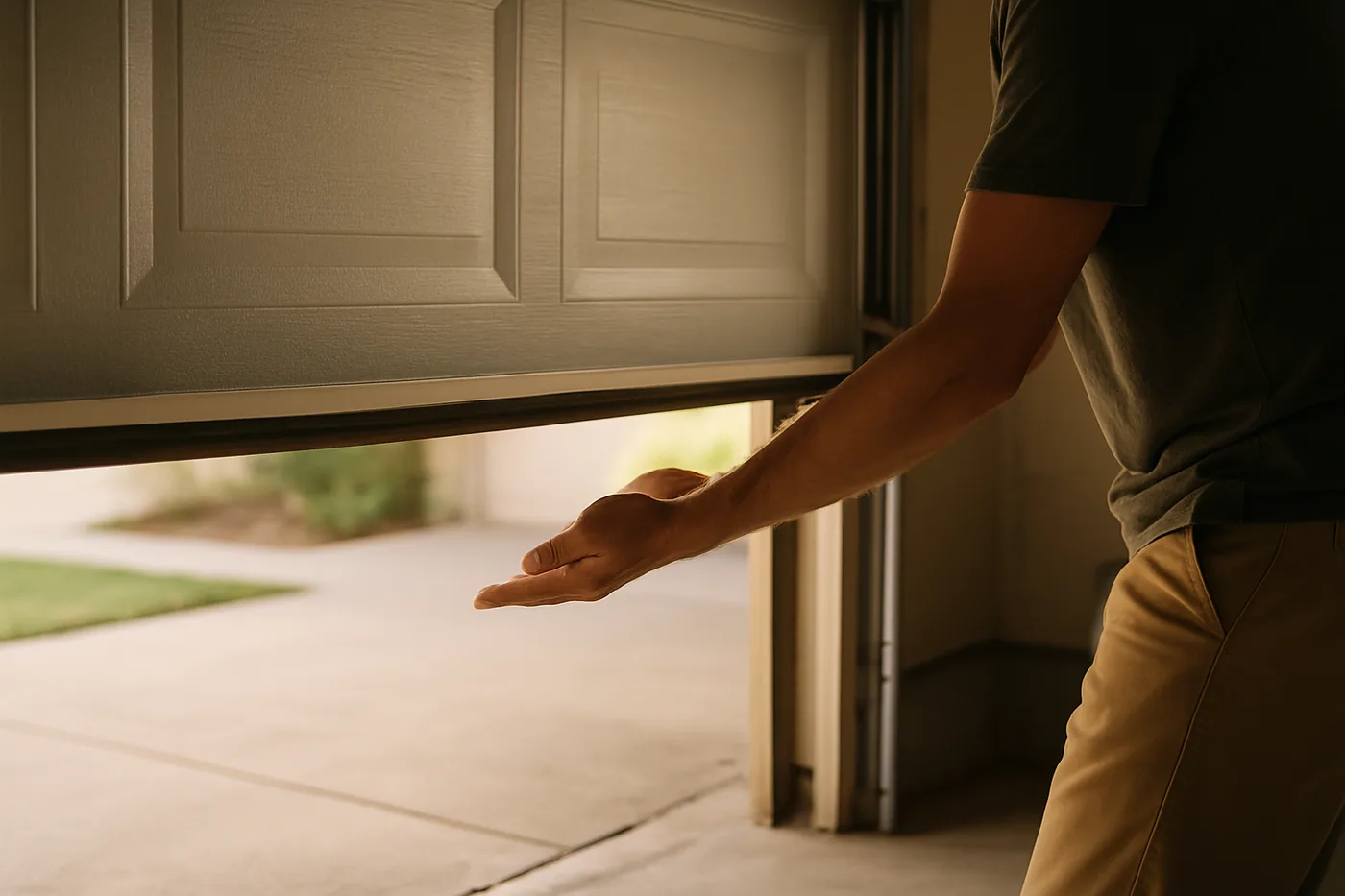
The bottom seal is the part you'll replace first and probably not even notice. Clopay says most seals need replacing every two to three years, depending on climate and use, and Amarr says around two years or more with proper maintenance. A worn seal goes chalky or stays permanently flattened. You replace it by sliding a new one into the retainer. No tension, no danger. It's the friendliest repair on the door.
The sensors sit low, near the floor, and federal rules require the opener to reverse within 2 seconds of contact with an obstruction. If the door won't close and the opener light is blinking, the sensors are almost always the culprit — bumped by a bike, clouded by spider silk, knocked askew by a kid's soccer ball.
What fatigue means, and why November is a bad month
Steel does not break on the cycle when it's fatigued. It breaks on the cycle when the temperature drops. Steel contracts at roughly 6.5 millionths of an inch per inch per degree Fahrenheit, and that contraction concentrates stress in tightly wound spring coils where micro-cracks already exist. A spring that would have lasted another six months in July gives up on the first cold morning in November.
This is why maintenance timing matters. The cheapest service call is the one in October.
The maintenance that actually matters
Most of what shortens a door's life is invisible until it isn't. A door that runs two years out of balance can lose a decade of total service life across the opener, cables, rollers, hinges, and brackets because every component is working harder than it was designed to. Balance is the foundation. Lubrication is the maintenance.
Lubricate the hinge pins and steel roller bearings every 3 to 6 months, or as needed for usage and climate. Leave the spring and its hardware to a technician. Clopay says WD-40 and oil-based lubricants should be avoided because they draw dirt and dust, which causes premature wear. And do not lubricate the tracks: Clopay says not to lubricate the tracks: wipe them with a damp cloth, because lubricant there makes the rollers work harder and strains the opener.
If you'd rather have someone else handle the annual inspection, Garage Door Pro services (our affiliated installer) offers a free garage door safety inspection that covers balance, spring condition, cable wear, and photo-eye alignment in one visit. For Las Vegas homeowners, A+ Garage Doors (our affiliated installer) handles garage door repair in Las Vegas including same-day spring and cable work — which matters when the failure is the kind that strands a car inside the garage.
You can also walk through the parts-and-failure logic visually in Maya: Garage Door Tech Decoded, or watch the physics of how the system stores and releases energy in Pop Art Physics.
The diagram in your head should look like this: a spring overhead that's working harder than anything else on the door, two cables that depend on the spring being healthy, rollers and hinges that wear quietly, an opener that suffers when the springs go out of balance, and a pair of sensors near the floor whose only job is to refuse to close on something soft. When something breaks, it's almost never an isolated failure. It's the part at the top of that stack giving up first and taking a few neighbors with it.
A spring that breaks at 9,500 cycles because nobody looked at it at 7,000 doesn't just need a new spring. It needs a cable check, a roller check, and an opener gear inspection — because every other part on the door just absorbed the shock the spring used to absorb.