Garage door spring maintenance: what you can check and what to leave to a pro
What garage door spring maintenance is and is not. A technician inspects and replaces springs and cables; you check the balance by hand, look without touching and call a pro. Never wind, adjust, loosen or replace a spring.

Garage door spring maintenance is two different jobs. A technician inspects the springs and cables and replaces them when they are worn. You never wind, adjust, loosen or replace a spring yourself, because it is under extreme tension. Your part is smaller: check the balance by hand, look at the spring with a flashlight without touching it, and call a pro when anything looks off.
Spring, after a winter of cold mornings, is a good time to do that check. The hardware has just been through the hardest months of its year, and you can still see what the cold did to it. The rest of this page is what the check is and where it stops.
Why check after winter
A standard spring is rated for about 10,000 cycles, one cycle is one full open and close, and at four cycles a day that is about seven years (IDC Spring, a spring manufacturer). That number is an average, not a promise.
If your spring was going to crack somewhere, winter told it where. Spring is when you can see the evidence before next winter forces the issue.
Start with the balance test
This is the check the door and opener makers describe for the owner. You are checking whether the springs are still doing the work they were designed to do.
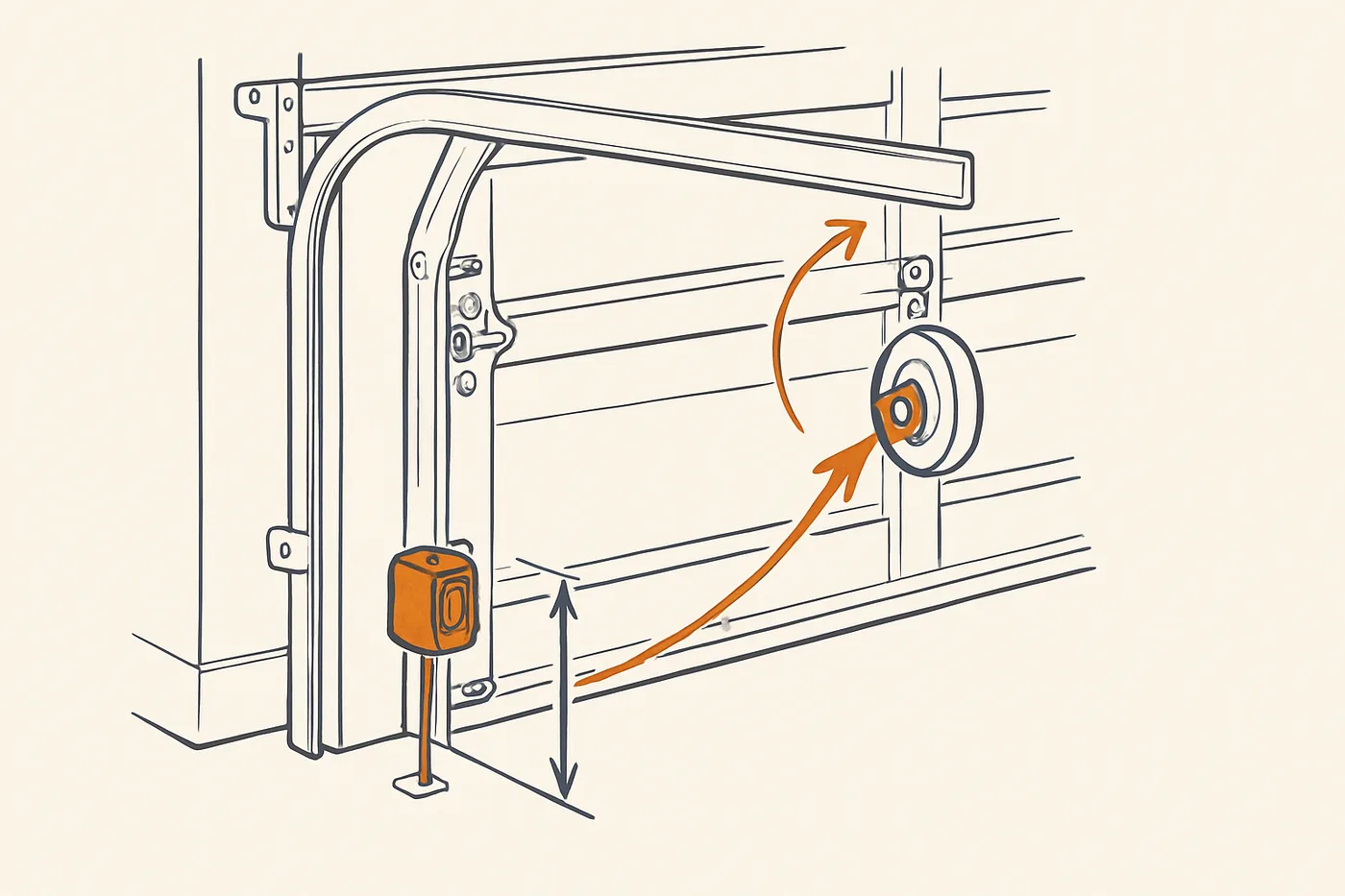
Close the door. Pull the manual release, the red handle hanging from the opener rail, to disconnect the opener from the door. Do it with the door fully closed, because weak or broken springs or an unbalanced door could let an open door fall. Move the door up and down by hand: it should move easily, and if it sticks or binds, stop and call a pro.
Then lift the door partway and let go. Chamberlain's support article says to lift it 3 to 4 feet, and Chamberlain's and LiftMaster's opener manuals say halfway. A balanced door stays in place, supported entirely by its springs; Chamberlain says slowly rising or gently falling is acceptable.
If the door slams shut or shoots upward with force, Chamberlain says it is out of balance and to contact a professional door technician. If the door is very heavy, drops fast, will not stay up, or a spring or cable looks broken, do not lift it: stop and call a pro.
If the door passes, reconnect the opener the way your opener's manual shows. The release works differently on different rail and drive types.
What an out-of-balance door is quietly costing you
When the spring isn't carrying the load, the opener motor and the cables take up the slack. They are not designed for that. It isn't that anything breaks immediately. It's that everything ages faster, all at once, and you don't notice because the aging is distributed.
You can hear this before you can see it. A door whose opener is working harder than it should will sound heavier on the lift. You get used to it gradually. That's how these things hide.
What to look for on the spring itself
Stand to the side of the door and look at the spring with a flashlight. You are not touching it. You are looking.
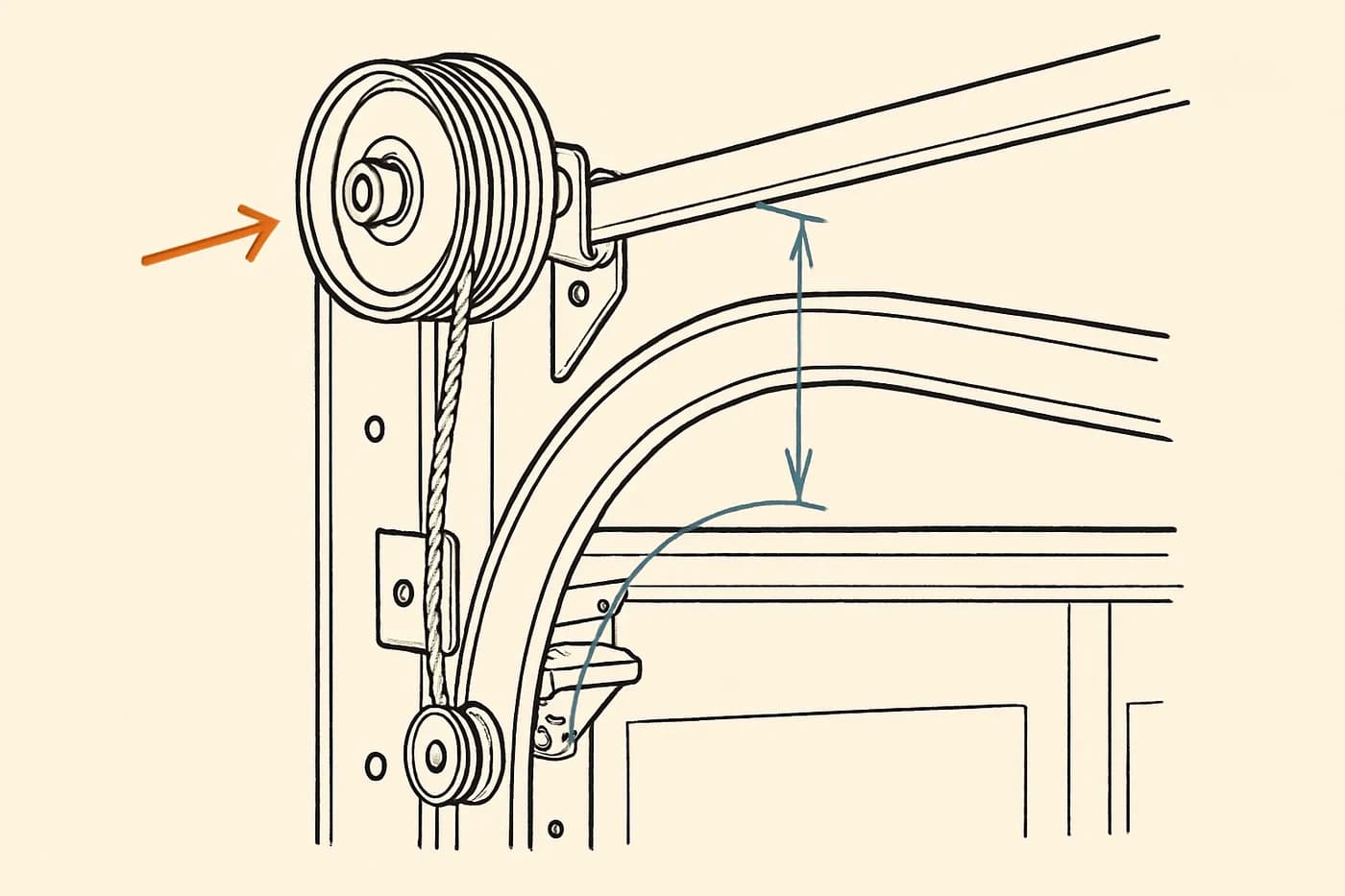
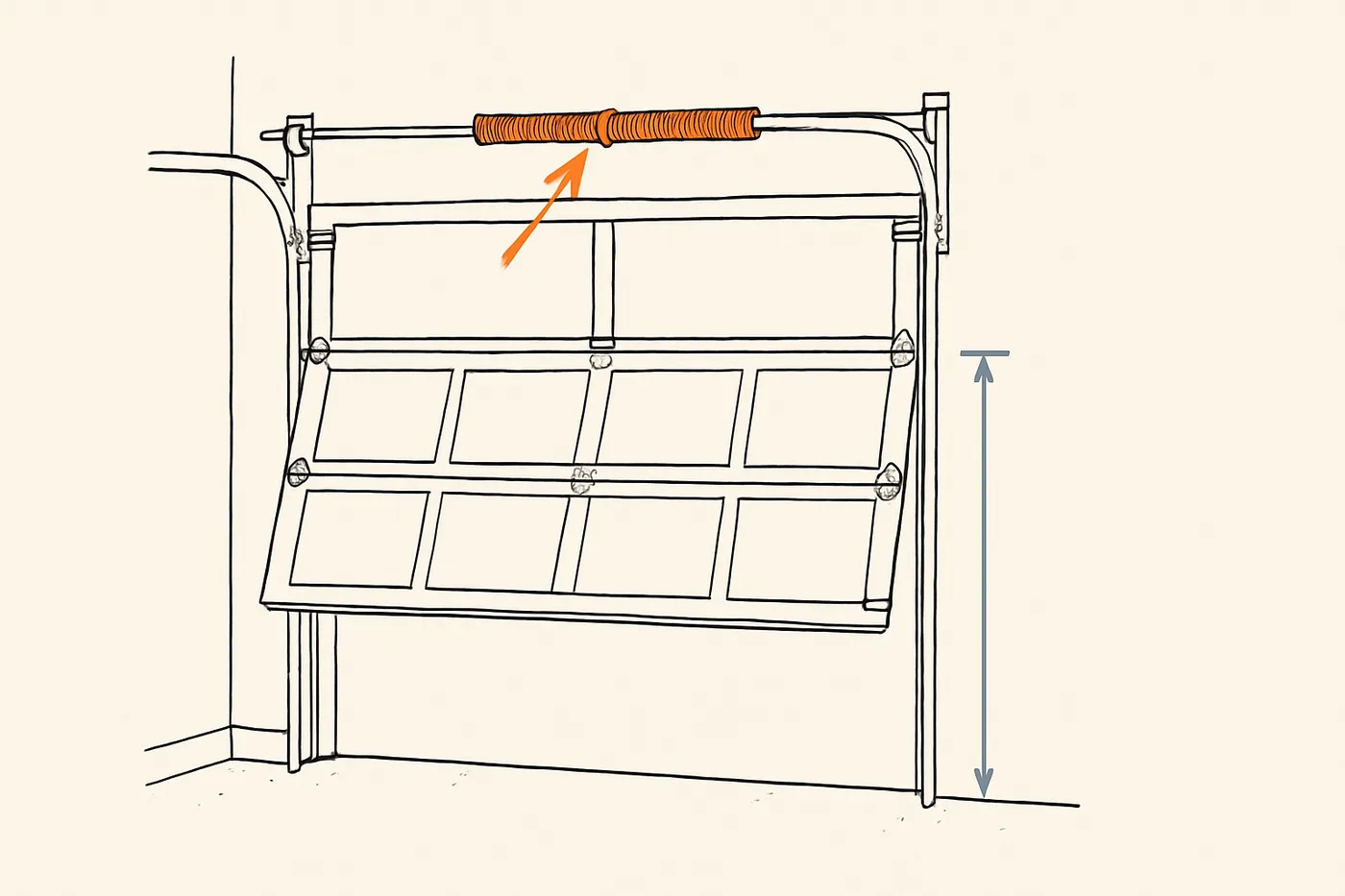
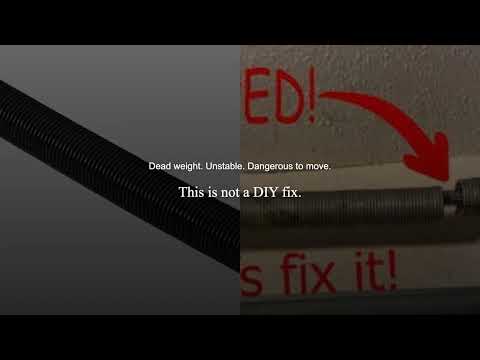
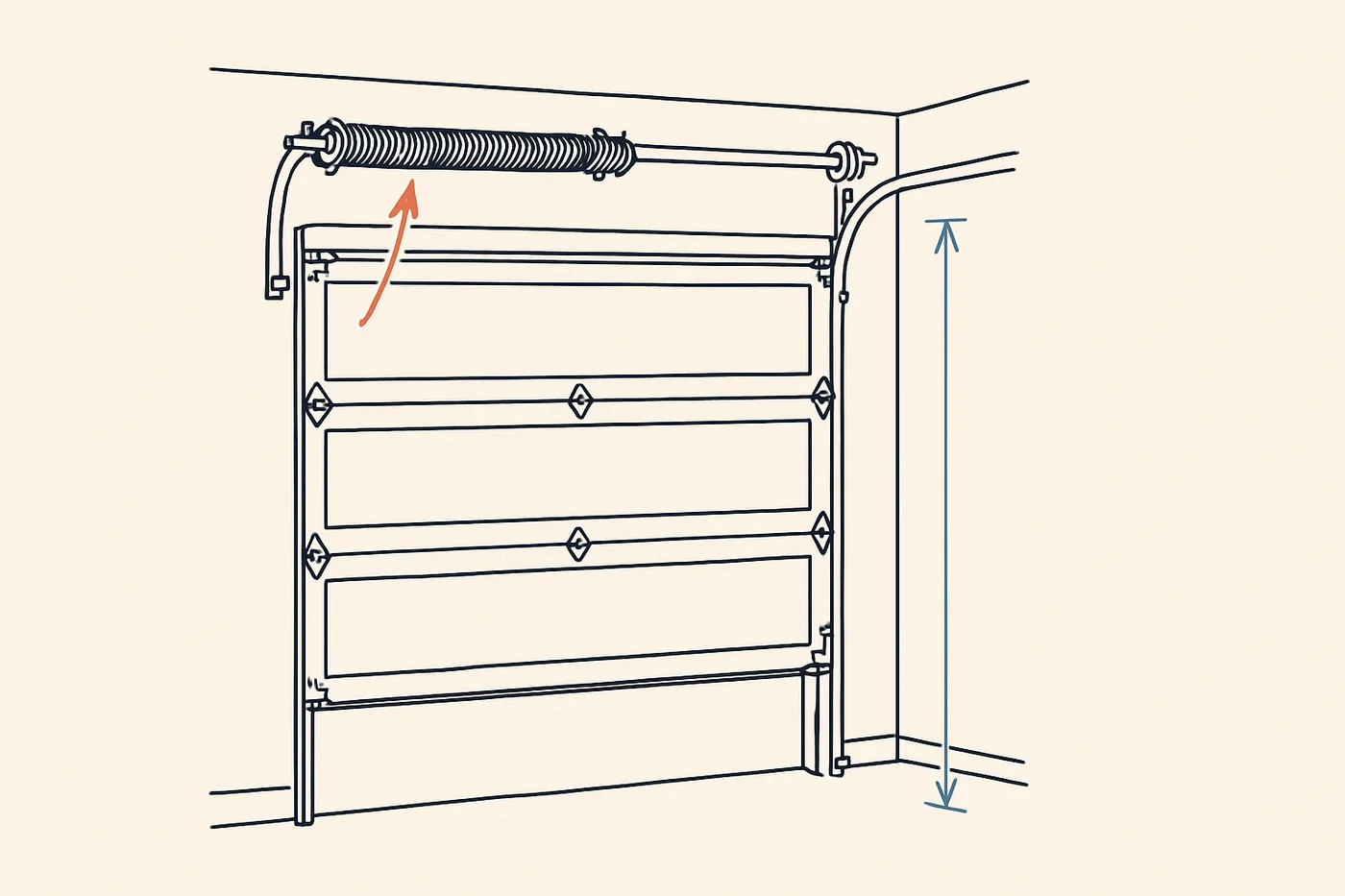
What you are looking for: Raynor says an intact torsion spring is tightly wound with no gaps and a broken one shows a visible gap, that orange or flaky coils mean it is deteriorating, and that rust accelerates fatigue. A gap means the spring has already broken. Orange or flaky coils are a reason to call before it breaks.
If you see a gap, stop. Do not run the door. Call a technician.
The physics of a loaded torsion spring explains why that's the right response. When a compromised spring lets go, it releases all of it at once, and the winding cone and bar become projectiles.
This is why untrained homeowners don't adjust spring tension. It isn't a skill gap. It's a consequence gap.
Lubrication, done right, and WD-40, done wrong
Lubricating the hinges and rollers is the part of the tune-up that's yours to do, and doing it wrong is worse than not doing it at all.
Clopay says to re-lubricate every 3 to 6 months, closer to 3 for heavy use, on the hinge pins and the steel roller bearings, using a silicone-based lubricant or white lithium grease sparingly. Not on the tracks, not on nylon rollers, and wipe off any excess. Our full guide is how often to lubricate a garage door.
Do not use WD-40. Clopay says that WD-40 and oil-based lubricants should be avoided because they draw dirt and dust.
The spring is different. The torsion spring is under constant tension whether the door is moving or not, and we leave anything touching the torsion spring to a technician. If it squeaks, mention it when you book the visit.
Where the DIY ends
The balance test, the visual inspection, and lubricating the hinges and rollers are your side of the tune-up. Anything that involves loosening a set screw on a winding cone, adjusting spring tension, or replacing a spring is a technician's job. Not because the procedure is mysterious, but because the energy stored in the component doesn't negotiate with inexperience.
If the balance test was off, or the visual inspection showed a gap or orange, flaky coils, the next step is a phone call.
The economics of catching it early
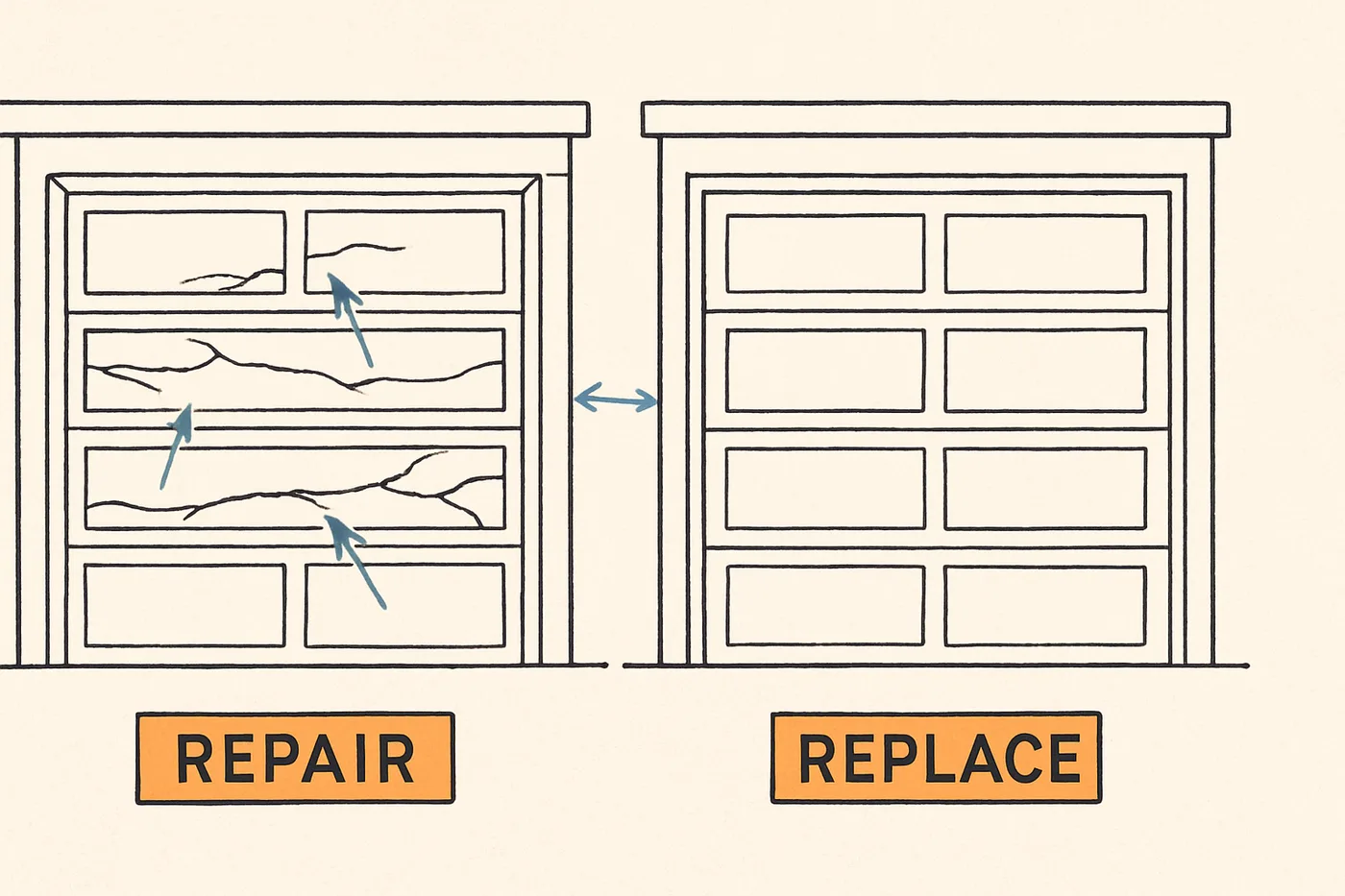
Here is what a technician's annual visit looks like when nothing has broken yet. They run the same balance test you ran. They look at the spring. If they see signs the spring is wearing out, they can replace it on a scheduled visit. HomeAdvisor's repair-cost page lists springs at $180 to $350 (updated Jun 20, 2026). Scheduled. Planned.
Here's what that same call looks like in January, at 6:45 AM, after the spring has let go. The spring is broken. The cables took an unplanned shock load when it released and have to be inspected. The door is stuck closed with your car inside it. The technician is billing emergency rates, and you're working from home whether you planned to or not.
The spring was going to need replacing either way. The only question was whether you got to choose the Tuesday. If the balance test came back off and you'd rather hand it to a pro, Garage Door Pros (our affiliated installer) offers a free safety inspection that covers spring condition and balance, and A+ Garage Doors (our affiliated installer) can handle same-day spring replacement if you're in their service area.
Springs run on cycles, not calendars. You schedule the calendar.