Commercial rolling steel door maintenance: what to check, when, and why
Learn how to maintain commercial rolling steel doors with seasonal care, lubrication schedules, and inspection tips to extend equipment life and ensure safety.

You noticed it Monday. The rolling steel door was a beat slow coming up, nothing dramatic, just enough to register. By Thursday your shipping crew is standing around waiting for the barrel to finish unwinding, and you're trying to remember the last time anyone actually looked at the thing.
Commercial rolling steel doors are patient. They take more abuse than any residential door will ever see, and they keep working long past the point they should have been serviced. That patience is the problem. By the time a rolling steel door announces itself with a hard failure, the failure is rarely just the part that broke.
What a commercial door goes through that a residential one doesn't
A standard spring is rated for about 10,000 cycles, one cycle is one full open and close, and at four cycles a day that is about seven years (IDC Spring, a spring manufacturer). A loading dock door runs many more cycles a day than a home door, so it reaches that rating much sooner.
This is why higher-cycle springs exist (IDC Spring, a spring manufacturer, says certain wire types can offer 25,000 cycles or even 50,000), and why a door that cycles often is worth asking about. If your door is running commercial duty on residential-grade springs, you aren't maintaining equipment. You're managing failures on a schedule.
Every closing cycle also puts real energy through the counterbalance. A rolling steel door's counterbalance is larger, but the principle is the same. Metal takes a hit every time the door moves. Metal remembers.
Lubrication, and the schedule you actually need
The schedule for a residential door is every 3 to 6 months, or as needed for usage and climate, and the spring assembly and its bearings are for a technician. A commercial door that cycles many times a day is on a different clock than a suburban garage, so ask the door's maker for the interval, and let a technician set the spring's.
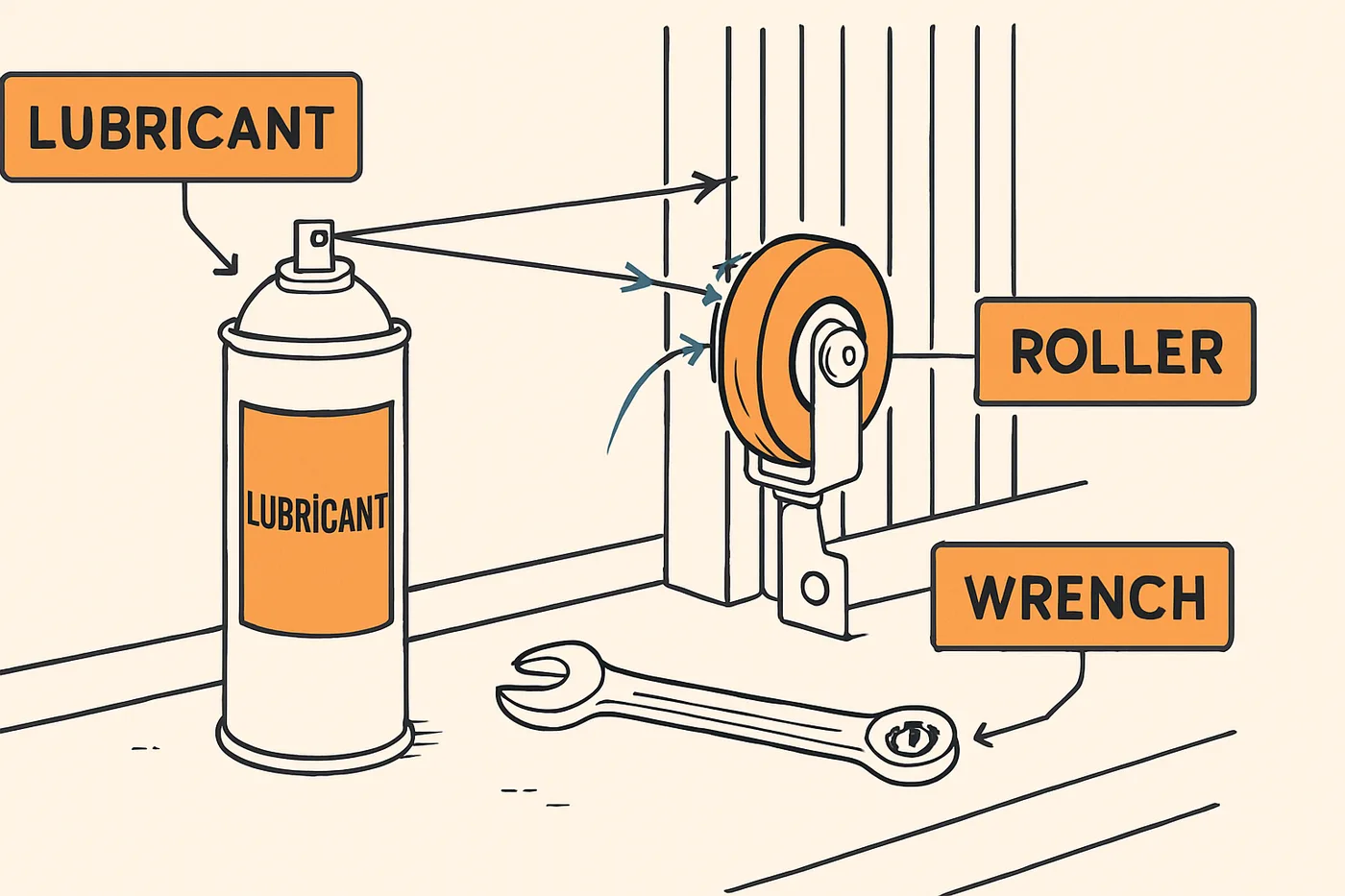
Use the lubricant the door's maker names. For residential doors Clopay names silicone-based lubricant or white lithium grease used sparingly.
Clopay's residential guide says WD-40 and oil-based lubricants should be avoided because they draw dirt and dust, which causes premature wear. A commercial door may differ, so check its maker's manual for what it specifies.
On a residential door, Clopay says not to lubricate the tracks: wipe them with a damp cloth, because lubricant there makes the rollers work harder and strains the opener. On a curtain-style rolling steel door, ask the maker how to treat the guide channel that receives the slats.
Balance, and what an out-of-balance door actually costs
An out-of-balance door does not stop working. It works harder. The opener strains, the cables carry uneven tension, the rollers wear unevenly, and every bracket and hinge in the assembly starts absorbing forces it wasn't sized for. The visible cost is the spring. The invisible cost is everything else.
A spring replacement can escalate into a bigger repair when an out-of-balance condition has been quietly wearing down the rest of the assembly. On a commercial installation, where a door that will not run can stop a loading operation, that hidden wear is the expensive part.
Balance is not a thing you feel by pressing the button. It's a thing a technician measures with the opener disconnected, watching whether the door holds position at half-open. That's not a walkaround check on a commercial door. It's a scheduled service item. Garage Door Pro Services offers a free garage door safety inspection that includes balance verification as part of the visit, and for facilities in the desert Southwest, A+ Garage Doors (our affiliated installer) handles commercial calls alongside their garage door repair in Las Vegas work.
What cold does to a spring that's already tired
Steel does not care that your loading dock has to open at six a.m. in January. Clopay says winter breakage is more common because spring wire becomes more brittle and weaker in colder temperatures, so a spring that seemed fine in October is the one most likely to give out on a cold morning.
If your facility runs in a climate that swings hard between seasons, put your inspection on the calendar for October. Not January. You want to catch the signs of a worn spring before the cold arrives, not after. The rolling steel lab walks through what a fatigued coil looks like, and the cold-weather spring fatigue lab is an illustrative model of how cold changes a spring's cycles to failure, not a measured figure.
What to look for on a walkaround
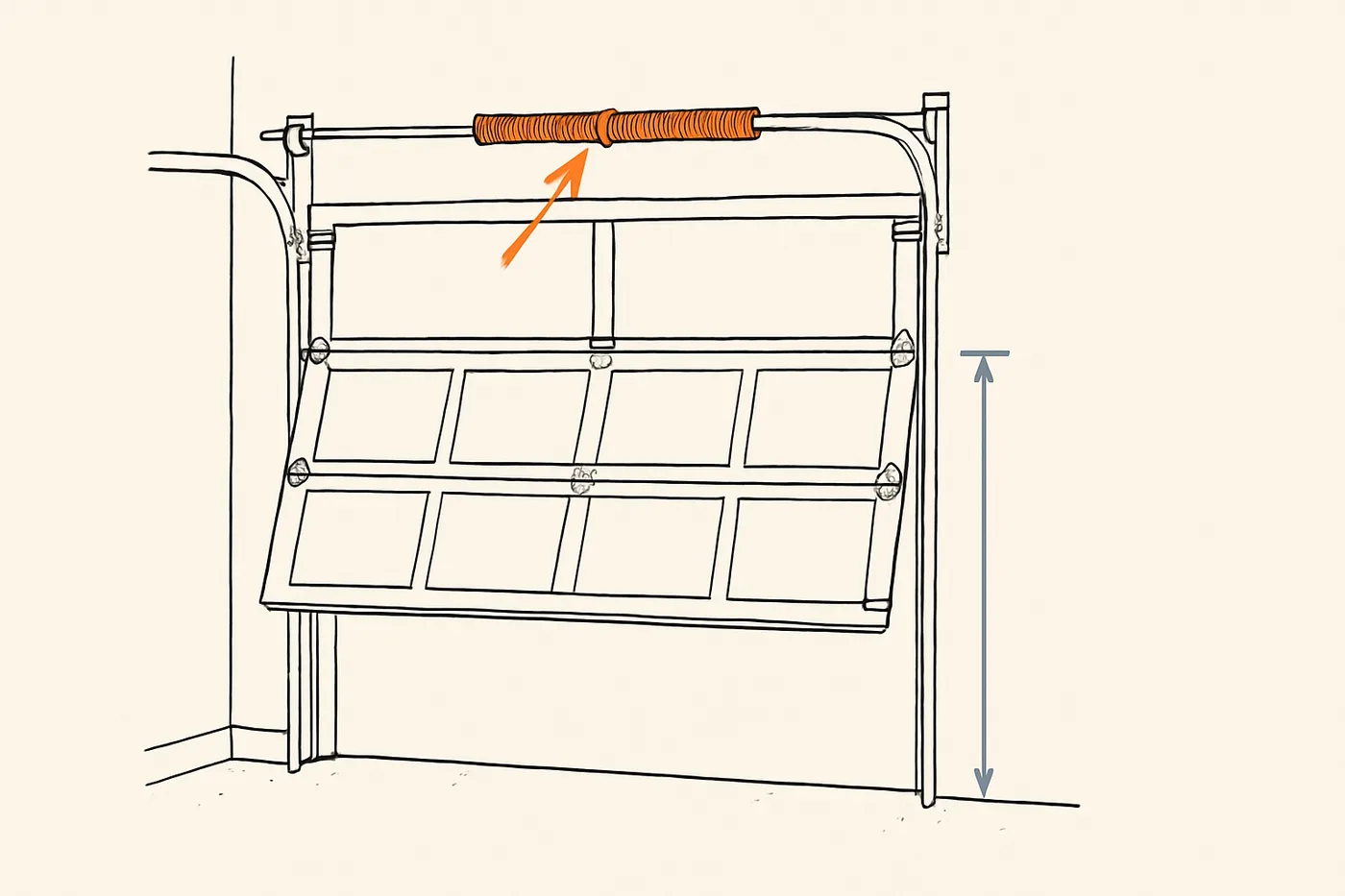
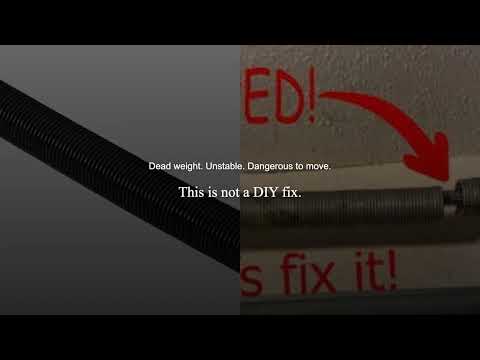
You are not going to service the spring. You are going to look at it. That distinction matters. For a home door, Raynor says a broken torsion spring shows a visible gap in the coil, and that coils that look orange or flaky mean the spring is deteriorating. If you see either, do not operate the door and call a technician. A commercial door's springs may look different, so ask its maker what to look for.
Do not touch the spring. Do not try to loosen anything. Do not attempt to adjust winding cones.
A commercial counterbalance spring stores enormous energy. If it releases while someone is working on it without the right tools and training, the failure is not gradual. It is sudden and it is violent. The spring safety introduction covers why every technician who works on these professionally treats them the way they do.
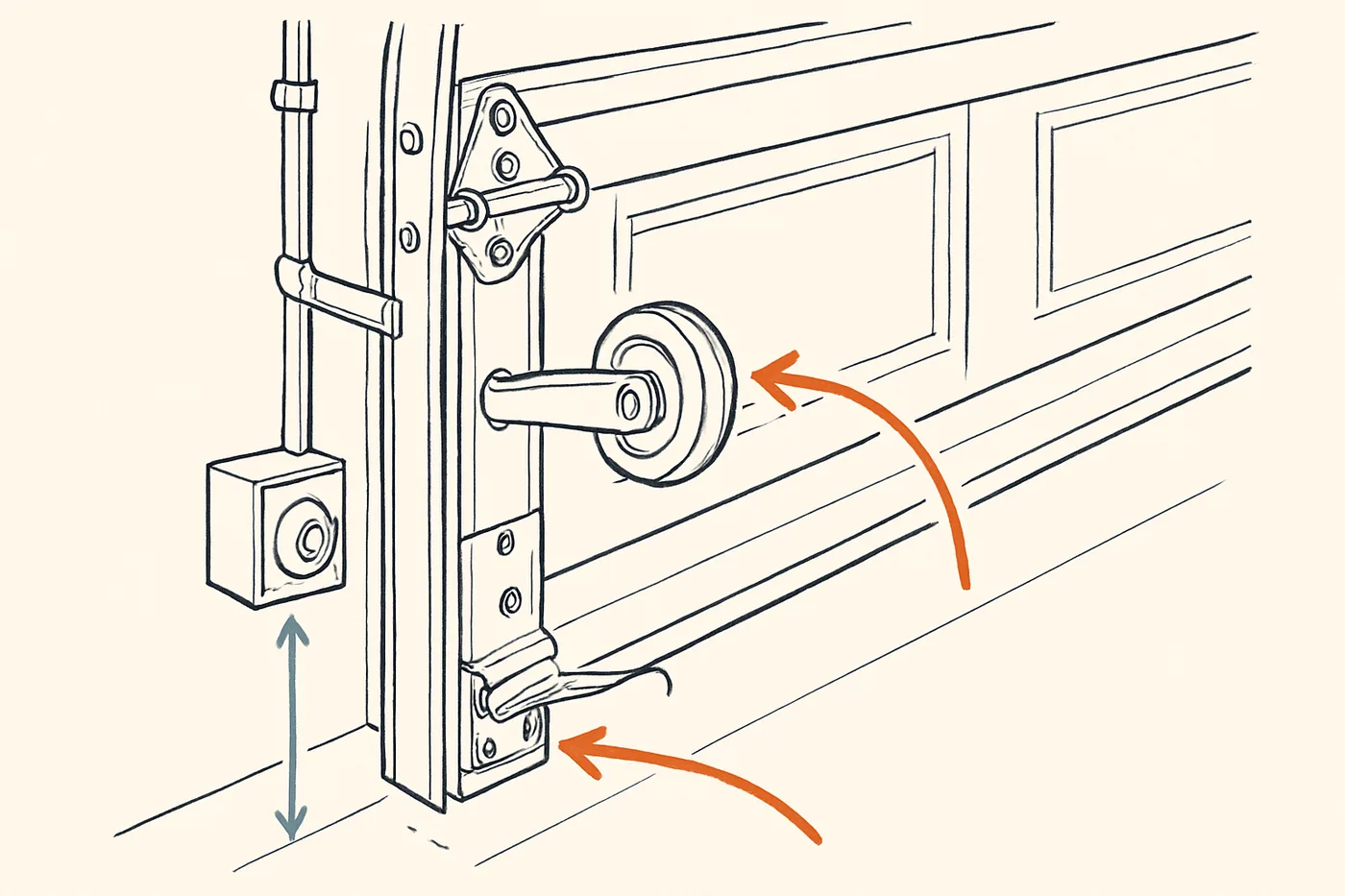
While you walk the door, look at the seal along the bottom bar. Bottom seals wear out. For residential doors, Clopay says most seals need replacing every two to three years, depending on climate and use, and Amarr says around two years or more with proper maintenance. A commercial door's seal may last a different time, so ask its maker. Replace one that has gone chalky or stays permanently flattened. A flattened seal is a draft, a pest entry, and a water path in one worn strip of rubber. The garage door anatomy lab is useful here if you want to name what you're looking at as you walk it.
Safety systems get checked, even on commercial doors
A commercial opener may be set up differently from a home opener, and its manual says how yours works. Either way, you want the door to reverse when it meets resistance and never close on a person.
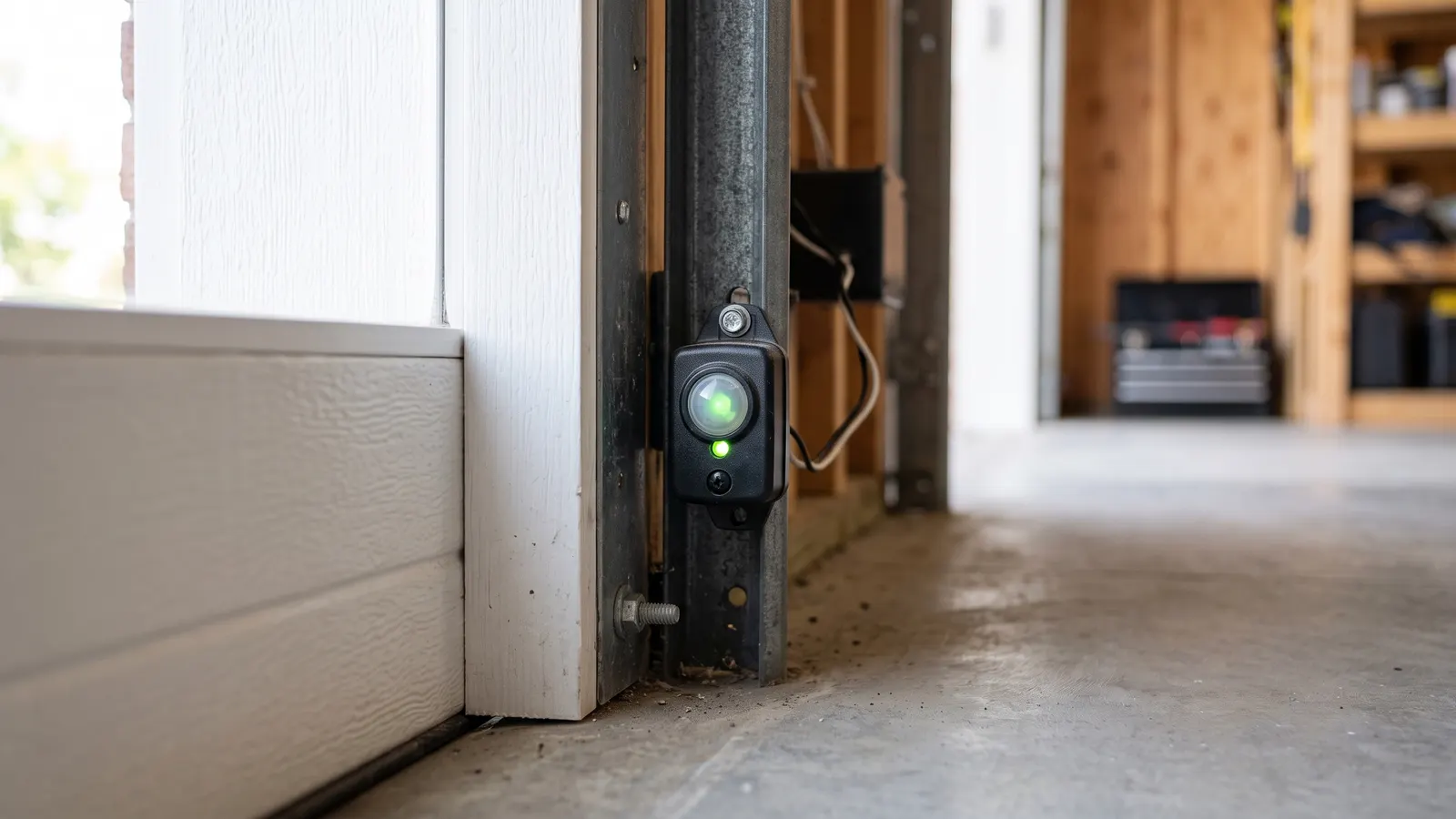
Federal rules require residential openers to have a photoelectric or edge sensor as secondary protection. That rule is written for residential openers. Test what you have. The safety systems lab walks through how to verify a photo eye is actually reversing the door and not just blinking a light, and Margaret's safety guide video covers why the springs, bottom brackets and lift cables are a job for a technician.
Test the sensors on a schedule. If the door reverses when nothing is in the way, our safety sensors guide explains what to check first.
The maintenance is the budget item
A scheduled service visit on a commercial rolling steel door is a line item. It goes on the calendar, gets a purchase order, and is done during operating hours by a technician who is not rushing. A failed door at six a.m. on a delivery day is an emergency call, an overtime rate, a shutdown of the operation it serves, and often a bigger repair than it would have been.
The parts do not know which category they're in. They wear the same either way. The difference is whether the wear gets caught during an inspection or during a delivery window.
A spring that breaks because nobody looked at it doesn't just need a new spring. It needs a cable check, a balance verification, and an opener assessment, because everything downstream absorbed the failure. The scheduled version of that job is one visit. The emergency version is a morning of stopped work and a bill that reflects it.