How to diagnose your garage door before you call a pro
Learn how to diagnose common garage door issues yourself. Identify symptoms and problems before calling a professional technician to save time and money.

You're in the garage. Coffee in one hand, your bag in the other. You pressed the button and something is wrong: the door won't move, or it moved and reversed, or it made a sound you've never heard it make before. You have somewhere to be in fifteen minutes and you don't know whether this is a loose wire or a bigger problem.
Most of that fifteen minutes is enough to figure out which one it is. Not to fix it. A lot of what goes wrong on a garage door lives on the far side of a line you should not cross. But diagnosis is different from repair. If you can hand a technician a real symptom instead of "it's not working," they know where to start.
Here's how to read what your door is telling you.
Start by listening, then look at the light
Before you touch anything, run the door once and listen. A healthy garage door is not silent: there's a hum from the motor, the soft click of rollers moving through the track, maybe a low creak from a hinge at the top of travel. What you're listening for is anything new. A grinding note that wasn't there last week. A pop at a specific point in travel. A rhythmic knock that speeds up with the door.
Sound tells you where to look. Clopay's guide to noisy garage doors names grinding noises that won't quit, sudden loud bangs, or any issues with springs or cables as red flags that mean it's time to call in the pros. Book a technician for grinding that won't quit. If you heard a bang and the door won't open now, stop reading and skip to the section on springs.
Then check the opener's light. If it blinks in a pattern, such as one blink, pause, two blinks, look the pattern up in the opener's manual before you do anything else.
Check the photo-eyes before you assume it's the opener
If the door starts to close and reverses partway down, or won't close at all, check the photo-eyes.
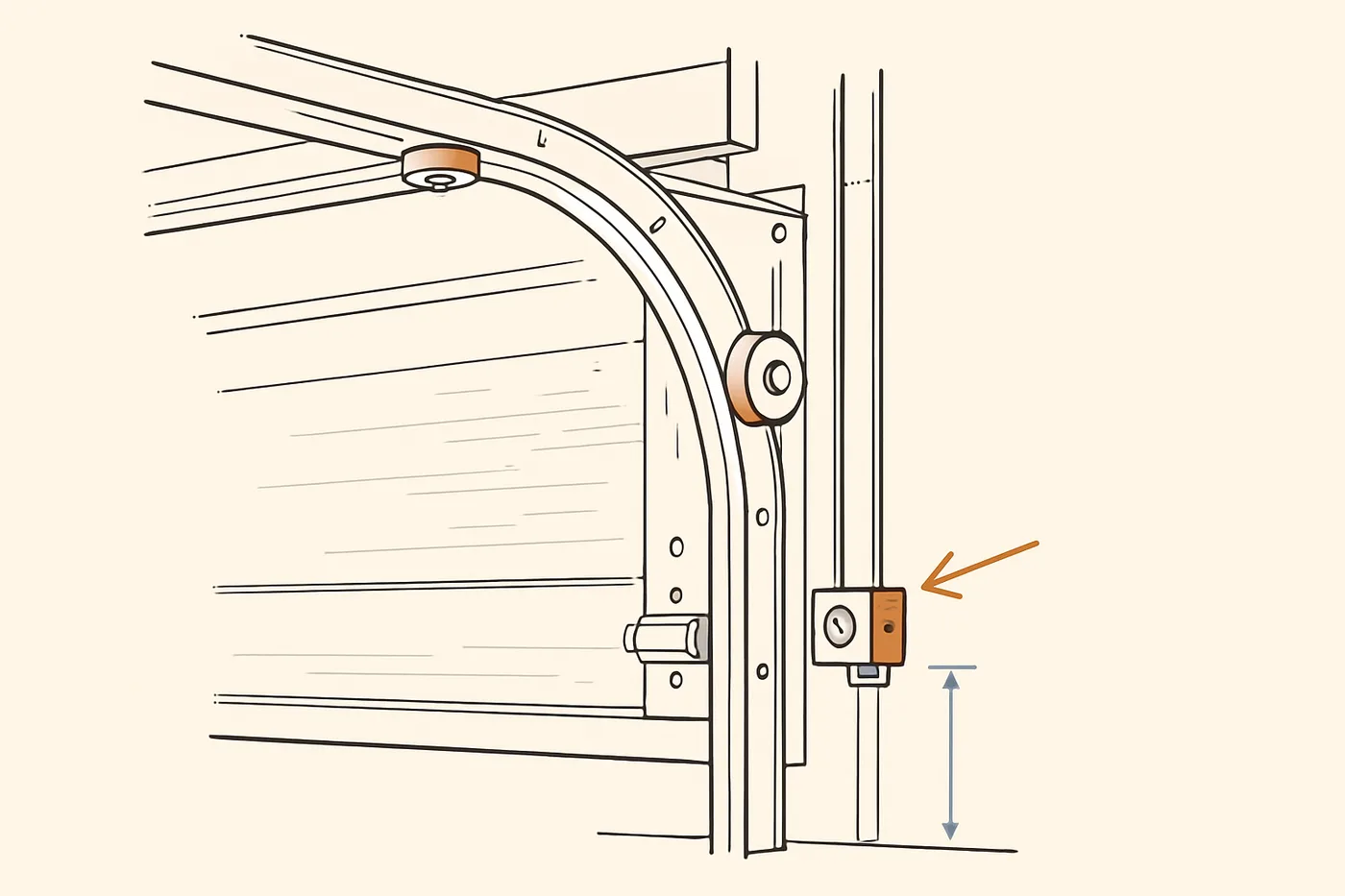
Look at the sensors. Each should show a steady light. If either is off, blinking, or flickering, the beam isn't landing. Wipe both lenses with a clean cloth. Check whether a rake or a bag of mulch is sitting in the beam path. Look at the alignment: the two lenses should point at each other.
There's a weirder failure worth knowing. Sunlight shining into the receiving sensor can block the beam, so the door won't close at one time of day and works fine the rest of the time. If your problem happens at the same time each day, sunlight may be why.
Do not bypass the sensors. If the door won't close, the sensors need fixing: make sure nothing is blocking them and that their lights glow steady, and if they do not, a technician fixes them. Never switch them off or look for a way to force the door shut.
The remote works sometimes, or not at all
If the wall button works but the remote doesn't, start with the battery. If a new battery doesn't help, the remote may have lost its pairing. On a LiftMaster or Chamberlain, pressing the Learn button on the opener opens a short pairing window during which you press the remote button to re-pair. Other brands differ, so check the label on the opener.
If neither the remote nor the wall button does anything, and the opener has no light and no hum, check the opener's manual for how to power-cycle it.
Balance is the technician's test
Clopay's spring guide lists these signs. You can notice them while the opener runs the door, without touching the door or a spring:
- The opener is straining more than usual, or the door seems unusually heavy when it runs. Clopay says the spring may have lost its tension.
- The door looks crooked as it moves or gets stuck partway. Clopay says one of the springs could be weaker or broken.
- You hear loud banging or snapping noises while it runs. Clopay calls that "a strong indicator a spring has let go."
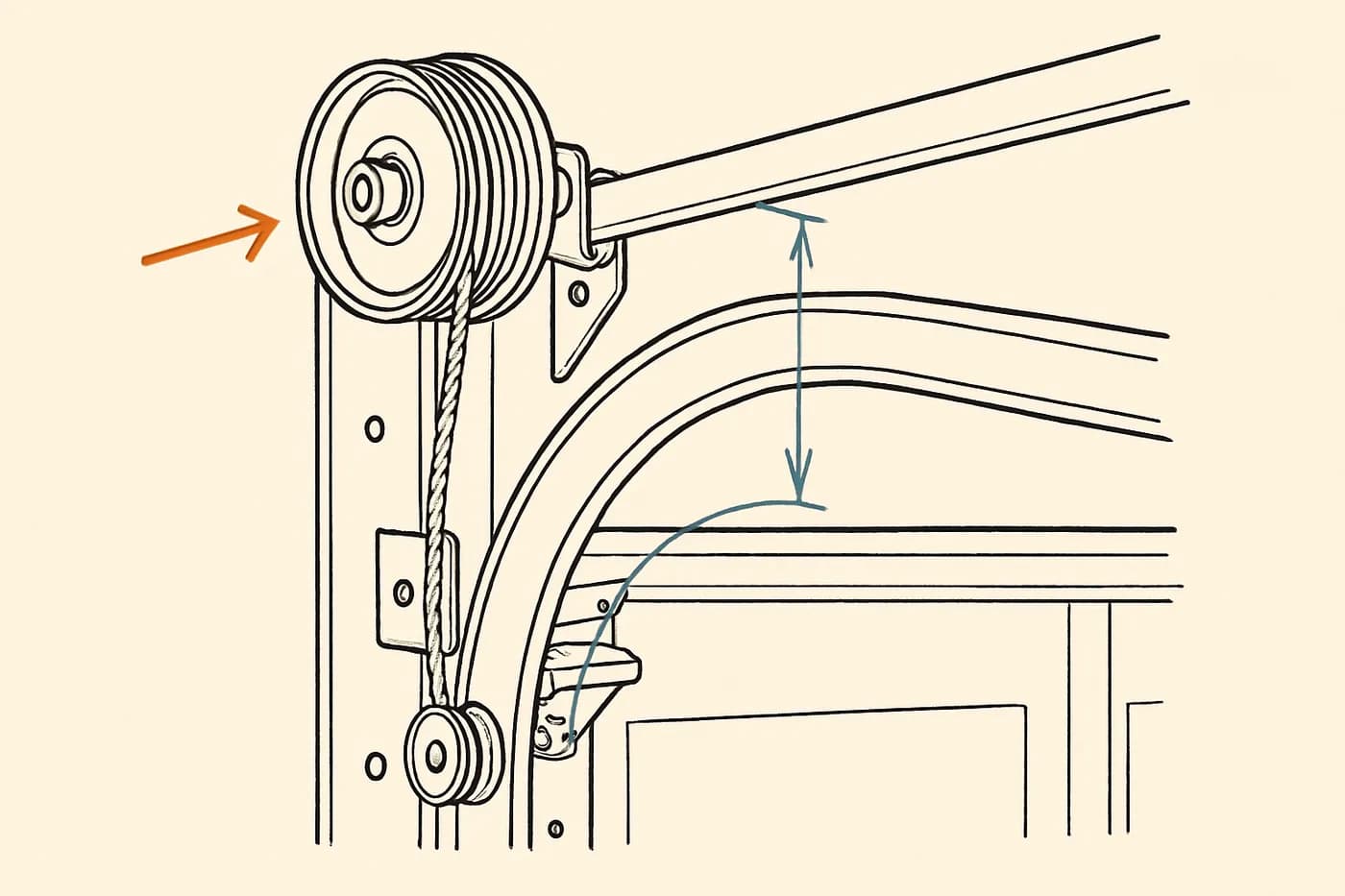
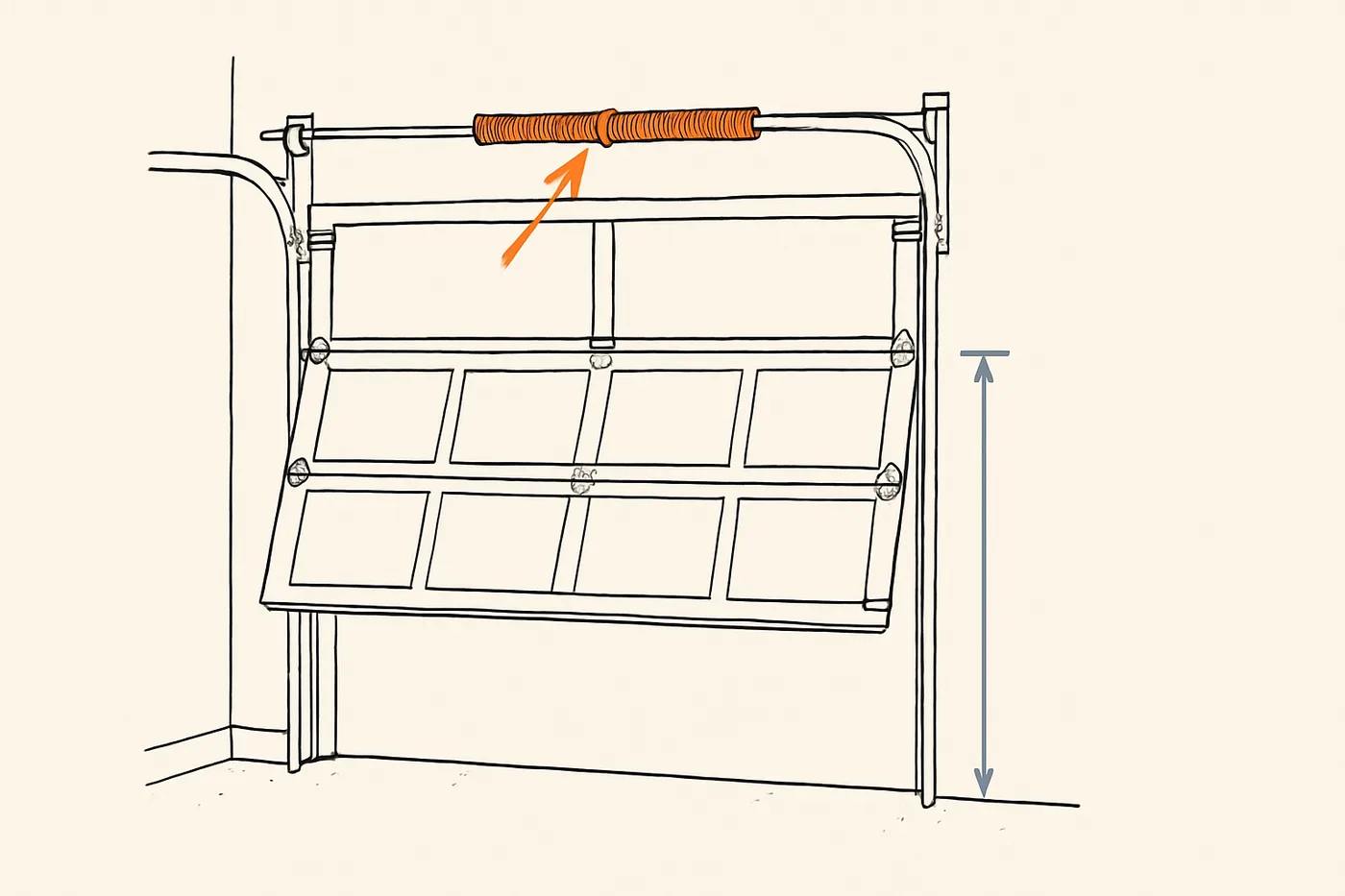
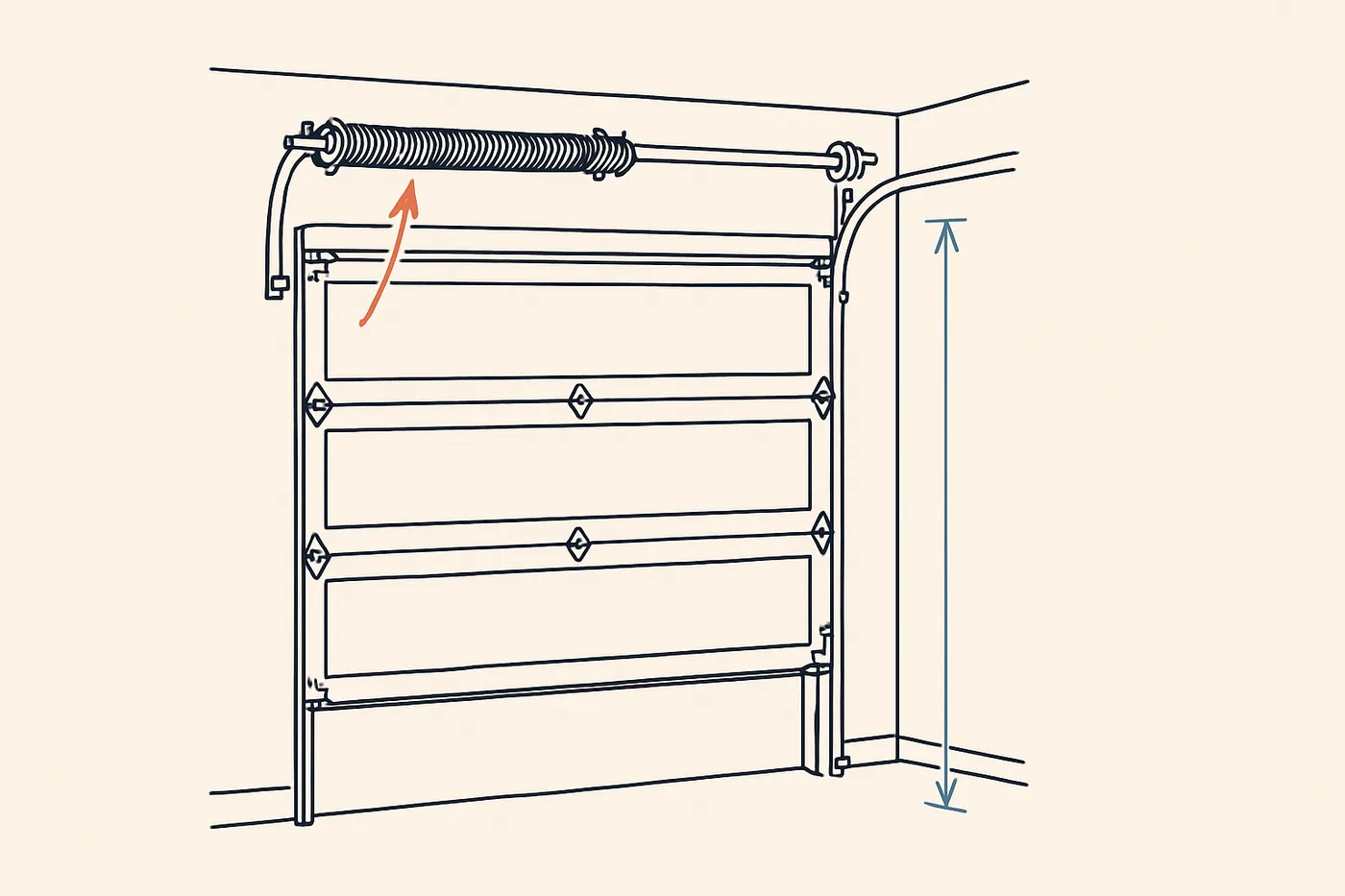
- You see a break or gap in the spring above the door. Clopay says "the most obvious sign is a visible break or gap in the spring itself."
Stop using the door and call a technician if you see a break or gap in a spring, hear loud banging or snapping, or the door looks crooked, gets stuck partway or feels unusually heavy. Do the same if you see a frayed or kinked cable; that one is our rule, not on Clopay's list. If the only sign is an opener that sounds like it is straining, book a technician.
The same Clopay guide says a spring that has lost its tension can put extra stress on your opener and other components, and that a broken or worn-out spring can suddenly give way, causing the door to slam shut or even fall. That is why we leave the balance test, which means disconnecting the opener and moving the door by hand, to a technician.
You can notice the signs yourself. Testing or correcting the balance is the technician's job. That's the line.
Where the line is, and why
A standard spring is rated for about 10,000 cycles, one cycle is one full open and close, and at four cycles a day that is about seven years (IDC Spring, a spring manufacturer). Clopay's spring guide says that once springs wear out, they simply can't support the door's weight. The same guide says torsion and extension springs are under extreme tension, and even a small mistake can cause serious injury or property damage.
That's what makes springs a professional job.
Cold makes it worse. Clopay says winter breakage is more common because spring wire becomes more brittle and weaker in colder temperatures.
Clopay's spring guide says a broken or worn-out spring can also put added strain on cables, rollers, and the opener. If a spring has broken, ask the technician to check the cables and the rest of the door too, not only the spring. For a scheduled check before anything fails, Garage Door Pro Services (our affiliated installer) offers a free garage door safety inspection to customers in St. George and the surrounding area; if you're in southern Nevada and the door is already down, A+ Garage Doors (our affiliated installer) handles garage door repair in Las Vegas and garage door repair in Henderson on same-day calls.
The small things you can and should handle
There are real jobs on your side of the line. Lubricate the hinges, steel rollers and bearings, as Wayne Dalton's manual lists them, with the type your door maker's manual names (Wayne Dalton and Amarr say non-silicone), sparingly. Clopay says not to lubricate nylon rollers or the tracks. Never lubricate the spring: that is our rule, and the spring and its hardware are a technician's job. Clopay says WD-40 and oil-based lubricants should be avoided because they draw dirt and dust, which causes premature wear.
Replace the bottom seal when it goes chalky, flattens permanently, or lets daylight through. Seals do not last long: Clopay says most seals need replacing every two to three years, depending on climate and use, and Amarr says around two years or more with proper maintenance.
Look over the hinges and the track brackets for bolts that are loose or missing, and tell the technician what you saw. Leave the tightening to them. Clopay's service and replacement guide says the bottom brackets on all garage doors must not be removed while the door is under tension, and lists the track among the repairs it recommends a professional handle.
What to tell the technician when you call
When you do call, the technician can start faster if you can say more than "it's broken." Tell them what the door does, at what point in travel, with what sound. Tell them whether the wall button works, whether the remote works, whether the sensor lights are on. Tell them whether the door stays where it stops or drifts, without touching it to find out.
If you want to understand the machine you're diagnosing before the technician arrives, the anatomy lab shows you what every part does and why it matters, and the science lab walks through the physics of the spring, the cable, and the opener as a single system.
If you saw one of the spring signs above, stop using the door and call a technician. If the door shows anything else on this page that you could not clear up yourself, book a technician.