A drafty, cold or hot garage: seal it, insulate it or replace the door?
Fix the gaps, add insulation to the door you have, or buy an insulated door. What each option gets you, what the sourced prices are, and when the cheapest one is the right call.

Your garage is freezing in January, an oven in July, or you can feel a draft along the bottom of the door. There are three real ways to fix it, and they cost very different amounts: seal the gaps, add insulation to the door you have, or buy an insulated door.
This page does not tell you how to install anything. It helps you pick, read a quote and know what to ask. If you are comparing seals, our weather seal guide goes through the types. If the question is really about cooling costs, our summer cooling cost page covers that side.
Option 1, the good: seal the gaps
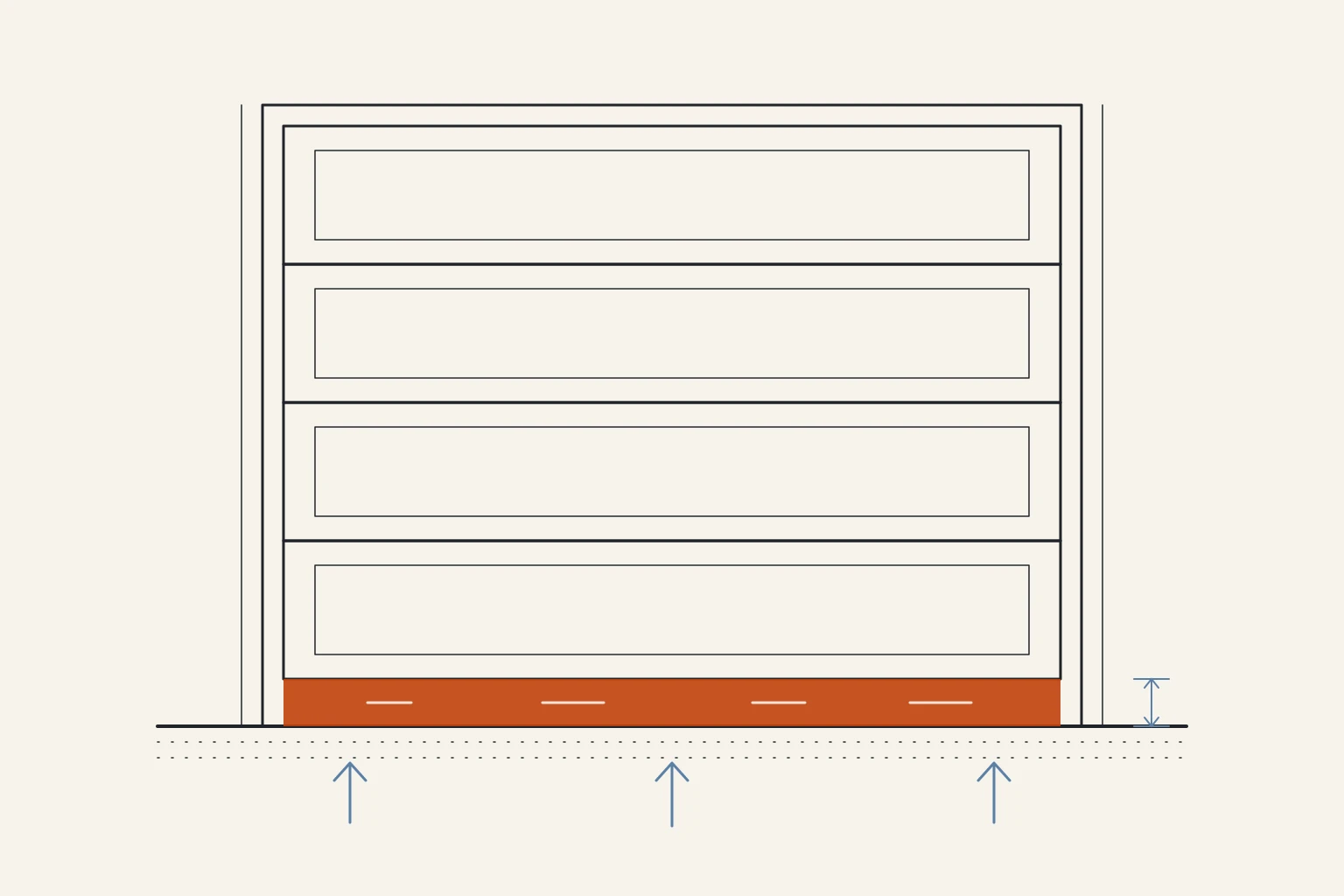
The edges of the door get new seals: the bottom seal, and the strip that runs along the sides and top. Clopay calls the side and top strip a perimeter seal, also called weatherstripping, and says it is designed to close the gaps around the door.
What it gets you: an end to the cold draft, the water and the pests that come in at the edges. Clopay lists drafts, water and pests among the things to look for when a seal has worn out. A threshold seal, which Clopay says helps in garages that sit lower than the driveway or have uneven floors, is a third kind.
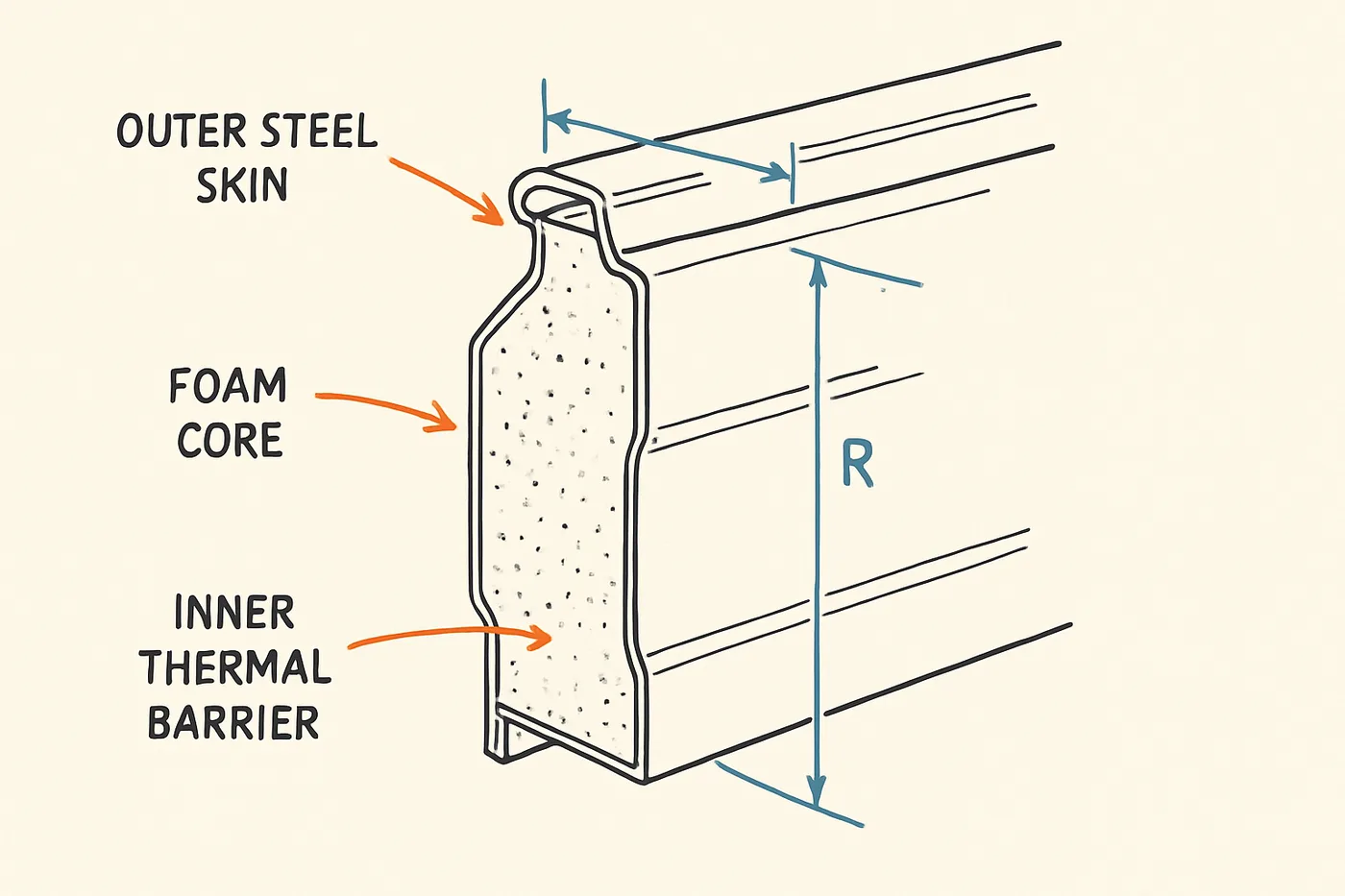
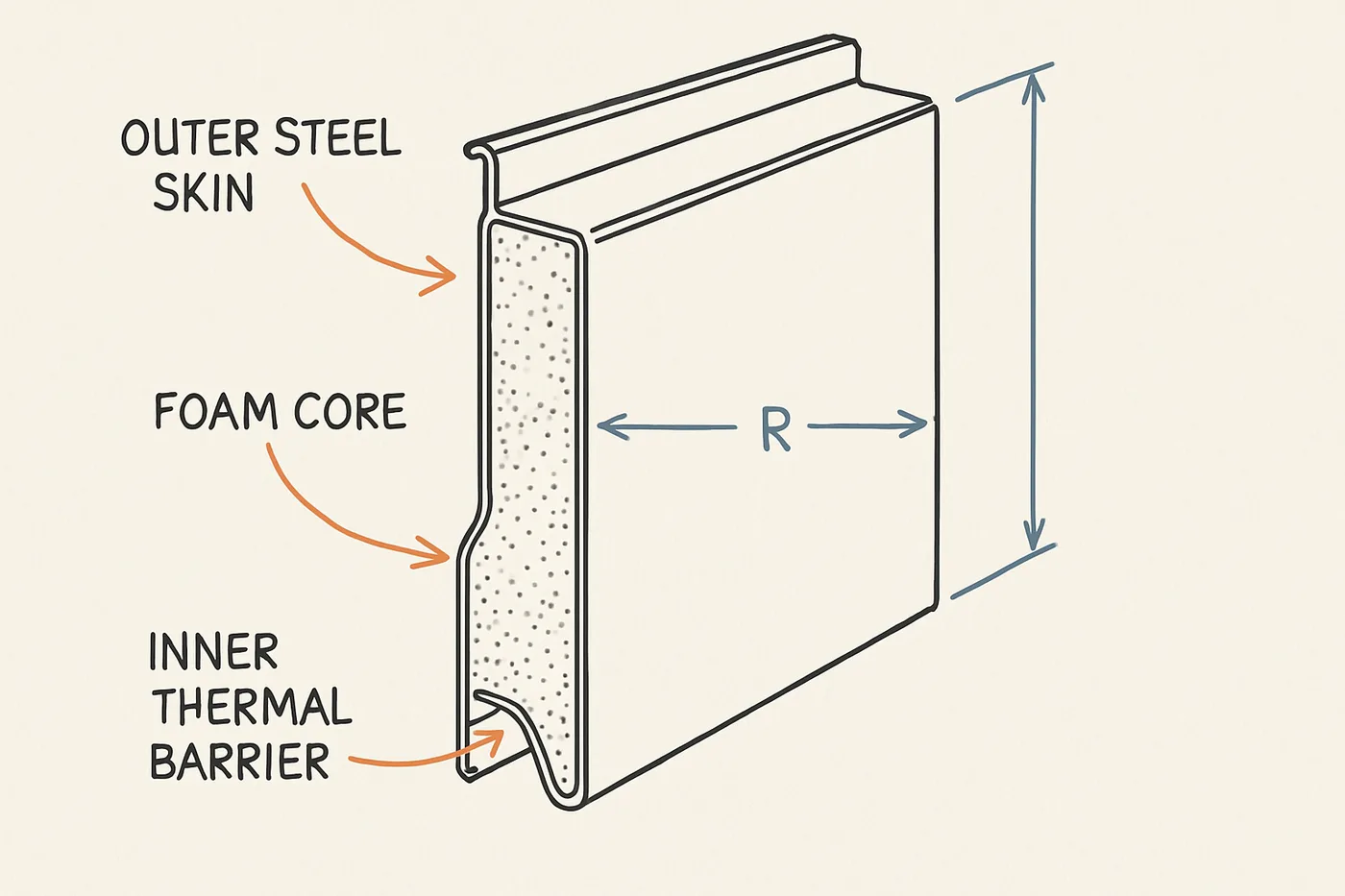
What it does not do: change how much heat passes through the door itself. A door with no insulation is one layer of steel or aluminum with no thermal barrier and an R-value near zero, and new seals do not change that. That last point is our reading, not a manufacturer's claim.
What to know: Amarr says you can typically get around two years or more out of seals with proper maintenance, and Clopay says most need replacing every 2 to 3 years. Replace one that is cracked, crushed or stiff. We have no sourced price for seals, so ask for the part price and the installed price as two numbers.
Option 2, the better: add insulation to the door you have
Insulation panels or a kit go onto the door sections you already own.
What it gets you: a warmer or cooler garage without buying a new door. Clopay puts a non-insulated door near R-0 and typical polystyrene doors between R-6 and R-9, so there is room to improve.
What to know: this is the option with a safety catch. Anything you add is weight, and DASMA says a door's springs are designed for its original intended weight. Added weight can leave the door unbalanced and can even damage or break the springs. DASMA also says door makers typically write exclusions into their warranties for alterations to a door. Our insulation kit guide has the DASMA wording and what to ask. We have no sourced price for a kit, so get a written one.
What to ask: whether your door's maker approves a kit for your model, in writing, and who checks the balance after. Springs and cables stay a technician's job.
Option 3, the best: replace it with an insulated door
A new door whose sections come insulated from the factory.
What it gets you: a door built to carry its own insulation, with the springs sized for it. Clopay says typical polystyrene doors fall between R-6 and R-9, and its polyurethane doors reach as high as R-20.4 in select models. What the number means is in our R-value guide.
What it costs: HomeAdvisor puts replacement at $754 to $1,707, with most people spending around $1,231 (updated Jun 17, 2026). It lists the insulation upgrade at $600 to $3,000, and labor at $200 to $500. Clopay says an 8 by 7 non-insulated door can cost $750 to $1,500, and insulated doors often start at $900 and can pass $2,500 (read Oct 14, 2026). Two sources will not agree to the dollar. Use them to judge a quote, not to replace one. Our insulated door cost guide has more.
What to ask: the R-value in writing, whether removal of the old door is in the price, and what the warranty covers.
When the cheapest option is the right call
Option 1 is often right, and it is not a sign you are cutting corners. This part is our judgment, drawing on what Clopay says about who needs insulation. It fits when:
- The draft is at the edges. You can see light or feel air along the bottom, sides or top.
- The garage is detached, or you do not use it as living space. Clopay says a non-insulated door suits detached garages and spaces where controlling the temperature is not a priority.
- Your climate is moderate. Clopay says that in moderate climates you may not need an energy-efficient door.
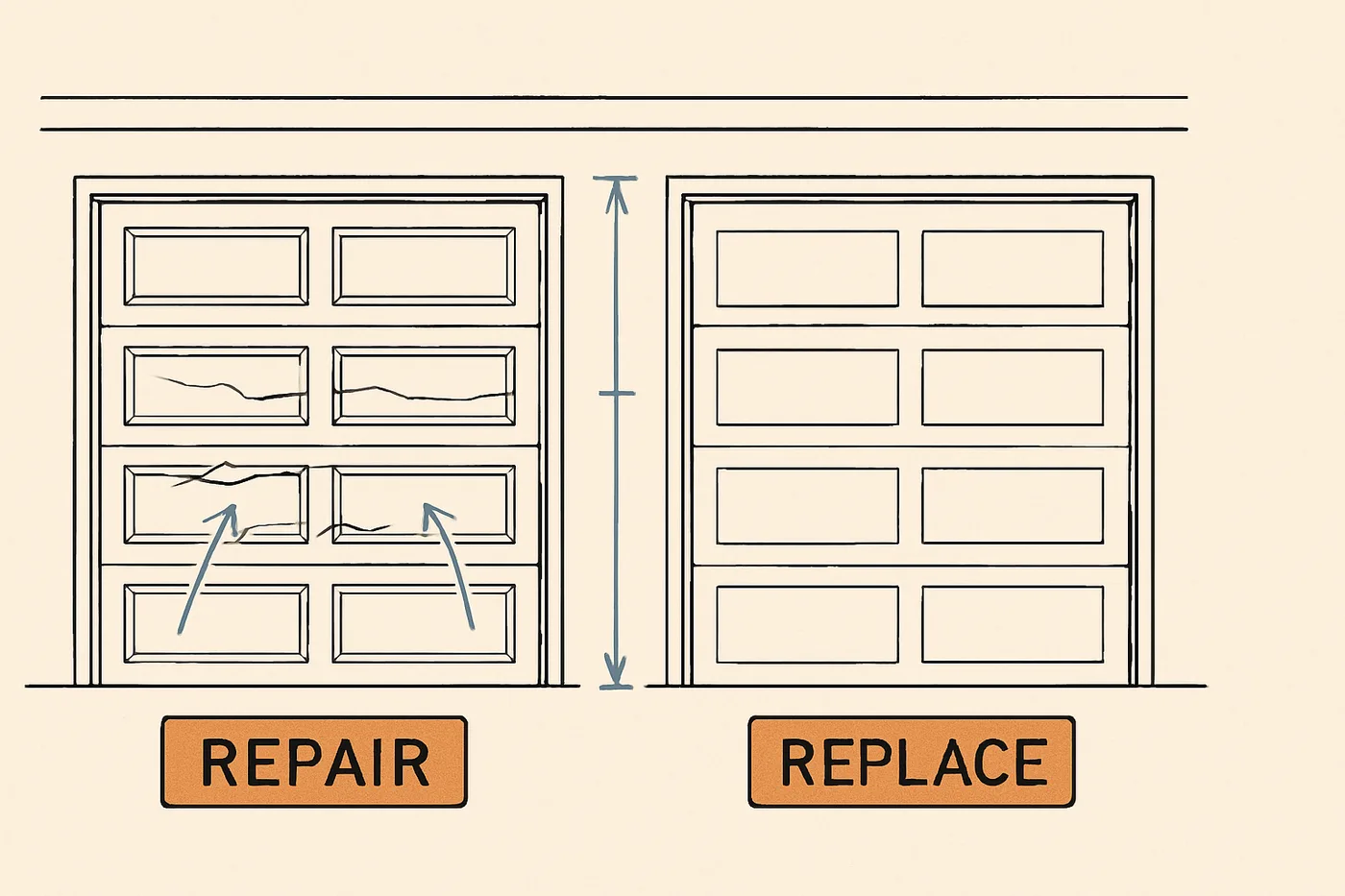
It does not fit when the garage is attached. Clopay says heat loss or gain through an attached garage can affect the rooms next to it and raise energy bills. It also does not fit when the door is old or damaged and is close to needing replacement anyway. Then our repair-or-replace guide is the better place to start.
What to put on any quote
- What is being done to which part of the door: seals, insulation or a whole door.
- The part price and the installed price as two numbers.
- For insulation, the maker's written approval and who checks the balance after.
- For a new door, the R-value, removal of the old door and the warranty.
Two quotes with the same four lines are easy to compare.
What not to do
Do not add weight to the door without your door maker's word, and do not touch the springs, cables or bottom brackets. Those parts are under tension and belong to a trained technician. If the door feels very heavy, drops fast or will not stay up, do not lift it again, and call a professional.
What to do today
- With the door closed, look along the bottom, sides and top in daylight. Light showing through is a gap.
- Check your seals for Clopay's wear signs: cracks, tears or missing pieces, hardening, gaps, and signs of water or pests.
- Decide from there. A worn seal and a mild climate point to Option 1. An attached garage that stays too cold or too hot points to Options 2 or 3, with a written quote for each.