When your garage door jumps the track: causes, fixes, and the line you don't cross
Learn why garage doors go off track, what causes it, and why this is a job for a professional technician — not a DIY repair.

You hear it before you see it. A bang, then a metal-on-metal grind, then the door stops at a wrong angle — one side higher than the other, a roller hanging in space where a track used to hold it. The opener is still trying. The chain is still moving. Nothing is moving with it.
A door that has come off its track is one of the situations where the line between "I can handle this" and "I need someone with the right tools" matters most. Unlike a noisy hinge or a worn roller, an off-track door is not a DIY fix — the springs and cables are still under tension, and the geometry is no longer predictable. The right move is to unplug the opener and call a technician.
What "off track" actually means
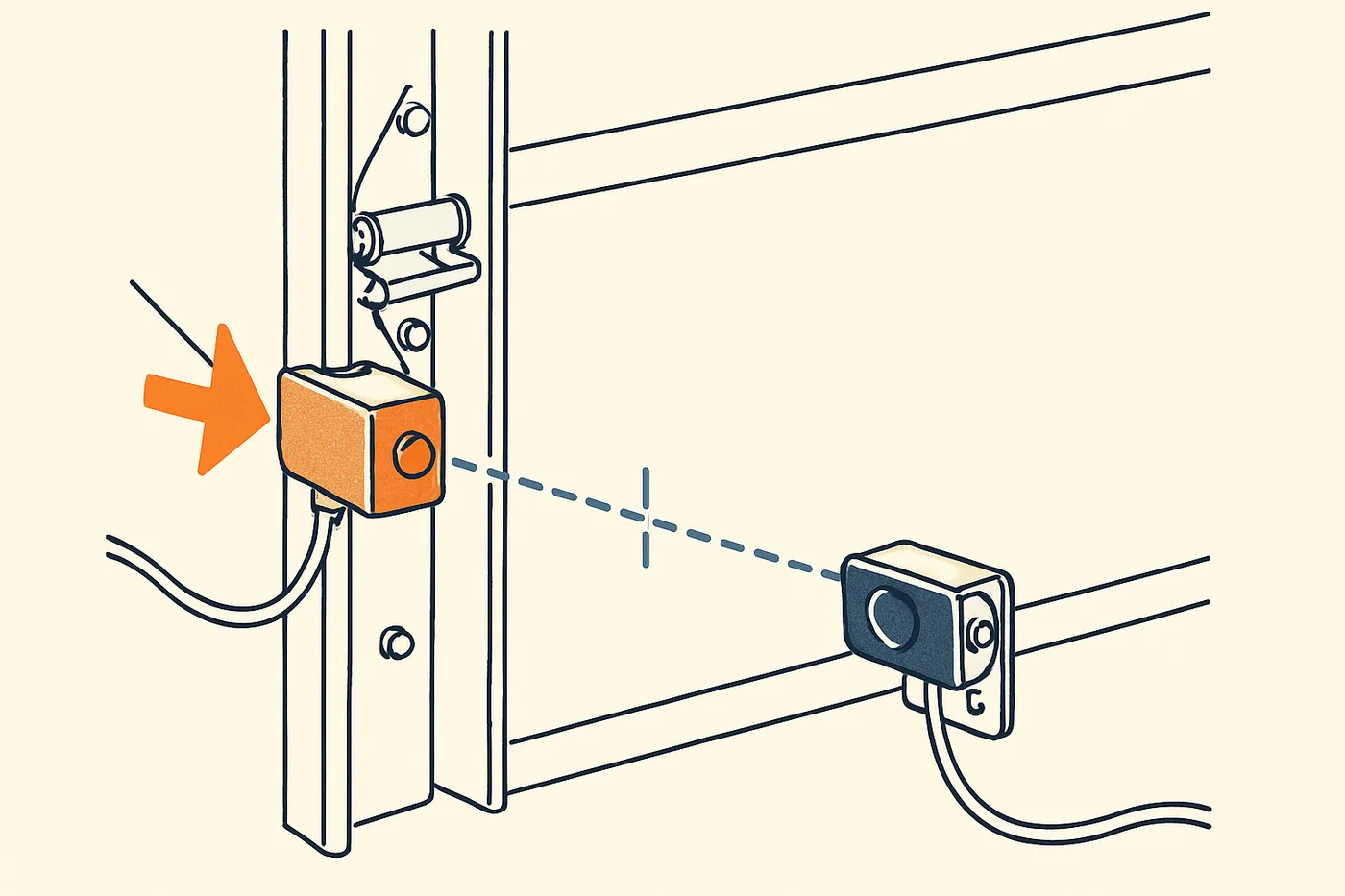
The door rides on rollers. The rollers ride inside steel tracks bolted to the framing on either side of the opening. When everything is healthy, the rollers turn smoothly as the door travels, and the tracks hold them in a path that curves from vertical to horizontal across the top of the opening.
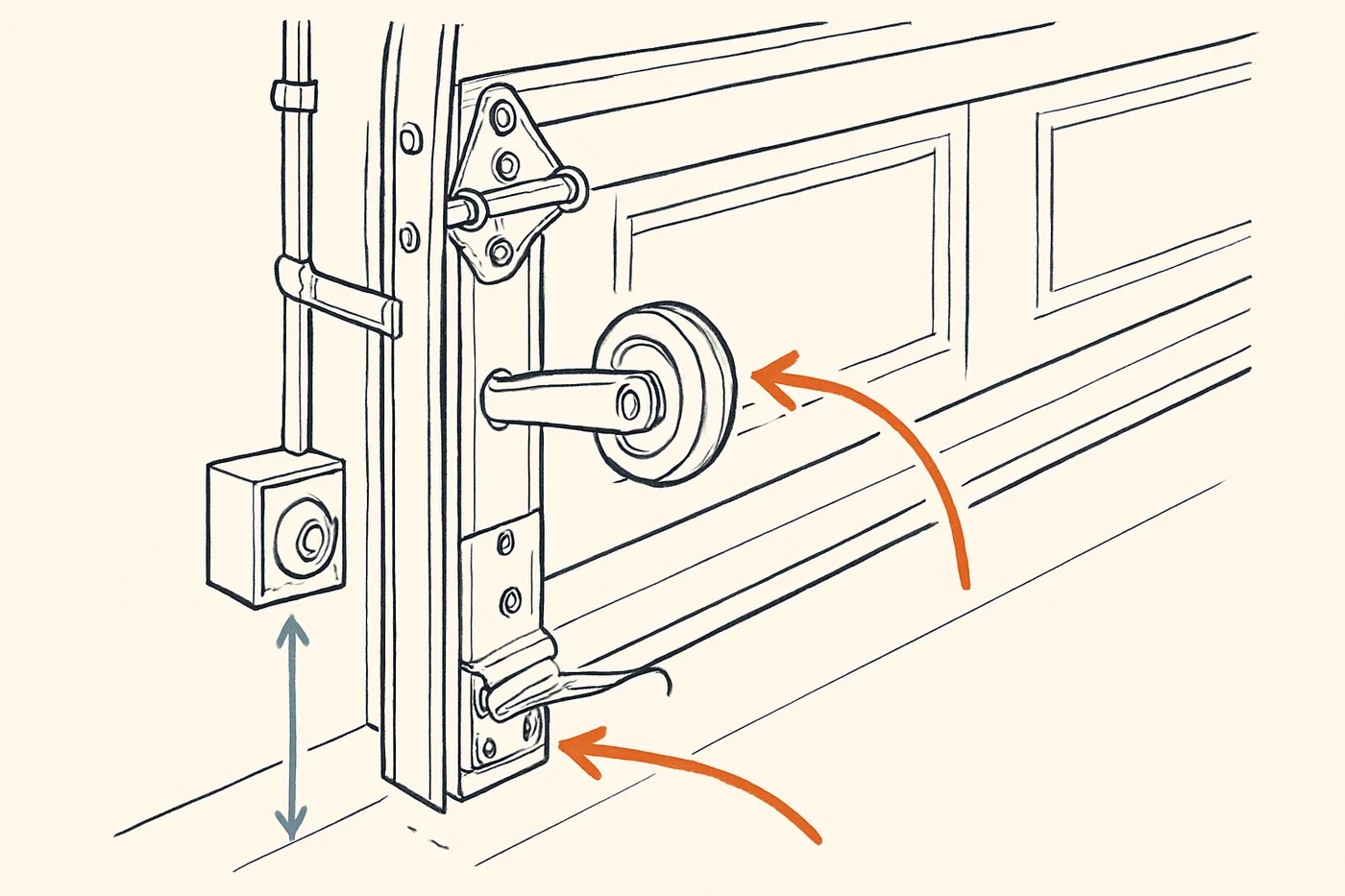
Off-track means one or more rollers has left that path. Sometimes the roller has popped sideways out of an open section of track. Sometimes a track has bent away from the wall and the roller is still inside but pinched. Sometimes a panel has twisted because one side dropped while the other held, and now the whole assembly is sitting at an angle that no longer matches the geometry it was built for.
The door is heavy. It is also under tension from cables and springs that are still doing their job even though the door is in the wrong place. That combination is what makes this more than an alignment problem.
The five things that put a door off track
The first cause is the most boring, and also the most common: brackets that have loosened from vibration. Every cycle shakes the assembly. Over hundreds of cycles, the bolts that hold the track to the wall back themselves out a quarter turn at a time, the track drifts, and eventually a roller hits a transition at the wrong angle and skids instead of rolling. You'll hear this coming weeks in advance as a deep grinding noise that gets worse, not better, until the roller finally jumps.
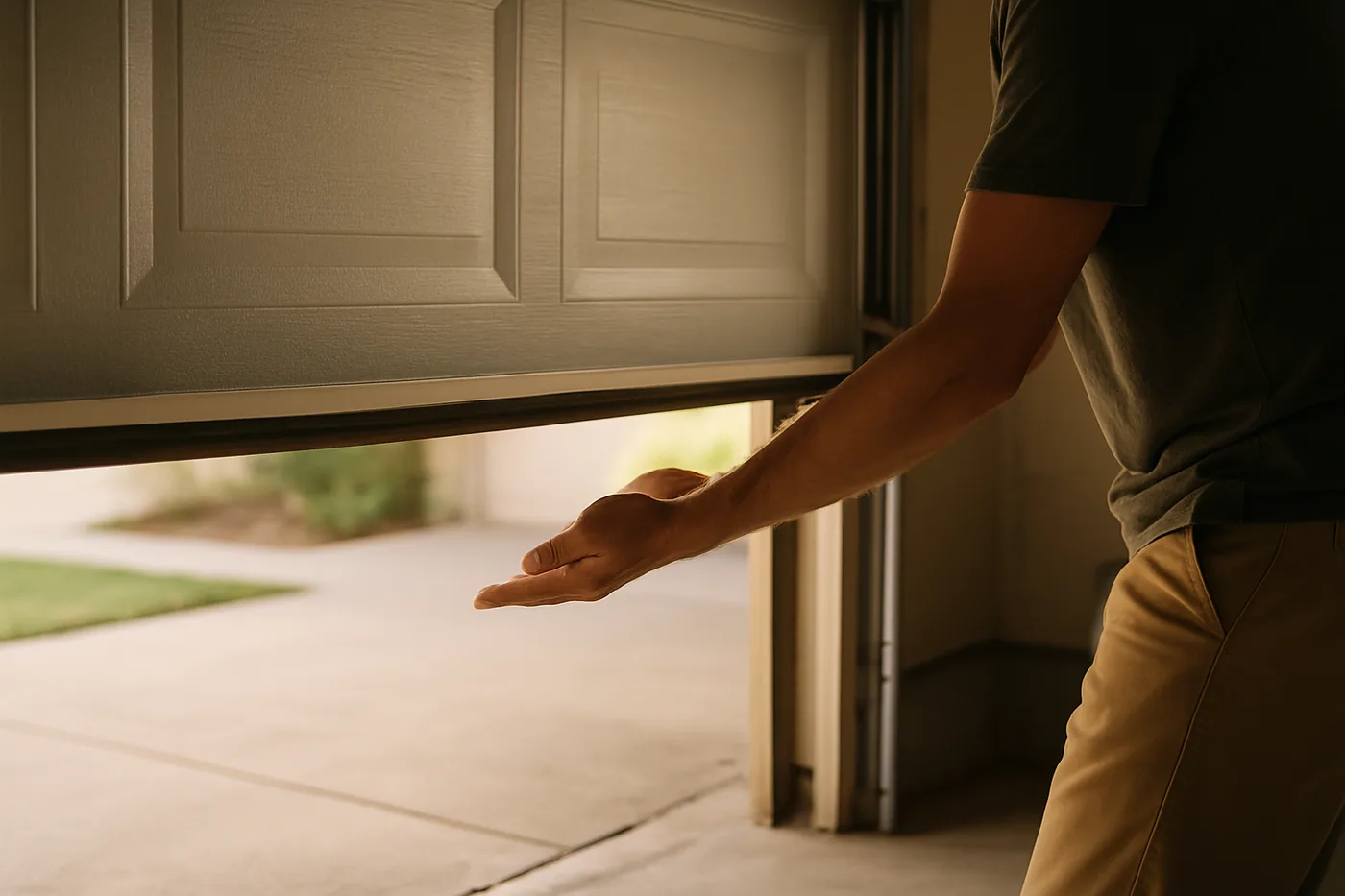
The second is a spring that has weakened or broken. A torsion spring is what counterbalances the door's weight, and when it loses tension, the opener has to lift a door it was never sized to lift alone. The door comes up crooked. One side leads, the other lags, and the rollers on the lagging side end up loaded sideways against the track until something gives. A balance test where you release the door at waist height tells you immediately whether the spring is doing its job — a healthy door holds its position, an unbalanced door drops or rises on its own.
The third is impact. A bumper. A bicycle handlebar. A delivery driver who didn't quite clear the opening. The door doesn't always come off the track immediately — sometimes it runs for a week with a bent section before the next cycle catches the deformation at the wrong angle.
The fourth is cold, especially in regions where the garage temperature swings forty or fifty degrees overnight. Cold stresses a spring at the points where the metal is already fatigued. The fatigue mechanics of springs in winter conditions explain why November and February are when service calls spike.
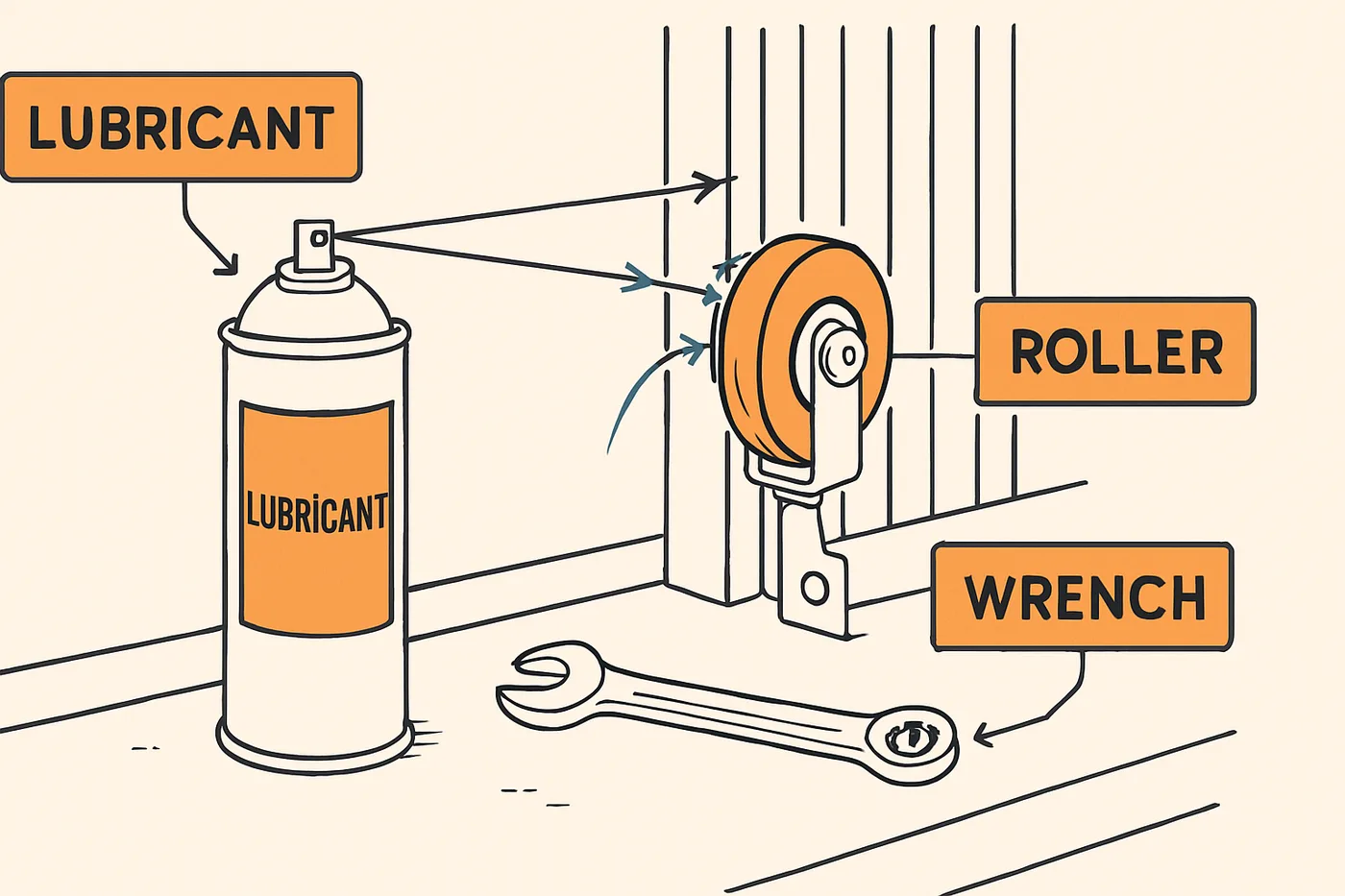
The fifth is something a lot of homeowners do thinking they are helping: lubricating the tracks. The rollers are designed to roll along the track, not slide along it, and a film of grease in the track changes the physics. The roller skids at transitions, collects grit, and eventually gets shoved sideways hard enough to leave the channel. If you have lubricated your tracks, the fix is to wipe them clean with a damp cloth and stop (Clopay says to wipe the tracks, not lubricate them). The hinges and rollers are what get lubricant, and we leave anything touching the torsion spring to a technician. The track does not.
When to call a pro
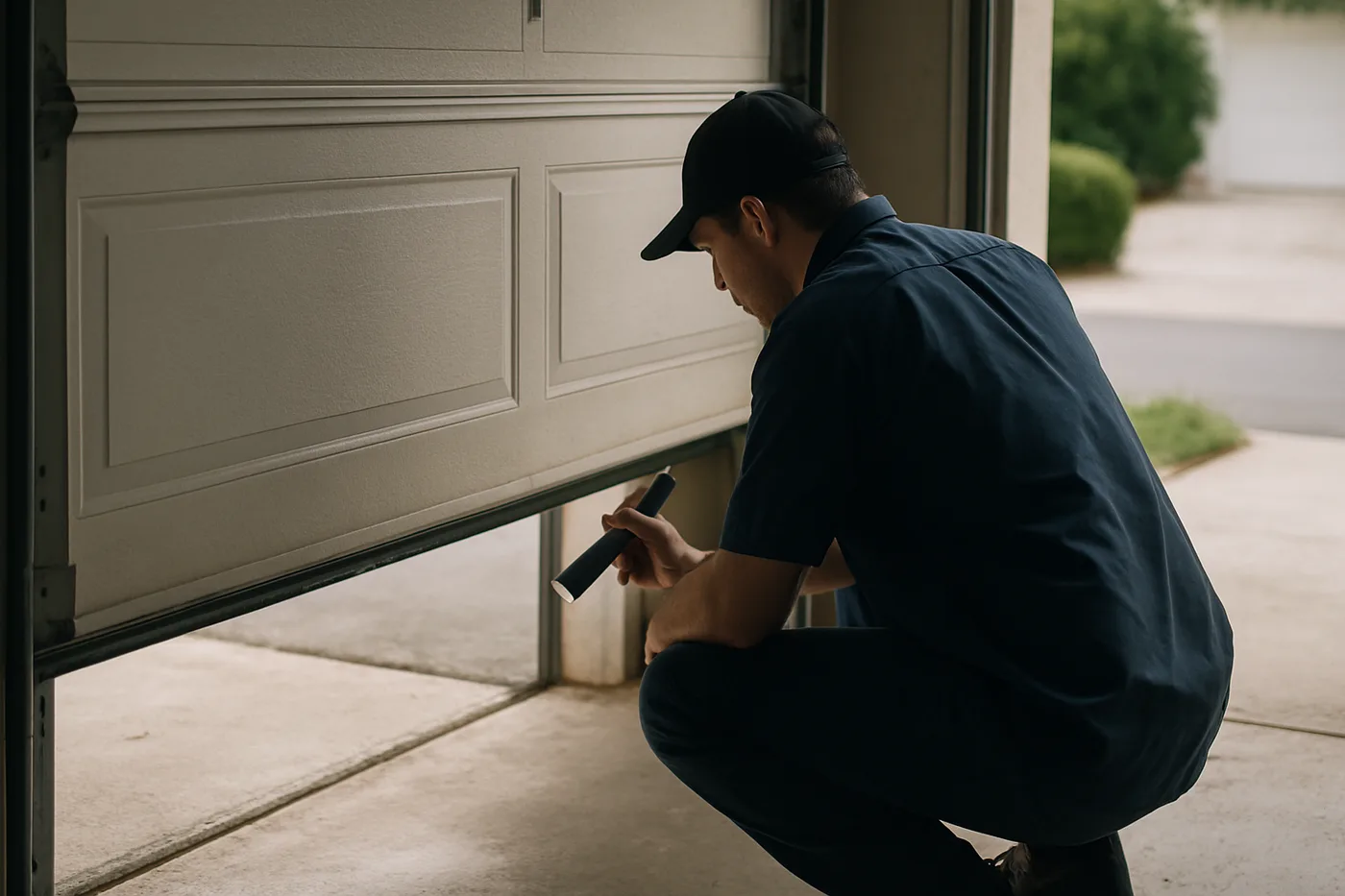
An off-track door is not a DIY repair. Even if the door looks stable where it sits, the springs and cables are still under tension — and that tension no longer has a predictable path because the geometry is wrong. A roller that popped out of the track means the door's weight is no longer evenly distributed, and reconnecting it requires supporting that weight safely while the track is realigned.
The only homeowner-safe action is to unplug the opener so the door doesn't get another cycle, stay clear of the springs and cables, and call a technician. For Las Vegas homeowners, A+ Garage Doors (our affiliated installer) offers same-day repair service for exactly this situation, and most regional providers like Garage Door Pro Services (our affiliated installer) carry the right equipment to support the door's weight while the tracks are realigned. The reason to call is not that you can't figure it out. The reason to call is that the cost of being wrong is a trip to an emergency room.
Where the line is
Here is the part where the sentences get short.
A garage door spring stores enormous energy.
When a door comes off the track and the panels twist, the cables can come loose from their drums. When the cables come loose, the spring's tension has nowhere to go but into whatever is in its path. You do not want to be what is in its path. The full picture of how the safety systems on a residential door are designed to fail predictably — and how they stop being predictable when geometry is wrong — is worth reading before you touch a door that has gone sideways.
If the door is open and resting on the rollers in the horizontal track, do not try to lower it manually. Call someone.
What this costs, and why prevention is the cheaper number
A standalone track realignment with no other damage tends to be a modest repair. A track realignment that also requires a spring replacement, cable replacement, and a couple of new rollers is a different conversation. A $200 spring replacement can escalate to a $600 repair when an out-of-balance condition has been quietly grinding down the rest of the assembly, and the same cascade applies when a door comes off track from a cause that has been building for months.
The math on prevention is hard to argue with. Standard residential springs are rated for 10,000 cycles, or roughly seven years at four cycles a day. A door that runs two years out of balance can lose a decade of total service life across the opener, cables, rollers, hinges, and brackets, because every part is working harder than it was designed to. Twice-yearly lubrication of the spring — the one place lubricant matters most, because it stays under tension even when the door isn't moving — and a quick visual check of the brackets each season is the difference between a door that surprises you and a door that doesn't. Several providers, including the free safety inspection program from our affiliated installer, Garage Door Pro Services, will do that walkthrough at no cost if you ask.
A door that jumps the track at 7 AM on a Monday is rarely doing it because of a single bad day. It is doing it because the bolts loosened a quarter turn at a time over a year, or because the spring weakened a percent at a time over a season, and nobody looked. The door doesn't fail loudly until it has been failing quietly for a while.