Torsion spring wire gauge chart: what to tell a technician
A torsion spring wire gauge chart is DASMA's color code for spring makers, not a homeowner's guide. What the numbers mean and what to tell your technician.

A torsion spring wire gauge chart is an industry reference, not a homeowner's guide. The standard one comes from DASMA, the door makers' association, and it matches each wire size to a paint color (DASMA TDS 171). DASMA wrote it for spring manufacturers and says it "should not be used by homeowners or maintenance personnel" to replace springs. Replacement "should only be performed by a trained door systems technician."
So this page will not teach you to size your own spring. It explains what the numbers and colors mean, so you can talk to the technician who does.
Not sure which problem this is? Start with our page on a broken garage door spring.
What a technician reads off a spring
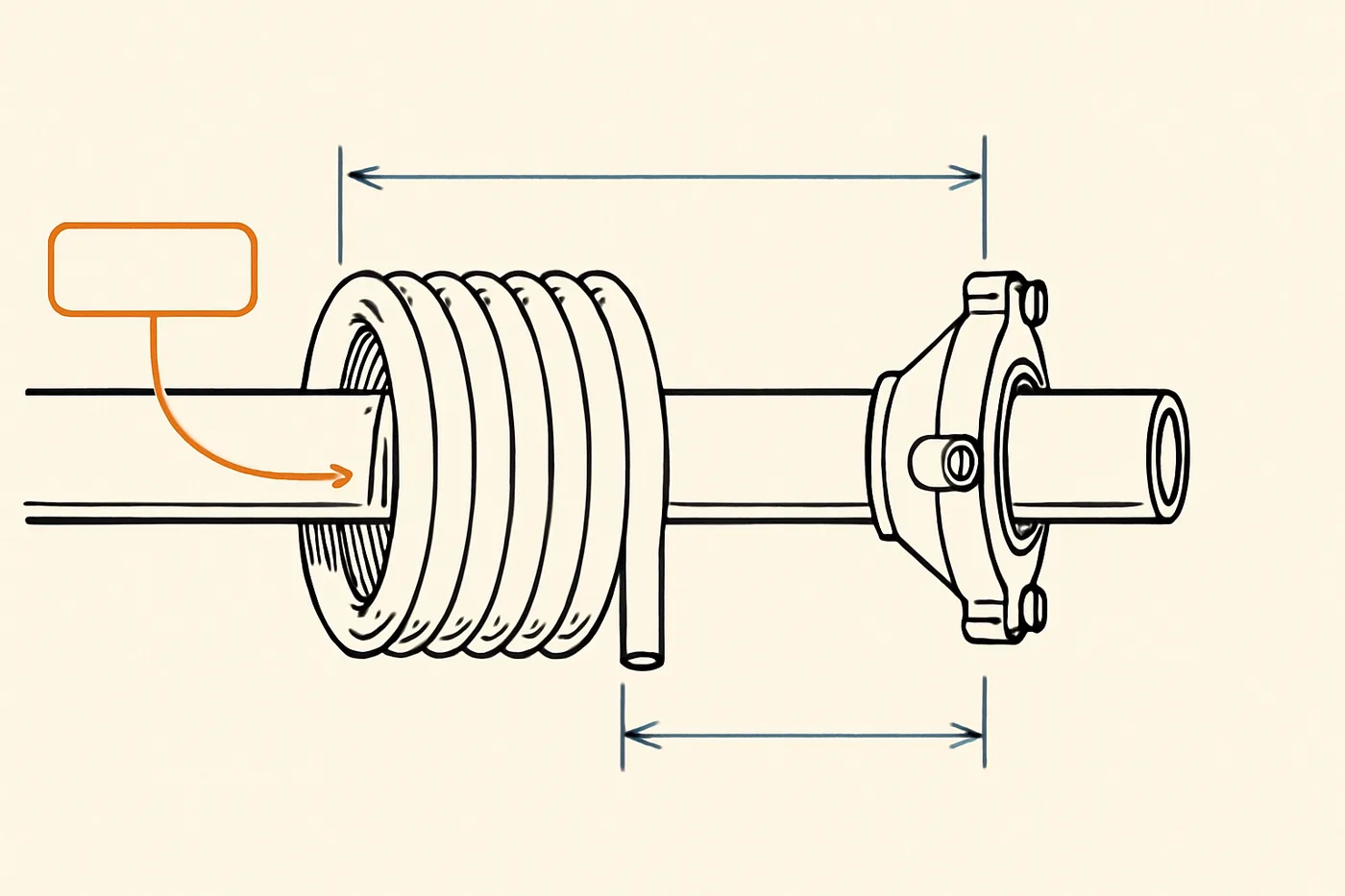
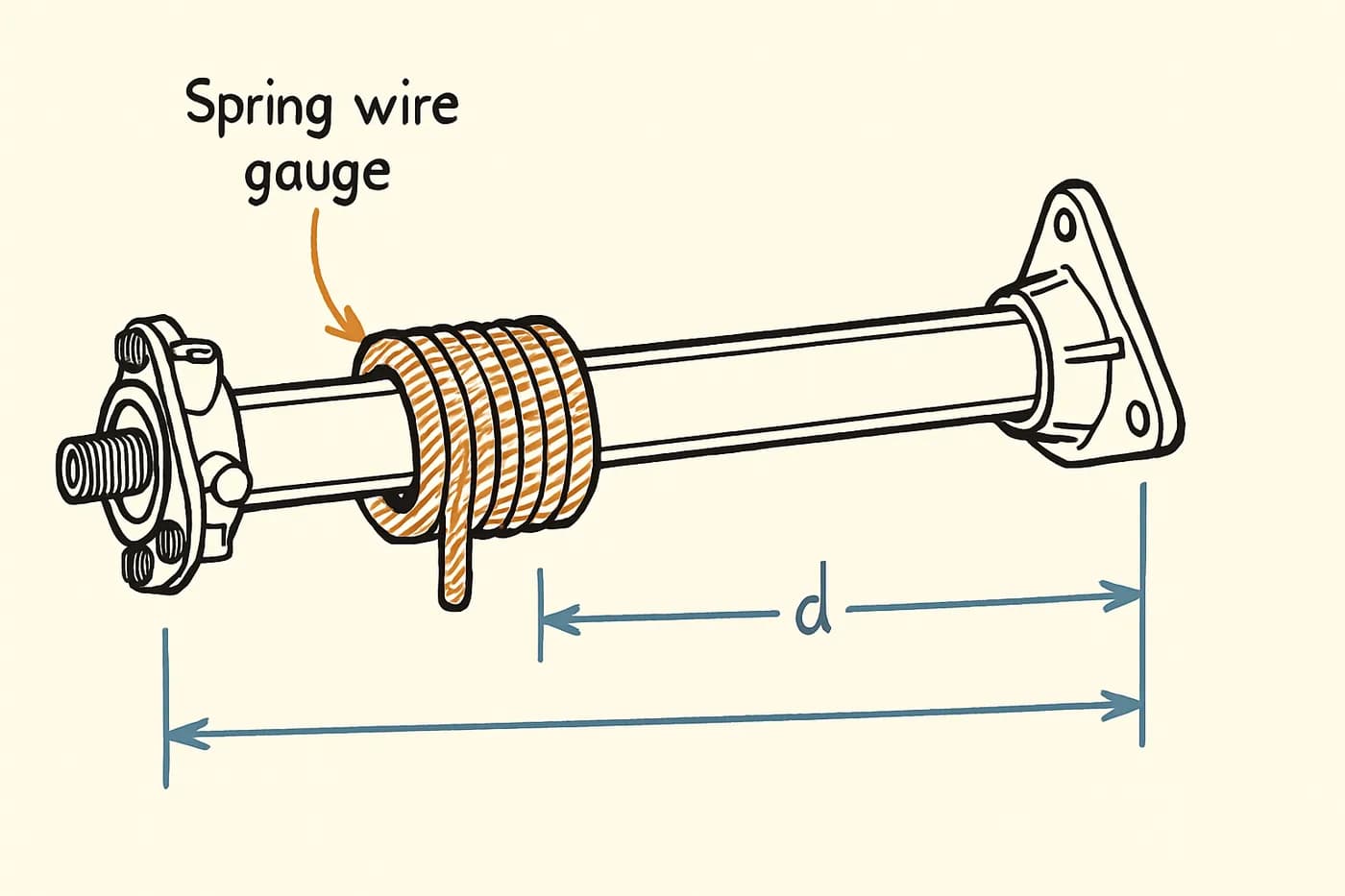
Wire size is one of several things that describe a spring. DASMA lists others that its color code does not cover, among them inner diameter, length, stretch, material type and finish (DASMA TDS 171).
Wire size (the "gauge") is the actual thickness of the wire, given in decimal inches. On DASMA's chart for torsion springs the sizes run from .1200 to .6250 inch.
A spring that looks like yours may not match your door. DASMA says the installer "should always double check spring identification and parameters" (DASMA TDS 190).
What the color on a spring means
On a torsion spring, the DASMA paint color stands for the wire size and nothing else. It does not give the inner diameter, the length or anything else about the spring. The colors also repeat: red marks five different wire sizes on the chart, from .1430 to .5625 inch. A size that is not on the list is marked black.
DASMA calls color "only partial identification" and says color codes "should be substantiated by physical spring measurements" (DASMA TDS 171). That is the technician's job. Treat the color as a clue, not an answer.
How long a spring lasts
A standard spring is rated for about 10,000 cycles, one cycle is one full open and close, and at four cycles a day that is about seven years (IDC Spring, a spring manufacturer).
Clopay, a door maker, also says springs are "usually rated for 10,000 cycles." Breaks happen more often in winter, Clopay says, because "spring wire becomes more brittle" in the cold (Clopay).
Why the spring has to match the door
A spring is chosen for the door it holds up. DASMA says paint, or components added to the door, can push its weight past the maker's specification. It also says a spring that does not meet the door's needs can shorten the cycle life of the door and of the opener (DASMA TDS 190).
A worn or wrong spring costs the rest of the door, too. Amarr, a door maker, says worn or broken springs make the door heavy and "cause an extra load on the garage door opener" (Amarr). DASMA says a door out of balance can cause "premature wear and tear on other important door components." On a door with two springs, DASMA says both should be replaced, "even if one is not broken" (DASMA safety tips).
Why this is a technician's job
The spring holds up the weight of your door, and it stays under tension the whole time it is installed. The makers say it plainly:
- "Springs and spring hardware are under high tension." (DASMA TDS 167)
- "Working with garage door springs is extremely dangerous" (Clopay)
- "High spring tension can cause serious injury or death." (Amarr)
- "DO NOT attempt to repair or adjust torsion springs yourself." (Wayne Dalton)
We leave measuring, ordering, winding, adjusting and replacing a spring to a technician, and anything else that touches the spring, lubrication included.
What you can do
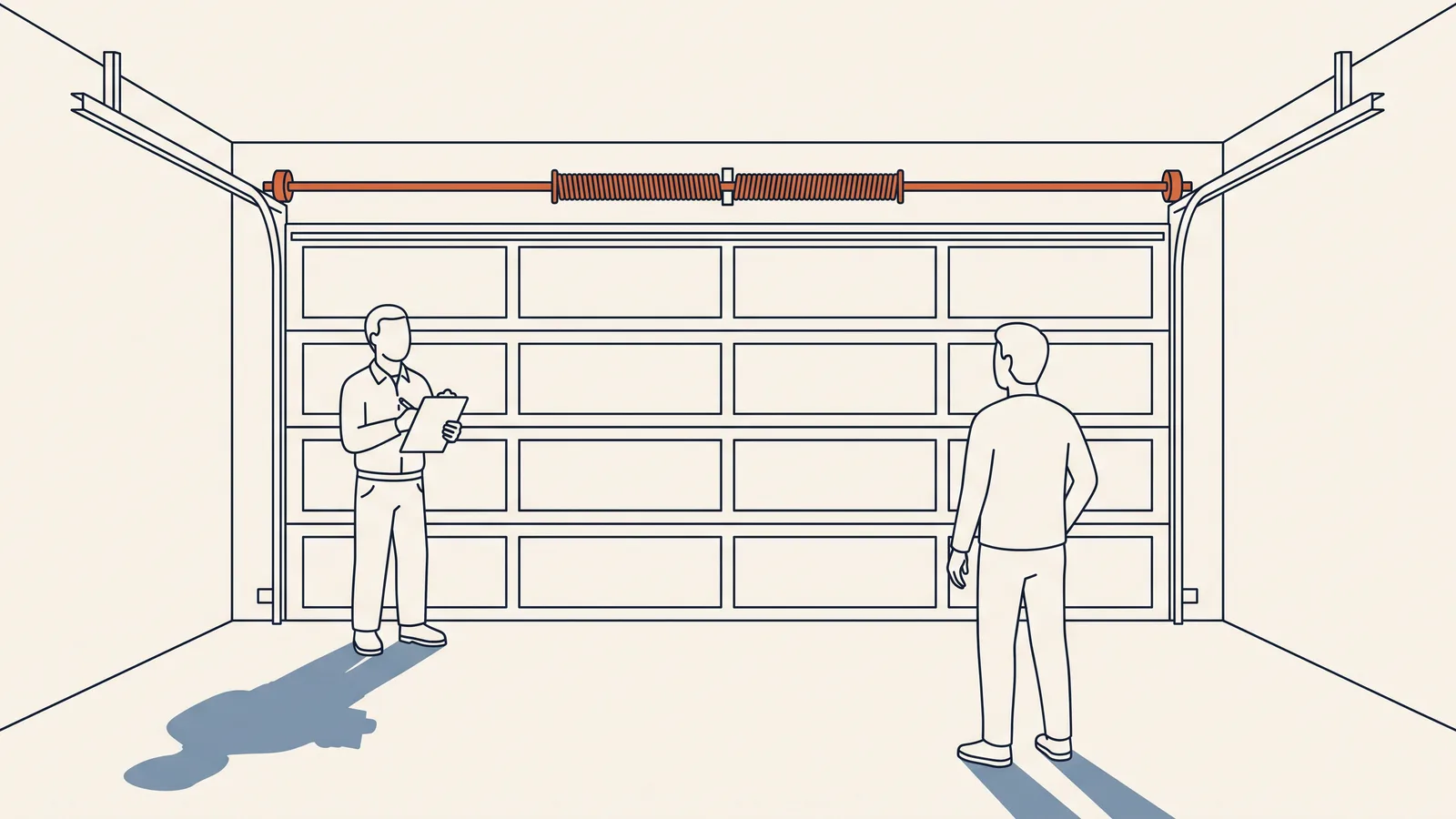
- Look, from the floor. With the door closed, look at the springs from inside the garage. DASMA's checklist asks you to "visually inspect the springs for damage" (DASMA TDS 167). Do not touch the spring, the cones or the cables. If a spring is broken, DASMA says not to run the door until the spring is replaced.
- Tell the technician about the door. Give them its size and anything that has changed since it went in: paint, added windows, insulation, anything attached to it.
- Ask them to confirm the match. Ask the technician to check that the spring fits your door, and, if there are two springs, whether both should be replaced.
Your part of the upkeep is the hinges and rollers. Lubricate the hinge pins and the bearings of steel rollers every 3 to 6 months (Clopay's lubrication guide), with the type your door maker's manual names. Never the spring.
To book a technician, call Garage Door Pro services (our affiliated installer) or, around Las Vegas, A+ Garage Doors (our affiliated installer).
Knowing what the numbers mean is yours. Measuring and replacing the spring is a technician's job.